

Physical retail shelves allow shoppers to test shoulder strap contouring, evaluate fabric thickness, and examine internal pocket configurations before committing to a daily bag. Knowing what stores carry backpacks streamlines the search whether a commuter needs padded tech sleeves or a student requires heavy-duty book compartments. Department stores, sporting goods retailers, and specialized online storefronts each focus on distinct carrying categories ranging from sleek office packs to rugged outdoor daypacks. Exploring these distinct merchant categories ensures buyers find the exact volume capacity and structural durability required for their routines.
Store selection directly affects whether a shopper encounters lightweight nylon commuter bags or specialized packs built for rough trail use. While general retailers cater to mass-market school needs, outdoor outfitters stock specialized suspension systems, ventilated back panels, and weather-resistant materials. Budget-conscious buyers exploring affordable daypacks often discover that value-focused sporting chains provide sturdy baseline options without demanding premium specialty pricing. Aligning personal gear needs with the right store type saves significant shopping time and guarantees access to proper pack sizes.
Pros
- Extremely lightweight at approximately 8 ounces, adding minimal base weight on short trail walks.
- Configurable left- or right-side clip allows versatile cross-body carrying options.
- Multiple internal and external zippered pockets keep small gear separated and easy to locate.
- Tough 600D polyester fabric stands up well to regular scuffs and outdoor use.
Cons
- Compact 7-liter capacity cannot accommodate bulky insulation layers or large hiking gear.
- Single-strap sling design lacks a hip belt and is not intended for carrying heavy trail loads.
- Does not include an external water bottle pocket or dedicated hydration reservoir sleeve.
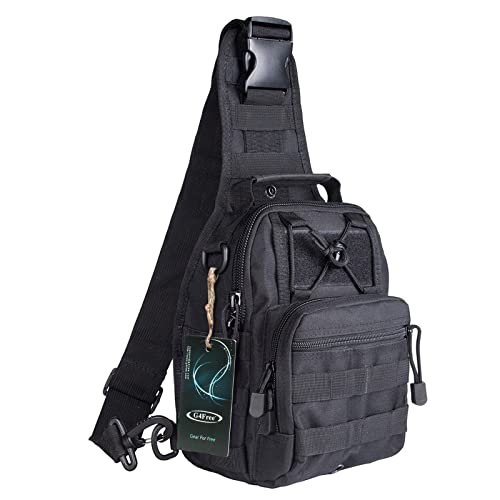
The G4Free Outdoor Tactical Bag is a compact 7-liter sling-style shoulder pack designed for trail-goers, campers, and outdoor enthusiasts who need streamlined storage for basic gear. Rather than functioning as a full-sized backpack for long excursions, this tactical sling bag targets fast day hikes, scouting trips, travel, and everyday carry where keeping small tools, a first-aid kit, and personal accessories within easy reach is the priority.
Measuring roughly 7.87 by 5.51 by 9.87 inches with an approximate 7-liter capacity, this bag focuses purely on minimal gear loads. Weighing around 8 ounces, it carries lightly across the upper body without the weight penalty of a traditional pack suspension. Given the modest capacity, it suits trail outings that require only basic essentials such as snacks, navigation tools, pocket knives, keys, and emergency items rather than heavy extra clothing or bulky camping gear.
In terms of construction, the pack uses 600D polyester fabric paired with upgraded stitching, double zippered closures, and a padded heavy-duty grab handle. The 600D fabric gives the exterior sufficient structure to resist everyday contact with brush and dirt. External attachment loops and sturdy hardware clips provide dependable daily use, while the padded back pocket provides a cushioned barrier between harder items inside the bag and your body.
Wearing options remain flexible due to the dual clipping points located at the lower corners of the pack. You can attach the primary shoulder strap to either the left or right clip depending on your preferred cross-body carry orientation. Additionally, a hook-and-loop fastener inside the back pocket lets you stow the strap out of the way when you prefer carrying the bag by its padded top handle. Pocket access is divided cleanly across three external compartments, a front zippered sleeve, internal organizational dividers, and a main compartment.
Because of its 7-liter volume and single-strap sling architecture, this pack carries clear practical limits. It does not include a hip belt, sternum strap, internal frame, or dedicated hydration reservoir pocket, meaning it is not engineered for long-distance backpacking or heavy load distribution. Furthermore, without an external bottle pouch listed in the specifications, carrying fluid containers requires dedicating room inside the main zippered compartment.
For hikers, campers, and commuters seeking an affordable, lightweight shoulder pack to keep personal tools and trail essentials organized, the G4Free Tactical Bag offers straightforward utility. If your trail plans involve minimal equipment, short durations, or organized vehicle-to-trailhead transport, this compact sling bag serves as a practical, easy-to-carry option.
With an approximate volume of 7 liters and dimensions of 7.87 by 5.51 by 9.87 inches, this pack is optimized for quick-access items. It contains three external compartments, a front zippered pocket, a primary zippered section, and multiple internal pockets to prevent small gear from shifting.
The padded back pocket adds a secure, cushioned storage space against your body. This setup works well for keeping trail permits, compact medical supplies, small multi-tools, and mobile devices neatly arranged without digging through a deep pack.
The shoulder strap features an ambidextrous clipping setup with two attachment anchors at the bottom corners. This allows users to wear the sling across either the left or right shoulder depending on comfort and trail-side reach.
When shoulder carry is unnecessary, a hook-and-loop fixing strap in the rear compartment secures the shoulder harness flat against the pack. This converts the unit into a handheld gear pouch utilizing the padded top carry handle.
Navigating Retail Outlets and Online Marketplaces for Every Backpack Style
Shoppers seeking a reliable carry solution often wonder which physical retailers and online storefronts provide the best selection. Different retail environments cater to vastly different carrying priorities, ranging from campus textbook hauling to minimalist tactical EDC setups. Big-box chains, specialty outdoor retailers, office supply shops, and digital platforms each maintain distinct inventory models tailored to specific consumer groups. Identifying which merchant aligns with your exact carrying requirements prevents wasted shopping trips and ensures you purchase the correct pack architecture.
Evaluating a pack in person provides immediate feedback on shoulder strap padding density, seam construction, and zipper glide that product photos cannot replicate. Online storefronts, by comparison, provide vast catalogs and niche technical gear that physical brick-and-mortar locations rarely allocate shelf space to display. Balancing local storefront availability against digital marketplace variety gives buyers the best chance of finding durable construction. A structured evaluation of major retail channels reveals where specific backpack categories consistently appear.
Department Stores and Big-Box Retailers for Student and Commuter Bags
Large general-merchandise chains and traditional department stores focus heavily on lifestyle, campus, and everyday commuter packs. These locations typically feature well-known mainstream brands that emphasize classic silhouettes, dual-compartment designs, and basic tech sleeves. Inventory in these stores swells dramatically during late summer to support the annual academic rush, offering shoppers diverse colorways and volume profiles. Buyers visiting these locations can physically test zipper pulls, feel fabric textures, and confirm that standard folders or binders fit inside the main compartment.
Construction in these retail environments predominantly centers around 400D to 600D polyester blends designed for casual urban wear. Most bags stocked on big-box shelves feature simple unpadded bottoms or flat back panels that suit moderate loads under fifteen pounds. Open display racks make comparing several basic daypacks straightforward, allowing immediate side-by-side weight assessments before purchasing. Big-box stores excel at delivering dependable, everyday bags that satisfy casual office or school routines at accessible entry points.
Outdoor Specialty Outfitters and Sporting Goods Retailers
Specialty outdoor outfitters and regional sporting goods stores maintain an inventory philosophy focused on technical performance and physical durability. Shelves in these shops feature backpacks built with high-tenacity nylon, molded suspension harnesses, sternum straps, and hydration bladder compatibility. Customers visiting outdoor stores can access floor staff who understand torso length measurement and proper pack balance. This environment suits outdoor enthusiasts, bicycle commuters, and long-distance travelers who demand ergonomic support under sustained physical movement.
Technical outdoor retailers frequently carry specialized gear variations, including dedicated hydration packs, day-hiking bags, and hiking backpack cooler designs engineered to transport chilled refreshments on warm trails. The back panels found in outdoor stores often showcase suspended tensioned mesh or grooved foam channels designed to facilitate airflow and mitigate commuter back sweat. Hardware in these packs commonly utilizes branded acetal buckles and reverse-coil zippers built to resist grit, moisture, and trail abrasion. Testing these packs in-store allows buyers to load weighted sandbags into the main compartment to evaluate strap pressure across the collarbones.
Sporting goods chains often bridge the gap between alpine gear and athletic team daypacks with dedicated ball holders or shoe compartments. These hybrid retailers provide exceptional variety for active students and gym commuters needing separated wet-and-dry storage zones. The fabrics available in outdoor retail channels often incorporate durable water repellent surface finishes or polyurethane interior backings. Outdoor shops remain the premier destination for anyone requiring long-term ergonomic health and durable weather protection.
Office Supply Chains and Electronics Retailers for Tech Packs
Electronics specialty retailers and major office supply superstores target business professionals, digital nomads, and corporate commuters who prioritize tech protection. Backpack displays in these stores emphasize dedicated laptop compartments, padded tablet sleeves, and cord management pockets. Unlike outdoor stores that prioritize exterior gear attachment loops, office retailers favor clean aesthetic lines, subdued color palettes, and professional silhouettes. These bags are specifically tailored to navigate corporate dress codes, client presentations, and hybrid hot-desking routines.
Device security serves as the central design pillar for the backpacks found in electronics stores. Many models feature suspended false-bottom laptop compartments that keep delicate computer chassis elevated above the floor during accidental vertical drops. Shoppers can physically test whether their fifteen-inch or sixteen-inch laptop slips comfortably into the padded sleeve without straining zipper tracks. Commuter features like luggage trolley pass-through sleeves also appear regularly in these displays, allowing travelers to slide the bag securely over a rolling suitcase handle.
Tactical Outlets, Surplus Stores, and Compact EDC Sling Bags
Military surplus outlets, tactical gear shops, and outdoor tactical retailers cater to users who require modular exterior webbing, heavy-duty stitching, and ambidextrous carry versatility. These stores specialize in rugged compact carry bags, modular pouches, and specialized sling packs rather than bulky two-strap travel luggage. Shoppers who frequent these locations often value immediate access to gear, reinforced grab handles, and high abrasion resistance. Tactical stores allow buyers to evaluate thick polyester or nylon weaves and heavy-gauge hardware designed for rigorous field conditions.
A prime example of this compact carry philosophy is the G4Free Outdoor Tactical Bag Backpack, which showcases how tactical retailers approach compact utility. The manufacturer lists this sling pack with external dimensions of 7.87 by 5.51 by 9.87 inches, an unladen tare weight of eight ounces, and a compact volume around seven liters. Constructed from upgraded 600D polyester fabric, the pack features double zip closures, a padded heavy-duty grab handle, and reinforced stitching intended for daily carry. Its layout includes multiple internal organizer pockets, three external zippered compartments, and a padded rear pocket equipped with a fixing magic sticker to secure the harness strap.
The ambidextrous sling architecture of such tactical packs highlights the practical design solutions found in specialized gear shops. Dual side attachment clips allow users to switch the primary shoulder strap easily between left-side and right-side carry to match individual posture. While a compact seven-liter pack cannot hold large office laptops or heavy university binders, it excels as an everyday chest bag, first-aid kit carrier, or trail utility pack. Visiting tactical retailers or specialized online stores allows users to inspect these modular attachment options and choose compact bags tailored to focused essentials.
Digital Marketplaces Versus Physical Brick-and-Mortar Showrooms
The decision to buy through online retail platforms versus brick-and-mortar storefronts involves fundamental trade-offs between tactile evaluation and catalog breadth. Local stores offer immediate gratification and allow shoppers to examine zipper action, strap density, and pocket depth firsthand. Digital marketplaces, on the other hand, provide access to thousands of niche manufacturers, specialty volume sizes, and user feedback archives. Shoppers browsing online can instantly filter by specific dimensions, liter capacities, and fabric compositions that local retail shelves cannot match.
Physical retail displays necessarily suffer from limited shelf space, forcing store managers to curate only the most commercially dominant models. An outdoor outfitter might stock only a few daypack brands, whereas an e-commerce platform provides access to dozens of independent gear makers and international labels. Many gear buyers employ a hybrid shopping strategy, visiting local stores to inspect material weights and harness padding before ordering specific colorways online. This balanced approach combines the tactile certainty of physical retail with the expansive reach and detailed specification data of digital commerce.
In-Store Ergonomic Testing and Harness Fit Inspection
Visiting a physical store provides a unique opportunity to conduct thorough ergonomic assessments before spending money. A backpack should sit comfortably against the natural curve of your spine without pinching the trapezius muscles or pulling your upper torso backward. When trying on packs in a store aisle, loosen all harness adjustments, position the base comfortably, and gently pull the shoulder strap webbing downward. The straps should wrap smoothly over the curvature of your shoulders without creating localized pressure points or gaps along the chest.
Evaluating heavier loads requires inspecting how suspension frames and hip belts distribute weight away from sensitive shoulders and down toward the pelvic structure. Shoppers testing technical multi-day or heavy commuter loads can study internal frame hiking packs to understand how rigid stays stabilize mass against the lumbar region. Adjusting sternum straps horizontally across the mid-chest prevents the shoulder harness from splaying outward under tension. A properly fitted pack remains stable during walking strides without swinging laterally or rubbing abrasively against the hips.
Store visits also let buyers verify the physical padding composition across the back panel and shoulder straps. Firm EVA foam retains its structural cushioning longer than low-density open-cell foams that compress completely flat under moderate weight. You can press your fingers firmly into the harness padding to evaluate its resilience and recovery speed. Testing these physical traits on a retail floor prevents purchasing an ill-fitting bag that causes neck stiffness or lower back fatigue during long daily commutes.
Evaluating Hardware Durability, Zippers, and Fabric Denier on the Shelf
Inspecting structural hardware and textile quality on retail shelves allows buyers to distinguish long-lasting bags from fragile alternatives. Fabric denier measures the linear mass density of the individual yarns, with higher numbers generally indicating greater abrasion resistance. A 600D polyester fabric offers dependable resistance against everyday scuffs, while heavy-duty 1000D cordura fabrics provide superior defense against transit friction and rough pavement. Physical stores allow you to feel the weave tightness and inspect whether the internal fabric surface features a protective polyurethane coating.
Zipper hardware represents the most frequent mechanical failure point on heavily loaded backpacks across all price brackets. When inspecting a pack on a store rack, pull the zipper sliders smoothly across tight corners to check for resistance or fabric catching. Sturdy coil zippers, such as standard number eight or number ten gauges, resist lateral separation far better than delicate lightweight teeth. Plastic buckles and strap adjusters made from durable acetal polymers also provide dependable impact resistance without cracking under cold weather or heavy tension.
Seasonal Retail Cycles and Inventory Timing Across Retailers
Backpack retail availability fluctuates heavily based on predictable seasonal merchandising calendars throughout the calendar year. The largest influx of casual daypacks, campus bags, and student bookbags occurs between July and September during the peak back-to-school retail wave. Department stores and big-box retailers dedicate massive floor space to backpacks during this period, presenting consumers with their widest selection of colors and sizes. Once autumn progresses, retailers quickly condense these displays to make room for seasonal holiday merchandise, reducing overall in-store variety.
Outdoor specialty stores follow an alternate seasonal inventory rhythm dictated by recreational travel and trail preparation. Spring and early summer mark the arrival of new technical daypacks, ventilated hiking rucksacks, and hydration carry systems. Digital platforms offer far more consistent year-round inventory than physical stores that rely on floor turnover, maintaining steady stock even in winter months. Understanding these seasonal inventory patterns allows buyers to plan purchases strategically when selection and pricing align favorably.
Practical Verification Steps Before Finalizing a Backpack Purchase
Conducting a final hands-on checklist before taking a backpack to the checkout counter prevents post-purchase regret. Open every exterior pocket to verify that internal seams are neatly bound with protective tape rather than left with exposed fraying threads. Test whether your essential daily gear, such as an insulated water bottle or portable laptop, fits securely into dedicated sleeves without bulging awkwardly. Stand the bag on a flat surface to observe whether its base geometry remains stable or topples forward when loaded with contents.
Careful attention to manufacturer warranty policies and retail return windows provides added security for your investment. Reputable outdoor and commuter brands typically offer multi-year or lifetime guarantees against manufacturing defects in stitching, hardware, and fabrics. Reviewing the store return policy ensures you can load your actual daily essentials at home and test real-world carry comfort on your daily commute. Taking these simple verification steps guarantees you select a dependable backpack perfectly matched to your lifestyle and daily demands.







Write Your Review
No reviews yet. Be the first to share your experience!