


Carrying a poorly organized load over steep switchbacks quickly turns an ambitious trail trip into an exhausting physical struggle. Understanding what to pack in a camping backpack helps hikers distribute heavy gear efficiently, protect vital shelter components from sudden weather shifts, and prevent severe muscular strain across the neck and shoulders. When technical equipment is arranged logically inside a durable pack, outdoor adventurers can maintain proper balance across uneven terrain without fighting awkward center-of-gravity shifts. Hikers frequently rely on structured frame packs to transfer substantial gear weight directly onto the hips and lower body.
Selecting the correct gear layout depends heavily on total trip duration, environmental conditions, and available internal pack volume. Modern packs range from ultralight summit daypacks to high-capacity expedition rucksacks built with weather-resistant fabrics and modular attachment loops. Learning how to organize sleep systems, hydration bladders, campsite cookware, and emergency layers ensures that critical items remain accessible right when trail conditions demand them. Balancing dense equipment close to the spine keeps trail fatigue to a minimum while ensuring an enjoyable wilderness experience.

Pros
- Generous 80L volume provides ample space for large gear, clothing, and camp essentials
- Exterior Molle webbing allows easy customization with modular pouches and external tool carry
- Thick sponge padding on the widened mesh shoulder straps enhances carrying comfort
- Internal laptop compartment adds practical everyday versatility for travel and transit
Cons
- Lacks documented internal frame stays or an adjustable torso suspension system for heavy trail loads
- No structured, load-bearing padded hip belt is specified to transfer weight away from the shoulders
- Water-resistant Oxford fabric is not fully submersible and does not include a dedicated rain cover
The Triforde 80L Tactical Hiking Backpack is a high-capacity, military-inspired rucksack tailored for campers, travelers, and general outdoor gear haulers seeking maximum packing volume. Sized at 14.17 x 9.84 x 27.56 inches, this pack provides substantial space for bulky recreation essentials like sleeping bags, extra layers, and lightweight tents without requiring a complex technical mountaineering chassis. It offers a practical solution for car campers, scout trips, gear staging, and budget-conscious weekenders who prioritize modularity and storage room.
In practical use, load handling relies on widened, thickened shoulder straps equipped with sponge padding and breathable mesh. This setup cushions the shoulders and pairs with a high-elastic back panel engineered to promote ventilation. Because product specifications do not list an internal frame structure or a rigid, load-bearing hip belt, this rucksack is best suited for voluminous, moderate-weight cargo rather than dense, expedition-grade trail loads that demand total hip weight transfer.
The build centers around durable Oxford cloth and high-density water-resistant fabric designed to withstand scuffs, scratches, and light weather exposure. Top loading is managed by a high-strength drawstring cord closure beneath the top flap, giving flexibility when packing bulky items. On the exterior, integrated Molle webbing allows users to clip on canteen holders, trekking poles, or auxiliary pouches to expand organization on the go.
Organization inside the pack is straightforward and accessible. The main compartment includes a dedicated laptop sleeve, which adds multi-use capability for travelers and commuters moving between town and trailheads. A front exterior zippered pocket keeps navigation tools, flashlights, or small essentials within easy reach, while two side pockets accommodate water bottles or quick-access trail supplies.
Prospective buyers should be mindful of realistic trail limitations. While the fabric resists water penetration from light rain, the top drawstring closure and stitched seams are not waterproof, meaning sensitive electronics and down sleeping bags should be secured inside separate waterproof dry bags. Furthermore, the absence of micro-adjustable torso sizing means fit depends primarily on standard shoulder-strap tensioning rather than custom suspension adjustments.
Overall, the Triforde 80L Rucksack represents a cost-effective, high-volume utility pack for outdoor travel, camping, and tactical sports. It delivers solid value for those who need modular Molle adaptability and wide-open packing volume for gear transportation where heavy-duty backcountry internal frames are not required.
With an 80-liter total capacity, the Triforde Tactical Rucksack handles bulky camping loads that overwhelm standard daypacks. The open top-loading barrel design accommodates oversized items like camp quilts, camp pillows, and spare boots through a wide drawstring collar.
Internal and external pocketing keeps smaller accessories separated from the cavernous main bay. A protective interior sleeve holds a laptop or tablet, while the exterior front zippered compartment provides rapid access to headlamps, camp cutlery, or trail maps. Two exterior side pockets offer dedicated storage for slender water bottles, stakes, or auxiliary tools.
The exterior shell is built from high-density Oxford cloth selected for abrasion resistance, tear protection, and everyday durability around campsite brush and luggage racks. The fabric coating provides water resistance against light showers, mist, and damp ground contact.
Because the main compartment relies on a drawstring closure rather than a sealed roll-top or waterproof zipper, water can seep through during sustained, heavy downpours. Hikers and travelers heading into wet environments should pair this rucksack with an aftermarket rain cover or line the interior with sealed dry bags for critical items.


Pros
- Folds down to a 7.5 x 5.5-inch footprint and weighs only 0.7 pounds for seamless travel packability.
- Generous 22-liter volume holds extra clothing, food, and daily gear without taking up excess luggage room.
- Dual side bottle sleeves and an exterior net pouch deliver practical, quick-access trail organization.
- Water-resistant nylon fabric offers reliable protection against light splashes and mist.
Cons
- Frameless ultralight build lacks an internal frame, load lifters, and a padded hip belt for carrying heavy loads.
- Thin mesh shoulder straps have minimal cushioning, which may feel unsupportive under dense, weighty contents.
- Manufacturer specifications designate that this pack is not suitable for children under 12 years of age.
The Sinotron Lightweight Packable Backpack is a collapsible, frameless 22-liter daypack tailored for casual day hikers, vacation travelers, and weekend campers seeking minimalist carry. Weighing roughly 0.7 pounds, it collapses down to a compact 7.5 by 5.5 inches, making it a viable secondary bag to toss inside a primary travel duffel or multi-day backpacking pack. For hikers who prefer not to haul a heavy, structured daypack on casual trail loops or excursion days, this design emphasizes low bulk and straightforward portability.
With a manufacturer-listed volume of 22 liters, the main compartment provides sufficient capacity for day-trail necessities such as a windbreaker, trail snacks, a small first-aid kit, and everyday tech up to a 14-inch laptop. Adjustable mesh shoulder straps manage upper-body placement, though the pack does not feature an adjustable torso suspension, sternum strap, or load-bearing hip belt. Consequently, the pack relies entirely on its shoulder harness, making it best suited for light cargo rather than dense, cumbersome trail loads.
The exterior uses water-resistant nylon fabric paired with solid metal zippers intended to glide smoothly and resist catching. While the fabric resists damp trail environments and light mist, it is not sealed against prolonged downpours or full submersion, so sensitive electronics require dedicated waterproof dry sacks. The shoulder straps use an unpadded, breathable mesh material designed to maximize ventilation and minimize pack weight, while the exterior features two side bottle slots and an outer net pouch for immediate trail-side access.
Deploying the backpack is straightforward, unfolding directly from its self-contained storage pouch into a full 22-liter silhouette measuring approximately 16.5 by 10.6 by 6.7 inches (42 by 27 by 17 cm). Loading heavier items close to the back panel prevents shifting, as the frameless back offers no rigid structure. Routine cleaning involves wiping down the nylon exterior with a damp cloth and mild soap, followed by air-drying completely before folding it back into its storage configuration to avoid mold or mildew buildup.
Because the Sinotron daypack prioritizes minimal weight and packability, it carries inherent design tradeoffs that trail users should evaluate. The lack of back-panel foam, load-lifter adjustments, and a hip belt means all carried weight rests directly on the shoulder straps, which may cause pressure points if loaded with heavy hydration bladders or bulky gear. Additionally, the manufacturer notes that this pack is not suitable for children under 12 years of age, and it lacks an integrated rain cover for heavy storm protection.
For budget-conscious hikers, vacationers, and weekend campers needing a lightweight, fold-away summit pack or casual walking bag, this Sinotron model provides dependable everyday utility at negligible pack weight. It serves exceptionally well as a supplemental daypack kept in a vehicle or primary luggage for spontaneous outings. Users planning strenuous multi-hour treks with heavy gear or seeking structured ergonomic support should look toward dedicated framed daypacks with padded hip belts.
The 22-liter main compartment accommodates daily excursion gear, clothing layers, and items up to the size of a 14-inch laptop. Internal pockets hold keys, identification, and smaller loose accessories securely in place.
Exterior storage includes two dedicated side pockets suitable for standard water bottles or compact umbrellas, along with a wide front mesh pouch. This outer mesh netting allows hikers to stow items that need rapid access on trail without opening the main compartment zipper.
Weighing only 0.7 pounds, this daypack is engineered for minimal weight and effortless transport. When not in use, the entire backpack folds down into an integrated pocket measuring 7.5 by 5.5 inches, comparable in size to a standard paperback book.
This compact folded footprint makes it convenient to tuck into carry-on luggage, vehicle glove compartments, or larger multi-day backpacking packs for use as a lightweight summit or side-trail pack.

Pros
- Generous 40L capacity at a low listed weight of just 2.18 pounds
- Included stowable rain cover offers immediate foul-weather defense
- Dedicated internal wet pocket keeps damp garments separated from dry trail gear
- Dual zippered hip-belt pockets provide convenient access to trail snacks and small items
- Built-in trekking pole loops and hydration hose routing support active day hiking
Cons
- Hydration reservoir is not included and must be purchased separately
- Manufacturer does not specify adjustable torso ranges, making custom spine fit limited
- Lacks heavy-duty load-transfer stays for carrying dense, expedition-weight loads
The Maelstrom 40L Hiking Backpack is a high-capacity, lightweight daypack designed for hikers, weekend campers, and adventure travelers who want ample gear space without carrying excess empty pack weight. At an accessible 2.18 pounds, this 40-liter pack bridges the gap between a standard single-day bag and an overnight pack, making it a viable option for full-day mountain excursions, gear-heavy family outings, or minimalist overnights.
For trail carrying comfort, the pack features an ergonomic, breathable padded back panel paired with contoured, ventilated shoulder straps. An adjustable chest buckle stabilizes the harness across the torso and integrates an emergency whistle for added trail readiness. Dual zippered waist pockets help stabilize the lower pack against your hips while keeping essential items within arm reach. Hikers should note that the pack does not provide adjustable torso-length sliding mechanisms, so overall suspension fit will depend on your individual torso proportions.
Exterior construction utilizes 210D rip-stop nylon fabric, offering water resistance and protection against light trail abrasions from overhanging branches or brush. When sustained rainfall rolls in, the pack includes a fitted rain cover stored inside a dedicated bottom pouch. This rain cover features a reflective logo to enhance low-light visibility while providing an extra barrier against moisture.
Organization is a distinct strength of the Maelstrom 40L, featuring a large main zippered compartment, three front zippered utility pockets, a top lid pocket, and two stretchy mesh side pockets for water bottles. An internal waterproof wet pocket lets you isolate damp rainwear, sweaty garments, or towels from the rest of your dry supplies. For hands-free drinking on the move, an internal fastener accommodates a hydration reservoir paired with a side hose port, though the bladder itself must be supplied separately.
In terms of limitations, the flexible lightweight build is engineered for moderate trail loads rather than dense, heavy backpacking gear. Carrying excessively dense gear without rigid aluminum stay support may cause the pack to sag against the lower lumbar area. Furthermore, the absence of specific torso sizing data means hikers with particularly tall or short torsos may need to experiment with strap tension to achieve balanced weight distribution.
Overall, the Maelstrom 40L Backpack is a practical, value-oriented solution for day hikers, campers, and travelers seeking dependable volume, structured pocket access, and foul-weather readiness. If you prioritize lightweight flexibility, included weather accessories, and versatile pocket dividers over rigid technical suspension systems, this pack serves as a capable companion across a wide range of outdoor adventures.
The Maelstrom 40L pack utilizes a multi-compartment structure to prevent trail gear from migrating to the bottom of the main chamber. It features a spacious main zipper compartment alongside three individual front zippered pockets that allow clear separation of trail maps, headlamps, first-aid kits, and electronics. The quick-access top pocket serves as a convenient stash location for items like sunglasses or keys.
Inside the primary chamber, a dedicated waterproof wet pocket separates damp swimsuits, rain jackets, or post-hike clothes from dry gear. Exterior storage is rounded out with dual side mesh pockets designed to hold standard water bottles, along with two zippered hip-belt pockets for snacks, multi-tools, or pocket knives. Side fastener cords and elastic loops securely anchor up to two trekking poles against the pack body when not in use.
Weather management relies on a two-part defense system starting with the 210D rip-stop water-resistant nylon shell. For steady rain and harsh conditions, an included rain cover deploys quickly from the dedicated bottom zipper pocket, providing supplemental coverage to shield pack zippers and seams from saturation.
Hydration integration includes a hook-and-loop hanging strap inside the main chamber to keep a reservoir upright, along with an upper pass-through hole for routing a drinking tube down the shoulder harness. Note that a hydration reservoir is not included with the pack, so hikers will need to pair it with their preferred compatible water bladder.

Pros
- Weighs under two pounds while delivering a generous 40-liter gear capacity.
- Comes equipped with a fitted rain cover featuring a reflective safety logo.
- Dual zippered hip-belt pockets keep trail snacks, lip balm, and small accessories easily accessible.
- Built-in exterior lashing points accommodate trekking poles, sleeping pads, or tripods.
- Internal hydration hanger and dedicated hose port simplify bladder integration.
Cons
- Lacks an adjustable torso ladder system, meaning fit is fixed along the back length.
- Frameless construction lacks rigid aluminum stays, making it unsuitable for extremely dense, heavy loads.
- Hydration reservoir is not included and must be sourced separately.
The Maelstrom 40L Hiking Backpack is a lightweight, high-capacity daypack designed for hikers, weekend campers, and adventure travelers who need substantial packing room without carrying a heavy pack structure. Weighing in at just 1.96 pounds empty, this pack provides a practical solution for full-day hikes requiring extra insulating layers, family outings where one hiker carries group gear, or travel trips where light luggage compliance is a priority.
With exterior dimensions of 8.6 by 13.4 by 22 inches, the pack delivers an advertised 40 liters of volume distributed across several functional storage zones. The carrying harness relies on ergonomic shoulder straps, a back support system, and dual side and bottom compression straps to cinch down shifting gear. While it features dual waist pockets on the hip belt and an integrated emergency whistle on the sternum buckle, the pack does not utilize a rigid internal frame or stay. Consequently, it performs best with light-to-moderate trail loads rather than dense, expedition-weight gear.
Construction centers on a nylon fabric specified as tear-resistant, scratch-resistant, and water-resistant. For direct foul-weather management, the pack features a dedicated zippered pocket on the bottom that houses an included rain cover. Deploying this external cover provides a dependable barrier against sudden trail downpours, while the reflective logo offers enhanced visibility in overcast or low-light conditions.
Gear management is organized around a multi-pocket architecture. The pack includes a large zippered main compartment, two front zippered organizer sections, two side bottle sleeves, dual exterior mesh slots, and two zippered pockets on the waist belt. For water management, the interior of the main compartment includes a Velcro strap to secure a reservoir liner, along with a top hose pass-through port. Exterior straps and buckles allow hikers to lash trekking poles, a compact sleeping pad, or a tripod directly to the exterior.
Hikers evaluating this backpack should keep a few practical design boundaries in mind. Because there is no internal metal frame or rigid frame sheet, carrying excessively heavy items can cause the pack to pull against the shoulders rather than transferring weight smoothly to the pelvis. Furthermore, the torso length is non-adjustable, so fit will depend strictly on individual body proportions. Bladder users must also note that a water reservoir is not included in the purchase.
For trail walkers and weekend adventurers seeking high volume at a modest weight, the Maelstrom 40L backpack represents a sensible, budget-friendly value. Its combination of an included rain cover, dedicated hydration routing, and multiple quick-access pockets makes it well suited for long day trips, casual camping weekends, and general outdoor travel.
The Maelstrom 40L pack utilizes a multi-compartment layout to keep clothing, food, and trail gear organized across its 40-liter interior. The primary zippered compartment handles bulkier supplies such as jackets, lunch containers, and camp accessories, while two front zippered pockets provide separate storage for maps, headlamps, and smaller items.
On-the-move access is supported by two zippered waist pockets positioned directly on the hip belt, allowing you to reach snacks, keys, or pocket tools without taking the pack off. Dual exterior side pockets and supplementary mesh slots accommodate water bottles and quick-stash gear, while lower and side compression straps hold trekking poles or bulky exterior pads firmly in place.
Hydration setup is integrated directly into the main compartment via an internal Velcro hanging strap and a dedicated upper hose routing hole. While the pack does not come with a reservoir, this configuration allows hikers to install standard hydration bladders and route the drinking tube over the shoulder strap for regular fluid access.
For wet-weather protection, the backpack relies on water-resistant nylon construction supported by an included rain cover stored in a base pocket. Unzipping the bottom compartment allows you to pull the fitted cover over the entire loaded pack during heavy rain, protecting seams and zippers from moisture exposure.

Pros
- Expands easily from 70L to 100L to hold bulky camp items and clothing
- Comes with an included rain cover for added wet-weather coverage
- Abundant external attachment options with Molle webbing and dedicated lash straps
- Lightweight empty carry at 3.64 pounds for a pack of this volume
Cons
- Lacks an internal frame, which limits structural load transfer when carrying dense or heavy gear
- Massive dimensions up to 34 inches high may feel unwieldy on narrower trails or smaller body frames
- Does not include dedicated hydration reservoir ports or internal water bladder sleeves
The LibSkyln 70L/100L Camping Hiking Backpack is a high-capacity, frameless tactical rucksack designed for outdoor travelers, campers, and hunters who need to transport high-volume gear on a modest budget. Featuring an expandable lower compartment that scales from 70 liters up to 100 liters, this pack caters to users packing bulky clothing, sleeping bags, and camping accessories for campsite approaches, car camping bases, or utility trekking. Because it is built without a rigid frame sheet or internal stays, it targets hikers who prioritize overall volume and pack versatility over technical alpine load distribution.
On the trail, managing capacity and pack stability requires careful consideration of the pack's frameless build. The manufacturer lists the pack at 3.64 pounds with dimensions of 34 by 16 by 8 inches, giving it a spacious footprint. Suspension relies on widened sponge-padded shoulder straps, an adjustable chest strap, a waist belt, and a thickened mesh back panel. The position and length of the chest strap can be adjusted to fit upper-body preferences, helping to keep shoulder straps positioned properly. However, without an internal frame, total load transfer to the hips is limited, making it best suited for lighter, bulkier loads rather than dense, heavy trail equipment.
Construction centers on a 900D Oxford cloth fabric that provides water-resistant performance and tear resistance against rough brush, outdoor debris, and everyday transit. An included rain cover adds crucial exterior coverage when hiking in wet or unpredictable weather. Gear attachment is supported through an extensive Molle webbing system across the front and sides, complemented by dual top webbing straps for securing sleeping pads and lower webbing straps for lashing tents. Pocket access includes a drawstring-secured main compartment, a front zippered stash, top and bottom pockets, and two side bottle sleeves.
Packing this high-capacity rucksack requires thoughtful gear distribution to maintain comfort. Because there is no internal frame to create rigidity, placing soft gear such as sleeping bags, blankets, or apparel against the back panel helps create a supportive structure. The bottom zipper mechanism allows users to quickly expand the pack from 70L to 100L when extra space is necessary for bulkier sleep kits or extra clothing layers. For maintenance, the 900D Oxford exterior wipes clean with water and mild detergent, and the frameless construction allows it to fold down relatively flat for off-season storage.
Hikers should be mindful of the natural limitations of a 100-liter frameless pack. Carrying heavy loads without internal frame stays can cause the pack to sag or place disproportionate pressure across the shoulders and upper back. Additionally, while the fabric is described as waterproof and tear-resistant, high-exposure rain demands the use of the included rain cover to protect vulnerable seams and zipper lines. The pack also lacks integrated hydration bladder ports, meaning users will rely primarily on the two exterior side pockets for water storage.
Overall, the LibSkyln 70L/100L Backpack is a practical, budget-oriented gear hauler for weekend campers, casual trekkers, and utility travelers who require maximum storage volume without paying a premium for technical mountaineering suspension. As long as users pack responsibly to account for the frameless design and utilize the included rain cover in stormy conditions, this rucksack delivers functional organization, rugged 900D fabric, and adaptable Molle utility.
The LibSkyln backpack provides an expandable volume configuration that transitions from 70 liters to 100 liters using an integrated bottom zipper. This flexible capacity allows users to compress the pack for streamlined weekend outings or expand it fully when carrying high-volume winter layers, sleeping bags, and camping camp gear.
Organization is handled through a spacious top-loading main compartment secured by a drawstring, alongside five exterior pockets. These compartments include a front zippered pocket, separate top and bottom zippered areas, and two side sleeves designed to keep water bottles, trekking poles, or compact umbrellas accessible.
This backpack utilizes a frameless design, explicitly lacking internal aluminum stays or a rigid composite frame sheet. While this keeps the empty pack weight at an economical 3.64 pounds, it shifts structural support entirely to the way gear is packed inside the bag.
To support carrying comfort, the pack is equipped with widened sponge-padded shoulder straps, a padded waist belt, and an adjustable sternum strap. Thickened sponge back padding with breathable mesh helps cushion contact points, but users should avoid packing dense, heavy items that exceed comfortable shoulder-carry tolerances.
Built from high-density 900D Oxford fabric, the pack offers tear-resistant and wear-resistant performance suitable for rugged trail conditions, hunting trips, and campsite use. The material provides baseline water resistance against light splashes and damp brush.
For sustained precipitation and heavy rainstorms, the pack comes with an external rain cover. Deploying this included cover over the exterior protects the zipper tracks and pack body from direct water intrusion, ensuring reliable gear protection during outdoor excursions.

Pros
- Extremely low empty pack weight of 12.3 ounces reduces unnecessary trail fatigue
- Includes both chest and waist webbing straps to minimize bouncing during cycling or fast walking
- Practical pocket layout with three separate zippered sections and dual exterior bottle sleeves
- Breathable mesh cushioning on contact zones enhances everyday carrying comfort on short outings
Cons
- Lacks an internal frame or structured suspension, making it ill-suited for dense or heavy loads
- Compact 15.8-inch back panel height may feel too short for hikers with longer torso measurements
- Water-resistant coating is not completely waterproof and will require added protection in prolonged downpours
The sunhiker Small Hiking Backpack is a frameless 20L to 25L daypack designed specifically for light-duty outdoor recreation, day hikes, cycling, and travel. Weighing approximately 12.3 ounces, it targets outdoor enthusiasts, commuters, and travelers who prioritize low carry weight over heavy load capacity. Its modest exterior dimensions of 15.8 inches high by 9.4 inches long and 5.9 inches wide make it an accessible pack for petite adults, teenagers, and children aged 3 and older seeking a reliable pack for essentials.
On standard half-day hikes or local nature walks, the pack delivers adequate storage for basic trail requirements. The approximate 20L to 25L main cavity easily holds an extra midlayer, a lightweight rain shell, packed lunch, and safety accessories. Two external mesh side pockets provide dedicated storage for water bottles, ensuring hydration remains separated from interior electronics and dry layers. The inclusion of adjustable chest and waist straps helps prevent lateral shifting across the shoulders when navigating uneven terrain or riding a bicycle.
Construction relies on a woven nylon shell treated with a water-resistant coating. This fabric offers dependable resistance against everyday scuffs, light dirt, and brief moisture exposure without adding excessive bulk. Smooth-gliding zippers secure each storage zone, while breathable mesh pads line the rear panel and shoulder harnesses to facilitate air movement along high-sweat contact zones.
Loading and packing the daypack is straightforward thanks to its three distinct zippered compartments. The primary compartment features an integrated computer sleeve to isolate tablets or compact laptops during travel, while the auxiliary exterior pockets keep small items like keys, wallets, sunscreen, and trail snacks organized. Maintenance is simple, requiring only spot cleaning with mild soap and cold water followed by thorough air drying between outings.
Hikers should recognize the realistic limits of this minimalist design. Because it lacks internal frame stays, rigid back supports, or heavy hip-belt padding, carrying dense, heavy gear can lead to sagging and strap pressure over extended distances. Furthermore, while the coated nylon fabric deflects light splashes, the seams and zippers are not fully sealed against heavy rainstorms, so critical electronics should always be packed inside secondary dry bags.
For casual day hikers, park visitors, and travelers who need an affordable, featherweight daypack that avoids unnecessary bulk, the sunhiker 20L provides balanced utility. It stands out as an easy-to-carry option for shorter excursions where lightweight simplicity and practical pocket division matter most.
The sunhiker daypack offers an estimated volume between 20 and 25 liters, which accommodates daily trail essentials, lunch, and a lightweight jacket. The interior organization relies on three separate zippered sections, preventing smaller accessories from falling to the bottom of the main pack bag.
A dedicated computer compartment inside the primary storage space provides separation for a tablet or compact laptop when commuting or traveling. On the exterior, two flexible side mesh pouches hold water bottles, keeping hydration within reach without sacrificing internal packing volume.
With a fixed height of 15.8 inches, this pack is tailored for smaller to mid-sized torso lengths, making it particularly comfortable for petite adults, teens, and youth above 3 years of age. Taller hikers with long torsos may find the back panel sits higher on the upper back.
Both the shoulder straps and the back panel feature breathable mesh padding designed to cushion contact points. For added stability during dynamic motion, the pack includes both an adjustable sternum strap and a waist webbing strap to prevent the pack from swaying during active movement.
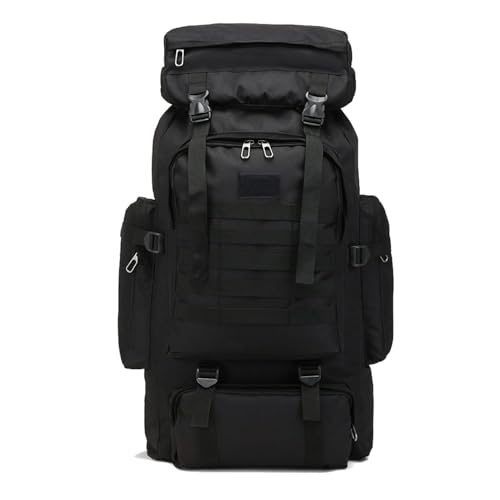
Pros
- Generous 70-liter capacity accommodates large volumes of camping gear and bulky clothing.
- Lightweight empty pack weight of 2.86 pounds avoids adding unnecessary base bulk.
- Exterior MOLLE grid provides modular flexibility for attaching accessory pouches and clip-on equipment.
- Resilient 600D Oxford fabric handles surface scrapes, brush contact, and damp ground conditions.
Cons
- Does not feature an internal frame or structured suspension system for heavy trail loads.
- Fabric is water-resistant rather than fully seam-taped or submersible in severe downpours.
- Lacks detailed torso-length adjustment features found on dedicated technical backpacking packs.
The Ziliyy 70L Hiking Backpack is a high-capacity, military-inspired outdoor rucksack designed for budget-conscious outdoor enthusiasts, casual campers, and travelers requiring substantial gear volume. Combining tactical styling with general outdoor utility, this pack is tailored for situations where carrying extra supplies, clothing, or campsite equipment takes priority over specialized mountaineering ergonomics.
With a listed capacity of 70 liters and an empty pack weight of roughly 2.86 pounds (1.3 kg), the pack delivers significant volume without excessive deadweight. Gear is accessed primarily through a top-loading opening secured with a drawstring closure, which makes stuffing bulky gear like sleeping bags or jackets straightforward. For organization, the design incorporates a dedicated laptop sleeve, a front zippered compartment for quickly needed accessories, and two side pockets suitable for water bottles or smaller essentials.
Construction centers on 600D Oxford fabric, a material selected for its water-resistant, tear-resistant, and scratch-resistant properties. The exterior features an integrated MOLLE attachment system, enabling hikers and campers to clip modular pouches, flashlights, or utility gear directly to the outside of the pack. Shoulder carry is handled by widened mesh shoulder straps lined with thickened sponge padding to enhance contact cushioning and encourage airflow across the shoulders.
Using and packing this rucksack is simple, as the drawstring opening allows flexible loading, while the MOLLE webbing facilitates customized external expansion. Cleaning and routine care are uncomplicated; wiping down the 600D fabric with a damp cloth and allowing it to air dry will keep the exterior in good condition between outings. The pack stores flat when empty, making it convenient to stow inside a closet, vehicle trunk, or travel duffel.
Buyers should remain aware of realistic functional boundaries before relying on this pack for rigorous backcountry routes. While the exterior fabric resists light moisture, the bag is not fully seam-sealed or waterproof in heavy downpours, requiring dry bags or an aftermarket rain cover for wet-weather security. Additionally, the specifications do not indicate an internal frame, load lifters, or an adjustable torso harness, meaning heavy loads will rest largely across the shoulders rather than transferring to the hips.
The Ziliyy 70L Rucksack represents a practical, value-oriented option for car campers, scout trips, gear haulers, and general travel where high packing volume and modular MOLLE storage are primary requirements. For moderate-weight outings and casual outdoor adventures, it offers a dependable combination of capacity, tough fabric, and accessible utility.
Offering a manufacturer-listed volume of 70 liters, this rucksack is configured to hold extensive outdoor supplies, bedding, and multi-day travel apparel. The primary packing chamber relies on a wide-mouth drawstring opening that accommodates oversized gear that might struggle to fit through restricted zip openings.
Internal and external organization includes a protective laptop sleeve within the main space, a front accessory pocket for smaller tools or personal items, and dual side storage pockets. The exterior MOLLE grid further expands utility by allowing compatible modular pouches and clip-on accessories to be secured directly to the pack body.
The pack is constructed from 600D Oxford fabric, offering documented resistance against scratches, surface tears, and light trail abrasion. This heavyweight textile helps shield contents from coarse ground contact and rugged campsite use.
While the manufacturer highlights water-resistant properties that repel light mist and brief splashes, the pack is not completely waterproof and does not feature taped seams. Hikers encountering steady or heavy rain should protect critical gear and electronics using internal waterproof dry sacks or an external rain cover.
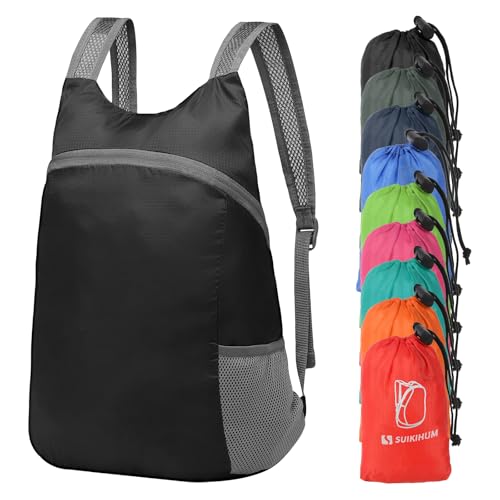
Pros
- Extremely lightweight at approximately 2.3 ounces, adding almost no bulk to your main pack or luggage.
- Folds down into a compact package measuring just 8.6 x 3.1 x 1.06 inches for effortless portability.
- 20-liter capacity easily holds trail layers, a compact umbrella, and daily personal items.
- Breathable mesh shoulder straps help promote airflow during warm-weather walks or cycling rides.
Cons
- Lacks an internal frame, hip belt, or sternum strap, making it unsuitable for carrying heavy loads.
- Water-repellent coating protects against dampness but is not seam-sealed or waterproof in heavy downpours.
- Minimalist shoulder straps do not feature thick foam padding for extended heavy-duty trekking.
The SUIKIHUM Ultra Lightweight Hiking Daypack is an ultralight, frameless packable backpack engineered for minimalist day hikers, travelers, and outdoor recreationists. Designed to serve as a convenient secondary bag, it excels when stowed inside a larger multi-day backpacking pack or travel suitcase and deployed for quick side trails, campsite errands, or urban exploring. If your priority is finding a functional pack that virtually disappears in your luggage when not in use, this bag aligns directly with those needs.
On the trail, the pack provides a stated 20-liter volume within an unfolded footprint of 11.79 inches long, 4.32 inches wide, and 16.11 inches high. This interior space easily accommodates casual day essentials such as a light windbreaker, trail snacks, a small umbrella, and basic personal items. Weighing approximately 2.3 ounces, the daypack introduces negligible base weight to your setup. However, because it is an entirely frameless pack without structural stays, optimal carrying comfort relies on careful packing of soft items against the back panel to prevent hard objects from poking through.
The daypack is constructed from lightweight polyester fabric that features a water-repellent surface coating alongside scratch-resistant and wear-resistant properties. The shoulder straps utilize a breathable mesh design paired with adjustable ladder-lock buckles, allowing users to alter strap tension on the go while encouraging airflow over the shoulders in warm or humid conditions. The zippered opening provides straightforward top access, making it simple to pack and retrieve items quickly at trailside rest stops.
Packing and managing the daypack between outings is exceptionally straightforward. It folds down into a pocket-sized package measuring just 8.6 x 3.1 x 1.06 inches, allowing it to slide into a jacket pocket, a glove compartment, or an internal compartment of a primary trekking backpack. Maintenance is equally simple, as the synthetic polyester material can be wiped clean with a damp cloth and quickly air-dried before folding back into its compact storage state.
Buyers should remain mindful of the realistic load and weather limitations inherent to an ultralight packable design. With no padded hip belt, sternum strap, or rigid back suspension, carrying dense, heavy gear can lead to shoulder strain over long miles. Furthermore, while the exterior fabric has a water-repellent treatment to shed light drizzle, it is not a seam-taped waterproof dry bag, so sensitive electronics and critical trail gear should always be secured inside waterproof bags during sustained rain.
For casual day hikers, minimalist travelers, and budget-focused outdoor enthusiasts, the SUIKIHUM 20L Packable Daypack offers practical utility at a fraction of the weight of traditional backpacks. It stands as a reliable, highly compact solution for short nature walks, travel excursions, and emergency extra storage whenever a full-featured technical backpack is unnecessary.
Portability is the core attribute of the SUIKIHUM 20L Daypack, folding down to a compact 8.6 x 3.1 x 1.06 inches when compressed. This small form factor allows thru-hikers and backpackers to carry it inside a primary multi-day pack as a dedicated summit pack or side-excursion bag without taking up valuable volume.
Weighing only 2.3 ounces, it adds virtually no noticeable weight to your carry-on luggage, vehicle glove box, or day-hiking kit. When unfolded to its full 11.79 x 4.32 x 16.11 inch dimensions, it quickly expands into a spacious 20-liter carrier ready for daily excursions, market runs, or quick trail outings.
The exterior of the SUIKIHUM Daypack is made from a woven polyester fabric selected for tear resistance and everyday trail durability. The surface is treated with a water-repellent finish designed to resist light splashes, damp trail conditions, and brief moisture exposure during outdoor activities.
Users should note that water-repellent fabric does not mean the backpack is entirely waterproof. Because the zippers and stitching are not seam-sealed, rainwater can penetrate during steady or heavy storms, making internal dry sacks advisable for electronics, spare clothing, or paper maps.
Strategic Load Architecture for Wilderness and Overnight Camping
Determining what to pack in a camping backpack requires organizing equipment into distinct vertical weight zones rather than casually stacking items inside the main compartment. A properly packed wilderness rucksack places the heaviest items close to the spine while positioning lighter, bulkier sleep gear at the base. This method stabilizes your natural center of gravity, which prevents backward pull and reduces physical strain on the lumbar spine. Outdoor travelers can move faster, maintain balance across slippery river crossings, and set up camp quickly when every piece of gear has an assigned location.
The Four Vertical Packing Zones for Balance and Stability
The bottom zone of your camping pack should consistently hold lightweight, high-volume items that you do not need until making camp at night. A compressible synthetic or down sleeping bag, a compact inflatable pillow, and lightweight sleeping base layers belong in this lowest compartment. Placing soft gear at the bottom cushions the pack base, maintains a stable cylindrical shape, and creates an elevated platform for heavier hardware above. Cinching bottom compression straps locks this lower foundation tightly against your lower back, preventing unnecessary shifting as you walk.
The core zone, positioned directly against the back panel between shoulder blade height and the lower lumbar region, accommodates the densest gear in your inventory. Heavy equipment such as liquid fuel canisters, compact camp stoves, dense food rations, and the folded body of your tent belong securely in this central area. Keeping heavy mass close to your natural center of gravity keeps the pack from levering backward and straining your trapezius muscles. Packing softer clothing items around these rigid items keeps hard edges from poking through the interior lining into your spine.
The top zone and perimeter pockets should house medium-weight gear, emergency items, and layers needed throughout the hiking day. A waterproof breathable rain jacket, an insulating fleece mid-layer, trail snacks, and personal hygiene supplies should sit directly beneath the top opening. Quick access to weather protection prevents hypothermia when sudden mountain storms arise without forcing you to dump your entire pack contents onto wet dirt. Exterior side stretch pockets provide convenient slots for rigid water bottles, while zippered top lids protect delicate electronics and sunglasses from crushing.
Core Shelter and Sleep System Essentials
A dependable wilderness shelter system protects against hypothermia, insect swarms, and aggressive mountain winds. Backcountry travelers should pack a weather-resistant tent body, a durable rainfly, lightweight aluminum tent stakes, and a protective ground footprint. Separating tent poles and sliding them vertically along internal side sleeves keeps rigid structural rods from puncturing internal dry sacks. Stowing damp tent flies in exterior stretch pockets or dedicated lower compartments prevents moisture from migrating into dry sleeping bags during long hikes.
Sleeping pads serve as vital thermal barriers against cold ground conduction rather than acting merely as soft cushions. Hikers should choose insulated inflatable air pads or closed-cell foam mats with appropriate thermal resistance ratings for their target seasonal temperatures. Inflatable pads pack down into compact cylindrical rolls that fit neatly alongside sleeping bags in the bottom cavity. Closed-cell foam pads resist punctures from sharp rocks, but their bulky profile often requires securing them to external bottom webbing buckles or exterior compression lash points.
High-capacity rucksacks featuring 70L to 100L volumes allow plenty of room for oversized four-season sleep systems and cold-weather clothing bundles. Tactical rucksacks built from heavy Oxford fabric often feature wide drawstring top collars that expand upward to accommodate thick winter sleeping bags. Utilizing internal waterproof dry compression sacks squeezes trapped air out of lofty down fill, dramatically reducing occupied pack volume. This space-saving technique ensures that heavy winter insulation does not monopolize valuable room needed for mandatory camp kitchen tools and emergency gear.
Hydration Reservoirs, Bottle Storage, and Trail Filtration
Maintaining proper hydration requires carrying reliable water storage along with proven wilderness filtration methods. Many modern hiking backpacks incorporate internal bladder sleeves equipped with top hanging straps and dedicated hose routing ports. Placing a full two-liter or three-liter hydration bladder directly against the back panel positions significant liquid weight directly over your hips. External hose routing allows continuous sips along uphill climbs without forcing you to unbuckle your chest harness or stop your momentum.
Backcountry explorers should always pack secondary wide-mouth water bottles in durable exterior mesh or nylon side pockets. Rigid plastic or vacuum-insulated bottles provide dependable backups if a flexible hydration bladder suffers an accidental seam puncture on sharp granite. Side pockets must feature sufficient depth and elastic tension to grip tall bottles securely during steep descents and scrambles. Securing bottles with side compression webbing prevents them from tumbling loose when you bend over to adjust boot laces or cross fallen logs.
Carrying backcountry water purification tools protects against severe biological waterborne illnesses during extended trail travel. Hikers should pack compact hollow-fiber membrane filters, chemical purification tablets, or battery-powered ultraviolet sterilizers in an easily accessible top pocket. Squeeze filters screw directly onto flexible water pouches, allowing fast water replenishment at clear alpine streams. Chemical purification tablets take up negligible space in emergency kits and provide critical redundancy when freezing temperatures threaten to damage hollow-fiber filter elements.
Wilderness Kitchen Setup and Nutrition Management
Camp cooking gear must remain lightweight, compact, and shielded from accidental impacts inside the central pack cavity. A complete cookware setup typically includes a small canister stove, a lightweight titanium cook pot, and clean fuel canisters. Storing fuel containers upright in the core zone minimizes the risk of accidental valve leakage onto clothing or sleeping gear. Nesting the stove burner and folded matches directly inside the cook pot protects fragile burner assemblies from bending under heavy pack loads.
Caloric planning requires packing energy-dense dehydrated meals, trail mix, nut butter packets, and electrolyte powders. Many hikers preparing for warm day excursions or vehicle-supported wilderness camping pack perishable food using specialized equipment like backpack cooler compartments to keep supplies fresh before cooking. For extended backcountry treks, packing all fragrant food items, scented lip balms, and toiletries inside an approved rigid bear-resistant canister is essential. Placing cylindrical bear canisters vertically in the core pack zone against your spine balances their substantial density comfortably.
Waste disposal management is a mandatory part of every wilderness kitchen checklist to follow strict outdoor ethics. Campers must carry dedicated heavy-duty resealable trash bags to pack out every piece of packaging, food scrap, and used wipe. Stashing trash bags inside an exterior pocket or dedicated wet storage compartment prevents food odors and stains from contaminating clean camp clothing. Keeping your cooking and cleanup gear organized in a single lightweight stuff sack streamlines meal prep once you arrive tired at camp.
Trail Clothing Systems and Layering Strategy
Wearing and packing proper outdoor apparel follows a three-part layering system designed to manage body heat and moisture. A moisture-wicking synthetic or merino wool base layer keeps skin dry during strenuous uphill ascents. The insulating mid-layer, such as a high-loft fleece jacket or packable down vest, traps warm air around your torso during rest breaks. Packing an extra set of dry base layers inside a sealed dry bag ensures you have warm clothing to change into after hiking in relentless rain.
Protective outer shells must guard against cutting mountain winds, driving sleet, and torrential rainstorms. A breathable waterproof jacket and packable rain pants should rest at the very top of your main compartment or in an external stretch stash pocket. Rapidly pulling on an outer shell before moisture soaks through your mid-layer prevents severe hypothermia during high-altitude elevation gains. Sturdy extra wool hiking socks packed in protective pouches provide essential blister prevention and foot warmth inside cold sleeping bags.
Camp comfort clothing should remain minimal to prevent unnecessary pack weight from slowing your trail progress. Hikers should avoid packing heavy cotton sweatshirts or bulky denim pants that absorb ambient humidity and take days to dry in the woods. Selecting synthetic trail apparel ensures rapid drying times and lightweight compressibility inside compact stuff sacks. Rotating between one dedicated hiking outfit and one clean, dry sleeping outfit keeps your total clothing payload under control on multi-day journeys.
Navigation, First Aid, and Emergency Essentials
Safety gear must remain readily accessible at all times rather than buried underneath heavy camp cookware or sleeping pads. The top lid pocket, often called the pack brain, should house a physical topographic map, a magnetic compass, and a fully charged satellite messenger. Relying solely on smartphone GPS navigation creates extreme vulnerability if cold weather drains lithium batteries or damp conditions damage sensitive touchscreen glass. Keeping printed maps inside a clear waterproof sleeve preserves critical trail route data through torrential downpours.
A customized wilderness first aid kit provides crucial medical treatment for trail blisters, sprains, lacerations, and insect bites. Essential medical supplies include sterile gauze pads, adhesive bandages, antiseptic wipes, medical tape, trauma shears, and blister-prevention moleskin. Campers should also pack personal prescription medications and broad-spectrum antihistamines in clearly labeled, waterproof containers. Placing your first aid kit in a distinct red pouch inside an exterior zippered pocket allows companions to locate medical supplies quickly during emergencies.
Emergency lighting and signaling tools must accompany every hiking party regardless of intended trip duration. A reliable LED headlamp with spare rechargeable batteries or fresh alkaline cells ensures safe trail navigation if unexpected delays force night hiking. Backpack sternum straps equipped with integrated safety whistles provide an immediate, effortless audible signal to locate separated companions across windy alpine valleys. Compact fire starters, stormproof matches, and emergency space blankets take up negligible space while providing life-saving warmth during sudden trail strandings.
Matching Pack Capacity to Trip Duration
Backpack volume selection dictates how much gear you can safely transport without destabilizing your walking posture. Compact daypacks ranging from 15L to 22L excel for ultralight day hikes, summit scrambles, or quick excursions from a base camp. These lightweight packs easily fold down into tiny storage pouches to stow inside larger luggage or vehicle glove compartments. When tackling single-day outings, outdoor enthusiasts can review budget trail backpacks to identify practical, cost-effective daypack options that carry hydration and trail snacks comfortably.
Mid-capacity packs between 35L and 45L hit the sweet spot for minimalist overnight outings and gear-intensive weekend hikes. These packs provide sufficient interior volume for a compact one-person tent, a down sleeping quilt, a mini stove, and two days of food. Packs in this size bracket often feature trekking pole attachment loops, external wet pockets, and ergonomic padded shoulder harnesses that handle moderate weight efficiently. Packing discipline is crucial with 40L bags, as bringing unnecessary luxury items will quickly cause main zipper seams to bulge.
Expedition-scale rucksacks spanning 70L to 100L provide massive storage volume for multi-day wilderness adventures and technical outdoor pursuits. These high-capacity bags feature rugged Oxford fabric construction, heavy-duty drawstring top collars, and comprehensive external MOLLE webbing systems. External webbing lets campers lash bulky sleeping pads, camp axes, and utility pouches directly to the pack exterior without consuming internal space. Choosing an expandable rucksack gives outdoor travelers flexibility to adjust carrying volume according to changing seasonal gear requirements.
Preventing Seam Stress, Zipper Separation, and Weather Intrusion
Overstuffing a backpack strains high-tension seams and risks sudden zipper coil blowouts far from the trailhead. Hikers should never force slider closures over tightly packed, bulging gear, as lateral tension separates delicate zipper teeth. Distributing soft gear evenly along interior pack walls eliminates localized pressure points against exterior zippers. Utilizing exterior compression straps to draw the pack body inward takes stress off zipper tracks and keeps internal gear locked firmly in position.
Water resistance varies significantly across different pack fabrics and construction techniques used in modern outdoor manufacturing. Durable 600D and 900D Oxford fabrics, as well as 210D ripstop nylon, provide excellent resistance against abrasion and incidental mist. However, heavy prolonged downpours will eventually penetrate unsealed needle stitching and exposed zipper coils. Deploying a dedicated waterproof rain cover with a reflective logo shields the entire pack exterior, keeping critical dry insulation completely safe from moisture ingress.
Proper pack maintenance preserves internal polyurethane water-repellent coatings and ensures hardware operates smoothly season after season. Campers should clean dirty backpacks using lukewarm water, mild non-detergent technical soap, and a soft nylon bristle brush. Machine washing or high-heat tumble drying can strip protective interior waterproof films and melt synthetic foam harness padding. Air drying packs thoroughly in a shaded, well-ventilated space prevents mildew formation and keeps zipper tracks free from dirt and grit.
Harness Fine-Tuning and Center-of-Gravity Verification
Achieving carrying comfort requires systematically adjusting your backpack harness system once all gear is loaded. Before lifting your loaded pack, loosen all shoulder straps, sternum sliders, load-lifter straps, and hip belt webbing completely. Hoist the pack onto your back, fasten the padded hip belt directly over your iliac crest bones, and cinch the belt snug. Anchoring the waist belt transfers approximately eighty percent of total pack weight off your vulnerable shoulders and onto your strong pelvic structure.
Once the hip belt is anchored, gently pull the shoulder strap adjustment tabs downward until the padded harness hugs your torso smoothly. Avoid over-tightening shoulder straps, as excessive downward pull forces unnecessary weight back onto your collarbones and spine. Adjust the chest sternum strap so it rests approximately one inch below your collarbones, tensioning it just enough to keep straps from slipping outward. Load-lifter straps running from the top of the pack frame to your shoulders should be tightened to a forty-five-degree angle to bring pack weight inward.
Conducting a stability test at home before heading out on the trail confirms that your pack balance is properly centered. Walk around a room, step onto stairs, and bend forward slightly to observe whether the pack sways awkwardly or pulls you backward. If the bag leans back or shifts laterally, reopen the main compartment and reposition heavy cooking gear and water closer to your spinal column. Taking time to dial in weight distribution transforms heavy gear loads into balanced, manageable trail companions on challenging backcountry journeys.
Preparing your camping backpack with intentional zone organization, durable weatherproofing layers, and balanced weight distribution ensures safe, comfortable wilderness travel. Matching gear volume to your backpack liter capacity prevents seam blowouts and eliminates painful pressure points on the trail. Taking the time to verify harness adjustments before departure allows you to focus fully on the outdoor scenery ahead.







Write Your Review
No reviews yet. Be the first to share your experience!