


Carrying heavy tech gear, hydration bottles, and daily work essentials across a city transit system or university campus demands rugged construction and ergonomic weight distribution. For decades, students and daily commuters have trusted classic silhouettes such as the Borealis, Recon, and Jester for dependable daily utility and long-lasting resilience. Many buyers evaluating these popular carriers wonder where are north face backpacks manufactured and how regional factory assembly impacts material durability, seam strength, and overall gear quality. Understanding where and how these packs are produced provides valuable perspective on supply chain oversight, component authenticity, and sustainable fabric initiatives before purchasing a long-term daily bag.
Although The North Face maintains its corporate headquarters, product design studios, and materials testing facilities in the United States under parent company VF Corporation, physical pack assembly takes place overseas. Contracted textile factories across Southeast Asia and East Asia, primarily in Vietnam, Indonesia, and Cambodia, manufacture both lifestyle daypacks and technical outdoor bags. Whether you are carrying daily office essentials or comparing commuter bags against larger structured load-bearing backpacks, factory origin offers critical context on hardware longevity and harness construction. Reviewing global manufacturing hubs also helps owners decipher interior product labels and verify genuine design details across modern daypack collections.

Pros
- Substantial 30-liter volume provides flexible packing space for day hikes, campus use, and travel.
- American Chiropractic Association-certified FlexVent suspension delivers supportive back cushioning and contoured shoulder straps.
- Recycled nylon ripstop fabric with a non-PFC DWR coating offers practical weather resistance against light drizzle.
- Thoughtful pocket layout includes dedicated laptop protection, dual bottle sleeves, and an external stretch mesh pouch.
Cons
- One-size frame lacks adjustable torso sizing for fine-tuned personal torso fitting.
- At 2 pounds 9 ounces, it carries more baseline pack weight than stripped-down ultralight daypacks.
- Water-repellent fabric coating is not fully waterproof and requires an additional rain cover during heavy downpours.
The North Face Recon Everyday Laptop Backpack is a multi-purpose 30-liter daypack tailored for hikers, students, and commuters who need a single bag that transitions smoothly from daily travel to trailheads. Measuring 11.6 by 7.5 by 19.3 inches with an average weight of 2 pounds 9 ounces, it bridges the space between a tech-focused commuter bag and an active day hiking pack. This makes it an attractive choice for day hikers, travelers, and outdoor enthusiasts seeking reliable organization without investing in separate bags for work and recreation.
Carrying a 30-liter capacity allows sufficient interior volume to pack extra apparel, lunch, trail safety equipment, and personal essentials for full-day outings. The pack is built around The North Face's FlexVent suspension system, which incorporates articulated shoulder straps, a rounded back panel, soft chemise fabric, and targeted stitch lines. Certified by the American Chiropractic Association, this suspension framework is designed to distribute weight comfortably across the shoulders and back during campus walks or moderate nature trails.
Material construction centers on a resilient recycled nylon ripstop fabric finished with a non-PFC Durable Water Repellent (DWR) treatment. This coating allows the pack to repel light rain, road spray, and damp trail moisture without soaking through immediately. For external utility, the Recon features daisy-chain attachment loops for clipping accessory gear, twin mesh side pockets designed for water bottles, and a prominent front mesh stash pouch that makes it easy to stow or grab a lightweight windbreaker.
Interior organization stands out as one of the pack's primary design strengths. A dedicated laptop sleeve measuring 18.9 by 11 inches provides elevated protection for computers up to 16 inches, isolating hardware from bottom impacts. In addition, an easily accessible exterior pocket lined with soft fleece guards sunglasses, phones, and small items against abrasion. Routine care is straightforward, requiring gentle spot cleaning with mild soap and ambient air drying to keep the ripstop weave and surface treatment in good condition.
While the Recon is an exceptionally versatile hybrid pack, it has realistic boundaries compared to specialized alpine packs. Because it uses a fixed one-size harness, it does not provide an adjustable torso ladder or a padded load-bearing hip belt for handling heavy backpacking loads. Furthermore, while the non-PFC DWR coating sheds light moisture, the pack lacks taped seams and is not completely waterproof, meaning sensitive electronics will need waterproof dry bags or an external pack cover in sustained rainfall.
For day hikers, commuters, and travelers who want a reliable daypack that pairs protective tech storage with legitimate trail functionality, The North Face Recon offers excellent overall value. Its durable ripstop build, chiropractor-certified suspension support, and intuitive exterior pockets provide everyday comfort across varied terrain. If your schedule demands a seamless blend of workday utility and weekend trail adventures, this classic pack remains a dependable choice.
The North Face Recon features a total volume of 30 liters distributed across dedicated compartments and quick-access exterior storage. Its large main compartment handles bulkier trail gear such as fleece layers, rain jackets, lunches, and small gear pouches. Inside, a dedicated laptop compartment measuring 18.9 by 11 inches holds up to a 16-inch laptop to keep work devices isolated and secure.
Exterior organization includes a spacious front mesh pocket suitable for damp layers or quick-grab items, along with daisy-chain webbing for clipping small carabiners. A top external fleece-lined pocket protects sensitive items like sunglasses and smartphones from scratches, while dual stretch-mesh side pockets keep hydration bottles securely in place while on the move.
The Recon utilizes the updated FlexVent suspension system, which has been officially certified by the American Chiropractic Association for ergonomic design. The harness incorporates custom-molded articulated shoulder straps and a rounded back panel lined with soft-touch chemise fabric to deliver smooth, contoured contact against the body.
Padded stitch lines help maintain back-panel structure under load, preventing hard gear items from poking through. Because the pack is built in a fixed one-size configuration, torso length is non-adjustable, making it best suited for adult users whose upper body dimensions align comfortably with standard daypack sizing.
Constructed from recycled nylon ripstop fabric, the Recon offers dependable resistance to everyday scuffs, light trail brush, and general abrasion. The exterior surface is treated with a non-PFC Durable Water Repellent (DWR) finish that encourages water to bead up and roll away in light mist or drizzle.
The pack is weather-resistant rather than fully waterproof, meaning prolonged exposure to heavy downpours can eventually saturate the fabric and seams. To preserve the water-repellent coating, users should clean the pack using cold water and mild soap, avoiding harsh machine washing or machine drying.

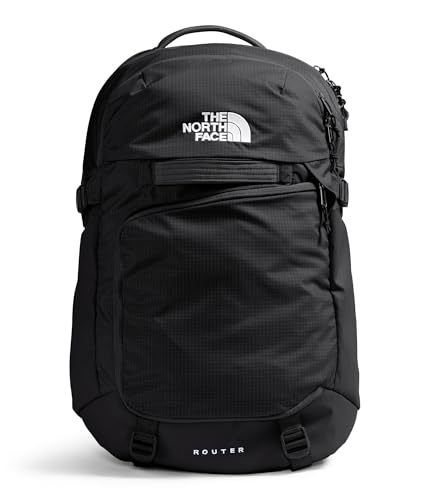
Pros
- High 40-liter volume handles bulky gear, extra clothing, and travel necessities with ease
- American Chiropractic Association certified FlexVent suspension provides supportive back padding and ergonomic straps
- Accommodates larger tech devices with a dedicated 17-inch laptop compartment and padded tablet sleeve
- Includes practical trail and travel features such as side bottle pockets, a sternum whistle buckle, and 360-degree reflectivity
Cons
- Listed average weight of 2 lbs 15 oz is heavier than specialized ultralight hiking daypacks
- Non-padded webbing waist belt helps with pack sway but does not provide heavy load-bearing hip transfer
- Water-repellent finish protects against light moisture but the pack is not seam-sealed or fully waterproof
The North Face Router is a high-capacity 40-liter lifestyle daypack engineered for commuters, weekend travelers, and casual day hikers who require versatile storage and structured organization. Built with exterior dimensions of 12.5 by 9 by 21 inches and an average weight of 2 pounds 15 ounces, this pack comfortably bridges the gap between daily campus or office duty and outdoor excursions. It is designed for adults and teens, with the manufacturer specifying that it is not intended for children age 12 and under.
For outdoor and trail-adjacent use, the 40-liter volume provides generous room for extra insulating layers, packed meals, and day-hiking supplies. While it is classified as a lifestyle daypack rather than a technical mountain pack, it incorporates functional trail elements including exterior water bottle pockets to keep hydration within easy reach. The sternum strap assists with load stability and includes an integrated whistle buckle for safety, while the removable waist belt helps steady the bag against body sway during active movement.
Comfort and structural support rely on the updated FlexVent suspension system, which holds an official endorsement from the American Chiropractic Association. The harness design incorporates articulated shoulder straps, tailored stitch lines, a rounded back panel, and soft-touch chemise fabric designed to contour naturally to the upper body. The outer shell is treated with a non-PFC durable water-repellent finish, offering surface protection against light rain showers and road spray without using persistent chemical treatments.
Organization is a defining asset of the Router, offering segmented spaces for electronics, documents, and bulky items. A dedicated rear laptop compartment features a 14.75 by 12-inch sleeve capable of holding laptops up to 17 inches. The front compartment includes organized secure-zip pockets and a padded tablet sleeve, while an external fleece-lined stash pocket shields sensitive items like sunglasses from scratches. The large primary compartment provides unrestricted space for packing jackets, trail shoes, or travel cubes.
Potential buyers should keep practical design limitations in mind before heading into backcountry terrain. The one-size harness does not offer an adjustable torso length, and the removable waist belt is constructed from unpadded webbing, meaning it will not transfer heavy pack weight onto the hips like an internal-frame backpacking harness. Additionally, while the exterior finish repels light precipitation, the seams are not waterproofed and an integrated rain cover is not included for sustained rainstorms.
Overall, The North Face Router is a compelling choice for travelers, road-trippers, and daily hikers who want a robust, well-organized 40-liter pack that transitions seamlessly between the office and the trailhead. Users prioritizing chiropractor-backed suspension, dedicated tech safety, and extensive pocketing will find it provides dependable utility for everyday carry and casual outdoor excursions.
The North Face Router utilizes an updated FlexVent suspension system certified by the American Chiropractic Association. It combines articulated shoulder straps with a rounded back panel, strategic stitch lines, and soft-touch chemise fabric to encourage balanced weight distribution across the shoulders and upper back.
Supplied in a single standard size, the pack relies on adjustable shoulder webbing and a sliding sternum strap to fine-tune upper-body positioning. The removable webbing waist belt offers additional stabilization during active movement, though it is not designed to transfer load weight to the pelvis like a padded trekking hip belt.
Offering a generous 40-liter volume, the Router provides abundant storage for multi-purpose use. The interior layout separates bulky gear from sensitive electronics through a deep main compartment and a front organizational compartment featuring a padded tablet sleeve and internal secure-zip pockets.
Dedicated tech storage includes a 14.75 by 12-inch laptop sleeve designed to accommodate computers up to 17 inches. On the exterior, durable side pockets hold standard water bottles, while a fleece-lined top pocket keeps delicate items like sunglasses and phones safe from abrasion.

Pros
- FlexVent suspension combines injection-molded straps with a padded mesh back panel for supportive carry
- Dual exterior stretch pockets accommodate standard 1-liter water bottles
- Self-standing base keeps the pack upright when setting it down at trailheads or desks
- Practical 27-liter capacity with dedicated padded compartments for both a laptop and a tablet
Cons
- Lacks a padded hip belt, which limits load transfer on longer, heavier trail outings
- Designed primarily as a commuter daypack without specialized trail features like trekking-pole attachments or a hydration bladder port
- Fixed one-size harness cannot be adjusted for specific torso lengths
The North Face Vault is a versatile 27-liter everyday backpack designed to bridge daily commuting, campus travel, and casual frontcountry day hiking. Built with a self-standing base and a streamlined profile, this pack caters to users who need a dependable bag for weekday work or school that can comfortably transition to weekend nature walks, park trails, and travel. Its 1-pound 11-ounce average weight keeps it manageable for all-day carry without adding unnecessary bulk.
On light day outings, the 27-liter capacity offers plenty of room for an extra insulating layer, a packable windbreaker, trail snacks, and emergency gear. Load management relies on the proprietary FlexVent suspension system, which holds an endorsement from the American Chiropractic Association. The suspension incorporates flexible injection-molded shoulder straps, a padded mesh back panel, and a breathable lumbar panel intended to encourage ventilation. An adjustable sternum strap helps stabilize the straps across the chest when walking at a steady pace.
Construction details emphasize daily durability and basic weather defense, featuring a protective water-repellent finish that helps resist light moisture and mist. For hydration, the pack includes two exterior side pockets sized to fit most 1-liter water bottles, ensuring fluids remain readily accessible without needing to open the main body. Inside, a padded 11.5 by 11-inch laptop sleeve and an 11.8 by 6.3-inch tablet sleeve shield electronics, while the front organizer compartment uses zippered pockets and a key hook to prevent smaller items from shifting.
Everyday handling is made easier by the self-standing base design, which allows the pack to stay upright when set on a trailhead bench, picnic table, or floor. Top webbing grab handles provide a quick lifting point when moving in and out of vehicles. To keep the pack in good condition, surface spot cleaning with mild soap and cold water is recommended, followed by air drying away from direct heat sources to preserve the water-repellent finish and foam padding.
While capable for light trails and travel, the Vault has clear boundaries when compared to dedicated technical hiking packs. It does not feature a hip belt, meaning all carried weight rests entirely on the shoulders and upper back. Additionally, the specifications do not indicate an internal hydration bladder port or external trekking pole attachments, and the fixed one-size harness offers no torso-length adjustment for hikers with particularly short or tall back measurements.
For hikers and commuters seeking an affordable, multi-purpose 27-liter daypack from a reputable brand, The North Face Vault delivers solid everyday utility, proven ergonomic straps, and generous bottle storage. It is best suited for casual day hikers, students, and travelers who prioritize simple organization and comfort over technical mountain features.
The North Face Vault features the FlexVent suspension system, endorsed by the American Chiropractic Association. This setup includes a flexible yoke built with custom injection-molded shoulder straps, a padded mesh back panel, and a breathable lumbar panel designed to support airflow along the spine.
Because the pack comes in a single one-size fit without an adjustable torso frame, fit relies primarily on tightening the shoulder straps and fastening the integrated sternum strap to keep the load centered against the upper back. The pack does not include a hip belt, so users should keep pack weight moderate to avoid excessive shoulder fatigue.
With a total volume of 27 liters and dimensions measuring 11 by 8.5 by 18 inches, the Vault accommodates daily work essentials, extra layers, and trail nutrition. The main compartment contains a dedicated padded laptop sleeve measuring 11.5 by 11 inches, alongside a separate tablet pocket measuring 11.8 by 6.3 inches.
For smaller gear, the front compartment provides organized storage with dedicated zippered pockets and an integrated key clip. On the outside, two dedicated bottle pockets easily fit standard 1-liter water bottles for quick, on-the-move hydration.

Pros
- Ergonomic FlexVent suspension certified by the American Chiropractic Association for back and shoulder comfort.
- Versatile 28-liter volume with internal electronics sleeves and an external bungee compression system.
- Removable webbing waist belt allows users to switch easily between casual use and trail stability.
- Sternum strap includes an integrated emergency whistle buckle for added safety on the trail.
Cons
- Webbing waist belt provides lateral stability but lacks padded load-bearing hip fins.
- No integrated rain cover is included for wet-weather downpours.
- At an average weight of 2 pounds 5 ounces, it is heavier than minimalist, frameless daypacks.
The North Face Borealis is a 28-liter crossover daypack designed to bridge the gap between daily routines and outdoor day hiking. With its structured body, multiple compartments, and rugged hardware, it is tailored for hikers who want a single, reliable backpack for weekend trails, campus paths, and travel carry-on needs. Sized as a One Size fit with dimensions of 12 by 6.5 by 19.5 inches, this pack suits adult day hikers and commuters seeking organized gear capacity without stepping into bulky multi-day trekking packs.
On the trail, the Borealis manages gear through distinct storage zones. The 28-liter volume provides ample room for extra clothing layers, emergency essentials, food, and personal supplies. Its exterior front bungee cord system functions both as an active compression system to draw pack volume closer to your body and as a quick-stash location for a fleece or windbreaker. Two external side pockets easily handle standard water bottles, keeping hydration accessible without forcing you to dig inside the main compartment.
Harness comfort relies on The North Face FlexVent suspension system, certified by the American Chiropractic Association. The design incorporates articulated shoulder straps, a rounded back panel with engineered stitch lines, and soft chemise fabric over contact points. Together, these features provide stable upper-body support during active movement. A sternum strap with an integrated safety whistle buckle keeps the shoulder straps centered across the chest, while a removable webbing waist belt limits side-to-side bag sway on steeper trails.
Packing and gear access remain clear and efficient across both trail and city environments. Inside, the pack houses a dedicated 13.75 by 11.25 inch laptop compartment alongside an extra padded tablet sleeve, protecting sensitive screens from impacts. The front compartment features zippered organizers for small trail tools, keys, and snacks, while an external fleece-lined top pocket shields sunglasses and phones from abrasions. Adjusting fit on the go requires only quick pulls on the shoulder-strap webbing and sternum rail.
Buyers should note several realistic limitations based on the design. Because this is a crossover daypack, the waist belt is made of non-padded webbing, meaning load transfer to the hips is limited compared to technical hiking packs with structured hip belts. In addition, the Borealis does not include a rain cover, and its average weight of 2 pounds 5 ounces places it above ultralight trail daypacks. The pack is also explicitly designated as not intended for children 12 and under.
For hikers who prioritize versatile organization, solid back support, and multi-use functionality, The North Face Borealis represents a practical investment. If you regularly move between school or work during the week and community trails on the weekend, its ergonomic harness, sturdy construction, and smart pocket architecture make it a dependable companion.
The North Face Borealis features the FlexVent suspension system, certified by the American Chiropractic Association for its supportive back design. The harness system includes articulated shoulder straps engineered to contour naturally around the neck and chest, paired with a rounded back panel that conforms to the spinal curve. Soft chemise fabric over the contact surfaces provides all-day comfort against your clothes during long walks.
Load management is further supported by an adjustable sternum strap and a removable webbing waist belt. The sternum strap prevents the shoulder harness from slipping outward during dynamic movement and features an integrated safety whistle buckle. The removable waist belt helps anchor the pack against the lower back during ascents, and it can be detached whenever a cleaner profile is desired for casual travel.
With a volume of 28 liters and dimensions of 12 x 6.5 x 19.5 inches, the Borealis offers structured capacity suited for day hiking kits, work gear, or travel essentials. The main compartment holds bulky items like jackets and food containers, while dedicated internal padding secures laptops up to 13.75 x 11.25 inches and tablets in separate protective sleeves.
External gear management includes two multi-use side pockets built for water bottles and trail accessories, an external fleece-lined pocket for fragile items like sunglasses, and a front organizer compartment with secure zip pockets. The front exterior bungee cord system adds external compression to steady shifting gear while doubling as a quick-access lash zone for light jackets or extra apparel.

Global Manufacturing Operations, Sourcing Networks, and Build Standards for North Face Packs
The North Face backpacks are primarily manufactured across Southeast Asia and East Asia, with Vietnam operating as the central manufacturing hub for technical and everyday daypack lines. Production facilities located in Indonesia, Cambodia, Bangladesh, and China also produce significant volumes of lifestyle and campus bags. Parent company VF Corporation oversees product engineering, design standards, and corporate compliance guidelines from its headquarters in Denver, Colorado. Overseas manufacturing partners handle the physical textile cutting, automated foam molding, and structural sewing required for signature features like the chiropractor-endorsed FlexVent suspension system.
Primary Manufacturing Hubs in Southeast Asia and East Asia
Vietnam serves as the primary manufacturing foundation for The North Face backpack collection. Specialized textile mills and technical assembly facilities in both northern and southern industrial zones house advanced machinery built specifically for multi-panel backpack construction. These factories excel at bonding composite panels, assembling articulated shoulder straps, and stitching tough ripstop textiles under strict dimensional tolerances. For popular everyday packs ranging from twenty-two to forty liters, Vietnamese manufacturing lines deliver the consistent seam density necessary to support heavy textbook and computer loads.
Indonesia and Cambodia provide vital assembly capacity for high-volume commuter models such as the Vault and Jester. Production plants in these regions specialize in efficient, high-volume construction utilizing recycled polyester fabrics and automated bar-tack reinforcement at key load points. Facilities in Bangladesh and China contribute specialized hardware components, including molded buckles, cord locks, and precision zipper sliders. Sourcing across multiple Asian manufacturing centers allows VF Corporation to balance production schedules while matching specific factory capabilities to the technical demands of each pack design.
None of the standard consumer daypacks, campus bags, or laptop carriers from The North Face are currently manufactured within the United States. While early mountaineering equipment and vintage gear from the nineteen-sixties and seventies was assembled in California, production moved overseas decades ago to scale with international consumer demand. Today, domestic operations focus entirely on design innovation, environmental sustainability research, material development, and global logistics coordination. Everyday buyers can readily verify this production footprint by checking the permanent origin label sewn into the interior seams of any authentic pack.
Supply Chain Oversight and VF Corporation Factory Standards
VF Corporation enforces a centralized global supply chain compliance program that governs all contracted manufacturing facilities. Independent contract factories must strictly adhere to established workplace safety standards, fair compensation policies, and environmental management rules to maintain active production status. Third-party auditors conduct regular unannounced factory assessments to verify air quality, chemical handling protocols, working hours, and fair labor practices. This structured corporate oversight helps ensure that overseas assembly maintains ethical manufacturing baselines and worker safety standards across all regional hubs.
Supply chain transparency has expanded significantly as consumers increasingly seek accountability regarding the origin of their daily gear. VF Corporation routinely publishes detailed factory disclosures that list tier-one supplier locations across Vietnam, Indonesia, and Cambodia. These public disclosures confirm that contracted partners meet rigorous international environmental standards, including responsible industrial wastewater treatment and safe chemical disposal. For commuters and outdoor enthusiasts who prioritize environmental ethics alongside gear performance, such transparency offers clear visibility into how everyday packs are constructed.
Corporate quality control representatives collaborate directly with factory engineers to monitor material consistency and defect rates during mass production runs. Standardized assembly manuals dictate exact seam allowances, thread tensile strengths, and reinforcement requirements for every handle and strap. If a batch of recycled nylon or molded foam fails tensile tolerances, factory lines are adjusted before finished products clear customs. This multi-layered oversight bridges the physical gap between Colorado design studios and overseas sewing floors.
How Assembly Locations Integrate FlexVent Ergonomics and Technical Textiles
Advanced ergonomic features like the American Chiropractic Association-certified FlexVent suspension system require specialized manufacturing processes that standard garment factories cannot execute. The FlexVent system utilizes custom injection-molded shoulder straps, a flexible contoured yoke, and a padded mesh back panel with engineered air channels. Overseas facilities in Vietnam have invested heavily in automated thermal compression molding and precision die-cutting equipment to shape these dense foam panels reliably. Without this dedicated tooling, achieving consistent spinal support and breathable lumbar airflow across millions of units would be virtually impossible.
Fabric preparation forms another vital phase of the overseas manufacturing pipeline. Packs like the Recon and Router incorporate rugged recycled nylon ripstop treated with non-PFC durable water repellent finishes. Specialized coating mills apply these water-shedding chemical layers before the fabric is cut into individual panels, ensuring uniform moisture resistance across high-exposure zones. Technicians then stitch these coated textiles using heavy-gauge synthetic thread, reinforcing pocket edges and zipper perimeters against lateral expansion pressure.
Hardware integration demands equal mechanical precision during factory assembly. Industrial machines press and stitch heavy-duty zippers, Duraflex buckles, and elasticized side bottle mesh into the pack chassis with multi-point bar-tack stitches. For outdoor enthusiasts who alternate between urban transit and trail adventures, this construction mirrors the technical durability seen in specialized outdoor carriers, including specialized backpack cooler designs and technical daypacks. Ensuring that exterior shock cords, sternum straps, and whistle buckles are anchored firmly prevents field failures when hauling heavy loads of daily cargo.
Decoding Interior Country of Origin Labels and Production Codes
Every authentic backpack from The North Face features a cluster of informational fabric tags sewn into an interior seam. In modern packs like the Borealis, Vault, or Router, this tag bundle is typically situated inside the main packing cavity, tucked along a side seam or stitched near the laptop sleeve opening. Scanning through this bundle reveals the mandatory country of origin declaration, printed in clear block lettering such as “Made in Vietnam” or “Fabrique au Vietnam.” If a pack lacks this permanent legal tag entirely, it represents an immediate warning sign regarding authenticity.
Beneath the origin declaration, buyers will discover additional white tags that contain crucial manufacturing codes and season identifiers. A distinct style code, typically formatted as a six-character alphanumeric sequence starting with letters like “NF0A,” identifies the exact model and design revision. A separate production date code indicates the specific manufacturing season and year, such as “F23” for Fall 2023 or “S24” for Spring 2024. These codes allow customer service agents to cross-reference production batches and confirm warranty coverage when evaluating seam or zipper issues.
Modern tags also feature comprehensive fabric composition breakdowns and standardized international care symbols. You will typically see declarations highlighting one hundred percent recycled nylon, polyester linings, and specific plastic hardware grades. Care instructions explicitly forbid washing machine agitation and commercial tumble drying to protect technical foam padding and internal coatings. Reviewing these interior labels ensures that owners follow correct maintenance procedures while confirming that the pack originated from a licensed assembly partner.
Verifying Authenticity Through Hardware, Stitching, and Materials
Counterfeit daypacks represent a persistent problem in secondary online marketplaces and unauthorized discount outlets. Because genuine production occurs in advanced overseas facilities, authentic packs display meticulous stitching standards that illicit copycats rarely duplicate. Inspecting the embroidered brand logo on the front panel provides an immediate quality check. Authentic embroidery features crisp, dense thread coverage with clean separation between the lettering and the three curved dome segments, avoiding sloppy connecting threads or misshapen arches.
Hardware construction offers another decisive test of authenticity when evaluating a suspected counterfeit. Authentic models employ branded, smooth-gliding zippers, frequently stamped with official manufacturer markings such as YKK on the metal sliders. The plastic hardware, including sternum strap buckles, strap adjusters, and key clips, uses sturdy, impact-resistant acetal resin rather than cheap, brittle plastic. Furthermore, the integrated emergency whistle built into the sternum strap buckle on models like the Borealis and Router produces a sharp, clear tone rather than a dull, airy hiss.
The FlexVent back panel design provides physical proof of genuine automated molding. On authentic packs, the back foam exhibits firm, high-density resilience that springs back immediately when pressed with a thumb, accompanied by smooth chemise fabric lining the spinal air channel. Counterfeits frequently substitute soft, unsupportive craft foam covered in coarse, scratchy mesh that quickly collapses under load. Authentic modern packs also integrate a miniature holographic security tag or unique QR code label stitched behind the main product tag cluster, displaying shifting light patterns that fraudulent operators cannot easily replicate.
Build Quality Across Everyday Commuter and Large-Capacity Models
Manufacturing complexity varies significantly depending on the volume capacity and intended use case of each individual model. Compact twenty-two-liter carriers, such as the Women’s Jester and Jester Luxe, feature a streamlined dual-compartment layout and self-standing base geometry. Overseas factory lines mold these bases with structured foam inserts that encourage the bag to stay upright when placed on a flat floor. This smart structural balance appeals to campus students and office workers who prioritize easy access without carrying unnecessary bulk or weight.
Mid-sized twenty-seven and twenty-eight-liter options, including the Vault and Borealis, introduce external bungee compression systems and multi-tier organizational pockets. Assembling the Borealis requires intricate multi-panel construction, as technicians must anchor reflective cord loops, daisy-chain webbing, and external fleece-lined sunglass pockets into the front facade. Adding a removable webbing waist belt and side compression straps demands additional heavy-duty bar-tacking along the lower chassis. These complex steps increase assembly time at Vietnamese facilities but yield exceptional versatility for active city commuters.
At the heavy-duty end of the spectrum, the forty-liter Router backpack demands the highest degree of manufacturing reinforcement. Designed to carry seventeen-inch workstations alongside dense textbooks or overnight clothing, the Router incorporates extra-wide articulated shoulder straps and reinforced haul handles. While hikers seeking extreme load distribution might examine budget-friendly hiking backpacks or framed trail options, the Router maximizes everyday lifestyle volume without resorting to an internal metal frame. Indonesian and Vietnamese factory lines rigorously test the stress joints on these oversized packs to ensure the seams withstand heavy dynamic loads during extended urban transit.
Preserving Factory Coatings and Proper Backpack Care
Maintaining an authentic backpack according to factory guidelines is essential for preserving its structural integrity and water-repellent properties over years of daily commuting. The primary rule emphasized by manufacturing labels is to avoid domestic washing machines entirely. Agitator blades and high-speed spin cycles generate extreme mechanical shear that can peel internal polyurethane coatings, shred delicate mesh pockets, and deform molded FlexVent back panels. Submerging the entire pack in boiling water or using harsh laundry detergents will likewise strip the factory-applied non-PFC water-repellent finish.
Proper cleaning begins with simple spot-cleaning using lukewarm water, a soft microfiber cloth, and a gentle non-detergent soap. For stubborn mud, spilled beverages, or ground-in subway grime, gently brush the affected exterior nylon with a soft-bristled nylon brush before blotting dry with a clean towel. Pay close attention to the zipper tracks, clearing out accumulated dirt and grit that could otherwise cause zipper sliders to bind or derail under tension. After spot cleaning, hang the backpack upside down in a shaded, well-ventilated indoor space, keeping it away from direct sunlight and high-heat radiators.
Over several seasons of heavy rain exposure and transit friction, exterior water beading may naturally begin to degrade. When moisture starts soaking directly into the outer nylon rather than forming droplets, you can easily restore performance with a spray-on aftermarket water-repellent treatment designed for technical outerwear. Hang the clean, dry pack and apply a light, even mist across all high-exposure zones, including the top lid, exterior pocket faces, and shoulder straps. Allowing the treatment to cure fully at room temperature restores factory-level water resistance, keeping valuable electronics and documents safe during stormy daily commutes.
Summary and Buyer Guidance on Global Manufacturing
Investigating where and how The North Face produces its backpacks reveals a modern, globally integrated manufacturing network centered in Southeast Asia. While design and engineering originate in the United States, skilled factory partners in Vietnam, Indonesia, and Cambodia execute the complex stitching, molding, and textile treatments that define the brand. Verifying authentic interior origin tags, robust YKK zippers, and high-density FlexVent back panels ensures that you receive a genuine product built to strict ergonomic tolerances. By understanding these overseas assembly standards and practicing proper maintenance, everyday commuters can confidently select a durable, protective pack that delivers years of reliable daily service.






Write Your Review
No reviews yet. Be the first to share your experience!