


Planning an extended trail journey requires more than just picking a high-capacity bag off a digital shelf. Backpackers often struggle with balancing structural support against pack weight, especially when purchasing technical load-bearing gear online without trying it on first. Discovering where to buy backpacking backpacks involves looking beyond standard retail listings to find storefronts and authorized retailers that offer verified brand warranties, transparent return policies, and detailed sizing specifications. Choosing the right source helps outdoor adventurers secure reliable gear from established names like Osprey and TETON Sports without facing counterfeit concerns or restocking penalties.
A proper pack needs an internal suspension system that shifts heavy gear directly onto the pelvic girdle rather than overloading sensitive shoulder muscles. When evaluating online marketplaces against specialty outdoor retailers, buyers must confirm whether a seller provides flexible return windows for testing weighted pack balance at home. Exploring options like dedicated framed hiking backpacks can help hikers identify whether rigid stays or tensioned mesh panels match their personal trail demands. Prioritizing authorized distributors guarantees that integrated features like custom torso adjustments and built-in rain covers perform as promised out in the backcountry.

Pros
- Integrated rain cover provides fast weather protection without needing to purchase an aftermarket cover.
- Adjustable torso harness accommodates medium and tall adult hikers across different body types.
- Dedicated lower sleeping bag compartment simplifies overnight gear organization and packing.
- Internal frame system and multi-directional compression straps help stabilize shifting trail loads.
- Feature-rich internal frame design offered at an accessible price point for budget-minded campers.
Cons
- At roughly 4.1 pounds empty, it is noticeably heavier than dedicated ultralight frameless packs.
- Hydration reservoir is not included and must be purchased separately.
- Torso adjustability is geared toward medium and tall adventurers, which may not fit shorter hikers.
The TETON Sports Scout 55L Internal Frame Backpack is a high-capacity, budget-friendly trail pack engineered for weekend backpackers, car campers transitioning to trail camping, and outdoor travelers. Designed to balance gear organization and load management, this pack offers a 55-liter storage volume that suits overnight to multi-day hiking itineraries. It is especially suited for first-time backpackers or cost-conscious hikers who want essential trail features without the steep investment typical of premium outdoor gear.
Equipped with an internal frame and measuring 16 x 30 x 10 inches, the pack weighs approximately 4.1 pounds empty. This internal frame structure works in tandem with a multi-position torso adjustment system designed to accommodate medium and tall adventurers. The suspension design centers around a durable open-cell foam lumbar pad and molded back-panel channels that encourage airflow across your back, helping reduce heat buildup during warm-weather ascents and extended trail miles.
Storage and gear management are central to the Scout 55L layout. The pack includes a dedicated lower sleeping bag compartment, which keeps your sleep setup separated from heavy mid-pack items like food bags and camp stoves. Multi-directional compression straps run along the body to pull the load closer to your spine, preventing gear from shifting over uneven terrain. External attachment points and spacious compartments provide distinct places for essentials, while an internal hydration pocket supports hands-free water storage.
Fitting and packing the pack is straightforward for beginner and experienced hikers alike. Users can adjust the shoulder harness position to align with their torso length before tensioning the hip belt and load-bearing straps. Packing is simplified by the dual-compartment layout, allowing direct access to the sleeping bag compartment without emptying the upper ruck. An integrated rain cover is included in the package, deploying quickly during unexpected storms to shield the pack fabric from wet conditions.
While the Scout 55L offers dependable utility, hikers should recognize its specific trade-offs. Weighing just over four pounds, it is heavier than specialized ultralight packs, making base weight management a key consideration. The torso harness is tailored specifically for medium to tall body frames, so shorter or petite hikers may struggle to achieve an ideal load-transfer alignment. Additionally, while the pack features a pocket for a hydration reservoir, the bladder and drinking tube itself must be acquired separately.
Overall, the TETON Sports Scout 55L stands as a practical, reliable option for weekend trekkers seeking a structured internal-frame pack with included weather protection. The combination of multi-position torso adjustability, an integrated rain cover, dedicated sleeping bag storage, and airflow-oriented lumbar padding delivers exceptional functional value for trail adventures across the United States.
The TETON Sports Scout 55L features an adjustable suspension harness with a multi-position torso adjustment mechanism. This adjustment range is designed to fit medium and tall adult hikers, offering balanced shoulder strap and hip-belt positioning across different back lengths.
Hikers with shorter torso lengths should confirm fit before packing, as the adjustment range is optimized for medium and taller adventurers. Properly aligning the harness ensures that the open-cell foam lumbar pad sits securely against the lower back to assist with load distribution.
With a 55-liter capacity and dimensions of 16 x 30 x 10 inches, this pack accommodates standard weekend gear, including shelter, sleep systems, clothing layers, and trail nutrition. The dedicated bottom sleeping bag compartment helps segregate bulkier gear from the main top compartment.
For wet weather management, the backpack includes a fitted rain cover that stores compactly when not in use. While the rain cover shields pack fabric from external showers, sensitive gear such as electronics, dry clothing, and down sleeping bags should still be packed in waterproof dry sacks or pack liners for comprehensive protection.

Pros
- Adjustable AirSpeed backpanel accommodates multiple torso lengths with ventilated mesh spacing
- LightWire frame effectively shifts gear weight onto the hipbelt for stable carrying
- Included removable raincover eliminates the need to purchase external weather protection separately
- Dedicated zippered sleeping bag compartment with floating divider simplifies base loading
- Daylite pack compatibility offers practical expansion options for day hikes away from camp
Cons
- 50L volume requires disciplined packing and may feel tight for cold-weather trips or bulky bear canisters
- Streamlined exterior omits front stretch mesh stash pockets found on some technical packs
- Harness adjustment system offers torso length shifting but does not feature swappable hipbelts or shoulder straps
The Osprey Rook 50L is a dedicated men's internal-frame backpacking pack engineered for overnight trips, weekend trail outings, and streamlined multi-day treks. Built around an uncluttered design ethos, this pack caters to hikers who want dependable load support and active back ventilation without unnecessary weight or overly complex strapping systems. Its 50-liter capacity offers sufficient internal volume for a standard three-season tent, sleeping gear, food storage, and spare layers, making it an appealing option for beginners assembling their first backpacking kit as well as seasoned hikers refining a minimalist base weight.
Load distribution relies on an adjustable AirSpeed suspension system anchored by a perimeter LightWire frame. The tensioned mesh backpanel creates open physical separation between the wearer's back and the pack body to promote airflow across warm hiking days. Mechanically, the LightWire frame structure directs the carried weight off the shoulder straps and channels it downward toward the hipbelt, aiding stability on uneven terrain. The suspension also allows the harness position to adjust across a variety of torso lengths, helping hikers fine-tune pack balance to fit their specific spine dimensions before stepping onto the trail.
In terms of construction and physical dimensions, the Rook 50 measures 29.5 inches high, 14.6 inches wide, and 13.8 inches deep with an overall empty weight of 3.6 pounds. Gear organization is kept intuitive through a top-loading main body paired with a dedicated lower zippered sleeping bag compartment. A floating divider separates the lower compartment from the upper pack cavity, allowing hikers to segregate wet gear or sleep systems from clothing, or loosen the divider to combine the interior into one continuous packing space. For additional versatility, the exterior is built to be Daylite compatible, allowing an optional Osprey Daylite pack to attach securely for short summit bids or day hikes away from camp.
Inclement weather protection is integrated directly into the design through an included, removable raincover stored within its own dedicated external pocket. When sudden squalls or steady rain hit, the cover deploys quickly around the main pack body to shield gear from surface moisture, and it can be detached completely to air out and dry after reaching camp. Adjusting the pack for fit requires only simple sliding adjustments along the backpanel harness points and cinch straps at the waist and shoulders. Routine maintenance involves spot cleaning with mild soap and lukewarm water, followed by hanging the pack in a shaded, well-ventilated space to preserve the tension of the mesh backpanel.
While the streamlined layout keeps overall pack weight low, the Rook 50 carries a few practical trail limitations. The 50-liter volume requires disciplined packing and compact gear choices, which may prove challenging for cold-weather adventures requiring bulky winter sleeping bags or multi-day excursions requiring full-sized hard-sided bear canisters. Furthermore, this pack focuses on essential storage rather than extensive external organization, omitting large front stretch mesh pockets or dual side-access panel zippers commonly found on heavier expedition-style packs. Hikers must pack deliberately since most mid-trail access requires going through the top collar or bottom compartment.
Overall, the Osprey Rook 50 delivers a well-balanced combination of ventilated carrying comfort, proven frame support, and essential weather protection at a very competitive baseline weight. Hikers who prefer a straightforward, durable pack with an adjustable harness and built-in rain cover will find it a capable companion across a wide variety of weekend backpacking routes and lightweight multi-day trips.
The adjustable AirSpeed suspension pairs a tensioned mesh backpanel with a LightWire perimeter frame to optimize both cooling and load distribution. The mesh panel maintains physical separation between the hiker and the pack body, which encourages continuous air circulation across the back during strenuous trail ascents. Meanwhile, the LightWire frame channels the pack's carried weight directly onto the padded hipbelt to relieve localized strain on the shoulders and upper back. Because the harness platform can be adjusted across a range of torso lengths, hikers can accurately match the pack's backpanel geometry to their personal torso measurements for better on-trail balance.
A 50-liter total capacity and an organized dual-compartment layout make the Rook 50 well suited for disciplined overnight and weekend trail packing. The lower zippered sleeping bag compartment features a floating divider, enabling hikers to isolate their sleep system or dirty laundry while keeping the upper compartment reserved for shelter, food, and clothing layers. If continuous packing space is required for taller equipment, the divider can be adjusted or pushed aside. Furthermore, built-in Daylite compatibility gives backpackers the flexibility to piggyback an optional secondary Daylite daypack to the exterior, expanding total gear capacity or providing a lightweight pack for side scrambles.

Pros
- Steel internal frame structure provides solid load distribution at an accessible price point
- Separate bottom compartment keeps dirty shoes or soiled trail gear away from clean clothing
- Included rain cover stows neatly in its own bottom pouch for rapid foul-weather deployment
- Multiple gear attachment points include dual trekking pole loops and adjustable side compression straps
Cons
- Product specifications do not state the exact empty pack weight or specific torso measurement range
- The 35-liter capacity may feel bulky for minimal day hikes or too tight for bulky multi-day camping gear
- Fixed steel frame design does not offer micro-adjustments for custom torso sizing
The MIVENTO 35L Hiking Backpack is an internal-frame pack designed for day hikers, weekend campers, and adventure travelers who want structured carrying capacity without moving to a bulky expedition pack. With 35 liters of gear volume and dedicated compartments, this pack is particularly well suited for hikers carrying extra layers, food, hydration, and trail footwear for full-day outings or streamlined overnight trips.
Sized at 12.6 x 7 x 20 inches, the pack offers enough internal room to organize clothing, trail food, and accessories while maintaining a manageable profile on the trail. A standout feature is the separate bottom shoe compartment, which isolates trail runners, sandals, or muddy boots from your clean layers in the main compartment. External side loops with elastic fasteners can secure two sets of trekking poles, freeing up interior volume and keeping your poles quickly accessible during changing terrain.
The pack body is constructed from 210D nylon fabric engineered for anti-scratch and tear resistance against branches, brush, and abrasive rock surfaces. Beneath the fabric, an internal steel frame provides structural rigidity to assist with load distribution across the back, while the back panel incorporates contoured padding designed to allow ventilation along natural movement lines. For wet conditions, the pack includes a waterproof rain cover stored inside its own bottom zippered pouch, providing rapid external weather protection when storm clouds roll in.
Suspension adjustments rely on an adjustable chest buckle and waist straps to pull the pack close to the torso and limit side-to-side shifting on uneven trail paths. Compression straps along the sides allow you to cinch down the internal volume when the pack is not completely full, stabilizing the gear inside. Exterior reflective accents are integrated into the exterior print, giving you extra visibility when hiking near roadsides or approaching trailheads at dawn or dusk.
Despite its versatile feature set, the MIVENTO 35L has specific limitations to consider before buying. The manufacturer does not list exact torso-length ranges or the total empty weight of the pack, which means hikers who require precise torso micro-adjustments or ultralight gear specifications may find the fixed suspension restrictive. Additionally, while 35 liters works well for day hikes or minimalist warm-weather overnights, it will likely require compact gear systems if you intend to fit a tent, sleeping bag, and food for multi-day trips.
For budget-conscious hikers, weekend campers, and travelers seeking an all-around pack with structural support and dedicated shoe storage, this 35L model offers practical utility at an accessible price. Its combination of steel frame load support, durable 210D nylon, and an included rain cover delivers solid everyday trail value for recreational outdoor adventures.
The internal steel frame support provides structural rigidity that helps transfer the carried load across the back, preventing the pack from barreling when fully packed. This rigid support structure is paired with an ergonomic back panel shaped to match natural muscle contours, allowing air circulation between contact points.
To stabilize the pack on rough terrain, the harness system includes an adjustable chest buckle and waist straps. While these straps help secure the pack against shifting, buyers should note that the frame itself is a fixed size without adjustable torso ladders, making it important to evaluate your fit preferences relative to the pack's 20-inch overall height.
A total capacity of 35 liters provides flexible storage for long day hikes, travel carry, or short camping trips where gear volume is moderate. The main body easily swallows extra jackets, food sacks, and trail essentials, while side elastic loops and fasteners hold up to two pairs of trekking poles externally.
The dedicated bottom compartment allows you to isolate trail footwear, camp sandals, or soiled clothes directly beneath the main storage cavity. This partitioned design keeps trail dirt and odor away from sensitive electronics, camp clothing, and snacks without requiring extra external dry bags or packing cubes.
The exterior shell is made from 210D nylon fabric, which provides baseline water resistance and protection against snags and abrasive trail obstacles. However, like most nylon packs, prolonged downpours can eventually saturate the seams and exterior material.
To address heavy rain and wet trail conditions, this pack includes an extra waterproof rain cover stashed in a dedicated bottom pouch. Hikers can quickly pull the cover out and wrap it securely around the pack exterior to protect gear and electronics during sudden weather shifts.

Pros
- High-capacity 65L layout features a dedicated sleeping bag compartment for organized packing
- Includes an integrated rain cover so you do not need to buy weather protection separately
- Adjustable multi-position harness caters effectively to medium and tall torso lengths
- Open-cell foam lumbar pad with molded channels aids ventilation along the spine
- Sturdy multi-directional compression webbing helps balance bulky loads
Cons
- Carries a 5-pound empty pack weight, which may feel heavy for ultralight hikers
- Hydration reservoir must be purchased separately to utilize the hydration pocket
- Harness sizing is tailored for medium to tall frames and may not fit petite hikers properly
The TETON Sports Explorer 65L is an internal frame hiking backpack engineered primarily for multi-day backcountry trips, extended weekend treks, and gear-intensive camping excursions. Built to accommodate both men and women, this model suits beginner backpackers stepping into overnight adventures as well as experienced hikers seeking a dependable, high-capacity hauler. Its 65-liter interior capacity ensures there is substantial room to organize shelter components, clothing layers, and food stores for days on the trail.
In terms of load management and support, the backpack combines an internal frame with a multi-position torso adjustment system tailored specifically for medium and tall adventurers. The back panel incorporates a durable open-cell foam lumbar pad alongside molded airflow channels designed to encourage air circulation during demanding climbs. Measuring 18 by 32 by 12 inches and weighing 5 pounds empty, the Explorer offers a stable, structured chassis that helps balance substantial loads across the hips and shoulders.
Organization is centered around practical compartment separation, anchored by a large sleeping bag compartment that allows quick setup at camp without disturbing the contents of the main pack body. Multi-directional compression straps wrap the exterior, helping you cinch down gear, minimize internal shifting, and maintain a centered balance point. The pack also features a dedicated internal hydration pocket for route-ready water storage, along with an included rain cover that deploys over the exterior during sudden downpours.
Setting up the backpack before heading out is straightforward thanks to the movable harness mechanism, allowing you to fine-tune the shoulder strap positioning to match your specific torso length. Packing bulky equipment is simplified by the spacious main cavern and external compression anchor points. For maintenance, spot-cleaning the fabric with mild soap and allowing the backpack to air-dry completely before storage will help protect the open-cell foam padding and hardware across repeated seasons.
Despite its versatile feature set, the Explorer 65L presents certain practical tradeoffs. At a base weight of 5 pounds, this backpack is considerably heavier than dedicated ultralight alternatives. Additionally, while the multi-position harness serves medium and taller frames well, shorter or petite hikers may find it challenging to achieve an ideal fit. Users should also note that while the pack includes a hydration pocket, the actual water reservoir is sold separately.
For campers, weekend backpackers, and introductory trail explorers seeking an internal frame pack that includes a rain cover and customizable torso settings right out of the box, the TETON Sports Explorer 65L stands out as a practical investment. Its combination of structured lumbar support, spacious gear compartments, and compression stability makes it a dependable companion for classic outdoor treks.
The TETON Sports Explorer 65L utilizes a multi-position torso adjustment system designed to fit adult hikers with medium and tall profiles. This adjustable harness setup allows the shoulder strap yoke to move vertically, helping you align the suspension with your spine length for proper weight transfer to the hips.
Lower back support relies on an open-cell foam lumbar pad that rests against the lower spine, complemented by molded air channels to assist with airflow. While the multi-position system offers solid flexibility across standard adult sizing, hikers with short or petite torsos should carefully evaluate their measurements, as the harness may not drop low enough for an optimal fit.
Boasting a 65-liter volume with dimensions of 18 by 32 by 12 inches, the Explorer 65L provides generous capacity for overnight and multi-day gear lists. A dedicated lower sleeping bag compartment keeps bulky sleep systems isolated from damp clothing or trail food, streamlining campsite setup when arriving after dusk.
To manage variable pack volumes, multi-directional compression straps pull the load inward toward the frame to prevent gear from swaying. The pack also features a dedicated pocket for a hydration bladder to facilitate trail drinking, alongside an integrated rain cover that packs away neatly when skies are clear.
Pros
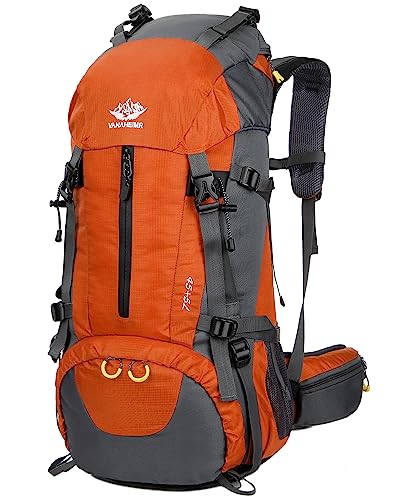
- Generous 50L capacity (45L + 5L) with dedicated sleeping bag storage and multiple exterior organization pockets
- Low empty pack weight of approximately 2.4 pounds helps hikers avoid unnecessary base weight
- Includes a dedicated waterproof rain cover to shield gear during wet trail conditions
- Multiple external tie-down straps easily secure bulky camp items like sleeping pads and hammocks
Cons
- Lacks an internal rigid metal frame, which may limit stability when hauling exceptionally heavy loads
- Comes in a standard fixed size without an adjustable torso-length suspension system
- No dedicated hydration reservoir sleeve or hose routing mentioned in the manufacturer specifications
The Esup 50L Camping Hiking Backpack is a lightweight, high-capacity pack designed for budget-conscious weekend backpackers, car campers, travelers, and outdoor enthusiasts. Offering a primary 45-liter volume with an additional 5-liter expansion potential, this pack targets hikers looking for multi-day gear storage without investing in premium technical mountaineering rigs. With its manageable empty weight of approximately 2.4 pounds, it suits those who need sufficient room for overnight essentials, spare layers, and camp equipment on moderate trails.
On the trail, the pack measures roughly 25.6 by 9.8 by 13.8 inches, giving it a tall, vertical profile capable of swallowing bulky camping sleep systems. The manufacturer incorporates widened, thickened S-type shoulder straps padded with sponge and covered in breathable mesh to distribute weight across the shoulders. While the back panel utilizes a high-elastic breathable back support designed to promote ventilation, hikers should note that there is no advertised rigid internal metal stay system. As a result, careful packing is essential to balance the load and maintain back comfort across varied terrain.
Build quality centers around a tear-resistant and anti-scratch polyester and nylon blended fabric, engineered to withstand routine trail brush, campsite friction, and travel handling. The pack features multiple storage zones, including a dedicated lower sleeping bag compartment, two zippered front organizer pockets, and mesh side pockets suited for water bottles or quick-access accessories. It also comes packaged with a dedicated waterproof rain cover, providing an exterior barrier to keep gear dry during sudden downpours on open trails.
Setting up and packing the Esup 50L involves utilizing its exterior compression and attachment straps to secure extra gear. Hikers can tie up a sleeping pad, rolled mat, or hammock using the adjustable external tie-downs, preserving interior space for food, cooking kits, and shelter components. The shoulder harness includes standard tension adjusters to snug the pack against the upper back, while the front pockets allow rapid retrieval of trail maps, headlamps, or snacks without unpacking the central cavity.
Buyers should keep realistic expectations regarding technical features and fit customization. The pack comes in a standard size without an adjustable torso suspension system, meaning it may not provide an optimal anatomical fit for particularly short or tall hikers. Additionally, the specifications do not indicate an internal hydration bladder sleeve or hose routing, so users will likely rely on the mesh side pockets for water bottles. Without a rigid internal frame sheet or stays, packing extremely heavy loads could lead to strap strain or awkward pack sagging.
For beginner backpackers, scouts, weekend campers, and budget travelers seeking a feature-rich, high-volume bag under 2.5 pounds, the Esup 50L offers solid utility and straightforward organization. Those undertaking rigorous alpine routes or requiring custom torso-fitted suspensions with heavy-load framing will want to step up to specialized technical packs, but for casual overnights and dry-to-moderate trail outings, this pack delivers great practical value.
The Esup hiking pack provides a structured 50-liter total volume (45L main storage plus a 5L reserve capacity) designed to accommodate multi-day gear loads. The interior layout features a dedicated sleeping bag compartment at the base, allowing hikers to isolate bulkier sleep gear from food, cooking utensils, and clean clothing stored in the main chamber.
External storage options include two zippered front pockets for organizing trail tools, hygiene kits, or electronics, alongside dual stretch-mesh side pockets designed to carry standard water bottles. Adjustable external webbing straps extend attachment capability, allowing hikers to lash sleeping pads, camp chairs, or hammocks directly onto the exterior.
Crafted from a blended polyester and nylon composite, the pack body is engineered for scratch and tear resistance against branches, brush, and rough ground contact. The tough woven material provides everyday abrasion resistance for trail approaches and campsite storage.
For wet-weather scenarios, the pack includes a fitted waterproof rain cover that deploys over the exterior shell. While the base pack fabric resists light wear and moisture, relying on the included rain cover during extended rainfall ensures gear inside remains protected from moisture seepage through seams and zippers.
Pros
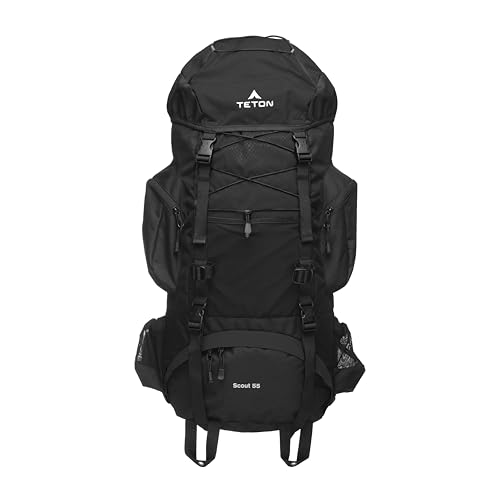
- Spacious 55L capacity organized with a separate sleeping bag compartment and multiple pockets
- Adjustable torso system allows medium and tall hikers to adjust harness positioning easily
- Includes an integrated rain cover, saving the expense and effort of sourcing a separate cover
- Internal frame and foam lumbar pad help distribute load weight effectively across the back
- Multi-directional exterior compression straps keep uneven gear loads secure and compact
Cons
- At 4.14 pounds empty weight, this pack is heavier than minimalist or ultralight trail options
- Torso adjustment is oriented toward medium and tall adventurers, which may not suit hikers with shorter torsos
- Hydration reservoir is not included and must be purchased separately to utilize the hydration pocket
The TETON Sports Scout 55L Internal Frame Backpack is an entry to intermediate backpacking pack built for hikers, campers, and travelers who require dependable load support and structured organization without premium gear costs. Equipped with a 55-liter capacity, this model suits overnight weekend trips, car-camping excursions, and gear-intensive day outings. It is engineered with a multi-position torso adjustment system designed for men and women with medium to tall builds who want a balanced, custom fit on the trail.
In terms of load management, the backpack relies on an internal frame structure that channels pack weight toward the hips and lower body. The back panel integrates an open-cell foam lumbar pad alongside molded channels designed to provide cushioning while promoting continuous airflow across the back. Measuring 16 x 30 x 10 inches and weighing 4.14 pounds empty, the Scout 55L balances durable structural components with manageable pack weight, giving recreational backpackers sufficient rigidity without the extreme heft of older external-frame models.
Organization is a distinct asset of this design, highlighted by a dedicated sleeping bag compartment at the base that allows easy access to camp sleep systems without unpacking the main hold. The pack also features spacious exterior compartments, multiple pockets for trail items, and multi-directional compression straps that pull cargo inward to keep weight centered. A designated internal hydration pocket supports hands-free hydration bladders, while an included protective rain cover stows neatly until wet conditions demand fast deployment.
Setting up the pack is straightforward thanks to the multi-position torso mechanism, which lets hikers adjust the shoulder harness height before heading out. Users should take the time to align the lumbar pad comfortably against the lower back and tighten the compression straps once packed to prevent gear shift. For ongoing maintenance, spot cleaning with mild soap, air drying thoroughly out of direct sunlight, and checking buckle points prior to departure will keep the hardware and fabric in good trail-ready condition.
A few practical limitations should be kept in mind before purchasing. The 4.14-pound empty weight puts this pack outside the ultralight category, which may deter long-distance thru-hikers focused strictly on base weight reduction. Additionally, because the multi-position torso system is built for medium and tall users, individuals with shorter torso measurements may struggle to find an optimal harness fit. Hikers should also note that while a hydration pocket is built in, a compatible reservoir and drinking tube must be purchased separately.
For weekend backpackers, trail newcomers, and outdoor enthusiasts seeking a dependable internal frame carrier, the TETON Sports Scout 55L delivers reliable utility and thoughtful compartment layout. The inclusion of a fitted rain cover, multi-directional load compression, and a dedicated sleeping bag section make it a practical, trail-ready choice for budget-conscious hikers.
The TETON Sports Scout 55L features a multi-position torso adjustment system engineered to fit medium and tall adventurers. Proper backpack fit requires setting the harness height so the lumbar pad rests securely on the lower back while the shoulder straps wrap comfortably around the chest without pinching or leaving large gaps.
Hikers should establish their harness setting at home with moderate weight loaded inside before hitting the trail. Shorter hikers should carefully evaluate their torso dimensions, as the harness geometry is tailored for medium to taller body frames and may not shorten sufficiently for smaller statures.
With a 55-liter total volume, the Scout 55L provides distinct compartments that simplify overnight trail packing. The lower sleeping bag compartment keeps bulky sleep systems isolated from damp clothing, trail snacks, and upper cargo, preventing unnecessary repacking during camp setup.
Multi-directional compression straps run across the pack body to pull heavy gear closer to the user spine, reducing sway on uneven terrain. Exterior compartments and side pockets offer organized storage for essential accessories, tools, and maps that need to be reached without opening the main internal body.
Navigating Retail Channels and Sizing Requirements for Backpacking Packs
Finding the ideal wilderness pack requires balancing retail convenience, price points, and physical fit. Choosing where to purchase your gear dictates not only the upfront cost but also the level of customer service, return flexibility, and warranty protection you receive after placing an order. A technical pack must support significant weight across rugged terrain, making retailer reliability an essential component of gear safety. Exploring authorized online marketplaces and specialized distributors ensures that trail enthusiasts receive genuine products engineered to withstand backcountry stress.
Primary Online Marketplaces Versus Direct Brand Stores
Large online platforms provide rapid shipping logistics and broad customer feedback on gear durability. Major digital marketplaces allow buyers to compare multiple models, such as the Osprey Rook 50L alongside high-capacity Teton Sports packs, across a single interface. However, shoppers must confirm that the specific seller is an authorized distributor rather than an unverified third party. Purchasing through unauthorized channels can jeopardize warranty coverage or lead to older product revisions that lack updated harness designs.
Ordering directly through manufacturer websites provides guaranteed access to complete model catalogs and direct customer support. Brands often supply detailed sizing charts and customer service representatives capable of answering technical harness questions. While direct brand shipping may occasionally take longer than marketplace logistics, buyers gain peace of mind regarding product authenticity. For budget-conscious hikers searching for accessible options, exploring budget trail packs can highlight entry-level models that balance functional storage with sensible consumer pricing.
Specialty Outdoor Retailers and In-Person Fitting Advantages
Brick-and-mortar outdoor outfitters offer the distinct advantage of hands-on physical evaluation before any financial commitment. Retail staff can measure your spine using specialized calipers or flexible measuring tapes to determine your exact torso length. Trying on a weighted pack inside a store reveals immediate pressure points along the collarbones and lower back that digital spec sheets cannot convey. Many physical storefronts also allow customers to test multiple brands simultaneously, providing immediate tactile comparisons of lumbar foam densities and hip belt contours.
In-store visits also allow hikers to practice adjusting internal frames, sternum clips, and compression straps under simulated load conditions. Sandbags or weighted foam blocks placed in the main compartment help demonstrate how a suspension system responds to fifteen or thirty pounds of trail gear. Even if you ultimately purchase your gear through digital channels to secure better shipping options, visiting a physical outfitter provides invaluable baseline measurements. Understanding your anatomical dimensions ensures that whatever online order you place matches your structural frame.
Secondary Gear Outlets and Clearance Marketplaces
Bargain outlets, seasonal gear clearance hubs, and verified outdoor consignment stores present attractive alternatives for wilderness adventurers on tight budgets. These secondary marketplaces often feature discontinued colorways, past-season models, or factory overstock at reduced entry points. Savvy shoppers can frequently locate reputable internal frame packs that perform identically to the newest iterations on the market. However, clearance items frequently carry restrictive return policies, making careful evaluation of sizing tolerances essential prior to checkout.
When shopping on pre-owned gear forums or secondary auction sites, buyers must thoroughly inspect high-wear areas before finalizing transactions. Zipper tracks, hip belt buckles, shoulder strap bar-tack stitching, and internal polyurethane waterproof coatings suffer the most damage from previous trail use. Internal frame stays can also bend out of alignment if overloaded or improperly packed by a prior owner. Unless the secondary seller offers a reliable inspection guarantee, novice backpackers are usually safer purchasing new equipment backed by full manufacturer warranties.
Torso Length Compatibility and Suspension Adjustability
A common misconception among beginner hikers is selecting a backpack based solely on body height rather than torso measurement. Torso length measures the vertical distance between the seventh cervical vertebra at the base of your neck down to the iliac crest along your hip bones. If a pack harness is too short, the shoulder straps carry excessive downward force that pinches the trapezius muscles. Conversely, an overly long frame pulls the shoulder harness away from your upper back, causing the pack to sway erratically on uneven trails.
Many modern backpacking packs feature adjustable torso systems to accommodate varying physical builds across different outdoor enthusiasts. The Teton 55L Scout and 65L Explorer, for example, incorporate multi-position torso adjustment mechanisms that shift the shoulder harness along internal ladder channels. Similarly, the Osprey Rook 50L utilizes an adjustable AirSpeed suspension system that lets users modify backpanel tension and torso height effortlessly. Verifying that a prospective pack includes an adjustable harness reduces the risk of ordering the wrong size from an online retailer.
Selecting Volume Brackets From Weekend Overnights to Extended Treks
Backpack storage capacity is measured in liters and directly determines how much camping equipment, food, and water you can carry safely. Compact packs in the 35L range, such as the lightweight MIVENTO hiking pack, work best for streamlined one-to-two-day summer excursions where minimalist gear is used. These smaller capacities force organized packing habits and reduce total carry fatigue on quick trail loops. However, cramming bulky sleeping bags or three-season tents into a 35L chassis can strain exterior seams and overfill secondary pockets.
Mid-range packs spanning 45L to 55L represent the sweet spot for traditional weekend backpacking trips spanning two to four days. Models like the Esup 50L and Teton 55L Scout supply generous main compartments alongside dedicated sleeping bag chambers. For multi-day expeditions requiring bear canisters, extra thermal apparel, and extensive cooking supplies, stepping up to a 65L pack like the Teton Explorer provides necessary breathing room. Hikers planning shorter day excursions with specialty gear might also evaluate hiking backpack cooler designs when standard overnight wilderness packs offer far more volume than necessary.
Structural Frame Mechanics and Weight Distribution
Internal frame architecture serves as the structural skeleton of any serious backpacking backpack. Modern packs utilize lightweight materials like internal spring steel rods, aluminum stays, or perimeter LightWire frames to provide rigid vertical stability. The primary mechanical goal of this internal framework is transferring approximately eighty percent of total pack mass directly onto your pelvic girdle. Without an internal frame, heavy gear collapses downward, pulling the pack away from your spine and straining delicate shoulder ligaments.
The interaction between lumbar padding and the hip belt determines how effectively weight is distributed around your hips. Dense open-cell or EVA foam molded into the lumbar region fills the natural curvature of your lower spine to eliminate painful hollows and friction spots. The Osprey Rook utilizes a LightWire frame that directs tension down to an integrated, padded hip belt to relieve shoulder pressure over long trail miles. When shopping online, examine customer feedback regarding hip belt stiffness to ensure the padding will not crush flat under twenty-five pounds of wilderness gear.
Material Durability, Weather Resistance, and Hardware Quality
The exterior fabric of a backpacking pack must endure friction from granite boulders, thorny trail undergrowth, and airline baggage handlers. High-grade synthetic textiles, such as 210D ripstop nylon and reinforced polyester blends, offer exceptional resistance to tearing without adding unnecessary tare weight. Denier ratings reflect yarn thickness, with higher numbers generally indicating greater abrasion defense in high-contact areas like pack bottoms. Dual-layer composite fabrics prevent minor trail snags from propagating into catastrophic fabric blowouts midway through a wilderness trek.
Water resistance is another critical specification that buyers must evaluate when browsing online gear inventories. While coated nylon sheds light morning dew, heavy mountain downpours can penetrate untreated zipper coils and needle holes. Pack designs from brands like TETON Sports, MIVENTO, and Esup address this issue by bundling integrated waterproof rain covers within dedicated storage pouches. Choosing a pack with an included rain cover saves you the trouble of purchasing third-party weather covers that might not match your pack perimeter.
Ventilation Architecture and Backpanel Heat Dissipation
Carrying thirty pounds across sun-exposed alpine ridges generates significant perspiration along your back. Traditional padded packs hold dense foam directly against your spine, trapping body heat and saturating apparel during warm climbs. To address this issue, manufacturers implement tensioned open-mesh suspensions that create a physical air gap between the pack body and your back. The Osprey Rook utilizes an adjustable AirSpeed backpanel that promotes active airflow across your lumbar region while keeping the load securely centered.
Alternative designs rely on molded open-cell foam channels covered with breathable mesh to balance cushioning with air circulation. Packs like the Teton 55L Scout feature central spinal chimneys that allow rising heat to escape while maintaining close-contact load stability. While suspended mesh backpanels maximize ventilation, close-contact foam designs often position the center of gravity slightly closer to your spine. Evaluating your typical hiking climate helps you choose between maximum airflow suspension and high-stability contoured padding when comparing packs online.
Compartment Organization and Exterior Gear Attachment
Backpacking packs differ significantly from standard travel bags in how their interior space is divided and organized. Dedicated lower sleeping bag compartments with zippered access and floating dividers allow hikers to pull out evening sleep systems without unpacking entire contents. The MIVENTO 35L backpack even features an isolated bottom compartment designed to separate footwear or damp clothing from dry interior gear. Choosing a model with dedicated access points simplifies evening camp setup, especially when pitching shelters during adverse weather conditions.
Exterior gear attachments extend your carrying versatility when hauling bulky equipment like trekking poles, sleeping pads, or ice axes. Look for backpacks equipped with reinforced side compression straps, dual trekking pole loops, and deep elastic side pouches that hold wide water containers securely. Multi-directional compression webbing, standard on Teton internal frame packs, allows users to cinch down partial loads so gear does not shift across technical trail terrain. Verifying these exterior features on digital product listings guarantees that your pack can accommodate bulky tools that cannot fit inside the main compartment.
Conducting Home Fit Trials and Verifying Return Windows
Purchasing a backpack online requires a deliberate home fitting protocol before you remove factory tags or head out onto dusty trails. Once your delivery arrives, inspect all exterior seams, nylon buckles, and zipper tracks for manufacturing defects or shipping damage. Load the pack with fifteen to twenty pounds of household items, such as wrapped books or sleeping blankets, to simulate a realistic trail load. Fasten the hip belt over the crest of your hip bones, pull the shoulder straps snug, and tension the load-lifter straps at a forty-five-degree angle.
Wear the weighted pack around your home for thirty to forty-five minutes, walking up and down stairs to test dynamic balance. Pay close attention to whether the shoulder straps pinch your neck or if the lumbar pad creates uncomfortable rubbing against your tailbone. If the pack causes persistent discomfort despite adjusting torso settings, utilize the retailer return window to exchange the model for an alternative frame size. Selecting online vendors with thirty-day trial windows and straightforward return labels ensures that you never get stuck with an ill-fitting technical backpack.
Manufacturer Warranties and Long-Term Product Support
Warranty coverage represents an essential safety net when investing in technical outdoor equipment. Established manufacturers like Osprey are widely recognized for robust product guarantees that cover broken buckles, split frame stays, and seam failures over extended lifespans. TETON Sports similarly emphasizes direct customer support to resolve hardware problems or provide replacement parts should gear encounter trail issues. Purchasing from unauthorized third-party resellers can void these valuable protections, leaving you without recourse if a zipper track derails on the trail.
Checking the manufacturer warranty terms before completing an online transaction safeguards your financial investment against premature hardware breakdown. Verify whether the brand requires product registration within a set timeframe after purchase to activate lifetime or multi-year coverage. Keep your digital proof of purchase and original order confirmation emails stored safely in case you ever need to file a warranty claim. Prioritizing legitimate retail channels ensures that your backpacking backpack remains dependable and field-ready across many backcountry seasons.
Final Pre-Trail Checklist Before Finalizing Your Purchase
Before placing an order or finalizing a transaction, confirm that your gear selection matches both your physical anatomy and the length of your scheduled trips. Double-check torso adjustment ranges, verify the presence of an included rain cover, and ensure the retailer provides hassle-free return logistics. Taking time to test weighted suspension balance in your living room guarantees trail comfort long before you reach the trailhead. Trusting authorized retailers and reputable outdoor brands ensures that your pack will carry essential wilderness loads reliably across every backcountry mile.







Write Your Review
No reviews yet. Be the first to share your experience!