


It’s no secret that hauling a loaded pack across uneven trails puts continuous strain on your lower spine, especially when heavy gear shifts on steep climbs. That repeated downward pressure often leads to deep muscle fatigue and nagging aches after just a few miles on the route. Integrating a dedicated Hiking Back Brace into your trail setup provides targeted abdominal compression and firm reinforcement along the spine. A supportive lumbar wrap stabilizes your lower torso so your pack’s suspension can transfer weight efficiently rather than leaving your back to absorb every harsh trail shock.
Today’s designs combine vertical support stays with breathable mesh materials that won’t trap excessive heat under your waist belt. Coordinating this lumbar reinforcement with a reliable hiking backpack for adults helps you keep an upright posture through demanding stretches of trail. Whether you’re managing persistent sciatica or guarding against lower back fatigue on multi-hour treks, selecting a dependable lumbar support belt keeps your body moving smoothly without getting in the way of your stride.

Pros
- Four internal steel springs offer firm spinal stabilization for trail walking, camp chores, and gear lifting.
- Removable lumbar pad provides versatile, customizable compression based on daily comfort needs.
- Breathable mesh material helps minimize heat buildup when layered over hiking shirts or base layers.
- Internal molded plastic supports help prevent the brace from bunching or rolling while in motion.
Cons
- Adds bulk around the waistline that may interfere with heavily padded backpack hip belts.
- The wide 28 to 50 inch regular sizing span requires careful strap tensioning for users near the lower or upper boundary.
- The available product data does not list machine-wash care instructions, likely requiring gentle spot cleaning due to internal steel springs.
The MUELLER Lumbar Back Brace with Removable Compression Pad is a supportive lower-torso accessory designed for trail walkers, day hikers, and campers who need extra spinal support and pressure relief. It provides adjustable compression around the lumbar region, making it well suited for outdoor recreationists lifting heavy equipment, pitching tents, or managing lower-back fatigue across uneven terrain.
On the trail, this brace combines core stability with functional movement. The wraparound design uses adjustable tension straps that allow hikers to dial in compression depending on whether they are walking flat trails, ascending steep switchbacks, or carrying loads. The internal molded plastic component works to prevent the brace from rolling or bunching around the waist as the body bends and flexes, while the breathable mesh fabric allows air circulation to help reduce trapped heat during active use.
Built with practical support elements, the brace incorporates four flexible steel springs positioned along the spine to deliver firm reinforcement without completely immobilizing movement. A key feature is the removable lumbar pad, which can be inserted for concentrated lower-back cushioning or removed when a lower profile is desired under clothing. The manufacturer notes that the mesh fabric is treated to help prevent odor buildup, which is a useful detail for warm-weather hiking and multi-hour wear.
Sizing for this regular model accommodates waist circumfaces from 28 to 50 inches (71 to 127 cm), measured around the widest part of the waist. The brace weighs one pound and secures easily over hiking shirts, base layers, or lightweight trail pants. Hikers using a backpacking pack should observe how the brace sits relative to the pack hip belt, as the dual-strap closure and lumbar pad create extra thickness that may require adjusting hip-belt tension for optimal comfort.
While the four steel springs and lumbar pad provide focused compression, the brace does add noticeable profile around the midsection. This extra bulk can compete with heavily padded backpack hip belts or low-profile climbing harnesses. Additionally, the broad 28-to-50-inch fit range means hikers near the lower boundary will have excess strap overlap, and the product data does not specify machine-wash instructions, suggesting careful hand maintenance around the internal steel stays.
For hikers, backpackers, and outdoor enthusiasts seeking targeted lower-back stabilization and customizable compression under thirty dollars, the MUELLER Lumbar Back Brace offers reliable everyday support. Its balance of steel spinal stays, removable padding, and breathable mesh makes it a practical gear addition for managing back fatigue on and off the trail.
Proper fit begins with measuring around the widest part of the waist. This regular model is designed to fit waists ranging from 28 to 50 inches (71 to 127 cm), utilizing wide hook-and-loop closure wings followed by secondary tension straps for fine-tuned support.
Because the sizing span is broad, users at the lower end of the measurement range may experience significant overlap of the closure bands, while those near 50 inches will use more of the outer strap reach. Taking accurate waist measurements over typical hiking layers ensures the best compression and stability.
Backpackers carrying multi-day loads often experience lumbar fatigue, making supplemental core support helpful. The four flexible steel springs align along the lower spine to assist with posture when bearing heavy gear or bending to lift packs.
When wearing a backpack with a padded hip belt, users should test the brace positioning to avoid pressure points. The removable lumbar pad can be taken out to create a flatter back profile that integrates more smoothly beneath hip belts and lumbar pack padding.

Pros
- Vertical stays provide reliable lower-back stabilization and prevent the brace from rolling during forward bends or trail steps
- Adjustable lumbar pad provides customizable, focused compression right where lower-back fatigue commonly concentrates
- Slim, breathable profile layers smoothly under hiking trousers and trail apparel without excessive bulk
- Manageable weight of approximately 0.82 pounds makes it easy to carry inside a hiking daypack when not in use
Cons
- Product specifications do not list exact waist circumference dimensions for size Medium, requiring careful size chart verification
- Compression wrap around the midsection naturally retains some heat during hot, humid summer hiking conditions
- Rigid vertical stays may cause pressure points if worn directly underneath a heavily loaded, tightly cinched backpack hip belt
The Sparthos Back Brace in size Medium is a specialized supportive apparel accessory tailored for active individuals, trail walkers, and day hikers who deal with sciatica, herniated discs, or persistent lower-back fatigue. While traditional hiking apparel focuses on trail pants and technical base layers, this lumbar support belt is designed to integrate into an outdoor layering system to provide targeted core and lumbar stabilization. For hikers who struggle with spinal discomfort during prolonged walking, standing, or bending over camp setups, this brace serves as a focused mechanical support to keep you moving comfortably outdoors.
On the trail, the Sparthos brace offers an intentional balance between structural reinforcement and stride mobility. The design is built to maintain spinal stability while still allowing the natural forward and lateral movement required for walking, climbing gradual grades, and stepping over trail obstacles. The manufacturer highlights breathable fabric construction to help mitigate sweat accumulation against the skin, which is crucial during sustained outdoor movement. However, because it wraps firmly around the lumbar area, any compression accessory will naturally trap some body heat, making it best suited for moderate activity levels, cooler morning starts, or trail sessions where mechanical back relief outweighs maximum ventilation.
Structural support centers on vertical stays and an adjustable lumbar pad that target the lower back. The vertical stays are engineered to stabilize the spine and prevent the brace from rolling, folding, or bunching when you bend down to adjust boots, pitch a tent, or navigate steep switchbacks. Working alongside these stays, the internal lumbar pad provides concentrated compression where lower-back aches commonly flare up. The adjustable outer compression setup lets users tailor the tightness to match their activity level, whether loosening tension for level walking or snugging it down for added support when lifting gear or climbing.
Managing the brace alongside trail apparel requires attention to fit and pack interaction. Weighed at approximately 0.82 pounds, the brace is relatively light and packs down compactly into a daypack when not in use. It features a slim, low-profile form factor designed to wear under or over hiking pants and base layers without excessive bulk. Hikers should exercise caution when pairing the brace with an internal-frame backpack that utilizes a heavily padded hip belt, as the vertical support stays and rear lumbar pad may cause friction or pressure points if pinched directly beneath a tight backpack belt. Pairing it with a daypack that rests above the lumbar zone or wearing it during unweighted walks, recovery hikes, and camp activities provides the most seamless experience.
Realistic limitations must be kept in mind before taking this brace onto the trail. The provided product data does not supply precise waist circumference measurements for size Medium, meaning prospective buyers must verify manufacturer sizing charts to avoid purchasing an improper fit. Furthermore, while the brace provides physical compression and stability, it is not an injury cure or a substitute for medical guidance when managing severe spinal conditions. The breathable fabric reduces clamminess compared to solid neoprene wraps, but hot-weather hikers may still experience sweat buildup along the waistband on warm, humid summer days.
The Sparthos Back Brace is a practical investment for day hikers, outdoor workers, campers, and active walkers seeking dependable lumbar stabilization without excess bulk. Its combination of anti-roll vertical stays, an adjustable lumbar pad, and a low-profile profile makes it easy to integrate beneath outdoor trousers or over light technical tops. If lower-back soreness or sciatica threatens to cut your outdoor walking short, this supportive accessory delivers focused stability and comfort at a reasonable pack weight.
The primary advantage of the Sparthos Back Brace on outdoor trails is its combination of vertical support stays and an adjustable lumbar pad. By reinforcing the lower back, it helps active walkers and hikers maintain upright posture and avoid lumbar strain when taking extended strides. The vertical stays are specifically built to resist rolling, which keeps the brace anchored in place as you bend down, stretch, or step over uneven trail features.
Compression levels can be adjusted quickly using the wrap system, allowing you to loosen the fit on easy flat stretches or tighten the brace for added support during steep climbs or camp chores. While it provides firm stabilization, it maintains the functional flexibility needed for unhindered walking mechanics.
Integrating the Sparthos Back Brace with standard hiking clothing requires thoughtful layering. Built with a low-profile design, this Medium brace can be worn directly over synthetic base-layer bottoms or tucked neatly under standard hiking pants waistbands. The smooth exterior helps prevent trail trousers from catching or bunching during movement.
When carrying outdoor gear, hikers should evaluate how their backpack hip belt aligns with the brace. Lightweight daypacks with high-riding straps generally pair without issue, but heavy backpacking hip belts positioned directly over the brace's vertical stays and lumbar pad may create focused pressure. For best results on technical hikes, test the brace with your specific pack harness to ensure comfort over long trail miles.
Pros
- Eight internal steel springs deliver firm lumbar stabilization when carrying daypacks or setting up camp
- Breathable mesh construction helps reduce heat and moisture accumulation against trail clothing
- Wraparound dual-strap adjustment allows fast tension changes for steep climbs or recovery stretches
- Broad waist adjustment range fits smoothly over lightweight summer apparel or cold-weather base layers
Cons
- The 0.88-pound weight and rigid steel spring structure add noticeable bulk under snug backpack hip belts
- The 8.75-inch vertical height may feel stiff against the rib cage for shorter-torso hikers during steep scrambles
- Mesh fabric is treated for odor resistance but does not offer waterproof or weather-resistant protection in heavy rain
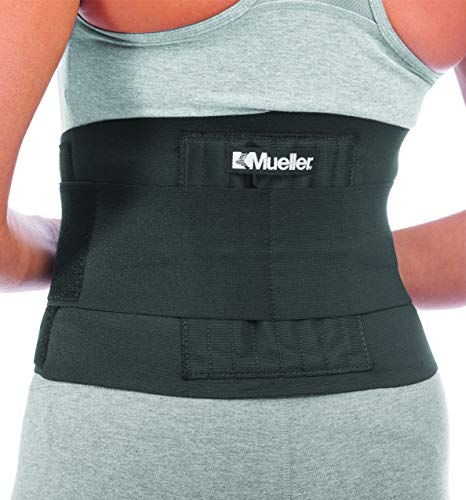
The MUELLER Sports Medicine Adjustable Back Brace is a supportive outdoor apparel accessory designed for hikers, backpackers, and trail workers who need focused lumbar reinforcement on uneven terrain. Built with eight integrated steel springs and a breathable mesh panel, this brace delivers firm compression to help alleviate lower back strains, sciatica discomfort, and muscle fatigue during demanding physical activity. It suits day hikers carrying loaded packs, campers managing heavy trail equipment, and outdoor enthusiasts who experience lower back tightness over extended trail miles.
On the trail, the brace provides structured core stabilization that helps maintain upright posture when ascending steep grades or stepping over roots and rocks. Dual wraparound closure straps allow users to dial in tension quickly, tightening the brace for steep descents or loosening it during flat recovery stretches. The manufacturer highlights breathable mesh material and an odor-resistant fabric treatment, which help minimize sweat buildup when worn over a technical base layer or synthetic hiking shirt. However, because the unit relies on firm steel springs, it may slightly restrict forward bending when scrambling over boulders or ducking under low blowdowns.
Construction centers around an 8.75-inch tall back panel housing eight vertical steel springs that distribute compression across the lumbar region. The surrounding body features lightweight mesh engineered to encourage passive airflow, while heavy-duty hook-and-loop closure bands secure the main wrap and secondary tension straps. With an overall length of 30 inches and a weight of roughly 0.88 pounds, the brace is built for repeated mechanical tension rather than ultralight packing. The reinforced spring channels keep the internal supports aligned, resisting rolling or curling during active torso movement.
Sizing for this One Size model accommodates waist measurements between 28 and 50 inches, measured around the widest part of the waist as directed by the manufacturer. For hikers wearing technical trail trousers or convertible pants, the brace fits comfortably over mid-rise and high-rise waistbands, though wearers must position it carefully to avoid pinch points beneath a padded backpack hip belt. Stowing the brace requires rolling or folding around the flexible steel stays, occupying modest room inside a daypack when not in use. Regular care involves spot cleaning or hand washing to preserve elastic tension and protect internal steel components from trapped moisture.
While the MUELLER Back Brace delivers dependable lumbar support at an accessible price point, it is not an ultralight piece of gear and does not replace medical treatment or proper pack fitting. Hikers with compact torsos may find the 8.75-inch vertical height encroaches on the lower rib cage during deep bends, and wearing it under heavy precipitation requires an outer waterproof shell. For outdoor enthusiasts, trail volunteers, and weekend hikers seeking dependable, budget-friendly lower back support to keep moving comfortably down the trail, this brace serves as a practical, stabilizing accessory.
The MUELLER Adjustable Back Brace in One Size is designed to accommodate waist sizes ranging from 28 inches up to 50 inches. Mueller instructs users to measure around the widest portion of the waist or abdomen to ensure adequate overlapping contact for the hook-and-loop fastener bands. The manufacturer also produces a separate Small size intended for waists measuring between 22 and 30 inches.
When layering for outdoor adventures, hikers should account for the thickness of their hiking trousers, base layers, or cold-weather bottoms. The dual-strap tensioning design provides substantial adjustability, enabling wearers to loosen the outer bands when layering over cold-weather fleece or cinch them tight over lightweight summer trail shirts.
Carrying a loaded multi-day backpack or heavy daypack places continuous downward stress on the lumbar spine, which can aggravate existing strains or muscle imbalances. The MUELLER Back Brace counteracts this fatigue by providing rigid vertical stabilization through eight internal steel springs, assisting spinal alignment on challenging trail routes.
To ensure comfortable integration with hiking backpacks, users should position the bottom edge of the brace so it does not conflict directly with the pack's lumbar pad or hip-belt buckle. Adjusting the backpack load lifters and hip belt slightly outward can prevent excessive localized pressure against the brace's steel stays during long trail miles.

Pros
- Four built-in support strips and a contoured lumbar pad deliver firm 360-degree lower back stabilization.
- Dual elastic hook-and-loop straps allow precise compression adjustments while on the move.
- Inclusive sizing range accommodates waist measurements from 24.4 inches up to 74.8 inches at the navel.
- Neoprene core maintains flexible core engagement without entirely locking out natural bending.
Cons
- Adding a one-pound support belt around the waist can create bulk when paired with padded backpack hip belts.
- Neoprene interior can retain heat and sweat during high-exertion hikes in warm summer weather.
- Requires precise measurement at the navel rather than relying on standard hiking pant waist sizing.
The FEATOL Back Brace is an external lumbar support accessory designed to stabilize the lower spine and core, making it a valuable apparel addition for hikers, backpackers, and outdoor workers managing lower back strain. Rather than acting like a standard waist belt, this support system uses four rigid vertical strips and a dedicated lumbar pad to encourage proper spinal alignment during prolonged physical activity. For hikers carrying loaded daypacks or individuals dealing with sciatica on uneven trails, this accessory provides targeted compression to help limit fatigue.
Trail mobility requires a balance between firm structural support and natural hip movement. The FEATOL belt achieves this by pairing an elastic neoprene inner wrap with secondary outer tension straps. This dual-layer system allows hikers to set the initial brace snugness and then dial in firm compression using the wide hook-and-loop fasteners. While the four stays reinforce posture when ascending steep grades or stepping over obstacles, the elastic nature of the neoprene ensures the waist can still flex naturally without feeling like a rigid medical cast.
Fabric construction focuses on durability and support through a combination of elastic neoprene and breathable exterior textiles. The inner neoprene band offers compressive retention around the lumbar region, while breathable fabric sections are integrated to reduce the heavy, suffocating feel common to basic neoprene wraps. The rear panel houses the four vertical stays, which work in tandem with the extra lumbar pad to fill the gap in the lower spine curve and distribute pack pressure evenly across the lower back.
Proper sizing and daily wear require careful attention to body measurements rather than outdoor pant sizes. The manufacturer specifies measuring circumference at the level of the navel, offering ranges from S/M (24.4 to 29.8 inches) up to 5XL (68 to 74.8 inches). On the trail, the brace is most comfortably worn over a technical base layer or hiking shirt to prevent skin friction. Hikers carrying multi-day packs should account for the brace thickness, as wearing both a lumbar belt and a padded pack harness requires minor strap adjustments to prevent pressure points.
Realistic limitations must be kept in mind before taking this support belt onto backcountry trails. Weighing approximately one pound, the brace adds noticeable weight and bulk around the waistline compared to standard hiking belts. In hot, humid conditions, the neoprene material will inevitably trap body heat and sweat against the lower torso during sustained uphill climbs. Additionally, while the brace assists posture and muscle stabilization, it does not replace medical treatment or proper physical conditioning for severe spinal injuries.
The FEATOL Back Brace is best suited for hikers, trail walkers, and outdoor enthusiasts who need extra lower back stabilization when walking, lifting camp gear, or carrying mid-weight packs. Its wide size selection, adjustable dual-strap closure, and firm vertical stays deliver practical lumbar support at an accessible price point. Hikers planning long trail days with existing back soreness will find it a dependable addition to their outdoor gear lineup, provided they measure accurately at the belly button.
Accurate sizing for the FEATOL Back Brace requires measuring your waist circumference at the level of your navel, not by your pants waist size. The manufacturer provides six distinct size brackets: S/M fits 24.4 to 29.8 inches, L/XL fits 29.8 to 38.6 inches, XXL fits 38.6 to 51.2 inches, 3XL fits 54 to 63 inches, 4XL fits 63 to 68 inches, and 5XL fits 68 to 74.8 inches.
Because the brace fastens with wide outer hook-and-loop straps, each size offers a substantial range of micro-adjustability. If your navel measurement falls near the upper edge of a size bracket and you plan to layer the brace over thick outdoor clothing or winter base layers, stepping up to the next size allows more strap overlap for a secure hold.
The FEATOL support belt reinforces the core by combining four vertical support stays with an extra lumbar pad that contours directly into the natural curve of the lower spine. This configuration helps distribute external pack pressure away from tired lower back muscles and promotes an upright torso posture during long hiking days.
When combining this brace with a technical backpack, position the support belt so it sits comfortably against your lumbar region before tightening the backpack hip belt. The dual elastic cinch bands allow you to loosen compression on flat trail sections and quickly tighten the wrap before steep switchbacks or heavy lifting around camp.

Pros
- Five reinforced stays (three memory aluminum and two support plates) provide structured 360-degree lumbar stabilization.
- Dual adjustable tension straps and integrated finger loops make application and tensioning quick and precise.
- Low-profile 9.8-inch height can be worn beneath or over outdoor garments and hiking pant waistbands.
- Broad sizing options ranging from small through 5XL accommodate a wide variety of waist dimensions.
Cons
- At 1.16 pounds, the rigid aluminum stays add noticeable carry weight for ultralight backpackers.
- Firm stays restrict deep forward bending, which can feel limiting during steep rock scrambles or technical climbing.
- Proper fit requires measuring around the navel rather than standard pant waist size, which may confuse some buyers.
The FEATOL Lumbar Support Belt is a structured back support accessory designed for day hikers, trail walkers, active travelers, and outdoor workers who experience lower-back strain during extended periods on their feet. Engineered with targeted compression and five rigid support stays, this accessory serves anyone who needs additional spinal alignment and abdominal core bracing while walking uneven paths, standing on hard surfaces, or carrying light daypacks.
Walking long distances or standing for hours on outdoor trails can place repetitive strain on the lumbar spine, and this brace addresses that fatigue through adjustable compression. The dual elastic tension bands wrap snugly around the midsection to encourage upright posture, helping to offload pressure associated with sciatica, herniated discs, and general muscle fatigue. While the support aids in upright stride mechanics and flat-trail pacing, the structured design naturally limits extreme torso flexion, making it best suited for graded paths and moderate day hikes rather than technical scrambles or steep boulder fields.
Structural stability in the FEATOL back brace comes from a combination of three memory-aluminum stays along the spine and two flexible support plates positioned along the flanks. The manufacturer combines these internal supports with durable elastic materials that conform to the lower back while maintaining firm tension. Built-in finger loops on the main closure flaps give users extra leverage to cinch the brace securely, ensuring the hook-and-loop fasteners lock firmly in place without shifting during routine movements.
Sizing accuracy depends strictly on measuring around the navel rather than using standard pant waist sizes. In size Large, the brace accommodates navel circumferences from 34.3 to 38 inches, measuring 44.1 inches in total length and 9.8 inches in vertical height. Weighing approximately 1.16 pounds, the brace fits comfortably over technical base layers or directly beneath relaxed-fit hiking pants, though it may create slight bulk when worn under slim-cut trousers or directly under a heavily padded backpack hip belt.
The FEATOL back brace provides mechanical support, but it does not replace medical treatment, physical conditioning, or proper load-lifting mechanics. The 1.16-pound weight and rigid stay construction make it less appealing for minimalist thru-hikers who monitor every ounce in their pack. Furthermore, the firm vertical stays can press against the ribs or pelvis when bending deeply to tie boot laces or stepping over high trail obstacles.
For hikers, outdoor workers, and active individuals who need reliable lumbar stabilization to manage lower back discomfort during long walking days, the FEATOL Back Support Belt offers dependable construction and firm support. Choosing the correct size by measuring at the navel ensures that the memory-aluminum stays sit flush against the spine, providing a balanced blend of compression and posture control for moderate outdoor activity.
Accurate sizing for the FEATOL back brace requires measuring around the navel rather than relying on everyday pant or belt sizes. The size Large model is designed specifically for navel measurements between 34.3 and 38 inches, offering an overall brace length of 44.1 inches to provide adequate wrap-around overlap.
The dual-elastic adjustment strap system allows users to micro-adjust tension once the primary band is secured. If your measurement falls near the boundary between sizes, selecting the larger option generally provides better wrap overlap and more adjustable tension range across different clothing layers.
Posture reinforcement from the three memory-aluminum stays and two support plates helps maintain upright spinal alignment on flat trails, gravel paths, and sustained walks. By stabilizing the lower back, the brace helps delay muscle fatigue during repetitive, upright walking movements.
Torso mobility is intentionally constrained in forward flexion to protect the lumbar spine. Hikers should anticipate reduced agility when bending over to adjust gaiters, ducking under low-hanging branches, or traversing rocky terrain that requires dynamic hip and trunk bending.
With a vertical height of 9.8 inches and a profile thickness of roughly half an inch, the FEATOL lumbar brace layers best over a smooth moisture-wicking base layer. Wearing a light synthetic shirt underneath helps prevent chafing against bare skin during warm-weather outings.
When pairing the brace with hiking apparel, wearers should note that the thick support belt can interact with standard hiking pant waistbands and backpack hip belts. Positioning the brace slightly above or beneath your backpack hip belt avoids pressure points, ensuring comfortable load distribution on extended walks.

Pros
- Seven-element support structure featuring aluminum stays and flexible springs provides firm lower back stabilization.
- 3D knitted mesh fabric allows airflow to minimize overheating compared to conventional solid neoprene braces.
- Removable lumbar cushion lets users customize compression levels depending on trail activity and fatigue.
- Low-profile construction fits discreetly beneath outdoor apparel without excessive bulk.
- Weighs only 0.86 pounds, making it easy to pack or wear on extended trail walks.
Cons
- Rigid lumbar stays restrict extreme torso twisting and deep bending required for technical rock scrambling.
- Listed Medium size is constrained to a 33.4 to 40.5 inch waist range, requiring precise measurement before purchase.
- Added compression layer around the midsection can still trap warmth during high-temperature summer hikes.
The FREETOO Lower Back Support Brace is an ergonomic lumbar support belt designed to stabilize the lower spine and relieve muscular fatigue for hikers, backpackers, outdoor workers, and trail walkers navigating persistent back discomfort. Individuals managing lumbar strain, sciatica symptoms, or herniated disc discomfort often struggle with the repeated impact and upright posture required during long miles on foot. By pairing a contoured framework with breathable compression, this brace targets day hikers, campers setting up base camp, and backpackers who need supplemental lumbar reinforcement while standing, trekking, or handling camp equipment.
On maintained hiking trails, the brace delivers noticeable lower back stability while walking upright, though its supportive framework inherently limits extreme torso flexibility. The structured design restricts unwanted lumbar flexing and lateral over-extension, which helps maintain proper spinal alignment over rolling terrain and extended ascents. However, because the brace provides firm support, hikers should expect restricted mobility during technical scrambles, steep step-ups over tall boulders, or when bending deeply to tie boot laces. For steady footpaths, forest tracks, and long road walks, the balance between moderate torso flexion and firm lumbar control helps delay posture-related fatigue.
Breathability and structural reinforcement are central to the construction, highlighted by an advanced 3D knitted mesh fabric and a multi-tiered stay system. The support architecture incorporates one bionic bone lumbar panel, four memory-aluminum stays, and two flexible springs designed to distribute pressure evenly across the lumbar region. A removable cushioned lumbar pad sits directly against the spine, allowing users to fine-tune compression levels depending on personal comfort. Unlike traditional impermeable neoprene belts, the 3D knitted mesh construction promotes continuous air circulation, which helps manage perspiration and reduce heat retention against base layers during active movement.
Proper sizing is critical for effective lumbar decompression, with this Medium model engineered specifically to accommodate waist circumferences between 33.4 and 40.5 inches. At a listed weight of 0.86 pounds, the brace is relatively light, packing down flat inside a daypack or gear duffel when not actively needed. The soft outer fabric edges are tailored to prevent skin chafing or digging into the waistline, while the low-profile knit fits neatly underneath hiking shirts, trail pants, or fleece layers. Backpackers should ensure the brace sits flush against the lower back so it does not interfere awkwardly with a pack's padded hip belt or lumbar cushion.
Realistic limitations center on motion restriction and heat generation during intense physical output in hot climates. While the 3D knit promotes better airflow than solid rubber or neoprene supports, wearing any snug, compressive wrap around the midsection will inevitably trap some body heat during strenuous summer ascents. Furthermore, the firm memory-aluminum stays are specifically designed to limit spinal motion, making this support brace ill-suited for fast-and-light trail running, high-mobility climbing, or deep twisting movements. It is also essential to recognize that a lumbar brace serves as physical support rather than a medical cure for underlying spinal conditions.
For outdoor enthusiasts and workers seeking dependable lumbar stabilization without unnecessary bulk, the FREETOO Back Brace offers a practical, well-ventilated support solution. Its combination of aluminum stays, flexible springs, and a removable pad makes it especially well suited for day hikes on moderate terrain, campsite tasks, and long walking routines where upright posture is vital. Hikers measuring within the 33.4 to 40.5 inch waist span who prioritize posture control and spinal cushioning over unrestricted athletic flexibility will find solid value in this trail support accessory.
The Medium FREETOO Back Support Brace is specified for natural waist measurements ranging between 33.4 and 40.5 inches. To achieve the intended stabilization, users should measure around the navel rather than relying on standard hiking pant waist sizing. The three-dimensional stretch knit automatically conforms to various body contours, while adjustable outer tension straps allow users to customize the level of compression. The soft finished edges help prevent pressure points or binding against the lower ribs and hips when cinched securely.
Integrating a structured back brace with a multiday backpack requires careful alignment with the pack hip belt. Because the FREETOO brace features a relatively slim 3D knit profile, it can be worn directly over a lightweight synthetic base layer beneath hiking trousers. Backpackers should position the brace so that the pack lumbar pad and hip belt do not pinch the aluminum stays against the sacrum. At 0.86 pounds, the brace can also be stowed inside a backpack compartment and deployed specifically for setting up camp or during long downhill descents where spinal fatigue accumulates.
The primary body of the brace utilizes an engineered 3D knitted mesh designed to facilitate active ventilation around the midsection. Unlike closed-cell neoprene belts that trap sweat and cause excessive perspiration, this open-structure knit allows air to circulate directly to the skin or base layer. The skin-friendly soft knit fabric resists heat retention while maintaining sufficient elastic tension to keep the seven internal stays firmly anchored against the lower back.
Pros
- Six built-in vertical stays provide rigid lower back stabilization without excessive exterior bulk.
- Dual outer elastic straps make it easy to increase compression when walking uphill or carrying weight.
- Hollow mesh polyester fabric offers ventilation to reduce sweat accumulation against your base layer.
- Ten-inch wide coverage supports both lower lumbar discs and waist muscles across extended hours.
Cons
- Rigid vertical stays limit deep forward bending and torso rotation on steep scrambling terrain.
- Broad width can interfere with or create pressure points under heavily padded backpack hip belts.
- Requires precise measurement one inch above the belly button to avoid fit issues.
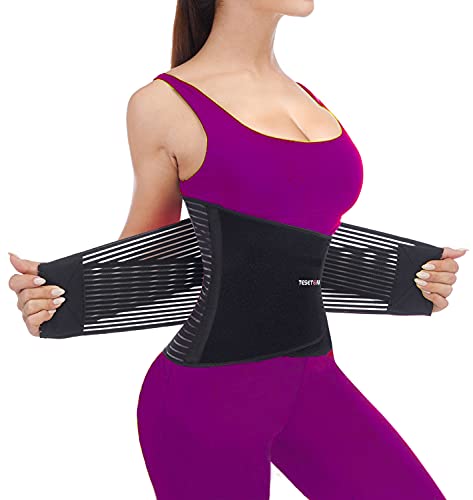
The TESETON Lumbar Support Belt is a structured lower-back brace designed to provide targeted core compression and lumbar stabilization for hikers, walkers, and outdoor workers managing back fatigue. Hikers carrying moderate daypacks or spending extended hours on their feet often experience lower-back strain, making a dedicated support accessory a practical addition to an outdoor gear lineup. This model is built for both men and women who want firm posture reinforcement without dealing with overly heavy medical-grade appliances.
On maintained walking paths, easy forest loops, and around the campsite, this support belt delivers noticeable postural guidance and tension relief across the lumbar spine. The manufacturer lists six integrated vertical stays that wrap around the lower back to discourage excessive muscle rolling and relieve pressure around the discs and waist. While highly supportive for upright striding, trail walking, and repetitive bending tasks, the vertical rigidity does introduce natural movement tradeoffs when navigating steep rock scrambles or stepping high over fallen logs where full torso flexion is required.
The build incorporates an elastic polyester fiber outer layer woven with a hollow mesh design intended to promote airflow during physical exertion. Measuring 10 inches (25 cm) in total vertical width, the brace offers extensive midsection coverage from the upper sacrum to the lower thoracic boundary. Fastening is managed by a primary hook-and-loop closure reinforced by two secondary elastic compression straps, allowing wearers to easily loosen tension for flat rest breaks or cinch down tightly for loaded pack walks.
Sizing this accessory properly requires taking a waist measurement one inch above the belly button rather than relying on standard hiking pant waistband sizes. Weighing roughly 0.79 pounds in size Large, the unit packs down easily into the bottom of a daypack when not in active use. It wears most comfortably over a moisture-wicking technical t-shirt or base layer, though hikers who use framed backpacks should check how their pack hip belt sits against the 10-inch wide band to prevent overlapping pressure points.
This lumbar belt is an external postural aid and does not replace medical treatment, physical conditioning, or proper pack weight distribution. The rigid support bones and broad profile add insulation and mild stiffness around the torso, which may feel warm during midsummer outings or restrictive during fast-paced aerobic ascents. Additionally, exposed hook-and-loop tabs require careful alignment to prevent accidental snags against delicate merino wool or ultralight knit apparel.
The TESETON Back Brace is a sensible, budget-friendly option for trail walkers, day hikers, and outdoor workers seeking firm lower-back support and core stability. It excels on even-grade hikes, long travel walks, and campsite chores where upright stabilization reduces muscle exhaustion, provided shoppers size according to the manufacturer chart and balance compression levels against the demands of the trail.
Accurate sizing requires measuring your waist circumference one inch above your navel rather than matching your everyday hiking pant waist tag. The manufacturer specifies that this measurement determines the correct brace size, as the 10-inch vertical profile must wrap around the natural waist without sliding upward or bunching.
The dual elastic compression straps provide generous adjustment range once the primary hook-and-loop flap is secured. This allows you to tailor the tension depending on whether you are wearing a thin summer trail tee or a midweight thermal base layer underneath.
Hikers carrying framed multi-day packs should evaluate how their backpack hip belt aligns with the 10-inch width of this lumbar brace. On packs with substantial lumbar pads and rigid hip fins, wearing the brace directly underneath may create overlapping bulk and localized hot spots along the lower spine.
For day hikers using frameless daypacks or running vests, the brace integrates smoothly over base layers to provide steady core reinforcement. The breathable polyester hollow mesh helps dissipate heat, though pairing the brace with a synthetic wicking shirt is recommended to manage moisture buildup during warm-weather trail outings.
Pros
- Adjustable lumbar pad delivers customizable compression directly where lower back fatigue tends to concentrate on long trail days
- Vertical support stays prevent fabric rolling and maintain solid structural alignment while bending, stretching, or walking
- Low-profile and breathable fabric build wears neatly under outdoor trousers or over technical base-layer tops without extreme bulk
- Lightweight footprint at roughly 0.86 pounds makes it easy to carry inside a daypack as a supportive backup accessory
Cons
- Size Small offers a narrow waist fit range that will not fit medium or broader body profiles without stepping up in sizing
- Dual-layer compression bands add insulation around the midsection that can feel warm during strenuous summer ascents
- Can create pressure points if layered directly underneath heavily padded, rigid backpack hip belts carrying heavy loads
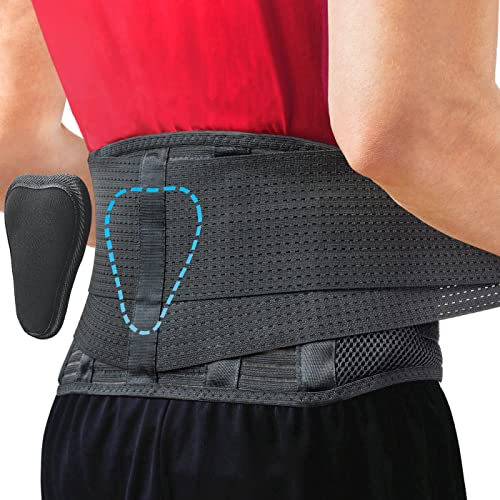
The Sparthos Back Brace is a supportive trail and daily activity accessory designed for day hikers, trail walkers, campers, and outdoor workers who need reliable lumbar stabilization and lower back relief. Unlike standard hiking belts or suspenders that purely support trousers, this medical-grade back brace focuses on mitigating discomfort from sciatica, herniated discs, muscle soreness, and postural fatigue. It suits individuals who find that extended hours of standing, walking uneven paths, or lifting gear around camp aggravate their lower back.
On the trail, the brace provides structured compression that encourages upright spinal alignment without completely locking up natural movement. The manufacturer designs the unit for active motion such as walking, bending, and stretching, making it practical for light day hikes, nature walks, and setting up camp. The dual-strap elastic tension system allows hikers to loosen the brace on relaxed flats and tighten it before tackling steep step-ups or carrying moderate pack loads. Because it maintains core tension, it helps reduce the muscular slouching that often occurs after several miles on foot.
Construction centers around breathable synthetic fabrics combined with firm internal vertical stays and a removable lumbar pad. The vertical stays are essential for active wear because they prevent the sides and back from rolling or bunching as your hips articulate. The included lumbar pad fastens internally, allowing users to apply targeted pressure to the inward curve of the lower back or remove it entirely for a flatter profile. The overall stitching and hook-and-loop closures provide secure fastening that holds firm through repetitive strides and bending.
Sizing for this specific unit is designated as Small, making accurate waist measurement crucial before purchase to ensure proper compression overlap. At an approximate weight of 0.86 pounds, the brace adds very little bulk to a daypack when stowed. In daily trail use, it can be worn directly over a lightweight synthetic base layer or discreetly beneath hiking shirts and relaxed-waist trail pants. The low-profile silhouette minimizes snagging, though proper placement just above the hip bones is necessary to maintain full comfort while walking.
A primary limitation of the Sparthos brace involves its interaction with heavy load-bearing backpack hip belts. When wearing an expedition or multi-day backpack, the rigid lumbar padding of the pack suspension can press against the brace stays, potentially causing uncomfortable pressure spots. Additionally, while the fabrics are described as breathable, wearing any snug elastic compression garment around the midsection will inevitably trap warmth and sweat during strenuous climbs in hot or humid weather.
The Sparthos Back Brace represents an effective, budget-friendly supportive accessory for hikers and active outdoor enthusiasts managing chronic back stiffness or recovering from strain. It excels during day hikes, walking routines, fishing trips, and camp chores where extra spinal reinforcement keeps you moving comfortably. For walkers and light-pack hikers seeking dependable lumbar support in a compact size Small format, this brace delivers practical, adjustable stabilization.
The Small size of the Sparthos Back Brace is tailored for smaller waist circumferences and requires a snug initial fit to function properly. The primary wrap secures with broad hook-and-loop fasteners across the abdomen, establishing the foundational support around the lumbar region.
Secondary elastic tension straps flank both sides of the brace, allowing the wearer to micro-adjust compression independently. Hikers can easily cinch the secondary straps tighter during active movement or slacken them when resting at a viewpoint or driving to the trailhead.
Integrating the Sparthos Back Brace with outdoor packs depends heavily on pack type and suspension design. The brace pairs seamlessly with lightweight daypacks, hydration vests, and frameless packs that lack wide, rigid lumbar pads or heavy-duty hip belts.
When worn with standard hiking trousers, the lower portion of the brace rests comfortably across the waistband, especially when paired with mid-rise or high-rise trail pants. For extended comfort, wearing the brace over a thin, moisture-wicking synthetic base-layer tee prevents friction between the hook-and-loop edges and bare skin.

Pros
- Breathable dense mesh backing helps prevent sweat and heat accumulation beneath outdoor apparel
- Removable high-elastic stays allow hikers and workers to adjust support rigidity as needed
- Wide lumbar support belt helps distribute pressure across the waist when managing heavy packs or gear
- Adjustable shoulder straps and non-pilling fasteners provide a customizable, secure fit
Cons
- Added torso bulk may cause rubbing or interference when worn directly beneath rigid backpack hip belts
- Sizing requires careful navel measurement, and those between sizes must size up according to the manufacturer
- Rigid posture restriction is not designed for fast-paced aerobic trail running or technical scrambling
The BraceTop Upgraded Posture Corrector Back Brace serves as a wearable torso support accessory designed for walkers, day hikers, and outdoor workers who struggle with shoulder slump and lumbar strain. Unlike standard clothing, this brace combines upper thoracic alignment with lower-back stabilization to help users maintain an upright posture during daily activities or long days on their feet. The manufacturer designs this unisex unit to gently draw the shoulders back, support the chest, and stabilize the lumbar region to alleviate neck, shoulder, and lower back fatigue.
On outdoor walking paths or around camp, the brace functions primarily as a postural cue and lumbar stabilizer while managing light equipment or walking maintained trails. The wide waist belt supports the lower torso during repeated lifting tasks, such as loading gear, setting up camp, or handling tools. Because the brace holds the spine in an upright posture, it limits extreme torso flexion and rotation, which helps encourage proper lifting mechanics but may feel restrictive during steep scrambles or active climbing.
Constructed with a dense full-back mesh cloth, the BraceTop brace is built to facilitate airflow and reduce the clammy heat buildup typical of solid neoprene supports. The unit utilizes a perforated elastic tension band that provides steady tension and resilience around the waist, secured with non-pilling hook-and-loop fasteners for reliable adjustments. A central high-elastic support strip provides vertical stability along the spine, and this strip is completely withdrawable so users can dial back rigidity or wash the brace easily. The manufacturer also integrates a small storage pocket suitable for stashing flat essentials like keys or cards.
Proper sizing and layer placement remain critical when wearing this brace during outdoor tasks. This specific model is sized Large and features fully adjustable shoulder straps to customize the tension across different body frames. The manufacturer recommends measuring around the navel rather than standard pant waist size, advising users who fall between sizes to choose the larger option. For trail comfort, wearing the brace over a smooth synthetic base layer or lightweight hiking shirt helps prevent edge friction, as direct skin contact under tight elastic straps can lead to chafing over extended periods.
While the brace provides structured posture guidance, it presents clear mechanical limitations for technical outdoor use. The widened lumbar band and side tension straps add noticeable bulk around the waist, which can interfere directly with the padded hip belts found on multi-day backpacking packs. Additionally, the PRODUCT DATA does not specify any water resistance or rain protection, meaning the perforated elastic and mesh materials will absorb moisture if exposed to wet weather without a protective rain shell.
The BraceTop Posture Corrector is best suited for day hikers, neighborhood walkers, campers, and outdoor workers who need deliberate posture correction and lower-back reinforcement on moderate terrain. Backpackers relying on heavy load-bearing hip belts should look elsewhere due to inevitable harness overlap, but users seeking an adjustable, breathable brace for lifting chores, trail walking, and upright spinal support will find practical utility in its removable support strips and ventilated mesh build.
Sizing for the BraceTop Posture Corrector requires measuring circumference at the navel rather than relying on standard trouser waist sizing. The manufacturer explicitly recommends choosing the larger size if your measurement falls between two standard brackets to avoid excessive constriction across the ribs and abdomen.
The size Large model includes fully adjustable shoulder straps and an adjustable wide waist belt to accommodate varied chest depths and torso lengths. Users can regulate overall tension via the non-pilling hook-and-loop closures, ensuring the brace stays snug against the torso without cutting into the underarms during light walking activities.
Dense mesh cloth across the back panel ensures constant passive ventilation to reduce sweat accumulation during physical exertion. Paired with a perforated elastic waist band, the structure allows air to circulate far better than non-breathable solid neoprene back braces.
For optimal trail comfort, this accessory should be layered over a moisture-wicking base layer or synthetic hiking tee. Wearing the brace directly against bare skin may cause friction along the shoulder straps, while wearing it under an outer hiking jacket keeps the profile streamlined in cool or breezy weather.

Pros
- Ultra-thin 0.08-inch profile and 4-inch width fit cleanly under hiking layers without excessive bulk.
- Pulley tension mechanism enables smooth, custom compression adjustments with minimal physical effort.
- Honeycomb mesh panels promote airflow to stay cooler and drier than solid neoprene alternatives.
- Lightweight 5.5-ounce build packs down easily into a daypack or gear bag when not in use.
Cons
- The manufacturer recommends wearing it over clothing because the firm mesh fabric can feel abrasive directly against bare skin.
- Narrow 4-inch width provides targeted lower-back stabilization but offers no upper lumbar or thoracic coverage.
- Requires accurate measurement at navel level rather than relying on everyday pants sizing to secure the correct fit.
The cybryeh lumbar support belt is a lightweight, low-profile back brace engineered to deliver adjustable lower-back stabilization for day hikers, trail walkers, travelers, and active individuals managing lumbar fatigue. Unlike thick, restrictive medical belts, this accessory focuses on mobility and breathability, making it suitable for outdoor enthusiasts who need lower-back reinforcement while logging trail miles or performing physical chores. The slim footprint allows it to integrate smoothly into an outdoor layering system without forcing you to change your apparel sizes.
Active trail movement demands unrestricted hip and torso mobility, and the brace accommodates natural strides through dual elastic side zones and a narrow four-inch width. When stepping over trail obstacles, ascending switchbacks, or leaning forward on steep climbs, the flexible structure bends with the body rather than digging into the ribs or pelvis. Breathable honeycomb mesh and perforated side panels promote continuous air circulation, helping reduce sweat accumulation under trail clothing during warm-weather outings or brisk walks.
Constructed with high-strength synthetic mesh, this back brace pairs durable fabric construction with integrated vertical support stays and a mechanical pulley tension system. The pulley design allows wearers to fine-tune compression levels with minimal effort, securing firmly against a broad hook-compatible outer landing zone. Because the durable mesh fabric has a slightly firm texture to maintain its structural rigidity, the manufacturer recommends wearing the belt over a lightweight synthetic shirt, base layer, or hiking top rather than against bare skin.
Proper fit depends on measuring around your abdomen at navel level rather than relying on everyday pants sizing, with the medium option covering waist spans from 32 to 42 inches. Weighing just 5.5 ounces with a 0.08-inch thickness, the brace rolls up compactly for stowing in a daypack when not in use. When worn on the trail, the streamlined design minimizes interference with standard daypack straps, though hikers using heavily padded, load-bearing backpack hip belts should position the brace carefully to avoid overlapping pressure zones.
While the slim profile promotes agility, the four-inch width offers localized lower-back support rather than extensive thoracic or mid-spine coverage. Hikers requiring rigid post-surgical immobilization or broad thoracic bracing will find this flexible belt too minimalist for high-stability medical needs. Additionally, because direct-to-skin wear may cause friction from the firm mesh edges, wearers must plan to layer it over a base garment, which may feel warmer during sweltering midsummer heat.
For hikers, walkers, gardeners, and travelers seeking dependable lumbar stability without the stifling heat and bulk of conventional braces, the cybryeh back support belt provides a practical balance of airflow and compression. Its low weight, mechanical pulley tightening, and compact packability make it an easy addition to a daypack or gear kit. Verify your navel measurement against the manufacturer's size brackets before ordering to ensure the pulley system operates within its optimal tension range.
Achieving proper compression requires measuring your waist circumference directly at navel level rather than relying on your standard pant waist size. The cybryeh lumbar brace is offered in three distinct sizing bands: XS/S accommodates waists from 26 to 31.5 inches, Medium spans 32 to 42 inches, and L/XL covers 42 to 53 inches.
Because the mechanical pulley system and hook-compatible exterior require adequate overlapping space to generate leverage, selecting the correct bracket ensures optimal tension. If your measurement falls near the upper limit of a size range, evaluate your layering plans before deciding, as wearing the brace over thicker thermal bottoms or hiking shirts will require additional circumference.
The narrow four-inch width and 0.08-inch thickness are engineered to preserve torso flexion and hip movement on uneven outdoor terrain. Unlike broad occupational weightlifting belts, this profile allows trail walkers and day hikers to step high over logs and scramble up steep grades without the top or bottom edges pinching the ribcage or hips.
Integrated support stays work alongside the corded pulley tensioner to deliver uniform pressure across the lumbar region, helping offset posture fatigue during prolonged standing or walking. Dual elastic side panels flex dynamically with your stride, keeping the brace anchored quietly in place without shifting upward during activity.
Trail Lumbar Support and Hiking Back Brace FAQs
Can you wear a Hiking Back Brace comfortably underneath a backpack hip belt?
Yes, slim lumbar braces can be worn under a backpack hip belt if the brace uses low-profile stays and flat closures. Ultra-thin models measuring under a tenth of an inch thick help minimize pressure points where heavy pack webbing cinches down. Braces with thicker steel springs or bulky pads should sit slightly above or below the primary pack harness to prevent friction over long trail miles.
How do you select the correct size for a Hiking Back Brace?
Measure your waist circumference directly at your navel rather than relying on your standard pant size. Manufacturers build their lumbar sizing charts around belly-button circumference to guarantee proper vertical coverage along the lower spine. Taking an accurate tape measurement over a thin trail shirt ensures the outer hook-and-loop straps overlap properly without bunching up beneath your pack.
Does a Hiking Back Brace restrict natural movement on steep trails?
No, modern trail braces deliver stability without locking your entire torso into a rigid block. Many designs feature flexible steel springs or contoured memory-aluminum stays that allow natural flexion at the hips while preventing excessive spinal rotation. This balance lets you step over obstacles and lean forward on steep switchbacks while maintaining firm core support.
Will wearing a Hiking Back Brace in warm 2026 weather cause excessive sweating?
Breathable mesh construction significantly limits sweat accumulation, although adding any compression layer slightly reduces ventilation. Many braces incorporate perforated panels or 3D knitted materials designed to let airflow circulate across your lower back. Wearing your brace over a quick-drying synthetic base layer helps wick sweat away during intense summer ascents.
Can a Hiking Back Brace help stabilize heavier gear loads?
Yes, a reinforced back brace assists your core muscles when balancing a heavy trail load. When you carry substantial weight in a heavy duty hiking backpack for women, external support stays help prevent backward spinal extension and posture collapse. While a support belt cannot replace a pack’s internal frame, it helps keep your posture aligned across long distances.
Should you hike with a removable lumbar compression pad installed?
It depends on whether your lower back requires targeted pressure in the lumbar hollow or a flatter profile under pack padding. Removable pads cushion the lumbar curve for concentrated relief during mild walking or day hikes. Taking the pad out creates a flatter surface that integrates much more smoothly underneath heavily padded backpack hip belts.


Write Your Review
No reviews yet. Be the first to share your experience!