


Long days on overgrown paths quickly reveal how much fabric choices impact overall leg fatigue and stride efficiency. Hikers encountering abrasive brush, sudden afternoon showers, and rising humidity need fabrics that breathe without tearing on rocks. Determining what is the best material for hiking pants requires balancing abrasion resistance, moisture management, weight, and unrestricted movement across varied terrain. Exploring lightweight trail options shows how modern synthetic blends deliver dependable protection while maintaining active airflow. Investing in proper trail bottoms saves substantial frustration when facing changing wilderness weather.
Garments built with technical weaves dry noticeably faster than traditional casual wear, protecting the skin from friction and prolonged dampness. While traditional heavy cotton absorbs moisture and causes friction, modern trail textiles incorporate synthetic fibers that actively pull sweat away from the body. Selecting the right fabric profile helps day hikers and backpackers remain comfortable across unpredictable mountain weather. Durable synthetic weaves also resist snagging against trailside brush, keeping your legs protected throughout demanding backcountry treks. Reliable outdoor textiles keep you focused on the path ahead rather than wet, clinging fabric.

Pros
- Three zippered pockets provide secure storage for car keys, cards, and compact trail necessities.
- Four-way stretch fabric with spandex allows easy mobility on uphills and trail obstacles.
- Elastic waistband with drawcord adjustment offers a comfortable, customizable waist closure.
- Lightweight 0.55-pound garment weight makes it highly packable for hiking trips and travel.
Cons
- Product data does not list a water-repellent DWR coating, waterproof membrane, or certified UPF sun rating.
- Pockets are sized by the manufacturer for up to 5.5-inch devices, which may pinch larger modern smartphones.
- Lacks technical reinforcement patches, belt loops, or heavy-duty ripstop weave for dense brush or abrasive rock scrambling.
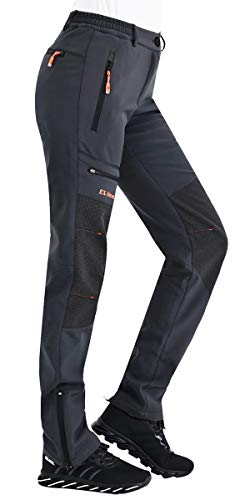
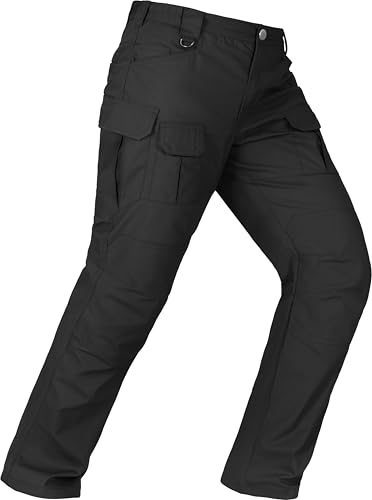
TACVASEN Men's Lightweight Quick-Dry Stretch Jogger Pants are designed for hikers, walkers, and travelers seeking a comfortable, budget-friendly trail bottom. Combining an athletic jogger silhouette with outdoor functionality, this model suits day hikers on maintained park paths, travelers needing packable clothing, and fitness enthusiasts moving between workouts and casual trail walks during spring, summer, and fall.
Trail mobility relies primarily on the listed four-way stretch construction. The fabric incorporates spandex to allow give during high steps, forward strides, and bending over trail obstacles. While the manufacturer specifications do not indicate articulated knee seams or a dedicated gusseted crotch, the inherent fabric flex helps prevent restrictive binding during uphill walking and active workouts.
The garment weighs roughly 0.55 pounds, emphasizing breathability and moisture management over heavy weather protection. The manufacturer lists the synthetic fabric as quick-drying, breathable, and moisture-wicking to keep active wearers cool during mild or humid hikes. In terms of storage, the pants feature two zippered hand pockets and one zippered rear pocket, which help secure keys, cards, or a compact device while on the move.
For fit and daily handling, the waist features an elastic band with an adjustable drawstring closure. This low-profile waist design sits comfortably beneath light daypack hip belts without the bulky pinch points often caused by thick leather belts or heavy metal buckles. The jogger-style tapered leg and narrow cuff opening reduce excess flapping fabric around trail runners or low-profile hiking shoes.
Potential buyers should keep several functional limitations in mind. The product data does not list a durable water repellent (DWR) finish, waterproof barrier, or UPF sun-protection rating, making these pants unsuitable for sustained wet weather or exposed alpine conditions without secondary layers. Furthermore, the listed pocket capacity specifies clearance for up to 5.5-inch mobile phones, meaning larger modern smartphones may require separate pack storage, and the lightweight fabric is not reinforced for bushwhacking through dense briars or abrasive rock scrambles.
Overall, TACVASEN delivers a straightforward, highly affordable option for recreational hikers and active travelers who prioritize lightweight comfort, stretch, and secure zippered pockets. If your typical outings consist of maintained local trails, warm-weather day hikes, travel days, or gym-to-trail workouts, these stretch joggers offer practical utility at an accessible entry point.
Storage on the TACVASEN Men's Hiking Jogger Pants consists of three dedicated zippered pockets designed to keep gear secure during active motion. There are two front side hand pockets and a single rear pocket, each secured with tight stitching to prevent loose items from shifting or falling out on the trail.
The manufacturer notes that these pockets are deep enough to accommodate compact items such as credit cards, keys, and mobile phones up to 5.5 inches in display size. Hikers carrying larger flagship smartphones or bulky GPS units should note that zippered closure may be tight or require stowing larger devices in an external pack pocket.
The waistband utilizes a fully elasticized construction paired with an adjustable drawcord. This setup allows wearers to fine-tune the waist tension without relying on a dedicated belt, ensuring that the pants stay in place during dynamic movements like jogging or stepping up steep trail grades.
Because the waistband is soft and lacks rigid hardware, it interacts cleanly with backpack hip belts and daypack straps. The jogger cut also incorporates a tapered lower leg, keeping hems clean and away from muddy trail surfaces or footwear catches.
Essential Guide to Hiking Pant Materials and Fabrics
Nylon blended with a small percentage of spandex or elastane represents the best all-around material for modern hiking pants. This specific synthetic pairing combines exceptional tensile strength and abrasion resistance with the four-way mechanical stretch required for stepping over fallen logs and scrambling up rocky switchbacks. Polyester blends follow closely behind, offering slightly faster drying times and superior moisture vapor dispersion in sweltering conditions. Understanding how these fibers behave under physical stress helps hikers choose garments that resist wear without trapping sweat against the skin.
The Fundamental Strengths of Nylon in Outdoor Apparel
Nylon fibers feature a remarkably dense molecular structure that withstands dragging across sharp granite and pushing through thorny underbrush. Manufacturers frequently utilize woven nylon because it resists punctures and surface scuffs far better than natural materials or softer synthetics. In addition to high tensile capability, tight nylon weaves naturally deflect moderate gusts of mountain wind. This wind blocking capacity prevents rapid convective cooling during high-altitude scrambles without suffocating the legs. Hikers tackling rough off-trail routes or densely vegetated corridors consistently rely on nylon-dominant bottoms to avoid ripped seams and fabric tears.
Despite its physical toughness, woven nylon remains relatively lightweight and packs down easily into a weekend gear duffel. Advanced manufacturing methods allow producers to spin thin nylon filaments into tight, supple fabrics that do not feel stiff or noisy while walking. The fiber also accepts specialized chemical finishes well, allowing water-resistant coatings to bond securely to the exterior yarns. When paired with reinforced stitching, a nylon foundation ensures a pair of trail bottoms survives multiple seasons of aggressive trail abuse. These qualities make nylon the standard foundation for three-season trekking across demanding alpine environments.
When Polyester Blends Outperform Other Synthetic Fibers
Polyester stands out as the premier choice when hiking primarily in hot, muggy climates or along rainy river valleys where rapid drying takes precedence over extreme abrasion resistance. The chemical structure of polyester is naturally hydrophobic, meaning the individual fibers absorb less than one percent of their weight in liquid water. As a result, sweat generated during steep climbs spreads across a broad surface area on the outside of the pant leg and evaporates into the ambient breeze. Hikers wearing polyester stay drier during heavy cardiovascular efforts, which drastically decreases the danger of painful friction chafing along the inner thighs.
Another practical benefit of polyester involves its innate resistance to ultraviolet radiation from harsh sunlight. Unlike untreated nylon, which can slowly degrade and weaken under prolonged UV exposure at high elevations, polyester fibers maintain their molecular integrity over years of bright sun. Polyester is also naturally colorfast, resisting fading from trail grime, repeated sun exposure, and frequent laundering. For summer day hikes and fast-paced fitness outings, a lightweight polyester jogger or trouser provides excellent breathability while minimizing heavy sweat buildup. Combining polyester with strategic mesh venting creates an optimal system for sweltering summer heat.
The Essential Role of Spandex and Four-Way Stretch
Pure nylon or polyester woven into a rigid canvas can restrict natural leg motion when stepping up steep boulders or ducking under blowdowns. Incorporating elastane, commonly known as spandex or Lycra, adds mechanical flexibility that transforms a stiff pair of pants into an agile, articulated piece of athletic gear. Even a modest addition of five to twelve percent spandex allows fabric panels to expand and recoil dynamically with every stride. This elasticity prevents the waistband and knee panels from pulling taut, keeping the hiker comfortable across shifting trail grades.
Four-way stretch weaves expand both horizontally and vertically, accommodating deep squats and high knee lifts without binding across the quadriceps or seat. When trail bottoms feature this multidirectional flexibility, designers can craft a more streamlined, athletic silhouette that avoids excess billowing fabric. Less excess fabric reduces the chance of snagging on trailside twigs, trekking pole baskets, or low-hanging brambles. The resulting combination of freedom and secure fit enhances overall trail safety on technical scrambles. Hikers investing in comfortable trail bottoms often find that high-spandex blends provide immediate comfort during prolonged descents.
Why Cotton Remains a Liability on Mountain Trails
Cotton clothing poses serious physiological risks on remote trails due to its hydrophilic nature and lack of insulation when damp. Natural cotton fibers absorb up to twenty-seven times their dry weight in liquid moisture, trapping sweat and environmental rain directly against the skin. Once cotton becomes soaked, the water displaces trapped air pockets that would otherwise provide thermal insulation. In breezy or dropping temperatures, wet cotton draws body heat away at an alarming rate, substantially increasing the risk of hypothermia. Even on warm afternoons, damp denim or canvas creates intense friction points that lead to severe skin chafing.
Beyond the thermal danger, wet cotton gains substantial physical weight and dries exceptionally slowly in wilderness environments. A pair of heavy cotton utility pants soaked by morning dew or stream crossings can remain damp for hours or even days inside a shaded canyon. The fabric also loses structural shape when wet, sagging around the hips and bunching behind the knees to impede normal walking mechanics. Synthetic alternatives have largely replaced cotton across modern trail wardrobes for these exact safety reasons. Leaving cotton garments at home remains one of the simplest rules for safe wilderness exploration.
Fabric Weaves, Ripstop Reinforcements, and Material Weights
The way textile mills weave synthetic fibers exerts almost as much influence on trail performance as the chemical composition of the yarn itself. Plain weaves produce flat, smooth surfaces that breathe readily, whereas twill weaves create diagonal ribs that enhance tear resistance and drape nicely over hiking boots. Ripstop weaves incorporate thicker reinforcement threads at regular crosshatched intervals throughout the fabric matrix. If a sharp stick punctures a ripstop garment, the grid pattern halts the spread of the tear before it ruins the entire leg panel.
Fabric weight, typically measured in grams per square meter or ounces per square yard, dictates whether a garment suits warm breezes or chilly ridges. Ultralight fabrics under one hundred and fifty grams per square meter maximize ventilation during intense summer outings but offer minimal wind shielding. Midweight textiles between one hundred and fifty and two hundred and fifty grams balance year-round durability with moderate breathability for three-season trekking. Heavyweight softshell fabrics surpassing two hundred and fifty grams provide brushed interior fleece and dense wind resistance for shoulder-season cold snaps. Matching fabric density to expected trail temperatures prevents both overheating and shivering.
Durable Water Repellent Finishes and Weather Resistance
Most technical hiking pants utilize a chemical treatment known as Durable Water Repellent, or DWR, applied to the outer face of the woven synthetic fibers. This microscopic coating lowers the surface tension of the fabric, forcing droplets of mist and light rain to bead up and roll off rather than soaking into the weave. Maintaining this surface beading allows the breathable pores between the synthetic threads to stay open so internal perspiration vapor can escape freely. Without an effective repellent treatment, outer fabrics wet out, saturating the face yarn and halting vapor breathability.
While DWR coatings handle morning dew and passing showers with ease, they do not turn standard hiking trousers into fully waterproof rain pants. Prolonged downpours or sustained pressure from kneeling on wet ground will eventually push moisture through the breathable gaps in the fabric. Understanding this boundary ensures hikers pack dedicated waterproof hardshells when severe storms threaten backcountry routes. Over time, trail dust and body oils degrade factory repellent coatings, requiring occasional cleaning with technical wash detergents to restore water beading. Properly maintained water repellency keeps pants light and dry across variable mountain climates.
Balancing Breathability with Wind and Insect Protection
Hikers often face a difficult tradeoff between maximizing airflow and protecting their legs from biting insects and chilling mountain gusts. Loosely woven, featherweight fabrics allow cool breezes to penetrate the pant legs, which feels invigorating during strenuous ascents in open meadows. However, open weaves allow sharp winds to strip away body heat on exposed ridgelines and provide little barrier against mosquitoes or biting flies. Tightly woven synthetic textiles strike an effective compromise by preventing insect proboscises from penetrating while moderating heavy wind chills.
Densely woven nylon fabrics create a physical shield that keeps ticks and thorns away from bare legs without relying on sticky chemical bug sprays. This mechanical barrier proves invaluable when navigating overgrown singletrack or bushwhacking through dense brush where trail margins disappear. Hikers searching for durable trail apparel frequently seek tight micro-weaves that deliver insect defense alongside long-term scuff protection. Adjusting ankle cuffs or utilizing elastic jogger hems further seals out crawling pests and trail debris while hiking through thick forest loam. Thoughtful fabric construction ensures defense against environmental annoyances without causing thermal distress.
Practical Features Grounded in Synthetic Construction
Modern synthetic pants often feature specialized closures, athletic jogger cuts, and reinforced utility pockets that complement the flexible fabric base. For example, garments like the TACVASEN Hiking Pants for Men Lightweight Quick utilize a lightweight spandex-mixed fabric with four-way stretch to facilitate unrestricted mobility during dynamic movement. The elastic waistband with an adjustable drawstring ensures the trousers sit comfortably around the hips without requiring a stiff, heavy belt that might rub uncomfortably beneath a backpack hipbelt. These thoughtful design elements turn functional synthetic yardage into a versatile athletic garment suitable for spring, summer, and fall trekking.
Pocket security is another area where synthetic fabric construction makes a notable difference in day-to-day trail utility. Lightweight stretch pants that feature deep zippered pockets, such as two side zippered hand pockets and a secure rear zippered compartment, prevent smartphones, keys, and navigation tools from falling out during steep scrambles. Tight stitching around zippered pocket frames distributes stress across the surrounding synthetic weave, preventing pocket bags from sagging or tearing loose under the weight of personal gear. Having dedicated zippered storage means essential trail items remain instantly accessible without opening a heavy backpack at every trail junction. Practical hardware choices combined with agile stretch fabrics ensure long-lasting trail convenience.
Garment Care and Maintaining Synthetic Fabric Integrity
Preserving the technical attributes of synthetic hiking pants requires straightforward garment care routines tailored to synthetic fibers. Washing synthetic bottoms in cold or warm water on a gentle cycle removes abrasive dirt particles that grind away at delicate spandex filaments. Standard liquid detergents work well, but fabric softeners must always be avoided because they leave a waxy chemical residue that clogs the breathable microscopic spaces between fibers. This waxy coating impairs moisture wicking and permanently degrades the water-beading effectiveness of factory DWR treatments.
Drying technical trail bottoms also demands gentle handling to avoid heat damage to elastane and synthetic yarns. Tumble drying on low heat or hanging the pants to air dry in a well-ventilated room preserves the stretch recovery of the fabric and prevents seam puckering. High dryer temperatures can melt fine synthetic filaments or degrade the elastic waistband, causing the garment to lose its original shape. Following the manufacturer label instructions ensures that four-way stretch panels and quick-drying finishes continue to perform reliably season after season. Proper laundering protects your apparel investment and maintains dependable trail comfort.
Selecting the Best Material Profile for Your Hiking Style
Choosing between nylon, polyester, and hybrid stretch blends ultimately comes down to analyzing your typical trail environments and regional weather patterns. If your adventures involve rugged scrambles, dense brush, and abrasive sandstone, a nylon-dominant weave with reinforced ripstop provides the rugged defense you need. Conversely, if your outings center on humid summer day hikes, fast-packing, or warm-weather travel, a lightweight polyester jogger with spandex offers unmatched moisture evaporation and swift drying times.
Evaluating factors like stretch percentage, fabric weight, and pocket hardware ensures your chosen trousers align with your hiking intensity. Hikers who carry heavy multi-day backpacks benefit from smooth, flat waistbands and flexible four-way stretch that eliminates pressure points under load. Day hikers exploring maintained local park trails can prioritize featherweight breathability and soft hand-feel over extreme rock abrasion resistance. Matching the proven capabilities of synthetic textiles to your personal outdoor routine guarantees reliable protection and effortless stride mobility across every mile.


Write Your Review
No reviews yet. Be the first to share your experience!