


Winter conditions present unique challenges on steep trails, where cold winds and deep snow demand reliable protection. Many cold-weather explorers wonder, can i use ski pants for hiking when temperatures drop and standard three-season bottoms feel too light. While standard downhill ski pants offer exceptional thermal warmth, trail trekking requires far more moisture venting and flexible stride mechanics than sitting on a chairlift. Balancing insulation against active body heat helps hikers avoid sweat accumulation while navigating frost-covered terrain.
If you already own snow apparel, repurposing existing gear sounds practical and budget-friendly for casual cold outings. However, swapping dedicated trail apparel for downhill snow pants introduces clear tradeoffs in weight, noise, and knee flexibility. Pairing functional base layers with specialized lightweight hiking bottoms or winter softshells often delivers better performance during sustained climbs. Examining how fabric construction, thermal lining, and pocket placement impact trail comfort ensures you make an informed decision before heading outdoors.

Pros
- Cozy fleece interior delivers immediate warmth without the constant need for thick thermal base layers.
- Weather-resistant softshell coating helps shed snow, light precipitation, and brisk winter gusts.
- Side-elastic mid-waist allows for comfortable breathing room and flexible fit adjustments.
- Secure front zipper pockets keep essential items from sliding out on the trail.
- Durable ripstop exterior weave resists minor snags and trail scrapes from low brush.
Cons
- Waterproof coating resists snow and dampness, but unsealed seams mean these are not designed for torrential downpours.
- Insulated fleece lining creates excess warmth that makes them unsuitable for mild or hot-weather hiking.
- Available product specifications do not detail exact inseam options or lower-leg cuff adjustments.
The MAGCOMSEN Women's Fleece Lined Softshell Pants are insulated cold-weather outdoor trousers designed for winter day hikers, snowshoers, campers, and cold-climate travelers seeking dependable warmth. Built with a weather-repellent outer shell and a soft interior fleece layer, these bottoms are targeted toward women who spend time outside in low temperatures and brisk winds. Instead of forcing hikers to juggle bulky external shells over heavy thermal tights, this design merges a weather-resistant exterior with an integrated thermal lining into an accessible, all-in-one winter trail pant.
On winter trails and snowy paths, these softshell pants prioritize thermal retention and wind blocking during moderate-paced cold-weather outings. The manufacturer-listed waterproof surface coating helps repel light snow flurries, damp brush moisture, and surface spray, while the dense outer weave acts as a barrier against chilling gusts. The fleece-lined interior features listed moisture-wicking characteristics that help manage sweat during steeper climbs, though softshell construction naturally traps significant heat compared to unlined trekking trousers. For active winter hiking, snowshoeing, or walking exposed ridgelines, the fleece insulation provides a cozy microclimate without feeling excessively stiff.
The pants are built around a durable ripstop exterior fabric paired with an integrated heat-locking fleece backing. The ripstop construction enhances abrasion resistance, giving the surface useful resistance against scratches from low-lying twigs, brush, or rocky outcrops. At the waist, the pants feature a mid-rise cut with a front zipper closure and integrated elastic side sections. This elasticized waistband segment allows the pant to expand and contract with bodily movement, accommodating bending and high steps on uneven trails. For storage, two zippered front pockets give the wearer secure spots to stow a smartphone, identification cards, or small trail snacks without fear of contents falling out into deep snow.
Regarding fit and daily handling, the mid-waist design and side elastic panels provide flexibility around the hip and waist area. The elastic inserts help maintain a snug yet forgiving fit, which can be advantageous when wearing a daypack hip belt or moving between seated and standing positions. Because the pants come with integrated fleece insulation, sizing should account for whether you plan to wear them directly against the skin or layer lightweight thermal bottoms underneath in extreme sub-zero weather. The available product data does not list specific ankle cinches or boot hooks, so hikers pairing these with bulky winter footwear may want to check cuff openings or consider adding separate snow gaiters if traversing deep powder.
Prospective buyers should note specific design boundaries based on available product specifications. While the manufacturer highlights a waterproof coating layer that repels rain and snow, the specifications do not indicate fully taped or sealed seams, meaning the garment is not built for sustained torrential rainstorms or extended submersion. Additionally, the dedicated fleece lining limits year-round utility, making the pants far too warm for spring or summer hiking. The product data also lists only two front zippered pockets, which may limit storage options for hikers accustomed to carrying gear in cargo or rear pockets.
The MAGCOMSEN Women's Fleece Lined Softshell Pants represent a practical, budget-conscious choice for cold-weather day hikers, winter travelers, and outdoor recreationists needing insulated warmth and wind resistance in freezing temperatures. They offer a dependable balance of scratch-resistant ripstop protection, flexible waist comfort, and cozy fleece insulation for snow walking, late-season camping, or winter resort strolls. If you need a reliable, insulated winter hiking pant for sub-freezing trail outings without paying premium technical-mountaineering prices, these fleece-lined pants are an appealing and capable option.
The integrated fleece lining in the MAGCOMSEN Softshell Pants serves as the primary thermal barrier by trapping warm air directly against the lower body. For high-output hiking in temperatures hovering around the freezing mark, the pants generally supply sufficient thermal retention without the mandatory addition of heavy base layers.
When venturing out in extreme sub-zero conditions or stationary cold-weather activities such as ice fishing or winter camping, there may still be room to pair these pants with a slim synthetic or merino wool base layer. The listed moisture-wicking fleece helps pull perspiration away from skin during steep climbs, preventing damp chill when you stop to rest.
Mobility in the MAGCOMSEN Softshell Pants is anchored by an elasticized mid-waist configuration that adjusts to natural body movements. The elastic side panels built into the waistband stretch during bending, sitting, or taking high steps over downed trail logs, helping prevent pinching at the midsection.
While the product details do not list articulated knee darts or a gusseted crotch, the flexible waistband and softshell construction provide adequate everyday freedom of motion for standard hiking, snowshoeing, and outdoor chores. The front zipper closure ensures secure fastening while keeping the waist profile relatively smooth beneath a daypack or hip belt.

Pros
- Integrated fleece lining provides reliable warmth for cold-weather and winter hiking
- Water-repellent and wind-resistant outer shell shields against light snow and chilly breezes
- Ergonomic knee tailoring allows natural stride mobility with minimal fabric bunching
- Zippered thigh pocket keeps small gear secure and accessible under winter layers
Cons
- Water-repellent finish resists snow and light precipitation but lacks fully taped waterproof seam sealing for heavy downpours
- Thermal fleece lining makes these pants too warm for mild, warm-weather, or summer hiking
- Product specifications do not list exact waist, rise, or inseam measurements
The Wespornow Women's Fleece-Lined Softshell Hiking Pants are engineered specifically for cold-weather hikers, snowshoers, and winter outdoor enthusiasts who need built-in warmth. By pairing a soft, heat-trapping fleece interior with a weather-resistant softshell exterior, these pants offer an all-in-one thermal solution for chilly shoulder-season outings and winter day treks. They serve outdoor recreationists who want more protection than standard lightweight nylon hiking pants provide, without the heavy bulk or stiffness of traditional alpine ski pants.
On the trail, freedom of movement and weather protection are essential during cold-weather ascents. The manufacturer incorporates an ergonomic knee construction designed to follow the natural bend of the leg, reducing bunching and binding when stepping over deadfall or powering up steep switchbacks. The outer face is treated with a water-repellent coating to help shed drifting snow and light drizzle while cutting out brisk wind chill. While the softshell weave offers breathability to let sweat escape during active climbs, the fleece interior naturally retains heat, making these bottoms best matched to cool and sub-freezing temperatures rather than high-output aerobic efforts in mild weather.
Storage and practical trail utility are handled through a straightforward, multi-pocket setup. Wespornow includes classic front slant hand pockets, a secure zippered rear pocket, and a dedicated zippered pocket on the right thigh. The thigh pocket is particularly useful for hikers wearing longer winter coats or backpack hip belts, as it keeps small essentials like keys, trail permits, or lip balm readily accessible without interfering with harness straps. The softshell fabric provides a durable barrier against brush, while the inner fleece eliminates the cold, clammy feeling that unlined synthetic pants often have when first put on.
In terms of sizing and everyday handling, these pants are offered in women's Medium in black, engineered for a streamlined profile that fits over typical winter hiking boots. Because of the built-in fleece lining, shoppers should consider whether they plan to wear these directly against the skin or layer them over technical base layers on exceptionally frigid days. The available product data does not specify exact inseam lengths, rise measurements, or waist adjustment mechanisms, so consulting a comprehensive brand sizing guide is recommended prior to purchase.
A realistic limitation of this design relates to extreme wet-weather protection. While the product title uses the term waterproof, the manufacturer features clarify that the pants utilize a water-repellent coating to repel rain and snow. Without a verified waterproof membrane and taped seams, these pants will protect against dry snow, light flurries, and frosty vegetation, but they will eventually wet out in soaking downpours or heavy, slushy winter rain. Additionally, the integrated fleece makes them unsuitable for warm-weather or humid summer hiking.
The Wespornow Women's Fleece-Lined Softshell Pants represent a practical, value-oriented investment for cold-weather hikers and winter trail walkers. If you need comfortable thermal insulation, dependable wind resistance, and functional zippered pockets for snowshoeing, winter camping, or freezing day hikes, these pants offer strong trail usability. For persistent rain or high-elevation alpine mountaineering requiring certified waterproof protection, pairing unlined hardshell rain pants with modular thermal base layers remains the more technical route.
The integrated fleece lining in the Wespornow Women's Pants acts as a built-in mid-layer, trapping body heat to keep legs comfortable in freezing conditions. For most day hikers operating in moderate winter temperatures, these pants provide ample warmth worn directly against the skin without requiring separate thermal underwear.
In deep sub-freezing environments or during low-movement activities such as winter camping and ice fishing, these pants can be combined with a moisture-wicking synthetic or merino wool base layer. When stepping into soaking, slushy snow or active rainstorms, hikers should layer a dedicated waterproof rain shell over the exterior to maintain a complete barrier against water intrusion.
Wespornow incorporates ergonomic knee shaping to help ensure flexible movement during steep ascents and dynamic trail steps. This knee tailoring reduces excess fabric bunching behind the joints, which helps reduce chafing over long winter trail miles.
The pocket layout is designed around practical trail storage, featuring an exterior right-thigh zippered pocket alongside front slant pockets and a rear zip pocket. The thigh placement allows quick access to essential gear even when wearing a backpack with a padded hip belt or an extended winter parka.
Pros
- Bonded fleece interior delivers immediate warmth in chilly autumn and winter conditions.
- Four dedicated zippered pockets keep trail essentials like maps, knives, and keys fully enclosed and secure.
- Elastic adjustable waist accommodates different base-layer thicknesses without binding.
- Abrasion-resistant outer softshell fabric holds up well against trail obstacles and rough brush.
Cons
- Water-resistant fabric handles snow and light spray well but is not intended for sustained heavy rainfall.
- Thermal fleece interior makes these pants unsuitable for mild or warm-weather hiking due to heat buildup.
- Fit is size-specific (size 34 listed) and requires checking base-layer room before selecting a waist size.
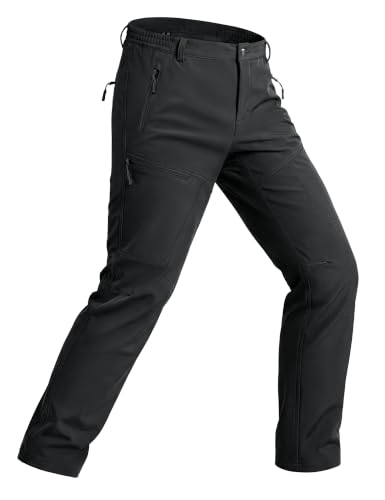
The MAGCOMSEN Men's Winter Hiking Pants are fleece-lined softshell outdoor trousers engineered specifically for cold-weather recreation. Designed for autumn and winter conditions, they serve day hikers, snowshoers, winter campers, and outdoor travelers who need warmth and wind protection without restricted movement. By pairing a stretch softshell outer layer with a thermal fleece lining, these pants target the cold winds, dry snowfall, and frosty mornings common on late-season trails.
Trail functionality centers on warmth, ease of movement, and reliable cargo management. The elastic adjustable waistband stretches to fit your midsection comfortably, facilitating easy on-and-off handling over thermal long underwear. For carrying personal gear on trail, four dedicated zippered pockets provide generous storage. The pair includes two side zip hand pockets, one rear zip pocket, and a cargo-style thigh zip pocket, ensuring critical items such as trail snacks, car keys, pocket knives, or a phone remain securely stowed during active movement.
Material quality reflects an emphasis on cold-weather durability and weather resistance. The exterior is crafted from an abrasion-resistant functional fabric designed to endure scraping from trailside brush, thorns, and rough rock faces. This softshell layer also provides windproof protection and water resistance, shielding your legs from biting breezes and shedding light snow. Inside, the soft fleece lining traps escaping body heat to maintain warmth without adding unwieldy bulk.
Day-to-day usability is straightforward on and off the trail. The stretchy waist simplifies layering adjustments when morning temperatures give way to active hiking output. The zippered pocket closures prevent snow drift and trail grit from getting inside your gear compartments. When returning from winter excursions, standard gentle washing and line drying help maintain the protective softshell surface and keep the fleece lining soft and lofty for subsequent adventures.
Prospective buyers should keep a few practical limitations in mind. The fabric is water-resistant and windproof, which works very well in falling snow and light mist, but it lacks taped seams and is not a substitute for dedicated hard-shell waterproof rain pants in a downpour. Additionally, the thermal fleece interior provides substantial warmth, meaning these pants will quickly cause overheating if worn during moderate spring or summer hikes. Hikers should verify their waist measurement against the listed size 34 to ensure proper clearance for any base layers they plan to wear.
For outdoor enthusiasts heading out into chilly autumn breezes, snowy trails, or cold-weather camps, the MAGCOMSEN Men's Fleece-Lined Hiking Pants offer a dependable combination of wind resistance, warmth, and secure pocket capacity. They are an accessible, practical choice for hikers who need functional abrasion resistance and insulated leg protection throughout the winter season.
The pants are built with four dedicated zippered pockets to maximize gear organization while keeping items secure on the trail. Two side zip pockets offer convenient storage for hands or small essentials, while the rear zip pocket provides a flat space for wallets or cards. The additional thigh cargo pocket delivers easily accessible carrying capacity for items like a compass, trail guide, or phone without interfering with hip-belt placement from a backpack.
Engineered with a functional two-tier construction, the outer layer uses an abrasion-resistant stretch softshell fabric that resists snagging on rocks, branches, and trail underbrush. The exterior provides windproof and water-resistant performance to shed snow flurries and block cold air. The bonded fleece interior functions as an insulating barrier, trapping warm air against the skin while remaining soft and breathable during active winter use.
Evaluating Ski Pants for Winter Hiking: Performance, Tradeoffs, and Trail Practicality
The short answer to whether you can hike in ski pants is yes, but only under specific cold-weather conditions. Standard downhill ski pants excel at blocking freezing wind and resisting snow during inactive periods, making them usable for short winter strolls or relaxed snowshoe treks. However, sustained hiking generates immense aerobic heat, which quickly turns heavily insulated ski bottoms into sweat traps. Understanding how fabric weight, ventilation, and leg articulation function on the trail helps you decide whether your snow pants are suitable for your next adventure.
The Direct Answer: When Ski Pants Work on the Trail (and When They Fail)
Ski pants perform reasonably well when ambient temperatures hover well below freezing and your route involves flat terrain or minimal elevation gain. In sub-freezing conditions, the heavy outer shell and thermal barrier shield your legs against biting winds and drifting powder. If you plan a gentle winter walk, a short snowshoe outing, or an easy day hike with frequent stops, standard snow bottoms provide dependable warmth. They keep your lower half dry when sitting on snow banks or pushing through powder drifts.
Conversely, using traditional ski apparel becomes counterproductive as soon as the trail steepens or the temperature rises above freezing. Sustained uphill hiking demands active temperature regulation that standard insulated alpine bottoms cannot accommodate. Hikers often experience excessive perspiration within twenty minutes of climbing, leading to soaked inner layers. Once your base layer becomes damp from sweat, stopping for a quick rest can induce rapid chilling, creating potential hypothermia risks in exposed mountain environments.
Overheating and Moisture Management During Aerobic Ascents
Managing internal moisture represents the greatest challenge when using snow pants for trail activities. Downhill ski apparel is designed primarily for downhill bursts followed by extended sedentary periods on cold chairlifts, prioritizing heavy heat retention over vapor transfer. Hiking requires continuous physical exertion where your leg muscles generate significant metabolic heat every minute. Without specialized thigh vents or high-breathability fabrics, perspiration condenses inside the garment against your skin.
Trapped moisture rapidly reduces the insulating effectiveness of your clothing layers while causing uncomfortable chafing along the inner thighs. When sweat cannot escape through dense outer membranes, it pools inside the fleece lining or base fabric. In cold outdoor environments, dry skin is your primary defense against sudden drops in core body temperature. If your ski pants lack zippered ventilation slits along the thighs, regulating your internal temperature during steep trail ascents becomes nearly impossible.
Fabric Mobility, Stride Resistance, and Articulated Knee Design
Stepping over fallen logs, climbing rocky steps, and navigating uneven switchbacks require unrestricted knee flexion and hip extension. Traditional alpine ski pants frequently feature stiff outer shells and bulky synthetic insulation that resist natural walking strides. Over several miles, pushing against heavy, non-stretching fabric causes premature muscular fatigue in your quadriceps and hip flexors. Choosing apparel with built-in stretch or flexible softshell fabric drastically reduces physical strain on technical winter routes.
Ergonomic knee tailoring plays a decisive role in trail mobility across snowy grades. Dedicated cold-weather garments, including specialized articulated knee hiking pants, utilize pre-shaped seams that match the natural bending angle of your leg. For instance, the Wespornow women’s snow ski pants incorporate an ergonomic knee design intended to minimize fabric bunching and maintain full walking freedom. Without adequate knee shaping or softshell elasticity, repetitive leg movements create friction and annoying fabric rustling with every single forward step.
Bulk, Packability, and Leg Cuff Compatibility Around Hiking Boots
Downhill ski pants are engineered with wide leg cuffs specifically patterned to fit over rigid, high-volume plastic ski boots. When paired with standard winter hiking boots or trail footwear, these oversized hems leave excess fabric swishing against your lower legs. The internal snow gaiters built into ski pants often fit too loosely around narrower hiking collars, allowing powder to sneak upward during deep postholing. Excess lower-leg volume also increases the likelihood of snagging a cuff on hidden branches or catching it with trekking pole tips.
Packing volume is another serious consideration for hikers who like carrying emergency layers inside a daypack. Standard insulated ski trousers consume enormous space inside a pack and add noticeable dead weight to your gear load. If conditions warm up midday and you need to shed your outer bottoms, stowing bulky snow pants requires a surprisingly large backpack compartment. By comparison, purpose-built trail garments fold compactly and weigh significantly less, making pack management much simpler during variable mountain weather.
Softshell Crossover Designs Versus Heavy Downhill Ski Pants
A noticeable difference exists between rigid alpine ski gear and modern fleece-lined winter softshell trousers. Many outdoor pants sold under snow or ski labels actually feature flexible softshell outers bonded directly to thin fleece linings. The MAGCOMSEN women’s fleece lined waterproof pants illustrate this crossover approach by combining a weather-resistant softshell exterior with a heat-locking inner fleece layer. These hybrid designs eliminate heavy interior batting while preserving water resistance and wind blocking, making them far more practical for winter trail walking.
Similarly, the MAGCOMSEN men’s snow ski pants utilize an abrasion-resistant functional fabric that stretches with your body while deflecting rock scrapes and branch snags. Unlike stiff downhill ski trousers with thick padding, softshell crossover apparel provides the necessary thermal balance for active movement. The fleece interior delivers immediate warmth against the skin while remaining breathable enough to handle steady, low-intensity winter treks. Choosing a fleece-backed softshell rather than a multi-layer insulated ski suit represents the smartest compromise for cold-weather day hikes.
Weather Resistance: Waterproof Membranes Versus Water-Repellent Coatings
Downhill ski pants often rely on fully taped waterproof membranes designed to keep riders dry while sitting on wet chairlift benches or falling in slush. While complete waterproofing sounds ideal, impenetrable membranes trap internal perspiration just as effectively as they block outside moisture. Most winter hiking conditions, particularly in dry powdery snow or crisp freezing air, do not require extreme waterproof ratings. Instead, water-resistant fabrics treated with a durable water repellent coating provide adequate snow shedding without completely sacrificing active airflow.
Both the Wespornow and MAGCOMSEN softshell designs utilize surface coatings engineered to repel light rain, melting snow, and brisk winds. These coatings prevent frozen flakes from soaking through the outer weave while you hike through powder or light flurries. Furthermore, ripstop fabric constructions help protect the surface layer from puncture tears when brushing against frozen undergrowth. For wet, slushy winter days where temperatures hover near thawing, heavier waterproof protection may be helpful, but dry freezing trails favor breathable water-resistant weaves.
Pocket Layout, Waistband Adjustability, and Trail Hardware Security
Trail hikers access their belongings differently than resort skiers who generally carry essentials inside secure jacket compartments. On a hiking trail, having accessible, zippered cargo and thigh pockets allows quick access to navigation tools, lip balm, and energy snacks without unbuckling your hip belt. Garments like the MAGCOMSEN men’s winter trousers feature four secure zippered pockets, including a dedicated thigh pocket that remains reachable beneath a backpack harness. Zippered closures are essential on snowy routes to prevent cold powder from filling open pockets during accidental slips.
Waistband comfort also dictates how well a pair of winter bottoms performs under the weight of a loaded daypack. Ski pants often feature rigid button snaps or thick bib suspenders that can press uncomfortably against your hips beneath a pack strap. Modern winter trail bottoms incorporate elasticized waist panels or adjustable side tabs to maintain a snug fit across varying body shapes. The Wespornow women’s snow ski pants utilize flexible waist construction that stays secure during dynamic climbing motions without causing painful pressure points along the pelvis.
Layering Systems: How to Stay Comfortable Under Varying Trail Temperatures
Layering strategy determines whether your winter outing feels comfortable or miserable from start to finish. When using fleece-lined snow apparel, you rarely need a heavy thermal base layer underneath unless temperatures sink into single digits. Adding a thick long-underwear bottom beneath fleece-backed pants almost always causes premature overheating on the first steady ascent. In moderate cold, wearing fleece-lined softshells directly against bare skin provides ample warmth while preserving natural mobility and comfort.
If you regularly venture out in fluctuating mountain climates, investing in modular clothing systems delivers far superior adaptability. Hikers often discover that pairing breathable base bottoms with dedicated dedicated trail pants and packable lightweight rain shells offers better thermal flexibility than wearing one heavy snow pant. A modular system lets you strip down to a light wind-resistant layer when working hard uphill, then pull on a weather shell when resting on windy summits. Ski pants lock you into a single heavy warmth level, limiting your ability to adapt to changing terrain demands.
Durability and Protection Against Trail Hazards
Winter trails present hazards that ski resorts rarely feature, including jagged rock outcrops, frozen thorny brush, and sharp crampon spikes. Downhill ski pants often feature smooth outer surfaces designed to glide across powder, which may snag easily on rough branches or abrasive stone. Choosing apparel with reinforced ripstop fabrics or tough nylon blends protects against costly tears when pushing through overgrown alpine corridors. Functional ripstop construction distributes tension across a woven grid, preventing small snags from expanding into major fabric rips.
Abrasion resistance around the lower inner ankle is particularly valuable if you hike with snowshoes or traction cleats. A misplaced microspike can instantly slice through delicate outer fabric if the lower cuffs lack protective scuff guards. The MAGCOMSEN men’s winter trousers emphasize abrasion-resistant functional fabric throughout their construction to withstand routine scrapes from rocks and brush. Inspecting the durability of high-wear areas before your trek helps prevent garment damage while keeping your legs protected against rugged outdoor obstacles.
Essential Trail Checklist Before Hiking in Snow Pants
Before committing to a day hike in ski pants, inspect your garment carefully to identify potential trail limitations. Check whether the outer shell permits comfortable high-stepping by performing several deep lunges across your living room floor. Verify that the ankle cuffs can be secured snugly over your hiking boots to keep snow from penetrating your socks. You should also ensure the fabric does not produce loud, irritating swishing noises with every stride, which can quickly detract from a peaceful outdoor experience.
Finally, consider your planned route difficulty, anticipated elevation gain, and forecasted weather conditions before leaving the trailhead. If your winter hike involves steep inclines or temperatures above freezing, consider switching to lighter softshell trekking pants or packing extra venting options. Bringing lightweight gaiters can also bridge the gap between wide ski cuffs and narrower hiking footwear in deep snow. Taking time to assess your apparel ensures that cold winds and snowy trails remain enjoyable rather than exhausting.
Making the choice between dedicated winter hiking apparel and repurposed snow pants ultimately comes down to activity intensity and ambient temperature. While traditional downhill ski pants remain too hot and restrictive for steep, demanding climbs, modern fleece-lined softshell snow pants provide a balanced crossover solution for cold-weather trails. Checking fabric stretch, ventilation options, and cuff fit before heading out helps ensure a safe, warm, and comfortable winter hiking journey.


Write Your Review
No reviews yet. Be the first to share your experience!