


Downhill toe bang, heel lift blisters, and aching arches can quickly ruin an otherwise spectacular backcountry journey. Understanding how to shop for hiking boots requires looking beyond shelf aesthetics and focusing on structural fit, terrain demands, and chassis support. A trail shoe that feels plush inside a store may fold under a multi-day pack or fail across slick granite scrambles. Hikers must assess foot volume, upper durability, and midsole rigidity before committing to a pair for serious mountain travel.
Footwear selection also directly influences your broader trail comfort and pacing, much like pairing the right footwear with durable lightweight trail pants during long ascents. Foot volume expands naturally after several miles, meaning a boot must offer adequate toe clearance while locking down the heel pocket. From lightweight day hiking options to heavy-duty mountain boots featuring rigid nylon midsoles, identifying your specific trail needs ensures long-term comfort. Taking time to evaluate flex, breathability, and traction will prevent common foot ailments across varied trail conditions.



Evaluating Trail Footwear Architecture and Fit
Selecting the right pair of hiking boots is an essential gear decision that directly dictates endurance and safety on rugged terrain. Every trail presents unique demands, ranging from soft forest loam to jagged alpine scree and high-heat canyon trails. Focusing on core construction elements like chassis stiffness, upper materials, and anatomical fit ensures that feet remain protected. Understanding the mechanical differences between lightweight trail footwear and rigid mountain boots enables hikers to make informed gear choices.
Assessing Foot Volume, Shape, and Critical Sizing Checks
An accurate fit forms the foundation of any reliable trail footwear setup. Feet naturally expand and swell throughout a long day of walking under load, often increasing by a half-size. For this reason, trying on boots late in the afternoon while wearing dedicated hiking socks provides the most realistic measurement. Matching internal volume to instep height prevents uncomfortable pressure points and unwanted foot movement.
A standard sizing verification begins with the unlaced heel test before tying the laces. Slide your foot forward until your toes lightly touch the front of the toe box, then check the space behind your heel. You should comfortably fit one finger behind the heel, indicating sufficient forward clearance for steep descents. If your heel contacts the back while toes press the front, the boot is too short.
Downhill toe clearance must also be confirmed while the boot is fully laced and secured. Stamping your foot forward on an incline board should not cause your toes to ram into the front bumper. Hikers with wider forefeet must seek lasts that allow natural metatarsal splay without lateral pinching. Conversely, hikers with narrow heels need a snug heel cup that holds the calcaneus firmly to prevent blisters.
Upper Materials: Full-Grain Leather Versus Lightweight Synthetics
The material composition of a boot upper establishes its overall weight, durability, and trail protection. Heavy-duty mountain footwear, such as the Kenetrek Men’s Mountain Extreme, utilizes thick 2.8mm premium full-grain leather built with a one-piece vamp construction. This seamless design eliminates vulnerable tongue seams and delivers superior abrasion resistance against sharp granite. Full-grain cowhide uppers naturally resist water penetration and mold to foot contours over time.
In contrast, lighter trail models often incorporate thinner leathers or synthetic textile panels to reduce foot fatigue on day hikes. Options like the Timberland White Ledge use seam-sealed waterproof full-grain leather designed for immediate flexibility and trail readiness. Synthetic textiles and split leathers offer lower weight out of the box, making them appealing for casual outings. Lighter fabrics offer less structural defense against sharp rock edges than thick leather hides.
Choosing between leather and synthetic uppers also impacts long-term maintenance and field care routines. Full-grain cowhide boots, including models crafted by SL-Saint, require regular conditioning to prevent the natural fibers from drying out or cracking. Synthetic fabrics dry faster after stream crossings but cannot be conditioned once fibers abrade. Evaluating the typical roughness of your routes helps determine whether heavy leather protection or lightweight synthetic agility is appropriate.
Weatherproof Membranes Versus Unlined High-Heat Breathability
Moisture management remains a critical consideration when evaluating different boot constructions. Waterproof breathable membranes, such as Windtex or specialized bootie liners found in R CORD boots, block external rain while allowing internal perspiration to escape. These systems perform reliably in wet climates, slush, and muddy terrain where keeping outside moisture away from socks is vital. They create a protective barrier that keeps feet dry across saturated mountain meadows.
Waterproof membranes have distinct physical limitations when hiking in arid environments or high summer temperatures. In extreme heat, external humidity gradients drop, which restricts how effectively sweat vapor passes outward through microporous liners. This issue causes sweat to accumulate rapidly inside the boot, leading to damp socks and painful hot spots. Recognizing this performance limitation helps hikers select footwear suited to expected seasonal temperatures.
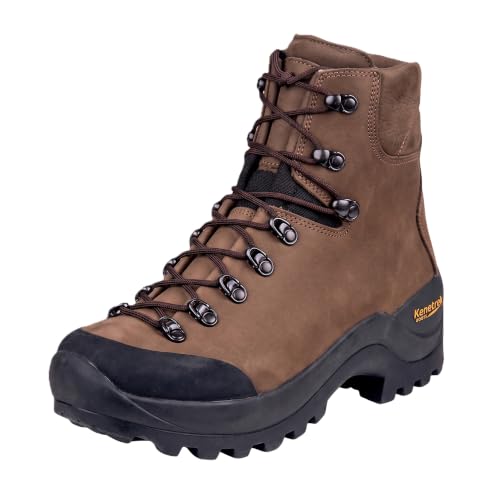
For desert trekking and warm-weather exploration, unlined footwear offers substantial advantages over waterproof models. The Kenetrek Men’s Desert Guide deliberately eliminates the waterproof membrane to maximize airflow and keep feet cool under intense heat. Without an internal membrane barrier, air circulates directly through the thick leather upper, allowing sweat to evaporate quickly. When navigating arid canyons, an unlined boot prevents excessive heat buildup and maintains a drier interior.
Midsole Rigidity, Internal Shanks, and Pack Load Support
Underfoot support is governed primarily by the construction of the midsole and internal structural shank rather than collar height alone. Flexible midsoles crafted from soft EVA foam deliver plush cushioning on gentle paths, absorbing impact on short outings. However, when carrying heavy loads over uneven ground, a flexible sole bends over sharp rocks, transferring strain to arches and ankles. This continuous flexing causes underfoot fatigue over sustained trail mileage.
Backpackers navigating steep, off-trail terrain with heavy gear require robust structural support underneath the footbed. Boots equipped with rigid 7mm nylon midsoles provide an unyielding platform that prevents excessive torsional twist. This rigid foundation distributes pack weight evenly across the base of the foot, reducing plantar strain during steep ascents. Pairing supportive footwear with balanced gear like internal frame backpacks ensures that heavy loads remain stable on rocky ridgelines.
Torsional rigidity can be checked easily by grasping the heel and toe of the boot and twisting them in opposite directions. A boot intended for rugged backcountry use should firmly resist twisting, providing stability on off-camber slopes. Day hiking footwear can afford greater torsional flex, facilitating a natural rolling stride on groomed paths. Matching midsole stiffness to your pack weight prevents unnecessary muscular fatigue.
Outsole Traction, Rubber Compounds, and Lug Geometry
Traction performance depends on both the composition of the rubber outsole and the physical geometry of the tread lugs. Deep, aggressive lugs like the K-Talon outsole pattern found on technical mountain boots provide biting traction in loose scree, mud, and snow. Widely spaced perimeter lugs facilitate self-cleaning, shedding sticky mud clumps so the sole maintains continuous ground contact. Clogged tread lugs quickly transform a supportive boot into a slipping hazard.
Outsole design must also incorporate specific downhill braking mechanisms to keep hikers secure on steep descents. Look for boots featuring a defined, undercut heel breast that bites into soft ground when descending slick dirt or scree. Non-slip rubber soles with multi-directional lugs, such as those featured on R CORD outdoor boots, provide dependable multi-angle stability across wet rocks and gravel. A well-engineered tread profile instills confidence during tricky descents.
Rubber compound hardness represents another vital tradeoff between surface grip and long-term durability. Softer sticky rubbers adhere exceptionally well to slick, wet granite but wear down quickly on abrasive sandstone. Denser rubber formulations resist abrasion across sharp talus, extending tread lifespan over hundreds of trail miles. Outsoles reinforced with protective rubber toe rands also defend front stitching against cuts from hidden rocks.
Lacing Hardware and Pressure-Relief Lacing Techniques
The lacing system acts as the mechanical interface locking your foot into the internal chassis of the boot. Premium outdoor models often feature rustproof speed lace hardware, swivel eyelets, and locking top hooks that facilitate precise tensioning. Swivel hardware prevents binding along high-stress flex zones, allowing the upper collar to move naturally with your stride. Secure top hooks enable hikers to lace the lower foot snug while leaving the collar slightly looser.
Heel slippage is a primary cause of severe friction blisters, but it can be corrected using targeted lacing methods. Applying a surgeon’s knot above the instep locks tension in the lower laces, preventing the heel from lifting during steep ascents. To tie this knot, cross the laces twice before passing them through the eyelet, creating a friction lock that stays firm. This technique isolates lower-foot tightness from ankle mobility, maintaining heel lockdown without restricting blood flow.
Hikers with high insteps often experience uncomfortable numbness when laces press directly against sensitive dorsal nerves. Window lacing, also known as parallel lacing, solves this problem by skipping an eyelet crossing directly over the sensitive pressure point. Instead of crossing over, the lace runs vertically up the side eyelets before resuming its standard crisscross pattern higher up. Utilizing customized lacing strategies allows you to tailor boot volume to your anatomical needs.
Progressive Break-in Schedules and Upper Conditioning
Modern synthetic footwear frequently provides immediate comfort, but stiff leather boots require a deliberate break-in process. Stiff 2.8mm full-grain leather boots must be conditioned gradually to allow thick hides to soften and conform to your foot shape. Wearing a brand-new pair of heavy backpacking boots directly on a multi-day trek often results in painful hot spots and heel chafing. A systematic break-in schedule ensures that footwear is fully trail-ready before demanding outings.
Begin the break-in process by wearing your boots indoors for several hours each day while completing routine tasks. Once the footbeds begin to mold to your soles, progress to short neighborhood walks and flat park paths. Gradually introduce incline walking while carrying a light daypack to simulate trail forces and verify that heel hold remains secure. This progressive exposure softens the leather collar and flex notches naturally without causing excessive foot soreness.
Proper care during and after the break-in phase is vital for preserving leather integrity and seam strength. Never attempt to accelerate break-in by soaking boots in hot water or drying wet leather beside a campfire or radiator. Excessive direct heat causes natural leather to dry out and crack while degrading the adhesives that bond the outsoles. Applying quality conditioners maintains suppleness, preserves water resistance, and prevents premature leather dry rot.
Joint Protection, Trail Mobility, and Lower-Body Comfort
Footwear stiffness and collar support directly influence the amount of fatigue transferred upward to your knees, hips, and lower back. When boots lack sufficient torsional rigidity, stabilizing muscles around the ankle joint must work continuously to maintain balance. This extra muscular effort leads to premature lower-leg fatigue, which often alters walking gait and strains knee tendons. Pairing stable boots with protective apparel like knee support hiking pants helps maintain joint stability across demanding mountain descents.
Collar cut height should be matched to both your physical ankle strength and the roughness of the trail surface. Mid-cut boots provide a balanced blend of trail debris protection and freedom of movement for standard trail rambles. High-cut designs provide extended scree protection, keep out loose pebbles, and offer superior physical shielding against lateral impacts on talus fields. Choosing the right shaft height depends largely on whether you prioritize agility or off-trail protection.
Recognizing Midsole Fatigue and Replacement Thresholds
Even the most durable hiking boots eventually reach the end of their functional lifespan as internal components degrade. While leather uppers can often last for many years with proper conditioning, cushioning midsoles break down over time. Compression-molded EVA foams gradually lose their rebound elasticity, packing down under continuous body and pack weight. Once a midsole compacts, it no longer absorbs ground impacts effectively, transferring excessive shock directly into your joints.
Inspect your boots regularly for visible indicators of structural wear and mechanical degradation. Deep horizontal wrinkles across the sides of the foam midsole indicate severe compression pack-out and loss of supportive cushioning. Outsoles with rounded, worn-down lugs provide drastically reduced grip on wet surfaces and need attention before you embark on slick routes. If the protective rubber rand begins to delaminate or stitching separates, resolving these issues promptly prevents trail failures.
Ultimately, choosing how to shop for hiking boots comes down to aligning footwear engineering with your trail goals. Prioritize structural volume match, appropriate sole rigidity for your expected pack weight, and breathable or waterproof uppers suited to your climate. Taking time to test fits thoroughly on inclines, practice targeted lacing adjustments, and break in leather components guarantees rewarding trail journeys. With the right boots supporting your feet, you can confidently take on challenging wilderness paths mile after mile.



Write Your Review
No reviews yet. Be the first to share your experience!