


Navigating rocky trails and varied outdoor terrain often sparks an immediate question regarding footwear selection and foot protection. Many beginner and seasoned hikers wonder if do you have to wear hiking boots on every trek, or if lighter trail running shoes and hybrid sneakers offer sufficient stability. Traditional mid-cut hiking boots provide remarkable underfoot protection, protective toe rands, and elevated weather defense that shield feet from sharp rock strikes and deep mud. Pairing supportive trail footwear with comfortable breathable hiking pants helps ensure unrestricted mobility while protecting lower extremities from abrasive brush.
Footwear choice ultimately depends on pack weight, trail severity, individual joint conditioning, and expected weather conditions. Traditional footwear provides torsional rigidity, firm heel counters, and thick lugged outsoles that excel on steep climbs and loose scree. Meanwhile, modern lightweight ankle shoes deliver impressive agility and ventilation for casual day excursions on well-maintained paths. Understanding how footwear mechanics align with your specific trekking plans enables you to choose between rigid ankle support and lightweight trail freedom with complete confidence.

Pros
- Built specifically to withstand higher body weights and heavier gear loads without flattening out quickly
- Trim-to-fit guidelines easily adapt to a wide range of men's shoe sizes from 8 to 14
- Deep heel cup and targeted cushioning absorb hard shock on rocky trails and packed ground
- Effective arch support helps balance pressure distribution over long walking distances
Cons
- Requires careful manual trimming with scissors to fit your specific footwear shape
- Generous heel cushioning adds vertical volume that may feel tight in low-profile or narrow trail shoes
- Size range is limited to men's sizes 8 to 14, excluding smaller feet or narrow women-specific lasts
Dr. Scholl's Heavy Duty Support Insoles are specialized orthotic replacement footbeds designed specifically for men over 200 pounds, tall individuals, and those with wide feet. Many stock footbeds included in hiking boots and trail footwear consist of thin, flat foam that quickly compresses under heavy body weight or the added load of a backpacking pack. These aftermarket inserts serve as a rugged foundation, replacing flimsy factory liners to provide structured arch support and enhanced shock absorption for men wearing shoe sizes 8 through 14.
Trail comfort depends heavily on how forces are managed between your foot and the terrain. According to manufacturer specifications, these insoles feature extra supportive heel cushioning that surrounds the heel perimeter to absorb harsh shock on rocky surfaces, gravel paths, and hard-packed trails. The contoured arch support works in tandem with the heel structure to distribute body and gear weight across the entire base of the foot, helping to alleviate leg fatigue and lower-back strain during long day hikes or gear-heavy trail outings.
Constructed from durable multi-density materials in a grey, blue, orange, and yellow layout, these inserts are engineered to hold their structural shape over extended wear. Weighing approximately 0.44 pounds in the package, the footbeds balance rigid arch reinforcement with resilient cushioning that resists premature flattening. The firm arch bridge maintains its integrity under load, ensuring consistent footbed alignment when navigating uneven terrain, switchbacks, or extended downhill descents.
Setup and installation follow a straightforward trim-to-fit process. Hikers should remove the existing stock footbeds from their hiking boots or work shoes, place them directly over the Dr. Scholl's inserts as a cutting guide, and trim along the toe box with household shears. Because these inserts feature substantial heel padding and structured arch support, they perform best in mid- to high-volume hiking boots and outdoor footwear that have sufficient vertical space and fully removable factory insoles.
There are practical limitations to keep in mind before purchasing. Because the heel cup and arch areas feature thicker supportive padding, these footbeds reduce the overall interior volume of your footwear, which may cause snug trail runners or low-instep shoes to feel overly tight across the top of the foot. Furthermore, the sizing only spans men's sizes 8 through 14, meaning individuals with smaller feet or those requiring narrow, women-specific heel profiles will need to look elsewhere.
For hikers, campers, and outdoor workers over 200 pounds who need extra stability and impact protection in their trail footwear, Dr. Scholl's Heavy Duty Support Insoles offer an accessible and reliable solution. If your hiking boots accommodate high-volume replacement insoles, these footbeds provide substantial underfoot support that helps absorb trail shock and distribute pressure throughout demanding days outdoors.
Dr. Scholl's Heavy Duty Support Insoles are engineered with a trim-to-fit format covering men's footwear sizes 8 through 14. Clear size guidelines on the bottom of the forefoot allow users to carefully trim away excess material to match the exact interior profile of their specific boots or shoes.
For the best fit inside hiking boots, remove the original factory insole and trace its outline onto the new footbed before cutting. The insole is built with a wider profile suited for standard to wide-width footwear, making it an excellent match for roomier hiking boots, though it may require additional side trimming to fit narrow lasts.
These orthotic inserts are clinically engineered to support individuals over 200 pounds by reinforcing the primary impact zones of the foot. The deep heel cup cradles the heel to keep it centered while dedicated cushioning materials absorb shock generated with every stride on rugged ground.
The built-in arch support prevents the footbed from collapsing under heavy pack weights, which promotes even pressure distribution across the foot. This combination of arch stability and heel cushioning helps reduce the repetitive strain that often leads to leg fatigue and lower-back discomfort during extended outdoor activities.

Pros
- Lightweight design at 12.3 oz per shoe reduces leg strain during long walking days.
- Cushioned EVA insole and breathable mesh panels provide dependable out-of-the-box comfort.
- Rugged rubber outsole delivers slip-resistant traction across dirt, rocks, and packed paths.
- TPU reinforcement patches and Oxford fabric withstand abrasive brush and rough terrain.
Cons
- Water resistance is rated for four hours of static exposure rather than a fully submerged waterproof membrane.
- Flexible lightweight construction lacks the rigid shank support needed for heavy multi-day backpacking or alpine mountaineering.
- Fit depends on individual foot shape and hiking sock thickness.
The NORTIV 8 Women's Lightweight Ankle Hiking Boots in Khaki (Size 8) are designed for women seeking comfortable, agile footwear for day hikes, recreational trail walks, and outdoor travel. For hikers carrying lighter daypacks or managing active outdoor itineraries, heavy, rigid leather boots can quickly lead to foot fatigue. These boots address that need by offering ankle-height coverage paired with a low weight of just 12.3 oz per shoe, making them an approachable choice for beginners, weekend walkers, and budget-conscious day hikers.
On the trail, walking comfort relies heavily on the underfoot foundation and total carried weight. With each shoe weighing 12.3 oz, the NORTIV 8 boots minimize swing weight with every stride, which pairs well with fast-paced trail walking and light day hiking. The interior incorporates responsive EVA insoles that cushion repetitive steps against hard-packed dirt and uneven ground. Mesh paneling across the upper promotes steady air ventilation, helping manage interior heat buildup during warmer outings.
Durability and stability are addressed through a combination of rugged Oxford fabric and TPU reinforcements strategically placed across high-wear contact zones. These synthetic reinforcements resist abrasion and tearing from trailside brush, rocks, and trail debris. Underneath, a slip-resistant rubber outsole delivers dependable surface grip across loose gravel, damp soil, and mild inclines. Additionally, the integrated tongue construction is designed to block loose pebbles and dirt from sneaking inside the boot collar.
For outdoor moisture management, these boots provide up to four hours of static water resistance, helping shield your feet from dew-covered trail grass, light puddle splashes, and surface dampness. Cleaning and care are straightforward thanks to the synthetic Oxford exterior and rubber soles, which can be wiped down with a damp cloth and mild soap after muddy outings. Allowing them to air-dry naturally away from direct heat sources helps preserve the elasticity of the TPU patches and the cushioning of the EVA insoles.
While these boots offer solid trail value and agility, they have clear practical boundaries. The four-hour static water resistance is not equivalent to a fully sealed waterproof membrane, meaning prolonged exposure to heavy downpours or submerged creek crossings may result in moisture penetration. Furthermore, the lightweight, flexible construction does not offer the torsional rigidity or stiff shank required for carrying heavy multi-day expedition packs over rugged alpine terrain.
For hikers, travelers, and outdoor enthusiasts seeking an affordable, agile boot for well-maintained trails, local parks, and weekend adventures, the NORTIV 8 Women's Lightweight Ankle Hiking Boots offer an appealing combination of traction, cushioning, and reduced weight. They are best suited for day hikers who prioritize walking ease and breathability over rigid alpine mountaineering protection.
The upper of the NORTIV 8 hiking boot is constructed from durable Oxford fabric that provides substantial resistance to abrasion and tearing along unpaved paths. High-contact wear areas are shielded with thermoplastic polyurethane (TPU) patches, which help protect the fabric from scrapes caused by trailside rocks, branches, and rough terrain.
Underfoot, the boot utilizes an EVA insole paired with a sturdy rubber outsole. The rubber compound is molded to resist slipping and deliver lasting tread stability across everyday dirt, gravel, and packed trails, maintaining structural reliability without adding unnecessary bulk.
The boot features a static water-resistant capability rated for up to four hours, making it effective against damp ground, morning dew, and shallow trail puddles. A specialized tongue design prevents loose dirt, small stones, and splashing debris from slipping into the footwear during movement.
Traction is managed by an aggressive rubber outsole designed to grip varying surfaces securely. While capable in damp conditions and light trail moisture, this design is intended for surface-level splash resistance rather than complete submersion in stream crossings or deep mud.

Pros
- Seam-sealed waterproof leather and suede upper provides reliable wet-weather defense
- Omni-GRIP non-marking rubber outsole delivers dependable grip across varied terrain
- TECHLITE midsole provides lightweight cushioning and responsive energy return
- Reinforced toe and heel barriers with extended toe overwrap protect critical wear points
Cons
- Designed specifically for three-season hiking rather than severe winter snowpack or sub-zero conditions
- Leather and suede exterior requires occasional brushing and natural drying after wet, muddy outings
- Mid-cut ankle coverage may feel warmer during high-heat midsummer hikes than low-cut trail shoes
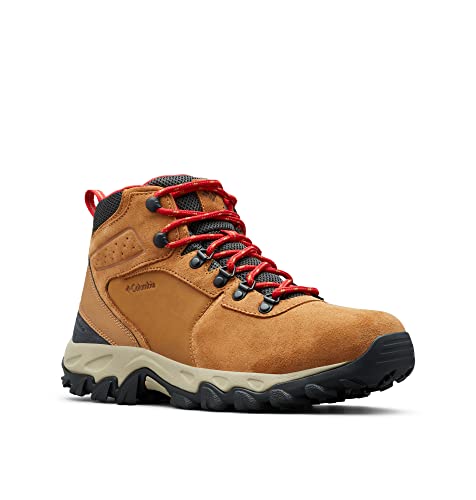
The Columbia Women's Newton Ridge Plus Waterproof Amped is a mid-cut hiking boot engineered for day hikers, outdoor walkers, and weekend adventurers who need dependable trail traction and weather defense. Built with classic mountaineering style cues in a women's size 8 Stratus and Canyon Rose colorway, this boot targets hikers seeking reliable foot support without excess bulk on established trails, forest paths, and mixed outdoor terrain.
On the trail, the boot relies on Columbia's TECHLITE lightweight midsole to deliver sustained cushioning and high energy return across hours of walking. Underneath, the signature Omni-GRIP non-marking rubber outsole provides traction across a wide variety of terrain, making it suitable for loose gravel, packed dirt, slick roots, and rocky inclines throughout spring, summer, and fall.
Construction highlights include a waterproof combination of supportive leather and suede paired with seam-sealed craftsmanship to lock out moisture from wet grass, shallow puddles, and unexpected rainfall. Durability is further reinforced at key wear points with dedicated toe and heel barriers, as well as an extended outsole toe overwrap designed to protect the front of the boot against scrapes and rocks over extended use.
The traditional mid-cut lace-up setup allows hikers to customize tension across the instep and collar for a stable, secure fit around the ankle. For ongoing maintenance, wiping away caked mud with a damp cloth, gently brushing the suede sections, and letting the boots air dry at room temperature helps preserve the upper materials and waterproofing performance between outings.
While the seam-sealed design provides solid moisture protection on damp trails, this boot is specifically rated for three-season use and is not built for deep winter snow or mountaineering crampon compatibility. Additionally, hikers who tackle very warm summer trails in dry climates may find the leather and suede construction holds more heat than lightweight, mesh-heavy low-cut trail running alternatives.
For hikers seeking a sturdy, comfortable waterproof trail boot with solid grip and proven protective overlays, the Columbia Newton Ridge Plus Waterproof Amped delivers excellent practical value. It serves as a dependable choice for day hikes, state park loops, and general outdoor recreation where ankle support, traction, and dry feet are top priorities.
The Columbia Newton Ridge Plus Waterproof Amped combines supportive leather and suede panels to create an abrasion-resistant outer shell. Seam-sealed construction works directly with the treated upper materials to prevent water from penetrating through needle holes and panel joints during wet conditions.
High-wear areas receive dedicated reinforcement, including heavy-duty toe and heel barriers. An extended rubber overwrap from the Omni-GRIP outsole shields the front toe box against impact from trail obstacles, extending the functional lifespan of the boot across seasons of trail use.
This boot is well suited for day hikers navigating variable trails where changing weather and uneven footing are common. The mid-cut height provides supportive coverage around the ankle joint, which helps manage balance over rocky stretches and uneven dirt trails.
Underfoot cushioning from the TECHLITE midsole reduces ground impact during longer day treks, while the Omni-GRIP rubber tread maintains reliable footing on dry switchbacks, damp leaves, and loose gravel paths without marking indoor surfaces at the trailhead.
Routine care for the leather and suede upper begins with removing dried mud and dust using a soft-bristle brush after every trail outing. Spot cleaning with cool water and a mild soap helps preserve the appearance of the Stratus and Canyon Rose colorway without damaging the material structure.
Always allow the boots to dry naturally at room temperature away from campfires, radiators, or direct high heat, as excessive heat can dry out leather and compromise seam adhesives. Occasional treatment with a water-repellent spray designed for suede and leather can help maintain outer water bead performance.

Pros
- Advanced traction rubber outsole provides reliable grip on wet or uneven terrain
- Manageable 14.98 oz single shoe weight minimizes leg fatigue on long day hikes
- Waterproof suede leather build keeps feet protected in damp outdoor environments
- Cushioned EVA insole and supportive midsole soften impact on rocky trails
- Integrated mesh tongue assists with airflow during strenuous hiking
Cons
- Slightly firm sole feel may be stiffer than expected for hikers preferring plush trail-runner cushioning
- Hikers wanting a roomy toe splay may need to choose the wide toe box variant over this standard profile
- Specific waterproof membrane specifications and prolonged submersion limits are not provided
The NORTIV 8 Women's Waterproof Hiking Boots are designed for day hikers, weekend backpackers, and outdoor enthusiasts seeking protective, budget-friendly footwear for trail use. Listed in women's size 8.5 with an eye-catching black and pink colorway, these mid-cut trekking boots combine waterproof suede leather uppers with an ankle-height structure to balance weather resistance and trail stability.
For trail performance on varied ground, the boot relies on an advanced traction rubber outsole built for slip resistance on uneven, muddy, or rocky terrain. Weighing 14.98 ounces for a single shoe, the design keeps foot weight relatively low compared to traditional heavy backpacking boots, which helps reduce overall fatigue during high-mileage day hikes. The slightly firm sole profile delivers essential underfoot protection against sharp stones and roots without unnecessary bulk.
Construction features include a durable suede leather exterior that shields feet against trail debris, complemented by a breathable mesh tongue that facilitates ventilation during warm hikes. Underfoot, a lightweight midsole works alongside an EVA insole to provide all-day cushioning and shock absorption. The boot blends functional durability with a feminine outdoor style through soft suede textures and contrasting color panels.
In terms of fit and adjustment, this standard size 8.5 model features traditional lace-up hardware to secure the ankle and midfoot. For hikers who prefer extra forefoot volume or plan to wear thicker wool socks on backpacking trips, the manufacturer suggests considering the wide toe box version. Routine trail care involves brushing dried dirt from the suede surface and letting damp boots air dry away from direct heat sources.
Realistic limitations should be kept in mind before purchase. The slightly firm sole is designed primarily for stability and rock protection, which may feel rigid to hikers who prefer the flexible, plush cushioning of trail-running shoes. Furthermore, while the boots feature waterproof construction, deep water crossings or continuous heavy downpours can still test exterior materials over time.
For women seeking a dependable, cost-effective boot for state park day hikes, rugged weekend backpacking, or general camping, the NORTIV 8 Waterproof Hiking Boots offer practical performance. With reliable rubber traction, supportive EVA cushioning, and weather-resistant suede, they represent a solid entry-level choice for hitting the trail with confidence.
Finding the right fit in hiking footwear is essential for avoiding trail discomfort. This NORTIV 8 model comes in women's size 8.5 with a standard profile designed to secure the heel and midfoot. For hikers who prefer additional room for toe splay or thicker wool backpacking socks, the manufacturer recommends opting for the wide toe box version.
Standard lacing across the midfoot and ankle shaft allows users to customize tension depending on whether they are climbing uphill or descending steep terrain. Trying boots on with your preferred trail socks helps confirm adequate room in the front without heel slippage.
Underfoot stability on rugged trails depends heavily on outsole compound and tread design. NORTIV 8 equips this boot with an advanced traction rubber outsole engineered to resist slipping on loose dirt, gravel, and wet rock surfaces during backcountry trekking.
The slightly firm sole profile acts as a protective barrier against sharp stones and trail roots, preventing foot bruising under a loaded pack. Inside, an EVA insole paired with a lightweight midsole adds essential shock absorption to cushion recurring trail impact.
The upper is built from waterproof suede leather paired with an ankle boot structure to provide ankle support and barrier protection against wet brush and damp trail conditions. Suede offers natural abrasion resistance against light scrapes from rocks and trailside branches.
To maintain internal airflow, a durable mesh tongue is integrated into the lacing area to vent heat and moisture vapor during exertion. Proper maintenance includes brushing off dried mud and applying suede-safe waterproofing treatments periodically to preserve leather quality over multiple hiking seasons.
Understanding When Hiking Boots Are Necessary and When Alternatives Work
Selecting appropriate footwear for backcountry excursions does not require following a single rigid standard. The choice of whether you must wear dedicated boots depends heavily on trail topography, weather conditions, pack weight, and your individual joint stability. While backpackers carrying substantial loads often favor stiff leather boots for multi-day expeditions, countless day hikers navigate well-maintained paths comfortably in lightweight trail running shoes or low-cut hikers. Examining the mechanics behind trail footwear allows you to make an informed decision tailored to your specific outdoor goals.
The Direct Answer: When Boots Are Essential Versus Optional
The direct answer is that you do not always have to wear traditional hiking boots to venture outdoors safely. For casual day walks on groomed dirt trails with minimal elevation changes, lightweight trail shoes or running sneakers provide ample cushion and grip. On these gentle routes, the extra bulk and stiff sole construction of a heavy boot can cause unnecessary leg fatigue over several miles. Freedom of ankle movement and lightweight upper materials often enhance agility on smooth terrain without compromising foot safety.
Dedicated hiking boots become essential once trails turn steep, muddy, or strewn with jagged scree and granite boulders. Stiff outsoles and elevated collars shield feet from sharp rock strikes and rolling stones that would easily bruise a foot through thin mesh shoes. If you are navigating backcountry routes off-trail, crossing marshy wetlands, or traversing loose talus, the structural integrity of a boot provides critical security. In these demanding environments, the physical protection offered by mid-cut or high-cut footwear far outweighs the benefit of carrying less weight on your feet.
Pack Weight and Biomechanical Load Demands
Carrying gear transforms the biomechanical stresses placed on your feet, ankles, and plantar fascia during a hike. When you carry a small daypack weighing under fifteen pounds, your foot muscles and tendons easily handle the load without supplemental external bracing. Flexible midsoles made of compression-molded EVA foam absorb minor trail shocks and allow natural foot flexion through each stride. Lightweight ankle boots such as the NORTIV 8 Women’s Lightweight Ankle Hiking design provide responsive cushioning while remaining agile on short outings.
The equation shifts dramatically when you shoulder a heavy multi-day load supported by a framed backpacking pack for extended wilderness travel. Every additional pound in your pack increases the downward force exerted through your heels and arches, causing soft midsoles to compress prematurely. Adding structured orthotics like Dr. Scholl’s Heavy Duty Support Insole Orthotics provides crucial arch reinforcement and deep heel cushioning to distribute high-impact forces evenly. Stiffer footwear paired with supportive insoles prevents excessive foot flexing under heavy gear, preserving joint alignment over rugged miles.
Ankle Support Realities: Collar Height Versus Torsional Rigidity
One common misconception in trail footwear is that a high padded collar alone prevents ankle sprains. Soft fabric or thin leather wrapped around the upper ankle offers light scrape protection, but it cannot mechanically prevent a severe joint roll if the sole twists underneath you. True lateral stability originates in the shoe chassis, specifically through torsional rigidity and a firm internal heel counter. If you can easily twist the sole of a shoe like a dishcloth, it will provide minimal resistance against uneven rocks regardless of collar height.
Quality mid-cut boots combine an extended collar with a stiff internal shank made of nylon, fiberglass, or molded thermoplastic polyurethane. The rigid shank acts as a structural bridge beneath the arch, preventing the footwear from torquing sideways when stepping on angled rocks. Meanwhile, a firm heel counter locks the heel bone securely into the rear pocket of the boot to eliminate internal slippage. Hikers with a history of recurrent ankle instability should prioritize this structural underfoot stiffness rather than relying solely on tall ankle padding.
Terrain Severity, Outsole Traction, and Underfoot Protection
Traction patterns on casual street sneakers or standard gym shoes are wholly inadequate for unpaved outdoor environments. Paved-surface outsoles feature shallow, closely spaced tread that quickly clogs with slick mud and clay, creating a dangerously slippery surface. In contrast, purposeful trail footwear incorporates deep, multidirectional lugs spaced widely apart to shed clinging soil automatically as the sole flexes. Specialized rubber compounds, such as the Omni-GRIP outsole found on the Columbia Womens Newton Ridge Plus Waterproof boot, deliver reliable adhesion across wet granite, slippery roots, and loose gravel.
Underfoot protection and upper durability are equally vital when trekking across trails embedded with sharp roots, flint, and jagged limestone. Walking in thin-soled athletic shoes on sharp rocks causes stone bruising beneath the metatarsal heads, leading to painful plantar inflammation. Trail boots feature durable rubber outsoles, dense midsoles, and reinforced protective toe caps to disperse point impact forces. Protective toe barriers, featured prominently on boots like the Columbia Newton Ridge Plus, absorb direct frontal impacts against loose scree and hidden tree roots.
Weather Protection, Membrane Water Resistance, and Breathability Trade-Offs
Environmental conditions play a decisive role in determining whether you should wear protective hiking boots or ventilated trail shoes. Hiking through persistent rain, wet morning brush, or snowmelt requires reliable water defense to prevent soaked socks and cold feet. Footwear featuring seam-sealed waterproof membranes locks out external moisture while crossing shallow puddles and damp marshland. Options like the NORTIV 8 Women’s Waterproof Hiking Boots utilize suede leather and protective construction to block moisture while providing a breathable mesh tongue for thermal regulation.
Water-resistant barriers deliver tangible moisture protection, but they introduce notable breathability trade-offs in warm climates. While boots may offer several hours of static water resistance to keep external splashes out, internal foot perspiration escapes slowly through sealed linings. Trapped sweat can saturate hiking socks from the inside out, softening skin tissue and dramatically increasing blister risks. Non-waterproof trail shoes and ventilated mesh footwear excel in hot, arid environments where rapid moisture evaporation and quick drying are paramount.
Footwear Weight and Trail Agility: The Energy Cost of Heavy Footwear
Outdoor researchers and backpackers have long observed that weight carried on your feet expends significantly more metabolic energy than weight carried in your backpack. Lifting heavy boots thousands of times across an all-day trek creates cumulative fatigue in your hip flexors, hamstrings, and quadriceps. Traditional full-grain leather backpacking boots often weigh several pounds per pair, demanding considerable physical effort over high-mileage routes. For long-distance trekking on maintained trails, reducing footwear weight directly conserves muscular stamina and enhances overall pace.
Modern footwear engineering addresses this energy challenge by combining lightweight synthetic textiles with agile mid-cut ankle profiles. For example, the NORTIV 8 Women’s Lightweight Ankle Hiking shoe weighs approximately 12.3 ounces per shoe, rivaling athletic sneakers while retaining rugged trail utility. Its Oxford fabric construction and lightweight EVA midsole provide cushioned rebound without dragging down your stride. Hikers who prefer mid-height ankle coverage without the crushing weight of traditional mountaineering leather find an ideal compromise in these lightweight designs.
Foot Anatomy, Sizing Checks, and Insole Compatibility
Proper footwear fit is the single most critical factor in determining whether boots or shoes will keep you comfortable on the trail. During extended walking, your feet naturally expand, often swelling by a half size or more due to continuous blood flow and impact. Purchasing trail footwear with approximately a thumb-width of clearance in front of your longest toe prevents toes from ramming the front of the toe box on steep descents. This simple sizing adjustment eliminates painful subungual hematomas, commonly known as black toenails, after demanding downhill treks.
Toe box shape must also match your natural forefoot anatomy to avoid painful metatarsal compression, friction blisters, or aggravated bunions. Many hikers suffer in boots that taper too sharply at the front, forcing toes to overlap during lateral trail movements. Selecting models with generous forefoot profiles, such as wide toe box variations available in boots like the NORTIV 8 Women’s Waterproof Hiking Boots, allows natural toe splay. Giving your toes room to spread improves your balance across uneven surfaces and prevents burning nerve pain beneath the forefoot.
Lacing Adjustments and Blister Prevention on the Trail
Mastering specialized lacing techniques allows you to customize the fit of boots and trail shoes to prevent hot spots before blisters form. Heel slippage on steep uphill ascents is the leading cause of friction blisters along the back of the heel. By incorporating a surgeon’s knot, looping the laces twice around each other at the ankle bend, you lock tension in the lower boot while allowing the upper collar to flex naturally. This tension lock anchors the heel firmly into the rear pocket, preventing the repetitive friction that tears delicate skin.
Hikers with high insteps or dorsal bone spurs frequently experience painful pressure points across the top of their feet from tight laces. You can alleviate this localized pressure by utilizing window lacing, which routes laces vertically through eyelets to skip crossing over sensitive areas. Preparing your footwear alongside other trail essentials from a comprehensive day hiking gear checklist ensures you have blister bandages and friction tape ready before hot spots worsen. Pairing customized lacing with high-density merino wool socks creates an effective defense against trail friction.
Trail Decision Framework: Selecting the Right Footwear for Your Hike
Choosing whether to wear hiking boots ultimately comes down to matching your footwear to the specific variables of your planned trek. For short day trips on well-graded state park paths in warm weather, lightweight trail shoes or featherweight ankle boots offer superior comfort and agility. When your trail agenda involves scrambling across wet talus, wading through thick mud, or hauling gear for an overnight camp, robust mid-cut boots provide essential foot security. Consider your pack weight, trail severity, weather forecast, and ankle conditioning before tying your laces.
There is no single correct footwear answer for every hiker or every trail condition. Listening to your feet, understanding your biomechanical support requirements, and matching traction to trail surfaces ensures a safe and enjoyable journey. Whether you step onto the trail in ultralight synthetic ankle hikers or traditional waterproof leather boots, prioritizing proper fit and reliable underfoot traction guarantees confident steps from trailhead to summit.



Write Your Review
No reviews yet. Be the first to share your experience!