


Steep downhill descents often push toes forcefully against the front of a shoe box, turning a promising day on the path into a painful ordeal with bruised toenails and friction blisters. Long hours navigating loose scree, damp roots, and packed dirt quickly expose whether footwear offers genuine structural support or merely mimics athletic sneakers. When hikers ask who makes the best hiking shoes, the answer usually leads back to established brands like Merrell that prioritize rugged trail durability and purposeful ergonomic design. Selecting footwear engineered specifically for natural terrain helps protect metatarsal joints and maintain traction across diverse environments.
Rugged outdoor footwear relies on resilient uppers, anatomical arch shanks, and responsive heel cushioning to absorb repetitive trail shock. Pairing proper footwear with flexible apparel like lightweight breathable hiking pants creates a dependable foundation for day outings and multi-day explorations alike. Modern trail shoes strike an effective balance between protective split-leather overlays and ventilated linings to keep moisture manageable during sustained elevation gains. By evaluating key technical details such as debris protection tongues, contoured insoles, and torsional stiffness, outdoor enthusiasts can identify footwear built to handle unpredictable backwoods routes.

Pros
- Vibram TC5+ rubber outsole provides dependable traction on varied trail surfaces
- Kinetic Fit ADVANCED contoured insole with Air Cushion heel offers supportive shock absorption
- Protective toe cap and bellows tongue effectively help guard against trail debris
- Durable pig suede leather combined with breathable mesh upper panels
Cons
- Low-cut shoe design provides less ankle collar coverage than mid-height hiking boots
- Product specifications do not list a waterproof membrane for wet-weather or muddy hikes
The Merrell Women's Moab 3 Hiking Shoe in Falcon (Size 8 M) is low-cut trail footwear engineered specifically for day hikers, outdoor walkers, and trail travelers who prioritize underfoot support and dependable traction. Built with a combination of pig suede leather and breathable mesh, this model provides structured upper support alongside ventilation for warm-weather and moderate trail outings. Weighing approximately 1.54 pounds in package specifications, it serves hikers who want a stable, grounded feel without the bulk of a heavy high-cut backpacking boot.
Underfoot load management and trail stability rely on an integrated system consisting of a lightweight EVA foam midsole, a molded nylon arch shank, and the Merrell Air Cushion in the heel. The heel air cushion absorbs ground impact and adds step stability, while the molded nylon shank provides torsional stiffness when stepping over uneven rocks, roots, or hard-packed trail beds. Inside, the Kinetic Fit ADVANCED removable contoured insole delivers reinforced heel cushioning and medium arch support, catering to day hikers carrying daypacks who need balanced foot support across varying terrain.
Construction details emphasize durability and conscious material sourcing, pairing pig suede leather panels with 100% recycled laces, webbing, and interior mesh lining. The front of the shoe features a protective toe cap to guard against unexpected impacts with trail obstacles, while a bellows tongue works to keep loose dirt, sand, and pebbles from migrating inside. Traction is handled by an industry-standard Vibram TC5+ rubber outsole, designed to maintain solid grip across dirt paths, gravel approaches, and rocky surfaces.
This specific listing is built to a women's size 8 M (Medium width) with standard lace-up closure using 100% recycled laces to secure midfoot lock-in. Because the Kinetic Fit ADVANCED insole is removable, hikers can easily air it out after warm-weather treks or replace it with custom orthotics if personal foot support requirements call for it. Routine maintenance involves brushing dried mud or loose dirt from the suede and mesh upper with a soft brush, allowing the shoes to dry naturally at room temperature, and storing them in a cool, dry area away from direct heat sources.
While well-suited for general trail use, the Moab 3 in this configuration has clear operational limitations. As a low-cut shoe, it does not provide the extended ankle collar support found in mid- or high-cut backpacking boots, which some hikers prefer when carrying heavy multi-day backpacks. Additionally, the manufacturer specifications do not indicate a waterproof membrane or seam sealing, meaning exposure to standing water, river crossings, or heavy downpours will allow moisture through the mesh upper panels.
For U.S. day hikers, recreational trail walkers, and weekend adventurers seeking a proven combination of Vibram grip, heel shock absorption, and durable suede construction, the Merrell Women's Moab 3 Hiking Shoe represents a practical, high-value footwear choice. It performs at its best on dry to moderate day hikes, maintained forest paths, and scenic trails where breathability, step-in cushioning, and medium arch support are top priorities.
Underfoot stability in the Merrell Women's Moab 3 is driven by a Vibram TC5+ rubber outsole engineered for reliable surface grip on outdoor terrain. The underfoot platform combines a molded nylon arch shank for torsional rigidity with a lightweight EVA foam midsole that cushions each stride. Heel impact is addressed by the Merrell Air Cushion, which absorbs shock and helps stabilize foot strikes when carrying trail gear.
The upper combines durable pig suede leather overlays with breathable mesh sections to balance structural support and airflow. Merrell incorporates eco-friendly elements, including 100% recycled laces, webbing, and interior mesh lining. A protective toe cap guards the front of the shoe against trail hazards, while the bellows tongue prevents grit and loose debris from entering during movement.
Pros
- Vibram TC5+ rubber outsole offers dependable grip across hard-pack, loose soil, and rocky terrain
- Kinetic Fit ADVANCED removable insole delivers reliable medium arch support and heel impact absorption
- Pigskin leather and mesh upper with a protective toe cap shields against abrasion and trail obstacles
- Bellows tongue and molded nylon arch shank enhance trail comfort and midfoot stability
Cons
- Non-waterproof mesh construction allows moisture penetration during heavy rain or wet stream crossings
- Low-cut design provides less lateral ankle wrap than a mid or high-cut hiking boot
- Listed weight of roughly 1.85 pounds per pair is heavier than ultralight trail runners
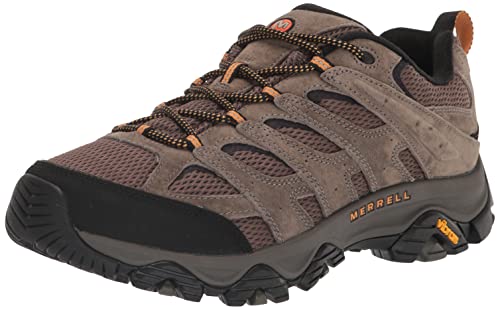
The Merrell Men's Moab 3 Hiking Shoe is a low-cut trail shoe designed for day hikers, weekend trail walkers, and backpackers looking for a dependable balance of support, traction, and breathability. Offered in the Walnut colorway in men's size 11 medium, this footwear suits hikers who favor the freedom and mobility of an ankle-height shoe over a rigid hiking boot. It is engineered for varied outdoor terrain, from groomed state-park paths to rocky backcountry loops across the United States.
Underfoot performance on the trail relies heavily on the shoe's shock mitigation and stability features. The Moab 3 incorporates Merrell Air Cushion technology in the heel alongside a lightweight EVA foam midsole, which absorbs shock upon heel strike and promotes a balanced stride. For foot support, the shoe features a molded nylon arch shank that stiffens the midfoot against uneven surfaces, combined with the Kinetic Fit ADVANCED removable contoured insole that delivers reinforced heel cushioning and medium arch support. Hikers carrying daypacks or moderate overnight gear can appreciate this structured platform during long hours on the trail.
Upper durability is achieved through a combination of pigskin leather overlays and breathable mesh panels that promote air circulation while resisting scuffs from trailside brush. Merrell incorporates 100% recycled laces, webbing, and interior mesh lining into the build, improving sustainability without compromising everyday trail utility. A protective toe cap guards the front of the foot against painful impacts with loose rocks and roots, while the bellows tongue prevents pebbles, sand, and loose gravel from sifting into the interior during dry, dusty treks.
Traction is managed by a Vibram TC5+ rubber outsole engineered to maintain purchase across mixed surfaces, including dry hardpack, loose soil, and damp rock faces. The traditional lace-up system with 100% recycled webbing allows hikers to dial in midfoot tension and heel lockdown to match foot volume. The removable insole also makes it simple to air out the shoes after warm summer hikes or swap in specialized orthotic inserts if personal biomechanics require custom support.
While the Moab 3 is a dependable all-around trail shoe, buyers should keep specific design tradeoffs in mind. Because this version utilizes breathable mesh without a waterproof membrane, water from rain showers, dewy morning brush, or stream crossings will seep through the upper fabric. Additionally, the low-cut profile offers less lateral ankle bracing than a dedicated mid-cut boot, which some hikers carrying heavy multi-day backpacks over off-camber scree may prefer. At approximately 1.85 pounds, it is also moderately heavier than minimalist trail running shoes.
For outdoor enthusiasts seeking reliable out-of-the-box comfort, dependable Vibram grip, and structured underfoot support, the Merrell Men's Moab 3 in Walnut is a practical and proven choice. It performs best on day hikes, light backpacking trips, and camping outings where warm-weather airflow and solid stability take priority over waterproof protection.
The Merrell Moab 3 relies on a Vibram TC5+ rubber outsole, engineered to deliver reliable purchase across diverse trail surfaces such as packed dirt, loose scree, and exposed slab. The lug geometry provides confident grip on both ascents and descents without producing excessive stiffness under the ball of the foot.
Underfoot stability is reinforced by a molded nylon arch shank that resists torsional twisting on uneven ground. Working together with the Kinetic Fit ADVANCED contoured insole, the platform offers medium arch support and heel shock absorption to help minimize foot fatigue over extended trail miles.
The upper combines genuine pigskin leather with breathable mesh panels, offering abrasion resistance against trailside rocks while venting excess foot heat on warm hikes. Sustainability is highlighted throughout the hardware, with 100% recycled content in the laces, webbing, and inner mesh lining.
Trail protection is enhanced by a durable rubber toe cap that shields against direct impacts from hidden roots and stones. In addition, the bellows tongue is connected along the sides of the throat to prevent grit, dirt, and trail debris from entering the shoe.
Evaluating Trail Footwear Construction and Heritage
Choosing the right outdoor footwear starts with understanding which manufacturers build for genuine trail durability rather than superficial style. When asking who makes the best hiking shoes, experienced hikers evaluate real mechanical features like shank rigidity, specialized upper leathers, and calibrated shock absorption systems. Reputable brands earn their status by refining these structural details over decades of practical trail use. Understanding these engineering elements helps outdoor enthusiasts select footwear tailored to their terrain requirements and foot shape.
Brand Heritage and the Legacy of Dedicated Trail Design
Outdoor footwear manufacturers build their reputations on consistency across hundreds of demanding trail miles. Merrell established an industry benchmark with its iconic Moab line by adapting traditional boot support into agile low-cut footwear. Hikers often return to the brand because its trail shoe lasts deliver predictable volume, dependable arch stability, and dependable out-of-the-box comfort. That track record comes from focusing on the biomechanics of walking over uneven ground rather than chasing fleeting athletic shoe trends.
Athletic brands frequently attempt to convert road-running sneakers into trail footwear simply by sticking aggressive lugs onto standard foam soles. Dedicated outdoor brands design their trail shoes from the ground up with reinforced perimeters, dense supportive midsoles, and torsional shank support. This fundamental design difference ensures the footwear can withstand side-hill torque, sharp granite edges, and persistent downward pressures without twisting out of alignment. Footwear engineered specifically for rugged paths protects the foot from unnatural pronation and excessive joint stress.
Decades of footwear development allow outdoor manufacturers to refine their fit profiles to suit a wide spectrum of natural foot shapes. Standard outdoor lasts feature a contoured heel cup that holds the calcaneus in place while offering sufficient forefoot room for toes to spread under load. This careful balance between rearfoot lockdown and forefoot freedom remains a hallmark of seasoned footwear makers. Hikers gain stability on unpredictable surfaces without suffering from pinched forefeet or slipping heels.
Upper Materials: Pigskin Leather Versus Synthetic Mesh
Upper materials define both the abrasion resistance and internal ventilation of low-cut trail footwear. Both the Merrell Women’s Moab 3 Hiking Shoe, Falcon, 8 M and the Merrell Men’s Moab 3 Hiking Shoe, Walnut utilize heavy-duty pig suede and pigskin leather uppers reinforced with breathable mesh panels. Pigskin leather provides exceptional resistance to scrapes from jagged granite slabs, thorny brush, and coarse trail grit without stiffening excessively in cooler temperatures. Its dense fiber structure resists tearing far better than thin synthetic weaves when dragged across abrasive rock ledges.
Ventilated mesh inserts work alongside durable suede overlays to regulate interior shoe temperatures on warm afternoon outings. Dense leather alone can trap foot perspiration, accelerating skin softening and increasing blister risk on sustained ascents. By strategically placing mesh windows across the instep and side panels, the shoe allows hot air to vent while maintaining an unyielding structural skeleton around the foot. This hybrid construction balances immediate heat dissipation with long-term upper durability.
Modern footwear construction also prioritizes environmental responsibility without compromising mechanical strength. These trail shoes integrate 100% recycled laces, webbing loops, and interior mesh linings that withstand heavy tension without fraying. Recycled collar linings promote rapid moisture dispersion away from the sock, reducing friction hot spots around the ankle bones. Hikers benefit from dependable lacing lockdown while supporting manufacturing practices that reduce industrial waste.
Underfoot Stability and Molded Nylon Arch Shanks
Uneven terrain constantly exerts torsional forces on the foot, forcing the plantar fascia to work overtime if a shoe lacks internal rigidity. Stepping across roots, angular rocks, and off-camber dirt paths bends flexible footwear sideways, rapidly draining foot stamina. Footwear built with an integrated arch shank resists this twisting motion, providing a stable platform under the midfoot. Without adequate torsional support, hikers frequently experience aching arches and midfoot fatigue before reaching their destination.
Merrell incorporates a molded nylon arch shank into the midfoot structure of the Moab 3 series. Nylon provides an optimal balance between torsional stiffness and natural forefoot flexibility, unlike heavy steel shanks found in mountaineering boots that make regular walking stiff and awkward. The nylon shank shields the central arch from stone bruising while allowing natural flex at the metatarsal joints during forward stride push-off. This localized rigidity protects sensitive tendons while maintaining a natural, rolling stride on rolling singletrack.
Hikers carrying loaded packs especially notice the benefits of torsional shank reinforcement on rough switchbacks. Hauling extra trail gear in a supportive iron frame hiking backpack increases downward gravitational pressure on every step. Under this extra weight, a sturdy molded shank prevents the shoe from sagging in the middle, preserving efficient biomechanics and protecting the arch from excessive strain. Maintaining midfoot integrity under load keeps fatigue from compromising balance on technical trail sections.
Shock Absorption Mechanics: Merrell Air Cushion Mechanics
Downhill trekking places severe stress on the heel bone and knee joints as gravity amplifies impact forces. A typical descent can generate heel strike impacts equivalent to several times a hiker’s total body weight. Without adequate damping in the heel pocket, repetitive shock travels directly up the skeletal chain, aggravating knees, hips, and lower back muscles. Dedicated trail footwear incorporates targeted heel cushioning systems specifically engineered to disperse these downward collision forces.
The Merrell Air Cushion located in the heel absorbs impact shock and adds vital stability upon initial ground contact. This sealed pocket dampens abrupt downward jarring while functioning as an internal heel cup that centers the calcaneus. By keeping the heel centered during ground impact, the air cushion minimizes ankle deflection on loose, shifting gravel. Hikers experience softer landings on hardpack trails without sacrificing lateral stability on rocky steps.
Pairing heel air damping with resilient midsole foam ensures long-term cushioning that resists rapid compression set. Cheaper athletic foams often flatten permanently after just a few dozen trail miles, leaving feet vulnerable to harsh impacts. Quality trail shoes maintain their shock-absorbing properties over extended mileage, reducing joint fatigue on grueling descents. Consistent underfoot damping helps hikers maintain a steady, confident stride from trail start to finish.
Contoured Footbeds: Kinetic Fit ADVANCED Insole System
Standard footwear insoles are often flimsy foam cutouts that offer virtually zero anatomical arch support. In contrast, the Kinetic Fit ADVANCED removable contoured insole found in the Moab 3 lineup features structured arch geometry and reinforced heel cushioning. This pre-curved shape cradles the contours of the foot, distributing plantar pressure evenly across the entire sole. Hikers gain reliable contact under the midfoot, which eliminates concentrated pressure points beneath the metatarsal heads.
Reinforced heel cushioning inside the insole works in tandem with the primary midsole cushion to isolate sensitive nerve endings from hard trail strikes. Medium arch support helps maintain natural foot alignment without forcing flat feet into painful overextension. Because the insole is completely removable, hikers can quickly pull it out to dry after wet crossings or replace it with custom medical orthotics if needed. This adaptability ensures the footwear accommodates personalized podiatric requirements without compromising factory volume.
Proper insole contouring also prevents forward foot sliding inside the shoe when walking down steep hills. A well-designed insole holds the heel firmly in place, stopping the toes from jamming against the front bumper. This steady underfoot support dramatically reduces friction against the ball of the foot, preventing painful hot spots during high-mileage day treks. Maintaining full surface contact under the foot reduces the muscular effort needed to stabilize each step.
Trail Debris Defense: Gusseted Bellows Tongue Design
Loose gravel, dried pine needles, and trail silt can easily infiltrate low-cut shoes through the sides of the tongue. Once foreign particles enter the interior lining, they settle under the insole or wedge between the sock and heel collar, creating intense friction. Stopping every mile to untie shoes and shake out dirt destroys hiking rhythm and exposes socks to trail grime. Preventing debris ingress at the tongue level is critical for keeping socks clean and blisters at bay.
The bellows tongue construction utilized by Merrell addresses this trail annoyance by stitching continuous fabric webs between the tongue and the upper. This gusseted design keeps external dirt, loose scree, and woodland mulch from slipping past the eyelets while maintaining plenty of flexibility for shoe entry. The bellows fold neatly along the sides without pinching or creating uncomfortable pressure points across the top of the foot. Hikers can traverse loose talus slopes without worrying about gravel penetrating the shoe interior.
Trail debris becomes an even bigger issue when trekking alongside energetic pets that kick up loose gravel on narrow paths. Carrying trail essentials for hiking with dogs often means navigating unexpected detours through brush and loose dirt. A sealed bellows tongue ensures that kicked-up debris stays on the exterior of the shoe where it cannot cause painful friction blisters. That reliable physical barrier keeps the internal foot environment comfortable across varied woodland terrain.
Forefoot Protection: Heavy-Duty Protective Toe Caps
Trail fatigue gradually reduces leg clearance, making toe scuffs and accidental rock strikes almost inevitable near the end of a long hike. Kicking an immovable boulder or submerged root in lightweight running sneakers can lead to fractured toes or lost toenails. Robust hiking shoes prioritize perimeter defense by wrapping heavy-duty rubber reinforcements around the front of the toe box. This structural shield turns potential foot injuries into harmless deflections against the shoe bumper.
The protective toe cap featured on the Moab 3 series creates a firm shield that absorbs direct impacts before force reaches the foot. This thick rubber bumper extends upward from the outsole, creating a seamless defense against abrasive scree and sharp rock outcroppings. Beyond protecting human toes, the rubber cap protects the front stitching and suede from splitting or peeling away from the sole. The reinforced rand preserves upper integrity through seasons of contact with abrasive granite.
Ample vertical room inside the toe box ensures that toes do not press against the rubber bumper under normal conditions. Maintaining a proper thumb-width gap between the longest toe and the front cap prevents bruising on steep downhill switchbacks. A rigid toe cap should protect against external hazards while leaving plenty of interior space for natural toe movement. This generous volume allows the toes to splay comfortably on ascents without feeling restricted.
Sizing Verification and Managing Natural Foot Expansion
Selecting the correct size in rugged hiking shoes requires planning for natural foot swelling that occurs after hours of continuous walking. Blood pooling and heat expansion routinely cause feet to expand by a half size over the course of a strenuous outing. Hikers who purchase shoes fitted snugly in a cold morning store often suffer severe toe compression by mid-afternoon. Factoring in afternoon foot volume ensures long-distance comfort on extended backcountry itineraries.
Always verify footwear fit in the afternoon or evening while wearing the exact hiking socks intended for the trail. Stand on an incline or kick downward against an indoor step to confirm that toes never touch the front cap. The midfoot lacing should hold the instep securely without requiring excessive tension that restricts circulation across the dorsal nerves. Proper sock thickness combined with calibrated lace tension keeps the foot anchored squarely over the footbed.
Utilizing different lacing patterns can resolve minor fit discrepancies between the heel and forefoot. A runner’s lock knot utilizing the top eyelets creates firm downward tension that locks the heel into the rear pocket without tightening the toe box. Mastering lacing adjustments ensures consistent foot security across both steep climbs and jarring descents. Hikers can eliminate micro-slippage before friction generates painful hot spots.
Routine Maintenance and Outsole Wear Assessment
Caring for pigskin leather and mesh footwear prolongs both material suppleness and structural integrity. Caked mud draws essential moisture out of natural suede, causing fibers to dry out, stiffen, and crack prematurely under repeated flexing. Cleaning off dried dirt with a soft nylon brush and lukewarm water after each muddy excursion preserves the original flex characteristics of the upper. Regular gentle cleaning also stops fine grit from working its way through the mesh lining.
Never force-dry damp hiking shoes near open campfires, wood stoves, or home heating vents. Intense localized heat breaks down specialized midsole cements, shrinks leather uppers, and can warp the molded nylon arch shank. Removing the contoured insoles and allowing shoes to air-dry naturally at room temperature in a well-ventilated space ensures components stay intact. Proper drying habits preserve internal padding density and prevent premature breakdown of protective adhesives.
Regularly inspecting tread wear patterns and midsole compression wrinkles reveals when shoes approach retirement. When outsole lug edges become rounded or smooth, braking traction on wet slopes drops significantly. Replacing worn footwear before midsoles lose their shock-absorbing rebound protects knee joints and maintains dependable grip across challenging terrain. Timely retirement ensures hikers never venture onto technical paths with compromised traction or fatigued arch support.
Answering who makes the best hiking shoes ultimately comes down to finding a brand that matches proven craftsmanship with your specific trail requirements. Dedicated manufacturers like Merrell succeed because they combine protective leathers, supportive arch shanks, and responsive heel cushioning into a cohesive trail platform. Investing in footwear built with these structural qualities ensures every step remains secure, stable, and comfortable on the trail. Assessing your personal fit, terrain demands, and footwear construction guarantees a rewarding outdoor experience on every trail.


Write Your Review
No reviews yet. Be the first to share your experience!