


Navigating rocky switchbacks or loose forest paths demands footwear that keeps your feet secure without weighing down your stride. Outdoor enthusiasts often ask what are hiking shoes called when trying to distinguish lightweight trail footwear from bulky backpacking boots and road sneakers. In the outdoor industry, these designs are commonly referred to as low-cut hiking shoes, trail shoes, light hikers, or trail walking shoes. Understanding these specific designations helps you select the right balance of underfoot protection, breathability, and flexibility for your favorite day hikes.
Unlike standard athletic sneakers, dedicated trail footwear incorporates firm outsoles, reinforced toe caps, and supportive internal shanks designed to deflect sharp stones. Pairing these responsive low-top shoes with comfortable gear like lightweight hiking pants allows for nimble movement on warm afternoon treks. By recognizing the terminology and construction details behind these shoes, you can avoid painful trail blisters and make well-informed gear choices for varying terrain.

Pros
- Vibram TC5+ rubber outsole provides dependable traction on varied trail surfaces
- Kinetic Fit ADVANCED contoured insole with Air Cushion heel offers supportive shock absorption
- Protective toe cap and bellows tongue effectively help guard against trail debris
- Durable pig suede leather combined with breathable mesh upper panels
Cons
- Low-cut shoe design provides less ankle collar coverage than mid-height hiking boots
- Product specifications do not list a waterproof membrane for wet-weather or muddy hikes
The Merrell Women's Moab 3 Hiking Shoe in Falcon (Size 8 M) is low-cut trail footwear engineered specifically for day hikers, outdoor walkers, and trail travelers who prioritize underfoot support and dependable traction. Built with a combination of pig suede leather and breathable mesh, this model provides structured upper support alongside ventilation for warm-weather and moderate trail outings. Weighing approximately 1.54 pounds in package specifications, it serves hikers who want a stable, grounded feel without the bulk of a heavy high-cut backpacking boot.
Underfoot load management and trail stability rely on an integrated system consisting of a lightweight EVA foam midsole, a molded nylon arch shank, and the Merrell Air Cushion in the heel. The heel air cushion absorbs ground impact and adds step stability, while the molded nylon shank provides torsional stiffness when stepping over uneven rocks, roots, or hard-packed trail beds. Inside, the Kinetic Fit ADVANCED removable contoured insole delivers reinforced heel cushioning and medium arch support, catering to day hikers carrying daypacks who need balanced foot support across varying terrain.
Construction details emphasize durability and conscious material sourcing, pairing pig suede leather panels with 100% recycled laces, webbing, and interior mesh lining. The front of the shoe features a protective toe cap to guard against unexpected impacts with trail obstacles, while a bellows tongue works to keep loose dirt, sand, and pebbles from migrating inside. Traction is handled by an industry-standard Vibram TC5+ rubber outsole, designed to maintain solid grip across dirt paths, gravel approaches, and rocky surfaces.
This specific listing is built to a women's size 8 M (Medium width) with standard lace-up closure using 100% recycled laces to secure midfoot lock-in. Because the Kinetic Fit ADVANCED insole is removable, hikers can easily air it out after warm-weather treks or replace it with custom orthotics if personal foot support requirements call for it. Routine maintenance involves brushing dried mud or loose dirt from the suede and mesh upper with a soft brush, allowing the shoes to dry naturally at room temperature, and storing them in a cool, dry area away from direct heat sources.
While well-suited for general trail use, the Moab 3 in this configuration has clear operational limitations. As a low-cut shoe, it does not provide the extended ankle collar support found in mid- or high-cut backpacking boots, which some hikers prefer when carrying heavy multi-day backpacks. Additionally, the manufacturer specifications do not indicate a waterproof membrane or seam sealing, meaning exposure to standing water, river crossings, or heavy downpours will allow moisture through the mesh upper panels.
For U.S. day hikers, recreational trail walkers, and weekend adventurers seeking a proven combination of Vibram grip, heel shock absorption, and durable suede construction, the Merrell Women's Moab 3 Hiking Shoe represents a practical, high-value footwear choice. It performs at its best on dry to moderate day hikes, maintained forest paths, and scenic trails where breathability, step-in cushioning, and medium arch support are top priorities.
Underfoot stability in the Merrell Women's Moab 3 is driven by a Vibram TC5+ rubber outsole engineered for reliable surface grip on outdoor terrain. The underfoot platform combines a molded nylon arch shank for torsional rigidity with a lightweight EVA foam midsole that cushions each stride. Heel impact is addressed by the Merrell Air Cushion, which absorbs shock and helps stabilize foot strikes when carrying trail gear.
The upper combines durable pig suede leather overlays with breathable mesh sections to balance structural support and airflow. Merrell incorporates eco-friendly elements, including 100% recycled laces, webbing, and interior mesh lining. A protective toe cap guards the front of the shoe against trail hazards, while the bellows tongue prevents grit and loose debris from entering during movement.

Pros
- Generous wide toe box allows toes to relax and spread naturally without pinching
- Aggressive rubber lug pattern delivers reliable grip on loose gravel and uneven trail surfaces
- Arch-support insole paired with high-rebound foam eases foot strain across extended walking sessions
- Soft microfiber suede upper provides a comfortable blend of water resistance and abrasion defense
Cons
- Water-resistant upper repels light moisture but will not keep feet dry during deep puddle crossings or heavy downpours
- Low-top cut does not provide the rigid ankle stability found in mid or high-top hiking boots
- Extra-wide forefoot volume may feel too loose for hikers with narrow or standard-width feet
FitVille Men's Outdoor Hiking Shoes are low-top trail shoes built specifically for outdoor enthusiasts who require extra forefoot volume and dependable underfoot support. Designed with a wide and extra-wide toe box, these shoes cater to day hikers, casual trekkers, campers, and fitness walkers who experience pinching or hot spots in standard-width footwear. By allowing the toes to splay naturally, this design helps reduce cramped pressure points on extended walks across varied terrain.
On the trail, footing and impact management play an essential role in foot endurance. The shoes feature a full rubber outsole equipped with pronounced lugs designed to bite into loose gravel, packed dirt, and uneven trail surfaces. Paired with a high-rebound cushioning system in the midsole, each stride absorbs footstrike shock to help manage fatigue over longer routes. The built-in arch-support insole provides targeted structural stability beneath the foot, encouraging balanced alignment through repeated steps.
The upper construction utilizes a soft yet durable microfiber suede that offers built-in water resistance. This exterior helps minimize moisture penetration from morning dew, light splashes, or damp brush while resisting minor trail abrasions. The low-top silhouette prioritizes mobility around the ankle, making it easy to transition from campground tasks to wooded nature trails without feeling weighed down by heavy, restrictive boot collars.
Securing the right fit relies on the shoe's traditional lace-up closure, allowing hikers to tighten or loosen the midfoot while keeping the wide forefoot open and unconstrained. Maintaining the shoes between outings involves brushing away dried dirt from the lugged sole and wiping the suede upper with a damp cloth before air-drying away from direct heat sources. Because suede requires gentle care, keeping the material clean helps preserve its water-resistant surface over time.
While the shoes deliver generous forefoot room and reliable dry-trail grip, they come with clear functional boundaries. The water-resistant microfiber suede upper handles damp conditions and light trail mist, but it is not a fully waterproof membrane suitable for submersion in creeks or heavy rain. Additionally, the low-cut design provides nimble freedom of movement rather than rigid ankle stabilization on steep, technical rock scrambles, and the extra-wide profile may feel excessively loose for narrow feet.
For day hikers, trail walkers, and outdoor adventurers seeking relief from cramped toe boxes, FitVille Men's Outdoor Hiking Shoes offer an appealing blend of arch support, responsive cushioning, and gravel-ready traction. If your trail outings center on maintained paths, campground trails, and casual backcountry walking where wide-width comfort is the top priority, this model stands out as a sensible, foot-friendly choice.
FitVille specializes in footwear engineered for wide and extra-wide foot profiles. The spacious toe box lets toes splay naturally without rubbing against the sides, which can help prevent blisters and uncomfortable pressure buildup during extended trail walks.
This specific model is listed in size 10.5 X-Wide, making it ideal for hikers who consistently find standard D-width shoes too constricting. Hikers with narrow or average-width feet should keep in mind that the extra forefoot volume may feel loose unless paired with high-volume hiking socks.
The outsole is constructed from full rubber featuring a lugged tread pattern designed to provide reliable traction on unpredictable terrain. The lugs help bite into loose gravel, dry dirt, and undulating forest paths to reduce the likelihood of slipping.
While the tread provides dependable hold on dry and moderately damp trail surfaces, smooth wet boulders and slick mud still demand cautious foot placement, as with any low-top trail footwear.
The upper is crafted from microfiber suede, selected for its soft feel, flexible movement, and surface resistance to scuffs and trail debris. The fabric offers water-resistant qualities to shed light surface moisture during morning hikes.
To maintain the durability of the suede upper, users should avoid soaking the shoes in water and allow them to air dry thoroughly at room temperature after exposure to damp trail environments.
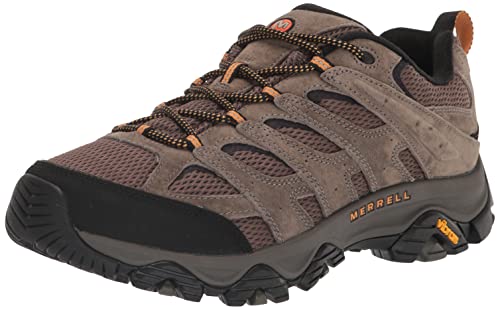
Pros
- Vibram TC5+ rubber outsole offers dependable grip across hard-pack, loose soil, and rocky terrain
- Kinetic Fit ADVANCED removable insole delivers reliable medium arch support and heel impact absorption
- Pigskin leather and mesh upper with a protective toe cap shields against abrasion and trail obstacles
- Bellows tongue and molded nylon arch shank enhance trail comfort and midfoot stability
Cons
- Non-waterproof mesh construction allows moisture penetration during heavy rain or wet stream crossings
- Low-cut design provides less lateral ankle wrap than a mid or high-cut hiking boot
- Listed weight of roughly 1.85 pounds per pair is heavier than ultralight trail runners
The Merrell Men's Moab 3 Hiking Shoe is a low-cut trail shoe designed for day hikers, weekend trail walkers, and backpackers looking for a dependable balance of support, traction, and breathability. Offered in the Walnut colorway in men's size 11 medium, this footwear suits hikers who favor the freedom and mobility of an ankle-height shoe over a rigid hiking boot. It is engineered for varied outdoor terrain, from groomed state-park paths to rocky backcountry loops across the United States.
Underfoot performance on the trail relies heavily on the shoe's shock mitigation and stability features. The Moab 3 incorporates Merrell Air Cushion technology in the heel alongside a lightweight EVA foam midsole, which absorbs shock upon heel strike and promotes a balanced stride. For foot support, the shoe features a molded nylon arch shank that stiffens the midfoot against uneven surfaces, combined with the Kinetic Fit ADVANCED removable contoured insole that delivers reinforced heel cushioning and medium arch support. Hikers carrying daypacks or moderate overnight gear can appreciate this structured platform during long hours on the trail.
Upper durability is achieved through a combination of pigskin leather overlays and breathable mesh panels that promote air circulation while resisting scuffs from trailside brush. Merrell incorporates 100% recycled laces, webbing, and interior mesh lining into the build, improving sustainability without compromising everyday trail utility. A protective toe cap guards the front of the foot against painful impacts with loose rocks and roots, while the bellows tongue prevents pebbles, sand, and loose gravel from sifting into the interior during dry, dusty treks.
Traction is managed by a Vibram TC5+ rubber outsole engineered to maintain purchase across mixed surfaces, including dry hardpack, loose soil, and damp rock faces. The traditional lace-up system with 100% recycled webbing allows hikers to dial in midfoot tension and heel lockdown to match foot volume. The removable insole also makes it simple to air out the shoes after warm summer hikes or swap in specialized orthotic inserts if personal biomechanics require custom support.
While the Moab 3 is a dependable all-around trail shoe, buyers should keep specific design tradeoffs in mind. Because this version utilizes breathable mesh without a waterproof membrane, water from rain showers, dewy morning brush, or stream crossings will seep through the upper fabric. Additionally, the low-cut profile offers less lateral ankle bracing than a dedicated mid-cut boot, which some hikers carrying heavy multi-day backpacks over off-camber scree may prefer. At approximately 1.85 pounds, it is also moderately heavier than minimalist trail running shoes.
For outdoor enthusiasts seeking reliable out-of-the-box comfort, dependable Vibram grip, and structured underfoot support, the Merrell Men's Moab 3 in Walnut is a practical and proven choice. It performs best on day hikes, light backpacking trips, and camping outings where warm-weather airflow and solid stability take priority over waterproof protection.
The Merrell Moab 3 relies on a Vibram TC5+ rubber outsole, engineered to deliver reliable purchase across diverse trail surfaces such as packed dirt, loose scree, and exposed slab. The lug geometry provides confident grip on both ascents and descents without producing excessive stiffness under the ball of the foot.
Underfoot stability is reinforced by a molded nylon arch shank that resists torsional twisting on uneven ground. Working together with the Kinetic Fit ADVANCED contoured insole, the platform offers medium arch support and heel shock absorption to help minimize foot fatigue over extended trail miles.
The upper combines genuine pigskin leather with breathable mesh panels, offering abrasion resistance against trailside rocks while venting excess foot heat on warm hikes. Sustainability is highlighted throughout the hardware, with 100% recycled content in the laces, webbing, and inner mesh lining.
Trail protection is enhanced by a durable rubber toe cap that shields against direct impacts from hidden roots and stones. In addition, the bellows tongue is connected along the sides of the throat to prevent grit, dirt, and trail debris from entering the shoe.
Understanding Trail Footwear Terminology and Design Categories
Finding the correct terminology for outdoor footwear can feel confusing because manufacturers and retail shops frequently use multiple terms for similar low-cut trail models. When people wonder what are hiking shoes called, the answer generally depends on the shoe’s structural stiffness, upper construction, and intended terrain. The most common industry terms include low-cut hiking shoes, light hikers, trail shoes, and technical walking shoes. Each label reflects a specific blend of traction, protective materials, and underfoot stability tailored to unpaved environments.
The Core Classification: Low-Cut Hiking Shoes and Day Hikers
The standard low-cut hiking shoe is designed to provide the rugged durability of a traditional boot while stopping below the ankle collar. Many outdoor brands refer to these models simply as day hikers or trail walkers because they excel on maintained dirt paths, rolling hills, and moderately rocky paths. By eliminating the high ankle collar of traditional backpacking boots, low-cut designs significantly cut down on overall footwear weight. This weight reduction conserves leg energy over long afternoon treks without sacrificing underfoot stability.
Modern low-cut hikers often utilize resilient upper materials like pig suede or split-grain leather combined with breathable mesh. For instance, models such as the Merrell Women’s Moab 3 Hiking Shoe and Merrell Men’s Moab 3 Hiking Shoe rely on durable suede and mesh to resist abrasive trail debris. These shoes also feature a bellows tongue, which is a gusseted tongue attached to the upper on both sides. This construction prevents pebbles, sand, and dried twigs from slipping into the shoe during descent.
Another defining element of the classic low-cut hiker is a molded protective toe cap. When navigating uneven paths, kicking an exposed root or hidden rock is almost inevitable. A rubber or synthetic toe bumper acts as an impact barrier, shielding your metatarsals and toenails from painful strikes. This rugged front-end structure distinguishes purpose-built hiking shoes from casual walking footwear that lacks perimeter armor.
Trail Runners Versus Dedicated Hiking Shoes
A frequent point of confusion among trail walkers is the operational difference between hiking shoes and trail running shoes. While both styles feature low-cut silhouettes, their internal structures and flex patterns cater to fundamentally different trail dynamics. Trail runners emphasize ultralight mesh, flexible midsoles, and rapid drainage for fast-paced running on packed dirt. In contrast, hiking shoes focus on torsional stiffness, durable upper fabrics, and robust heel support to handle slower, weight-bearing steps.
Midsole density represents one of the clearest dividing lines between these two footwear categories. Trail running footwear often employs softer foams that maximize rebound and immediate step-in softness. Hiking shoes, however, utilize denser foam compounds engineered to resist premature compression and pack-out over hundreds of trail miles. This firmer cushioning platform prevents your foot from bending excessively over uneven stones, reducing the risk of bottom-of-foot bruising.
Upper durability also differs considerably between running and hiking models. While a lightweight trail runner might succumb to sidewall abrasions when scraped against jagged granite, a leather-reinforced hiking shoe offers substantial tear resistance. Hikers who prefer carrying a loaded daypack generally benefit from the structured foundation of a dedicated hiking shoe. The stiffer chassis stabilizes the foot on off-camber terrain where a flimsy running shoe might roll or twist.
Approach Shoes and Technical Scrambling Footwear
Within the broader family of trail footwear, you will occasionally encounter models called approach shoes. These specialized shoes were originally developed for rock climbers hiking to the base of alpine climbing routes. While they are low-cut shoes suited for trail walking, approach shoes feature design cues borrowed directly from climbing slippers. They incorporate sticky, low-profile rubber outsoles and a smooth climbing zone under the big toe for edging on narrow rock ledges.
The lacing system on an approach shoe typically extends all the way down to the front of the toes. This extended eyelet configuration allows the wearer to tighten the shoe snugly around the forefoot, eliminating internal foot shift during steep ascents. However, this precision fit creates a much narrower toe box that can compress the toes over extended miles. For standard day hikes and non-technical trails, traditional hiking shoes provide far more relaxed comfort and natural toe spread.
Sticky rubber formulations used on approach shoes wear down rapidly on coarse gravel or paved roads. Dedicated hiking shoes utilize firmer, wear-resistant rubber blends that retain their lug profile across varying surfaces. Unless your route involves genuine rock scrambling, a traditional light hiker remains the more practical choice. Standard trail shoes balance reliable traction with durable compounds that withstand sustained friction over diverse terrain.
Internal Support Architecture: Molded Shanks and Arch Alignment
The internal chassis of a hiking shoe is engineered to prevent excessive twisting when stepping across jagged rocks. A critical component responsible for this support is the molded shank, typically constructed from semi-rigid nylon. In the Merrell Moab 3, a molded nylon arch shank sits between the insole and outsole. This internal piece reinforces the midfoot, keeping the shoe from folding when your foot balances on an uneven edge.
Without an integrated shank, the plantar fascia along the bottom of your foot must work significantly harder to stabilize your stride. Over miles of rocky ascents, this repeated muscular strain can lead to acute arch fatigue and painful heel discomfort. The shank acts as a structural bridge that transfers your body weight smoothly from heel strike to toe-off. This rigid element allows you to step onto roots and sharp stone ridges without feeling every concentrated pressure point.
In addition to structural shanks, quality trail footwear incorporates specialized arch-support insoles. Footwear designs like the FitVille Men’s Outdoor Hiking Shoes emphasize targeted arch support to maintain proper skeletal alignment across extended routes. When your arch receives adequate physical contouring, your ankles and knees track more naturally over each stride. This alignment is vital for long-distance trail comfort, especially when your feet begin to tire late in the afternoon.
Heel Cushioning Systems and Shock Absorption
Downhill trekking places tremendous repetitive shock on the heel and lower leg joints with every braking stride. To mitigate these jarring forces, manufacturers integrate proprietary shock-absorbing elements into the rearfoot. Merrell utilizes their specialized Air Cushion technology in the heel pocket of the Moab 3 series. This encapsulated chamber absorbs downward impacts during aggressive heel strikes and centers the heel to prevent lateral slippage.
Contoured insoles also play a major role in rearfoot stability and long-term joint comfort. Removable footbeds, such as the Kinetic Fit ADVANCED contoured insole found in Merrell footwear, feature reinforced heel cradling and zoned pod cushioning. A deep heel cup holds the natural fatty tissue beneath your calcaneus in place, maximizing your body’s inherent shock absorption. When the heel remains firmly seated, friction hot spots and blister-causing slippage are minimized.
High-rebound cushioning foams offer another effective solution for mitigating trail impact. The FitVille Men’s Outdoor Hiking Shoes employ responsive, high-rebound cushioning designed to maintain energy return across long distances. Rather than compressing permanently under load, high-rebound midsoles spring back to absorb consecutive impacts on packed dirt trails. This dynamic cushioning helps soften every step, allowing hikers to maintain a steady cadence with reduced leg fatigue.
Forefoot Dimensions, Volume, and Roomy Toe Boxes
Proper toe box volume is one of the most critical factors determining whether a hiking shoe feels comfortable or painful. As you walk over several hours, your feet naturally expand in both length and width due to increased blood flow and gravitational load. If a shoe features a tapered or narrow forefoot, this natural swelling can force your toes together, causing friction between digits and aggravating pressure points. A cramped toe box is a primary cause of blackened toenails and painful forefoot irritation.
Recognizing this mechanical challenge, specialized manufacturers design shoes with roomy wide and extra-wide toe boxes. The FitVille Men’s Outdoor Hiking Shoes specifically prioritize an expansive forefoot profile that allows natural toe splay. When your toes can spread outward naturally upon impact, your forefoot creates a wider, more stable base of support on uneven gravel. This extra space relieves tension across the metatarsal heads and reduces the likelihood of hot spots forming during long trail sessions.
Evaluating internal shoe volume also matters when selecting appropriate hiking socks or custom orthotic inserts. Shoes with removable insoles allow you to easily replace factory liners with specialized aftermarket footbeds if you require higher arch support. Testing the shoe volume with your intended trail socks ensures that your instep is not compressed painfully against the eyelets. A secure midfoot wrap combined with a spacious toe box offers the ideal geometry for trail endurance.
Outsole Traction, Lug Geometry, and Mud Shedding
The outsole of any shoe referred to as a hiking shoe must provide dependable mechanical grip across unpredictable ground. While road running shoes feature flat, shallow tread patterns optimized for dry asphalt, trail shoes utilize aggressive rubber lugs. A full rubber lugged sole, such as the high-traction platform found on FitVille outdoor shoes, bites into loose dirt, sand, and slick grass. These multidirectional lugs act like mini-cleats that dig into the surface to prevent forward or lateral skidding.
Lug geometry is carefully organized to serve two distinct purposes during a hike: propulsion and braking. Lugs beneath the ball of the foot generally point forward to grab the ground when pushing off uphill. Conversely, lugs situated beneath the heel are oriented in reverse to act as friction brakes when descending steep, slippery slopes. Having distinct braking lugs allows you to maintain controlled footing on downhill grades without having to lean back excessively.
Lug spacing is equally essential for maintaining grip in damp or muddy trail conditions. If the rubber lugs are positioned too close together, thick clay and damp soil become trapped between them, turning the sole into a smooth, slippery surface. Widely spaced perimeter channels allow the sole to flex and naturally shed clumping mud as you step. This self-cleaning action ensures that the rubber lugs remain exposed and ready to grip the next root or stone.
Matching Footwear Stability to Pack Weight and Terrain Demands
A vital consideration when choosing between low-cut hiking shoes and higher-cut boots is the amount of weight you intend to carry. Low-cut trail shoes excel when carrying light daypacks loaded with water, trail snacks, and lightweight layers. Because the shoe chassis is agile and light, your feet stay nimble over swift miles. This agility makes low-cut shoes a favorite choice for day hikers who want to move comfortably without the clunkiness of heavy leather footwear.
When you transition to heavier gear setups, such as carrying overnight supplies or load-bearing packs, underfoot rigidity becomes paramount. Hikers carrying bulkier gear like supportive internal frame packs must ensure their footwear can support the increased downward pressure. A shoe with a molded nylon arch shank and dense heel cushioning prevents the midsole from over-compressing under the extra load. This structural firmness protects your arches and preserves stable footing across off-camber paths.
If your excursions involve multi-day expeditions with heavy gear over unmaintained talus fields, a mid-cut boot may offer additional debris protection. But for the vast majority of day hikers, a well-built low-cut hiking shoe provides more than enough lateral stability. The key is ensuring that the shoe’s internal shank and lug profile match the terrain complexity and pack weight. Choosing the proper balance of rigidity and agility will keep your feet supported across hours of exploration.
Whether you call them low-cut hiking shoes, trail walkers, or light day hikers, these purpose-built shoes bridge the gap between heavy boots and flexible sneakers. By combining rugged outsoles, protective toe caps, supportive arch shanks, and breathable uppers, they deliver the exact durability needed for unpaved adventures. Knowing the anatomy and naming conventions behind these shoes ensures that you choose the right footwear to tackle your favorite trails with confidence.


Write Your Review
No reviews yet. Be the first to share your experience!