


Walking onto a rocky path in standard gym sneakers often leads to bruised soles, slipping on loose dirt, and painful toe collisions against thin fabric. Footwear engineered for outdoor terrain addresses these exact hazards through structured soles and reinforced uppers. If you are preparing for your first season outdoors or updating your gear, you might wonder what do hiking shoes look like compared to standard road sneakers. Unlike smooth road runners, authentic trail shoes display distinct visual cues such as aggressive rubber treads, fortified toe caps, and rugged multi-material paneling.
These exterior characteristics are not mere styling choices; they provide critical functional protection against jagged stones, abrasive brush, and slick mud. Gear pairings matter on the trail, and just as outdoor enthusiasts weigh the benefits of investing in durable hiking pants for leg protection, selecting footwear with the right exterior architecture protects your feet from painful impacts. From traditional leather builds to sleek low-cut designs with wide toe boxes, identifying these exterior design markers helps you choose the right shoe for your local terrain. Examining the defining visual elements, structural components, and distinct style profiles reveals how modern trail footwear is built to perform.



Visual Anatomy and Distinct Styles of Modern Hiking Shoes
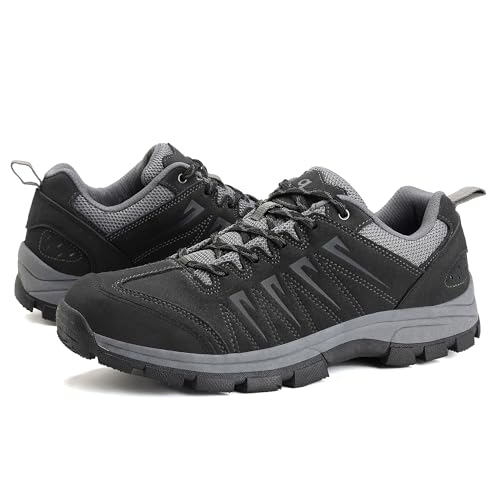
Understanding what do hiking shoes look like begins with recognizing their overall silhouette and proportions. At first glance, a hiking shoe resembles a reinforced hybrid between a rugged athletic sneaker and a cut-down mountain boot. The collar sits below the ankle joint, distinguishing it immediately from taller mid-cut or high-cut hiking boots. However, the profile appears substantially stouter and more muscular than a traditional gym sneaker or road running shoe. Thick rubber creeps up the sides of the sole, dense leather or synthetic overlays cross the upper, and the platform sits wider on the ground to provide reliable walking stability.
Key Hallmarks and Silhouette at First Glance
The overall aesthetic of a hiking shoe reflects functional durability rather than streamlined aerodynamics. While road running shoes prioritize thin, lightweight mesh and smooth foam outsoles, hiking shoes emphasize layered textiles and protective shields. Color palettes frequently feature earthy tones such as slate gray, olive, charcoal, brown, and tan, often accented with vibrant contrasting lace loops or pull tabs. Even modern athletic trail designs feature visible reinforcement around the toe and heel that signals their off-pavement purpose.
When you place a hiking shoe next to a standard casual shoe, the difference in underfoot substance is immediately obvious. The sculpted midsole displays a substantial thickness designed to absorb ground impact from jagged rocks and tree roots. You can also spot specialized hardware like reinforced webbing loops, metal eyelets, and chunky laces that withstand friction from trail debris. Every exterior element communicates that the shoe is engineered to handle dirt, moisture, and uneven terrain without breaking down prematurely.
The Outsole: Deep Lugs and Aggressive Tread Geometry
Flipping a hiking shoe upside down reveals its most defining visual feature: the aggressive tread pattern. Standard sneakers feature relatively flat outsoles with shallow siping grooves intended for smooth asphalt and indoor gym floors. In contrast, hiking shoes showcase deep rubber studs known as lugs that protrude visibly from the base of the shoe. These lugs create mechanical bite, allowing the sole to dig into soft loam, slick mud, and loose gravel paths without sliding.
The lugs are rarely arranged in uniform straight lines across the rubber surface. Instead, you will observe multidirectional lug patterns, where forward-facing angular blocks at the forefoot provide climbing propulsion while rear-facing lugs beneath the heel act as braking edges during steep descents. For instance, designs like the KEEN Targhee 3 feature prominent 4mm multidirectional lugs crafted from all-terrain rubber to maintain stability across rocky inclines. Other prominent designs utilize proprietary rubber compounds such as the Vibram TC5+ outsole found on the Merrell Moab 3, which displays broad, sculpted contact pads designed to grip slick granite slabs.
Wide spacing between the rubber lugs is another unmistakable visual cue. Manufacturers space the tread blocks deliberately so that accumulated mud and wet clay can shed naturally as the shoe flexes during movement. If the lugs sat tightly together, packed soil would turn the bottom of the shoe into a slick surface. By incorporating open evacuation channels across the perimeter, the outsole retains its gripping edges step after step.
Protective Armoring: Toe Caps, Rands, and Heel Counters
The front of a hiking shoe features heavy structural reinforcement designed to defend your toes against accidental collisions. Sharp trail stones and hidden roots pose constant hazards when navigating uneven terrain. To counter this, hiking shoes incorporate a molded rubber toe cap or an extended outsole bumper that curves upward over the front of the shoe. On models such as the KEEN Targhee 3, this high-abrasion rubber toe guard forms an imposing protective shield across the entire front perimeter.
Beyond the front bumper, many trail shoes include protective rands that run along the lower boundary where the upper meets the midsole. These rands consist of durable synthetic coatings or thick rubber strips that encircle high-wear zones. They shield the fabric upper from abrasive scrapes when you brush against granite boulders or thorny trailside brambles. Models like the SHULOOK lightweight waterproof hiker integrate anti-collision toe styling and reinforced perimeter sealing to keep external hazards from penetrating the forefoot.
At the rear of the shoe, a stiffened heel counter provides external stability and structure. You can visually identify the heel counter by its molded, cupped shape and firm exterior reinforcement, often finished with dense synthetic paneling or heavy stitching. This structure locks the calcaneus firmly in place to minimize lateral rolling and reduce heel lift. A secure heel pocket keeps the foot centered over the midsole cushioning, preventing friction that causes painful hot spots.
Upper Construction: Layered Suede, Leather, and Ballistic Mesh
Examining the exterior upper reveals a complex interplay of durable materials arranged in protective layers. Traditional and technical hiking shoes rarely rely on a single sheet of lightweight fabric. Instead, you will see a strategic blend of heavy suede leather, nubuck, and tightly woven ballistic mesh panels. For example, the Merrell Moab 3 combines pig suede leather with breathable mesh windows, while the Columbia Crestwood utilizes suede leather overlays over tightly woven textiles to balance breathability with tear resistance.
Leather components typically frame the high-stress zones around the lace stays, the sides of the midfoot, and the perimeter of the heel. These leather panels provide structural integrity, preventing the shoe from stretching out or deforming when you traverse off-camber slopes. In areas requiring heat dissipation, open mesh inserts allow internal moisture vapor to escape during warm day hikes. Suede and leather surfaces often carry a matte, rugged finish that resists light abrasion and scuffs.
Heavy-duty, double-row stitching visibly traces the seams connecting these distinct materials. Because trail shoes experience constant rotational torque and abrasive forces, single-stitched seams would unravel quickly under stress. You will notice that the thread used in hiking shoes is noticeably thicker than that found in road running sneakers. These reinforced seam lines give the upper its characteristic paneled, rugged appearance while ensuring the shoe holds together across hundreds of trail miles.
Gusseted Tongues and Trail Lacing Systems
Opening the laces of a hiking shoe exposes one of its most critical functional components: the gusseted tongue. In standard athletic sneakers, the tongue is stitched only at the bottom base, leaving the sides open to the interior of the shoe. Hiking shoes feature a bellows or gusseted tongue, which connects the sides of the tongue directly to the upper via flexible fabric wings. Both the Merrell Moab 3 bellows tongue and the SHULOOK closed-cell tongue visually demonstrate this design, creating a continuous barrier against incoming grit.
This integrated side webbing prevents trail debris such as loose gravel, sand, pine needles, and shallow puddle splashes from slipping into the shoe. When the tongue is flattened against your foot, these fabric wings fold neatly inward beneath the laces. You will also notice dense foam padding running throughout the length of the tongue. This thick cushioning disperses pressure across the delicate dorsal tendons of the foot, preventing painful lace bite during steep ascents.
The lacing hardware on a hiking shoe also looks distinct from casual footwear. Rather than simple punched holes through fabric, hiking shoes use reinforced metal eyelets, webbing ghillie loops, or heavy synthetic anchor points. The laces themselves are generally round, tightly braided, and textured to prevent them from loosening under continuous foot flex. Some models incorporate locking eyelets at the instep that allow hikers to adjust forefoot tension independently from collar tightness.
Visual Identification of Waterproof vs. Ventilated Designs
From a short distance, waterproof hiking shoes and non-waterproof ventilated models can appear remarkably similar, but close inspection reveals subtle differences. Waterproof models typically feature small woven fabric tags or subtle rubber emblems along the collar or eyelet row. Badges reading KEEN.DRY, SL-TEX, HUMTTO-TEX, or OL-TEX indicate that a waterproof, vapor-permeable membrane lines the interior of the shoe. These internal booties block liquid water from penetrating while allowing perspiration vapor to vent through microscopic pores.
Peering inside the collar of a waterproof shoe reveals a continuous fabric bootie lining with sealed seams extending partway up the tongue. In non-waterproof shoes, you will see a more open, porous lining designed for maximum airflow. Non-waterproof trail shoes, such as standard mesh variants of the Columbia Crestwood, prioritize rapid drying and heat dissipation over moisture exclusion. Their uppers display broader mesh pores that allow light to filter through when held up to a bright window.
Waterproof shoes also feature a treated exterior surface that causes water droplets to bead up on contact. Manufacturers apply durable water repellent finishes to exterior suede and mesh fabrics, giving them a slight sheen. In contrast, non-waterproof mesh shoes absorb moisture rapidly when submerged, but they also dry significantly faster once you step out of a stream crossing. Recognizing these subtle exterior cues helps you choose the correct footwear for your local climate and seasonal trail conditions.
Modern Style Variations: Classic Low-Cut vs. Minimalist Barefoot Hikers
The trail footwear category has expanded beyond traditional silhouettes to include distinctly different design philosophies. The classic low-cut hiker, exemplified by models like the Merrell Moab 3 and the KEEN Targhee 3, features a substantial, sculpted midsole with a noticeable heel-to-toe drop. These shoes have thick EVA or polyurethane midsoles, visible external arch support shanks, and a contoured footbed designed to cushion repetitive heel impacts. Their visual profile is chunky, supportive, and distinctly outdoor-oriented.
In recent years, minimalist and barefoot trail shoes have introduced an entirely different visual profile to the outdoors. Footwear such as the ELETON barefoot hiking shoe, the Barezoey wide-toe-box shoe, and the Hike Footwear HF Stride slip-on display a remarkably thin, flat sole profile known as zero-drop. In these shoes, the heel and forefoot sit at the exact same elevation above the ground, promoting natural body alignment. The outsoles are ultra-flexible and lack the thick, molded foam midsole seen on traditional trail footwear.
Another unmistakable visual hallmark of barefoot and anatomical trail shoes is the wide, foot-shaped toe box. Traditional footwear often tapers inward toward the big toe, whereas barefoot models fan outward to mirror the natural anatomy of the human foot. This generous forefoot volume allows the toes to splay naturally during downhill braking and uphill propulsion, which can reduce cramping and joint strain. Lightweight barefoot hikers often replace standard shoelaces with elastic drawstrings or slip-on collars for quick adjustments on the go.
Between traditional chunky hikers and minimalist barefoot models lie athletic lightweight trail shoes. Options like the OUTJET women’s lightweight waterproof shoe, weighing only 10.7 ounces per shoe, blend the low weight of athletic runners with genuine trail protection. They display a sleeker, faster silhouette with molded EVA midsoles and streamlined synthetic overlays. These modern variations ensure that hikers can match their visual and functional preferences to their specific trail ambitions.
Inspecting Wear: Visual Indicators That Signal Midsole and Tread Breakdown
Knowing what a healthy hiking shoe looks like also enables you to spot the visual warning signs of structural breakdown. Over time, the aggressive rubber lugs on the outsole undergo abrasive friction against sharp rocks and coarse granite. A worn outsole displays rounded lug edges, thinned tread blocks, or smooth bald patches directly under the ball of the foot and the heel. When lug depth wears down significantly, the shoe loses its mechanical grip on loose gravel and wet surfaces.
The midsole also displays clear visual evidence of material fatigue, commonly known as pack-out. As compression-molded EVA absorbs repetitive steps across hundreds of trail miles, the foam permanently compresses. You can spot midsole pack-out by looking for deep, permanent horizontal wrinkles and compression creases etched into the exterior foam sidewalls. When a midsole packs out, it loses its resilience and shock absorption, leading to premature foot fatigue and sore joints.
Upper deterioration provides further visual confirmation that footwear requires maintenance or replacement. Check for frayed stitching along high-flex points near the metatarsal joints, delamination where the rubber toe bumper attaches to the leather, and tears in the exterior mesh. Keeping your trail gear in top condition is essential when planning a multi-day backpacking checklist, because shoe failures in remote backcountry areas can compromise your safety and comfort. Visual inspections before every major trip ensure that your footwear remains structurally capable of handling rugged terrain.
Practical Trail Verification and Selection Takeaways
Understanding what hiking shoes look like empowers you to distinguish genuine off-road capability from superficial outdoor styling. Authentic trail shoes declare their functional intent through aggressive multidirectional lugs, reinforced rubber toe caps, gusseted tongues, and supportive heel counters. Whether you lean toward the structured stability of classic leather hikers or the natural freedom of wide-toe-box barefoot designs, each element serves a direct purpose on the trail.
Before embarking on your next hike, examine your footwear closely to confirm that its structural features match your intended trail conditions. Check the depth of the outsole tread, verify that the tongue gussets sit securely against your ankle, and ensure that your toes have adequate clearance inside the front box. By selecting shoes with the right protective visual features, you give your feet the support, traction, and protection needed for confident steps on every backcountry path.


Write Your Review
No reviews yet. Be the first to share your experience!