


Descending steep mountain switchbacks with a heavy pack places punishing shock loads on your quadriceps, hips, and knees. Dedicated hikers often look for reliable gear to redistribute that downward force into their upper body and maintain solid footing across loose scree or muddy riverbanks. Understanding %what to look for in trekking pole% setups allows you to select equipment that preserves joint health, provides immediate stability, and resists sudden failure when you stumble. Pairing your gear with supportive apparel like tendon knee hiking pants can further protect your lower joints when navigating grueling alpine descents.
A hiking pole acts as an essential extension of your body, creating dependable third and fourth points of contact across unstable terrain. Key elements such as shaft materials, locking mechanisms, grip textures, and tip durability dictate how well a stick holds up under rigorous backcountry demands. Finding the right balance between overall weight, structural stiffness, and collapsed length keeps your arms fresh over long trail days. Evaluating these mechanical characteristics ahead of time ensures you invest in hardware that matches your specific hiking ambitions.


Essential Features and Mechanical Details in Trekking Poles
Evaluating hiking poles requires looking beyond exterior colors and branding to inspect the core engineering that determines stability and joint protection. You need to focus primarily on shaft durability, locking mechanism reliability, grip ergonomics, and tip design. Each mechanical component directly influences how well the pole transfers downward impact away from your lower body during long hikes. Understanding these mechanical distinctions helps you select a setup tailored to your typical terrain, pack load, and personal endurance goals.
Shaft Material Selection: Aluminum Alloys Versus Carbon Fiber
Shaft material represents the foundational choice that dictates pole weight, rigidity, and behavior under sudden lateral stress. High-grade aluminum alloys, particularly 7075-T6 and 6061, remain the benchmark for rugged backcountry durability and heavy pack loads. Aluminum possesses ductile properties, meaning it tends to bend rather than snap catastrophically when wedged between granite boulders or subjected to a tripping fall. Many telescoping options, such as the telescoping poles included with Odoland snowshoe systems, utilize lightweight aluminum alloy frames to combine dependable support with manageable carry weight.
Carbon fiber shafts cater to ultralight backpackers and long-distance thru-hikers who prioritize minimal swing weight and natural vibration absorption. Carbon fiber consists of layered composite weaves that deliver remarkable tensile strength along the vertical axis while dampening hollow trail vibrations before they reach your wrists. The primary compromise of carbon fiber lies in its brittle failure mode under high lateral shear loads. If a carbon pole becomes caught in a tight rock crevice while your body momentum carries forward, the shaft can fracture abruptly instead of bending.
Solid timber offers an alternative approach for recreational walkers and traditionalists who appreciate natural flex and classic craftsmanship. Handcrafted wooden options like the Brazos straight pine wood walking stick utilize a solid piece of seasoned pine to deliver reliable balance and safety on casual forest strolls. Wooden staffs exhibit a heavier swing weight than modern hollow composites, but their solid structural core provides substantial vertical stability. Casual hikers tackling neighborhood trails or packed dirt pathways often find that natural timber handles routine balance duties without the mechanical complexity of telescoping collars.
Locking Mechanisms: External Cam Levers, Twist Locks, and One-Piece Shafts
Locking mechanisms maintain your chosen pole length and keep telescoping sections from collapsing under vertical body weight. External cam lever locks use an outer clamp collar tightened around the lower shaft section to generate reliable holding friction. Hikers prefer external levers because they can be easily operated while wearing thick winter gloves or navigating wet conditions. Most external cam designs feature a knurled thumb screw that allows quick, tool-free tension calibration directly on the trail when temperature changes alter clamp pressure.
Internal twist locks rely on expanding plastic internal plugs that press outward against the inner walls of the upper shaft section when rotated. While twist locks create a streamlined pole exterior without protruding clamps, they suffer from vulnerability to trail grit, fine dust, and sub-zero freezing. If moisture enters the shaft and freezes, internal expanders can spin freely without catching, creating a dangerous collapse risk on steep descents. Multi-section telescoping poles from Odoland provide adjustable height ranges between 25.5 and 54 inches, showing how user-friendly adjustment hardware remains crucial during cold-weather outings.
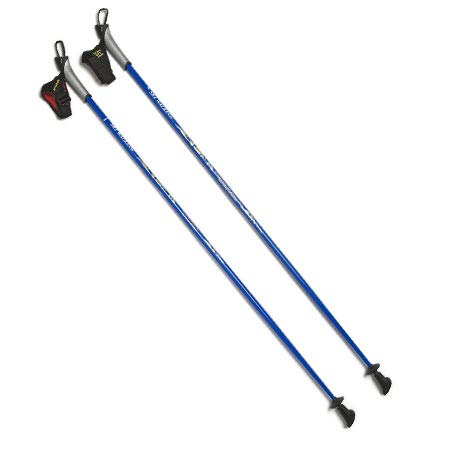
One-piece rigid shafts eliminate mechanical locks entirely to guarantee zero joint slip and maximum structural integrity. Fixed-length designs, exemplified by the American Nordic Walking System SWIX and EXEL one-piece poles, avoid the rattling vibrations and unexpected collapses associated with moving joints. Athletes, fitness walkers, and individuals undergoing physical therapy frequently choose single-piece shafts because unyielding rigidity provides dependable balance support. Eliminating telescoping adjustment hardware also lightens the pole tip and minimizes swing weight, although you lose the ability to shorten the shafts for compact transport.
Architecture and Packability: Telescoping Versus Folding Z-Poles
The structural architecture of a trekking pole determines how compactly it stows away when you need your hands free for scrambling or travel. Classic three-section telescoping poles slide inside one another, offering broad length versatility to accommodate varying body heights and shifting trail gradients. Telescoping models typically collapse down to 24 to 26 inches, strapping securely to the side compression straps of most multiday backpacks. Their overlapping cylindrical sections provide exceptional column strength, making them well suited for rugged backcountry routes where load-bearing reliability is essential.
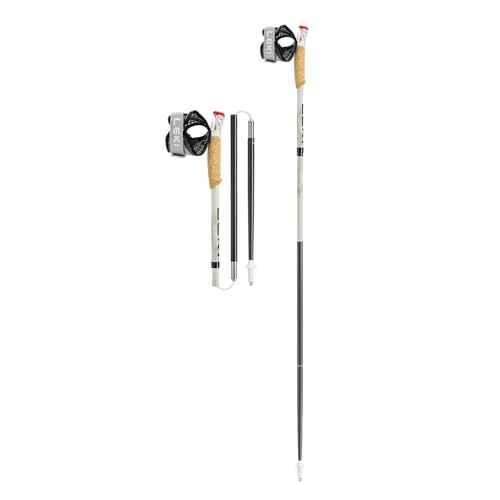
Folding Z-poles utilize three or four distinct shaft segments connected by an internal tension cord, assembling much like modern tent poles. A push-button lock pin secures the top segment, allowing the pole to fold down rapidly to a remarkably compact 14 to 16 inches. Trail runners and fastpackers favor folding models because they pack completely inside small hydration vests or luggage duffels. The tradeoff with folding poles centers on limited height adjustability, as many models feature fixed operational lengths with minimal room for slope customization.
Transportation logistics should also shape your packability decisions if you frequently fly to distant hiking destinations. Sharp metal tips on trekking poles fall under security restrictions for commercial airline cabins, meaning poles must be stowed inside checked luggage. Consulting our carry-on backpack size guide helps clarify baggage dimensions so you can pack clothing in the cabin while safely checking your hiking poles in a protective gear bag. Matching your pole collapsed length to your luggage dimensions prevents bent shafts and damaged pack fabrics during transit.
Grip Materials and Ergonomics: Natural Cork, EVA Foam, and Rubber
Grip materials form the direct interface between your hands and the pole, influencing comfort, blister prevention, and sweat management. Natural cork handles represent the gold standard for warm-weather hiking and high-mileage multi-day backpacking trips. Cork wicks away palm moisture effectively, maintains a smooth texture when damp, and gradually conforms to the individual shape of your hand over time. By dampening trail vibrations and reducing friction hot spots, quality cork grips help prevent painful palm blisters during hot summer ascents.
High-density EVA foam serves as a lightweight, soft-cushion alternative that performs reliably across wet and chilly trail conditions. EVA foam resists water absorption, provides a non-slip textured hold, and remains flexible in sub-freezing alpine environments. Many mountain poles incorporate an extended foam grip sleeve that extends six to eight inches down the upper shaft below the primary handle. This choke-up sleeve allows hikers to quickly lower their hand position on steep sidehill switchbacks without pausing to shorten the telescoping locks.
Molded rubber grips provide outstanding durability, water resistance, and cold-weather thermal insulation during winter excursions. Rubber does not absorb freezing water, making it a dependable choice for snowshoeing, winter mountaineering, and rainy day outings. The main downside of rubber appears in high heat, where non-breathable surfaces cause palms to sweat heavily and generate skin-rubbing friction. Backpackers tackling summer trails typically avoid heavy rubber grips to keep their hands dry and minimize forearm strain.
Wrist Straps and Biomechanical Load Distribution
Properly designed wrist straps perform a vital biomechanical function by transferring upper body weight directly into the pole shaft. Hikers should not need to tightly squeeze the handle grip during normal walking strides. Instead, the base of the palm should press down onto the strap loop, allowing you to guide the pole with a relaxed, loose hand grip. This mechanical transfer saves muscular energy, reduces forearm fatigue, and prevents hand cramps over consecutive ten-mile hiking days.
Correct strap technique requires sliding your hand up through the bottom of the loop before gripping the handle and webbing together. Entering the strap from below allows the wide strap webbing to wrap smoothly across the back of your wrist and under your palm heel. Quality straps incorporate soft, breathable lining and moisture-wicking edge binding to prevent chafing along sensitive wrist bones. Quick-release tension buckles or internal wedge locks allow you to tailor the loop circumference perfectly to bare hands or thick winter gloves.
Advanced designs, such as the specialized Nordic straps on American Nordic Walking System poles, feature contoured glove-like wraps with individual thumb slots. These ergonomic harnesses keep the pole securely tethered to your hand, facilitating a full rearward push-off without losing pole alignment. However, when negotiating hazardous boulder fields or steep scree descents, you should consider removing your hands from wrist straps. Releasing the straps on exposed scramble terrain ensures that your hands can freely break a fall without entangling fingers or twisting your wrists.
Tip Hardware, Road Paws, and Mud Basket Versatility
Tip construction dictates how securely your poles anchor into various backcountry surfaces ranging from slick granite to soft loam. Tungsten carbide flex tips serve as the standard trail hardware, providing exceptional hardness and aggressive bite on rock, packed dirt, and ice. The slightly cupped or concave carbide point bites into minuscule surface textures, preventing the pole from skidding outward when you plant it. Most premium poles house the carbide insert within a flexible plastic tip body designed to bend slightly if jammed between rocks rather than snapping the shaft.
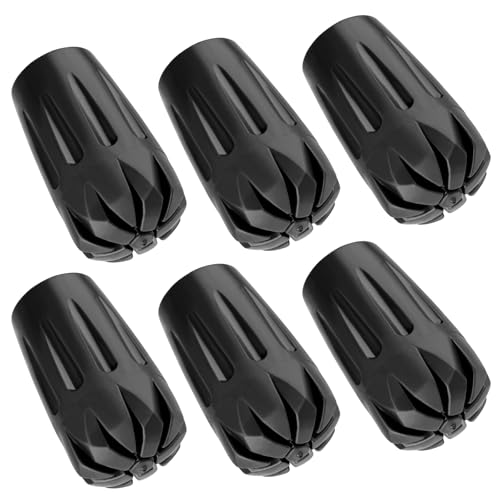
Removable rubber road tips and asphalt paws slip over the carbide points to protect hard urban surfaces and reduce noise. American Nordic Walking System one-piece poles include removable asphalt paws that absorb impact shock and offer smooth traction across pavement, running tracks, and indoor tiles. Rubber tips also protect sensitive sandstone formations and heavily traveled trail corridors from the erosive scarring caused by bare carbide tips. Carrying rubber tips in your pack allows you to transition seamlessly from rugged mountain paths to paved access roads and community walking tracks.
Interchangeable baskets prevent the pole tip from penetrating too deeply into soft ground or getting wedged into narrow rock fissures. Small diameter mud discs provide sufficient resistance against boggy loam and scree while maintaining a light tip swing weight. Wide diameter powder snow baskets, like those paired with Odoland snowshoe packages, distribute downward force across a broad surface area to prevent post-holing in deep winter snowpacks. Checking whether a pole features threaded or friction-fit basket mounts ensures you can quickly adapt your hardware for changing seasonal conditions.
Proper Sizing, Height Adjustment, and Slope Mechanics
Correct pole sizing establishes the foundation for efficient trail biomechanics and joint stress reduction. Standing upright on flat ground with your hiking shoes on, adjust your pole length until your elbow rests at a clean 90-degree angle. For fixed-length poles and traditional wooden staffs, manufacturers provide sizing charts based directly on user stature. For example, Brazos pine walking stick guidelines suggest a 41-inch stick for hikers under 4 feet 5 inches, 48 inches for those up to 5 feet 4 inches, 55 inches for heights between 5 feet 4 inches and 5 feet 11 inches, and 58 inches for anyone over 5 feet 11 inches.
Dynamic terrain requires subtle height adjustments to maintain an efficient walking cadence and keep your body centered over your feet. When climbing sustained, steep switchbacks, shortening your poles by 5 to 10 centimeters prevents you from overreaching and straining your shoulder joints. Conversely, lengthening each shaft by 5 to 10 centimeters on steep descents allows you to plant the tips further ahead and absorb impact before your knees take the brunt. Keeping your torso upright during downhill steps relieves severe compressive forces on your patellofemoral joints and lumbar spine.
Adjusting telescoping shafts safely requires strict attention to the laser-etched markings on each lower section. Never extend a pole segment beyond the indicated STOP or MAX line, as doing so leaves insufficient shaft overlap inside the clamping collar. Inadequate overlap creates an acute mechanical leverage point that can bend the aluminum or crack the composite body under vertical loads. Distributing your required length evenly between the middle and lower telescoping sections maintains optimal balance and structural rigidity.
Field Maintenance, Lock Calibration, and Inspection Habits
Regular cleaning and dry storage prevent mechanical failure and extend the operational lifespan of your hiking poles. After trekking through rain, mud, or dusty talus, pull each telescoping section completely apart and wipe the bare tubes dry with a clean cloth. Trapped moisture inside aluminum tubes promotes surface oxidation that can jam shafts, while fine trail grit wears away anodized protective coatings. Never apply lubricants, grease, or silicone spray inside telescoping shafts, as oils destroy the friction necessary for cam locks to hold weight securely.
Calibrating external lever clamp tension requires only subtle micro-adjustments to the knurled thumbscrew or tension dial. Open the cam lever, tighten the thumb dial slightly with your fingers, and close the lever until you feel firm, positive resistance from the palm of your hand. Before heading down a technical trail, test the holding force by placing both pole tips on the ground and leaning your upper body weight directly onto the handles. If either telescoping section slips downward even a fraction of an inch, open the clamp and increase thumbscrew tension until slippage ceases completely.
Consistent hardware inspections help you catch structural degradation before it leads to an unexpected failure on the trail. Check carbide tips periodically for rounded edges or chipped points that can slip off slick granite steps. Inspect composite carbon fiber shafts closely for hairline cracks or fraying fibers after any hard impact against sharp rocks. Catching worn wrist straps, damaged lever collars, or bent lower sections early allows you to replace individual components safely before your next backcountry journey.
Selecting the right trekking poles comes down to matching shaft materials, locking hardware, and grip comfort to your specific outdoor goals. Day hikers and neighborhood walkers may appreciate the simplicity of solid wooden sticks or rigid one-piece poles, while rugged mountain backpackers need adjustable aluminum or carbon telescoping designs. Prioritizing dependable lock holding power, breathable grip surfaces, and terrain-specific tips ensures your poles provide stable support and reliable joint relief across every mile.






Write Your Review
No reviews yet. Be the first to share your experience!