


Long mountain descents and rocky switchbacks can place punishing stress on knees, ankles, and lower back muscles. Hikers often purchase trekking poles to offload that joint impact, yet many grip the handles incorrectly and miss out on crucial biomechanical support. Understanding how to hold trekking pole handles properly transforms each shaft into an efficient extension of your body rather than a deadweight distraction. When you pair steady pole technique with supportive gear like knee support trail pants, you can dramatically soften cumulative descent shock over long trail days.
Gripping the handle with excessive tension leads directly to hand cramping, palm blisters, and premature forearm fatigue. The secret lies in letting the wrist strap carry your downward body weight while your fingers maintain a light, relaxed guide on the grip itself. Carrying a heavy load in a structured internal frame hiking backpack makes this efficient energy transfer even more critical on technical terrain. Learning the correct strap entry and hand positioning ensures you move forward with steady cadence, reliable balance, and minimal joint strain across every mile.

Pros
- Clips easily onto standard 1-inch webbing on shoulder harnesses, daisy chains, and pack fronts
- Shock cord construction dampens motion and avoids noisy plastic rattle on the trail
- Adjustable cord toggle accommodates varying diameters from ultralight shafts to bulky handles
- Four-piece bundle allows multiple tie-down configurations or outfitting multiple packs
- Weighs only about 0.11 pounds for the complete pack, keeping pack weight minimal
Cons
- Base clip requires standard 1-inch (25mm) webbing and will not fit ultra-wide straps or packs without external loops
- Elastic shock cord can stretch out over long-term environmental exposure compared to rigid mechanical clamps
- Not rated as load-bearing hardware for climbing safety or securing excessively heavy equipment
The TREKOLOGY Walking Stick Holder 4-Pack is an external gear-attachment accessory engineered to mount trekking poles, camera tripods, ice axes, or compact trail tools directly onto a backpack. Designed for day hikers, backpackers, section hikers, and outdoor photographers, this setup replaces makeshift cord ties or rigid plastic clips with an adjustable bungee and toggle system. It is particularly useful for hikers who frequently transition between using poles and needing free hands for scrambles, stream crossings, or camera handling.
On the trail, the primary advantage of this bungee system is rapid, hands-free gear management. Instead of stopping to remove a backpack or unpack gear compartments, hikers can slip poles or tools into the bungee loops and secure them in seconds. The elastic shock cord naturally absorbs kinetic movement and walking vibrations, preventing the distinct clicking and rattling sounds that often occur with hard plastic attachment hardware. With an overall listed weight of approximately 0.11 pounds for the four-pack, it introduces minimal weight to a base pack setup while providing reliable gear stability.
The build centers around an all-weather, high-tension elastic shock cord paired with a rugged cord-lock toggle and a dedicated base clip. According to product specifications, the cord and toggle maintain tension even when wet or exposed to freezing temperatures, reducing the risk of gear slipping out during foul-weather travel. The base clip is molded to anchor onto standard 1-inch (25mm) webbing, allowing it to integrate with shoulder straps, front daisy chains, side compression straps, or external MOLLE ladders.
Installation and daily adjustment are straightforward. The base clip snaps securely over 1-inch webbing without requiring sewing or pack modification. Once the clip is positioned, the bungee cord loops around the gear shaft or handle, and the spring toggle cinches tight. Because the tension is fully adjustable, the holder conforms equally well to narrow carbon-fiber lower sections, mid-shaft adjustment collars, or thicker EVA foam grips. Releasing the gear requires only a quick squeeze of the toggle to loosen the loop.
There are practical limitations to keep in mind before purchase. The base clip is specifically engineered for standard 1-inch (25mm) webbing and will not seat properly on wide, non-standard shoulder straps, thick padded hip belts, or minimalist frameless packs devoid of external loops. Furthermore, while the elastic cord handles trekking poles, tripods, and light tools effectively, it is not load-bearing hardware and should never be used for climbing safety, fall protection, or anchoring heavy, unstable trail loads.
For hikers, backpackers, and trail photographers who already own packs equipped with external webbing and want an organized, rattle-free way to carry poles hands-free, the TREKOLOGY Walking Stick Holder provides exceptional practical utility. Its lightweight footprint, simple toggle adjustment, and four-pack versatility make it a smart, functional accessory for streamlining trail transitions.
The TREKOLOGY Walking Stick Holder utilizes a specialized base clip designed to attach to standard 1-inch (25mm) webbing. This standardized sizing makes it compatible with horizontal or vertical strap systems, such as shoulder harness adjustment bands, front panel daisy chains, side compression webbing, and tactical MOLLE platforms found on many hiking packs.
Because the attachment loop relies on an expandable shock cord and mechanical cord lock, it provides variable diameter clamping. It securely holds equipment ranging from slim aluminum and carbon trekking pole shafts to bulkier items such as camera tripod legs, ice axe handles, compact fishing rods, or travel umbrellas.
Constructed with high-tension elastic shock cord and heavy-duty composite hardware, this attachment set is built to endure varying backcountry conditions. The cord retains elasticity and tension in both wet and freezing environments, ensuring that wet trekking poles remain firmly strapped against the pack body.
The flexible shock cord design also prevents trail wear by dampening vibrations that can cause gear friction. By holding gear snugly against the pack rather than loosely swinging, the holder minimizes abrasion on both the backpack fabric and the attached gear shafts.

Pros
- Ultralight listed package weight of roughly 0.022 pounds keeps pack weight down.
- Four-piece bundle provides versatile placement options across one or two backpacks.
- Sliding buckle mechanism adjusts quickly to secure poles of different diameters.
- Inexpensive upgrade for daypacks and hiking bags lacking factory pole attachment hardware.
Cons
- Requires existing webbing, daisy chains, or anchor points on your backpack to secure the cord.
- Elastic cord can lose tension over time if exposed to repeated heavy snagging or over-stretching.
- Not engineered or rated for technical climbing protection, heavy axes, or high-load carrying.
The Marsrut 4-Piece Trekking Pole Holder set is an aftermarket external attachment accessory designed for hikers, backpackers, and travelers who need a secure way to stow trekking poles or walking sticks on their packs. Many daypacks and minimalist backpacking bags omit dedicated pole attachment bungees to reduce production costs or maintain clean exterior profiles. This four-piece kit bridges that gap by providing standalone, adjustable elastic cord ties that attach to existing exterior anchor points.
On the trail, managing trekking poles during scrambles, stream crossings, or flat access walks requires a dependable hands-free storage method. These holders measure 20.3 cm (8 inches) in length and feature a slide-lock plastic buckle. When anchored through an exterior loop or compression strap on your pack, the elastic cord wraps around the pole shaft, allowing the buckle to slide forward and clamp the shaft tightly against the pack body. At an ultra-low total weight of approximately 0.022 pounds, this accessory adds no noticeable load to your setup.
The build centers around resilient elastic cord paired with molded plastic locking buckles. The cord provides enough elasticity to hold poles firmly without slippage, while the plastic friction hardware bites into the cord to prevent unwanted loosening during motion. While this hardware is engineered for light-duty tensioning rather than heavy load-bearing support, it offers dependable day-to-day security for standard aluminum or carbon fiber trekking poles, canes, and lightweight accessories like compact umbrellas.
Setup is straightforward and tool-free. To attach a pole, you thread the cord loop through a backpack daisy chain, shoulder harness loop, or side compression strap, insert the pole shaft into the open loop, and cinch the buckle down. Cleaning and maintaining these straps is simple: they can be rinsed with clear water to remove trail dust or grit from the buckle mechanism and air-dried before storage. Having four straps in the package means you can equip two attachment points on two separate packs or keep spares in a repair kit.
Prospective buyers should note realistic limitations regarding compatibility and load capacity. These holders do not create attachment loops out of thin air; your backpack must already feature some form of external webbing, loop, or strap to anchor the cord. Furthermore, these elastic cords are intended strictly for secondary retention of walking poles and umbrellas, not for technical mountaineering ice tools, heavy tools, or safety-critical climbing hardware.
For day hikers, section backpackers, and outdoor enthusiasts seeking an affordable, lightweight method to add pole-carrying functionality to an existing backpack, the Marsrut 4-Piece Trekking Pole Holder set offers practical value and effortless utility.
The Marsrut trekking pole straps are designed specifically to interface with backpacks that feature external attachment hardware such as daisy chains, ice-axe loops, trekking pole tip retainers, or side compression straps. At an 8-inch (20.3 cm) overall length, the cord provides ample reach to loop around common trekking pole diameters, walking stick shafts, and compact accessories.
Because these straps function as an upper or mid-shaft stabilizer, they work best when paired with a lower loop or side bottle pocket to cradle the pole tips. Confirming that your daypack or multi-day backpack has accessible webbing loops or strap anchor points will ensure smooth installation and optimal stability on the trail.
The holders combine resilient elastic shock cord with durable molded plastic slide buckles. The plastic components are designed to resist outdoor exposure and maintain friction against the cord during normal trail vibration, preventing poles from shifting while you walk.
To maintain peak function, keep the plastic sliding mechanisms clean of mud, sand, and fine trail dirt. Rinsing them periodically in lukewarm water and allowing the elastic to dry away from direct high heat or prolonged UV exposure will help maintain cord elasticity and long-term grip strength.

Pros
- Collapses down to a compact 15 inches, fitting easily inside backpacks or carry luggage bags
- Natural cork handles absorb hand perspiration effectively during strenuous hikes
- Sturdy aircraft-grade aluminum construction with protective metal caps at the folding joints
- Simple height adjustment between 110 cm and 130 cm via a sturdy metal flip lock lever
Cons
- TSA regulations require trekking poles to be packed in checked luggage rather than carry-on bags
- Users must verify the push-button lock is fully popped out to ensure shaft stability before hiking
- At 11.5 oz per pole, aluminum construction is heavier than ultralight carbon-fiber alternatives
The Trekology Trek-Z Cork Grip Collapsible Trekking Poles are three-section folding hiking sticks designed for day hikers, backpackers, and adventure travelers who require portable stability on uneven trails. Rather than using traditional telescoping designs that remain long when collapsed, these poles utilize a tri-fold folding cable system that stows down to a compact 15 inches. This makes them a strong match for hikers who prefer storing their poles directly inside a daypack or securing them flat against external pack compression straps without poles protruding past the top lid.
On trail, these poles offer an adjustable length range of 110 cm to 130 cm, covering a stated user height range between 5'2" and 6'5". Each pole weighs 11.5 oz (330 g), delivering a solid feel that helps distribute carried weight and stabilize joint impact on steep descents. The main handle is shaped from natural cork, which naturally absorbs hand moisture and sweat during warm trail outings. Trekology notes that the cork grips incorporate a slight rotational flex as an anti-torque ergonomic feature. Below the cork, secondary EVA foam grips allow hikers to quickly choke down on the poles when negotiating short, steep step-ups without adjusting overall pole length.
Build quality centers on aircraft-grade aluminum alloy shafts, chosen to withstand lateral loads and rocky terrain where brittle materials might crack. To reinforce high-stress connection points, Trekology adds metal caps around the folding joints, reducing play once the poles are deployed. Extension and length adjustments are secured using a durable metal flip lock at the upper section, ensuring reliable clamping power once clamped to the hiker's preferred height marker.
Deploying the poles requires extending the folding sections until the internal tension cable pulls tight and an internal metal lock button pops through the shaft hole. Ensuring this button is fully seated is essential for complete structural rigidity before latching the upper flip lock. For transport, collapsing the poles takes seconds, allowing both poles to slip neatly into the included storage bag. When traveling by commercial air to hiking destinations, keep in mind that TSA and airline policies classify trekking poles as checked luggage, meaning they must be stowed inside checked duffels or backpacks rather than overhead carry-on bags.
While the folding mechanism provides impressive packability, the design does present a few practical limitations. The total adjustment range is 20 cm (110 to 130 cm), which may not suit hikers under 5'2" who require a shorter pole setup. Additionally, at 11.5 oz per pole, weight-conscious thru-hikers aiming for sub-pound base weights might find aluminum folding poles heavier than fixed-length carbon options. The locking button also requires careful initial alignment during assembly to ensure the segments seat properly without wobbling.
For hikers, backpackers, and travelers seeking dependable trail support without spending top-tier outdoor brand prices, the Trekology Trek-Z Cork poles offer exceptional value. The combination of sweat-wicking cork handles, reinforced aluminum joints, and an ultra-packable 15-inch folded size makes them a versatile accessory for everything from local forest walks to rugged mountain backpacking trips.
The Trekology Trek-Z poles adjust between 110 cm and 130 cm in length, accommodating hikers measuring roughly 5'2" to 6'5" (159 to 195 cm) in height. Length adjustments are managed via a metal flip lock clamp on the top shaft section, allowing users to fine-tune height based on trail slope or individual arm ergonomics.
Hikers shorter than 5'2" may find the minimum 110 cm setting too tall for standard 90-degree elbow positioning on level terrain. Always confirm that your forearm rests parallel to the ground when holding the cork grip before clamping the metal flip lock.
Thanks to a three-piece folding design, the Trek-Z poles collapse down to just 15 inches (38 cm) in length. This compact size allows them to fit horizontally or vertically inside most standard daypacks, carry duffels, or luggage cases without hanging loosely off external attachment points.
The poles come with a dedicated carry bag to keep trail mud and dust away from clean gear inside your backpack. Hikers traveling by air should remember that TSA guidelines prohibit trekking poles in carry-on baggage, requiring these poles to travel inside checked luggage.
The pole shafts are manufactured from aircraft-grade aluminum alloy, delivering reliable strength-to-weight performance and high resistance to bending stresses on demanding rocky routes. The connection joints are strengthened with metal caps to guard against joint wear and slippage over time.
The handles feature genuine cork, which helps manage perspiration and adapts comfortably to hand pressure over long miles. A secondary EVA foam grip sits directly beneath the cork for quick hand repositioning on steep gradients without stopping to change shaft length.
Mastering the Proper Grip and Biomechanics of Trekking Poles
Holding a trekking pole correctly is not just a matter of comfort; it directly governs how efficiently your body transfers kinetic energy across varied terrain. When your hand placement and wrist strap alignment are dialed in, downward force shifts away from fragile wrist joints and into larger muscle groups across your shoulders and back. Misunderstanding this interaction frequently leads to palm blisters, thumb sprains, and excessive forearm fatigue within the first few miles of a trip. Mastering the fundamental mechanics behind hand positioning ensures you reap all the joint-protecting benefits your hiking poles are engineered to deliver.
The Wrist Strap Foundation: The Bottom-Up Entry Technique
The most widespread mistake on the trail is grabbing a pole handle like a ski stick or baseball bat from the top down. To establish an efficient load-bearing connection, you must slide your hand up through the bottom of the wrist strap loop from underneath. Once your hand passes through the opening, lower your palm down to rest directly against the webbing as you wrap your fingers around the handle. This configuration creates a supportive cradle directly under the heel of your palm, locking the strap securely against your carpal bones.
When you enter the strap from below, downward body weight transfers immediately through the strap fabric into the pole shaft instead of relying on finger grip friction. You can completely open your fingers and relax your grip, yet the pole remains securely anchored to your hand without slipping downward. This mechanical support allows you to push off strongly with every stride while exerting almost zero squeeze pressure from your fingers. Practicing this bottom-up entry quickly turns it into muscle memory before you ever reach technical terrain.
Calibrating Wrist Strap Length and Webbing Tension
Adjusting the strap to match your hand size is just as important as entering the loop correctly. Most modern trekking poles feature an internal cam wedge or tension buckle hidden within the upper grip head that allows you to lengthen or shorten the webbing loop. To calibrate the tension, pull the adjustment tab until the strap sits snugly beneath the heel of your palm when your thumb and index finger rest naturally on the grip. If the strap is too loose, your hand will slide down the handle, forcing your fingers to clutch the shaft tightly.
Conversely, an overly tight strap restricts blood flow through the wrist, causing cold fingers and numbness over extended hiking days. You should always be able to slide your hand in and out of the strap smoothly without forceful tugging or skin pinching. When changing between bare hands in warm afternoon heat and insulated gloves in chilly morning conditions, take a moment to re-tension the strap buckle. Keeping your strap tension calibrated ensures uniform downward force transfer regardless of the weather.
Finger Pressure and Upper Body Energy Conservation
Clutching your trekking pole handle with a continuous white-knuckle grip is a guaranteed recipe for forearm exhaustion and tendon irritation. Your hands contain small muscle groups that burn through localized glycogen stores rapidly when contracted under continuous static tension. Many beginner hikers instinctively squeeze the handle out of an unfounded fear of dropping the pole, which leads to wrist stiffness and blister formation. By trusting the bottom-up wrist strap connection, you free your fingers from having to bear the brunt of your hiking weight.
Adopt a relaxed grip where your index finger and thumb form a loose ring around the upper collar of the handle while your remaining fingers rest softly against the contour. As you swing the pole forward during your natural stride cadence, allow the shaft to pivot freely between your fingertips. The pole should float forward effortlessly, requiring only a gentle guiding touch from your hand to place the carbide tip precisely on the trail. This relaxed rhythm saves an enormous amount of upper-body energy across a twenty-mile backpacking day.
Ascending Steep Gradients: Choking Down on Grip Sleeves
Uphill switchbacks demand a completely different biomechanical approach than flat trail walking. When climbing steep ascents, using standard pole length forces your elbows outward and lifts your hands above chest level, accelerating shoulder and upper back fatigue. Elevating your hands above your heart for prolonged periods increases cardiovascular strain and reduces your forward propulsion efficiency. Shortening the pole sections at every minor incline is tedious, which is why proper hand repositioning offers the most practical field solution.
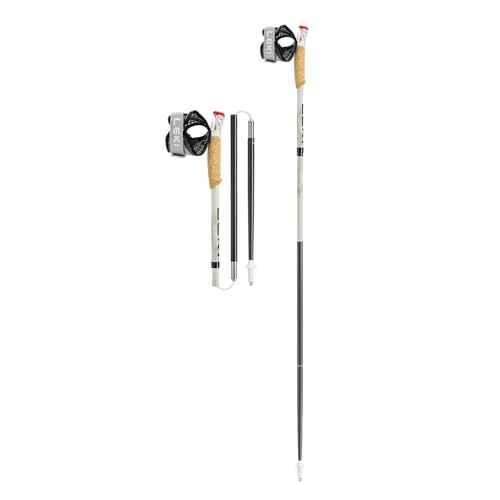
Many modern hiking poles incorporate an extended lower grip sleeve crafted from non-slip foam below the primary handle. For example, the Trekology Trek-Z Cork Grip Collapsible Lightweight features lower EVA foam grips that let you choke down several inches instantly when confronting sudden steep grades. When choking down on these lower sleeves, slide your hands completely out of the wrist straps so your fingers can grasp the lower foam directly. Removing your hands from the straps during steep scrambles also ensures you can discard the poles instantly if you stumble forward onto rocky ground.
Descending Technical Trails: Palming the Grip Cap
Steep downhill descents transfer immense kinetic energy through your lower joints, creating severe impact on knees, quadriceps, and ankles. To maximize braking support and absorb this shock, you should modify your grip by placing the flat heel of your palm directly over the rounded cap of the pole handle. Grasping the top pommel allows your forearm to remain in a nearly vertical alignment, giving you maximum downward leverage to brace each step. Wearing flexible, breathable lightweight hiking pants alongside this braking stance allows your legs to bend smoothly without binding at the knees.
While palming the grip cap on steep drops, it is strongly advisable to remove your hands from the wrist straps. If a pole tip becomes wedged in a boulder crevice or scree pocket while you are moving downhill, your forward momentum can trap your wrist in the strap loop. This scenario frequently causes painful wrist hyperextension, thumb sprains, or sudden rotator cuff trauma. By palming the pommel with your hands free of the straps, you can instantly let go of the pole if your footing slips unexpectedly.
Sidehilling and Contour Traversing Techniques
Navigating trails cut into steep mountain faces often requires hikers to traverse along a persistent cross-slope, known as sidehilling. In this situation, the ground on your uphill side is noticeably closer to your body than the trail edge dropping away on your downhill side. Attempting to hold both poles at an identical height and hand position forces your shoulders into an unnatural, tilted posture that strains your lumbar spine. To maintain an upright torso, you must adopt an asymmetrical hand grip across both poles.
Keep your downhill hand firmly anchored in its wrist strap, gripping the top of the handle or palming the cap to maximize reach and lateral stability. On the uphill side, slip your hand out of the wrist strap and choke down onto the lower foam grip sleeve or bare shaft. This asymmetrical hand placement levels your shoulders, keeps your spine vertical, and provides reliable balance across loose scree or narrow cliffside ledges. When the trail switches back in the opposite direction, simply reverse your hand positions to match the new slope orientation.
Grip Material Dynamics: Natural Cork versus EVA Foam and Rubber
The material covering your trekking pole handle plays a vital role in grip security, moisture management, and blister prevention. Natural cork grips excel in hot and humid hiking environments because cork naturally absorbs and dissipates palm perspiration throughout the day. Over time, natural cork gradually molds to the specific anatomical contours of your hand, providing a customized ergonomic fit that minimizes friction hot spots. Furthermore, cork designs like the Trekology Trek-Z Cork Grip Collapsible Lightweight incorporate subtle anti-torque flex that softens wrist strain during continuous trail strikes.
Dense EVA foam grips provide a lightweight, soft-touch alternative that remains pliable and comfortable even in freezing temperatures. EVA foam does not absorb water, making it a reliable choice for hikers frequently navigating rainy conditions or winter snowpack where wet cork might freeze. In contrast, solid molded rubber grips offer durable weather resistance and vibration damping, but they tend to cause excessive palm sweating and skin chafing in warm weather. Choosing the appropriate grip material for your typical climate helps preserve skin integrity and prevents painful trail blisters.
Hands-Free Scrambling and Backpack Pole Stowing
Certain rugged trail sections demand that you stow your trekking poles completely rather than attempting to hold them. When navigating Class 3 rock scrambles, fixed safety cables, or narrow talus fields, having poles dangling from your wrists creates a severe tripping and snag hazard. Your hands need full freedom of motion to grip rock holds, steady your balance against boulders, and scramble up steep ledges safely. Knowing how to secure your poles quickly to your pack prevents awkward pauses and protects your gear from rock damage.
Aftermarket bungee systems provide an exceptional hands-free upgrade for daypacks and multi-day packs lacking dedicated pole loops. Attachments like the TREKOLOGY Walking Stick Holder Universal Backpack clip directly to standard webbing and daisy chains, allowing you to lash your folded or collapsed poles securely to your shoulder strap in seconds. Similarly, using the 4pcs Climbing Stick Holder with its elastic cord and locking buckle holds pole shafts firmly against pack side panels without annoying trail rattle. If you frequently travel by air to remote trailheads, remember that trekking poles cannot be carried onto commercial aircraft and must be safely stowed in checked luggage or properly measured carry-on travel packs without installed tips.
Terrain Adaptations: River Fording, Mud Bogs, and Boulder Fields
Fast-moving river crossings require extreme vigilance in how you handle your trekking poles. Never use wrist straps while wading through swift water, as the current can easily sweep a submerged pole downstream and pull your arm under. Grip the handles from above so you can release them immediately if you lose your balance or get swept off your feet. Plant each pole firmly upstream, leaning gently into the current to create a wide, stable tripod between your feet and the riverbed.
Navigating deep mud bogs and loose boulder fields introduces different mechanical risks that threaten both your balance and your gear. In deep mud, pulling a suctioned pole upward by the strap can wrench your wrist, so grasp the upper handle firmly and twist slightly to break the mud seal. When crossing boulder fields, watch your tip placement carefully to prevent carbide tips from lodging tightly in narrow granite fissures. If a wedged pole catches your stride, release your grip immediately rather than levering your full body weight against the shaft and bending the aluminum.
Common Grip and Hand Placement Mistakes to Avoid
The single most frequent mistake hikers commit is threading their hands into wrist straps from the top downward. When you enter a strap from above, the webbing crosses awkwardly over your thumb joint and leaves your hand unsupported when you push downward. This incorrect position forces your palm away from the contoured handle and increases the likelihood of thumb sprains if you trip forward. Always double-check that your hand enters from the bottom opening so the webbing rests flat against the heel of your palm.
Another widespread mistake is failing to adjust strap tension when adding or removing trail gloves. Bulky fleece or winter gloves change hand volume significantly, making a previously comfortable strap uncomfortably tight and impeding capillary circulation. Additionally, many hikers forget to dry out their natural cork handles after wet, rainy treks, which can degrade the natural material over time. Taking a few minutes after each trip to wipe down your grips and air-dry the wrist straps ensures long-lasting comfort and reliable performance on future journeys.
Refining your trekking pole grip is one of the simplest and most impactful adjustments you can make to improve your hiking endurance. By entering the straps from below, relaxing your finger pressure, and adapting your hand placement to the slope of the trail, you unlock the true mechanical advantages of your gear. Your poles transform from clumsy sticks into vital, joint-saving tools that steady your stride and carry you comfortably through the most demanding mountain terrain.


Write Your Review
No reviews yet. Be the first to share your experience!