


Steep downhill descents can exert punishing forces on knee joints, turning a scenic mountain trek into a painful test of endurance. Deploying dependable hiking supports transfers substantial impact from the lower body to the upper arms, giving hikers reliable balance across wet talus and muddy river crossings. When outdoor adventurers ask what is the best trekking pole brand, the answer rarely comes down to a single universal manufacturer. Instead, the ideal choice hinges on shaft composition, clamp security under vertical loads, and how well the equipment matches specific terrain demands.
Ultralight backpackers managing a comprehensive backpacking trip checklist often favor featherweight carbon fiber shafts that dampen trail vibrations during high-mileage treks. Meanwhile, rugged bushwhackers and stream anglers frequently prioritize bend-resistant 7075 aluminum alloy construction or traditional carved hardwood staves that provide unyielding stability against strong currents. Evaluating external lever locks, grip ergonomics, and packed lengths helps you select gear tailored directly to your backcountry adventures.





Evaluating Trekking Pole Architecture and Brand Selection
Determining what is the best trekking pole brand requires looking past marketing claims and examining the mechanical construction of the gear itself. Outdoor brands approach trail stability from wildly different design philosophies, ranging from high-modulus composite shafts built for ultralight alpine treks to hand-carved American hardwoods tailored for traditional walking support. A brand excelling at featherweight trail running gear may not produce the robust wading staff needed for rocky stream beds. Understanding how materials, locking collars, and ergonomic components function in the backcountry enables hikers to identify the manufacturer that aligns with their specific physical demands.
Defining What Makes a Trekking Pole Brand Stand Out
Reliability under direct vertical compression represents the most critical metric for any pole manufacturer. When you descend an exposed ledge or step across slick river stones, your balance frequently depends on a pole holding firm without unexpected collapse. Leading brands distinguish themselves by engineering robust locking hardware that resists slipping even when subjected to sudden downward pressure. High-quality manufacturers also focus on user-serviceable parts, ensuring that thumb screws, wrist straps, and carbide tips can be adjusted or replaced over seasons of hard trail use.
Component harmony separates mediocre hiking equipment from truly dependable gear. A well-designed pole balances structural rigidity against swing weight, allowing the shaft to swing forward effortlessly with every stride without flexing excessively under lateral strain. Budget-focused makers often assemble generic shafts with brittle plastic levers, whereas premier brands select impact-resistant aluminum alloys or resilient carbon weaves. Focusing on how a manufacturer constructs its joints, handles, and tips reveals far more about its overall quality than brand notoriety alone.
Shaft Metallurgy and Composite Materials: Aluminum versus Carbon Fiber
Shaft material dictates how a trekking pole handles repetitive shock, rough trail impacts, and accidental wedging between rocks. Modern manufacturers predominantly construct poles from aluminum alloys or composite carbon fiber, each exhibiting distinct physical properties on the trail. Aircraft-grade 7075 aluminum provides exceptional tensile strength while retaining ductile flexibility under heavy loads. If an aluminum shaft bends during a stumble, it can often be gently coaxed back toward true in the field, allowing you to finish your trek safely.
Carbon fiber poles offer featherweight handling and natural vibration dampening that reduces joint strain across long miles. The Outsura Carbon Fiber Hiking Stick 2 Pack demonstrates this advantage by keeping pole weight around 7.4 ounces, minimizing arm fatigue over multi-day journeys. Carbon fiber absorbs trail chatter before it travels into your wrists and elbows, making it exceptionally comfortable on hard-packed soil. However, composite carbon has a brittle failure mode under high lateral shear stress, meaning a shaft wedged deeply in a rock crevice may snap rather than bend.
Traditional Hardwood Walking Sticks versus Modern Telescoping Poles
While multi-section metal and composite poles dominate modern backpacking, solid hardwood walking sticks maintain a dedicated following for good reason. Traditional wooden staffs provide completely rigid, single-piece structural stability with zero mechanical joints that could slip, rattle, or corrode. Crafted options like the Vive Wooden Walking Stick – (48″) utilize natural willow bark construction, offering resilient balance for steady recreational walking. Hardwood poles provide dependable weight-bearing confidence for day outings where compact packability is not an operational requirement.
Heavier hardwoods such as American red oak and hickory bring unmatched longevity to rugged woodland environments. The Walking Cane – Original Bubba Stik “Standard” pairs a solid red oak shaft with a distinctive brass hame handle, delivering dependable support rooted in classic American woodworking. Similarly, the Hickory Hollow, Rustick Style Handcrafted Wood walking stick utilizes North American hickory finished with weather-resistant varnish to resist moisture damage. These handcrafted timber staves excel at general trail walking, perimeter yard patrols, and stable balance assistance where adjustable telescoping mechanisms are unnecessary.
Locking Mechanisms: External Cam Levers versus Folding Cords
The locking mechanism is the mechanical heart of any adjustable trekking pole system. External cam lever locks have largely supplanted older internal twist-lock expanders because they provide visible clamping force and simple operation in cold weather. External clamps allow hikers to open the lever, alter shaft length for terrain gradients, and snap the latch shut securely even while wearing thick winter gloves. Modern quick-lock buckles allow tension adjustment through knurled thumb screws, letting you calibrate holding power before setting foot on technical slopes.
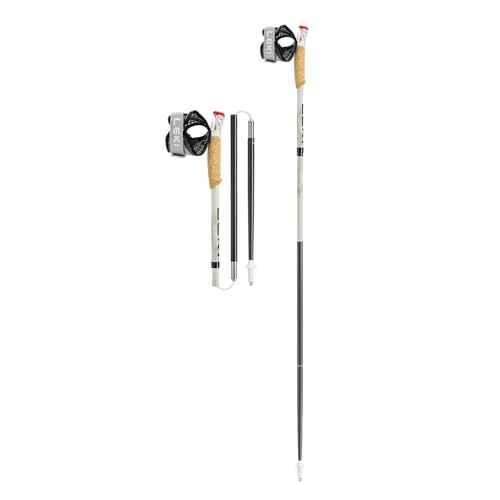
Folding Z-pole designs provide an alternative architecture centered on rapid deployment and minimal packed dimensions. Instead of telescoping sections sliding inside one another, folding models connect multiple shaft segments using an internal coated tension cord. The Aventik Wading Staff, 55″ Foldable 7075 Aluminum utilizes this folding principle to collapse a full 55-inch wading staff down to a compact 12-inch profile. While folding mechanisms offer less fine-grained height adjustment than three-section telescoping shafts, their speed of assembly and rigid lockouts make them exceptionally practical for wading anglers and fast-moving travelers.
Grip Ergonomics and Moisture Control: Cork versus EVA Foam
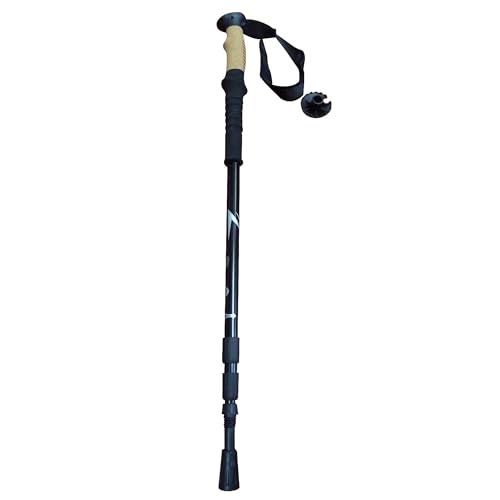
Your primary interface with a trekking pole is the grip handle, making material selection crucial for blister prevention. Natural cork grips excel in warm, humid weather because cork actively wicks palm sweat and conforms to user hand anatomy over time. As cork absorbs subtle hand oils, it develops a smooth, custom feel that minimizes friction hot spots during sweltering summer ascents. Cork also remains cool to the touch under direct sun exposure, preventing the clammy sensation typical of dense rubber handles.
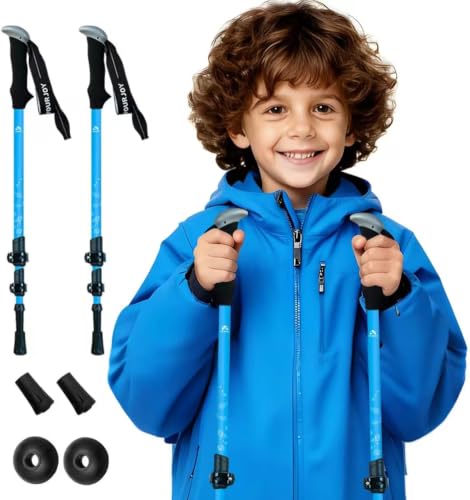
Closed-cell EVA foam serves as a lightweight, moisture-resistant alternative that provides plush cushioning across diverse temperatures. Many manufacturers incorporate extended EVA foam sleeves beneath the primary grip, allowing hikers to choke down on the shaft when traversing steep sidehills without stopping to adjust pole height. The Hiking Trekking Poles, 2 Pack Hiking Poles design utilizes ergonomic EVA handles paired with adjustable wrist straps to reduce hand pressure on long descents. EVA foam maintains its soft texture in freezing winter conditions, making it an excellent all-season material that will not absorb trail rain.
Packability and Swing Weight Dynamics on High-Mileage Days
Collapsed length dictates how easily trekking poles integrate with your travel gear and luggage. Tri-fold trekking poles from brands like yourjoy collapse down to roughly 13.78 inches, fitting neatly into daypacks, gear duffels, and standard carry-on suitcases. Compact folding dimensions allow adventure travelers to stow poles internally rather than lashing them awkwardly to exterior pack loops where they might snag brush. When preparing multi-day journeys, mastering techniques for fastening gear to the outside of your pack ensures your collapsible poles remain protected during transit.
Swing weight represents the rotational inertia felt in your forearms as you plant and recover each pole thousands of times per day. Poles that concentrate mass in the lower shaft sections feel sluggish and accelerate shoulder fatigue over extended mountain treks. Thin-diameter carbon lower sections and compact aluminum tips reduce swing weight, promoting an efficient, natural walking cadence. Evaluating the overall balance of a pole in your hand provides far more insight into trail comfort than simply weighing the equipment on a static scale.
Proper Height Sizing and Biomechanical Adjustment Technique
Dialing in the correct pole height optimizes upper-body propulsion while offloading repetitive strain from knees and ankles. On flat terrain, adjust the pole length so your elbow rests at a clean 90-degree angle when holding the grip and planting the tip beside your foot. This baseline posture keeps your shoulders relaxed and ensures efficient downward force transmission through your forearms. Never extend telescoping shaft sections beyond the clearly marked stop line, as overextension compromises the internal overlap required for structural strength.
Dynamic trail conditions call for proactive height adjustments to maintain balanced posture. When tackling prolonged, steep ascents, shorten each pole by five to ten centimeters to maintain forward drive without lifting your arms above chest level. Conversely, lengthen both poles by several centimeters during steep mountain descents to plant the tips ahead of your boots and maintain an upright torso. Looping your wrists upward through the padded straps allows the strap fabric to carry your weight, relieving tension in your fingers and preventing forearm cramping.
Trail Hardware Accessories: Carbide Tips, Rubber Boots, and Baskets
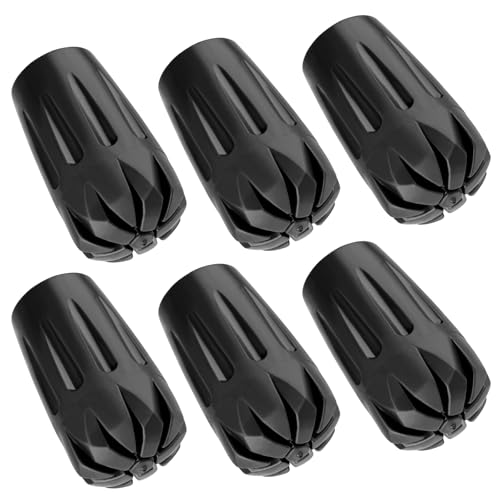
Trail hardware at the bottom of the pole determines how securely your gear bites into varied backcountry terrain. Durable tungsten carbide tips provide biting traction on packed dirt, wet logs, and solid rock slabs where slippery soil might otherwise cause a fall. Removable rubber road tips slip over carbide points to dampen harsh metallic vibrations on paved greenways and protect delicate trail stone from scarring. Selecting the proper tip setup keeps you stable while making thoughtful trail clothing considerations to protect your legs against abrasive trailside underbrush.
Modular baskets prevent pole shafts from sinking into soft forest loam, deep mud, or thick winter snowpack. Compact mud baskets provide sufficient surface area to deflect damp soil without catching on tangled roots or rocky talus crevices. Wide powder baskets offer broad flotation for winter snowshoeing and cold-weather hiking, distributing downward force across soft snow crusts. Threaded or snap-on basket designs allow hikers to swap accessories seasonally, transforming a summer walking pole into a reliable four-season mountain support.
Mechanical Anti-Shock Springs versus Rigid Shaft Construction
Mechanical anti-shock systems integrate internal springs within the telescoping shaft to cushion the shock of hard downhill strikes. The Yard Tuff Adjustable Walking Sticks for Hiking incorporate an anti-shock spring suspension designed to absorb initial impact on rough trails, helping hikers with sensitive knee joints. These internal springs compress slightly upon ground contact, softening the abrupt deceleration transferred through the wrists and shoulders. For recreational walkers navigating hard-packed descents, spring dampening can provide welcome joint relief over moderate distances.
Ultralight backpackers and technical mountain scramblers frequently prefer rigid shafts without mechanical spring assemblies. Rigid poles deliver crisp, instantaneous trail feedback and predictable planting precision when testing footing across unstable scree or wet boulders. Spring mechanisms add minor mechanical complexity and weight to the shaft assembly, which some minimalist hikers prefer to avoid. Furthermore, backpackers who use their trekking poles as structural ridge supports for ultralight tarps require rigid poles that will not compress under wind-induced shelter tension.
Troubleshooting Lock Slippage and Field Maintenance
Lock slippage is a frustrating issue that typically stems from loose tension collars or fine trail dust on the shaft. If an external cam lever slips under vertical pressure, open the lever fully and turn the knurled adjustment thumb screw clockwise in quarter-turn increments. Close the lever firmly; it should require positive palm pressure to snap shut against the shaft collar. Never overtighten the tension screw with pliers, as excessive clamping torque can crack composite lever bodies or crush thin-walled aluminum tubes.
Routine maintenance keeps your hiking poles operating smoothly across years of demanding outdoor use. After trekking through rain, mud, or river crossings, pull telescoping sections completely apart and wipe away accumulated moisture and grit with a clean cloth. Never apply oil, silicone spray, or grease to the internal shaft surfaces, as lubricants destroy the frictional grip needed for external cam clamps to hold. Inspect carbon fiber shafts periodically for hairline cracks or deep gouges, retiring damaged sections before they fail under load during a steep descent.
Matching Specific Pole Designs to Trail Disciplines
Matching pole architecture to your primary outdoor activity ensures you get dependable performance without unnecessary bulk. Fastpackers and travel hikers benefit immensely from tri-fold aluminum models that slip inside carry-on luggage and deploy in seconds at the trailhead. Thru-hikers tackling thousand-mile wilderness corridors often prioritize carbon fiber shafts with natural cork grips for supreme vibration damping and weight savings. Anglers and wetland explorers need specialized folding staffs equipped with corrosion-resistant 7075 aluminum and lanyard attachments to navigate rushing currents.
Traditional wooden walking sticks continue to shine for neighborhood fitness walks, pastoral trail strolling, and dependable support around the homestead. Choosing what is the best trekking pole brand ultimately means selecting the maker whose materials, locking hardware, and handle ergonomics directly align with how and where you hike. Inspect your locking collars, verify tip security, and dial in proper strap tension before every outing. With the right support equipment in hand, you can tackle demanding mountain terrain with confidence, stability, and enduring joint comfort.






Write Your Review
No reviews yet. Be the first to share your experience!