


Navigating steep descents and varied backcountry terrain places repetitive stress on your knees, ankles, and upper body. Trekking poles serve as vital third and fourth points of contact, yet the metal ends at the bottom cannot handle every surface equally well. Hikers often wonder which trekking pole tips to use when transitioning from loose forest loam to hard granite slabs or paved connecting roads. Matching your hardware to the terrain beneath your boots prevents unexpected slips while reducing joint shock over long trail days.
Bare tungsten carbide points dig firmly into dirt and ice, but they slide unpredictably on smooth rock faces and scar delicate trail environments. Adding rubber caps dampens metallic vibration and protects outdoor surfaces, pairing naturally with supportive trail gear like supportive knee hiking pants to keep joint fatigue at bay. Understanding how different terrain demands specific tip attachments helps you walk with confidence, protect your gear investments, and maintain consistent balance across every mile.
Pros
- Budget-friendly 6-piece bundle provides ample backup tips for long-distance hikes or multiple pairs of poles
- Universal 11mm inner diameter fits standard trekking poles and walking sticks
- Shock-absorbing rubber dampens impact and significantly reduces noise on paved or rocky terrain
- Simple push-on installation requires no tools or hardware
Cons
- Friction-fit rubber caps can be pulled off when wedged into thick mud, wet clay, or tight rock crevices
- The product specifications do not list an embedded metal washer, which may allow sharp metal pole tips to wear through over extended use
- Sized specifically for standard 11mm shafts and will not fit non-standard or oversized pole tips
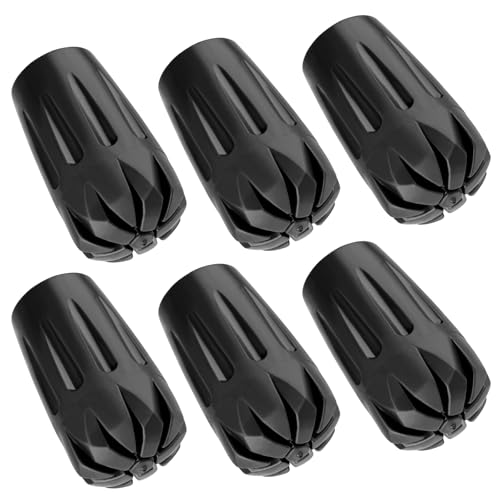
The AISUNOUTDOOR Trekking Pole Rubber Tips are replacement traction caps designed to fit standard 11mm hiking sticks, trekking poles, and walking canes. Sold as a convenient 6-pack, this accessory caters to day hikers, backpackers, thru-hikers, and trail walkers who need to replace missing or worn-down pole feet. Rather than replacing entire trekking poles when factory tips degrade, these push-on rubber caps provide an affordable way to maintain traction and extend pole lifespan across paved walkways, rocky switchbacks, and hardpacked forest trails.
Trail performance with rubber tips centers on surface traction and impact dampening. The manufacturer highlights an anti-slip textured bottom designed to give stability on slick surfaces such as wet pavement, smooth granite, concrete paths, and wooden boardwalks. By substituting bare carbide or tungsten pole points with rubber, these tips also reduce the sharp, repetitive jarring transmitted to the user's wrists, elbows, and shoulders. Furthermore, using rubber caps on popular trails helps prevent the loud metallic clicking sound of hiking poles while reducing surface scarring on sensitive rocks in national parks.
The tips are molded from black rubber engineered to withstand everyday abrasion on mixed terrain. According to the product specifications, the entire set weighs approximately 0.032 pounds, making individual caps virtually unnoticeable when stashed inside a backpack hip-belt pocket, top lid, or first-aid kit. The interior sleeve is sized for standard 11mm pole tips, using a snug friction fit that slides securely over the bottom shaft. While the rubber body offers shock absorption and road grip, the product listing does not state whether these caps contain an embedded metal washer to prevent sharp metal tips from puncturing through over long distances.
Installing and carrying these replacement tips is straightforward for any outdoor activity. Hikers can simply press the rubber caps onto clean pole ends until fully seated, requiring no tools, adhesives, or mechanical fasteners. Because rubber tips can occasionally loosen or pull free when stuck in sticky mud, wet soil, or deep gravel, carrying multiple spares from this 6-pack ensures uninterrupted support during multi-day backpacking trips. For routine care, rinsing dirt and grit from inside the sleeve after muddy outings will help maintain a tight friction grip against the pole shaft.
Despite their practical utility, these replacement tips have clear limitations that buyers should understand before heading into the backcountry. The push-on friction fit is susceptible to pulling off if a pole tip gets wedged between boulders, caught in tree roots, or buried in heavy clay. Additionally, because rubber is inherently softer than tungsten carbide, regular use on coarse asphalt and abrasive rock will eventually wear down the tread. Hikers with specialized, ultra-slim, or oversized trekking poles should also verify tip diameter, as an 11mm opening will not fit non-standard pole designs.
The AISUNOUTDOOR 11mm Trekking Pole Rubber Tips offer solid practical value for hikers seeking an economical way to maintain grip, dampen vibration, and protect trails. While aggressive backpackers navigating deep mud or technical talus will want to monitor their pole tips closely, this 6-pack provides ample backup caps for routine trail walking, road walking, and day hiking. If your current trekking pole tips are worn down to the metal or you need dependable spares for your gear closet, this set is a practical and budget-friendly upgrade.
The AISUNOUTDOOR replacement tips feature an interior sleeve designed specifically for standard 11mm trekking pole and walking cane tips. This 11mm inner diameter matches the industry-standard sizing used on the majority of telescoping and folding hiking poles available in the outdoor market.
Before purchasing, hikers should verify the tip diameter of their current poles, as non-standard ultra-light shafts or heavy-duty walking sticks may require different dimensions. The push-on friction fit allows users to swap worn tips in seconds without needing extra tools, glue, or clamps.
Rubber pole tips excel on hard, solid surfaces where bare metal carbide spikes tend to slip, vibrate, or make excessive noise. These tips provide dependable friction on paved paths, concrete steps, exposed rock slabs, and bridge decking, making them ideal for road walking, urban trails, and maintained park switchbacks.
To maintain a tight friction fit, remove the tips periodically to clear out trapped moisture, fine sand, and mud from the interior socket. Storing the spare caps in a dry pocket of your daypack or gear bag ensures you are always prepared if a tip is pulled off in wet soil or deep gravel.
Matching Trekking Pole Tips and Accessories to Trail Terrain
Selecting the right pole tip setup determines whether your hiking sticks provide stable traction or slide dangerously across the ground. Trekking poles typically ship with bare carbide ends and protective rubber transport caps, leading many hikers to leave the rubber pieces at home or keep them on indefinitely. In reality, different trail surfaces require distinct hardware attachments to maximize friction, protect delicate terrain, and reduce joint fatigue. Understanding the mechanical differences between bare points, rubber friction caps, and modular baskets ensures you get the best stability on every hike.
The Core Anatomy of Trekking Pole Ends and Tip Hardware
Trekking poles rely on a multi-part terminal assembly designed to withstand repeated ground strikes without bending or failing. The lower shaft section ends in a durable plastic flex tip body that absorbs minor lateral bending stress when trapped in rocky crevices. Embedded inside this plastic body is a small, ultra-hard tungsten carbide core shaped into a concave or textured point. This carbide point serves as the permanent foundation for all other modular accessories.
Removable accessories like rubber walking caps and modular baskets attach directly around this terminal assembly. Most modern hiking poles utilize a standardized 11mm taper near the bottom of the plastic flex tip housing. This standard dimension allows hikers to slide replacement caps directly over the carbide point without needing tools. Knowing how these components fit together helps you quickly swap hardware when trail conditions shift from loose dirt to hard pavement.
Bare Carbide Tips for Natural Earth, Loose Scree, and Ice
Bare tungsten carbide points offer unmatched biting traction on natural backcountry terrain. Tungsten carbide is an exceptionally hard composite material capable of biting directly into packed dirt, decomposed granite, and slick ice. When you plant a pole on a steep earthen ascent, the tiny surface area of the carbide point concentrates your downward force to penetrate the soil. This immediate bite creates an unyielding pivot point that propels you forward without slipping.
Loose scree, muddy trails, and forest floors covered in pine needles represent ideal conditions for bare carbide tips. The narrow profile slices straight through loose topsoil until it reaches solid ground beneath. Carbide tips also prevent dangerous slip incidents during winter walks across frozen trails, acting like miniature ice picks with every stride. If you spend most of your backcountry miles on unpaved singletrack, bare carbide remains your primary operating mode.
Using bare carbide on hard bedrock or dry riverbeds creates noticeable drawbacks. Metal tips scrape loudly and skid unpredictably when dragged across solid granite slabs. This skidding can cause sudden wrist strain or loss of balance when you expect solid support. Furthermore, bare metal points scratch permanent gouges into rock faces and accelerate trail erosion in popular national parks, prompting many land managers to encourage rubber caps on exposed stone.
Universal Slip-On Rubber Caps for Pavement, Bedrock, and Hardpack
Slip-on rubber caps transform your trekking poles into high-friction walking sticks for hard, unyielding surfaces. Rubber compounds grip smooth asphalt, concrete sidewalks, and solid rock slabs where metal points would otherwise skate out from under you. When you hike on paved rail trails, urban greenways, or granite switchbacks, rubber caps provide secure traction by conforming slightly to micro-textures on the surface. They also eliminate the irritating metallic clicking sound that echoes across stone canyons during quiet morning hikes.
Dampening ground impact is another major reason to utilize rubber accessories. Options like the Durable Replacement Rubber Tips for Trekking Poles by AISUNOUTDOOR feature thick rubber bases engineered to absorb sudden shock waves before they travel up the shaft. By cushioning every strike, these universal caps help minimize wrist, elbow, and shoulder fatigue during long expeditions on compacted surfaces. Their standard 11mm internal diameter provides broad compatibility across most popular hiking poles and walking canes.
Rubber caps also serve a vital role in trail preservation and environmental ethics. In sensitive alpine environments and historic archeological sites, sharp metal tips pulverize soft sandstone and strip moss from damp rock formations. Sliding durable rubber caps onto your poles protects these fragile outdoor resources while still giving you balance support. Carrying a reliable set of replacement caps ensures you can quickly adapt whenever your route traverses delicate natural features or rocky roads.
Angled Fitness Feet Versus Standard Round Rubber Caps
Hikers can choose between round cylindrical caps and angled fitness feet when selecting rubber accessories. Standard cylindrical caps feature a flat, textured circular base that provides consistent grip regardless of the angle at which the pole strikes the ground. This omnidirectional grip makes round caps the preferred choice for general hiking, backpacking, and navigating uneven rock steps. Because the pole angle constantly shifts on rough trails, round caps ensure stable contact with every planting motion.
Angled fitness feet, often called Nordic walking boots, feature a rockered tread design built specifically for fitness walking on pavement. These elongated feet promote a deliberate backward push during fitness walking routines, facilitating smooth forward propulsion on asphalt or level gravel paths. However, angled feet require you to maintain a precise pole orientation with every stride. If you plant an angled foot sideways on an uneven trail, the narrow edge can slip, making round cylindrical caps far more dependable for backcountry trekking.
Mud Baskets and Powder Snow Baskets for Ground Flotation
Trekking pole baskets prevent your poles from sinking too deep into soft ground, acting much like miniature snowshoes for your gear. Standard hiking poles usually include small, circular mud baskets with a diameter between 4 and 5 centimeters. These compact discs sit several inches above the tip, preventing the pole from sinking into wet mud bogs or wedging into deep fissures between talus boulders. When traversing rocky scree, mud baskets keep your poles from penetrating small crevices where the shaft could suffer catastrophic lateral shear failure.
Winter conditions and deep snowdrifts require wide powder snow baskets with diameters ranging from 8 to 10 centimeters. Standard mud baskets lack sufficient surface area to support downward pressure in soft powder, causing the pole to sink all the way to the grip. Wide snow baskets distribute your downward weight across a broader surface, giving you stable contact when snowshoeing or mountaineering. Most baskets screw securely onto threaded collars above the flex tip, allowing quick swaps before heading into alpine terrain.
Removing baskets entirely is rarely advisable unless you are hiking on manicured gravel or dry pavement. Without baskets, poles easily jam between roots and narrow rock gaps, leading to bent aluminum shafts or snapped carbon fiber sections when you step forward. Leaving small mud baskets installed provides a permanent safety barrier against entrapped shafts. For maximum versatility, keep your snow baskets in your pack whenever winter forecasts predict fresh accumulations along high mountain passes.
Transport Protection, Airline Travel, and Shelter Pitching
Rubber pole caps perform essential protective functions even when you are not actively walking. Sharp tungsten carbide tips can easily puncture expensive backpack side pockets, tear tent canopies, or scratch gear inside duffel bags during transit. Leaving rubber caps securely installed over the metal points keeps your storage sleeves intact and prevents accidental scratches. This simple habit keeps your pack organized and prevents avoidable gear repairs during wilderness expeditions.
Airline regulations also influence how you manage trekking pole hardware during transit. Security agencies like the Transportation Security Administration prohibit trekking poles with sharp carbide points in carry-on cabin luggage. If you are preparing your gear according to a practical carry-on backpack packing guide, you must check your poles or verify airline guidelines before reaching the airport terminal. Capping your pole tips with thick rubber accessories provides extra protection inside checked luggage, ensuring the sharp ends do not tear through your bag liner.
Ultralight backpackers who use trekking poles to support tarps and A-frame shelters must pay close attention to tip placement. Many ultralight shelters require placing the pole handle upward against the peak while resting the tip on the ground, but inverted pitches require the tip to seat against a reinforced apex grommet. Using a bare carbide point against shelter fabric risks tearing delicate silicone-coated nylon under high wind tension. Capping the carbide with a wide rubber tip creates a blunted, secure base that protects shelter fabric from excessive point pressure.
Installation Techniques and Maintaining Tip Hardware in the Field
Installing rubber tips correctly prevents the frustrating experience of losing caps in thick mud. To seat a rubber cap properly, wipe any grit or trail moisture off the plastic flex tip body before sliding the cap over the end. Push the rubber cap firmly upward while twisting it slightly until the internal shelf seats completely against the base of the plastic flex tip. This friction fit ensures the cap will not peel off when you pull your pole out of sticky clay or wet leaves.
Regular hardware inspection is critical because rubber caps naturally wear down with extended mileage. Over time, the hard internal carbide point can punch directly through the bottom of the rubber casing, exposing sharp metal to the ground. Inspect the underside of your rubber tips before every major trip for thinning tread, embedded pebbles, or circular metal puncture marks. When the rubber base becomes thin or cracked, replacing the caps immediately preserves both surface grip and joint cushioning.
Carrying spare replacement caps in your backpack side pouch prevents disruptions when a cap eventually pulls off in deep muck. Universal packs such as a set of six 11mm replacement rubber caps weigh very little and allow you to replace lost accessories instantly. Inspecting your flex tips for hairline cracks after trips through sharp talus fields ensures your lower sections remain structurally sound. Keeping spare tips and baskets inside your repair kit prepares you for unpredictable trail conditions across every season.
Practical Guide to Matching Tips with Trail Conditions
Choosing which accessory to deploy boils down to assessing the primary surface beneath your feet. For remote forest trails, decomposed granite, and muddy switchbacks, leave the rubber caps in your pocket and rely on bare carbide points to bite into the earth. When your route crosses exposed granite domes, slick sandstone, or paved road connectors, slip thick rubber caps over the carbide points to gain reliable friction and silence annoying trail chatter. This proactive approach optimizes both traction and physical endurance.
Whenever winter brings deep snowpack, replace your small mud discs with wide powder baskets to preserve crucial flotation. Always verify that your cam locks are tight and your rubber caps are pressed fully onto the 11mm stems before putting your full body weight on the poles. Adapting your trekking pole setup to the immediate environment protects fragile wilderness trails, reduces strain on your joints, and ensures your hiking sticks remain dependable tools through every backcountry adventure.






Write Your Review
No reviews yet. Be the first to share your experience!