


Descending a steep, loose scree slope with a heavy pack quickly reveals whether your trail gear can handle aggressive downward force. Mountain hikers and backpackers often ask if are black diamond trekking poles good enough to handle demanding alpine ascents, slick river crossings, and technical terrain. The brand earned a major reputation across outdoor communities through its FlickLock cam systems, durable aluminum alloys, and stiff carbon fiber shafts. Choosing the right pair means balancing low swing weight against lateral impact resistance so your arms stay fresh over high-mileage days.
When planning your gear list alongside an essential backpacking checklist, your walking supports serve as critical third and fourth points of ground contact. Reliable poles offload repetitive patellofemoral knee strain and reduce muscular fatigue in the quadriceps during punishing mountain descents. From telescoping aluminum workhorses to compact Z-folding carbon setups, understanding build materials and locking hardware helps you select the right model for your specific trail objectives. Examining real mechanical features reveals how these designs hold up across unpredictable backcountry conditions.


Evaluating Black Diamond Trekking Pole Performance and Reliability
Black Diamond has built an enduring legacy among mountain athletes, backpackers, and day hikers seeking dependable stability across technical terrain. Outdoor enthusiasts consistently ask whether are black diamond trekking poles good enough to withstand rugged alpine conditions without unexpected mechanical collapse. Across decades of real trail use, the brand solidified its reputation by introducing durable external cam lever locks, reliable shaft alloys, and ergonomic grip materials. Looking closely at mechanical construction, lock holding force, and weight distribution explains why these hiking sticks remain top choices across backcountry trails worldwide.
The Core Verdict: Where Black Diamond Poles Excel on the Trail
The short answer to whether these trekking poles justify their reputation is a confident yes for most hikers. Mountain travelers encounter varied trail challenges ranging from slick mud and boulder fields to steep glacial moraines. Black Diamond engineers their walking supports to absorb vertical trail shock and transfer user weight effectively away from tired knee joints. Hikers frequently praise the solid tactile engagement of their hardware, which creates trust when dropping off high rock steps with a heavy pack.
Trail reliability stems from an intentional focus on field repairability and structural durability rather than fragile ultralight gimmicks. While budget alternatives often use finicky twist locks or weak plastic fittings, Black Diamond relies on robust external lever clamps and reinforced aluminum or composite tubing. These design priorities make their poles especially attractive for long-distance routes where gear failure could strand you miles from the trailhead. Hikers who prioritize stability, secure locking power, and long-term durability consistently find that these poles deliver exceptional trail performance.
Shaft Metallurgy and Composites: Aluminum Toughness Versus Carbon Fiber Rigidity
Choosing between aluminum and carbon fiber shafts defines how your poles handle repeated trail stress and accidental impacts. Models like the BLACK DIAMOND Trail Trekking Poles Aluminum and the BLACK DIAMOND Women’s Trail Trekking Poles utilize high-strength aluminum alloys. Aluminum provides a forgiving ductile structure that resists sudden catastrophic breakage when wedged between granite crevices or talus boulders. Instead of snapping instantly under heavy leverage, an aluminum shaft tends to bend slightly, allowing a hiker to gently straighten it enough to finish a trek.
In contrast, premium composite models like the BLACK DIAMOND Alpine Carbon Cork Hiking Trekking use 100 percent carbon fiber construction across all three telescoping sections. Carbon fiber provides remarkable structural stiffness while dampening high-frequency trail vibrations before they travel into your wrists and elbows. This stiff composite reduces swing weight, helping you maintain a brisk cadence over grueling twenty-mile mountain days. However, carbon fiber requires greater care around jagged rocks, as sharp lateral shear forces or rock pinches can cause brittle fractures without warning.
FlickLock Clamping Mechanics: External Cam Levers Versus Slippage Hazards
A trekking pole is only as reliable as its locking mechanism when your full body weight bears down during an unexpected slip. Black Diamond popularized external lever clamps with its proprietary FlickLock system, replacing finicky twist-lock expanders. Twist locks rely on internal friction plugs that frequently jam or slip when exposed to trail dust or sub-freezing temperatures. The FlickLock mechanism uses an external cam lever that compresses the outer shaft sleeve tightly around the inner telescoping tubing.
Operating an external cam lever offers immediate visual and tactile confirmation that your pole sections are locked securely in place. You can snap the lever open or closed with heavy winter mittens on snowy ridges, eliminating frozen-finger frustration. On models like the BLACK DIAMOND Trail Cork Trekking Poles (Pair), the clamp collar features a knurled tension screw. This external screw lets you fine-tune clamping torque in seconds without disassembling the shaft sections.
Preventing clamp slippage requires periodic inspection before you head into technical mountain terrain. Over months of trail grit exposure and temperature fluctuations, clamping tension can relax slightly. Hikers should open the lever, tighten the micro-adjustment screw slightly, and close the clamp until it snaps shut with firm resistance. Testing the adjustment by putting your full upper-body weight onto the grips verifies that the sections will not telescope unexpectedly during steep descents.
Folding Z-Pole Architecture: Rapid Deployment and Compact Packability
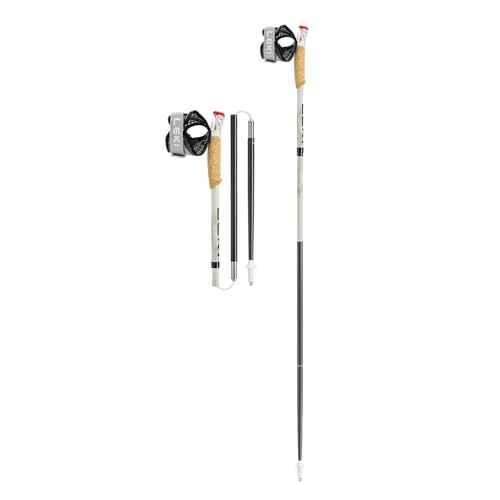
Traditional three-section telescoping poles collapse by sliding sections inside one another, which typically leaves a packed length around twenty-five inches. To solve packability issues for trail runners and traveling hikers, Black Diamond engineered the folding Z-Pole system. Models like the BLACK DIAMOND Distance Z Poles, Aluminum fold into three compact segments connected by an internal tension cord. This folding architecture collapses small enough to slide cleanly into running vest side holsters or standard airline carry-on luggage.
Deploying a Z-pole takes only seconds by grabbing the grip and top shaft section and pulling them apart until an aluminum push-button pin pops out. For hikers who want compact packability alongside height customization, hybrid designs offer an effective solution. The BLACK DIAMOND Distance FLZ Poles, Aluminum and the BLACK DIAMOND Pursuit Trekking Poles incorporate FlickLock adjustability into the upper shaft of a folding frame. This hybrid arrangement allows you to fine-tune your overall pole length across varying trail gradients while preserving rapid breakdown capabilities.
When organizing your backcountry setup alongside securing bulky sleep systems to your pack, compact pole dimensions simplify external gear attachment. Fixed-length Z-poles eliminate external adjustment hardware completely, which shaves ounces and provides exceptional swing efficiency. However, fixed models require careful sizing before purchase because you cannot adjust their length on varying slopes. Hybrid FLZ models provide the ideal middle ground for backpackers who navigate changing mountain gradients and need adaptable height settings.
Handle Ergonomics: Natural Cork Versus EVA Foam Sweat Management
Grip comfort directly determines whether you develop friction blisters or enjoy effortless handling over high-mileage mountain treks. Black Diamond equips its poles with either natural cork handles or contoured closed-cell EVA foam grips. Cork handles, featured on the BLACK DIAMOND Women’s Trail Cork Trekking Poles, offer superb moisture-wicking capability that keeps palms cool during sweltering summer ascents. Over extended use, natural cork gradually molds to your hand shape, creating a custom feel that reduces hand fatigue.
EVA foam grips, found on the Trail aluminum models and Distance series, provide soft cushioning and excellent thermal insulation in cold conditions. Unlike standard rubber grips that become slick from sweat and induce blister hot spots, closed-cell EVA foam resists water absorption and maintains dependable traction. Black Diamond pairs both grip styles with extended mini-grip foam sleeves located directly beneath the primary handle. These choke-up sleeves allow you to drop your hand position quickly when traversing steep sidehills without adjusting pole length.
Wrist strap engineering plays an equally vital role in offloading muscular strain from your forearms and hands. Models like the Pursuit series feature ergonomic Bloom foam grip extensions and breathable comfort straps with directional webbing. When adjusted properly, your wrist rests securely into the strap loop from below, transferring downward force into the pole without requiring a death grip on the handle. This ergonomic setup reduces forearm cramping and preserves upper-body energy across demanding wilderness journeys.
Trail Terrain Adaptability: Rock Scrambles, Loose Scree, and Snowfields
Navigating changing terrain requires equipment that adapts quickly to slick mud, jagged granite, and steep alpine snowpack. Black Diamond designs its poles as four-season tools capable of handling severe mountain environments throughout the year. The standard carbide Tech Tips bite tenaciously into bare rock, slick roots, and packed dirt to prevent accidental slippage. For smooth granite slabs or paved road walks, adding protective accessories like the BLACK DIAMOND Replacement Trekking Pole TPU protectors preserves tip integrity and silences trail noise.
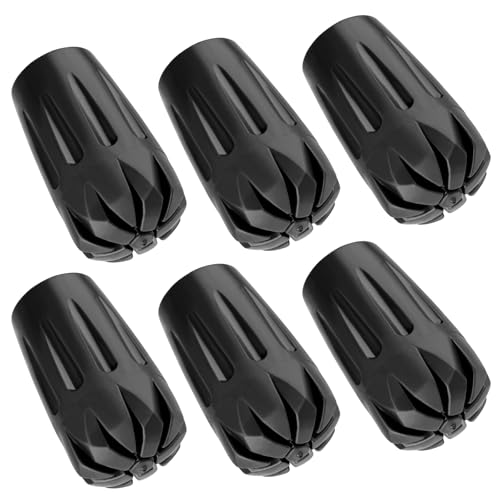
Hikers exploring mixed gravel paths and rocky approaches can also utilize universal attachments like the 8 Pcs Black Diamond Trekking Poles rubber tips from Thrymme. These textured rubber covers slide over standard tips to absorb minor trail vibrations and enhance grip across wet pavement. When winter arrives, swapping compact summer baskets for wide powder snow baskets transforms your hiking poles into dependable snowshoeing supports. Secure basket threading keeps poles from sinking into deep drifts, maintaining forward momentum across snow-covered passes.
Just as seasoned hikers evaluate trail apparel and technical clothing for unpredictable mountain weather, choosing adaptable pole hardware prevents sudden trail slowdowns. Crossing fast-flowing mountain rivers becomes significantly safer when you plant two stable poles to form a rigid tripod stance with your legs. By probing water depth and testing slippery riverbed stones ahead of your steps, you avoid balance errors in strong currents. The adaptability of these components makes them dependable assets across varied backcountry topographies.
Ultralight Shelter Pitching and Hardware Compatibility
Many modern backpackers use trekking poles as primary structural ridge supports for ultralight tarps and trekking-pole-supported tents. Replacing dedicated aluminum tent poles with your hiking sticks saves substantial pack weight on multi-day journeys. Telescoping Black Diamond models excel at this dual-purpose role because their FlickLock clamps allow precise height adjustments. Most ultralight A-frame shelters require ridge pole heights between 115 and 130 centimeters, which standard three-section Trail poles accommodate with ease.
Structural rigidity is essential when high mountain winds test the stability of your pitched shelter during overnight storms. Stiff aluminum and carbon shafts resist buffeting gusts far better than flimsy alternatives that bow under canopy tension. Furthermore, the rounded grip tops seat smoothly inside reinforced tent apex pockets without puncturing delicate fabrics. If your shelter requires tip-up pitching, the carbide flex tips seat cleanly into standard metal grommets or reinforced webbing loops.
Hikers using fixed-length Z-poles should take extra precautions when planning to use them for ultralight shelter setups. Because fixed-length poles cannot adjust their vertical extension, your tent pitch will be constrained to one exact height. In uneven campsites or rocky ground where stakes cannot seat fully, lack of adjustability can complicate guyline tensioning. For backpackers committed to trekking-pole shelters, telescoping FlickLock models or hybrid FLZ poles provide the necessary adjustment versatility.
Trail Maintenance, Tip Replacements, and Field Calibration
Maintaining your trekking poles ensures smooth operation and prevents premature hardware failures over seasons of heavy use. After wet backpacking trips or muddy river crossings, you should pull telescoping sections apart completely and wipe them clean with a dry cloth. Leaving wet aluminum shafts assembled for weeks can promote galvanic corrosion and cause fine silt to grind against the anodized finish. Never apply grease, oil, or spray lubricants to telescoping shafts, as lubricants attract dirt and cause cam locks to slip.
Carbide tips naturally wear down after hundreds of miles grinding against abrasive granite, quartzite, and volcanic rock. Black Diamond designs their lower flex tips as replaceable units that press onto the bottom shaft section. When tip ridges become rounded and lose their sharp trail bite, heating the old tip in boiling water softens the factory adhesive for easy removal. Pressing on a new replacement tip restores factory-fresh traction and extends the usable life of your entire pole set.
Regularly inspecting carbon fiber shafts for hairline fractures or deep stone gouges is another crucial safety practice. If a carbon pole suffers a violent lateral strike against a boulder, inspect the weave under bright light before placing your full weight on it. Retensioning the FlickLock levers with a quick thumbscrew adjustment keeps clamping pressure within optimal factory parameters. Taking five minutes for routine gear maintenance keeps your poles performing reliably across rugged backcountry expeditions.
Matching Pole Designs to Your Backcountry Objectives
Selecting the best pair of Black Diamond trekking poles depends entirely on your specific trail priorities and terrain demands. Budget-conscious day hikers and rugged thru-hikers will find immense value in the Trail and Trail Cork aluminum models. These telescoping workhorses deliver rugged durability, easy length adjustments, and time-tested FlickLock reliability that handles harsh treatment without complaint. Hikers who battle sweaty hands will particularly appreciate the moisture-wicking cork handles on the Trail Cork series.
Trail runners, fastpackers, and minimalist travelers should look toward the Distance Z and Distance FLZ folding models. Their ultra-compact collapsed length fits neatly into running hydration packs and avoids airline baggage issues when traveling to distant trailheads. Alpine trekkers and mountaineers who demand maximum vibration dampening and premium lightweight stiffness will find their ideal match in the Alpine Carbon Cork series. By matching shaft construction and grip style to your hiking discipline, you ensure reliable stability on every mountain adventure.
The consensus remains clear across mountain hiking and backpacking communities. Black Diamond trekking poles provide an exceptional blend of mechanical security, ergonomic comfort, and rugged trail longevity. Whether you need joint relief on steep descents or a rigid support for your backcountry shelter, these poles consistently deliver dependable results. Investing in a properly fitted pair gives you the balance and confidence needed to explore challenging wilderness routes safely.






Write Your Review
No reviews yet. Be the first to share your experience!