


Navigating steep descents with a heavy backpack quickly exposes the weaknesses of low-grade hiking gear, especially when sudden joint strain threatens your balance on rocky switchbacks. Hikers frequently ask whether are leki trekking poles good enough to justify their reputation on demanding backcountry trails. The short answer is yes, largely because the brand focuses on robust shaft alloys, reliable external cam levers, and ergonomic handle shapes that reduce hand fatigue over high-mileage days. Before finalizing your gear list on a practical backpacking gear checklist, understanding how these poles distribute upper-body load can transform your trail comfort.
From featherweight carbon shafts built for endurance trail running to sturdy aluminum workhorses meant for heavy pack loads, LEKI trekking poles span a wide spectrum of mountain disciplines. Their proprietary Speed Lock Plus external cam systems offer secure holding power without the sudden slipping hazards common in cheap twist mechanisms. You also get thoughtful grip geometry like the Aergon Cor-Tec and specialized glove systems that optimize wrist alignment and reduce blister friction on multi-hour climbs. Looking closely at specific pole builds, locking mechanisms, and trail hardware will help you decide if this gear truly matches your hiking goals.



Evaluating LEKI Trekking Pole Engineering and Real Trail Performance
Determining whether are leki trekking poles good comes down to analyzing how their mechanical designs hold up against the punishing realities of alpine rock, trail grit, and thousands of vertical descents. Hikers who invest in LEKI gear generally look for dependable locking collars, minimal shaft flex, and comfortable handles that prevent blisters over long backcountry days. The brand has built its standing on precision engineering, offering distinct advantages in shaft metallurgy, tool-free cam adjustments, and modular hardware that outlasts cheaper alternatives. Understanding the specific components that separate these poles from ordinary trekking sticks clarifies why they remain a staple on rugged trails worldwide.
Core Build Quality and Shaft Metallurgy
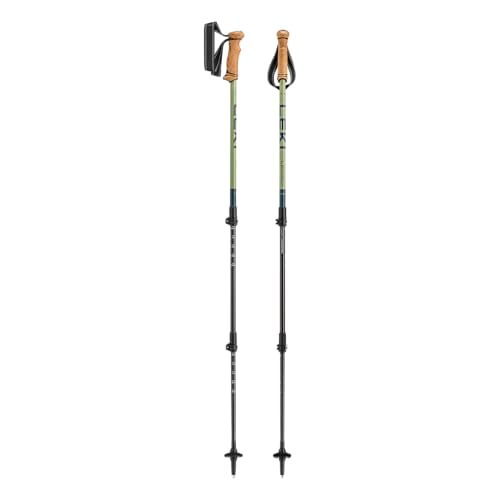
The structural backbone of any trekking pole lies in the raw material used across its telescoping sections. LEKI relies heavily on high-tensile aluminum alloys such as HTS 6.0 and HTS 6.5, which deliver exceptional yield strength without adding punishing weight to your swing. Models like the LEKI Legacy Lite Trekking Poles – Denimblue utilize HTS 6.0 aluminum to maintain a balance of light handling and dependable bending resistance. Aluminum handles lateral stress gracefully, meaning a pole caught in a deep granite fissure will typically bend rather than snap instantly, allowing for careful field straightening to limp back to camp.
For hikers prioritizing rapid movement and featherweight swing dynamics, LEKI also manufactures premium carbon shafts. Carbon models like the LEKI Ultratrail FX.One Trekking Poles- Grey Light use high-modulus carbon construction to drop weight down to a mere quarter-pound class per pole. Carbon fiber excels at absorbing high-frequency ground vibrations, which spares your wrists and forearms from constant trail buzz on packed dirt. However, carbon lacks the ductile forgiveness of aluminum, demanding greater vigilance around talus fields where severe lateral impacts can cause brittle structural failure.
Speed Lock Plus Versus Super Lock Twist Reliability
A trekking pole is only as reliable as its locking mechanism, especially when descending steep, loose terrain under the weight of a multi-day pack. LEKI pioneered the external lever lock category, and their modern Speed Lock Plus mechanism stands as one of the most secure clamp designs on the market. Unlike older twist locks that relied on internal expander plugs, the external cam lever wraps around the outer shaft diameter to create uniform friction. This design resists slipping under heavy vertical downward loads and remains effortless to adjust while wearing thick gloves in freezing mountain conditions.
In contrast, traditional twist systems like the Super Lock SLS found on the LEKI Voyager Trekking Poles – Blue – White offer a sleek profile with no external hardware to snag on thick trail brush. While twist locks deliver clean lines and dependable holding force when properly tensioned, they require extra care on dusty or wet trails. Silt, trail sand, and internal moisture can cause internal expansion wedges to slip or jam if not cleaned regularly. Backpackers frequently choose the external Speed Lock Plus specifically because it allows quick visual confirmation that the cam lever is fully closed before placing full body weight on a steep drop.
Push-Button Folding Mechanisms and Packability for Trail Runners
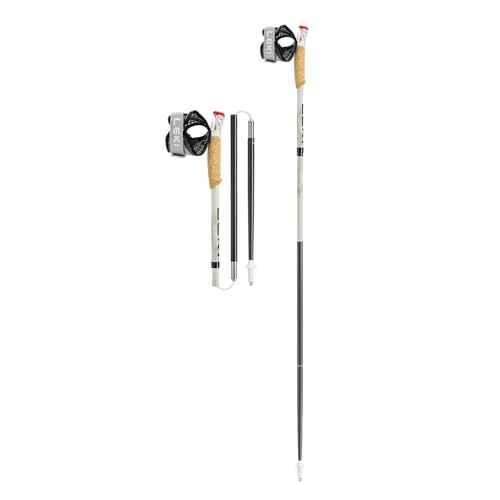
Fastpackers and ultra-endurance runners often face completely different gear requirements than traditional backpackers who keep poles extended all day long. The push-button folding design utilized on models like the LEKI Ultratrail FX.One Trekking Poles-Bright separates the pole into three compact 14.5-inch sections in seconds. By pulling the upper shaft until an internal spring pin clicks into place, the internal tension cord tightens the interlocking aluminum sleeves into a rigid, wobble-free column. This rapid deployment allows trail runners to transition from running flat terrain to climbing steep switchbacks without breaking stride.
Compact folding poles also simplify gear organization when you need to stow your sticks externally on a running vest or small mountain daypack. Much like learning proper techniques for strapping bulky gear to a pack, securing folding poles tightly prevents annoying rattles and balances your overall pack weight. The short pack size of folding models also makes them far easier to pack inside standard luggage for travel, avoiding the awkward bulk of full-length telescoping poles. Just remember that fixed-length folding poles lack telescoping height adjustability, requiring you to select the exact length corresponding to your height before heading out.
Grip Architecture: Aergon Cor-Tec, EVOCON, and Trigger Shark Systems
Handle ergonomics directly influence trail endurance, as poorly contoured grips can create hot spots, blisters, and repetitive strain in your palms and wrists. LEKI equips many of its standard trekking poles with proprietary cork composite handles, such as the Aergon Cor-Tec grip on the LEKI Khumbu Lite Trekking Poles – Orange. Cor-Tec blends natural cork with durable synthetic polymers, creating a porous surface that wicks away palm sweat during hot summer ascents. Over time, the cork composite molds slightly to the unique shape of your fingers, creating a personalized ergonomic feel that standard molded rubber cannot match.
The rounded, edgeless head of the Aergon grip also serves a critical biomechanical function when navigating steep downhill trails. Hikers can place the palm of their hand directly over the smooth upper knob to push downward comfortably, maintaining upright posture without contorting their wrists. On technical trail running models, LEKI replaces standard grips with the Trail Trigger Shark system, which pairs a breathable mesh hand harness directly into a quick-release grip lock. This mechanism optimizes direct power transfer on steep uphills while letting you click out instantly at trail aid stations or during sudden stumbling falls.
Carbide Flex Tips and Terrain Hardware Protection
The point where your pole contacts the trail dictates traction, braking stability, and overall trail safety across slippery surfaces. LEKI fits its trekking poles with durable Flex Tips made from tungsten carbide, a material hard enough to bite securely into granite slabs, ice, and packed mud. The flexible plastic ferrule housing the carbide core allows up to thirty degrees of bending flex without snapping the lower pole section if the tip wedges into a narrow rock crevice. This engineered flexibility protects the more expensive shaft sections from catastrophic shear damage during fast-paced hiking.
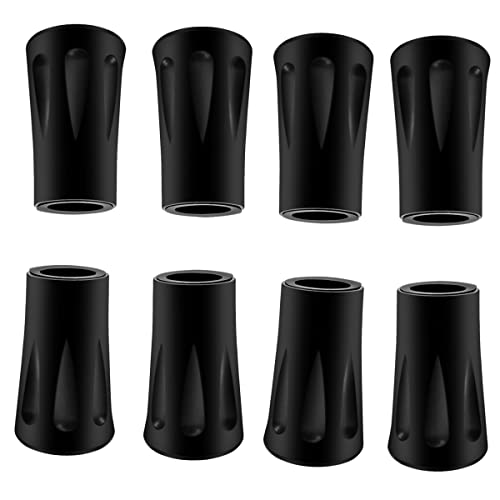
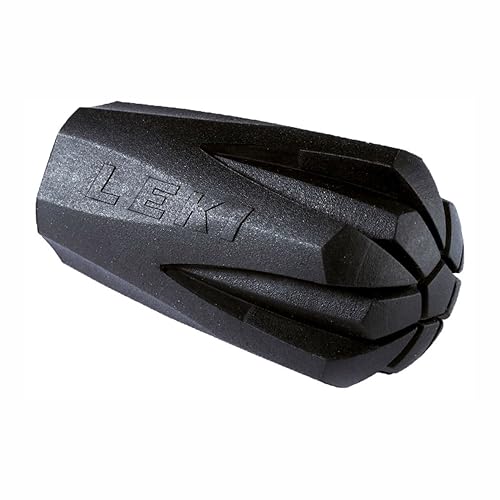
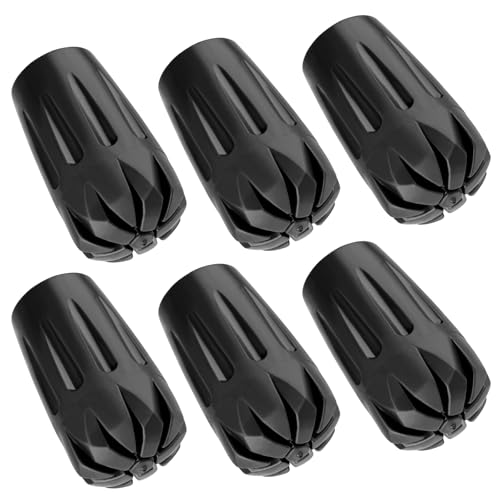
While bare carbide tips excel on wilderness dirt, they can slip dangerously and produce harsh clattering noise on paved roads, rocky sidewalks, or sensitive slickrock trails. Slipping protective accessories like the LEKI Rubber Walking Tip or the vulcanized LEKI Walking Rubber Tip over the carbide end provides silent, grippy traction on hard surfaces. Budget-conscious hikers frequently keep spare aftermarket options like the 8Pcs Trekking Pole Tips Replacement Protectors in their packs to protect asphalt surfaces and prevent sharp tips from tearing gear bags during transit. These rubber feet also reduce trail erosion on fragile cultural paths where metal spikes are prohibited.
Biomechanical Joint Relief and Downhill Load Transfer
Steep mountain descents exert tremendous cumulative force on the patellofemoral joint, quadriceps muscles, and lower lumbar spine. Hikers wondering if are leki trekking poles good for reducing knee pain will appreciate how effectively dual poles offload downward impact forces into the chest, shoulders, and arms. Lengthening your poles by five to ten centimeters on downhill sections allows you to plant the tips ahead of your descent, absorbing the initial shock wave before your lead foot strikes the ground. This controlled deceleration minimizes jarring impacts and significantly stabilizes your center of gravity across loose scree.
Proper wrist strap adjustment plays a vital role in transferring this downward weight without straining your forearm muscles. Sliding your hand up from the bottom of the strap and resting your palm against the webbing allows the strap to carry your weight, freeing you from death-gripping the handle. When coordinating your gear choices, balancing joint stability with practical trail clothing choices ensures full mobility across technical switchbacks. Letting the pole straps do the heavy lifting preserves grip strength and prevents hand cramping during high-mileage mountain days.
Single Walking Staffs Versus Dual Pole Trekking Setups
While the vast majority of backpackers rely on dual poles for rhythmic cadence and maximum joint relief, single walking staffs retain a loyal following among recreational walkers and travelers. A specialized single stick like the LEKI Wanderfreund High Fives Trekking Pole blends the supportive ergonomics of an orthopedic cane with mountain-ready hiking pole technology. Featuring a cane-shaped cork handle and sturdy HTS 6.5 aluminum construction, it provides exceptional upper-body support for casual ramble walks, gentle nature paths, and urban travel. Its dual Speed Lock Plus levers allow quick height adjustments across varying terrain while maintaining a stout half-pound weight.
Choosing between a single walking staff and a matched pair of poles depends entirely on your planned trail environment and physical needs. A single staff offers an uncomplicated third contact point for casual day rambles and lets you keep one hand free for navigating trail maps, taking photos, or holding handrails. However, for carrying a multi-day backpack across uneven terrain, dual poles provide vastly superior bilateral symmetry, balance stabilization, and energy conservation. Dual poles also offer essential versatility for backpackers who use their hiking sticks as structural ridge poles when pitching lightweight trekking-pole shelters.
Field Maintenance, Cam Calibration, and Preventing Trail Malfunctions
Even the highest-quality mountain hardware requires basic trail maintenance to prevent unexpected slipping and mechanical jamming. LEKI external lever clamps feature a knurled thumbscrew dial that controls the clamping tension applied to the inner shaft when the lever snaps closed. Over dozens of trail miles, fine grit or temperature fluctuations can cause the clamp tension to slacken slightly. Calibrating this tension takes only seconds in the field: simply open the lever, tighten the knurled dial clockwise by a quarter turn with your fingers, and close the lever until you feel firm, solid resistance.
Preventing shaft jamming after wet, muddy hikes is equally straightforward but frequently overlooked by casual backpackers. After returning from a rainy backpacking trip or silt-heavy river crossings, pull the telescoping sections apart completely and wipe the aluminum shafts dry with a clean cloth. Never apply oil, WD-40, silicone spray, or grease to the bare aluminum shafts, as lubricants destroy the friction required for cam collars to lock securely. Keeping the internal surfaces clean and completely dry guarantees that your locking mechanisms will hold firm under full body weight without sudden slippage.
Identifying the Right LEKI Model for Your Backcountry Needs
Selecting the right trekking pole from the LEKI lineup requires aligning shaft durability, locking mechanisms, and overall weight with your specific backcountry style. Budget-minded day hikers seeking a dependable, no-frills aluminum setup will find great utility in the Legacy Lite or Khumbu Lite series, which offer reliable Speed Lock Plus levers and sweat-resistant cork composite grips. These all-aluminum models provide exceptional bending tolerance, making them ideal companions for rugged mountain terrain where durability outweighs the need for minimal pack weight. Their generous telescoping range also accommodates hikers of varying heights with ease.
Conversely, fastpackers and trail runners who count every ounce should lean toward carbon folding options like the Ultratrail FX.One series. While carbon comes with a higher price tier and requires more careful handling around sharp rock gaps, its near-zero swing weight and instant push-button stowage provide an undeniable competitive edge. Travelers and casual walkers managing occasional knee stiffness will appreciate the cane-style support of the Wanderfreund staff for walking paths and paved city rambles. Matching the pole configuration to your trail pace and pack weight ensures you get the full benefits of LEKI engineering.
Practical Trail Verification and Final Recommendations
Before stepping onto an exposed alpine trail, performing a quick weight verification check will prevent accidents and confirm that your gear is dialed in properly. Stand on flat ground, adjust each pole until your elbow forms a clean ninety-degree bend, and firmly snap the external cam levers shut. Lean your full upper-body weight straight down onto the grips to verify that neither shaft section slips or creeps downward under sudden downward force. If the pole slides even a millimeter, open the lever and tighten the tension screw before trusting the equipment on a steep descent.
When evaluated across durability, clamp security, grip comfort, and long-term hardware availability, LEKI trekking poles consistently justify their strong standing among mountain enthusiasts. Whether you choose tough HTS aluminum for heavy wilderness backpacking or featherweight carbon for rapid trail runs, their dependable design reduces joint fatigue and enhances balance on challenging trails. By properly tensioning your cam locks, keeping the shafts clean and dry, and pairing the tips with the right terrain accessories, your poles will provide reliable, confidence-inspiring support for countless mountain adventures ahead.






Write Your Review
No reviews yet. Be the first to share your experience!