


Descending a steep, rocky trail with a loaded backpack places tremendous repetitive stress on your knees and quadriceps. Using hiking sticks helps distribute that downward force into your upper body, but incorrect pole height can force your shoulders into awkward postures or leave you overreaching on drop-offs. Learning how to choose trekking pole length ensures that your arms remain in an efficient biomechanical position where each plant provides immediate stability. When your poles match your body geometry, you save muscular energy over long trail miles while safeguarding your joints against unexpected slips.
Terrain gradients shift continuously throughout a mountain trek, requiring hikers to adapt their gear setup between steep climbs and technical descents. Before packing your gear alongside your practical backcountry packing checklist, understanding how telescoping shafts and folding sections function will simplify your pre-trail preparation. Selecting the right baseline length allows your elbows to rest naturally at a right angle while keeping your wrist straps properly aligned. With modern options ranging from ultralight carbon fiber to rugged aluminum builds, dialing in your personal height settings establishes a reliable foundation for every outing.


Dialing in Trekking Pole Length for Trail Comfort and Control
Setting your trekking poles to the exact right length directly dictates how much balance and joint relief you experience on the trail. A pole that sits too tall forces your shoulders into sustained elevation, creating neck fatigue and reducing forward propulsion. Conversely, a pole adjusted too short leads to excessive forward leaning, compromising posture under a heavy multi-day backpack. Mastering the mechanical sizing process allows your arms to absorb trail impacts efficiently across diverse terrain.
Modern poles accommodate different hiker heights through two primary structural systems: multi-section telescoping shafts and segmented folding designs. Telescoping models offer continuous length customization across a wide measurement spectrum, while tri-fold options provide dedicated size brackets. Finding your personal baseline measurement requires only a few minutes of standing on level ground in your standard hiking footwear. Once you lock in that foundation, making subtle adjustments for varying slope angles becomes second nature.
Establishing the Flat-Ground Baseline: The 90-Degree Elbow Angle
The fundamental reference point for sizing any trekking pole is the 90-degree elbow bend on flat, level terrain. To find this position, stand upright with your hiking boots or trail runners on, letting your upper arms hang relaxed at your sides. Bend your elbows forward until your forearms sit perfectly parallel to the ground, forming a clean right angle at the elbow joint. Holding the pole grip with the carbide tip resting vertically on the floor should maintain this exact horizontal forearm alignment.
If your forearm points upward toward your chest, the pole is set too long and needs to be shortened. If your hand drops downward and your elbow angle opens beyond 90 degrees, you must extend the shaft sections. Setting both poles to this neutral measurement creates a balanced swing weight and provides optimal lever arm mechanics during standard walking strides. It also ensures that your wrist strap supports your body weight through your palm rather than relying strictly on grip squeeze.
Adjusting Length for Steep Climbs and Ascending Gradients
When the trail pitches steeply upward, maintaining your standard flat-ground length can work against your natural climbing mechanics. Because the ground rises in front of you with every stride, planting a full-length pole requires lifting your arms higher than your chest. This repetitive shoulder engagement quickly exhausts your upper body and diminishes the upward pushing force your poles should deliver. Shortening each pole by 5 to 10 centimeters (approximately 2 to 4 inches) restores an ergonomic pushing angle.
Shorter shafts allow you to plant the tips near your lead foot without hyperextending your elbows or arching your lower back. Your arms can press down firmly on the grip tops to assist your quadriceps and glutes during high step-ups on rocky stairs. If you frequently encounter rolling terrain with alternating ascents, stopping to adjust your locks repeatedly can disrupt your rhythm. In those situations, sliding your hands down onto an extended lower grip sleeve provides immediate climbing leverage without touching the cam levers.
Lengthening Poles for Steep Mountain Descents and Joint Relief
Downhill trekking subjects knees, hips, and ankles to repetitive eccentric braking forces that accelerate muscular breakdown. Lengthening your poles by 5 to 10 centimeters gives you early ground contact before your leading boot impacts the trail surface. This extra reach lets your arms and shoulders bear part of your descending body weight, noticeably softening the impact on your patellofemoral joints. It also keeps your torso upright instead of pitching forward over drop-offs, which stabilizes your center of gravity.
During steep descents, resting your palms across the broad, rounded crowns of the handles provides firmer downward pressure than standard grip wraps. You should always ensure that your wrist straps are adjusted correctly so they do not pinch or trap your wrists in case of a sudden stumble. If a downhill pitch is exceptionally steep, extending the lower shaft sections slightly farther helps you probe footing on loose scree before committing weight. Never extend any telescoping section past its marked maximum limit line, as insufficient shaft overlap can cause structural bending or clamp slippage.
Sizing by Hiker Height: Standard Metric and Imperial Reference Ranges
While the 90-degree elbow test remains the gold standard, manufacturer height charts provide an excellent baseline when selecting pole models. Hikers under 5 feet 1 inch generally require pole lengths between 100 and 105 centimeters to achieve a natural arm angle. Hikers between 5 feet 2 inches and 5 feet 7 inches typically set their shafts between 105 and 115 centimeters. Those between 5 feet 8 inches and 5 feet 11 inches usually find their ideal flat-ground baseline between 115 and 125 centimeters.
Backpackers standing 6 feet tall and above normally require settings between 125 and 135 centimeters, and taller hikers may need specialized poles reaching 140 centimeters. Proportionate torso length, arm reach, and footwear stack height can alter these general reference ranges by several centimeters. Trying your poles with your thickest hiking boots helps account for outsole thickness before you finalize your field settings. Checking laser-etched metric markings on the shaft allows you to replicate your precise personal measurement quickly at every trailhead.
Telescoping Adjustability vs Sized Folding Z-Poles
Understanding pole architecture is essential when determining how to choose trekking pole length for your specific style of hiking. Telescoping poles, such as the Shxing Carbon Fiber Trekking Poles, 7.1 oz Each, feature multi-stage sliding shafts that adjust smoothly from 24.4 to 53.1 inches. This expansive adjustment span makes telescoping designs exceptionally versatile, allowing one pair to fit multiple hikers or adapt seamlessly between grueling climbs and deep descents. They also allow backpackers to fine-tune each section equally, preserving balanced shaft rigidity and uniform weight distribution.
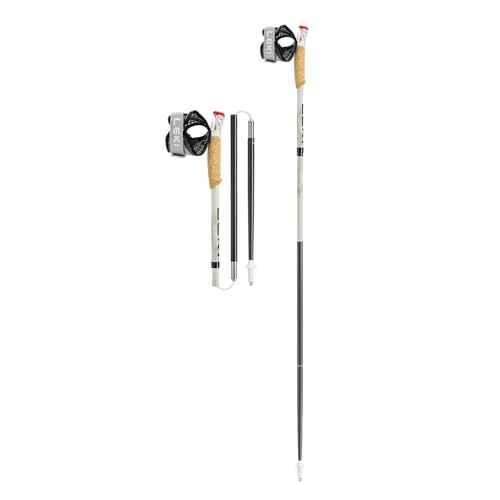
In contrast, folding tri-fold systems often come in predetermined size ranges that offer limited telescoping adjustment at the top section. For instance, the CONTOOSE Collapsible Hiking Poles for Women provide designated sizes, including a 100-115 centimeter range for users from 4’11” to 5’7″ and a 115-135 centimeter range for users from 5’5″ to 6’3″. Because folding poles collapse into three interconnected sections via an internal tension cord, you must pick the correct structural size bracket prior to purchase. Once selected, the upper flip lock provides enough on-trail micro-adjustment to accommodate shifting trail gradients while folding down to a compact 13 to 14.6 inches.
Calibrating Cam Lever Clamps and Preventing Slip Hazards
External lever locks have largely replaced internal twist expanders because they provide visual confirmation of clamp engagement and operate reliably in freezing temperatures. However, setting the correct length is pointless if the locking mechanism slips under your body weight on a rocky descent. A sudden shaft collapse under vertical force can cause a dangerous forward fall, especially when crossing steep talus or creek beds. External cam locks require proper tension calibration via their thumbscrews to generate adequate clamping friction against the anodized shaft surface.
To verify clamp security, open the lever clamp, tighten the knurled dial slightly with your fingers, and close the lever until you feel firm mechanical resistance. Test the hold by placing both tips on the ground and pressing your upper-body weight straight down through the handles. If the inner shaft slides into the outer tube even slightly, open the cam lever and tighten the tension screw by another quarter turn. Always perform this vertical load verification before setting out from camp, ensuring that both poles reliably support your weight.
The Role of Extended Grip Sleeves on Sidehill Traverses
Traversing a steep sidehill slope presents a unique sizing challenge because the uphill side of the trail is physically closer to your body than the downhill side. Hikers using standard single-grip poles must either walk with one shoulder awkwardly hunched or stop repeatedly to adjust individual pole lengths. This is where an extended lower grip sleeve proves invaluable for efficient backcountry travel. Both contoured natural cork handles and high-density EVA foam collars provide distinct advantages during extended mountain treks.
The Shxing Carbon Fiber Trekking Poles, 7.1 oz Each combine a natural cork handle with an extended EVA grip sleeve directly below the main grip. When you move across an angled slope, you can grip the primary cork handle on the downhill side while choking down onto the lower EVA foam on the uphill side. This simple hand adjustment balances your torso posture immediately without requiring you to open and recalibrate your aluminum locking levers. Natural cork wicks moisture effectively during hot afternoon hikes, while the closed-cell EVA foam provides secure friction without absorbing trail grime.
Shaft Material Considerations: Carbon Fiber Deflection vs 7075 Aluminum Durability
Shaft composition influences how a pole behaves when extended to its maximum usable length under trail loads. Carbon fiber construction offers exceptional strength-to-weight characteristics, as demonstrated by the featherweight 7.1-ounce single-pole weight of the Shxing carbon fiber model. Carbon fiber naturally dampens metallic trail chatter, preventing sharp vibrations from traveling into your wrists and elbows over high-mileage days. However, carbon composites have low tolerance for lateral shear stress and can crack if wedged tightly between granite boulders while bearing sideways force.
By comparison, 7075 aluminum shafts, utilized in the CONTOOSE Collapsible Hiking Poles for Women, deliver rugged impact resistance across rough backcountry terrain. Aluminum provides ductile deformation rather than sudden brittle failure, meaning an overstressed shaft is far more likely to bend than snap completely in two. While aluminum poles weigh slightly more at roughly 9.2 to 9.5 ounces each, their durability makes them an outstanding choice for rugged off-trail scrambles and heavy load hauling. Regardless of material, keeping shafts free of grit and trail silt prevents premature wear on clamping collars and telescoping sleeves.
Dual-Purpose Length Demands: Pitching Ultralight Trekking Pole Shelters
Many modern backpackers rely on their trekking poles as primary structural supports for ultralight tarps and A-frame shelters. When choosing your pole length, you must consider whether the pole’s adjustment span satisfies your shelter’s required apex pitch height. Most single-wall and modular trekking pole tents require vertical pole heights between 115 and 130 centimeters to achieve taut canopy tension. If your poles cannot securely extend to that required elevation, your shelter will sag under rain or wind loading.
Telescoping poles generally excel in this dual-purpose role because their continuous adjustment range allows micro-adjustments for uneven campsite terrain. Sized folding poles can also pitch ultralight shelters effectively provided your chosen size bracket covers the tent’s target ridge height. Always ensure that the pole handle or rubber tip rests securely in the tent’s reinforced apex cup without puncturing lightweight silnylon fabrics. Checking your shelter’s peak height specifications before buying your poles prevents frustrating compatibility issues when setting up camp in severe weather.
Practical Pack Attachment and Transport Considerations
How a pole collapses when not in use is almost as critical as its extended functional height on the trail. Traditional three-section telescoping poles pack down to around 24 inches, which fits easily into the side compression straps of most standard daypacks and multi-day packs. Meanwhile, tri-fold collapsible poles fold down to approximately 13 to 14.6 inches, allowing them to slip cleanly inside smaller packs, duffels, or travel luggage. When attaching collapsible poles to your exterior pack loops alongside methods for securing heavy gear to your pack, make sure the tips point downward to avoid snagging brush.
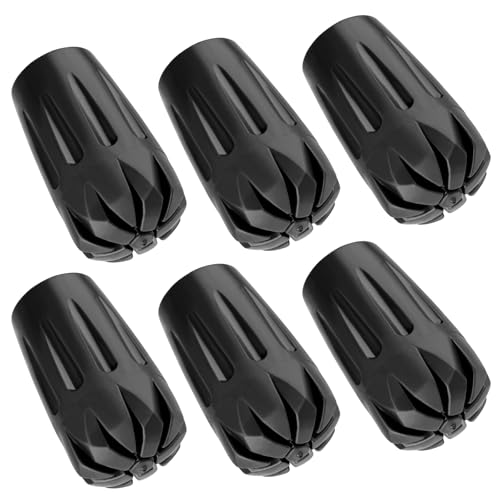
Travelers should note that transportation security agencies typically prohibit trekking poles with sharp carbide tips in carry-on luggage. Packing your poles securely inside checked baggage prevents airport delays and protects delicate shaft sections from baggage handling impacts. Using included protective rubber boot tips protects luggage fabric while keeping your gear clean during travel transit. Once you arrive at your destination, unpacking and testing your locks ensures everything operates smoothly before you take your first trail steps.
Selecting the correct trekking pole length transforms your hiking efficiency, helping you maintain posture, balance your pack weight, and protect your knees over demanding terrain. Establishing your baseline 90-degree elbow bend on flat ground gives you a reliable reference for every trail condition you encounter. From there, shortening your shafts on ascents and lengthening them on steep descents maximizes both propulsion and stability. By matching your body dimensions to the right pole design, you ensure steady support and joint comfort across every mile of wilderness adventure.






Write Your Review
No reviews yet. Be the first to share your experience!