


Descents place intense vertical stress on your knees and quadriceps, making a dependable pair of hiking sticks essential for trail stability. When a shaft slips under unexpected body weight, the sudden loss of balance can cause severe joint strain or dangerous falls on rocky terrain. Learning how to tighten trekking poles correctly ensures your gear provides rigid support whenever you plant your weight across steep switchbacks or loose talus. Backcountry hikers pairing their poles with trail apparel designed for knee relief often depend on this stability to maintain proper alignment and reduce joint fatigue over high-mileage days.
Different pole designs rely on distinct mechanical hardware to stay secure, ranging from external cam levers to internal friction expanders and folding tension pins. Understanding how these parts interact prevents common trail headaches like creeping telescoping sections, rattling aluminum joints, or stuck buttons in freezing weather. Taking a few moments to inspect clamp torque, clean out accumulated trail silt, and calibrate tension thumb screws will keep your walking poles structurally solid across every season.

Pros
- Ultralight listed package weight of roughly 0.022 pounds keeps pack weight down.
- Four-piece bundle provides versatile placement options across one or two backpacks.
- Sliding buckle mechanism adjusts quickly to secure poles of different diameters.
- Inexpensive upgrade for daypacks and hiking bags lacking factory pole attachment hardware.
Cons
- Requires existing webbing, daisy chains, or anchor points on your backpack to secure the cord.
- Elastic cord can lose tension over time if exposed to repeated heavy snagging or over-stretching.
- Not engineered or rated for technical climbing protection, heavy axes, or high-load carrying.
The Marsrut 4-Piece Trekking Pole Holder set is an aftermarket external attachment accessory designed for hikers, backpackers, and travelers who need a secure way to stow trekking poles or walking sticks on their packs. Many daypacks and minimalist backpacking bags omit dedicated pole attachment bungees to reduce production costs or maintain clean exterior profiles. This four-piece kit bridges that gap by providing standalone, adjustable elastic cord ties that attach to existing exterior anchor points.
On the trail, managing trekking poles during scrambles, stream crossings, or flat access walks requires a dependable hands-free storage method. These holders measure 20.3 cm (8 inches) in length and feature a slide-lock plastic buckle. When anchored through an exterior loop or compression strap on your pack, the elastic cord wraps around the pole shaft, allowing the buckle to slide forward and clamp the shaft tightly against the pack body. At an ultra-low total weight of approximately 0.022 pounds, this accessory adds no noticeable load to your setup.
The build centers around resilient elastic cord paired with molded plastic locking buckles. The cord provides enough elasticity to hold poles firmly without slippage, while the plastic friction hardware bites into the cord to prevent unwanted loosening during motion. While this hardware is engineered for light-duty tensioning rather than heavy load-bearing support, it offers dependable day-to-day security for standard aluminum or carbon fiber trekking poles, canes, and lightweight accessories like compact umbrellas.
Setup is straightforward and tool-free. To attach a pole, you thread the cord loop through a backpack daisy chain, shoulder harness loop, or side compression strap, insert the pole shaft into the open loop, and cinch the buckle down. Cleaning and maintaining these straps is simple: they can be rinsed with clear water to remove trail dust or grit from the buckle mechanism and air-dried before storage. Having four straps in the package means you can equip two attachment points on two separate packs or keep spares in a repair kit.
Prospective buyers should note realistic limitations regarding compatibility and load capacity. These holders do not create attachment loops out of thin air; your backpack must already feature some form of external webbing, loop, or strap to anchor the cord. Furthermore, these elastic cords are intended strictly for secondary retention of walking poles and umbrellas, not for technical mountaineering ice tools, heavy tools, or safety-critical climbing hardware.
For day hikers, section backpackers, and outdoor enthusiasts seeking an affordable, lightweight method to add pole-carrying functionality to an existing backpack, the Marsrut 4-Piece Trekking Pole Holder set offers practical value and effortless utility.
The Marsrut trekking pole straps are designed specifically to interface with backpacks that feature external attachment hardware such as daisy chains, ice-axe loops, trekking pole tip retainers, or side compression straps. At an 8-inch (20.3 cm) overall length, the cord provides ample reach to loop around common trekking pole diameters, walking stick shafts, and compact accessories.
Because these straps function as an upper or mid-shaft stabilizer, they work best when paired with a lower loop or side bottle pocket to cradle the pole tips. Confirming that your daypack or multi-day backpack has accessible webbing loops or strap anchor points will ensure smooth installation and optimal stability on the trail.
The holders combine resilient elastic shock cord with durable molded plastic slide buckles. The plastic components are designed to resist outdoor exposure and maintain friction against the cord during normal trail vibration, preventing poles from shifting while you walk.
To maintain peak function, keep the plastic sliding mechanisms clean of mud, sand, and fine trail dirt. Rinsing them periodically in lukewarm water and allowing the elastic to dry away from direct high heat or prolonged UV exposure will help maintain cord elasticity and long-term grip strength.

Pros
- Collapses down to a compact 15 inches, fitting easily inside backpacks or carry luggage bags
- Natural cork handles absorb hand perspiration effectively during strenuous hikes
- Sturdy aircraft-grade aluminum construction with protective metal caps at the folding joints
- Simple height adjustment between 110 cm and 130 cm via a sturdy metal flip lock lever
Cons
- TSA regulations require trekking poles to be packed in checked luggage rather than carry-on bags
- Users must verify the push-button lock is fully popped out to ensure shaft stability before hiking
- At 11.5 oz per pole, aluminum construction is heavier than ultralight carbon-fiber alternatives
The Trekology Trek-Z Cork Grip Collapsible Trekking Poles are three-section folding hiking sticks designed for day hikers, backpackers, and adventure travelers who require portable stability on uneven trails. Rather than using traditional telescoping designs that remain long when collapsed, these poles utilize a tri-fold folding cable system that stows down to a compact 15 inches. This makes them a strong match for hikers who prefer storing their poles directly inside a daypack or securing them flat against external pack compression straps without poles protruding past the top lid.
On trail, these poles offer an adjustable length range of 110 cm to 130 cm, covering a stated user height range between 5'2" and 6'5". Each pole weighs 11.5 oz (330 g), delivering a solid feel that helps distribute carried weight and stabilize joint impact on steep descents. The main handle is shaped from natural cork, which naturally absorbs hand moisture and sweat during warm trail outings. Trekology notes that the cork grips incorporate a slight rotational flex as an anti-torque ergonomic feature. Below the cork, secondary EVA foam grips allow hikers to quickly choke down on the poles when negotiating short, steep step-ups without adjusting overall pole length.
Build quality centers on aircraft-grade aluminum alloy shafts, chosen to withstand lateral loads and rocky terrain where brittle materials might crack. To reinforce high-stress connection points, Trekology adds metal caps around the folding joints, reducing play once the poles are deployed. Extension and length adjustments are secured using a durable metal flip lock at the upper section, ensuring reliable clamping power once clamped to the hiker's preferred height marker.
Deploying the poles requires extending the folding sections until the internal tension cable pulls tight and an internal metal lock button pops through the shaft hole. Ensuring this button is fully seated is essential for complete structural rigidity before latching the upper flip lock. For transport, collapsing the poles takes seconds, allowing both poles to slip neatly into the included storage bag. When traveling by commercial air to hiking destinations, keep in mind that TSA and airline policies classify trekking poles as checked luggage, meaning they must be stowed inside checked duffels or backpacks rather than overhead carry-on bags.
While the folding mechanism provides impressive packability, the design does present a few practical limitations. The total adjustment range is 20 cm (110 to 130 cm), which may not suit hikers under 5'2" who require a shorter pole setup. Additionally, at 11.5 oz per pole, weight-conscious thru-hikers aiming for sub-pound base weights might find aluminum folding poles heavier than fixed-length carbon options. The locking button also requires careful initial alignment during assembly to ensure the segments seat properly without wobbling.
For hikers, backpackers, and travelers seeking dependable trail support without spending top-tier outdoor brand prices, the Trekology Trek-Z Cork poles offer exceptional value. The combination of sweat-wicking cork handles, reinforced aluminum joints, and an ultra-packable 15-inch folded size makes them a versatile accessory for everything from local forest walks to rugged mountain backpacking trips.
The Trekology Trek-Z poles adjust between 110 cm and 130 cm in length, accommodating hikers measuring roughly 5'2" to 6'5" (159 to 195 cm) in height. Length adjustments are managed via a metal flip lock clamp on the top shaft section, allowing users to fine-tune height based on trail slope or individual arm ergonomics.
Hikers shorter than 5'2" may find the minimum 110 cm setting too tall for standard 90-degree elbow positioning on level terrain. Always confirm that your forearm rests parallel to the ground when holding the cork grip before clamping the metal flip lock.
Thanks to a three-piece folding design, the Trek-Z poles collapse down to just 15 inches (38 cm) in length. This compact size allows them to fit horizontally or vertically inside most standard daypacks, carry duffels, or luggage cases without hanging loosely off external attachment points.
The poles come with a dedicated carry bag to keep trail mud and dust away from clean gear inside your backpack. Hikers traveling by air should remember that TSA guidelines prohibit trekking poles in carry-on baggage, requiring these poles to travel inside checked luggage.
The pole shafts are manufactured from aircraft-grade aluminum alloy, delivering reliable strength-to-weight performance and high resistance to bending stresses on demanding rocky routes. The connection joints are strengthened with metal caps to guard against joint wear and slippage over time.
The handles feature genuine cork, which helps manage perspiration and adapts comfortably to hand pressure over long miles. A secondary EVA foam grip sits directly beneath the cork for quick hand repositioning on steep gradients without stopping to change shaft length.

Pros
- Folds down to 15 inches, making it significantly easier to pack inside travel luggage or strap to compact daypacks than standard telescoping poles
- Moisture-wicking natural cork handles keep palms dry and comfortable across humid hiking conditions
- Sturdy metal flip locks and reinforced joint caps provide solid structural support without slippage when properly tensioned
- Lower EVA foam grips allow instant trail adjustment for steep uphill climbing
Cons
- At 11.5 ounces per pole, they carry more weight than specialized ultralight carbon fiber poles
- The 110 cm minimum height setting may feel slightly too long for hikers under 5 feet 2 inches
- Per TSA regulations, trekking poles with metal tips must be packed in checked luggage rather than carried on flights
The Trekology Trek-Z Cork Grip Trekking Poles are folding, multi-section hiking sticks designed for hikers, backpackers, and travelers who require sturdy trail stability without the awkward bulk of traditional telescoping poles. Sold as a pair with an included carry bag, these poles suit day hikers tackling uneven paths, weekend backpackers managing load transfer on descents, and outdoor enthusiasts who need compact gear that fits inside travel luggage or standard daypack side sleeves.
Trail packability is one of the standout characteristics of this design. Utilizing a retractable tri-fold cable system, each pole breaks down to just 15 inches (38 cm) in overall length. This short folded dimension lets you slip the pair directly into the main compartment of an overnight pack, tuck them into side stretch-mesh water bottle pockets, or strap them beneath external compression straps without snagging overhead brush. For length adjustment, an upper aluminum section provides a 20 cm sliding range from 110 cm to 130 cm, catering to user heights between 5 feet 2 inches and 6 feet 5 inches.
Component construction focuses on long-term trail durability. Trekology builds the Trek-Z poles from aircraft-grade aluminum alloy, which provides higher impact resistance and flex tolerance against rocky crevices compared to brittle carbon fiber. The folding shaft joints feature protective metal caps to resist wear at stress points during repeated assembly. Up top, the natural cork grip wicks moisture away from sweaty palms during steep ascents, while a secondary EVA foam grip sleeve allows you to lower your hand placement instantly on steep trail grades without adjusting the shaft length.
Deploying and adjusting the poles requires a straightforward two-step setup. After letting the lower segments drop into place, you pull the upper shaft section until an internal metal locking button pops outward with a firm click. A durable metal external flip lock then secures the upper telescoping section at your desired height marker. Proper setup is essential; if the lower shaft feels loose or disconnected, the metal lock button must be firmly pulled until fully seated in its designated catch hole. Maintenance is simple, requiring only an occasional wipe-down with a dry cloth after muddy hikes before packing into the included storage sleeve.
While practical and durable, the Trek-Z design carries a few realistic limitations. Each pole weighs 11.5 ounces (330 grams), resulting in a combined pair weight around 23 ounces, which may deter dedicated ultralight thru-hikers who prefer minimal swing weight. Additionally, the minimum length of 110 cm means youth hikers or adults under 5 feet 2 inches might find the grip positioning too elevated on flat terrain. Travelers should also remember that TSA guidelines require trekking poles with rigid tips to travel inside checked baggage rather than carry-on packs.
For hikers seeking an affordable, compact, and robust set of walking poles, the Trekology Trek-Z Cork Grip poles deliver excellent overall value. They provide dependable joint support, sweat-wicking cork comfort, and pack-friendly folding convenience that fits easily into standard hiking backpacks and travel duffels.
The Trekology Trek-Z poles feature an adjustable working range between 110 cm and 130 cm, making them compatible with users measuring between 5 feet 2 inches and 6 feet 5 inches in height. Sizing adjustments are controlled via a durable metal flip-lock clamp positioned on the upper shaft section, marked with clear centimeter increments for quick alignment.
Hikers can lengthen the poles slightly for steep downhill sections to maintain an upright posture, or shorten them for prolonged uphill climbs. For fast grade transitions where stopping to loosen the clamp is impractical, the extended EVA foam grip below the primary cork handle allows instant choke-down positioning.
Thanks to a three-section folding architecture linked by an internal tension cable, the Trek-Z poles collapse down to an ultra-compact 15 inches (38 cm). This compact footprint allows them to slide vertically inside most 20-liter to 65-liter hiking backpacks, eliminating the tip-heavy snagging hazards common with longer two-piece or three-piece telescoping poles.
A matching carry bag is included to keep trail mud and dust away from sleeping bags, pack liners, and clothing when stored internally. When flying to destination trailheads, note that airline security guidelines require trekking poles to be packed within checked baggage rather than carry-on luggage.
The shafts are manufactured from aircraft-grade aluminum alloy, delivering high tensile strength and resilience against bending forces when supporting heavy backpack loads on rocky trails. The connection joints between segments are reinforced with metal caps to resist cracking and wall deformation under load.
The upper handle utilizes natural cork material that absorbs hand moisture, resisting slick spots during warm summer outings. The handle is engineered with a slight rotational flex that acts as an anti-torque buffer, reducing jarring impacts transmitted through the hands and wrists across prolonged trail miles.
Mastering Trekking Pole Locking Systems and Tension Adjustments
Locking mechanisms turn multi-section hiking sticks into rigid structural columns capable of offloading weight from your lower body. When a pole slips, the issue almost always stems from insufficient clamping friction, improper cord tension, or trail debris coating the shaft surfaces. Understanding the mechanical differences between external flip locks, internal expanders, and folding push-button systems allows you to dial in exact holding power before tackling rugged backcountry terrain.
The Mechanics of External Cam Lever and Flip Lock Systems
External lever locks, often called flip locks or cam clamps, have become the standard for modern telescoping poles because they provide visible security and simple field adjustments. These systems feature an external plastic or aluminum collar surrounding the outer shaft, split by a narrow gap that narrows when you flip the lever shut. As the cam rotates, it pinches the outer tube tightly around the narrower inner tube, creating friction that resists vertical sliding forces.
Most slippage occurs not because the lever itself is broken, but because the clamp tension screw has slowly backed out during transport or repeated cycling. If you flip the lever closed and feel minimal resistance, the clamp simply lacks the necessary clamping pressure to grip the inner shaft. Conversely, excessive clamping force can warp aluminum tubes, crush composite sleeves, or crack composite collars over time.
Quality flip locks often utilize anodized aluminum levers or reinforced metal components rather than lightweight plastic caps. For example, poles like the Trekology Trek-Z Cork Grip Collapsible Lightweight incorporate durable metal flip locks to secure the upper adjustable section between 110 and 130 centimeters. This metal-on-metal durability minimizes mechanical deformation under repeated downward loads, keeping the tension stable across fluctuating ambient temperatures.
Step-by-Step Calibration for External Lever Clamping Force
Calibrating an external cam lock requires zero specialized tools in most modern designs, relying instead on a knurled thumb screw opposite the lever. Begin by popping the lever fully open so that the inner shaft slides freely to your desired height mark. Never turn the tension screw while the lever is in the locked position, as doing so strips the internal threads and strains the plastic collar.
With the lever wide open, use your fingers to rotate the knurled thumb screw clockwise in small quarter-turn increments. After each minor turn, push the lever closed to test the closing resistance against your palm or thumb. You should feel noticeable mechanical resistance during the final third of the lever travel, requiring firm thumb pressure to snap the lever flush against the shaft collar.
If the lever snaps shut effortlessly without any resistance, open it again and tighten the knurled screw by another half turn. If the lever requires two hands or excessive force to close, back the screw counter-clockwise slightly to prevent cracking the collar housing. Once locked, grasp the shaft sections on either side of the clamp and try to twist or slide them by hand to confirm the grip holds fast.
Tightening Internal Twist Locks and Expander Mechanisms
Traditional telescoping poles frequently utilize internal twist locks, which hide the locking mechanism inside the hollow aluminum or carbon fiber tubes. Inside the shaft, a threaded plastic expander plug or wedge sits mounted on a central threaded rod. When you twist the lower shaft clockwise relative to the upper section, the wedge climbs the threads and spreads the expander outward against the inner walls of the upper tube.
Hikers often struggle when an internal twist lock spins endlessly without catching or tightening down. This spinning issue happens when the expander plug loses initial friction with the tube interior, preventing the wedge from climbing the central screw threads. To resolve this, pull the lower section completely out of the upper shaft to expose the expander plug assembly.
Inspect the plastic plug for caked trail dust, dried mud, or smooth plastic wear that prevents the surfaces from gripping. Expand the plug slightly by hand by turning it clockwise along the central screw until it just barely fits back into the upper shaft opening. Once reinserted with this slight interference fit, twisting the shaft will allow the expander to bite into the tube wall and lock securely into place.
Engaging Push-Button Locking Pins on Folding Z-Poles
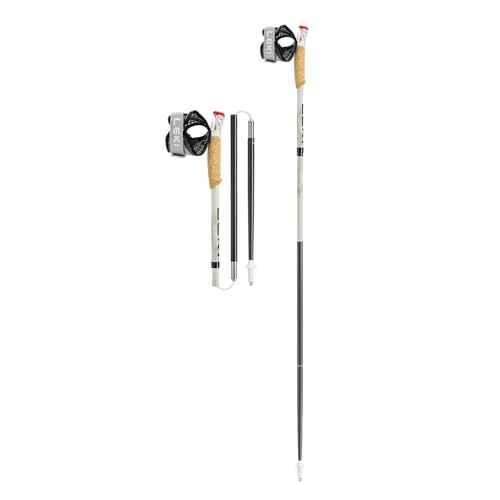
Folding trekking poles operate on a completely different mechanical concept than traditional multi-section telescoping designs. Rather than sliding inside one another, the three primary shaft sections link together via an internal tension cord, fitting into metal joint ferrules like tent poles. Tightening and locking a folding pole requires tensioning this internal cord until a spring-loaded metal lock button clicks out of the shaft.
To assemble these collapsible models, let the lower sections hang freely so the reinforced joints align naturally inside their receiving caps. Grab the shaft section just below the upper handle assembly and pull it firmly downward away from the grip. As you extend the tube, the internal tension cord tightens until a small silver or brass push button pops through a machined hole in the upper tube with an audible click.
If a folding pole feels loose, rattles at the joints, or collapses unexpectedly, the lock button has not fully seated into its locking aperture. On models like the Trekology Trek-Z Cork Grip Collapsible Lightweight, pulling the shaft until the metal lock button pops out is mandatory to lock the pole in place. When the assembly feels unstable, simply pull the shaft further down to re-seat the button until it completely engages the metal collar.
Diagnosing Sudden Shaft Collapse and Friction Loss
Experiencing an unexpected pole collapse during a technical descent is one of the most jarring surprises a hiker can encounter on the trail. While loose thumb screws are the most common culprit, microscopic layers of trail dust or moisture can dramatically lower friction between telescoping tubes. When fine rock dust coats smooth anodized aluminum, the clamping collar cannot generate enough surface friction to hold your downward weight.
Extreme temperature swings also impact clamp tension due to the natural thermal expansion and contraction of metals and polymers. An aluminum shaft tightened inside a warm vehicle or sunny trailhead will contract slightly when exposed to freezing mountain air or alpine snow. This slight metal contraction can loosen a borderline clamp, turning what felt like a secure lock into a slipping joint after only a mile of hiking.
Stripped adjustment hardware presents another mechanical failure point that mimics simple loose tensioning. If turning the knurled dial fails to increase clamping resistance, check the threads on the central bolt and receiving nut for metal shearing or rounded plastic teeth. Carrying a spare replacement cam lock collar or a compact multitool on multi-day wilderness treks ensures you can address hardware fatigue before encountering steep terrain.
Routine Maintenance and Trail Grit Removal
Proper maintenance prevents locking hardware from seizing up, slipping under load, or suffering from galvanic corrosion. After trekking through rain, deep mud bogs, or fine desert silt, always pull telescoping sections apart completely rather than storing the poles collapsed. Storing wet poles allows moisture to pool inside the aluminum tubes, causing white aluminum oxide crust to form and freeze the sections together.
Clean the exterior and interior of each shaft section using a dry lint-free cloth or a light damp wipe without harsh chemicals. Never apply WD-40, silicone spray, machine oil, or any other lubricant to trekking pole shafts or internal expander plugs. Lubricating the shafts destroys the exact friction required for cam locks and twist expanders to hold vertical weight, making the poles virtually impossible to tighten safely.
If an internal expander plug has accumulated hardened trail grit, rinse it thoroughly in clean water and scrub the threads with an old toothbrush. Allow all pieces to air-dry completely before reassembling the tubes and storing them in a cool, dry closet. Keeping the friction surfaces clean and bone dry ensures consistent clamping performance every time you adjust your poles on the trail.
Pre-Trail Load Testing and Safe Sizing Limits
Before trusting your full body weight to your hiking sticks on an exposed mountain trail, always conduct a static vertical load test. Stand on flat ground, place both tips firmly on the dirt, and lean heavily onto the grips with your full upper-body weight. If either shaft slips downward even a fraction of an inch, open the flip locks and tighten the knurled screws immediately until zero movement occurs.
Respecting the laser-etched height limit markings on telescoping sections is just as crucial for preventing structural failure. Every telescoping pole features a marked line that reads stop or max near the bottom of each extendable section. Pulling a shaft past this line leaves too little overlap inside the outer sleeve, creating extreme mechanical leverage that can bend the aluminum or shatter the clamp collar under heavy downhill impacts.
Balancing length adjustments between the middle and lower sections maintains balanced swing weight and structural stiffness. Rather than extending one section to its absolute limit while leaving the other fully collapsed, adjust both sections equally to achieve your target height. This distributed extension minimizes shaft flex, dampens trail vibrations, and spreads mechanical stress across multiple locking collars rather than overloading a single joint.
Securing Poles to Backpacks and Transport Best Practices
When scrambling across technical rock slabs or navigating overgrown brush, strapping your poles securely to your pack keeps your hands free and protects the hardware. Storing your gear safely on an iron frame backpack guide setup requires durable external tie-downs that keep loose shafts from bouncing around and snagging on low tree branches. Accessories like the 4pcs Climbing Stick Holder use elastic cords and sliding plastic buckles to strap collapsed poles tightly against side compression loops.
Tightening your poles down to their minimum collapsed dimensions is also essential when packing gear for airline flights and long-distance travel. Airline regulations and TSA security guidelines strictly prohibit sharp tungsten carbide tips inside carry-on luggage, meaning trekking poles must always be packed into checked bags. Reviewing a practical carry-on backpack sizing guide helps travelers understand pack capacity constraints when organizing gear for mountain journeys that require air transit.
Taking the time to master clamp tension, perform routine cleaning, and verify push-button engagement ensures your trekking poles remain dependable tools for years of adventure. Reliable locking hardware protects your joints, stabilizes your footing across loose scree, and provides trustworthy support on every demanding wilderness ascent. A few deliberate adjustments at the trailhead turn loose, frustrating shafts into rigid extensions of your stride.





Write Your Review
No reviews yet. Be the first to share your experience!