


Navigating rocky switchbacks and paved access trails puts immense friction on the lowest point of your hiking setup. Constant contact against asphalt, slick granite, or compacted gravel inevitably wears down protective rubber feet and exposes the underlying metal hardware. Learning how to change trekking pole tips before your next mountain outing preserves trail grip, protects fragile paths from rock scarring, and prevents jarring joint shocks from traveling up your arms. Regular maintenance keeps your gear functioning properly across varied wilderness terrain.
When rubber caps wear thin or pop off between boulder crevices, your poles quickly lose traction and stability on hard surfaces. Choosing the right replacement caps and maintaining secure friction on 11mm lower shafts ensures dependable third and fourth points of contact during technical descents. Pairing maintained gear with supportive trail clothing, such as specialized knee hiking pants, further cushions downward momentum and protects your joints over demanding backcountry mileage. Simple hardware upgrades can significantly extend the lifespan of your favorite hiking poles.
Pros
- Budget-friendly 6-piece bundle provides ample backup tips for long-distance hikes or multiple pairs of poles
- Universal 11mm inner diameter fits standard trekking poles and walking sticks
- Shock-absorbing rubber dampens impact and significantly reduces noise on paved or rocky terrain
- Simple push-on installation requires no tools or hardware
Cons
- Friction-fit rubber caps can be pulled off when wedged into thick mud, wet clay, or tight rock crevices
- The product specifications do not list an embedded metal washer, which may allow sharp metal pole tips to wear through over extended use
- Sized specifically for standard 11mm shafts and will not fit non-standard or oversized pole tips
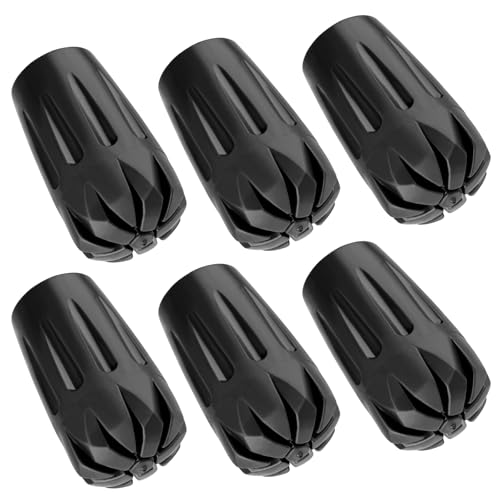
The AISUNOUTDOOR Trekking Pole Rubber Tips are replacement traction caps designed to fit standard 11mm hiking sticks, trekking poles, and walking canes. Sold as a convenient 6-pack, this accessory caters to day hikers, backpackers, thru-hikers, and trail walkers who need to replace missing or worn-down pole feet. Rather than replacing entire trekking poles when factory tips degrade, these push-on rubber caps provide an affordable way to maintain traction and extend pole lifespan across paved walkways, rocky switchbacks, and hardpacked forest trails.
Trail performance with rubber tips centers on surface traction and impact dampening. The manufacturer highlights an anti-slip textured bottom designed to give stability on slick surfaces such as wet pavement, smooth granite, concrete paths, and wooden boardwalks. By substituting bare carbide or tungsten pole points with rubber, these tips also reduce the sharp, repetitive jarring transmitted to the user's wrists, elbows, and shoulders. Furthermore, using rubber caps on popular trails helps prevent the loud metallic clicking sound of hiking poles while reducing surface scarring on sensitive rocks in national parks.
The tips are molded from black rubber engineered to withstand everyday abrasion on mixed terrain. According to the product specifications, the entire set weighs approximately 0.032 pounds, making individual caps virtually unnoticeable when stashed inside a backpack hip-belt pocket, top lid, or first-aid kit. The interior sleeve is sized for standard 11mm pole tips, using a snug friction fit that slides securely over the bottom shaft. While the rubber body offers shock absorption and road grip, the product listing does not state whether these caps contain an embedded metal washer to prevent sharp metal tips from puncturing through over long distances.
Installing and carrying these replacement tips is straightforward for any outdoor activity. Hikers can simply press the rubber caps onto clean pole ends until fully seated, requiring no tools, adhesives, or mechanical fasteners. Because rubber tips can occasionally loosen or pull free when stuck in sticky mud, wet soil, or deep gravel, carrying multiple spares from this 6-pack ensures uninterrupted support during multi-day backpacking trips. For routine care, rinsing dirt and grit from inside the sleeve after muddy outings will help maintain a tight friction grip against the pole shaft.
Despite their practical utility, these replacement tips have clear limitations that buyers should understand before heading into the backcountry. The push-on friction fit is susceptible to pulling off if a pole tip gets wedged between boulders, caught in tree roots, or buried in heavy clay. Additionally, because rubber is inherently softer than tungsten carbide, regular use on coarse asphalt and abrasive rock will eventually wear down the tread. Hikers with specialized, ultra-slim, or oversized trekking poles should also verify tip diameter, as an 11mm opening will not fit non-standard pole designs.
The AISUNOUTDOOR 11mm Trekking Pole Rubber Tips offer solid practical value for hikers seeking an economical way to maintain grip, dampen vibration, and protect trails. While aggressive backpackers navigating deep mud or technical talus will want to monitor their pole tips closely, this 6-pack provides ample backup caps for routine trail walking, road walking, and day hiking. If your current trekking pole tips are worn down to the metal or you need dependable spares for your gear closet, this set is a practical and budget-friendly upgrade.
The AISUNOUTDOOR replacement tips feature an interior sleeve designed specifically for standard 11mm trekking pole and walking cane tips. This 11mm inner diameter matches the industry-standard sizing used on the majority of telescoping and folding hiking poles available in the outdoor market.
Before purchasing, hikers should verify the tip diameter of their current poles, as non-standard ultra-light shafts or heavy-duty walking sticks may require different dimensions. The push-on friction fit allows users to swap worn tips in seconds without needing extra tools, glue, or clamps.
Rubber pole tips excel on hard, solid surfaces where bare metal carbide spikes tend to slip, vibrate, or make excessive noise. These tips provide dependable friction on paved paths, concrete steps, exposed rock slabs, and bridge decking, making them ideal for road walking, urban trails, and maintained park switchbacks.
To maintain a tight friction fit, remove the tips periodically to clear out trapped moisture, fine sand, and mud from the interior socket. Storing the spare caps in a dry pocket of your daypack or gear bag ensures you are always prepared if a tip is pulled off in wet soil or deep gravel.
Comprehensive Guide to Replacing and Maintaining Trekking Pole Tips
Knowing exactly how to service and swap the contact points of your hiking poles keeps your equipment safe and functional across varying landscapes. Trekking pole tips absorb direct ground impacts and grip uneven surfaces to keep your balance steady throughout demanding backcountry miles. Understanding the mechanical differences between friction-fit rubber caps and lower carbide flex housings lets you execute quick field replacements without damaging your poles.
Identifying When Trekking Pole Tips Require Immediate Replacement
Rubber accessories undergo continuous friction against abrasive surfaces like granite slabs, packed soil, and asphalt. Over multiple high-mileage outings, the tread pattern on the base of the cap thins out until the internal metal reinforcing washer becomes exposed. Once that inner washer cuts through the rubber base, the tip loses its traction properties and can begin clicking loudly against the ground. Inspecting the bottom profile of your rubber feet before each outing ensures you catch thin spots before the rubber fails entirely.
Worn tips drastically increase your risk of slipping during steep descents where reliable friction is mandatory. A rounded or bald rubber cap easily skates across wet river stones or slick sandstone, compromising your balance when you need stability most. In addition to traction loss, severely degraded caps transmit harsh shock waves through the pole shafts and directly into your wrists. Replacing worn accessories promptly restores steady grip and preserves the protective dampening properties that save your upper body from unnecessary fatigue.
Distinguishing Between Rubber Caps and Carbide Flex Tips
Every standard hiking pole features a multi-tiered tip design created for distinct trail environments and maintenance needs. The permanent base component is the carbide flex tip, which consists of a durable plastic sleeve housing a hardened tungsten carbide insert. Removable rubber caps, such as the standard accessories from AISUNOUTDOOR, slide directly over this carbide assembly. Understanding how these two layers interact allows you to adapt your gear quickly as the trail transitions from backcountry dirt to paved access paths.
Rubber tips serve as crucial protective covers that shield sensitive trail surfaces from severe mechanical damage. Bare carbide tips can scratch delicate alpine slickrock, puncture boardwalk planks, and leave permanent white scars on popular wilderness trails. Dense rubber caps also absorb high-frequency vibrations before they travel up the aluminum or carbon shafts into your elbow joints. The anti-slip tread on quality rubber covers grips slick urban walkways and damp rock shelves far better than smooth, unyielding metal points.
Removing Stuck or Worn Rubber Tips
Removing a standard rubber trekking pole tip usually requires nothing more than firm hand strength and proper leverage. Grasp the lower section of the trekking pole shaft firmly with one hand just above the plastic tip collar. Grip the rubber cap with your other hand, twisting it back and forth while pulling directly away from the pole end. Avoid bending the shaft at an angle during removal to prevent bending aluminum tubing or placing uneven shear stress on carbon fiber walls.
Trail grit, fine silt, and dried mud frequently work their way between the rubber cap and the plastic sleeve, causing the cap to seize in place. If a stubborn rubber cap refuses to twist free by hand, soaking the lower end of the pole in warm tap water for two minutes helps loosen trapped dirt. The warm water slightly softens the rubber compound and dissolves dried mud cakes inside the cavity. Once the debris softens, wrap a dry cloth around the rubber cap to gain extra traction and pull it free.
Cleaning and Inspecting the Exposed Shaft and Carbide Core
Taking off an old tip presents the perfect opportunity to clean and inspect the vulnerable components at the pole base. Accumulated dirt and moisture trapped beneath rubber caps create an abrasive slurry that accelerates plastic wear over time. Scrub away all grit, dried clay, and mineral deposits from the plastic flex sleeve using a damp rag or an old toothbrush. A clean mounting surface ensures that your fresh replacement cap seats securely without slipping off on the trail.
Examine the tungsten carbide insert embedded in the tip center to confirm that it remains tightly anchored. If the carbide point feels loose, wobbles inside its plastic housing, or exhibits severe fracture cracks, replacing only the rubber cap will not restore safe function. A compromised carbide core can shift unexpectedly under downward pressure and puncture straight through the base of a new rubber cover. Catching these structural defects early protects you from sudden traction failures during steep switchback descents.
Installing New Slip-On Rubber Tips for Maximum Retention
Installing replacement rubber caps is straightforward but requires deliberate technique to prevent accidental loss on muddy trails. Align the opening of the new cap with the tip of the pole, ensuring the accessory sits squarely on the central axis. Push the cap straight onto the tapered end using steady, centered pressure until you feel the interior shoulder meet resistance. Twisting the rubber slightly as you push downward helps the inner rubber walls slide smoothly over the exterior plastic ridges.
Once the cap is positioned on the pole end, you must drive it fully home against the internal metal stop. Place the pole tip vertically against a firm surface like a flat rock or a wooden deck and push down firmly with your upper body weight. You will feel the cap slide that final distance, completely seating the carbide point against the internal reinforcing washer. This firm mechanical seating prevents the sharp metal tip from shifting inside the cap during your first miles of hiking.
Replacing Press-Fit Carbide Flex Tip Assemblies
Replacing an entire press-fit carbide flex tip assembly is necessary when the plastic sleeve cracks or the carbide point wears down completely. Most reputable pole manufacturers utilize friction-fit or heat-bonded plastic sleeves that slide over the narrow lower end of the aluminum or carbon shaft. Because these assemblies are designed to withstand years of hard trail impacts, removing them requires controlled thermal expansion. Attempting to pry or twist a bonded flex tip off with pliers while cold can easily crimp or crack the underlying shaft.
Submerging the lower tip assembly in boiling water for approximately three to five minutes softens the factory adhesive inside the socket. Once the plastic and adhesive become pliable, grasp the tip with heat-resistant gloves or a pair of pliers and pull it straight off the shaft. To install the new flex tip assembly, apply a small bead of outdoor hot-melt adhesive to the bare lower shaft end. While the adhesive is warm, press the new flex sleeve firmly over the shaft end until it seats completely against the factory stop.
Matching Tip Dimensions and Compatibility Across Hiking Poles
Most modern trekking poles and walking sticks utilize a standardized taper with an approximate 11mm base diameter. Replacement caps, including the durable sets produced by AISUNOUTDOOR, are engineered to match this universal 11mm dimension. This standardization allows hikers to swap accessories across different pole brands without worrying about proprietary mounting clips. Checking your pole specifications or measuring the outer diameter of your existing tip collar confirms that universal 11mm accessories will fit snugly.
Proper tip maintenance is also essential for safe gear transport when preparing your pack for extended wilderness expeditions or flights. Sharp carbide tips can easily puncture luggage fabrics, tear tent walls, or pierce internal dry bags during transit. Capping your pole ends with thick rubber covers keeps your gear protected inside your pack, which is especially helpful when following a carry-on backpack packing guide for flights or bus travel. Keeping rubber caps installed during transit safeguards both your gear and other travelers from accidental punctures.
Terrain-Specific Tip Selection for Mixed Trail Conditions
Choosing the right tip configuration depends heavily on the specific ground surfaces you plan to encounter throughout your hike. High-altitude alpine trails composed of loose scree, talus, and broken granite require bare carbide tips for maximum penetration. The sharp tungsten point bites into microscopic fissures in solid rock, preventing the pole from skating away under lateral loads. In these rocky environments, rubber caps should be removed and stowed in your pack to avoid losing them in deep rock crevices.
Forest paths with exposed tree roots and slick wooden bog bridges call for durable rubber traction caps. Metal tips slip unpredictably on damp cedar roots and gouge deep cuts into wooden footbridges maintained by trail crews. Slip-on rubber feet conform to uneven contours, providing high-friction purchase on wet wood and polished river stones. The wide base and textured tread distribute downward force evenly, keeping your steps stable on wet boardwalks and pavement.
Trailside Troubleshooting and Preventing Lost Rubber Tips
The most common frustration hikers experience with slip-on rubber tips is losing them in thick, sticky mud bogs. Deep mud creates powerful suction around the exterior of the rubber cap as you step forward and pull the pole upward. If the suction force exceeds the internal friction holding the cap to the pole taper, the rubber foot pulls off and remains buried. To prevent this annoyance, take the rubber caps off and stow them safely whenever trail conditions turn into deep, muddy troughs.
Boulder fields and talus slopes present another mechanical hazard that frequently dislodges friction-fit pole accessories. When a pole tip wedges between two adjacent rocks, taking your next step exerts strong lateral leverage against the flexible rubber collar. This bending force easily rolls the cap off the shaft or slices through the side walls of the rubber sleeve. Carrying a multi-pack of replacement tips in your repair kit is an inexpensive way to ensure you never hike unprotected when unexpected losses occur.
Long-Term Maintenance and Tip Care for Extended Trips
Extending the working life of your trekking pole hardware requires simple post-hike maintenance after returning from the trail. Remove rubber caps after wet or muddy trips to allow trapped moisture to evaporate from the inner cavity. Leaving damp rubber caps on metal shafts can foster oxidation and trap grit that grinds down plastic sleeves over time. Rinsing both the tips and lower shafts under fresh water flushes away trail silt, salt, and abrasive minerals.
Store your replacement rubber tips in a cool, dry place away from direct sunlight and ozone sources when not in use. Extended exposure to ultraviolet light breaks down flexible rubber compounds, causing them to harden, crack, and lose their grip. Keeping spare tips stored inside a zip-top bag in your gear closet preserves the natural elasticity of the rubber material. Proper storage ensures your replacement accessories remain supple and ready to provide dependable shock absorption whenever needed.
Field Safety and Load Verification Before Steep Descents
Verifying that your newly installed tips are completely anchored is essential before stepping onto steep or technical terrain. Before descending, place both poles squarely on the ground and lean forward to apply your upper-body weight onto the grips. This load check verifies that the rubber cap will not twist, slide, or compress unevenly under real downhill stress. If you feel any rotation or slipping at the tip, press the pole down once more to ensure the inner washer is fully seated.
Never apply lubricants or oils to the shaft taper in an attempt to make sliding a tight rubber cap on easier. Oils completely eliminate the friction fit needed to retain the tip, causing it to spin or slip off at the slightest resistance. The natural suction and mechanical grip of a clean rubber interior against dry plastic provides all the holding power required. Keeping the contact points dry and clean ensures dependable stability when placing heavy body weight on your poles.
Mastering the simple process of changing and caring for your trekking pole tips ensures your gear remains dependable across every type of terrain. Whether you are sliding on durable 11mm rubber caps for shock absorption on hard pavement or maintaining a sharp carbide core for rocky peaks, proper maintenance directly improves your trail stability. Taking a few moments to inspect your tips before each adventure protects your joints, preserves delicate wilderness paths, and delivers secure footing on every journey.






Write Your Review
No reviews yet. Be the first to share your experience!