


Navigating rocky mountain switchbacks and loose scree requires gear that can withstand intense downward force without collapsing unexpectedly. Hikers seeking dependable stability often wonder where are black diamond trekking poles made when evaluating build quality and long-term durability. While Black Diamond Equipment designs and tests its gear at its global headquarters in Salt Lake City, Utah, the actual manufacturing of their aluminum and carbon trekking poles occurs primarily through specialized fabrication partners in Taiwan and China. Understanding these production roots helps hikers appreciate the balance between precision engineering, material sourcing, and trail performance.
High-strength aluminum shafts and cam-locking mechanisms must endure thousands of impact cycles over rocky paths to offload joint strain from tired knees and hips. Backpackers tackling steep terrain often combine reliable poles with hiking pants for knee support to maximize stability on rugged descents. With proprietary features like the dependable FlickLock clamping system and dual-density foam grips, Black Diamond maintains stringent quality standards across its overseas manufacturing facilities. Examining how these components are constructed provides valuable insight into why these poles remain a staple for multi-day wilderness backpacking trips.

Pros
- Sturdy aluminum shafts provide resilient support and resist bending under heavy pack loads
- FlickLock cam levers offer easy, non-slip adjustments even while wearing gloves or moving on trail
- Extended dual-density foam grip allows quick choke-up changes on short, steep switchbacks
- Includes carbide tips and low-profile trekking baskets for varied four-season trail conditions
- Manageable 1.07-pound weight per pair keeps swing weight comfortable on long-distance treks
Cons
- Collapsed length of roughly 27.2 inches requires external backpack attachment rather than internal packing
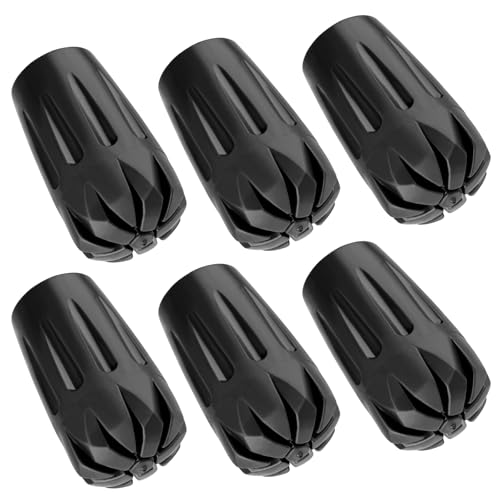
- Rubber tip protectors for pavement or slickrock are sold separately
- Heavier than specialized ultralight carbon fiber poles for hikers prioritizing minimal base weight
The Black Diamond Trail Trekking Poles are adjustable three-section aluminum hiking poles engineered for day hikers, weekend backpackers, and multi-day trekkers who need dependable stability across uneven ground. Equipped with an adjustment range of 100 to 140 cm, these poles suit a broad spectrum of hiker heights and trail angles. For backpackers carrying loaded packs, trekking poles serve as essential balance accessories that help distribute weight, reduce strain on knees and ankles during steep descents, and provide reliable anchor points on stream crossings or loose scree.
Trail performance centers on the rugged aluminum shaft construction and Black Diamond's proven FlickLock mechanism. Unlike internal twist-lock mechanisms that can freeze, slip, or seize when exposed to trail grit, the external FlickLock cam levers clamp down securely to prevent unwanted collapsing under full body weight. Making quick adjustments is straightforward, whether lengthening the shafts for a long technical descent or shortening them for an aggressive ridgeline climb. At approximately 1.07 pounds for the pair, the poles deliver a reassuring, solid feel without adding excessive swing weight to your stride.
Comfort and grip ergonomics are well-suited for high-mileage days. The upper handles feature dual-density foam that absorbs trail vibrations while preventing hot spots and hand fatigue in warmer weather. Directly beneath the primary handle, an extended foam choke-up sleeve gives hikers immediate alternative hand placements when tackling sudden steep switchbacks or traversing side-slopes, eliminating the need to stop and adjust pole length. Durable carbide Tech Tips provide aggressive bite on loose gravel, hardpack dirt, and wet granite, while the included trekking baskets prevent the poles from punching deep into soft mud or firm snowpack.
Integrating these poles with your hiking backpack is simple thanks to standard external attachment systems. When fully collapsed to roughly 27.2 inches, the poles slide easily into lower trekking-pole loops, side stretch bottle pockets, or side compression straps found on most daypacks and multi-day backpacking packs. Maintaining the poles between outings is low-maintenance: separating the three aluminum sections after wet or muddy hikes allows moisture to evaporate, preventing internal corrosion and ensuring the FlickLock clamps maintain consistent holding power season after season.
While the Black Diamond Trail poles deliver exceptional durability and stability, there are a few practical tradeoffs to note. With a collapsed length just over 27 inches, they do not pack down as compactly as folding Z-style poles, making them unsuitable for stowing inside small commuter daypacks or carry-on luggage. Furthermore, hikers looking for whisper-quiet grip on asphalt or delicate slickrock will need to purchase optional rubber tech tips separately, as only the carbide tips come standard in the package. Ultralight backpackers seeking the absolute lightest setup may also find aluminum shafts heavier than premium carbon-fiber alternatives.
For hikers and backpackers seeking a reliable, workhorse pair of poles that excel across rocky trails, seasonal weather, and demanding multi-day terrain, the Black Diamond Trail Trekking Poles represent a dependable, trail-tested investment. Their robust aluminum build, secure FlickLock adjustment, and comfortable choke-up foam grips provide practical, all-season trail confidence without the fragile handling concerns of ultralight composite materials.
The Black Diamond Trail Trekking Poles feature an adjustable length range spanning from 100 cm to 140 cm, easily accommodating a wide variety of adult hiker heights. To achieve proper ergonomics on level terrain, adjust the poles so that your elbow rests at a natural 90-degree angle when holding the grip. The external FlickLock cam levers allow each section to extend or collapse quickly with one hand, providing positive locking tension that holds firm under load.
On steep ascents, shortening each pole by 5 to 10 cm helps maintain forward momentum without hyper-extending your shoulders. Conversely, lengthening the poles by 5 to 10 cm on long downhill sections allows you to plant the tips ahead of your stride for controlled braking and knee relief. The built-in measurement markings on the shafts ensure you can reset your preferred trail lengths accurately in seconds.
With a collapsed length of approximately 27.2 inches, the Black Diamond Trail Trekking Poles are designed for external stowage on daypacks, overnight packs, and multi-day expedition backpacks. Most modern hiking packs feature lower trekking-pole tool loops paired with upper elastic bungee ties or side compression straps. Stowing the poles tips-down with the baskets secured in the lower loops keeps the carbide points safely oriented away from your body and gear.
When not in use on flatter stretches of trail, both poles can be collapsed together and secured on one side of your pack. Running the side compression straps through the wrist straps or around the foam choke-up sections prevents the poles from shifting or rattling against other gear. For packs lacking dedicated pole loops, sliding the collapsed shafts into a side water bottle pocket and cinching the upper side compression strap provides an equally secure carry solution.
Constructed from high-strength aluminum, the shaft sections of the Black Diamond Trail poles offer reliable resistance against trail impacts, shearing forces, and bending moments. Unlike carbon fiber, which can fracture unexpectedly when wedged between jagged rocks under heavy lateral loads, aluminum provides forgiving structural resilience that holds up under demanding backcountry use.
The dual-density foam grips resist breakdown from hand sweat and trail dirt, maintaining a non-slip texture throughout humid summer outings. The interchangeable carbide Tech Tips are built to withstand high abrasion from granite and gravel. To extend the working lifespan of your poles, periodically wipe the aluminum tubes clean of grit and inspect the FlickLock screws to maintain firm clamping pressure.
Understanding Black Diamond Trekking Pole Manufacturing and Trail Performance
Knowing where are black diamond trekking poles made clarifies how modern outdoor gear balances industrial manufacturing efficiency with rugged mountain safety. Black Diamond conducts its design, research, prototyping, and mechanical testing at its headquarters in Salt Lake City, Utah, while partnering with established Asian manufacturing facilities for mass production. This global production model allows the brand to utilize advanced aluminum extrusion, precision composite molding, and automated assembly techniques at scale. The resulting poles provide consistent vertical load resistance, dependable joint protection, and durable trail stability across varied four-season environments.
Global Manufacturing Footprint and Design Origins
Black Diamond Equipment established its alpine heritage in the Wasatch Mountains of Utah, where engineers and mountain athletes test prototypes across demanding rock and ice routes. Although early climbing hardware was forged in the United States, modern trekking pole production shifted to specialized Asian facilities, predominantly in Taiwan and China, several decades ago. These manufacturing centers specialize in advanced metal tube drawing, composite fiber weaving, and tight-tolerance injection molding for outdoor hardware. By maintaining a centralized engineering and warranty team in Utah, the company ensures that overseas production lines adhere precisely to strict alpine specifications and safety margins.
Overseas production allows outdoor companies to scale manufacturing while maintaining consistent batch quality across extensive global product lines. Advanced manufacturing hubs in Taiwan and China are recognized worldwide for excellence in aerospace components, sporting goods, and precision alloy fabrication. Black Diamond applies rigorous quality audits, raw material metallurgical verification, and mechanical stress evaluations before any production batch leaves the factory floor. This systematic oversight ensures that every telescoping section meets exacting dimensional tolerances, preventing loose joint connections or erratic clamp engagement on remote trails.
Shaft Metallurgy and High-Strength Aluminum Production
The shaft construction forms the structural foundation of any trekking pole, determining how the equipment handles vertical loads and unexpected lateral strikes. For models like the BLACK DIAMOND Trail Trekking Poles Aluminum, manufacturers utilize high-strength aircraft-grade aluminum tubing designed to balance lightweight handling with rugged impact resistance. Aluminum shafts undergo precision heat-treatment processes that substantially increase tensile yield strength while retaining sufficient ductility to prevent sudden brittle failure. This forgiving mechanical property is critical when a pole tip wedges between granite boulders under the momentum of a fully loaded backpacker.
During the extrusion process, raw aluminum billets are heated and forced through precision dies to form seamless cylindrical tubes with uniform wall thickness. Consistent wall dimensions prevent localized structural weak points that could buckle under heavy downward pressure during steep mountain descents. Following extrusion and tapering, the shafts receive durable anodized exterior finishes that protect the bare metal against moisture, trail grit abrasion, and environmental corrosion. This protective surface treatment also creates the ideal surface texture for external cam clamp collars to grip securely without slipping under vertical force.
The FlickLock Clamping System and Mechanical Reliability
External lever locks revolutionized trekking pole reliability by replacing finicky internal twist expanders with visible, low-profile cam clamps. Black Diamond pioneered this mechanical approach with its proprietary FlickLock mechanism, which uses an external camming lever to compress a collar evenly around the telescoping shaft. Because the locking force comes from external clamp compression, the system remains virtually immune to the internal silt buildup that frequently causes twist locks to jam or slip. Hikers can easily verify that the lever is fully engaged with a quick visual check, and the oversized cam profile operates smoothly even when wearing heavy winter gloves.
Temperature fluctuations and trail dust can cause subtle dimensional variations in both aluminum shafts and composite clamp collars over time. The FlickLock design includes a low-profile tension adjustment screw that allows hikers to recalibrate clamp holding force in the field without special tools. Tightening the adjustment screw slightly increases clamping pressure, ensuring zero vertical slippage even when carrying a heavy multi-day backpack across steep declines. Keeping this mechanism clean by occasionally brushing away trail dust prevents unnecessary abrasive wear on the cam hinge, pivot pin, and collar body.
Dual-Density Foam Grips and Ergonomic Control
Hand comfort plays a vital role in preventing blisters, palm fatigue, and repetitive joint strain during long-distance backpacking journeys. The BLACK DIAMOND Trail Trekking Poles Aluminum incorporate dual-density foam grips that cushion trail vibrations while offering a firm, tactile hold in wet or dry conditions. Closed-cell ethylene-vinyl acetate (EVA) foam resists water absorption, preventing the handles from becoming waterlogged, slippery, or heavy during sustained mountain downpours. The ergonomic grip contouring supports the natural anatomy of the palm, distributing downward pressure evenly across the hand to eliminate hot spots.
Traversing steep sidehills and scrambling over short rock steps often requires rapid hand repositioning without stopping to adjust pole length. An extended foam choke-up section located directly beneath the main handle allows hikers to grasp the lower shaft instantly on steep uphill pitches. This practical feature lowers the effective push point, maintaining efficient posture and proper balance without opening cam levers on technical terrain. Additionally, adjustable moisture-wicking wrist straps transfer downward force directly to the skeletal structure of the arm, dramatically reducing hand-grip strain over long mileage days.
Carbide Tech Tips and Ground Interface Hardware
The ground contact point of a trekking pole endures continuous friction and impact against granite slabs, mud, river cobbles, and compacted dirt. Black Diamond manufactures interchangeable carbide Tech Tips that deliver exceptional bite and slip resistance on bare rock and hard-packed alpine ice. Sintered tungsten carbide provides extreme hardness, ensuring that the sharp tip profile resists rounding over hundreds of rugged trail miles. The carbide points are housed within flexible plastic lower ferrules that absorb minor lateral deflections, protecting the main aluminum shaft from damaging bending stresses.
Modular hardware enhances seasonal adaptability, allowing hikers to switch quickly between standard low-profile trekking baskets and wide snow baskets for winter snowshoeing. The compact trekking baskets prevent the pole shafts from sinking deeply into soft loam, boggy mud, or talus gaps without catching on trailside brush. For hikers traversing paved road walks or sensitive sandstone trails, optional push-on rubber tips dampen metallic chatter and protect fragile surfaces from scratches. Inspecting tips regularly for wear and secure seating ensures consistent traction when descending loose scree or navigating slick creek crossings.
Quality Control Standards and Vertical Load Verification
Regardless of manufacturing location, structural integrity remains non-negotiable for mountain equipment that bears significant body weight. Black Diamond enforces strict laboratory and factory testing protocols to measure vertical clamp holding force and shaft deflection resistance. Before any production lot is cleared for international distribution, sample units undergo cyclic load testing to verify that cam locks maintain clamping pressure without creeping. These quality checks simulate the cumulative punishment of thousands of downhill footsteps on rough mountain trails, ensuring consistent performance for demanding hikers.
Hikers can easily perform a practical vertical load check at home or at the trailhead before starting a trek. Adjust the pole sections to your standard height, close the FlickLock levers firmly, and place both hands on the grips. Lean downward with substantial upper-body weight onto the poles on a flat, non-slip surface to verify that the telescoping sections do not slip downward. If a section slips even slightly, open the cam lever and tighten the adjustment screw clockwise a quarter turn before testing again.
Comparing Aluminum Durability and Carbon Fiber Failure Modes
Backpackers frequently debate whether to choose aluminum or carbon fiber trekking poles when outfitting for rugged backcountry routes. High-strength aluminum, such as that used in the Trail series, exhibits high ductile toughness, meaning it can absorb significant impact energy before deforming. When subjected to extreme lateral force in a rock crevice, an aluminum shaft typically bends rather than snapping instantly. In many backcountry situations, a slightly bent aluminum pole can be gently straightened by hand enough to remain functional until the trip concludes.
Carbon fiber poles offer featherweight swing weight and superior natural vibration dampening, making them favorites among ultralight thru-hikers and trail runners. However, carbon composite materials possess lower shear resistance and can fracture catastrophically when struck sharply by rocks or pinched in deep talus. Hikers carrying heavy packs or navigating off-trail boulder fields often prefer aluminum for its predictable failure behavior and rugged longevity. For those hauling expedition loads, reviewing our frame hiking backpack guide can help optimize weight distribution across both the pack frame and your trekking poles.
Field Maintenance and Hardware Care for Long-Term Durability
Routine care and simple field maintenance preserve the structural reliability of your trekking poles for years of demanding use. After hiking in heavy rain, river crossings, or muddy conditions, completely disassemble the telescoping sections by pulling them apart past their stop lines. Wipe away accumulated grit with a clean rag and allow the aluminum tubes to dry completely inside and out before reassembly. Storing damp poles with closed locks can cause galvanic oxidation, which creates white powdery aluminum oxide that binds the shafts and impairs smooth adjustment.
Never apply lubricants, grease, or WD-40 to the exterior surfaces of the telescoping aluminum shafts. Lubricants severely reduce the frictional grip of the FlickLock collars, causing the poles to slip under downward body weight and creating a potential fall hazard. If a cam lever becomes stiff or squeaks, apply a single drop of dry bicycle lubricant exclusively to the metal pivot pin, keeping the shaft tube clean and dry. Regularly inspect the plastic clamp collars for hairline cracks, especially after extended winter trips in sub-freezing alpine temperatures.
Packability, Travel Considerations, and Practical Trail Verification
Three-section telescoping poles collapse into a manageable length that stows securely on the exterior gear loops of standard hiking backpacks. However, travelers flying to trail destinations must remember that airport security agencies generally prohibit sharp carbide trekking poles in carry-on luggage. Packing your poles securely inside checked luggage alongside your tent stakes and pocket knife avoids confiscation at the security checkpoint. Hikers planning destination treks can consult our carry-on backpack sizing guide to coordinate gear packing strategies for flights and trailhead transit.
Before embarking on any major mountain route, always establish your correct baseline pole height on flat ground. Stand naturally with relaxed shoulders and adjust the upper shaft section until your elbow forms a clean ninety-degree angle when holding the grip. You can shorten the poles by five to ten centimeters for steep ascents or lengthen them accordingly for steep descents to maintain an upright torso. Taking time to verify these settings ensures maximum stability, knee impact relief, and dependable propulsion across every mile of rugged wilderness.






Write Your Review
No reviews yet. Be the first to share your experience!