


Gait stability, joint comfort, and balance confidence often depend on removing everyday physical distractions like restrictive clothing or binding waistbands. When people explore what are walking shorts, they usually want apparel designed specifically to allow natural knee flexion and unhindered leg movement during daily exercise or mobility training. Unlike rigid casual wear or restrictive trousers, walking shorts emphasize breathable fabrics, moderate inseam lengths, and practical pocket storage. Choosing the right cut ensures that individuals managing joint stiffness or working on gait cadence can move freely without excess fabric bunching around their knees. Exploring proper attire alongside supportive trail mobility pants gives active adults the physical freedom needed to maintain daily walking routines.
Proper lower-body attire also plays a subtle yet vital role for anyone using assistive mobility devices, such as single-point or offset walking canes. Loose or overly long pant legs can easily catch on wide quad cane bases, rubber ferrules, or stair risers, creating unnecessary tripping hazards. Understanding what are walking shorts helps walkers choose garments with streamlined profiles, secure drawstrings, and deep storage pockets that keep hands completely free to grip mobility aids. Whether recovering from orthopedic surgery or simply enjoying morning strolls around the neighborhood, the right combination of supportive shorts and balanced walking mechanics fosters long-term joint health and personal independence.


The Practical Guide to Walking Shorts, Biomechanics, and Everyday Mobility
Selecting appropriate clothing for walking requires evaluating how garment construction, fabric flexibility, and cut influence overall gait mechanics. Walking shorts provide a balance of thermal comfort and physical freedom, making them an ideal choice for exercise walks, physical therapy, and everyday mobility routines. By understanding the core functional attributes of these garments, individuals can choose apparel that supports their physical requirements while pairing seamlessly with necessary mobility equipment.
Defining Walking Shorts: Design, Inseam Lengths, and Cut Characteristics
Walking shorts represent a dedicated category of casual and athletic apparel engineered specifically for continuous, rhythmic lower-body movement. Historically linked to classic Bermuda styles, modern walking shorts typically feature an inseam ranging between five and nine inches, falling just above or directly at the knee. This specific length provides ample coverage while completely avoiding the hem drag and fabric resistance associated with standard trousers. Manufacturers focus on relaxed or tailored silhouettes that do not bind across the quadriceps or pinch the groin during forward hip flexion. For active adults and seniors, this balanced cut provides modest styling that transitions seamlessly from indoor living spaces to outdoor community pathways.
Designers achieve this functional balance by blending casual aesthetics with athletic performance features. For example, options like the COOFANDY Men’s Casual Shorts utilize a nine-inch inseam combined with slight stretch cotton fabric to maintain structure without restricting leg extension. Similarly, women’s styles often incorporate wide elastic waistbands that prevent slipping during prolonged standing or strolling. Unlike restrictive denim cutoffs or bulky cargo shorts, dedicated walking shorts minimize excess bulk around the hips and thighs. This streamlined profile prevents awkward friction between the legs, allowing users to sustain a smooth, uninterrupted gait cadence over extended distances.
Fabric Engineering: Moisture Management, Stretch, and Skin Protection
Material selection directly influences how comfortably an individual can walk, especially during warm weather or prolonged physical therapy sessions. High-performance walking apparel relies heavily on synthetic blends, such as polyester and spandex, which actively pull perspiration away from the skin. The MAGCOMSEN Women’s 5″ Hiking Golf Shorts showcase this approach with quick-drying, water-resistant fabrics that keep the wearer cool and dry. In addition to moisture control, many outdoor fabrics offer integrated UPF 50+ ultraviolet protection to shield delicate skin during midday walks. These technical properties reduce the likelihood of heat rash and chafing, which can otherwise force walkers to alter their natural stride.
Mechanical elasticity represents another critical pillar of modern walking shorts construction. Four-way stretch knits, found in designs like the G Gradual Women’s Bermuda Long Shorts, allow the garment to expand and recover dynamically as the leg moves through swing and stance phases. This multi-directional flexibility eliminates fabric tension across the patella during deep knee bends. Furthermore, flatlock stitching and smooth internal seams help prevent abrasive skin rubbing along the inner thighs. When clothing moves harmoniously with the body, walkers can concentrate entirely on posture, balance, and spatial awareness rather than garment discomfort.
Stride Biomechanics: Knee Flexion, Hip Extension, and Fabric Clearance
Human locomotion involves a complex, coordinated sequence of hip flexion, knee flexion, and ankle plantarflexion that demands unconstrained joint articulation. During a standard walking stride, the knee flexes roughly sixty degrees during the swing phase to ensure the foot clears the ground safely. Baggy pant cuffs or heavyweight fabric folds can create mechanical drag that subtly alters this natural swing clearance. Choosing lightweight, appropriately hemmed apparel eliminates unnecessary weight and friction around the lower leg. Individuals who prefer alternative leg coverage during cooler weather often explore lightweight walking pants to preserve this critical joint agility.
Proper hip extension during the terminal stance phase also depends on flexible garment construction. If a waistband pinches or a rear rise lacks adequate room, the pelvis may tilt forward prematurely to compensate for the tightness. This pelvic shift can place unnecessary strain on the lumbar spine and shorten the user’s overall step length. Walking shorts with elasticized waistbands and functional drawstrings adapt naturally to changes in abdominal pressure during movement. Maintaining an unhindered, symmetrical stride protects hip and knee joints from uneven impact forces over thousands of daily steps.
Assistive Mobility Synergy: Pairing Attire with Walking Canes and Quad Bases
For individuals utilizing mobility aids, lower-body clothing choices directly intersect with fall prevention and equipment handling. Standard single-point walking canes, offset handle canes, and wide-base quad canes operate in close physical proximity to the user’s lower legs. Wide, billowing pant legs can easily catch on the protruding legs of a quad cane or snag against a rubber ferrule during swing-through. Walking shorts completely eliminate this hazard by keeping fabric well above the lower calf and ankle area. This open clearance provides an unobstructed view of the ground, enabling users to place cane tips securely on solid, level surfaces.
Biomechanical principles dictate that a walking cane should be held in the hand opposite the weaker or injured leg to preserve a natural reciprocal gait. As the cane moves forward simultaneously with the affected limb, it offloads between fifteen and twenty-five percent of lower-extremity body weight. Having full visual feedback of knee alignment and foot placement allows both the user and supervising caregivers to monitor this coordination accurately. Clean hem lines ensure that the cane shaft never tangles with cloth during rapid corrections or emergency balance recovery steps.
Pocket Architecture and Hands-Free Safety for Balance Aid Users
Safe mobility device operation requires that both hands remain dedicated to primary tasks rather than carrying personal items. A user holding an offset cane or navigating with an ergonomic palm grip cannot safely juggle a smartphone, house keys, or wallet. High-quality walking shorts resolve this issue by integrating deep, secure pockets placed along the side seams or thighs. The G Gradual Women’s Bermuda Shorts Jersey Shorts, for instance, feature pockets deep enough to keep large smartphones firmly anchored against the hip. This secure positioning prevents items from bouncing vigorously or falling out during an active stride.
Zippered enclosures provide an extra layer of protection, particularly when navigating curbs, ramps, or uneven outdoor surfaces. The MAGCOMSEN shorts incorporate dual side zipper pockets and a rear zip compartment, locking essentials in place so the wearer never has to adjust shifting cargo. When personal belongings are secured against the pelvic girdle, the user’s center of gravity remains stable. Most importantly, keeping both hands unencumbered ensures a firm, uninterrupted grip on cane handles, handrails, or assistive grab bars at all times.
Inseam Selection: Evaluating 5-Inch, 7-Inch, and 9-Inch Profiles
Selecting the ideal inseam length depends on personal comfort preferences, joint mobility goals, and skin sensitivity requirements. A five-inch inseam, such as that found on active hiking shorts, offers maximum ventilation and uninhibited hip flexion. This shorter cut works well for individuals with full range of motion who prioritize lightweight agility during brisk warm-weather walks. However, shorter cuts provide less barrier protection against thigh friction, making them less ideal for individuals prone to chafing during extended walking sessions.
Seven-inch inseams provide a versatile middle ground that appeals to a wide variety of adult walkers. Falling roughly two inches above the patella, this length balances modest coverage with total knee clearance. Meanwhile, nine-inch Bermuda options, like the G Gradual 9″ high-waisted shorts, extend directly to the top of the knee. This extended coverage provides complete thigh protection, preventing friction burns while maintaining a relaxed, straight-leg profile. For structured social outings, classic options like Levi’s Women’s Mid Length Shorts offer a timeless denim silhouette while keeping the knee completely free to articulate.
Gait Training and Orthopedic Rehabilitation Considerations
Orthopedic rehabilitation following hip arthroplasty, knee replacement, or ankle reconstruction requires precise gait monitoring and joint assessment. Physical therapists routinely request that patients wear non-restrictive shorts during clinical therapy sessions. Clear exposure of the patella and surrounding musculature allows clinicians to observe quadriceps firing, knee extension deficits, and compensatory hip hiking. Patients wearing specialized supportive knee hiking pants or flexible walking shorts can perform therapeutic exercises without fabric binding against surgical incisions or compression sleeves.
Rehabilitation also demands sustained mental focus and emotional resilience when working through postoperative discomfort. Literary works such as The Bumps Are What You Climb On by Baker Books and A Short Walk Home from Hatherleigh Press emphasize perseverance through challenging physical trials. Pairing proper mindset with reliable apparel creates an environment where patients feel capable of rebuilding functional strength. When clothing supports rather than hinders the recovery process, users can focus entirely on achieving symmetrical weight distribution and regaining independent mobility.
Sizing Verification, Proper Cane Setup, and Clinical Transition Rules
Establishing proper cane dimensions remains just as critical as selecting appropriate walking attire for long-term mobility safety. To size a walking cane accurately, the user should stand erect while wearing their standard walking shoes with arms hanging naturally at their sides. The top of the cane handle should align directly with the user’s distal wrist crease or the greater trochanter of the femur. When grasping the handle, the user’s elbow should maintain a comfortable fifteen to twenty-degree bend. Setting the handle too high forces awkward shoulder hiking, while setting it too low induces forward trunk flexion and back fatigue.
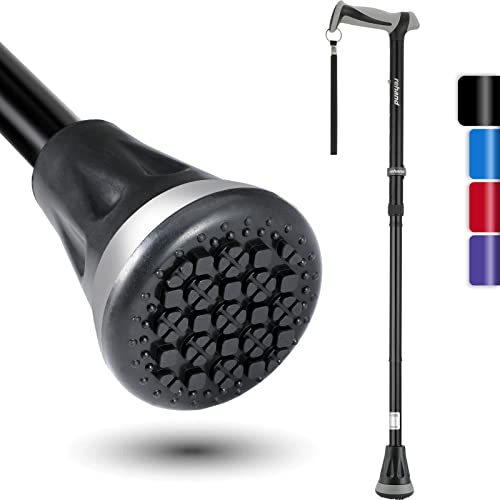
Navigating elevation changes also demands strict adherence to clinical sequencing to prevent catastrophic balance loss. When ascending a staircase, the user should step up first with the stronger, unaffected leg, followed by the cane and the recovering limb. When descending stairs, the sequence reverses completely: the cane and the affected leg step down first, followed by the stronger leg. Quad cane users must ensure that all four rubber feet rest squarely on the stair tread without overhanging the edge. Regularly inspecting rubber ferrules for worn tread grooves or cracked sidewalls guarantees dependable ground friction across all walking environments.
Finally, walkers and caregivers must recognize when a single walking cane no longer provides adequate balance support. If an individual experiences frequent near-falls, severe bilateral weakness, or persistent freezing of gait, upgrading to a four-wheeled rollator or standard walker becomes essential. Unilateral canes are designed solely for mild balance deficits and partial weight offloading up to twenty-five percent. Anyone experiencing progressive balance decline or acute joint deterioration should consult a licensed physical therapist or physician for a comprehensive gait evaluation and formal mobility equipment prescription.





Write Your Review
No reviews yet. Be the first to share your experience!