


Maintaining upright spinal alignment while offloading pressure from vulnerable knees and hips transforms daily walking into an active, low-impact exercise. Whether you need bilateral stability for neurological balance recovery or want to increase caloric burn through reciprocal arm movement, finding dependable gear requires knowing where to buy nordic walking poles that meet stringent durability standards. Specialized mobility retailers, dedicated fitness manufacturers, and verified online storefronts carry equipment ranging from rigid single-piece custom poles to compact telescoping balance sticks.
Selecting authentic equipment makes a noticeable difference in joint preservation, especially when paired with sensible foot gear and supportive knee apparel for walking. Substandard trekking sticks often lack the specialized ergonomic grips, secure wrist straps, and dense rubber asphalt paws necessary for urban pavement and indoor clinics. Investigating reputable retail sources ensures you receive properly rated poles that deliver reliable weight transfer and lasting mechanical security across every stride.


Navigating Retail Options and Sizing Standards for Nordic Walking Poles
Securing the right pair of walking poles starts with identifying trustworthy vendors that distinguish between general outdoor trekking gear and biomechanically engineered mobility poles. Traditional sporting goods outlets frequently stock backcountry hiking sticks, but those models feature simple loop straps and angled downhill handles rather than true Nordic fitness or orthopedic balance grips. Sourcing poles through specialized mobility outlets, official brand web stores, or authorized medical supply distributors ensures access to authentic designs engineered for joint offloading and gait retraining.
Direct Manufacturer Portals Versus Online Marketplaces
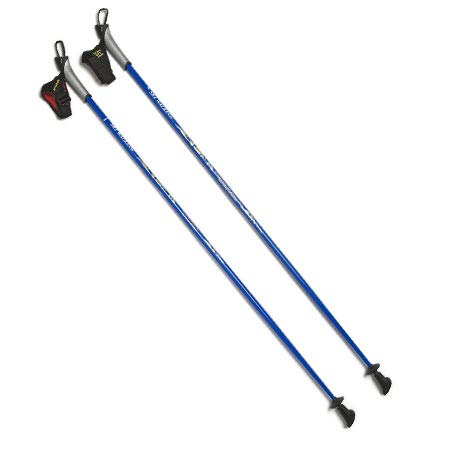
Purchasing directly through brand websites like the American Nordic Walking System, York Nordic, or Urban Poling guarantees product authenticity and factory customer support. Dedicated brand portals often provide specialized sizing services, such as ordering custom-cut single-piece Swix or Exel shafts matched precisely to your barefoot height. Direct ordering also allows you to select specific glove strap sizes ranging from small to extra-large, preventing the blister risks associated with generic one-size straps.
Major online marketplaces like Amazon offer rapid fulfillment, user feedback archives, and streamlined return policies if a pole length does not match your mobility requirements. When shopping on broad marketplaces, verify that the merchant is an authorized dealer or the manufacturer itself rather than an unverified third-party reseller. Legitimate brands provide detailed specifications regarding aircraft-grade 7075 aluminum or high-modulus carbon fiber construction rather than vague metal descriptions. Checking brand storefront credentials prevents accidentally purchasing low-grade novelty walking sticks that rattle under body weight.
Medical Supply Distributors and Specialty Rehabilitation Outlets
Specialty durable medical equipment stores and physical therapy clinics frequently stock dedicated balance poles like the Urban Poling ACTIVATOR or York Nordic Motivator. These clinical models cater specifically to patients recovering from hip replacement, knee arthroplasty, stroke, or Parkinsonian gait hesitation. Purchasing through rehabilitation-focused vendors often provides access to staff who understand weight-bearing restrictions and gait biomechanics. These clinical suppliers can demonstrate proper placement and adjust telescoping shafts before you take the equipment home.
Medical supply outlets also stock specialized replacement hardware such as bell-shaped rubber stability tips and wide-diameter ferrules that are rarely found in big-box sporting goods aisles. If your physical therapist recommends bilateral walking poles to replace a single cane, a medical distributor can verify that the poles feature tested weight-bearing ratings. Many rehabilitation facilities partner with regional medical equipment distributors to supply patients with approved poles directly during outpatient orthopedic therapy sessions.
Rehabilitation Poles Versus Traditional Fitness Walking Poles
Understanding the distinction between fitness poles and rehabilitation sticks is essential when selecting an online or retail vendor. Traditional fitness poles feature fingerless glove straps that physically attach your hands to the handles, allowing an open-palm backward push that engages upper-body musculature. This classic glove system maximizes cardiovascular exertion and core engagement during brisk outdoor fitness walks. However, active glove straps can pose fall hazards for individuals with balance instability because the hands remain anchored to the shafts during an unexpected stumble.
Rehabilitation poles, such as the ACTIVATOR series, replace glove straps with strapless ergonomic rubber handles featuring broad lower ledges. This strapless design allows users to offload substantial body weight directly through the heel of the hand while maintaining immediate release capability during a slip. The wide lower shelf supports the wrist in a neutral posture, reducing carpal tunnel pressure and eliminating thumb entrapment hazards. Choosing the correct handle style depends entirely on whether your primary objective is cardiovascular exercise or supervised orthopedic stability.
Fixed-Length One-Piece Shafts Versus Telescoping Lock Mechanisms
Rigid single-piece poles manufactured from carbon fiber or aluminum offer maximum structural integrity with zero internal joint vibration. Custom-fit one-piece poles eliminate the possibility of unexpected shaft slippage during weight transfer because they have no telescoping mechanisms. Athletes, fitness walkers, and individuals who do not need to pack their gear into compact luggage often prefer the silent, rigid feedback of one-piece construction. Vendors specializing in one-piece poles require your exact barefoot height to select the correct shaft length from dozens of pre-cut factory sizes.
Adjustable telescoping poles utilize external aluminum flip locks or internal push-button detents to accommodate multiple user heights and terrain gradients. High-quality telescoping models, like the York Nordic 7075 aluminum pairs, use lever-actuated clamp locks that provide secure friction without requiring painful hand twisting. Telescoping poles adjust smoothly between 32 inches and 54 inches, making them practical for households where multiple family members share equipment. Always inspect the clamp tension periodically to ensure the locking levers remain firmly seated under downward pressure.
Ultralight Folding Poles for Transit and Storage
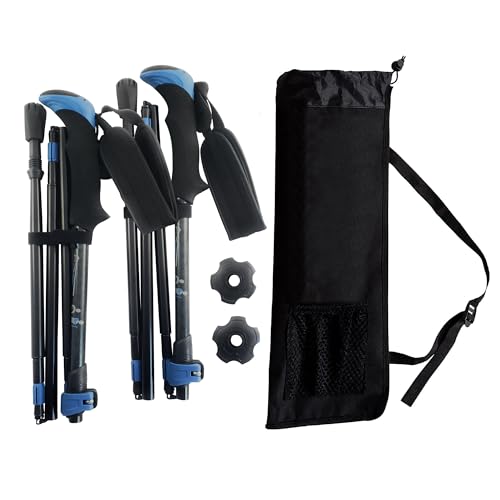
Travelers who frequently commute by bus, train, or airplane benefit from multi-segment folding walking poles that collapse into compact lengths. Folding models like the York Nordic Ultralight collapse down to approximately 13.5 inches, fitting neatly into standard tote bags and daypacks. When planning vacation transit, consulting a carry on luggage capacity guide helps verify that your collapsed poles and personal gear stow comfortably within overhead dimensions. The internal shock-cord system maintains tension across the joint sleeves, allowing quick assembly without tools.
Aircraft travelers must remember that airport security protocols generally require trekking poles and metal-tipped mobility aids to be stowed in checked baggage unless designated as assistive medical devices. Verifying the rigid lock security at each folding segment ensures the assembled shaft remains wobble-free under continuous ground contact. While folding poles provide unmatched portability, users requiring heavy vertical weight offloading should confirm that the model carries an adequate structural rating. Folding aluminum designs from York Nordic support up to 250 pounds, balancing travel convenience with dependable frame stability.
Grip Geometries and Thumb Joint Protection
Grip composition significantly influences hand comfort, skin friction, and wrist joint alignment during extended walking sessions. Natural cork grips absorb palm moisture effectively, maintaining non-slip traction during warm weather while molding slightly to hand contours over time. Soft-foam grip extensions beneath the primary handle provide secondary hand placement options when ascending steep slopes or navigating curb transitions. Budget poles constructed with hard, smooth plastics can create friction hotspots and exacerbate hand fatigue across long walking routes.
Patented ergonomic designs, such as the York Nordic Motivator grip, incorporate dual support zones that specifically protect the thumb carpometacarpal joint. By allowing the user to rest the thumb on top in a relaxed pinching posture rather than forcing a tight lateral fist grasp, these handles alleviate joint strain for walkers with osteoarthritis. Similarly, Urban Poling CoreGrip handles keep wrists in an aligned, neutral orientation to prevent nerve compression. Selecting the appropriate grip geometry ensures that your upper extremities remain comfortable throughout daily rehabilitation routines.
Footwear and Tip Traction Across Pavement, Dirt, and Indoors
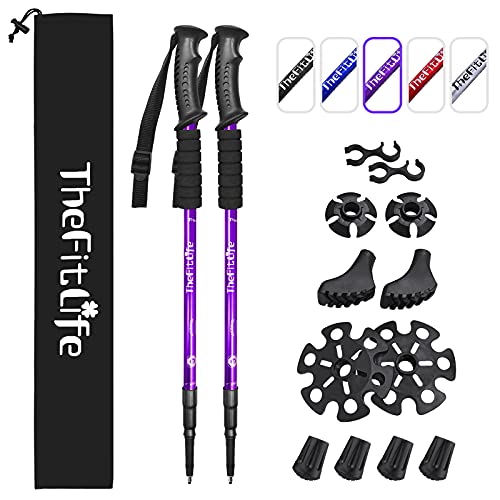
Nordic walking poles function across diverse surfaces thanks to modular tip systems that transition from hard pavement to soft earth. The base of the pole features a durable tungsten carbide metal tip that bites securely into natural trails, grass, gravel, and packed winter snow. For urban asphalt, concrete sidewalks, and indoor recreation tracks, removable angled rubber boot tips, often called asphalt paws, slide over the carbide point. Wearing breathable lightweight walking pants ensures full lower-body freedom of motion while you push through complete arm extensions across paved parks.
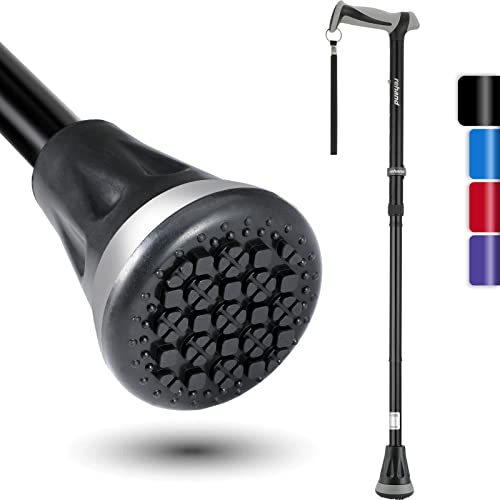
Angled rubber paws must face backward with the heel of the boot striking the ground first to propel the walker forward smoothly. For rehabilitation walkers using vertical downward pressure rather than backward propulsion, wide bell-shaped or round rubber tips provide superior slip resistance on slick indoor tiles and clinic hallways. Inspect the rubber tread regularly for signs of friction thinning or internal washer penetration. Worn rubber tips should be replaced promptly to prevent the hard metal core from scratching flooring or slipping unexpectedly.
Precise Sizing Calculations and Height Adjustment Procedures
Establishing accurate pole length is vital for maintaining natural walking cadence and preventing shoulder elevation. To measure pole height for active fitness walking, stand upright on a flat surface wearing your standard walking shoes with shoulders relaxed. Grasp the pole handle with the tip resting vertically on the floor beside your foot; your elbow should form a clean 90-degree angle. Alternatively, multiplying your total barefoot height in inches by 0.68 yields a dependable baseline pole length for classic fitness technique.
For rehabilitation and balance support, physical therapists often recommend setting poles slightly taller to provide greater upright stability and reduce forward spinal flexion. With balance poles like the ACTIVATOR, adjusting the shaft height so your elbow maintains a gentle 15- to 20-degree bend keeps body weight centered over the grip ledges. When setting telescoping models, ensure both poles are adjusted to identical height indicators and tighten the locking nuts firmly. Never extend telescoping shafts beyond the printed stop line, as insufficient tube overlap compromises structural rigidity.
Weight Bearing Capacities and Clinical Safety Boundaries
Verifying the certified weight capacity of walking poles ensures the shafts will safely absorb dynamic downward forces without buckling. Dedicated rehabilitation poles, such as the ACTIVATOR, offer a tested weight-bearing capacity of 200 pounds per individual pole, supporting users up to 250 pounds overall. Premium aircraft-grade 7075 aluminum models from York Nordic similarly support user weights up to 230 to 250 pounds. Using lightweight trekking poles lacking explicit vertical load ratings for post-surgical balance support risks sudden structural collapse.
Bilateral walking poles effectively offload 15% to 25% of body weight from the lower extremities, significantly easing stress on arthritic hip and knee joints. However, walking poles provide partial unilateral or bilateral assistance and cannot replace a rigid walker or rollator for individuals requiring non-weight-bearing recovery or severe balance stabilization. If you experience persistent gait freezing, profound lower-limb weakness, or vestibular dizziness, consult a licensed physical therapist or physician for a comprehensive gait evaluation before choosing mobility equipment.
Finding the ideal retail source for Nordic walking poles comes down to matching your personal mobility goals with verified product construction. Whether you select custom one-piece carbon shafts for brisk trail fitness or specialized ergonomic balance poles for joint rehabilitation, prioritizing structural integrity ensures dependable stability with every stride. Take time to measure your height accurately, verify weight limits, and choose rubber tips matched to your walking environment to enjoy safe, active mobility.





Write Your Review
No reviews yet. Be the first to share your experience!