


Maintaining solid floor traction is vital when relying on a mobility aid for daily balance, joint offloading, and fall prevention. Over months of steady movement across concrete sidewalks and slick tile, the bottom rubber ferrule naturally thins out, loses its anti-skid siping, and exposes the cane shaft to ground impacts. If you are wondering where can i buy rubber tips for canes, reliable replacements are readily accessible through dedicated medical supply retailers, neighborhood pharmacies, and leading online marketplaces. Choosing the correct replacement prevents dangerous slipping while preserving proper cane height and protecting joint comfort during recovery.
A worn walking cane ferrule can compromise up to 25 percent of your lower-extremity weight offloading capacity by sliding unexpectedly during forward weight transfer. Pairing a reliable walking aid with comfortable supportive joint apparel helps maintain stability while you navigate indoor thresholds and outdoor curbs. Knowing where to source heavy-duty rubber tips and how to match your cane shaft diameter ensures dependable traction every time you step outside. By inspecting your mobility equipment regularly, you can replace degrading parts before they compromise balance or cause joint strain.


A Complete Guide to Sourcing and Selecting Cane Rubber Tips
Locating suitable replacement tips for walking canes is straightforward once you know where to search and how to verify your equipment specifications. Replacement rubber ferrules are readily sold online through major retailers like Amazon, specialized medical supply companies, national pharmacy chains, and home healthcare distributors. While buying online provides access to diverse multi-packs from brands like Kotiorname, supregear, and Gadgetime USA, local brick-and-mortar pharmacies offer immediate pickup when sudden wear creates an urgent safety issue. Understanding the differences between purchasing channels, sizing formats, and structural reinforcements helps you secure dependable traction without wasting time or compromising your balance.
Where to Buy Cane Rubber Tips: Online vs. Local Retailers
Online shopping platforms offer the widest selection of replacement cane tips, allowing you to choose between various pack sizes, materials, and inner diameters. Marketplaces provide detailed customer feedback and cost-effective multi-packs, such as four-piece sets from OBTANIM or supregear, which are ideal if you want spare tips stored at home. Online medical equipment suppliers also stock specialized dimensions that may be difficult to find on local store shelves. The primary drawback of ordering online is transit time, which can leave you without safe mobility support if your existing ferrule is already damaged.
Local retail pharmacies, medical supply shops, and large supermarkets carry replacement cane tips in their home healthcare aisles. Retailers like Walgreens, CVS, Rite Aid, and Walmart typically stock universal 3/4-inch single-point tips for immediate in-person purchase. Visiting a physical store allows you to bring your cane along to check physical dimensions directly before paying. However, local stores often feature higher per-unit pricing and a limited selection that rarely includes 1/2-inch quad cane feet or reinforced heavy-duty models.
Measuring Cane Shaft Diameter for a Proper Fit
Determining the precise outer diameter of your cane shaft is the most critical step before placing an order. Most standard adult single-point canes, including standard aluminum telescoping models and wooden walking sticks, use a 3/4-inch (0.75-inch) bottom shaft diameter. In contrast, multi-prong quad canes and certain folding walking sticks frequently feature narrower 1/2-inch (0.5-inch) legs, such as those fitted with Gadgetime USA quad replacement tips. Installing a tip with an incorrect diameter creates severe stability hazards, as an oversized tip can slide off during mid-stride while an undersized tip cannot be installed.
To measure your cane accurately at home, remove the existing worn tip and use a standard ruler or caliper across the exposed bottom opening of the shaft. Measure straight across the outer edges of the tubing to determine the outside diameter rather than the internal wall thickness. If the existing tip is marked on the bottom or inner rim, look for embossed sizing indicators such as 3/4, 5/8, 7/8, or 1/2 inch. When measuring a wooden cane, verify that the shaft has not been tapered near the base, as custom cuts can alter the expected ferrule requirement.
The Critical Role of Internal Metal Reinforcement Washers
High-quality replacement tips feature a bonded internal metal washer or aluminum plate resting horizontally inside the rubber base. Heavy-duty options from brands like Kotiorname and supregear incorporate metal inserts designed to stop the hard bottom edge of the metal cane shaft from slicing through the soft rubber compound. Canes support substantial downward force during every step, transferring concentrated pressure through the narrow circumference of the tubing wall. Without an internal metal barrier, the metal shaft acts like a circular punch that quickly perforates unreinforced rubber.
Once the cane shaft breaks through the interior rubber base, the metal tube makes direct contact with the floor, destroying slip resistance and scratching finished flooring. A perforated tip also alters the structural balance of the cane, creating an uneven pivot point that can catch on floor transitions or exterior pavement expansion joints. When shopping online or in retail aisles, always inspect product descriptions to confirm the presence of a steel or aluminum reinforcing insert. Investing in reinforced rubber ensures consistent protection, extended product lifespan, and dependable shock absorption over thousands of walking strides.
Rubber Compounds, Tread Siping, and Surface Traction
The chemical composition of a cane tip directly affects its floor grip, impact cushioning, and wear resistance. Many premium tips use natural tire rubber compounds that provide supple, non-skid friction across polished hardwood, slick tile, and wet outdoor concrete. Other models utilize thermoplastic rubber (TPR), which offers firm structural resistance to abrasion and tearing on rough pavement, gravel, and asphalt. Natural rubber generally flexes more smoothly to absorb joint vibration, whereas dense synthetic blends may offer greater resilience against heavy friction wear.
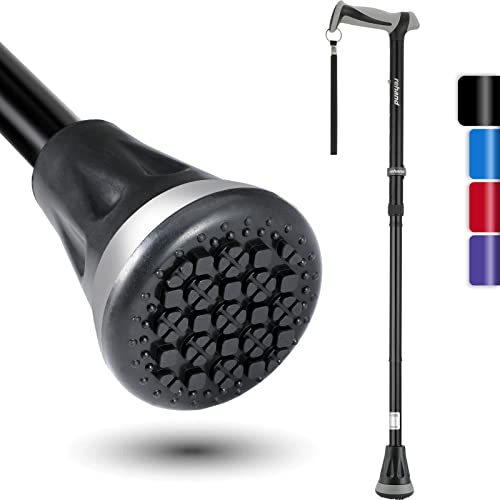
Base tread patterns and water-channeling grooves, often referred to as siping, are essential for maintaining grip on damp or smooth walkways. Products like the supregear 3/4-inch replacement tips incorporate raised base edges and textured contact points designed to channel moisture away from the ground contact area. A flat or completely smooth rubber surface can create an aquaplaning effect on wet bathroom tiles or polished marble lobbies, leading to sudden slip events. Deep grooves and concentric ring patterns maximize ground contact and deliver steady friction regardless of foot placement angles.
Single-Point Cane Tips Compared to Quad Cane Replacements
Single-point cane tips and quad cane replacement tips serve distinct mechanical purposes and cannot be used interchangeably. Single-point canes require broader rubber ferrules, often measuring 1.4 to 1.5 inches in bottom base diameter, to provide a stable, shock-absorbing platform for standard walking movements. Quad canes, by contrast, distribute weight across four separate downward-facing prongs that each require a smaller, dedicated 1/2-inch tip. Sets like the Gadgetime USA Quad Cane Tips provide four matched ferrules engineered to sit flush against the floor simultaneously.
Replacing tips on a quad cane requires renewing all four rubber feet at the same time to ensure equal ground height across the entire platform. If you replace only one or two worn feet, the quad base will rock unevenly, destabilizing your gait and creating dangerous trip hazards on thresholds. Furthermore, quad tips must be aligned so that the wide flat side of the base remains facing toward your body during walking strides. Maintaining balanced tread depth across all four contact points preserves the self-standing stability that makes quad canes beneficial for users managing severe balance instability.
Step-by-Step Procedure for Removing and Installing Cane Tips
Removing an old, tightly wedged cane tip can be challenging because dirt, moisture, and downward pressure create a tight vacuum seal over time. To remove a stubborn tip, grasp the cane shaft firmly with one hand while twisting and pulling the rubber base back and forth with your other hand. If the rubber refuses to budge, run warm tap water over the base for two minutes to soften the material and expand the seal. Avoid using petroleum-based lubricants or oils to loosen the tip, as residual grease will prevent the new replacement from gripping the shaft securely.
Installing the new replacement tip is a tool-free process that requires clean surfaces and firm downward pressure. Wipe the bottom of the cane shaft thoroughly with a dry cloth to eliminate any accumulated grit, rust, or moisture. Push the new rubber tip straight onto the shaft, then twist it gently until the cane tubing rests completely against the internal metal reinforcement plate. Finally, place the cane upright on a flat floor and lean your body weight down onto the handle to seat the ferrule securely into place.
Recognizing Wear and When to Replace Your Cane Tips
Regular inspection of your cane tip is a crucial habit for preventing sudden falls and maintaining steady walking mechanics. You should inspect the bottom ferrule at least once a month, checking for thinning tread grooves, deep cracks, and uneven wear angles. Users who drag their cane or walk with an asymmetrical gait often wear down the outer edge of the tip faster than the center. When tread grooves become smooth or the rubber hardens and loses its elasticity, slip resistance drops dramatically on polished indoor floors.
Immediate replacement is mandatory if you can feel the hard edge of the cane shaft pressing against the bottom rubber surface. Once the internal metal insert shifts or wears through, the tip loses its structural integrity and can tear open without warning. Additionally, if the cane tip begins wobbling or rotates loosely on the shaft, it must be swapped out right away. Keeping an inexpensive multi-pack of replacement tips in your home ensures that you can perform an immediate swap the moment safety concerns arise.
Biomechanical Alignment and Height Checks After Tip Replacement
Replacing a worn cane tip restores the proper height of your mobility aid, directly impacting your spinal posture and joint alignment. Over months of heavy use, a compressing rubber tip can lose up to a half-inch of height, causing subtle shoulder hiking or awkward forward bending. After putting on a new tip, stand upright wearing your normal walking shoes and let your arms hang relaxed at your sides. The top of the cane handle should align cleanly with the crease of your wrist or the greater trochanter of your hip joint.
When your hand rests comfortably on the handle, your elbow should form a natural 15- to 20-degree bend for optimal biomechanical leverage. Holding the cane in the hand opposite your injured or weaker leg allows you to transfer 15 to 25 percent of your body weight off the recovering limb. This contralateral positioning maintains a natural reciprocal arm swing and prevents compensatory strain on your lower back. If you notice persistent joint discomfort or wrist soreness after updating your tips, consult a physical therapist for a personalized gait assessment.
Daily Mobility and Travel Readiness with Spare Cane Tips
Active mobility aid users benefit greatly from carrying a spare replacement tip when commuting, dining out, or traveling away from home. Rubber tips can split unexpectedly when catching on rough gravel, metal sewer grates, or sharp outdoor curb transitions. Packing a compact backup tip alongside your folding travel cane inside practical carry on travel pack options ensures that you never get stranded with an unsafe walking stick. Preparedness gives you the freedom to navigate unfamiliar airports, transit hubs, and hotel environments with complete peace of mind.
Outdoor terrain requires constant vigilance regarding surface traction and equipment condition. Pairing dependable rubber cane tips with flexible lightweight walking pants allows for unrestricted leg movement and steady cadence across changing community pathways. Remember that rubber tips can become stiffer in freezing temperatures, which reduces their natural floor grip on icy patches and slick entryways. Taking shorter strides and keeping the cane tip planted firmly perpendicular to the ground minimizes slip risks when crossing unpredictable outdoor surfaces.
Clinical Recommendations and Knowing When to Transition
While fresh rubber tips restore traction, they cannot compensate for progressive neurological decline, severe muscle weakness, or worsening balance deficits. If you find yourself leaning heavily on your cane or experiencing frequent balance hesitations, a single walking aid may no longer provide sufficient stability. In such situations, transitioning from a single-point cane to a wide-base quad cane or a bilateral rolling walker offers greater stability and balance support. A licensed physical therapist or physician can conduct a formal gait evaluation to determine whether your mobility needs have evolved beyond a walking cane.
Safe mobility relies on proactive maintenance, correct equipment sizing, and strict adherence to established physical therapy principles. Sourcing durable, metal-reinforced rubber tips from reputable online suppliers or local pharmacies protects your joints and maintains dependable floor grip with every step. Taking the time to verify your shaft diameter, inspect tread wear, and replace degrading rubber ferrules ensures that your walking cane continues to support your daily independence safely and effectively.





Write Your Review
No reviews yet. Be the first to share your experience!