


Maintaining steady balance and reducing joint impact during everyday walking or outdoor excursions often comes down to fundamental technique. When individuals first pick up walking sticks or fitness poles to alleviate knee pressure or improve stability, hand placement is frequently overlooked. Learning how to hold walking poles correctly transforms a simple set of sticks into an active stability system that distributes weight away from tired knees and hips. Paired with appropriate footwear and trail pants designed for knee joint comfort, proper grip mechanics protect the delicate nerves in your palms while promoting an upright posture.
Many active adults and seniors turn to collapsible poles to regain walking confidence across paved neighborhood streets, gravel paths, and uneven park terrain. Holding the handles incorrectly can strain wrist tendons, cause blisters, and diminish the balance support that these mobility aids are engineered to provide. Understanding how hand straps cradle your wrist, how natural cork or EVA foam handles absorb palm sweat, and how an ergonomic grip offloads lower-body stress makes every outing significantly safer. With proper positioning, you ensure that every strike against the ground stabilizes your stride rather than jarring your upper body.

Pros
- Compact 15-inch folded size fits easily inside daypacks or stows neatly against backpack compression straps
- Aircraft-grade aluminum construction with reinforced metal joint caps offers reliable trail strength
- Moisture-wicking EVA foam grip and extended shaft sleeve provide secure handling during steep climbs
- External flip-lock mechanism allows quick, tool-free height adjustments between 100 and 120 cm
Cons
- Height range of 100 to 120 cm fits users up to 5'10", requiring taller hikers to select the longer pole size
- TSA regulations require folding trekking poles to be packed in checked luggage rather than airline carry-on bags
The Trekology Trek-Z Folding Trekking Pole set is a compact, tri-fold aluminum walking stick pair engineered for day hikers, backpackers, and active travelers who need dependable trail balance without taking up excessive pack space. Sized with an adjustment range of 100 to 120 cm, this specific model suits hikers between 4'11" and 5'10" who want an adjustable walking aid that easily stows on or inside a hiking backpack.
Collapsing down to just 15 inches (38 cm), the Trek-Z poles eliminate the awkward overhang common with traditional telescoping poles when strapped to backpack gear loops or slipped into stretch water bottle pockets. Weighing 10.4 oz (294 g) per pole, they offer solid ground support on ascents and descents while adding minimal base weight to your daypack or multi-day backpacking load. The included mud stops help prevent the tips from sinking into soft ground, making them useful across forest tracks, dirt trails, and wet crossings.
Built with aircraft-grade aluminum alloy tubing and reinforced joints fitted with metal lock caps, these poles are crafted to handle rugged trail conditions and repeated folding cycles. The ergonomic handle features moisture-wicking EVA foam that helps keep your hands dry during sweaty summer hikes. An extended EVA foam section down the upper shaft allows hikers to quickly choke up on the grip when climbing steep switchbacks without pausing to readjust pole height.
Deploying the poles involves snapping the folding sections into place and securing the top flip-lock mechanism, which provides 20 cm of micro-adjustment to dial in the correct 90-degree elbow angle. When you reach the trailhead or take a lunch break, unlocking the system allows the poles to quickly fold back down to 15 inches. Trekology includes a custom holder bag to shield the rest of your backpack contents from dirt and sharp tips during transport.
While the tri-fold aluminum design is versatile, buyers should be aware of a few practical constraints. Hikers taller than 5'10" will need the longer 115 to 135 cm version, as this model caps out at 120 cm. Additionally, for travelers heading to destination hikes via commercial airlines, TSA guidelines require trekking poles to be packed in checked baggage rather than carry-on luggage.
For day hikers, weekend campers, and budget-conscious backpackers seeking reliable walking support that packs down small enough for almost any daypack, the Trekology Trek-Z poles deliver practical utility and straightforward adjustment at an accessible price point.
A key advantage of the Trekology Trek-Z poles is their 15-inch (38 cm) collapsed length, making them significantly easier to carry than standard telescoping poles that often measure 24 inches or more when retracted. This short profile allows them to slide vertically inside a typical 20-liter daypack or tuck securely into the side water-bottle pockets of a backpacking pack without snagging low-hanging branches.
The included carry bag provides a clean barrier between trail mud and your gear, keeping the interior of your backpack dry and organized. Hikers who prefer external storage can easily lash the folded poles to standard pack compression straps, ice-axe loops, or trekking-pole attachments without throwing off the balance of their pack.
This 100 to 120 cm Trek-Z model is specifically tailored for hikers with heights between 4'11" and 5'10". Proper trekking-pole sizing generally requires your elbow to rest at a comfortable 90-degree angle when holding the grip with the pole tip resting on flat ground.
Height adjustment is controlled by an intuitive external flip-lock equipped with a metal stopper, offering 20 cm of variable adjustment. Hikers can shorten the poles slightly for steep uphill pushes or lengthen them for descents to maintain balanced posture on uneven terrain.
Constructed from aircraft-grade aluminum alloy, the Trek-Z poles balance structural rigidity with manageable trail weight. Aluminum is well-suited for rugged terrain because it tends to bend under extreme stress rather than snapping abruptly like ultralight carbon fiber.
Trekology reinforces the connecting joints with metal lock caps, reducing play and wobble across the tri-fold joints during heavy downhill impacts. The moisture-wicking EVA foam handles resist sweat buildup and provide soft, all-day hand comfort in varied weather conditions.

Pros
- Collapses down to a compact 15 inches, fitting easily inside backpacks or carry luggage bags
- Natural cork handles absorb hand perspiration effectively during strenuous hikes
- Sturdy aircraft-grade aluminum construction with protective metal caps at the folding joints
- Simple height adjustment between 110 cm and 130 cm via a sturdy metal flip lock lever
Cons
- TSA regulations require trekking poles to be packed in checked luggage rather than carry-on bags
- Users must verify the push-button lock is fully popped out to ensure shaft stability before hiking
- At 11.5 oz per pole, aluminum construction is heavier than ultralight carbon-fiber alternatives
The Trekology Trek-Z Cork Grip Collapsible Trekking Poles are three-section folding hiking sticks designed for day hikers, backpackers, and adventure travelers who require portable stability on uneven trails. Rather than using traditional telescoping designs that remain long when collapsed, these poles utilize a tri-fold folding cable system that stows down to a compact 15 inches. This makes them a strong match for hikers who prefer storing their poles directly inside a daypack or securing them flat against external pack compression straps without poles protruding past the top lid.
On trail, these poles offer an adjustable length range of 110 cm to 130 cm, covering a stated user height range between 5'2" and 6'5". Each pole weighs 11.5 oz (330 g), delivering a solid feel that helps distribute carried weight and stabilize joint impact on steep descents. The main handle is shaped from natural cork, which naturally absorbs hand moisture and sweat during warm trail outings. Trekology notes that the cork grips incorporate a slight rotational flex as an anti-torque ergonomic feature. Below the cork, secondary EVA foam grips allow hikers to quickly choke down on the poles when negotiating short, steep step-ups without adjusting overall pole length.
Build quality centers on aircraft-grade aluminum alloy shafts, chosen to withstand lateral loads and rocky terrain where brittle materials might crack. To reinforce high-stress connection points, Trekology adds metal caps around the folding joints, reducing play once the poles are deployed. Extension and length adjustments are secured using a durable metal flip lock at the upper section, ensuring reliable clamping power once clamped to the hiker's preferred height marker.
Deploying the poles requires extending the folding sections until the internal tension cable pulls tight and an internal metal lock button pops through the shaft hole. Ensuring this button is fully seated is essential for complete structural rigidity before latching the upper flip lock. For transport, collapsing the poles takes seconds, allowing both poles to slip neatly into the included storage bag. When traveling by commercial air to hiking destinations, keep in mind that TSA and airline policies classify trekking poles as checked luggage, meaning they must be stowed inside checked duffels or backpacks rather than overhead carry-on bags.
While the folding mechanism provides impressive packability, the design does present a few practical limitations. The total adjustment range is 20 cm (110 to 130 cm), which may not suit hikers under 5'2" who require a shorter pole setup. Additionally, at 11.5 oz per pole, weight-conscious thru-hikers aiming for sub-pound base weights might find aluminum folding poles heavier than fixed-length carbon options. The locking button also requires careful initial alignment during assembly to ensure the segments seat properly without wobbling.
For hikers, backpackers, and travelers seeking dependable trail support without spending top-tier outdoor brand prices, the Trekology Trek-Z Cork poles offer exceptional value. The combination of sweat-wicking cork handles, reinforced aluminum joints, and an ultra-packable 15-inch folded size makes them a versatile accessory for everything from local forest walks to rugged mountain backpacking trips.
The Trekology Trek-Z poles adjust between 110 cm and 130 cm in length, accommodating hikers measuring roughly 5'2" to 6'5" (159 to 195 cm) in height. Length adjustments are managed via a metal flip lock clamp on the top shaft section, allowing users to fine-tune height based on trail slope or individual arm ergonomics.
Hikers shorter than 5'2" may find the minimum 110 cm setting too tall for standard 90-degree elbow positioning on level terrain. Always confirm that your forearm rests parallel to the ground when holding the cork grip before clamping the metal flip lock.
Thanks to a three-piece folding design, the Trek-Z poles collapse down to just 15 inches (38 cm) in length. This compact size allows them to fit horizontally or vertically inside most standard daypacks, carry duffels, or luggage cases without hanging loosely off external attachment points.
The poles come with a dedicated carry bag to keep trail mud and dust away from clean gear inside your backpack. Hikers traveling by air should remember that TSA guidelines prohibit trekking poles in carry-on baggage, requiring these poles to travel inside checked luggage.
The pole shafts are manufactured from aircraft-grade aluminum alloy, delivering reliable strength-to-weight performance and high resistance to bending stresses on demanding rocky routes. The connection joints are strengthened with metal caps to guard against joint wear and slippage over time.
The handles feature genuine cork, which helps manage perspiration and adapts comfortably to hand pressure over long miles. A secondary EVA foam grip sits directly beneath the cork for quick hand repositioning on steep gradients without stopping to change shaft length.

Pros
- Lightweight 3K carbon fiber construction reduces carried and swinging weight to 7.6 ounces per pole
- Metal flip locks offer secure, slip-resistant tension compared to traditional twist-lock mechanisms
- Ergonomic cork handles paired with secondary EVA foam grips provide versatile hand positioning on varying trail grades
- Wide 24-inch to 55-inch adjustment span suits a diverse range of user heights and terrain angles
Cons
- Carbon fiber shafts can fracture if wedged between rocks and subjected to severe lateral bending forces
- Collapsed length of 24 inches may extend beyond the top or bottom of ultra-compact daypacks when mounted externally
- Metal flip lock levers require occasional thumb-screw tension checks to prevent slippage over extended mileage
The Hiker Hunger 100% Carbon Fiber Trekking Poles are adjustable three-section telescoping trail poles built for day hikers, section hikers, backpackers, and campers seeking to shed weight without giving up stability. Constructed from 3K carbon fiber, each pole weighs approximately 7.6 ounces, making them an excellent choice for hikers looking to reduce joint impact on rugged trails while keeping their base gear manageable.
In terms of trail adjustment, these poles expand from a compact 24 inches up to a full 55 inches, comfortably serving both shorter and taller hikers across diverse terrain grades. Rather than relying on twist locks that can slip or freeze when exposed to dirt and moisture, Hiker Hunger equips these poles with quick-adjust flip locks built with metal hardware. This provides firm, slip-resistant clamping whether you are lengthening the poles for a steep downhill descent or shortening them for an aggressive ridge climb.
Grip comfort is a primary design focus, featuring ergonomic natural cork handles that actively wick moisture away from your palms while molding to your hand shape over time. Directly beneath the cork handles, secondary nonslip EVA foam extensions provide an immediate choke-down point for short, steep switchbacks, eliminating the need to stop and adjust pole length. Soft neoprene-padded wrist straps further enhance comfort, distributing downward pressure across your wrists without causing chafing during long mileage days.
Transporting and maintaining these poles on the trail is straightforward. When not in use, the shafts collapse down to 24 inches, allowing them to nest securely into side water bottle pockets, slide behind backpack compression straps, or strap onto front trekking-pole attachment loops. Maintenance involves basic trail hygiene: simply wipe away grit and moisture after wet outings and periodically check the thumbscrew tension on the metal flip locks to preserve optimal clamping force.
While carbon fiber provides exceptional weight savings and natural vibration damping, it behaves differently than aluminum under severe lateral stress. If a carbon pole becomes trapped between roots or granite boulders and is subjected to heavy sideways leverage, it is susceptible to cracking or snapping rather than bending. Additionally, hikers using compact daypacks under 20 liters should note that the 24-inch collapsed height will protrude somewhat above the pack rim when lashed to external straps.
For day hikers, multi-day backpackers, and travelers seeking an agile pair of poles with natural cork ergonomics and durable metal locking mechanisms, the Hiker Hunger Carbon Fiber Trekking Poles represent strong trail value. Backed by a 1-year warranty and a USA-based company, they provide dependable knee-saving support and steady balance across varied backcountry trails.
The Hiker Hunger trekking poles feature a telescoping three-section shaft that adjusts smoothly between 24 inches and 55 inches. This expansive range accommodates men, women, and younger hikers across flat paths, steep alpine ascents, and knee-jarring descents.
Length adjustments are secured using external flip locks equipped with metal levers. Unlike plastic components that can warp or weaken over time, the metal locking mechanism maintains consistent clamping pressure against the carbon fiber sections to help prevent unexpected slippage while hiking under load.
Constructed entirely from 100% 3K carbon fiber, these poles offer high tensile strength and natural vibration absorption while weighing only 7.6 ounces per pole. This lightweight profile substantially lowers the energy required per arm swing over long trail days.
The upper handle combines natural moisture-wicking cork with dense EVA foam for the lower grip extension, providing comfortable handholds in both warm and cold weather. To maintain the structural integrity of carbon fiber, hikers should avoid using the poles as pry bars and keep the locking collars clean of trail debris.
With a collapsed length of 24 inches, these poles integrate easily with standard hiking daypacks and multi-day backpacking packs. They can be threaded through dedicated lower trekking-pole loops, secured via upper bungee cords, or held fast by side compression straps.
For travel or public transit to the trailhead, the 24-inch collapsed size allows the pair to fit inside standard checked luggage or across larger duffel bags, keeping your trail gear neatly consolidated between outings.
Proper Grip Mechanics and Technique for Walking Poles
Mastering how to hold walking poles begins by recognizing that your hands should guide the poles rather than clench them. A proper grip channels body weight through the structural wrist straps directly into the shafts, relieving strain on your fingers, wrists, and forearms. When your grip technique aligns with your natural gait, walking poles provide rhythmic balance and reduce repetitive impact on lower-body joints. Developing this habit early ensures that every walk feels stable, fluid, and energizing.
The Essential Wrist Strap Technique: Feeding from the Bottom Up
The most common mistake beginners make is sliding their hands straight down into the wrist straps from the top. Correct technique requires bringing your hand up through the bottom of the strap loop before grasping the handle. Once your hand passes through from underneath, spread your thumb and fingers wide and pull down so the webbing rests snugly against the back of your wrist. This creates a supportive sling that transfers downward pressure across the heel of your hand rather than forcing your fingers to squeeze tightly.
When your hand rests inside the strap correctly, the webbing should lie flat across your palm and the base of your thumb. You can open your fingers almost completely while swinging the pole forward, and the pole will remain securely aligned with your arm. This bottom-up configuration prevents the pole from slipping out of your grasp if you stumble or encounter loose gravel. It also allows you to push off backward with minimal hand effort, using your triceps and core muscles instead of straining your forearms.
Adjusting the strap tension is just as critical as the entry angle. If the loop is too loose, the strap cannot support your weight, forcing you to grip the handle with excessive muscular tension. Conversely, an overly tight strap restricts blood flow, causes friction hotspots, and pinches the ulnar nerve near the wrist crease. You should tighten or loosen the strap until it holds the handle comfortably against your palm with your fingers lightly relaxed around the shaft.
Grip Pressure and Wrist Alignment: Preventing Joint Strain and Fatigue
Maintaining a relaxed, loose grip is essential for preventing repetitive strain injuries during extended walks. Clenching the handle in a white-knuckle grasp tires out the small muscles in your hands and can trigger carpal tunnel symptoms or forearm cramps. Think of holding the grip with the gentle pressure you might use to hold an egg or a soft fruit. Your hand is primarily responsible for steering the pole, while the strap and shaft handle the downward load.
Your wrist should maintain a neutral, straight alignment that continues the natural line of your forearm. Bending your wrist backward or flexing it downward under heavy pressure creates excessive shear forces across the carpal bones. If you notice your wrist cocking at an unnatural angle during forward strikes, you may need to adjust your strap length or pole height. Keeping the wrist neutral ensures that impact shock travels evenly through your skeletal structure rather than straining soft connective tissues.
For walkers who experience arthritis in the knuckles or basal thumb joints, an ergonomic grip with subtle finger grooves or an angled head can make a dramatic difference. Many modern poles feature handles angled forward by ten to fifteen degrees to accommodate the natural resting angle of human wrists. This subtle tilt reduces radial deviation and helps individuals with limited grip strength maintain continuous support without pain. If joint tenderness persists, swapping to a thicker padded strap can also distribute pressure over a broader surface area.
Adjusting Pole Height for a Balanced 90-Degree Elbow Angle
How you hold your walking poles depends directly on where the handles sit relative to your body height. On flat, level ground, your poles should be set so that your elbows rest at a clean 90-degree angle when holding the grips with tips resting on the dirt. Your upper arms should hang naturally at your sides without your shoulders hunching upward or slouching forward. This right-angle geometry optimizes mechanical leverage and allows your arms to absorb shock efficiently.
Sizing poles requires standing on a level floor while wearing your standard walking shoes. Release the flip-lock levers on each shaft section, adjust the telescoping segments equally, and check your arm angle in a mirror or with the help of a partner. Aircraft-grade aluminum and carbon fiber models usually offer laser-etched height markings in centimeters to simplify equal adjustment across both poles. Secure the metal lock caps firmly so the telescoping joints do not slip downward when you lean into the handles.
If your poles are set too tall, your hands will rise above your elbows, forcing your shoulder muscles into constant tension. This elevation can cause neck stiffness, trapezius fatigue, and awkward pole planting that disrupts your walking rhythm. If the poles are adjusted too short, you will find yourself leaning forward excessively, rounding your spine and compromising your posture. Take the time to verify your 90-degree elbow benchmark before starting every outing.
Adapting Your Hand Hold on Uphill and Downhill Slopes
Changing terrain requires you to modify your hand placement to maintain balanced posture and stable ground contact. When you approach a steep incline, holding the tops of the handles can cause your arms to lift uncomfortably high. Many poles feature extended EVA foam sleeves located directly beneath the primary handle for this exact reason. Slipping your hands down onto these secondary foam grips allows you to push uphill effectively without pausing to readjust the telescoping shafts.
When climbing steep grades, slip your hands out of the wrist straps before using the lower foam grips. Using the straps while choking down on the shaft restricts mobility and can entangle your wrists if you lose balance on steep rocks. Gripping the mid-shaft foam directly keeps your center of gravity forward and allows your leg muscles to drive upward with arm assistance. Once you crest the hill and return to flat ground, slide your hands back into the straps from the bottom up.
Descending steep hills presents a completely different mechanical challenge that requires adjusting your grip to the top of the handle. Instead of wrapping your fingers around the shaft, cup the rounded pommel or knob of the handle in the palm of your hand. This technique, known as palming, allows you to plant the poles slightly forward and bear downward weight without bending your wrists backward. If the descent is long, consider lengthening your poles by five to ten centimeters to maintain an upright torso and protect your knees.
Natural Cork Versus EVA Foam Handles: Grip Texture and Moisture Control
Handle materials play a significant role in hand comfort, skin friction, and overall grip security. Natural cork handles are popular among long-distance walkers because cork naturally wicks away moisture and resists sweat buildup. Over weeks of consistent use, natural cork gradually molds to the distinct contours of your fingers and palm, creating a tailored contour. Cork also provides excellent vibration dampening, shielding your hands and wrists from harsh trail impacts.
Some cork handles feature a small amount of rotational flex engineered into the core to absorb torque during ground strikes. This slight movement is an anti-torque ergonomic feature that cushions joints rather than a manufacturing defect. For hot summer walking, cork remains cool to the touch and prevents the slippery sensation common with basic plastic or rubber handles. Its textured surface minimizes blisters, making it an excellent choice for individuals with sensitive skin.
High-density EVA foam handles offer another compelling option, particularly for walkers who prioritize soft cushioning and lightweight performance. Foam grips absorb sweat effectively, keeping your hands dry in humid climates while offering a soft, forgiving texture. Unlike cork, EVA foam does not conform to hand shapes over time, but it provides consistent cushioning across all weather conditions. Models that pair an upper cork or foam handle with an extended lower EVA grip give you the greatest versatility across changing trail grades.
Coordinating Arm Swing and Reciprocal Foot Cadence
Holding your walking poles correctly only delivers benefits when paired with a natural, reciprocal walking cadence. In standard walking mechanics, your opposite arm swings forward with your opposite leg in an alternating rhythm. When your left foot steps forward, your right arm swings forward to plant the right pole tip near your heel strike line. This reciprocal motion mirrors your body’s natural gait pattern, promoting spinal rotation and core muscle engagement.
The angle of your pole plant significantly influences how much forward momentum you generate. Plant each pole at a slight backward angle, roughly 45 degrees relative to the ground, rather than dropping it vertically or reaching too far ahead. Planting the tip behind your lead foot allows you to push backward against the ground through the wrist strap, propelling yourself forward. Reaching the pole too far forward creates a braking action that jars your shoulders and slows your walking speed.
Keep your arms swinging close to your body rather than letting your elbows flare outward like wings. Flaring your arms wastes energy, destabilizes your balance, and increases the likelihood of tripping over your own pole tips. Let your wrists flick forward naturally as the pole swings through, keeping your shoulders relaxed and down. With practice, the rhythm becomes automatic, transforming walking into a smooth, full-body exercise that enhances cardiovascular fitness.
Walking Poles Versus Single-Point Medical Canes: Knowing the Differences
It is critical to distinguish fitness walking poles from clinical mobility aids like single-point walking canes, quad canes, or bariatric support sticks. Walking poles are designed to be used in pairs by active adults to improve posture, provide mild balance support, and reduce joint wear by fifteen to twenty percent. They rely on an upright posture and alternating arm swing to enhance stability across outdoor terrain. However, they are not certified medical devices engineered for concentrated, unilateral body weight offloading.
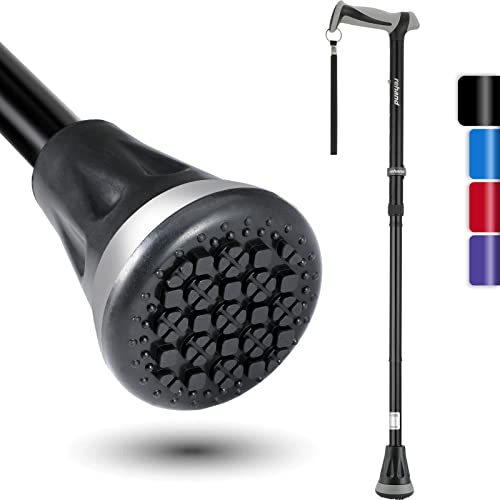
Clinical walking canes are built to transfer fifteen to twenty-five percent of an individual’s total body weight away from an injured or weak leg. A medical cane features an offset handle or ergonomic palm grip positioned directly over a rigid vertical shaft to support substantial downward forces. Canes are held in the hand opposite the affected limb and remain planted firmly on the floor during weight-bearing steps. Individuals recovering from hip replacements, knee surgeries, or severe balance disorders require the structural support of a dedicated cane rather than flexible walking poles.
If you experience significant balance instability, frequent falls, or severe lower-extremity weakness, consult a licensed physical therapist or physician for a professional gait evaluation. A clinical specialist can assess your mobility needs and determine whether a single cane, a quad cane, or a bilateral walker is necessary for safe ambulation. Walking poles should never replace prescribed medical aids when navigating indoor spaces, slick bathroom tiles, or steep residential stairs where certified load capacities are required.
Travel Storage, Airline Luggage Rules, and Lock Maintenance
Modern collapsible walking poles utilize tri-fold retractable designs that fold down to roughly 15 inches (38 cm) for effortless transit. This compact footprint allows active adults and seniors to stow their poles inside daypacks, duffel bags, or car trunks when running errands. If you plan to fly with your equipment, consult a carry-on travel pack capacity guide to plan your luggage packing efficiently. Remember that transportation security regulations prohibit trekking poles in passenger carry-on bags, meaning you must pack them securely in checked luggage.
Maintaining the locking hardware on your poles ensures that the shafts remain rigid and dependable under load. Most folding models feature an internal tension cord paired with an upper quick-adjust flip-lock system. When assembling tri-fold shafts, pull the upper section firmly until the spring-loaded metal lock button clicks outward into place. If the shaft feels loose or wobbles at the segment joints, verify that the locking pin is fully engaged before applying weight to the handles.
Periodic inspection of the metal flip-lock tension screw prevents sudden slippage on the trail. Open the lock lever and turn the knurled thumbscrew clockwise by a quarter turn to tighten the clamp if a telescoping section slides under downward hand pressure. Clean the shaft sections with a dry cloth after walking in dusty or wet conditions to prevent grit from scouring the aluminum or carbon fiber tubes. Storing your poles with the flip-locks open preserves the tension springs and extends the lifespan of the locking mechanism.
Developing a proper hold on your walking poles transforms your walking routine by protecting your joints, refining your balance, and conserving physical energy. By feeding your hands through the straps from the bottom up, maintaining a light grip, and keeping your elbows bent at 90 degrees, you allow your equipment to absorb shock smoothly. Always inspect your locking pins and adjust your hand positions to suit changing terrain grades. With consistent technique and mindful body mechanics, you can explore the outdoors with greater endurance, comfort, and confidence.





Write Your Review
No reviews yet. Be the first to share your experience!