


Maintaining everyday balance and confidence on outdoor strolls often starts with understanding how to use a single walking pole correctly. When you experience mild knee stiffness, hip fatigue, or slight hesitation on uneven sidewalks, leaning on a single staff can offload roughly fifteen to twenty-five percent of your lower-extremity body weight. Pairing this extra stability with supportive knee mobility apparel helps ease repetitive joint strain while keeping your posture upright. However, many active adults grip their pole incorrectly or carry it on the wrong side of the body, which can disrupt a smooth stride and trigger unnecessary shoulder tension.
Holding a walking stick on the proper side and setting the shaft to match your anatomical wrist crease protects your joint alignment with every step. Whether you choose lightweight aluminum shafts or vibration-absorbing carbon fiber builds, the mechanical mechanics remain grounded in natural reciprocal arm swing. Establishing the correct pole height ensures a natural fifteen to twenty degree elbow bend, preventing awkward leaning and lower back soreness. Learning these foundational habits restores your walking cadence and lets you navigate neighborhood loops, park gravel, and varied terrain with total peace of mind.

Pros
- Compact 15-inch folded size fits easily inside daypacks or stows neatly against backpack compression straps
- Aircraft-grade aluminum construction with reinforced metal joint caps offers reliable trail strength
- Moisture-wicking EVA foam grip and extended shaft sleeve provide secure handling during steep climbs
- External flip-lock mechanism allows quick, tool-free height adjustments between 100 and 120 cm
Cons
- Height range of 100 to 120 cm fits users up to 5'10", requiring taller hikers to select the longer pole size
- TSA regulations require folding trekking poles to be packed in checked luggage rather than airline carry-on bags
The Trekology Trek-Z Folding Trekking Pole set is a compact, tri-fold aluminum walking stick pair engineered for day hikers, backpackers, and active travelers who need dependable trail balance without taking up excessive pack space. Sized with an adjustment range of 100 to 120 cm, this specific model suits hikers between 4'11" and 5'10" who want an adjustable walking aid that easily stows on or inside a hiking backpack.
Collapsing down to just 15 inches (38 cm), the Trek-Z poles eliminate the awkward overhang common with traditional telescoping poles when strapped to backpack gear loops or slipped into stretch water bottle pockets. Weighing 10.4 oz (294 g) per pole, they offer solid ground support on ascents and descents while adding minimal base weight to your daypack or multi-day backpacking load. The included mud stops help prevent the tips from sinking into soft ground, making them useful across forest tracks, dirt trails, and wet crossings.
Built with aircraft-grade aluminum alloy tubing and reinforced joints fitted with metal lock caps, these poles are crafted to handle rugged trail conditions and repeated folding cycles. The ergonomic handle features moisture-wicking EVA foam that helps keep your hands dry during sweaty summer hikes. An extended EVA foam section down the upper shaft allows hikers to quickly choke up on the grip when climbing steep switchbacks without pausing to readjust pole height.
Deploying the poles involves snapping the folding sections into place and securing the top flip-lock mechanism, which provides 20 cm of micro-adjustment to dial in the correct 90-degree elbow angle. When you reach the trailhead or take a lunch break, unlocking the system allows the poles to quickly fold back down to 15 inches. Trekology includes a custom holder bag to shield the rest of your backpack contents from dirt and sharp tips during transport.
While the tri-fold aluminum design is versatile, buyers should be aware of a few practical constraints. Hikers taller than 5'10" will need the longer 115 to 135 cm version, as this model caps out at 120 cm. Additionally, for travelers heading to destination hikes via commercial airlines, TSA guidelines require trekking poles to be packed in checked baggage rather than carry-on luggage.
For day hikers, weekend campers, and budget-conscious backpackers seeking reliable walking support that packs down small enough for almost any daypack, the Trekology Trek-Z poles deliver practical utility and straightforward adjustment at an accessible price point.
A key advantage of the Trekology Trek-Z poles is their 15-inch (38 cm) collapsed length, making them significantly easier to carry than standard telescoping poles that often measure 24 inches or more when retracted. This short profile allows them to slide vertically inside a typical 20-liter daypack or tuck securely into the side water-bottle pockets of a backpacking pack without snagging low-hanging branches.
The included carry bag provides a clean barrier between trail mud and your gear, keeping the interior of your backpack dry and organized. Hikers who prefer external storage can easily lash the folded poles to standard pack compression straps, ice-axe loops, or trekking-pole attachments without throwing off the balance of their pack.
This 100 to 120 cm Trek-Z model is specifically tailored for hikers with heights between 4'11" and 5'10". Proper trekking-pole sizing generally requires your elbow to rest at a comfortable 90-degree angle when holding the grip with the pole tip resting on flat ground.
Height adjustment is controlled by an intuitive external flip-lock equipped with a metal stopper, offering 20 cm of variable adjustment. Hikers can shorten the poles slightly for steep uphill pushes or lengthen them for descents to maintain balanced posture on uneven terrain.
Constructed from aircraft-grade aluminum alloy, the Trek-Z poles balance structural rigidity with manageable trail weight. Aluminum is well-suited for rugged terrain because it tends to bend under extreme stress rather than snapping abruptly like ultralight carbon fiber.
Trekology reinforces the connecting joints with metal lock caps, reducing play and wobble across the tri-fold joints during heavy downhill impacts. The moisture-wicking EVA foam handles resist sweat buildup and provide soft, all-day hand comfort in varied weather conditions.

Pros
- Compact 13.4-inch folded size packs easily into daypacks, travel luggage, or side bottle sleeves
- Aircraft-grade 7075 aluminum alloy provides reliable strength against bending on rocky trails
- External Quick Lock mechanism allows simple height adjustments from 43.3 to 49.2 inches
- Grooved EVA foam handle absorbs hand sweat while maintaining a comfortable, non-slip grip
- Includes a durable tungsten steel tip with a protective rubber foot for varied surfaces
Cons
- Sold as a single pole (1 PC), meaning hikers who prefer dual-pole stability must purchase two units
- Maximum extended length of 49.2 inches may not suit taller hikers above 6 feet 2 inches
- Fixed adjustment range (43.3 to 49.2 inches) may be too long for individuals under 5 feet 3 inches
The A ALAFEN 7075 Aluminum Collapsible Trekking Pole is a single, folding walking stick designed for day hikers, backpackers, and travelers who require portable stability on the trail. Unlike standard telescoping poles that can remain awkwardly long when strapped to a backpack, this model folds down to a compact 13.4 inches. That manageable profile makes it especially suitable for hikers carrying mid-sized daypacks, overnight packs with external gear attachments, or travel bags where packing volume is limited.
Real-world trail utility centers on how easily the pole stows and deploys. Weighing approximately 0.6875 pounds (about 11 ounces), the pole adds very little base weight to your hiking pack. When assembled, its Quick Lock mechanism allows you to adjust the functional length between 43.3 inches and 49.2 inches. The pole shaft includes a printed measuring scale, which helps you quickly set your preferred height depending on whether you are climbing uphill or descending steep terrain. According to manufacturer specifications, this adjustment range accommodates hikers between 5 feet 3 inches and 6 feet 2 inches.
Construction quality centers on aircraft-grade 7075 aluminum alloy, a material well-regarded in the outdoor gear space for its resilience against bending and impact deformation. At the handle, an EVA foam grip features a skid-resistant grooved surface and sweat-absorbent texture to help maintain control during warm-weather hikes or strenuous ascents. The attached wrist strap adds stability and helps distribute grip pressure. For ground traction, the bottom houses a rugged tungsten steel tip that bites into packed dirt, mud, and scree, while an included rubber footing covers the metal tip for pavement or slick rock slabs.
Packing and trail-side handling are straightforward thanks to the multi-section folding design. When collapsed to 13.4 inches, the pole easily slips inside standard backpack main compartments, fits into tall side water bottle sleeves, or lashes onto external compression straps and trekking pole loops. Deploying the pole involves extending the connected segments until the internal tension cord locks in place, followed by securing the lever-action Quick Lock clamp at your desired height mark. Maintenance requires minimal effort, mainly consisting of wiping away trail grit, rinsing off mud, and allowing the sections to air dry completely before long-term storage.
Potential buyers should consider a few practical limitations before ordering. This listing includes only a single pole (1 PC), so hikers who rely on a dual-pole setup for knee relief or balance will need to purchase a second unit. Additionally, the adjustment range of 43.3 to 49.2 inches limits proper ergonomic fit for hikers under 5 feet 3 inches or taller than 6 feet 2 inches. While 7075 aluminum is durable and impact-resistant, it does weigh slightly more than high-end carbon fiber options, and the folding mechanism requires careful locking to prevent slippage under heavy downward force.
For hikers, campers, and travel enthusiasts seeking a reliable and budget-friendly single walking stick, the A ALAFEN collapsible pole delivers excellent practical value. Its ability to tuck neatly into or onto almost any hiking backpack makes it a hassle-free addition to your gear lineup. If you fall within the supported height range and want dependable trail support without the bulk of traditional full-length poles, this compact aluminum model is a sensible choice.
When fully collapsed, the A ALAFEN trekking pole measures 13.4 inches, making it short enough to fit inside most daypacks or slide into exterior side pockets without protruding excessively. This makes it far more pack-friendly than conventional three-section telescoping poles that typically collapse to 24 inches or more.
The working length adjusts from 43.3 inches (110 cm) to 49.2 inches (125 cm) using an external Quick Lock lever. The manufacturer lists a recommended user height range of 5 feet 3 inches to 6 feet 2 inches (160 cm to 187 cm). If your height falls outside this window, the pole may not provide an optimal 90-degree elbow angle on flat terrain.
The pole shaft is constructed from aircraft-grade 7075 aluminum alloy, offering solid structural resistance to bending forces common on rocky descents. The handle is shaped from grooved EVA foam designed to absorb hand moisture and reduce slippage during humid trail conditions.
The tip features a tungsten steel point engineered for firm penetration into dirt, gravel, and packed forest trails. A removable rubber foot is included to shield the metal tip and provide traction on asphalt, stone walkways, or slick granite slabs.

Pros
- Lightweight 3K carbon fiber construction reduces carried and swinging weight to 7.6 ounces per pole
- Metal flip locks offer secure, slip-resistant tension compared to traditional twist-lock mechanisms
- Ergonomic cork handles paired with secondary EVA foam grips provide versatile hand positioning on varying trail grades
- Wide 24-inch to 55-inch adjustment span suits a diverse range of user heights and terrain angles
Cons
- Carbon fiber shafts can fracture if wedged between rocks and subjected to severe lateral bending forces
- Collapsed length of 24 inches may extend beyond the top or bottom of ultra-compact daypacks when mounted externally
- Metal flip lock levers require occasional thumb-screw tension checks to prevent slippage over extended mileage
The Hiker Hunger 100% Carbon Fiber Trekking Poles are adjustable three-section telescoping trail poles built for day hikers, section hikers, backpackers, and campers seeking to shed weight without giving up stability. Constructed from 3K carbon fiber, each pole weighs approximately 7.6 ounces, making them an excellent choice for hikers looking to reduce joint impact on rugged trails while keeping their base gear manageable.
In terms of trail adjustment, these poles expand from a compact 24 inches up to a full 55 inches, comfortably serving both shorter and taller hikers across diverse terrain grades. Rather than relying on twist locks that can slip or freeze when exposed to dirt and moisture, Hiker Hunger equips these poles with quick-adjust flip locks built with metal hardware. This provides firm, slip-resistant clamping whether you are lengthening the poles for a steep downhill descent or shortening them for an aggressive ridge climb.
Grip comfort is a primary design focus, featuring ergonomic natural cork handles that actively wick moisture away from your palms while molding to your hand shape over time. Directly beneath the cork handles, secondary nonslip EVA foam extensions provide an immediate choke-down point for short, steep switchbacks, eliminating the need to stop and adjust pole length. Soft neoprene-padded wrist straps further enhance comfort, distributing downward pressure across your wrists without causing chafing during long mileage days.
Transporting and maintaining these poles on the trail is straightforward. When not in use, the shafts collapse down to 24 inches, allowing them to nest securely into side water bottle pockets, slide behind backpack compression straps, or strap onto front trekking-pole attachment loops. Maintenance involves basic trail hygiene: simply wipe away grit and moisture after wet outings and periodically check the thumbscrew tension on the metal flip locks to preserve optimal clamping force.
While carbon fiber provides exceptional weight savings and natural vibration damping, it behaves differently than aluminum under severe lateral stress. If a carbon pole becomes trapped between roots or granite boulders and is subjected to heavy sideways leverage, it is susceptible to cracking or snapping rather than bending. Additionally, hikers using compact daypacks under 20 liters should note that the 24-inch collapsed height will protrude somewhat above the pack rim when lashed to external straps.
For day hikers, multi-day backpackers, and travelers seeking an agile pair of poles with natural cork ergonomics and durable metal locking mechanisms, the Hiker Hunger Carbon Fiber Trekking Poles represent strong trail value. Backed by a 1-year warranty and a USA-based company, they provide dependable knee-saving support and steady balance across varied backcountry trails.
The Hiker Hunger trekking poles feature a telescoping three-section shaft that adjusts smoothly between 24 inches and 55 inches. This expansive range accommodates men, women, and younger hikers across flat paths, steep alpine ascents, and knee-jarring descents.
Length adjustments are secured using external flip locks equipped with metal levers. Unlike plastic components that can warp or weaken over time, the metal locking mechanism maintains consistent clamping pressure against the carbon fiber sections to help prevent unexpected slippage while hiking under load.
Constructed entirely from 100% 3K carbon fiber, these poles offer high tensile strength and natural vibration absorption while weighing only 7.6 ounces per pole. This lightweight profile substantially lowers the energy required per arm swing over long trail days.
The upper handle combines natural moisture-wicking cork with dense EVA foam for the lower grip extension, providing comfortable handholds in both warm and cold weather. To maintain the structural integrity of carbon fiber, hikers should avoid using the poles as pry bars and keep the locking collars clean of trail debris.
With a collapsed length of 24 inches, these poles integrate easily with standard hiking daypacks and multi-day backpacking packs. They can be threaded through dedicated lower trekking-pole loops, secured via upper bungee cords, or held fast by side compression straps.
For travel or public transit to the trailhead, the 24-inch collapsed size allows the pair to fit inside standard checked luggage or across larger duffel bags, keeping your trail gear neatly consolidated between outings.
Complete Guide to Using a Single Walking Pole for Stability and Joint Comfort
The Fundamental Contralateral Rule: Why the Opposite Hand Matters
Understanding how to use a single walking pole begins with holding it in the correct hand. Biomechanical guidelines dictate that you should always carry a single walking stick or cane in the hand opposite your weaker, stiffer, or recovering leg. If your right knee or hip causes discomfort, your left hand should grip the pole. Holding the support on the opposite side allows the pole to move forward at the exact same moment as your vulnerable limb, creating a stable base of support that mirrors your body’s natural balance.
Carrying a single pole on the same side as your painful joint is a frequent mistake that disrupts natural walking cadence. When you place the pole on the affected side, your torso instinctively leans toward the stick, which compresses your spine and creates an asymmetrical limp. In contrast, opposite-side positioning, known in physical therapy as contralateral placement, distributes your body weight evenly across both sides of your pelvis. This balance offloads between fifteen and twenty-five percent of joint impact away from the tender knee or ankle with every forward stride.
This balanced weight transfer significantly reduces the muscular effort required by your hip abductor muscles during the single-leg stance phase of walking. By stabilizing the pelvis, the pole prevents unnecessary pelvic drop and relieves pressure on the lower lumbar spine. If you do not have an injured leg and simply want extra balance support, you can alternate hands periodically to prevent fatigue in one arm. However, whenever joint discomfort or localized instability arises, staying anchored to the opposite hand remains the golden rule for steady movement.
Measuring and Adjusting Pole Height for Proper Body Alignment
Proper pole height establishes the mechanical leverage needed to support your balance without straining your neck or shoulders. To measure your ideal pole length, stand upright on a flat floor wearing your everyday walking shoes with your shoulders relaxed. Let your arm hang naturally at your side, then bend your elbow forward until your forearm forms a gentle angle between fifteen and twenty degrees. The top of the pole grip should meet your palm comfortably at this height, which usually aligns closely with the crease of your wrist.
Setting the pole too tall forces your shoulder into a permanent shrug, which quickly triggers neck stiffness and upper back spasms over long walks. Conversely, a pole that is adjusted too short makes you bend your torso forward, rounding your spine and placing excessive strain on your lower back. Many modern walking sticks feature intuitive height adjustments to make sizing straightforward. For example, the A ALAFEN 7075 Aluminum Collapsible Ultralight utilizes an external quick-lock lever that adjusts from forty-three to forty-nine inches, allowing users to dial in their preferred measurement using marked height scales along the shaft.
Whenever you adjust a telescoping or multi-section pole, always ensure that each locking mechanism is firmly secured before putting your weight onto it. Quick-release flip locks with metal tension screws provide dependable structural reliability during steady walking routines. Once adjusted, press downward on the handle with moderate body weight while standing stationary to verify that the shaft does not slip or telescope downward. This simple pre-walk check ensures that your support remains dependable throughout your entire outing.
Mastering the Reciprocal Walking Gait on Level Ground
Executing a natural walking rhythm with a single pole relies on what biomechanists call reciprocal arm swing. During standard human walking, your left arm naturally swings forward in tandem with your right leg, while your right arm swings forward with your left leg. When using a single walking stick on your unaffected side, you simply let the pole follow this exact rhythm. As your weaker leg steps forward, plant the tip of the pole simultaneously on the ground alongside your stepping foot.
The pole tip should land roughly two to four inches lateral to your foot rather than directly in front of your toes. Placing the base slightly outward broadens your stance and creates an effective three-point contact zone between your two feet and the pole tip. Never reach the pole too far ahead of your body, as over-reaching places the shaft at an awkward forward angle that reduces vertical support and increases the chance of slipping. Instead, aim for the tip to make ground contact level with the heel of your advancing shoe.
As your forward foot rolls from heel to toe, press down gently through the handle to push through your stride. This coordinated downward pressure transfers ground reaction forces through your arm and pole rather than absorbing the entire shock through your knee and hip. Allow the pole to follow through past your hip as your opposite leg swings forward for the next step. With just a few minutes of conscious practice, this rhythmic three-point cadence becomes second nature, restoring a smooth, fluid walking pace.
Handle Ergonomics and How to Use the Wrist Strap Correctly
Grip comfort plays a substantial role in reducing hand fatigue, blister formation, and wrist nerve irritation during extended walks. Walking poles commonly feature handles crafted from natural cork or textured ethylene-vinyl acetate (EVA) foam. Natural cork excels at absorbing hand sweat and gradually molds to the contours of your palm over time, while EVA foam provides plush shock cushioning and firm non-slip traction in wet conditions. Models like the 100% Carbon Fiber Trekking Poles by USA Brand combine moisture-wicking cork handles with an extended EVA grip sleeve underneath, giving you versatile hand placements.
Using the integrated wrist strap correctly is essential for maintaining control and minimizing gripping tension in your fingers. Many beginners mistakenly thread their hand downward through the strap from the top, which bunches the webbing uncomfortably against the palm. The proper technique requires sliding your hand upward through the bottom opening of the loop, then pulling the strap down against your palm before gripping the handle. This orientation distributes your downward body weight across the wide webbing loop rather than forcing your fingers to squeeze the shaft tightly.
Resting your weight on the strap relieves tension in your forearm flexor muscles and prevents hand cramps on longer neighborhood walks. Furthermore, if your grip slips temporarily on a damp surface, the strap prevents the pole from clattering to the pavement, eliminating painful bending to retrieve it. However, if you are walking through dense brush, rocky hazards, or areas with high fall risks, keeping your hand loose from the strap can be safer so you can release the stick quickly if you lose your footing.
Handling Hills, Curbs, and Stair Transitions Safely
Navigating elevation changes requires minor tactical adjustments to how you position and hold your walking pole. When walking uphill on a steep slope, shortening the pole by two to three inches or simply choking down onto a lower EVA foam grip extension helps keep your shoulders relaxed. Plant the tip slightly ahead to generate upward propulsion, pressing through your arm to assist your quadriceps as you step upward. Keep your torso upright rather than leaning heavily into the slope to maintain healthy respiratory expansion and balance.
Descending declines presents the greatest challenge for knee stability and balance control. When walking downhill, gravity accelerates joint impact, making controlled pole placement vital. Lengthen your pole by two to three inches so you do not have to lean forward to plant the tip on lower ground. Plant the pole slightly ahead of your stepping foot to act as a stabilizing brake, gently absorbing the initial downward impact before your heel strikes the pavement.
Negotiating curbs and stairs follows the traditional rehabilitation maxim: up with the good, down with the bad. When ascending a curb or flight of stairs, step up first with your stronger, unaffected leg, then bring your weaker leg and the pole up onto the step together. When descending, lower the pole tip and your affected leg down to the lower step simultaneously, then bring your strong leg down to meet them. Always utilize a sturdy wall handrail with your free hand whenever one is available, carrying your pole in your remaining hand for secondary security.
Traction Tips, Rubber Ferrules, and Surface Safety
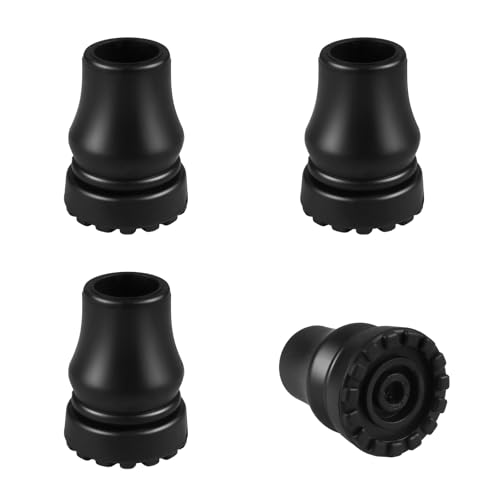
The bottom tip of your walking pole determines how reliably it grips various walking surfaces. Most multi-terrain walking poles are manufactured with durable tungsten carbide or steel tips hidden beneath removable rubber ferrules. Bare carbide points are designed exclusively for outdoor trails, hard-packed dirt, and soft forest paths, where the sharp metal can bite securely into the earth. Using a bare metal tip on indoor linoleum, polished tile, or concrete sidewalks is hazardous, as the slick metal will slide instantly across hard floors.
Always cap your pole with a thick, textured rubber walking ferrule when walking on paved sidewalks, asphalt streets, and smooth indoor corridors. Rubber tips provide high-friction grip across hard pavements and dampen the vibrating shock waves that travel up the shaft into your wrist and elbow joints. Inspect the bottom tread of your rubber ferrule regularly to ensure the grooved pattern has not worn smooth. If the internal metal washer punches through the bottom of the rubber, discard the tip immediately and replace it with a fresh ferrule to maintain safe traction.
In soft gravel, mud, or wet turf, adding a compact mud basket prevents the pole tip from sinking too deep into the ground. A pole that sinks unexpectedly can throw off your stride and cause you to stumble forward. Wet leaves, painted crosswalk markings, and icy patches also demand extreme vigilance. On questionable surfaces, shorten your stride length, plant the pole tip firmly directly beneath your center of gravity, and maintain steady, deliberate steps to prevent slippage.
Comparing Shaft Materials and Packable Travel Features
Selecting the right pole build involves balancing shaft stiffness, vibration dampening, and overall travel convenience. Poles constructed from high-grade 7075 aluminum alloy provide tremendous structural durability, resisting bending even under sudden lateral loads. The Trekology Trek-Z Hiking Trekking Poles highlight this rugged aluminum design, featuring reinforced joint connectors and metal lock caps that fold down to just fifteen inches for compact transit. If you plan to fly with your gear, remember that trekking poles are prohibited in airline carry-on bags by TSA guidelines, so consulting a carry on luggage backpack guide can help you plan your checked baggage capacity effectively.
For walkers who prioritize featherweight handling and fatigue reduction, carbon fiber shafts offer a compelling alternative. High-modulus 3k carbon fiber weighs significantly less than aluminum and provides natural vibration-damping properties that absorb repetitive impacts before they reach your joints. While carbon fiber is exceptionally strong along its vertical axis, it can be vulnerable to cracking if struck sharply against jagged rock edges. Choosing between carbon fiber and aluminum ultimately depends on whether you value ultra-light swing weight or rugged, bend-resistant toughness.
Packability is another major consideration for active adults and seniors who travel frequently. Collapsible poles typically feature either telescoping nesting sections or tri-fold tension-cord designs. Tri-fold models collapse into compact lengths that tuck neatly into tote bags, car trunks, or suitcases in seconds. If you choose a folding design, regularly check the internal tension cord for signs of wear and ensure the locking push-button snaps completely through the shaft hole to prevent sudden collapse while in motion.
Avoiding Common Gait Mistakes and Posture Errors
Even experienced walkers occasionally develop inefficient habits that reduce the benefits of using a single walking stick. One of the most prevalent mistakes is gripping the handle too tightly, which locks your forearm muscles and causes shoulder tension. Your hand should hold the grip securely but relaxed, allowing the wrist strap and natural pendulum momentum of your arm to carry the stick forward. Consciously relaxing your fingers at the back of your arm swing helps maintain healthy blood circulation and prevents joint stiffness.
Another frequent error is planting the pole tip too close to your feet, which creates a tripping hazard as your toes swing forward. The pole should always land slightly outward to the side, creating a clear walking lane for your legs to move without clipping the shaft. Similarly, avoid the temptation to lean your entire upper body heavily across the pole like a crutch. A single walking stick is designed to provide dynamic balance assistance and moderate joint offloading, not complete non-weight-bearing support.
Pay close attention to your posture as you walk, keeping your eyes forward rather than staring down at the tip of the pole. Looking down forces your cervical spine into a forward head tilt, pulling your shoulders forward and rounding your upper back. Stand tall with your chest open, let your shoulders drop away from your ears, and engage your core gently with each step. Good posture works in harmony with the pole, expanding your lung capacity and ensuring that your joints move through their optimal ranges of motion.
When to Choose a Single Pole Versus a Medical Walking Cane
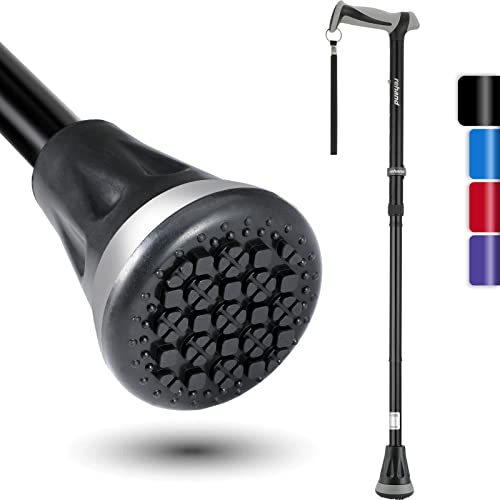
While a single walking pole is an outstanding tool for active fitness walks and outdoor stability, it is not a direct substitute for a clinical walking cane in every medical scenario. Walking poles feature vertical, straight grips designed for dynamic forward propulsion, which work wonderfully for mild balance hesitation, trail hiking, and general endurance. In contrast, medical walking canes, particularly offset handle canes and quad canes, feature handles positioned directly over the vertical shaft to support significant downward weight bearing.
If you are recovering from major orthopedic surgery, managing severe osteoarthritis, or dealing with progressive neurological conditions such as Parkinson’s disease or significant neuropathy, a medical cane or walker may be required. Offset canes and broad-base quad canes provide higher static load limits and stable resting platforms that do not roll or slide when you lean heavily. Furthermore, individuals with pronounced balance deficits should consult a licensed physical therapist or physician for a comprehensive gait evaluation before choosing between a walking pole and a medical mobility aid.
For active adults managing minor joint aches who want to stay active on community paths, parks, and sidewalks, a single walking pole offers an empowering, non-clinical solution. It preserves your walking cadence, protects your knees on uneven ground, and folds away easily when your stroll is complete. By respecting contralateral placement, verifying your height adjustment, and maintaining proper rubber traction, you can enjoy confident, pain-free mobility on every journey you take.





Write Your Review
No reviews yet. Be the first to share your experience!