


Walking sticks and support poles provide essential stability across varied terrain, but improper handling often leads to hand fatigue, wrist soreness, and compromised balance. Learning how to use walking pole straps allows walkers and mobility users to transfer downward force efficiently through the arm rather than relying solely on a fatiguing, white-knuckle finger grip. When straps are adjusted and positioned correctly, the wrist loop bears a significant portion of downward pressure, enabling a relaxed hold and a natural, rhythmic arm swing. Proper strap habits also prevent walking aids from clattering to the ground during brief rests or when navigating tricky transitions.
Beyond the wrist loops integrated into pole handles, external attachment straps offer a reliable way to stow mobility aids hands-free on packs during transit. High-tension bungee holders and lanyards keep telescoping or folding shafts secured flat against shoulder webbing or side loops on budget daypack selections without rattling or shifting out of place. Mastering both wrist loop mechanics and pack-mounting straps ensures that your gear stays accessible, comfortable, and biomechanically supportive throughout every walking routine. Understanding these techniques protects your joints, improves trail safety, and keeps your hands free whenever terrain demands change.

Pros
- Clips easily onto standard 1-inch webbing on shoulder harnesses, daisy chains, and pack fronts
- Shock cord construction dampens motion and avoids noisy plastic rattle on the trail
- Adjustable cord toggle accommodates varying diameters from ultralight shafts to bulky handles
- Four-piece bundle allows multiple tie-down configurations or outfitting multiple packs
- Weighs only about 0.11 pounds for the complete pack, keeping pack weight minimal
Cons
- Base clip requires standard 1-inch (25mm) webbing and will not fit ultra-wide straps or packs without external loops
- Elastic shock cord can stretch out over long-term environmental exposure compared to rigid mechanical clamps
- Not rated as load-bearing hardware for climbing safety or securing excessively heavy equipment
The TREKOLOGY Walking Stick Holder 4-Pack is an external gear-attachment accessory engineered to mount trekking poles, camera tripods, ice axes, or compact trail tools directly onto a backpack. Designed for day hikers, backpackers, section hikers, and outdoor photographers, this setup replaces makeshift cord ties or rigid plastic clips with an adjustable bungee and toggle system. It is particularly useful for hikers who frequently transition between using poles and needing free hands for scrambles, stream crossings, or camera handling.
On the trail, the primary advantage of this bungee system is rapid, hands-free gear management. Instead of stopping to remove a backpack or unpack gear compartments, hikers can slip poles or tools into the bungee loops and secure them in seconds. The elastic shock cord naturally absorbs kinetic movement and walking vibrations, preventing the distinct clicking and rattling sounds that often occur with hard plastic attachment hardware. With an overall listed weight of approximately 0.11 pounds for the four-pack, it introduces minimal weight to a base pack setup while providing reliable gear stability.
The build centers around an all-weather, high-tension elastic shock cord paired with a rugged cord-lock toggle and a dedicated base clip. According to product specifications, the cord and toggle maintain tension even when wet or exposed to freezing temperatures, reducing the risk of gear slipping out during foul-weather travel. The base clip is molded to anchor onto standard 1-inch (25mm) webbing, allowing it to integrate with shoulder straps, front daisy chains, side compression straps, or external MOLLE ladders.
Installation and daily adjustment are straightforward. The base clip snaps securely over 1-inch webbing without requiring sewing or pack modification. Once the clip is positioned, the bungee cord loops around the gear shaft or handle, and the spring toggle cinches tight. Because the tension is fully adjustable, the holder conforms equally well to narrow carbon-fiber lower sections, mid-shaft adjustment collars, or thicker EVA foam grips. Releasing the gear requires only a quick squeeze of the toggle to loosen the loop.
There are practical limitations to keep in mind before purchase. The base clip is specifically engineered for standard 1-inch (25mm) webbing and will not seat properly on wide, non-standard shoulder straps, thick padded hip belts, or minimalist frameless packs devoid of external loops. Furthermore, while the elastic cord handles trekking poles, tripods, and light tools effectively, it is not load-bearing hardware and should never be used for climbing safety, fall protection, or anchoring heavy, unstable trail loads.
For hikers, backpackers, and trail photographers who already own packs equipped with external webbing and want an organized, rattle-free way to carry poles hands-free, the TREKOLOGY Walking Stick Holder provides exceptional practical utility. Its lightweight footprint, simple toggle adjustment, and four-pack versatility make it a smart, functional accessory for streamlining trail transitions.
The TREKOLOGY Walking Stick Holder utilizes a specialized base clip designed to attach to standard 1-inch (25mm) webbing. This standardized sizing makes it compatible with horizontal or vertical strap systems, such as shoulder harness adjustment bands, front panel daisy chains, side compression webbing, and tactical MOLLE platforms found on many hiking packs.
Because the attachment loop relies on an expandable shock cord and mechanical cord lock, it provides variable diameter clamping. It securely holds equipment ranging from slim aluminum and carbon trekking pole shafts to bulkier items such as camera tripod legs, ice axe handles, compact fishing rods, or travel umbrellas.
Constructed with high-tension elastic shock cord and heavy-duty composite hardware, this attachment set is built to endure varying backcountry conditions. The cord retains elasticity and tension in both wet and freezing environments, ensuring that wet trekking poles remain firmly strapped against the pack body.
The flexible shock cord design also prevents trail wear by dampening vibrations that can cause gear friction. By holding gear snugly against the pack rather than loosely swinging, the holder minimizes abrasion on both the backpack fabric and the attached gear shafts.

Pros
- Ultralight listed package weight of roughly 0.022 pounds keeps pack weight down.
- Four-piece bundle provides versatile placement options across one or two backpacks.
- Sliding buckle mechanism adjusts quickly to secure poles of different diameters.
- Inexpensive upgrade for daypacks and hiking bags lacking factory pole attachment hardware.
Cons
- Requires existing webbing, daisy chains, or anchor points on your backpack to secure the cord.
- Elastic cord can lose tension over time if exposed to repeated heavy snagging or over-stretching.
- Not engineered or rated for technical climbing protection, heavy axes, or high-load carrying.
The Marsrut 4-Piece Trekking Pole Holder set is an aftermarket external attachment accessory designed for hikers, backpackers, and travelers who need a secure way to stow trekking poles or walking sticks on their packs. Many daypacks and minimalist backpacking bags omit dedicated pole attachment bungees to reduce production costs or maintain clean exterior profiles. This four-piece kit bridges that gap by providing standalone, adjustable elastic cord ties that attach to existing exterior anchor points.
On the trail, managing trekking poles during scrambles, stream crossings, or flat access walks requires a dependable hands-free storage method. These holders measure 20.3 cm (8 inches) in length and feature a slide-lock plastic buckle. When anchored through an exterior loop or compression strap on your pack, the elastic cord wraps around the pole shaft, allowing the buckle to slide forward and clamp the shaft tightly against the pack body. At an ultra-low total weight of approximately 0.022 pounds, this accessory adds no noticeable load to your setup.
The build centers around resilient elastic cord paired with molded plastic locking buckles. The cord provides enough elasticity to hold poles firmly without slippage, while the plastic friction hardware bites into the cord to prevent unwanted loosening during motion. While this hardware is engineered for light-duty tensioning rather than heavy load-bearing support, it offers dependable day-to-day security for standard aluminum or carbon fiber trekking poles, canes, and lightweight accessories like compact umbrellas.
Setup is straightforward and tool-free. To attach a pole, you thread the cord loop through a backpack daisy chain, shoulder harness loop, or side compression strap, insert the pole shaft into the open loop, and cinch the buckle down. Cleaning and maintaining these straps is simple: they can be rinsed with clear water to remove trail dust or grit from the buckle mechanism and air-dried before storage. Having four straps in the package means you can equip two attachment points on two separate packs or keep spares in a repair kit.
Prospective buyers should note realistic limitations regarding compatibility and load capacity. These holders do not create attachment loops out of thin air; your backpack must already feature some form of external webbing, loop, or strap to anchor the cord. Furthermore, these elastic cords are intended strictly for secondary retention of walking poles and umbrellas, not for technical mountaineering ice tools, heavy tools, or safety-critical climbing hardware.
For day hikers, section backpackers, and outdoor enthusiasts seeking an affordable, lightweight method to add pole-carrying functionality to an existing backpack, the Marsrut 4-Piece Trekking Pole Holder set offers practical value and effortless utility.
The Marsrut trekking pole straps are designed specifically to interface with backpacks that feature external attachment hardware such as daisy chains, ice-axe loops, trekking pole tip retainers, or side compression straps. At an 8-inch (20.3 cm) overall length, the cord provides ample reach to loop around common trekking pole diameters, walking stick shafts, and compact accessories.
Because these straps function as an upper or mid-shaft stabilizer, they work best when paired with a lower loop or side bottle pocket to cradle the pole tips. Confirming that your daypack or multi-day backpack has accessible webbing loops or strap anchor points will ensure smooth installation and optimal stability on the trail.
The holders combine resilient elastic shock cord with durable molded plastic slide buckles. The plastic components are designed to resist outdoor exposure and maintain friction against the cord during normal trail vibration, preventing poles from shifting while you walk.
To maintain peak function, keep the plastic sliding mechanisms clean of mud, sand, and fine trail dirt. Rinsing them periodically in lukewarm water and allowing the elastic to dry away from direct high heat or prolonged UV exposure will help maintain cord elasticity and long-term grip strength.

Pros
- Generous 8-pack bundle lets you outfit multiple hiking daypacks or keep spares in your gear bin
- Glove-friendly buckle mechanism allows quick one-handed securing and release of trekking poles
- Elastic bungee cord maintains steady tension around gear shafts to minimize annoying trail wobble
- Tool-free lashing setup mounts effortlessly to standard pack straps, daisy chains, or webbing loops
Cons
- Fixed 7.68-inch length limits use on larger tools or thick bundle diameters
- Requires existing webbing, loops, or daisy chains on your backpack to anchor properly
- Elastic cord and PP plastic buckles can show wear or lose elasticity after prolonged outdoor exposure
The Xinjoduz 8-Pack Hiking Stick Holders are external gear-attachment accessories designed for hikers, backpackers, and campers who need to lash poles or slender gear directly to their packs. Many daypacks and overnight packs lack dedicated pole loops or feature worn-out attachment points, making these elastic fasteners an accessible upgrade for managing loose trail gear.
When navigating rough scrambles or sections where hands need to be free, hiking poles can become cumbersome if not secured properly. These 7.68-inch bungee fasteners anchor poles against your pack body, shoulder straps, or hip belt webbing, helping to eliminate annoying swaying and snagging against branches. The design also works well for stabilizing compact camera tripods or walking canes, keeping your hands unburdened without having to dig inside your main backpack compartment.
Each strap combines a durable rubber elastic cord with a solid polypropylene (PP) buckle. The elastic core provides continuous clamping tension around gear shafts of varying diameters, preventing items from slipping down while hiking. Meanwhile, the lightweight PP buckle holds the loop firmly without adding noticeable weight to your overall gear setup, offering dependable retention across diverse trail environments.
Installing these fasteners requires no tools or sewing, making them easy to loop through daisy chains, compression strap webbing, or shoulder harness attachment points. The buckle and cord-lock system supports quick adjustment and one-handed operation, which is particularly helpful when wearing gloves in chilly morning conditions. Maintenance is minimal, requiring only a quick rinse with clean water to remove mud, trail grit, or sand.
While practical for standard trekking poles, these holders measure 7.68 inches in total length, meaning they cannot wrap around bulky gear like rolled sleeping pads, oversized tent poles, or wide camp axes. Furthermore, they depend on your backpack having suitable attachment points such as webbing straps, MOLLE loops, or lash tabs. Because plastic hardware and elastic rubber degrade over extended sun and moisture exposure, hikers should periodically check the cord tension before heading out on multi-day routes.
For day hikers, weekend backpackers, and outdoor photographers needing a simple gear-retention solution, the Xinjoduz 8-pack delivers strong utility. With four color options and eight separate fasteners, it is a smart addition to any gear closet for organizing external backpack gear.
Mounting Requirements: These fasteners require existing anchor points on your backpack, such as daisy chains, compression straps, shoulder-harness webbing, or side loops. They do not attach to flat, featureless fabric panels without an anchor loop.
Gear Sizing: At 7.68 inches in length, these bungee cords are optimized for standard trekking poles, walking sticks, collapsible canes, and slim camera tripods. They are not intended for large shelter bundles, bear canisters, or wide foam pads.
Cord Construction: Built with a rubber elastic core that stretches to accommodate varying shaft thicknesses while maintaining continuous clamping pressure.
Buckle Hardware: Features solid polypropylene (PP) plastic clips engineered for one-handed release and glove-friendly operation in cool outdoor weather.
Mastering Walking Pole Straps for Wrist Support, Balance, and Gear Storing
Using walking pole straps correctly transforms how your body interacts with your walking aid by shifting mechanical loads off small finger joints and onto larger arm muscles. Many individuals mistakenly slip their hand down through the strap from above, which forces the hand to grip tightly and risks wrist strain. Knowing how to use walking pole straps properly involves mastering two distinct systems: the handle-mounted wrist strap that supports dynamic movement, and the pack-mounted bungee strap that stows your poles securely. Each system plays a vital role in joint comfort, fall safety, and streamlined mobility during daily outings.
The Fundamental Technique for Wearing Walking Pole Wrist Straps
The proper technique for donning a walking pole strap starts by inserting your hand through the bottom opening of the loop rather than sliding in from the top. Bring your hand upward through the fabric loop so the webbing rests smoothly across the back of your wrist and palm base. Once your hand passes through, bring your palm downward over the handle, grasping the grip along with both sides of the strap webbing. This positioning wedges the strap directly beneath the heel of your palm and thumb, creating a secure cradle for your hand.
Resting your palm directly over the strap allows you to propel forward by pressing down against the webbing rather than clenching the plastic or cork handle. As you plant the pole, downward body weight transfers naturally through the heel of your hand and into the pole shaft. Your fingers can remain loosely wrapped around the grip, which prevents the forearm muscle fatigue and hand cramps common during long walks. A relaxed grip preserves circulation, minimizes carpal pressure, and maintains steady arm cadence on level paths.
Releasing your grip momentarily between strides becomes completely safe when the strap is worn from the bottom up. The strap maintains contact with your palm, allowing the pole to swing forward naturally with your arm motion without slipping away. You do not need to squeeze the handle tightly on every backswing, which saves substantial energy over miles of walking. Practicing this bottom-up entry quickly turns the motion into second nature for any walker seeking effortless balance assistance.
Adjusting Wrist Strap Length for Proper Ergonomic Alignment
Proper strap sizing is just as critical as correct hand entry when seeking stable walking support. If the wrist strap is adjusted too loosely, your hand drops below the ergonomic contour of the handle, forcing you to reach upward and strain your wrist joint. Conversely, an overly tight strap pinches circulation across the wrist, rubs sensitive skin, and prevents your palm from seating fully against the grip. The ideal length positions your hand comfortably on the grip while keeping light, supportive tension on the webbing.
Most walking poles feature an internal cam wedge, pull-tab, or buckle mechanism at the top of the handle to regulate strap circumference. Pulling the adjustment loop outward releases the lock, allowing you to shorten or lengthen the strap loop by pulling the appropriate strand of webbing. Once resized, a firm downward pull on the strap re-engages the locking wedge firmly inside the handle housing. Take the time to test the adjustment while wearing your normal walking gloves, as glove thickness significantly changes the fit.
Your arm posture provides an immediate indicator of whether the pole height and strap length work in harmony. When holding the grip with the strap supporting your palm, your elbow should form a natural 15- to 20-degree bend while standing upright on flat ground. If your forearm slopes downward or your shoulder hikes upward toward your ear, adjust the telescoping pole sections before finalizing strap tension. Proper alignment ensures that downward forces bypass delicate wrist tendons and travel cleanly up through the forearm.
When to Disengage Wrist Straps for Trail Safety and Fall Prevention
While wrist straps offer substantial propulsion and comfort on flat ground, certain walking conditions demand that you slip your hands out of the loops entirely. Navigating steep downhill descents, stepping over wet river boulders, or moving across loose gravel slopes introduces significant tripping hazards. If you stumble while your hands are firmly trapped inside pole straps, you cannot extend your open palms quickly to break your fall. The pole handles can also twist violently against your thumbs or wrists, leading to painful sprains or hyperextension injuries.
Steep downhill sections alter the biomechanics of walking, requiring you to plant poles further ahead to stabilize your knees and absorb descent shocks. Removing your hands from the straps during steep descents allows you to palm the top of the handle grips comfortably from above for maximum downward leverage. This open-hand approach gives you the freedom to drop the poles instantly if your footing gives way unexpectedly on slippery mud or loose scree. Prioritizing fall safety over strap support in precarious terrain protects your upper extremities from serious trauma.
Dense brush and thick woodland undergrowth represent another scenario where disengaging from pole straps is advisable. Low-hanging tree branches, roots, and sturdy briars can easily catch a pole basket or shaft as you stride past. If a trapped pole jerks backward while your wrist is locked into the strap, the sudden deceleration can pull your shoulder joint painfully backward. Keeping hands free from the loops in thick vegetation allows you to retain control without risking sudden torque on your arms.
How to Use Backpack Bungee Straps to Stow Walking Poles Hands-Free
Transitioning between active walking and hands-free scrambles requires a secure method for stowing gear without removing your pack. Aftermarket pole holder kits, such as the TREKOLOGY Walking Stick Holder Universal Backpack, utilize elastic shock cord and cord locks to anchor poles cleanly to shoulder straps or pack sides. These accessories feature a durable base clip designed to snap directly over standard 1-inch webbing on shoulder harnesses, daisy chains, or pack straps. Once clipped into place, the elastic loop expands around pole shafts of various diameters.
Securing your poles into backpack bungee straps involves a simple, one-handed sliding technique that takes only a few seconds to master. Collapse your walking poles down to their shortest telescoping length or fold them into compact segmented bundles before securing them. Pass the elastic cord around the pole shaft just below the handle, thread the toggle through the loop, and pull the cord lock tight against the frame. Multi-piece holder kits like the 4pcs Climbing Stick Holder provide dedicated upper and lower anchors to prevent loose shafts from swaying during movement.
Positioning your walking poles correctly on your pack ensures proper weight distribution and prevents snagging hazards on narrow trails. Mounting poles along the side compression straps keeps the center of gravity close to your torso, which pairs exceptionally well with larger internal frame backpacks designed for heavier loads. Front shoulder strap mounting, alternatively, allows you to retrieve or stow your poles on the move without unbuckling your hip belt or setting your pack on wet soil. Ensure rubber tip protectors are installed over tungsten carbide points before strapping gear to fabric packs.
Securing Multi-Section and Folding Walking Sticks on Packs
Folding walking sticks and canes require careful strap tensioning because their segmented shafts can shift or unfold if mounted loosely. Comprehensive mounting sets like the 8 Pack Backpack Hiking Stick Holders offer multiple fastening points that can bundle folded segments tightly together before securing them to a bag. Placing one elastic tie near the grip end and another around the rubber ferrule base keeps the folded sections parallel and compact. This dual-anchor configuration prevents metal joint sleeves from clattering against each other with every walking step.
Travelers navigating transit terminals, commuter trains, or airports benefit immensely from keeping folding mobility aids firmly fastened to their carry-on bags. Ensuring your stowed gear fits within standard travel pack dimensions prevents snagging when boarding aircraft or sliding packs into overhead bins. Elastic bungee holders dampen vibrations and prevent rigid pole tips from protruding past the pack profile, creating a streamlined package. Tightening the cord lock firmly ensures that vibrations during vehicle transit will not loosen the elastic hold.
When packing multiple poles or folding canes together, stagger the handle positions so bulky grips do not crowd against each other along the strap line. Point both rubber tips downward toward the bottom of the backpack to avoid poking overhead tree limbs, low door lintels, or fellow hikers. Always inspect the quick-release buckle or plastic toggle before walking to verify that the cord remains seated in its locked channel. A reliable strap setup keeps your mobility aids silently secured until you encounter terrain that demands active balance support.
Walking Pole Straps vs Medical Walking Cane Retention Lanyards
A vital distinction exists between recreational walking pole straps and retention wrist lanyards used on medical walking canes. Walking pole straps are built from stiff nylon or padded webbing engineered specifically to support direct downward weight during active propulsion. In contrast, wrist straps on single-point canes, quad canes, or offset canes are loose tether lanyards designed strictly to prevent the cane from falling to the floor. They are not intended to bear body weight, as leaning heavily on a cane wrist strap can cause severe wrist strain.
Medical canes serve a dedicated clinical purpose by offloading roughly 15 to 25 percent of body weight from a painful or recovering lower limb. Proper cane biomechanics require holding the cane in the hand opposite the affected leg while maintaining a 15- to 20-degree elbow flexion angle. If you require partial weight offloading following orthopedic surgery or suffer from balance instability, recreational trekking poles with straps should never replace a prescribed medical cane. Always consult a licensed physical therapist or physician for formal gait evaluation and equipment sizing.
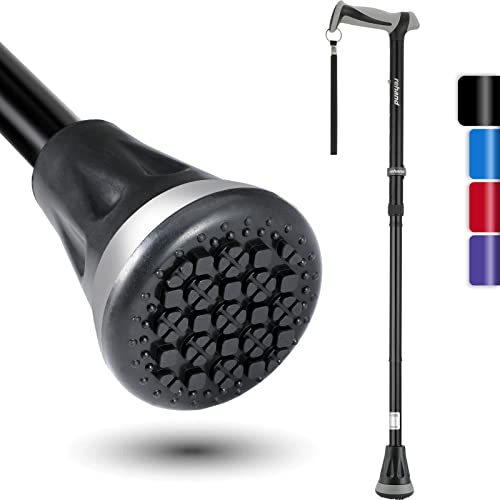
When using a medical cane equipped with a drop-prevention wrist strap, slip your hand through the strap loop loosely before grasping the ergonomic handle. The lanyard should dangle freely around your forearm without pulling tight against your skin while you walk. If you need to open a door, sign a receipt, or reach for a handrail, releasing the grip allows the cane to dangle safely from your wrist without crashing to the ground. This drop-prevention function saves mobility users from the painful bending required to retrieve fallen aids from slick floors.
Maintenance, Tension Inspection, and Hardware Durability
Routine inspection of walking pole straps and backpack bungee fasteners prevents sudden mechanical failure while you are miles away from trailheads. Fabric wrist straps absorb sweat, body oils, and trail dust, which can stiffen the nylon weave and cause abrasive chafing over time. Hand-washing straps periodically in warm water with mild soap preserves webbing flexibility and eliminates salt deposits that degrade stitching. Allow the fabric to air dry completely away from direct heat to prevent shrinking or warping internal reinforcement layers.
Backpack bungee cords and plastic cord locks require regular scrutiny to verify that their elastic core remains springy and resilient. Prolonged exposure to intense ultraviolet sunlight and freezing conditions can cause rubber shock cords to dry out, crack, or lose elasticity. Test the internal spring inside the cord lock by pressing the release button and verifying that it clamps firmly onto the cord without slipping under moderate pull. If an elastic cord shows signs of thinning or frayed outer braiding, replace the holder immediately to avoid losing gear on the trail.
Check the anchor clips on backpack holders to ensure the plastic has not developed stress fractures along the hinge line. Snapping clips onto pack webbing should produce a crisp, positive click that resists twisting forces when the pack moves. Keeping your fastening hardware clean of fine trail grit prevents abrasive wear inside the spring-loaded lock mechanisms. A few minutes of preventive care ensures that your pole retention systems remain dependable across seasons of diverse walking adventures.
Practical Takeaways for Safer Walking and Equipment Handling
Mastering walking pole straps bridges the gap between clumsy gear management and efficient, joint-friendly locomotion across any landscape. By entering wrist loops from the bottom up and resting your palm heel against the webbing, you unlock fatigue-free support that protects hands and forearms. Pairing proper wrist loop mechanics with rugged backpack bungee holders guarantees that your walking sticks remain instantly accessible without cluttering your hands when resting. Make deliberate strap checks a standard part of your pre-walk routine to maintain steady footing, protect delicate joints, and enjoy every mile with complete confidence.





Write Your Review
No reviews yet. Be the first to share your experience!