


Maintaining upright posture and steady balance during daily walking routines or orthopedic rehabilitation requires dependable physical support. Active walkers wondering what is a nordic walking pole often discover that these specialized poles bridge the gap between traditional mobility canes and athletic conditioning equipment. Unlike a single walking cane intended solely for unilateral weight offloading, Nordic poles use bilateral coordination to engage the upper torso, distribute physical exertion, and promote natural forward propulsion. When paired with functional outdoor clothing like supportive hiking apparel, incorporating dual poles can transform an ordinary neighborhood stroll into a stable, low-impact full-body activity.
Modern equipment from manufacturers like American Nordic Walking System, Urban Poling, and York Nordic serves diverse functional needs, ranging from brisk fitness training to gentle rehabilitation. A standard Nordic setup features specialized hand straps or wide palm ledges, shock-absorbing shafts, and angled rubber paws that grip paved sidewalks. By encouraging an erect spine and reducing joint stress across the hips, knees, and ankles, these poles help walkers build core stability without relying on institutional mobility devices. Selecting the appropriate design requires understanding strap mechanics, shaft locking mechanisms, and proper height adjustment guidelines.


Understanding Nordic Walking Poles: Mechanics, Design, and Mobility Benefits
A Nordic walking pole is a specialized fitness and mobility device engineered to drive forward propulsion, encourage upright posture, and distribute ground impact across both arms and legs. While traditional canes address acute unilateral balance deficits, Nordic poles operate as a coordinated pair that engages the entire body during movement.
Defining the Nordic Walking Pole and Core Biomechanics
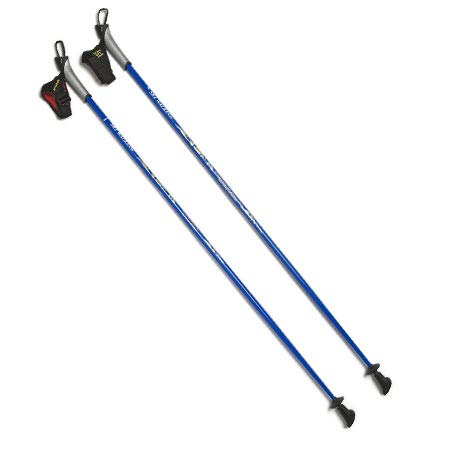
Nordic walking poles originated in Scandinavia during the twentieth century as summer dryland training gear for competitive cross-country skiers. Over recent decades, physical therapists, gerontologists, and fitness instructors adapted the equipment into a versatile mobility aid for adults seeking safe aerobic exercise and joint-friendly conditioning. A standard system consists of two matched poles equipped with contoured handgrips, dedicated hand straps or wide palm rests, and angled rubber feet. Unlike an ordinary walking stick that merely props up one side of the body, these poles actively integrate the arms, shoulders, back, and abdominal core into every forward stride.
The biomechanical foundation of Nordic walking relies on a natural, reciprocal arm swing that mirrors standard human walking gait. As your left foot strides forward, your right arm plants the opposite pole backward at an angle, pushing through the strap to drive your body ahead. This pushing action activates the latissimus dorsi, pectorals, and triceps while naturally extending the thoracic spine. Walking with two ground contact points simultaneously offloads impact forces from the lower extremities, providing gentle relief to arthritic knees and hips while maintaining steady cadence.
How Nordic Poles Differ from Standard Walking Canes and Trekking Poles
Distinguishing Nordic walking poles from other mobility aids prevents selecting mismatched equipment for your specific physical requirements. A standard single-point walking cane is a clinical mobility device intended primarily for unilateral lower-limb offloading. Cane users place the device on their unaffected side to absorb fifteen to twenty-five percent of body weight away from a painful hip, knee, or ankle. Canes plant vertically beside or slightly ahead of the foot to catch balance, rather than pushing backward to generate continuous forward propulsion.
Backcountry trekking poles also differ fundamentally from Nordic walking sticks in both purpose and geometry. Hikers utilize trekking poles primarily for stability, balance checks, and downhill braking on steep, unpredictable mountain trails. Trekking pole grips feature loose webbing loops meant to prevent dropping the shaft down a rocky incline, and hikers plant them forward into the ground to absorb steep descent impacts. In contrast, Nordic walking poles feature glove-like harnesses or supportive palm ledges tailored for continuous fitness striding, posture improvement, and joint-friendly exercise on sidewalks, running tracks, and level community paths.
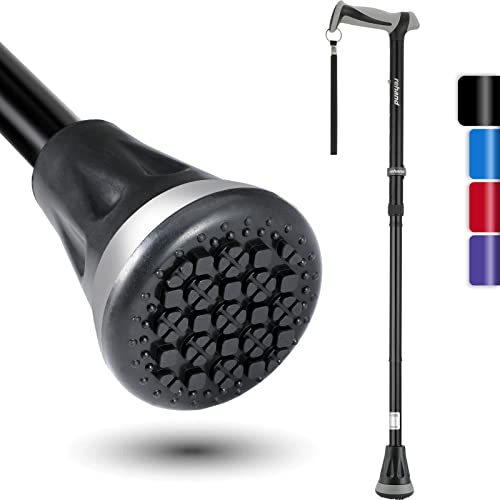
The ground contact tips further illustrate these technical distinctions across device categories. A medical cane relies on a broad, flat rubber ferrule designed to grip polished interior floors without slipping. Trekking poles use sharp, pointed tungsten carbide tips paired with wide plastic mud baskets to bite into loose backcountry dirt. Nordic walking poles incorporate specialized, boot-shaped rubber paws with directional tread patterns that grip hard asphalt during the backward propulsion phase while dampening shock along the upper arm.
Grip Engineering: Classic Nordic Straps versus Strapless Core Grips
Handle construction represents the single most important design element distinguishing Nordic walking poles from other walking equipment. Classic fitness models, including the Official Nordic Walking Poles from York Nordic and custom setups from American Nordic Walking System, feature a glove-style strap that wraps securely around the hand and wrist. This harness connects your palm directly to the shaft, enabling you to open your hand completely at the rear of each stride without dropping the pole. Releasing your grip between strides relieves tension in the forearm flexor tendons, preventing hand fatigue and joint cramping during long walks.
Modern fitness straps frequently include a quick-release push button on top of the grip, allowing walkers to detach their hands instantly from the poles. This mechanism allows you to answer a phone, adjust clothing, or drink water without peeling off the velcro hand wraps. Instructors emphasize that pushing through the strap rather than squeezing the handle grip is what drives smooth propulsion. The FitTrek Nordic Walking Poles for Men Women pair this convenient quick-release strap system with natural cork handles that absorb palm sweat and reduce hand vibration over extended outings.
An alternative philosophy exists for rehabilitation-focused balance poles, which often eliminate traditional wrist straps entirely to prioritize fall safety. The Urban Poling ACTIVATOR® Walking Poles for Balance feature a patented CoreGrip handle with a wide, flared lower ledge that supports the heel of the hand. This strapless design positions the wrist in a neutral posture to minimize median nerve strain and prevents the hand from becoming trapped if the user loses footing. Similarly, the York Nordic Motivator Walking Poles for Balance use contoured grips with dual thumb zones that reduce joint stress at the base of the thumb by ten times compared to standard cylindrical handles.
Rehabilitation and Stability Applications for Balance Support
Nordic walking poles have become widely utilized tools in physical therapy clinics and orthopedic recovery programs. Occupational therapists and mobility specialists frequently integrate dual poles into rehabilitation plans for patients recovering from hip, knee, or ankle joint replacement surgery. Using two poles provides symmetrical lateral stability, preventing the awkward limp and uneven spine tilt that frequently occur when patients lean heavily onto a single walking cane. The synchronized dual-pole rhythm restores an even, confident walking pattern while offloading significant stress from healing joints.
Adults managing chronic balance deficits, Parkinson’s disease, stroke recovery, or peripheral neuropathy also find significant functional security in dual walking poles. Planting two poles on the ground provides continuous tactile feedback through the hands and arms, helping the nervous system interpret spatial orientation and maintain steady equilibrium. The rhythmic movement pattern encourages longer, more consistent stride lengths while reducing freezing-of-gait episodes. Many seniors report that the symmetrical support of two poles greatly reduces the fear of falling during outdoor neighborhood walks.
Specialized balance poles provide substantial downward weight-bearing capacity when users need partial joint relief. Manufacturer specifications for the Urban Poling Activator indicate that each pole can support up to two hundred pounds of vertical load, offloading substantial force from the hips and knees while stimulating core muscular engagement. This dynamic support system turns ordinary walking into an active rehabilitation exercise. However, walkers with severe balance failure or strict non-weight-bearing medical orders should always consult a licensed physical therapist before replacing an assigned walker or cane with walking poles.
Shaft Materials, Structural Strength, and Locking Mechanisms
Shaft construction directly influences a walking pole’s balance, weight, and vibration-dampening capabilities. Most high-performance Nordic poles utilize aircraft-grade 7075 aluminum tubing, which delivers an outstanding strength-to-weight ratio while resisting sharp bending stresses. While carbon fiber shafts offer marginal weight reductions, quality 7075 aluminum provides superior impact toughness and will not fracture suddenly under unexpected lateral strain. Aluminum also flexes slightly to absorb ground shock before transferring vibration into the user’s wrist and elbow joints.
Adjustable telescoping poles rely on secure locking mechanisms to prevent the shaft sections from slipping under downward body pressure. Older internal twist locks rely on expanding plastic wedges that can loosen over time or seize if road dust penetrates the tubing. Modern designs favor external aluminum flip locks or positive push-button detents. External lever locks offer rapid, secure clamping that can be tightened easily without tools, while push-button systems provide absolute mechanical stops that eliminate slippage during rehabilitation exercise.
Weight capacities vary substantially depending on whether a pole is built for light fitness striding or heavy-duty physical therapy support. Standard telescoping fitness poles are rated for moderate propulsion forces rather than full vertical body weight. For individuals requiring reinforced structural support, bariatric models offer wider tubing and strengthened joints. The York Nordic Big and Tall Motivator Walking Poles utilize heavy-duty push-button locks and oversized aluminum shafts engineered to support users up to five hundred pounds and seven feet tall.
Measuring Proper Pole Height and Elbow Flexion Alignment
Establishing the correct pole height is critical for achieving optimal biomechanical efficiency and preventing upper-body discomfort. If a walking pole is adjusted too tall, your shoulders will hike upward toward your ears, creating tight neck muscles and limiting your natural arm swing. If a pole is adjusted too short, you will lean forward at the waist, compressing your spine and losing the upright posture that makes Nordic walking beneficial. Always conduct height sizing while standing erect on a level surface wearing your everyday walking shoes.
The standard guideline for fitness walking dictates that your elbow should form a ninety-degree angle when holding the grip with the pole tip resting vertically on the floor. A dependable sizing calculation multiplies your total standing height in inches by 0.68. For example, a walker who stands five feet eight inches tall (68 inches) would multiply 68 by 0.68 to arrive at a recommended pole height of approximately 46 inches. When your forearm rests parallel to the floor, the top of the handle should align comfortably with your relaxed palm.
Rehabilitation and balance walking often call for a slightly shorter shaft setting than athletic striding. Setting poles one to two inches below the standard ninety-degree mark increases vertical pushing leverage, allowing users to press downward firmly to offload weight from the knees and hips. Non-collapsible one-piece models, like the Nordic Walking Poles Custom Fit to Your Height. from American Nordic Walking System, eliminate telescoping hardware altogether by arriving pre-cut to your specific standing height. Solid single-piece shafts eliminate shaft clicking, reduce vibration, and provide exceptional structural confidence.
Traction Tips: Angled Rubber Paws versus Carbide Trail Spikes
The bottom tip assembly determines how reliably a Nordic walking pole grips different walking surfaces without slipping. Every quality walking pole features a hard tungsten carbide or steel tip permanently affixed to the lower shaft. This pointed tip bites securely into dirt trails, gravel paths, sand, packed snow, and grassy parks, preventing the pole from sliding backward when you exert pushing force. Metal tips are necessary for unpaved country paths where soft ground requires deep, positive penetration for stability.
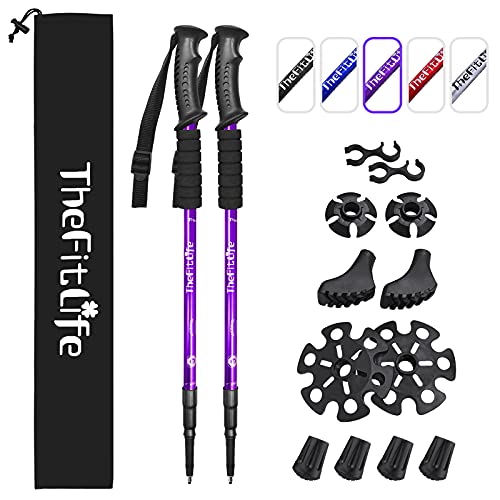
Hard artificial surfaces require a specialized rubber cover to maintain traction and protect user joints from shock. Bare metal tips slip easily on concrete sidewalks and generate loud clicking sounds that send jarring vibrations into the wrist and elbow. Nordic poles include removable, boot-shaped rubber paws designed specifically for hard surfaces. When installed with the toe of the rubber boot pointing backward, the angled tread grips asphalt firmly during the push phase, absorbing ground impact and propelling the walker forward smoothly.
Portability, Travel Collapsibility, and Daily Packing Needs
Walkers who travel frequently, commute on transit, or take road trips require poles that pack down easily into vehicles or luggage. Standard two-piece telescoping poles collapse down to twenty-nine or thirty-two inches, which fits easily across a car trunk or back seat. However, two-piece poles are generally too long to fit inside standard airline carry-on bags, meaning travelers must pack them inside checked luggage or carry them separately during transit.
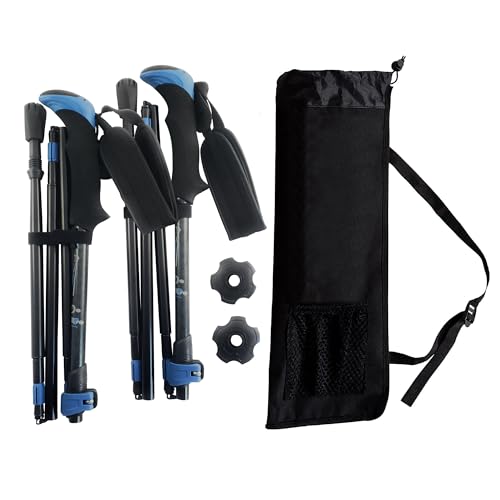
Folding travel poles overcome these luggage constraints by utilizing multi-segment shafts connected with internal tension cords. The York Nordic Ultralight Folding Walking Poles collapse down to just 13.5 inches, sliding easily into daypacks, tote bags, or carry on luggage pack options. These compact folding systems enable active adults to maintain their daily fitness routines and balance support while traveling through airports, exploring new cities, or touring vacation destinations.
Selecting the Right System for Your Mobility Profile
Determining the best Nordic walking pole configuration requires matching the equipment’s mechanical features to your personal physical capabilities and fitness goals. Active walkers seeking cardiovascular exercise, caloric expenditure, and brisk outdoor workouts should look for lightweight poles with glove-style quick-release straps and natural cork grips. Wearing non-restrictive outdoor clothing, such as flexible walking shoes and lightweight trail pants, facilitates an open, continuous arm swing during athletic fitness sessions.
Conversely, adults requiring orthopedic support, balance training, or neurological rehabilitation should select stability-focused designs. Prioritize strapless ergonomic handles with wide palm rests, broad bell-shaped rubber feet, and robust downward weight capacities. Models like the Urban Poling Activator or York Nordic Motivator emphasize upright posture, core stability, and secure downward loading rather than aggressive rearward propulsion, giving walkers the steady foundation needed to move safely and independently.
Safe Movement Practices and Long-Term Ownership Care
Maintaining your walking poles ensures consistent traction and structural safety across months of daily walking. Rubber boot tips gradually wear smooth through friction against abrasive concrete, eventually exposing the internal metal washer or carbide spike beneath. Inspect the tread on your rubber feet every few weeks and replace worn tips promptly to prevent sudden slipping on wet tile or smooth asphalt. In addition, check that all flip-lock levers clamp securely and push-button pins lock fully into their adjustment holes before beginning your walk.
Recognizing the functional limits of walking poles is essential for fall prevention. While Nordic poles offer outstanding stability for active adults with mild balance hesitation or joint discomfort, they cannot replace prescribed medical mobility devices like rolling walkers for individuals with severe gait deficits. If you experience persistent dizziness, severe lower-limb weakness, or significant balance loss, consult a licensed physical therapist or physician for a professional gait assessment and tailored equipment recommendation.





Write Your Review
No reviews yet. Be the first to share your experience!