


Walking rhythm and joint comfort often dictate how long an individual can stay active outdoors. Many adults experiencing early morning knee stiffness, hip soreness, or mild balance hesitation search for ways to move comfortably without immediately resorting to restrictive clinical aids. Discovering what is the point of nordic walking reveals how a pair of specialized poles can transform a standard neighborhood stroll into an efficient, full-body exercise that cushions lower-body joints. Incorporating supportive lower-body gear such as knee support hiking pants can further stabilize lower joints while walking across neighborhood streets or gentle park paths.
Unlike traditional walking, this Scandinavian technique uses two poles to recruit the upper body, driving forward momentum through the arms and shoulders. The rhythmic movement engages the core, encourages an upright posture, and distributes body weight across four contact points rather than two. Understanding the distinct biomechanics behind what is the point of nordic walking helps walkers determine whether fitness poles match their mobility goals or whether a dedicated medical cane remains necessary for balance support.
Top Products


Understanding the Biomechanics, Benefits, and Purpose of Nordic Walking
Nordic walking originated in Finland during the early twentieth century as a dryland summer training method for cross-country skiers. Over recent decades, physical therapists, athletic trainers, and active older adults recognized that the mechanics of pushing with specialized poles provided immense functional benefits for everyday pedestrians. The foundational point of this exercise is to convert simple bipedal locomotion into a dynamic, total-body conditioning activity that unloads painful joints while building functional endurance.
The Core Objective: Why Add Poles to Everyday Walking?
Everyday walking relies almost exclusively on the lower body, forcing the legs, hips, and lower back to absorb every impact shock while providing forward momentum. When walking without poles, the upper body remains largely passive, with arms swinging gently without generating propulsion. Adding dedicated poles fundamentally alters this dynamic by transforming the upper limbs into active drive levers that push against the ground with every stride.
This active push recruits approximately 80 to 90 percent of the body’s skeletal muscle mass during a routine walk. The latissimus dorsi, triceps, rhomboids, pectorals, and core stabilizers engage continuously to transfer energy from the torso through the poles into the earth. Walkers achieve a significantly higher muscular activation throughout the entire body without having to jog or increase their walking speed to an uncomfortable pace.
Cardiovascular demand increases proportionally as these large upper-body muscle groups work in unison with the legs. Research into walking physiology shows that Nordic walking elevates heart rate and caloric expenditure substantially higher than regular walking at the exact same pace. The remarkable aspect of this conditioning is that the perceived exertion remains surprisingly low because the workload is distributed across four limbs rather than concentrated in the legs.
Lower-Extremity Joint Offloading and Biomechanical Relief
Joint pain in the knees, hips, and ankles frequently discourages aging adults from maintaining daily walking routines. Each step during standard walking sends ground reaction forces up through the lower extremities, placing compressive pressure on damaged cartilage and arthritic joints. Nordic walking mitigates this constant pounding by redistributing a meaningful portion of body weight through the hands, forearms, and pole shafts.
Biomechanical studies show that pushing downward and backward through the poles offloads compressive forces from the knees and lower back on every single stride. While a unilateral medical walking cane offloads roughly 15 to 25 percent of body weight from one injured limb, Nordic walking creates bilateral offloading across four continuous points of ground contact. This balanced distribution cushions both legs simultaneously, making it exceptionally valuable for individuals dealing with bilateral knee osteoarthritis or degenerative joint conditions.
Braking forces also decrease significantly when walkers master the proper backward pole strike angle. Rather than slamming the heel into the pavement with a stiff leg, the walker uses the rear pole push to glide forward smoothly. This fluid cadence dampens the jarring deceleration shocks that commonly aggravate patellofemoral tracking issues and lumbar spine compression.
Postural Alignment, Core Stability, and Spinal Decompression
Prolonged sitting and age-related muscle weakness often cause people to develop a forward head tilt and a rounded thoracic spine. When individuals walk with slumped posture, their lung capacity drops, spinal discs face uneven compressive stress, and balance becomes increasingly unstable. The mechanical action of planting poles behind the hips naturally forces the chest open, lifts the sternum, and aligns the head directly above the shoulders.
Core muscle engagement occurs automatically as a functional byproduct of the contralateral arm-and-leg movement. As the right arm pushes backward through the pole, the abdominal obliques and transverse abdominis fire to counter torso torsion and stabilize the pelvis. This dynamic rotational movement acts as a gentle, rhythmic pump that helps decompress the intervertebral discs of the lower back during transit.
Walking with correct postural alignment builds neuromuscular habits that carry over into everyday standing and sitting activities. Pairing consistent walking sessions with flexible, unrestricted lightweight walking pants ensures full hip extension and unimpeded pelvic rotation. Over weeks of consistent practice, walkers often report decreased lower back tightness and noticeably better upright posture throughout their daily routines.
Nordic Walking Poles Versus Medical Walking Canes
Distinguishing between fitness poles and medical mobility aids is critical for user safety and clinical efficacy. Standard single-point walking canes, quad canes, and offset canes are specialized medical devices engineered for acute balance deficits, post-surgical rehabilitation, and unilateral weight-bearing limitations. Nordic walking poles, by contrast, are dynamic exercise tools designed for functional fitness, aerobic conditioning, and bilateral joint impact reduction.
Medical canes operate unilaterally, meaning the user holds the cane in the hand opposite the painful or recovering leg to restore a natural reciprocal gait pattern. In contrast, Nordic walking requires bilateral pole usage, demanding synchronized reciprocal arm swings that propel the body forward. Canes feature vertical weight-bearing structures built to support significant downward loads, whereas Nordic poles rely on angled rearward pressure for forward movement.
Substituting Nordic poles for a prescribed walking cane or walker can be dangerous for individuals with severe gait instability. Anyone with vestibular balance loss, Parkinsonian gait freezing, severe drop foot, or strict non-weight-bearing restrictions must rely on prescribed mobility equipment. A licensed physical therapist or physician should evaluate any patient experiencing frequent loss of balance before they attempt outdoor pole walking.
Anatomical Pole Sizing and Height Adjustment Rules
Accurate pole height sizing is essential to ensure efficient forward propulsion and avoid shoulder or elbow strain. Medical canes require a sizing procedure where the handle lines up with the user’s wrist crease while wearing regular shoes, producing a 15- to 20-degree elbow bend. Nordic walking poles require a noticeably taller setup because the user must push backward rather than press directly downward.
The standard guideline for Nordic walking pole height involves multiplying the user’s standing height in inches or centimeters by 0.68. When standing upright with walking shoes on and holding the pole grip vertically, the user’s elbow should form approximately a 90-degree right angle. Setting poles too high strains the trapezius muscles and causes shoulder hiking, while setting them too low reduces propulsion leverage and promotes forward slouching.
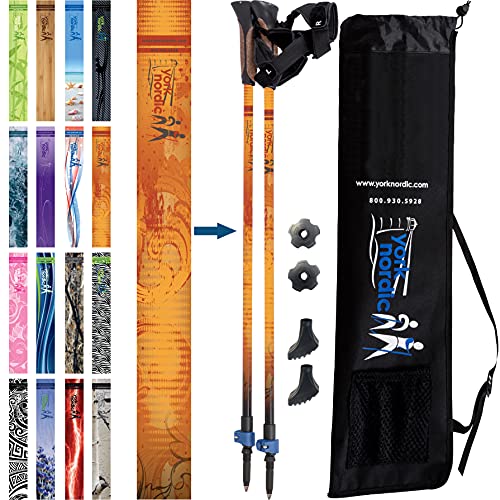
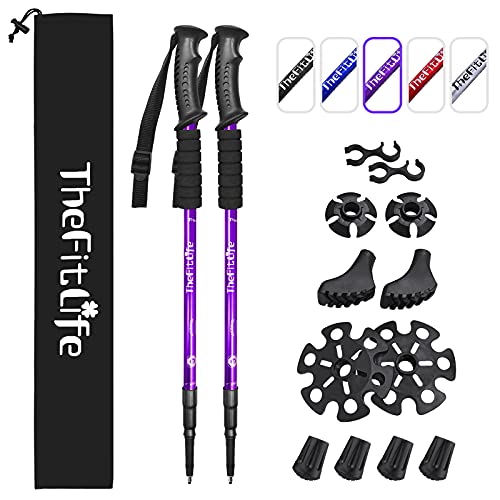
Modern adjustable poles provide telescoping shafts with clear numerical measurement scales to simplify fine-tuning. The Official Nordic Walking Poles from York Nordic adjust from 32 inches to 54 inches, fitting user heights from 5’4″ to 6’2″ through secure quick-release flip locks. TheFitLife Carbon Fiber Trekking Poles offer a versatile range from 24 inches to 53 inches, while KINGGEAR poles extend from 90 cm to 135 cm, allowing quick height changes for varying footwear sole thicknesses.
Proper Nordic Walking Gait Technique and Movement Mechanics
Executing proper Nordic walking technique requires mastering a natural contralateral arm swing that mirrors the movement of the legs. As the left leg strides forward, the right arm swings forward from the shoulder joint while keeping the elbow relatively straight and relaxed. The pole tip must plant on the ground at a backward angle of approximately 45 degrees, aligning near the heel of the opposing front foot.
The propulsion phase begins immediately after the pole tip contacts the walking surface. The user presses downward and backward through the palm and the glove strap, pushing the body forward past the planted pole. As the arm swings past the hip, the fingers relax and open naturally, allowing the secure glove strap to maintain control and drive the pole backward without gripping the handle tightly.
Beginners frequently make the mistake of planting poles vertically in front of their bodies, which creates braking resistance rather than forward propulsion. Another common error is squeezing the handle with a tight grip throughout the entire stride, which rapidly fatigues the forearm muscles and causes wrist tendon irritation. Keeping the hands relaxed during the backswing ensures fluid energy transfer and prevents joint stiffness.
Shaft Materials: 7075 Aluminum Versus 100 Percent Carbon Fiber
Selecting the appropriate shaft material directly affects pole durability, weight, and vibration transmission. High-grade aircraft 7075 aluminum, utilized in York Nordic Official Nordic Walking Poles, provides exceptional structural strength and flexural resilience. Aluminum resists impact damage from rocks, curbs, and trail debris, making it a reliable choice for walkers who value long-term ruggedness.
Carbon fiber construction represents an ultra-light alternative preferred by walkers seeking maximum shock damping. TheFitLife Carbon Fiber Trekking Poles weigh only 0.44 pounds per pole, while KINGGEAR 100 percent carbon fiber poles weigh approximately 8.2 ounces each. Carbon fiber naturally absorbs the repetitive micro-vibrations generated when poles strike hard pavement, preventing those shockwaves from traveling into the wrist, elbow, and shoulder joints.
Choosing between these two materials depends on personal joint sensitivity and walking terrain. Walkers managing chronic elbow epicondylitis or wrist arthritis often benefit from the vibration-dampening qualities of carbon fiber shafts. Conversely, walkers traversing rocky, uneven ground where poles might become wedged between roots or stones may prefer the bend-resistant durability of 7075 aircraft aluminum.
Grip Ergonomics, Glove Straps, and Hand Attachment Systems
The grip and strap assembly represents the single most important design element separating genuine Nordic poles from standard hiking sticks. True Nordic walking poles feature a specialized glove-style strap with a dedicated thumb opening and adjustable hook-and-loop closure that wraps firmly around the hand. This glove strap allows the walker to push forcefully through the palm without needing to clench their fingers around the handle.
York Nordic poles incorporate a classic Nordic-style cork grip equipped with a quick-release thumb button that detaches the glove from the shaft instantly. This convenient quick-release feature allows walkers to grab a water bottle, tie a shoe, or check a smartphone without taking off the fitted glove strap. Standard trekking poles with loose hanging wrist straps cannot replicate this precise power transfer or release mechanism.
Handle material also plays a vital role in moisture management and user comfort during extended outdoor sessions. Natural cork handles, featured on York Nordic, TheFitLife, and KINGGEAR models, naturally absorb palm sweat and gradually shape themselves to the user’s hand contours. Extended EVA foam sleeves beneath the main handle provide alternative gripping positions for steep uphill grades without requiring telescoping adjustments.
Base Traction: Rubber Paws, Mud Plates, and Carbide Tips
Base contact components dictate how reliably a walking pole grips different outdoor surfaces during the propulsion stroke. Nordic walking poles include detachable angled rubber feet, often called booties or paws, specifically designed for asphalt, concrete, and paved walking paths. The curved tread geometry of these rubber feet ensures a flat surface patch remains in firm contact with the ground as the pole angles backward.
Beneath the removable rubber paws, walking poles feature durable tungsten steel or carbide tips designed for natural trails. These sharp metal tips dig into packed dirt, loose gravel, grass, and ice, preventing slips and ensuring reliable forward leverage on off-road terrain. Accessories like mud plates and snow baskets prevent the poles from sinking deeply into soft turf or winter slush.
Routine inspection of the rubber paws is necessary to maintain proper traction and avoid sudden slipping on smooth surfaces. Pavement friction gradually wears down the angled tread pattern over months of regular road walking, exposing the inner metal tip. Replacing worn rubber feet promptly prevents annoying clicking sounds, cushions joint impacts, and protects the underlying carbide point from premature wear.
Evaluating Suitability: Who Benefits Most from Nordic Walking?
Determining whether Nordic walking matches an individual’s personal health profile depends on physical mobility and exercise goals. Healthy active seniors, brisk neighborhood walkers, and individuals recovering from mild joint stiffness who have completed physical therapy make ideal candidates. This activity enables users to increase cardiovascular stamina, improve lung capacity, and strengthen spinal muscles without pounding lower joints.
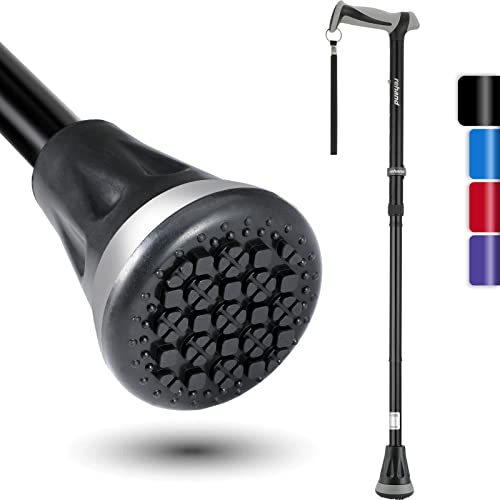
Conversely, adults experiencing significant vestibular instability, acute neuromuscular weakness, or frequent unprovoked falls should not attempt Nordic walking without clinical clearance. Those requiring direct, unilateral balance support to prevent falls must use a certified medical walking cane with a wide rubber ferrule or quad base. Attempting to use fitness poles when a cane or rollator is clinically indicated compromises stability and elevates fall risks.
Understanding the distinct biomechanical purpose behind Nordic walking allows users to select the right tool for their daily routine. When practiced with proper technique, fitted glove straps, and correctly sized poles, Nordic walking provides an exhilarating, joint-friendly pathway toward lasting functional mobility. Consulting a physical therapist ensures that incorporating pole walking safely complements your individual balance, joint health, and exercise capacity.





Write Your Review
No reviews yet. Be the first to share your experience!