


Walking with upright posture and reliable joint comfort begins with choosing the correct equipment height before taking your first step. When individuals experience knee discomfort, minor balance hesitation, or lower back fatigue, understanding how long should my walking poles be becomes an essential mobility consideration. Sizing your walking poles incorrectly can elevate the shoulders, strain neck muscles, and reduce stability across uneven terrain. Exploring options like supportive knee mobility apparel alongside bilateral walking poles helps establish a secure foundation for fitness walks and physical rehabilitation.
Properly sized walking poles transfer a portion of body weight away from the lower limbs while encouraging an active, upright stride. A pole that stands too tall prevents the arms from driving forward efficiently, while an undersized pole promotes stooping and spinal compression. Establishing your correct pole height based on anatomical landmarks ensures that your equipment supports natural body mechanics. Solid equipment choices, including rigid one-piece poles with dedicated hand straps, provide dependable stability and consistent ground contact on every outing.
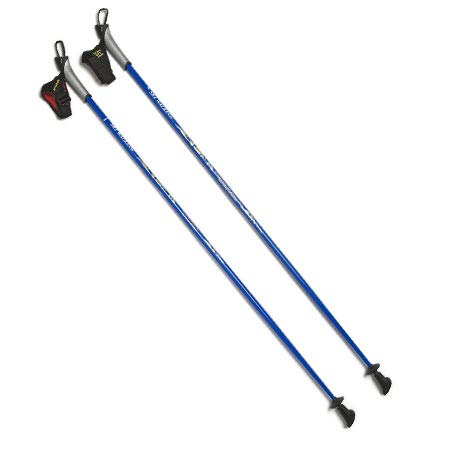

Comprehensive Sizing and Setup Guide for Walking Poles
Determining your ideal walking pole height establishes the mechanical foundation for balanced posture, smooth arm swing, and joint relief. Whether you use walking poles for daily cardiovascular exercise, physical therapy recovery, or steady balance support, the correct shaft length allows your upper body to work in harmony with your legs. Selecting an improper length undermines these physical benefits and introduces unnecessary fatigue into the arms and shoulders.
Direct Height Sizing Formulas and the 90-Degree Elbow Rule
The standard benchmark for determining walking pole length relies on a classic biomechanical measurement. Stand tall while wearing your standard walking shoes and let your upper arms hang naturally at your sides. Bend your elbows so your forearms extend straight forward, parallel to the ground at a 90-degree right angle. When you hold the pole grip in this position, the tip should rest vertically on the floor right beside your foot.
A proven mathematical formula calculates your pole height by multiplying your total standing height in centimeters by 0.68. For example, a person who stands 175 centimeters tall multiplies that number by 0.68 to reach approximately 119 centimeters. Because fixed-length poles are manufactured in set increments, rounding to the nearest standard size like 120 centimeters provides the most functional fit. Walkers who fall directly between sizes should round down for relaxed stability or round up for more athletic, propulsion-focused fitness walking.
Anatomical Landmarks: Measuring Floor to Grip Alignment
Measuring for walking poles requires different anatomical reference points than sizing a single-point walking cane. Traditional canes align with the user wrist crease to produce a 15- to 20-degree elbow bend designed purely for downward weight support. Bilateral walking poles position the hand higher to facilitate forward momentum, core engagement, and active propulsion. The top of the pole grip should comfortably meet the palm when your elbow forms a complete 90-degree bend.
Taking this measurement while wearing your everyday walking shoes prevents common sizing discrepancies. Running sneakers, trail shoes, and supportive walking shoes often add between one-half inch and one full inch to your standing height. Measuring in bare feet or socks leads to purchasing poles that feel noticeably short once you step onto paved surfaces. Keep your shoulders relaxed and your chin level while measuring from the floor to your flexed elbow to ensure an accurate fit.
Biomechanical Impact of Incorrect Pole Length on Posture and Joints
Using poles that are too long introduces substantial strain into the upper kinetic chain. When the grips sit too high, users must continuously hike their shoulders toward their ears with every forward step. This sustained muscle elevation creates persistent tension in the upper trapezius, neck, and shoulder joints. Over time, that unnatural posture leads to muscle spasms, cervical discomfort, and premature fatigue during routine walks.
Poles that are too short cause the opposite problem by forcing the torso into a forward stoop. Reaching down to plant short poles rounds the thoracic spine, increasing compression on the lumbar discs. This flexed posture also restricts deep diaphragmatic breathing and reduces the forward push generated through the upper body. When sized properly, poles encourage an upright spine and can offload between 15 and 25 percent of body weight from the knees and hips.
One-Piece Custom Lengths Versus Telescoping Adjustable Shafts
Selecting between rigid one-piece shafts and multi-segment telescoping poles is a fundamental hardware decision. One-piece poles, such as the fixed designs offered in 32 distinct lengths by the American Nordic Walking System, provide solid structural integrity without mechanical joints. These rigid shafts eliminate the annoying rattles, clicks, and shaft vibrations that frequently develop in adjustable models during hard ground strikes. For seniors and rehabilitation patients, absolute structural rigidity provides vital walking confidence.
Collapsible walking poles rely on internal twist locks or external lever clamps to secure sliding tube sections. If these friction mechanisms slip during a walk, the pole can collapse under partial body weight and create a serious fall hazard. Moisture, grit, and temperature shifts can also impair clamp reliability over extended use. A custom-sized one-piece pole built with ski pole manufacturing techniques guarantees consistent height and durable performance on every stride.
Shaft Materials and Vibration Damping: Carbon Fiber Versus Aluminum
The material composition of your walking pole shaft determines how ground impact travels into your wrists and elbows. Carbon fiber shafts, featured in premium models like the REAL Nordic Walking Carbon VIP poles, offer exceptional strength with minimal swing weight. Carbon fiber naturally absorbs and dampens high-frequency impact vibrations caused by repeated strikes against hard concrete and asphalt. Wearing comfortable lightweight trail walking apparel alongside lightweight carbon poles helps keep long walking sessions relaxed and low-impact.
Aluminum alloy shafts provide another reliable choice that offers solid durability under demanding conditions. Aluminum can bend slightly under excessive force without snapping, providing dependable support for users who require firm physical assistance. However, aluminum transmits more shock vibrations into the hand and wrist than carbon composite materials. Walkers with osteoarthritis in the fingers or carpal tunnel discomfort generally benefit from the superior vibration damping of carbon fiber shafts.
Nordic Ergonomic Straps and Grip Mechanics
The strap system on a specialized walking pole serves a critical biomechanical function that goes far beyond a simple wrist loop. Genuine Nordic walking poles feature wide, contoured harness straps that wrap securely around the hand and wrist with adjustable fasteners. These supportive straps transfer forward driving force directly from the palm into the pole shaft. This ergonomic design eliminates the need to maintain a continuous, white-knuckle grip on the handle while walking.
Basic hanging wrist straps found on generic trekking poles force the user to squeeze the handle constantly to prevent dropping the pole. That persistent gripping strains forearm tendons and can aggravate joint pain or carpal tunnel irritation. A dedicated wrap-around strap allows the walker to open the fingers naturally at the end of the backward stroke in an easy release. The strap keeps the pole securely connected to the palm so it swings forward smoothly for the next plant.
Traction Accessories: Removable Rubber Paws and Carbide Metal Tips
Walking poles adapt to different walking surfaces through specialized tips engineered for hard pavement or natural terrain. At the base of the shaft sits a durable carbide metal tip that bites firmly into dirt paths, packed gravel, turf, sand, and ice. Carbide metal resists abrasion from rocks and coarse surfaces, providing steady traction during outdoor workouts. However, using bare metal tips on indoor floors or hard sidewalks creates harsh vibration and can cause slipping.
Removable rubber tips, often called asphalt paws, slide directly over the metal points to provide quiet traction on paved surfaces. These rubber paws feature an angled tread that grips asphalt, concrete sidewalks, and indoor running tracks during the angled rear push of a fitness stride. The thick rubber compound absorbs pavement impact and protects finished floors from scratches. Walkers should regularly inspect rubber paws for tread wear to ensure the internal carbide tip does not poke through the base.
Gait Mechanics and Step Coordination on Flat Ground and Inclines
Developing smooth walking mechanics with poles requires coordinating your arm swing with your natural leg cadence. As your left foot steps forward, your right arm swings forward to plant the opposite pole at roughly a 45-degree angle behind you. You then push through the strap as your right foot advances, creating steady forward momentum that engages the core and upper back. This rhythmic cross-pattern stride mirrors natural human locomotion while reinforcing dynamic balance.
When walking uphill, modifying your body mechanics helps maintain momentum without overtaxing your shoulder muscles. Shorten your stride length slightly and plant the poles closer to your body to maintain leverage. Pushing firmly through the straps transfers climbing effort from the knees and quadriceps into the latissimus dorsi and arm muscles. On downhill paths, keeping the poles slightly forward and bending the knees provides reliable braking support that protects the patellofemoral joints.
Travel Planning and Transporting Fixed-Length Walking Gear
Transporting rigid one-piece walking poles requires simple planning when organizing gear for vacations or weekend excursions. Because fixed-length poles do not break down into short segments, they cannot fit inside standard carry-on luggage for commercial flights. Walkers frequently pack them into protective ski bags or specialized hard-sided travel cases for checked baggage handling. Reviewing a dedicated travel gear packing guide helps travelers coordinate checked sporting equipment alongside compact cabin bags.
For daily vehicle transportation, one-piece poles stow easily across the back seat or through the trunk without hassle. Using a lightweight fabric pole sleeve protects your car interior from trail dust, mud, or wet pavement residue. Storing poles flat rather than under heavy cargo prevents shaft bending and protects the strap hardware from snagging. With basic planning, the superior stability and rattle-free comfort of rigid poles remain completely practical for regular travel.
Clinical Indications: When to Transition Between Poles, Canes, and Walkers
Recognizing the functional boundaries of different mobility aids is essential for maintaining safety across changing physical conditions. Bilateral walking poles are excellent for active fitness walking, mild balance hesitation, posture training, and general joint relief. They provide dynamic, reciprocal stability for individuals who can bear their full body weight independently. However, walking poles should never replace medical mobility devices when significant joint offloading or balance intervention is required.
If an individual requires targeted unilateral support following orthopedic surgery, a standard single-point cane held on the opposite side is clinically appropriate. Single canes allow for direct vertical weight-bearing to relieve up to 25 percent of body weight from an injured leg. When balance instability progresses to frequent stumbling, severe weakness, or freezing of gait, transitioning to a four-wheeled rollator or walker becomes necessary. Consulting a licensed physical therapist or physician ensures you receive a formal gait assessment tailored to your personal mobility needs.
Pre-Walk Safety Verification and Equipment Maintenance
Performing a quick safety check before heading outdoors keeps your walking poles operating smoothly and securely. Check the rubber asphalt paws for cracks, thinning tread, or embedded stones that could reduce grip on smooth pavement. Verify that the underlying carbide metal tips remain firmly anchored without structural wobbling or severe dulling. If you use adjustable models, test each locking collar firmly to confirm that the shaft sections cannot slip under body weight.
Examine the ergonomic hand straps and buckles to confirm that the stitching and fasteners remain in good condition. Wipe down the cork or rubber grips with a damp cloth after warm outings to remove sweat oils and keep the gripping surface secure. Store your walking poles in a dry indoor area away from extreme heat that could degrade rubber components or composite adhesives. Consistent equipment care ensures dependable stability, upright posture, and joint protection on every journey.





Write Your Review
No reviews yet. Be the first to share your experience!