


Trail comfort on any day hike depends heavily on how weight rests against your back and interacts with your technical trail clothing. Carrying spare insulating layers, hydration reserves, and essential snacks requires an adaptable pack that limits shoulder fatigue while protecting delicate technical shirts from friction wear. Determining what is the best day pack for hiking often comes down to balancing packable ultralight construction against storage organization and reliable weather resistance. Hikers seeking dependable gear without steep price tags frequently turn to affordable hiking backpacks that handle rocky trails without tearing or absorbing trail moisture.
A well-designed daypack must also support active body thermoregulation by reducing dense sweat buildup between your technical base layer and the back panel. Lightweight fabrics such as water-resistant nylon and treated high-density polyester keep base weight minimal while shielding extra rain jackets from sudden trail squalls. Dialing in the right pack capacity, whether an agile twenty-liter sack or a spacious thirty-five-liter hauler, ensures you carry necessary trail essentials safely. Understanding how different packable daypacks distribute gear allows hikers to stay comfortable, agile, and prepared across changing mountain elevations.

Pros
- Extremely lightweight at under one pound (0.97 lbs), making it effortless to carry or pack into travel luggage.
- Front kangaroo stash pocket doubles as an exterior helmet carrier for multi-sport trail and bike use.
- Removable waist belt and adjustable sternum strap allow flexible fit and load stabilization.
- Hydration compartment supports up to a 2L reservoir for convenient hands-free hydration on the move.
Cons
- Hydration bladder is not included and must be purchased separately.
- Frameless packable structure is not intended for heavy gear loads or multi-day backpacking weights.
- Water-resistant polyester repels light moisture but does not replace a dedicated waterproof rain cover in heavy rain.
The BECOJADDE 20L Hiking Backpack is a lightweight, packable daypack designed for day hikers, bike commuters, weekend campers, and travelers who need functional gear storage without carrying unnecessary weight. Built to serve as an everyday trail pack or a stowable backup bag inside larger luggage, this model balances minimalist bulk with practical outdoor features. Its 20-liter volume suits essentials such as a mid-layer fleece, rain jacket, trail lunch, basic first-aid kit, and hydration gear for single-day outings.
On the trail, the pack relies on a compact footprint measuring 5.9 x 11.4 x 18.1 inches with an overall weight of just 0.96875 pounds (roughly 15.5 ounces). Organization is anchored by multiple compartments that separate small electronics and trail snacks from main storage. A standout feature is the exterior front kangaroo pocket, which expands to carry a cycling helmet or damp outer layers. For hikers who use walking poles, the pack also incorporates external trekking-pole attachment points to keep your hands free when scrambling or taking breaks.
The daypack is constructed from high-density polyester selected for its water-resistant, tear-resistant, and abrasion-resistant properties. While it is built to endure light brush and brief drizzle, it is water-resistant rather than fully waterproof. For carrying comfort, the pack integrates breathable padded shoulder straps and cushioned back support. The 20L model also features an adjustable sternum strap and a removable waist belt, allowing you to secure the bag against your torso on active trails or strip off the belt for casual around-town travel.
Using and adjusting the pack is straightforward. The chest strap slides to dial in upper-body positioning, and the removable waist belt clips into place when you need minor load stabilization during brisk walking or cycling. Setting up hydration requires sliding an aftermarket bladder of up to 2L into the dedicated hydration compartment. When trips conclude, the pack folds down compactly for flat storage in a closet or suitcase. Routine maintenance involves spot cleaning with a damp cloth and mild soap, followed by air drying away from direct heat.
Buyers should keep realistic expectations regarding load capacity and weather resistance. Because this is a frameless, packable daypack, it does not include rigid stays, an internal frame sheet, or heavy load lifters. Overloading it with dense, heavy items will place pressure directly on the shoulders. Additionally, seams and zippers are water-resistant rather than seam-sealed waterproof, meaning critical electronics should still be protected inside dry sacks during sustained rainstorms.
Overall, the BECOJADDE 20L Daypack is a dependable, high-value choice for budget-conscious day hikers, travelers needing a compact secondary bag, and outdoor enthusiasts who alternate between hiking trails and bike paths. If you prioritize minimal carry weight, smart multi-compartment organization, and helmet-carrying capability in a simple package, this daypack delivers excellent everyday versatility.
The BECOJADDE 20L pack provides a balanced 20-liter volume split across multiple internal and external storage zones. The primary compartment easily accommodates daily clothing layers, lunch, and trail navigation tools, while secondary pockets keep smaller items like keys, headlamps, and phones organized.
For hydration, the backpack features a dedicated internal hydration compartment engineered to fit water bladders up to 2L in capacity. Because the bladder is not included, users can pair the pack with their preferred aftermarket reservoir for continuous hands-free drinking on the move.
External gear management is enhanced by the front kangaroo pocket, designed to secure a cycling or climbing helmet without eating into interior capacity. Additional side water bottle pockets and trekking-pole attachment points round out the exterior layout for quick access while trekking.
Weighing under one pound at 0.96875 pounds, this daypack keeps initial carry weight exceptionally low. The suspension relies on cushioned back support and breathable padded shoulder straps to distribute moderate daypack loads evenly across the upper body.
To maintain stability during rapid movement or uneven terrain, the pack includes an adjustable sternum strap that prevents shoulder straps from slipping outward. Unlike many minimalist packable bags, this 20L version also includes a removable waist belt that helps hold the bottom of the pack steady against the hips.
The frameless build offers flexible movement and folds down small for storage. However, because there is no rigid internal frame, proper packing technique is recommended to ensure hard-edged gear does not press against the cushioned back panel.

Pros
- Weighs only 2.3 ounces, adding virtually zero noticeable weight to larger luggage or gear kits.
- Packs down to pocket size, making it ideal as a backup summit pack or emergency daypack.
- 20-liter capacity provides ample room for lightweight layers, trail snacks, and everyday items.
- Breathable mesh shoulder straps adjust easily for casual walking, cycling, or travel.
Cons
- Frameless design lacks a padded hip belt, sternum strap, and load-lifters for heavy loads.
- Water-repellent fabric sheds light moisture but is not waterproof during prolonged downpours.
- Minimal interior organization with no dedicated hydration reservoir sleeve listed.
The SUIKIHUM Ultra Lightweight Hiking-Daypack is a frameless, packable daypack built specifically for short trail outings, travel excursions, and everyday errands. Coming in at a manufacturer-listed weight of only 2.3 ounces, it caters directly to budget-conscious day hikers, travelers, and backpackers who need a minimalist secondary bag for summit pushes, city wandering, or side trips from a basecamp without adding measurable weight to their primary luggage.
In terms of volume and capacity, this pack provides 20 liters of storage space, which is plenty of room for warm-weather day hikes where you only need to carry an extra layer, trail snacks, a water bottle, and small personal gear. When unfolded, the pack measures 11.79 inches long, 4.32 inches wide, and 16.11 inches high, keeping the profile close to your back. Because the pack is entirely frameless and does not include a rigid back panel, careful packing is necessary; placing softer items like a rain jacket or fleece against the back panel helps maintain structure and prevents harder trail items from poking through.
The build relies on a lightweight polyester fabric designed to resist scuffs, scrapes, and light trail wear. The exterior surface includes a water-repellent coating intended to help shed light mist or light road spray during outdoor activities. The shoulder straps feature a breathable mesh construction equipped with standard adjustable buckles, giving you straightforward tension adjustment to fit your torso comfortably during low-intensity walking or cycling.
Portability is the clear strength of this packable design. It folds down into a compact 8.6 by 3.1 by 1.06-inch bundle that fits into a pocket, purse, glove compartment, or the top lid of an expedition backpack. Unfolding the pack at the trailhead or luggage carousel takes only seconds, and the main zippered opening gives you quick access to the entire interior. Maintaining the bag is straightforward, as the polyester fabric can be wiped clean with a damp cloth and air-dried after dusty or damp outings.
Potential buyers should keep realistic expectations regarding load support and weather protection. The SUIKIHUM daypack has no internal frame, no padded hip belt, and no sternum strap, meaning all carried weight rests entirely on your shoulders. It is not intended for heavy gear, technical equipment, or dense hydration systems. Furthermore, while the water-repellent coating handles light precipitation, it is not seam-sealed or waterproof, so sensitive electronics or dry clothing should always be placed in separate dry sacks during wet weather.
Overall, the SUIKIHUM 20L pack is a practical, ultra-affordable option for casual day hikers, minimalist travelers, and campers wanting a basic, ultralight carrying solution. If your priority is extreme packability, minimal weight, and simple utility for light gear loads, this foldable daypack serves as a dependable grab-and-go companion for trailheads and everyday travel.
The SUIKIHUM daypack stands out for its exceptional weight profile, tipping the scales at just 2.3 ounces. This featherweight build allows travelers and section hikers to tuck it away into a pocket or main pack without incurring a penalty to their base weight.
When not in use, the pack folds down to a mere 8.6 by 3.1 by 1.06 inches, making it small enough to slide into a jacket pocket, glove compartment, or the corner of a duffle bag. When ready for trail or city use, it quickly expands into a full 20-liter daypack measuring 11.79 by 4.32 by 16.11 inches.
Constructed from lightweight polyester fabric, this pack is designed to resist light abrasions, surface wear, and minor tears encountered during casual outdoor use. The material provides a balance of low bulk and daily durability for routine trail walking and cycling.
The exterior features a water-repellent surface coating that helps repel damp mist, brief drizzles, or splashes. However, because it does not feature sealed seams or waterproof closures, it is not suitable as a waterproof barrier in prolonged or heavy rain without supplemental dry bags.
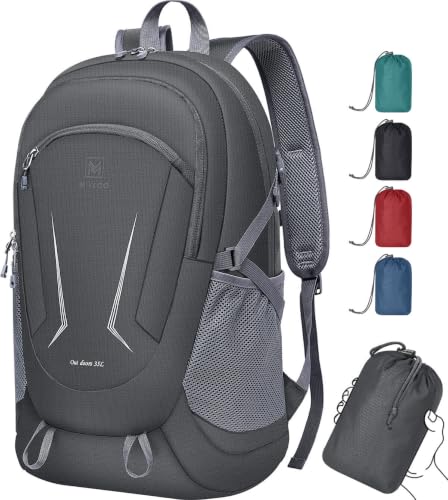
Pros
- Compresses down to 4.5 x 3.9 x 7.8 inches inside its own pocket for easy storage
- Extremely lightweight at 0.8 pounds, making it an easy addition to luggage or larger packs
- Features a dedicated wet compartment to keep damp and dry items separated
- Built-in safety whistle on the strap adds trail-readiness for emergencies
Cons
- Frameless, ultralight design lacks a rigid back panel or padded hip belt for heavy loads
- IPX4 rating protects against light rain and splashes but is not fully waterproof in prolonged downpours
- Thin packable fabric provides minimal structure or protection against sharp, bulky gear
The MIYCOO 35L Ultralight Packable Backpack is a collapsible daypack designed primarily for day hikers, travelers, and campers who need functional gear storage without carrying extra base bulk. Weighing just 0.8 pounds, it serves effectively as a secondary daypack that can stow inside a larger multi-day pack or travel suitcase until needed at the trailhead or destination. It suits budget-minded day hikers, vacationers, and lightweight enthusiasts who prioritize high packability over heavy load-bearing support.
With an unfolded profile measuring 12.5 x 8.5 x 20.9 inches and a listed capacity of 35 liters, this daypack provides generous volume for lightweight layers, trail food, and daily essentials. Because it is an ultralight, frameless packable bag, it does not feature an internal frame, rigid back-panel suspension, or a padded weight-distributing hip belt. Carried weight rests on the shoulder straps, which means packing soft items along the back panel is essential for maintaining trail comfort during moderate outings.
The pack construction utilizes water-resistant fabric with an IPX4 rating, which is designed to withstand light rain and water splashes encountered on the trail. The manufacturer incorporates reinforced major stress points and upgraded zippers with interlocking anti-theft clips to secure compartments against accidental opening. For organization, the bag provides three primary compartments, highlighted by a dedicated wet pocket that isolates damp towels, wet shells, or sweaty clothing from the rest of your dry gear. An integrated survival whistle is molded directly into the strap buckle for emergency signaling.
Packing and storing the daypack is straightforward, as the entire bag folds into its own internal pocket to a compact size of 4.5 x 3.9 x 7.8 inches. When deployed, hikers can organize trail items across the three compartments, keeping quick-grab gear accessible and heavier items centered. To clean the pack, spot cleaning with a damp cloth and mild soap followed by thorough air drying is recommended to maintain fabric integrity and zipper functionality before refolding it for long-term storage.
Buyers should be aware of clear physical limitations inherent to collapsible daypacks. The IPX4 rating offers splash protection and light-weather resistance, but it is not completely waterproof and will not safeguard electronics during sustained heavy downpours or immersion. Furthermore, the absence of structural frame stays or ergonomic suspension means carrying dense, heavy gear like climbing hardware or large amounts of water can cause strap strain and discomfort over long trail miles.
For casual day hikes, side trips from a base camp, or carry-on travel where packing space is at a premium, the MIYCOO 35L Packable Daypack offers practical, lightweight utility. Hikers looking for an inexpensive, secondary summit pack or an everyday excursion bag will appreciate its low weight and wet-gear separation, provided their gear list stays within reasonable lightweight limits.
The MIYCOO daypack delivers a stated 35-liter capacity distributed across three separate zippered compartments. This layout allows hikers to segregate trail snacks, emergency supplies, and spare layers rather than dumping everything into a single main cavity.
A standout organizational feature is the built-in wet compartment, which creates a physical barrier to separate damp jackets, sweaty clothing, or wet swimwear from sensitive dry items. The anti-theft zipper clips allow pulls to be fastened together, reducing the likelihood of zippers sliding open under motion.
At an unloaded weight of 0.8 pounds, this pack is designed to fold away into an integrated inner pocket measuring 4.5 x 3.9 x 7.8 inches. This compact folded profile makes it easy to slip into travel luggage, a car glove box, or the bottom of an expedition pack for summit bids.
The exterior material holds an IPX4 splash-resistance rating, helping shield contents from light drizzle, road spray, or damp ground. Upgraded zippers and reinforced stitching at major stress points help support everyday light-duty trail and travel demands.
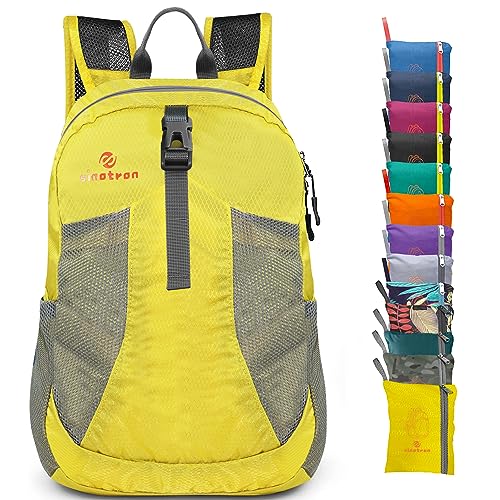
Pros
- Collapsible design packs into a pocket-sized 7.5 x 5.5 inch profile weighing only 0.7 pounds.
- Generous 22-liter volume accommodates daily trail essentials, snacks, and up to a 14-inch laptop.
- Dual side water bottle sleeves and a front mesh stash pocket provide quick external gear access.
- Water-resistant nylon construction paired with smooth metal zippers offers solid everyday utility.
Cons
- Frameless design lacks a rigid back panel, padded hip belt, or load lifters for supporting heavy trail gear.
- Water-resistant nylon fabric is not fully waterproof and will not safeguard electronics during persistent downpours.
- Manufacturer specifies that this pack is not suitable for children under 12 years old.
The Sinotron 22L Packable Hiking Daypack is a frameless, ultra-compressible day pack built primarily for day hikers, travelers, campers, and casual outdoor enthusiasts who require minimal carried weight. Tipping the scales at roughly 0.7 pounds, this foldable pack serves as a lightweight companion for short nature walks, summit scrambles from a basecamp, or travel excursions where stashing a full-sized hiking pack into luggage is impractical. Note that the manufacturer specifies this product is not intended for users under 12 years old.
With a stated 22-liter capacity and physical dimensions measuring approximately 6.3 x 8.3 x 13 inches, the pack offers enough room to store basic trail necessities such as light jackets, snacks, compact binoculars, or up to a 14-inch laptop. It lacks an internal or external frame, padded hip belt, or load lifters, meaning that the pack relies entirely on its adjustable mesh shoulder straps for carrying comfort. As a result, it performs best with lighter payloads, as heavy or dense items will press directly against the wearer's back without structural suspension to distribute the weight.
Construction centers on a water-resistant nylon fabric paired with solid metal zippers engineered for smooth opening and closure. On the exterior, the daypack features two dedicated side pockets suitable for standard water bottles or compact umbrellas, alongside an expansive front net compartment intended for quick-grab items like rain jackets or trail maps. Internally, smaller built-in organizational pockets help prevent small loose gear, such as car keys and multitools, from sinking to the bottom of the main compartment.
Packing and deployment are straightforward thanks to the pack's ability to compress down to a compact 7.5 x 5.5 inch folded profile, which occupies roughly the footprint of a paperback book. Hikers can readily slip the folded pouch into a primary multi-day backpacking pack or travel duffel until arriving at camp. Cleaning simply involves spot-cleaning the nylon shell with cool water, mild soap, and allowing it to air dry thoroughly before compressing it back into its storage configuration.
While practical for lightweight jaunts, buyers should keep realistic expectations regarding weather resistance and load capacity. The fabric is described as water-resistant nylon rather than fully seam-sealed or waterproof, meaning water may penetrate through zippers or seams during heavy rainstorms, requiring a dry bag or separate liner for sensitive electronics. Additionally, the absence of sternum straps, back-panel air channels, or waist support limits stability during vigorous scrambles or heavy gear hauls.
For budget-minded hikers, vacationers, and weekend campers seeking a straightforward, featherweight daypack that stows away virtually unnoticed, the Sinotron 22L offers dependable utility. Those intending to carry substantial water weight, camera setups, or multi-day backpacking gear will want a structured internal-frame pack, but for casual trail strolls and day outings, this foldable option provides functional convenience at minimal weight.
The Sinotron daypack provides a 22-liter storage volume, presenting a well-rounded configuration for everyday trail gear and quick day trips. The main compartment offers ample room for daily clothing layers, packed lunches, and personal electronics up to a 14-inch screen size.
For external organization, two side sleeves accommodate standard water bottles or travel umbrellas, while a large outer net pouch provides rapid access to light jackets or trail maps. Inside, dedicated smaller pockets keep keys, wallets, and pocket tools organized and prevent them from shifting around during movement.
Weighing just 0.7 pounds, this frameless daypack collapses into a self-contained footprint measuring 7.5 x 5.5 inches. This compact size allows travelers and backpackers to tuck the pack into luggage, glove boxes, or multi-day hiking packs without sacrificing substantial packing space.
When reaching a trailhead or basecamp, the pack quickly unfolds into a fully usable 22-liter daypack, making it an effective choice for side hikes and summit outings where a heavy expedition pack is unnecessary.
Evaluating Daypack Performance, Capacity, and Trail Comfort
Finding what is the best day pack for hiking begins with assessing the specific demands of your trail route, anticipated weather conditions, and personal gear list. The ideal daypack carries necessary food, water, and protective clothing securely while remaining comfortable across hours of continuous movement. Modern packable daypacks provide remarkable versatility by eliminating rigid internal frames in favor of lightweight, compressible fabrics. These designs excel for straightforward day hikes, summit scrambles, and travel adventures where minimizing base pack weight is a priority.
Capacity Selection and Volume Demands for Day Hikes
Pack volume dictates what safety margins and apparel options you can bring along during changing mountain weather. Daypacks generally range between fifteen and thirty-five liters of internal capacity, offering distinct advantages depending on trail duration. Compact models in the fifteen to twenty-liter range, such as the BECOJADDE 20L or the SUIKIHUM 20L, provide ample room for warm-weather essentials like a light wind shell, trail lunch, and hydration. Choosing this streamlined volume discourages overpacking and helps keep physical fatigue to a minimum on fast-paced outings.
Mid-sized packs between twenty and twenty-five liters provide more flexibility for variable conditions. The sinotron 22L lightweight packable hiking backpack offers enough space to stash a heavier fleece mid-layer, compact first aid kit, and separate rain pants. Hikers who navigate shoulder-season trails often require this additional volume to accommodate bulkier warm layers without straining pack seams. Many travelers also reference our carry-on backpack capacity guide when evaluating how twenty-liter daypacks transition between airport transit and rugged trailheads.
Extended wilderness day trips where you carry supplies for changing elevations demand higher capacities. A thirty-five-liter pack, such as the MIYCOO ultralight packable backpack, accommodates comprehensive foul-weather kits, extra water reserves, and emergency gear. This larger volume allows you to pack an insulated puffy jacket alongside bulky rain shells without compressing your gear excessively. Selecting a pack that aligns with your real gear footprint ensures your pack carries comfortably without sagging.
Material Durability and Water-Resistant Fabric Construction
Daypack fabrics must resist abrasive encounters with rock walls, overgrown trail branches, and continuous friction from movement. Manufacturers typically build lightweight daypacks using high-density polyester or ripstop nylon fabrics engineered for dependable tensile strength. Polyester options, featured in models like the BECOJADDE daypack, deliver reliable resistance against scuffs and punctures during typical forest hiking. Ripstop nylon weaves, like those used in the sinotron pack, incorporate reinforced grid patterns that help stop minor snags from turning into long fabric tears.
Weather protection is an equally vital material consideration when trekking under unpredictable mountain skies. Many packable daypacks utilize surface-treated water-repellent coatings to shed light rain, mist, and splash moisture. The MIYCOO daypack carries an IPX4 splash resistance rating, offering practical protection against light rain showers and damp trail conditions. While water-repellent fabrics cause droplets to bead and roll away, they do not provide total waterproof submersion protection in prolonged torrential storms. Hikers should pack sensitive electronics and spare dry base layers inside internal dry sacks when facing sustained downpours.
Hardware quality plays a major role in overall material longevity under regular trail stress. Solid metal zippers and reinforced bar-tack stitching at shoulder strap connection points prevent premature gear failures miles away from the trailhead. Light fabrics can degrade if zippers catch on fabric flaps, making smooth zipper action essential. Choosing a pack built with reinforced stress points ensures the bag handles dense water bottle loads without seam separation.
Harness Ergonomics, Strap Ventilation, and Clothing Protection
The way a daypack rests against your shoulders directly affects your posture and muscular comfort on steep trail ascents. Frameless packable backpacks rely primarily on flexible shoulder straps to distribute all carried weight across your collarbones and chest. Breathable open-mesh shoulder straps, found on the sinotron and SUIKIHUM daypacks, allow continuous airflow across your shoulders. This active ventilation reduces concentrated perspiration buildup, which is essential for keeping technical shirts dry during intense physical output.
Strap design also influences the lifespan of your technical hiking clothes. Coarse webbing or rough strap edges can cause abrasive pilling on delicate merino wool base layers and lightweight sun hoodies. Soft, wide mesh straps help distribute contact pressure evenly, minimizing friction against technical knit fabrics as your arms swing. Hikers who invest in performance apparel benefit noticeably from smooth strap linings that prevent fabric snagging and skin chafing.
Stability features help keep frameless packs secure against your back during dynamic scrambles. The BECOJADDE 20L pack features an adjustable chest strap and a removable waist belt to stabilize cargo movement on uneven terrain. A properly adjusted chest strap pulls shoulder straps inward, freeing up your arms and keeping straps from sliding off slick shells. Stabilizing the pack close to your center of gravity prevents awkward shifting that could otherwise throw off your balance on rocky trail descents.
Hydration Integration and Trail Gear Organization
Staying properly hydrated on the trail requires quick, unrestricted access to water without forcing you to stop and unpack. Daypacks designed with dedicated hydration sleeves allow hikers to slide in a water bladder for hands-free drinking on the move. The BECOJADDE daypack includes a dedicated hydration compartment compatible with up to a two-liter water bladder, complete with hose routing ports. Bladder compatibility helps maintain steady hydration pacing during steep climbs without requiring you to remove your pack.
Exterior storage pockets provide alternative hydration carrying options for hikers who prefer reusable trail bottles. Flexible side mesh pockets, featured on models like the sinotron 22L pack, hold standard water bottles, compact umbrellas, or trekking poles securely. Storing water bottles externally frees up internal pack volume for bulky insulating layers and keeps potential bottle leaks away from dry clothes. External stash pockets also grant immediate access to essential sunscreens, bug repellents, or trail snacks while walking.
Internal compartment organization helps keep critical supplies sorted and quickly accessible during emergencies. Multi-compartment layouts, such as the three-pocket design in the MIYCOO pack, allow hikers to separate wet rain shells from dry fleece jackets. The dedicated wet compartment in the MIYCOO bag prevents damp garments from soaking dry base layers after an afternoon rainstorm. Thoughtful organization eliminates frantic digging at trail junctions, ensuring navigation tools and medical kits remain instantly accessible.
Balancing Ultralight Packability with Functional Trail Support
Packable daypacks offer extraordinary weight savings compared to traditional heavy internal-frame rucksacks. The SUIKIHUM foldable daypack weighs only 2.3 ounces, while the sinotron pack registers at approximately 0.7 pounds. These ultralight bags compress down into integrated zippered pouches roughly the size of a small book. Their compact packed footprint makes them ideal secondary summit packs to carry inside larger multi-day expedition backpacks or travel luggage.
Carrying a frameless ultralight pack pairs naturally with agile hiking gear that prioritizes freedom of movement. Pairing an ultralight daypack with flexible lightweight hiking pants creates an efficient, unrestricted trail kit for covering high mileage. Without heavy metal stays or rigid backboards, frameless bags flex naturally with your torso as you step over fallen logs or scramble up steep boulder fields. This synergy between lightweight apparel and low-bulk packs significantly reduces physical strain on strenuous mountain routes.
Ultralight frameless packs do involve functional tradeoffs that hikers must consider carefully before hitting the trail. Without structured back padding, heavy or sharp objects packed incorrectly can press directly against your spine and cause discomfort. These packs lack heavy-duty load lifters, meaning they carry best when total pack weight stays under fifteen to twenty pounds. Understanding these structural boundaries helps hikers choose between ultralight packability for swift day trips and rigid frame packs for hauling heavy camping gear.
Specialized Trail Features and Added Safety Elements
Thoughtful exterior features expand the utility of lightweight daypacks across diverse outdoor activities. The BECOJADDE daypack incorporates a versatile front kangaroo pocket designed to hold cycling helmets, wet rain layers, or climbing gear. This external storage keeps bulky, oddly shaped equipment outside the main compartment while maintaining a balanced pack profile. Hikers who combine trail trekking with mountain biking or climbing routes benefit greatly from such multi-sport carrying capabilities.
Built-in safety features provide peace of mind when venturing into remote backcountry environments. The MIYCOO pack integrates a loud survival whistle directly into its chest buckle, giving hikers an immediate signaling tool during trail emergencies. Audio signaling devices work far more effectively than shouting if you become disoriented or separated from your group in dense fog. The MIYCOO pack also includes anti-theft zipper clips that secure zipper pulls together, preventing accidental openings when pushing through thick underbrush.
Low-light visibility elements protect hikers who get an early alpine start or finish hikes at dusk. Reflective trim details, such as those included on the BECOJADDE daypack, reflect headlamp beams from fellow hikers or vehicle lights along road crossings. These subtle exterior touches improve overall trail safety without adding noticeable weight or bulk to the pack body. Paying attention to these built-in details helps you choose a pack that enhances safety across varied trail environments.
Trail Packing Sequence and Gear Protection Techniques
Packing a frameless daypack properly is critical for creating a comfortable, stable carry on the trail. Soft items like a folded fleece mid-layer or a spare synthetic shirt should always sit directly against the back panel. This soft barrier creates a smooth, cushioned surface that prevents hard water filters, food containers, or trekking pole tips from poking your back. Placing dense items like heavy water bladders close to your spine keeps the pack center of gravity aligned with your natural posture.
Staging your trail clothing inside the pack ensures rapid responses to sudden mountain weather shifts. Rain jackets and lightweight wind shells should always sit at the very top of the main compartment or inside external quick-access pockets. If a sudden rain squall or cold ridge wind hits, you can deploy your protective shell in seconds without unloading your entire pack. Keeping gloves, beanies, and emergency headlamps in separate exterior zippered pockets guarantees swift access when daylight fades.
Maintaining your lightweight daypack between hikes preserves both fabric strength and water-repellent treatments. Clean dirty polyester and nylon fabrics by wiping them down with a damp cloth and mild soap rather than running them through harsh washing machines. Machine washing with aggressive agitators can strip surface water-repellent coatings and damage delicate strap mesh. Storing the pack loosely in a dry, ventilated area prevents moisture buildup and protects technical zipper teeth from corrosion over seasons of trail use.
Selecting the Right Daypack for Your Trail Objectives
Matching your daypack to your primary trail style ensures you enjoy dependable performance without unnecessary gear compromises. Minimalist day hikers who stick to well-maintained trails in mild weather will appreciate the featherlight portability of the SUIKIHUM 20L or sinotron 22L. Hikers needing active hydration routing, helmet storage, and waist stabilization for variable terrain will find the BECOJADDE 20L exceptionally well balanced. Those embarking on all-day alpine treks requiring comprehensive foul-weather clothing and wet-gear separation will get the most utility from the MIYCOO 35L.
Evaluating your pack capacity, strap comfort, fabric durability, and climate needs will lead you to the most practical setup for your adventures. A reliable daypack protects your technical layering system, supports steady hydration, and carries trail essentials effortlessly from trailhead to summit. Selecting the right balance between packable weight and functional organization allows you to focus fully on the physical rewards of the trail.



Write Your Review
No reviews yet. Be the first to share your experience!