


Trail conditions can quickly expose weak stitching, thin fabrics, and fragile zippers when gear is loaded for a long day outdoors. Figuring out how to choose a durable hiking backpack requires looking past basic aesthetic appeal to examine construction methods, structural reinforcement, and material integrity. A pack that holds up against rocky scrambles and heavy loads prevents frustrating gear failures miles away from the nearest trailhead. Pairing your pack with reliable trail hydration gear ensures that your outdoor kit remains practical and dependable throughout challenging terrain.
Backpack longevity often hinges on matching the pack build to your specific carrying demands, whether you need a compact daypack or a high-capacity multi-day hauler. Key elements such as high-density synthetic fabrics, reinforced anchor points on shoulder straps, and robust hardware determine how well a pack resists abrasion and tension over time. Understanding how materials like ripstop nylon and treated polyester handle outdoor exposure allows hikers to invest in equipment that stays functional across multiple seasons.

Pros
- Weighs only 0.75 lbs and stows into an integrated pocket for seamless packing inside luggage or larger trekking bags
- Dedicated shoulder-strap pockets provide rapid access to a smartphone and trail snacks while walking
- Taslan nylon construction provides dependable defense against trail scuffs and light moisture
- Vertically adjustable sternum strap allows users to dial in upper-body positioning without slipping
Cons
- Frameless packable build lacks rigid internal support or a padded hip belt for carrying heavy loads
- Water-repellent fabric handles light rain but is not fully waterproof or seam-sealed for heavy downpours
- Does not include an integrated hydration reservoir sleeve or dedicated water-bladder hose routing
The G4Free 20L Packable Hiking Backpack is a frameless, ultralight daypack designed specifically for hikers, travelers, and outdoor enthusiasts who prioritize minimal carry weight and space-saving packability. Operating as a secondary trail pack or a stand-alone daypack for short outings, it serves day hikers, campers heading away from a basecamp, and travelers needing an excursion pack that stows flat in luggage. Its balanced 20-liter volume provides enough capacity for daily trail essentials without adding bulk.
On the trail, the pack relies on an ultralight footprint, measuring 11.4 by 5.1 by 18.5 inches while weighing only 0.75 pounds. Because it is a frameless design without a rigid back panel or heavy suspension system, the load stays close to the body. Breathable mesh shoulder straps help promote airflow against the chest and shoulders, while an adjustable chest strap slides up or down to keep the harness centered across your torso. The capacity is well suited for carrying an extra fleece, trail snacks, a compact first-aid kit, and personal accessories on half-day or full-day outings.
Build quality centers on water-repellent Taslan nylon, a lightweight woven material chosen to withstand everyday trail abrasion, branches, and light moisture. The pocket organization is particularly thoughtful for an ultralight packable model. On the harness, a zippered pocket on the left shoulder strap secures a smartphone, while an elastic sleeve on the right holds nutrition bars or small trail tools. Additional storage consists of a front zippered compartment, two side pockets for water bottles, an interior zippered pocket, an internal slip pocket, and a front elastic bungee system for external jacket storage.
Operating and packing the daypack is straightforward. When not in use, the entire bag folds into its own 6.3 by 7.1-inch inner zippered pocket, making it effortless to stow in a glove box, carry-on suitcase, or multi-day backpacking pack. Unfolding takes only seconds, after which gear can be packed directly into the zippered main compartment. For maintenance, the nylon fabric is easy to wipe clean with a damp cloth, and the bag should be air-dried thoroughly before being compressed back into its integrated storage pouch.
Prospective buyers should keep realistic design limitations in mind. As an ultralight, packable backpack, it lacks rigid frame stays, load-lifter straps, and a padded hip belt, meaning it is not intended for heavy multi-day gear or dense, sharp equipment that could poke through the back panel. Furthermore, while the Taslan nylon fabric sheds light drizzles and trail spray, it lacks taped seams and a dedicated rain cover, so it should not be relied upon to keep contents dry in severe weather. The pack also does not advertise a dedicated hydration bladder hanger or hose port.
For day hikers, campers, and travelers seeking an inexpensive, functional, and exceptionally lightweight daypack, the G4Free 20L Packable Backpack is an easy recommendation. It provides practical trail access via its unique shoulder-strap pockets and versatile exterior bungee system while remaining compact enough to pack along on any journey.
The G4Free 20L Packable Backpack offers an intuitive storage configuration that rivals many full-sized daypacks despite its collapsible nature. The primary storage consists of a spacious zippered main compartment that easily accommodates insulating layers, trail lunch, and bulkier gear. Inside this space, one zippered security pocket holds keys or a wallet, while an additional slip pocket helps keep flatter items separated from the main interior cavity.
External organization focuses on immediate trail utility. The front panel features a zippered accessory compartment for maps, headlamps, or sun protection, supplemented by two elastic side pockets sized for water bottles. A front bungee cord setup provides fast external stowage for a rain shell or damp layer. Uniquely, the shoulder harness includes a zippered phone sleeve on the left strap and an elastic pocket on the right, allowing quick access to electronics and snacks without having to take the pack off.
Constructed from water-repellent Taslan nylon, this backpack provides a practical balance between tear resistance and minimal carry weight. The fabric offers reliable defense against light precipitation, trail dust, and light abrasions while keeping the complete empty pack weight at just 0.75 pounds. This lightweight exterior allows the pack to fold down into a compact 6.3 by 7.1-inch bundle using its built-in inner pocket.
Portability makes this daypack an ideal backup option for multi-day backpackers who want a summit pack for side trips from basecamp, as well as vacationers who want a secondary bag for day excursions. Maintenance is simple, requiring only spot cleaning with mild soap and cold water. It should always be completely dried before being zipped into its compact storage pouch to preserve the fabric and zipper integrity over time.

Pros
- Spacious 50L storage with organized multi-pocket layout and dedicated sleeping bag section
- Low base weight of just 2.5 pounds reduces unneeded pack bulk on long walks
- Comes with an included waterproof rain cover for quick bad-weather readiness
- Padded S-shaped shoulder straps paired with adjustable waist and chest straps provide flexible fit adjustments
- Tear-resistant and anti-scratch nylon and polyester construction holds up to basic outdoor wear
Cons
- Lacks precise torso-length measurement options or an adjustable harness ladder for custom spine fitting
- Does not include a rigid metal internal frame, which limits support for excessively dense or heavy loads
- Shell fabric is water-resistant rather than fully waterproof, requiring immediate use of the rain cover in steady rain
The WoneNice 50L Hiking Backpack is a high-capacity, multi-compartment pack built for budget-conscious day hikers, weekend campers, and outdoor travelers who need generous internal volume without a heavy initial pack weight. Configured with a 45+5 liter capacity split across multiple storage zones, it appeals to hikers carrying bulkier sleep systems, extra clothing layers, or cooking equipment. At an empty weight of 2.5 pounds and exterior dimensions of 13.8 x 7.9 x 23.6 inches, it offers an accessible balance of internal gear volume and straightforward trail utility for those exploring local state parks, car camping sites, or heading out on casual travel adventures.
On the trail, the backpack organizes gear through a spacious primary compartment and a dedicated sleeping bag compartment at the base. High-elastic, breathable back padding cushions the contact areas against the spine and shoulder blades, while widened, thickened S-type shoulder straps distribute pressure across the upper body. The adjustable chest strap and waist belt help stabilize the pack against side-to-side shift while walking. However, because the pack utilizes flexible elastic back support rather than rigid internal aluminum stays or a structured suspension system, packing heavier items close to the spine is essential to avoid balance issues on steep ascents.
Built from a blend of polyester and nylon fabrics, the exterior shell is engineered for tear resistance, scratch resistance, and general trail abrasion. The pack features an external hanging system for securing additional gear outside the main storage bag, along with durable plastic adjustment buckles along the harness. For wet trail conditions, the fabric provides water resistance against light mist and splashes, while the included waterproof rain cover can be pulled over the entire exterior when steady rainfall or passing mountain storms threaten to soak your gear.
Adjusting the backpack for a day on the trail is straightforward thanks to sliding tensioners on the shoulder straps, sternum strap, and waist belt. Two front zippered pockets give quick access to maps, headlamps, snacks, or small electronics, while the twin side mesh pockets hold standard water bottles. For maintenance, the nylon and polyester shell wipes clean easily with a damp cloth and mild soap, and the entire pack should be air-dried completely in the shade before long-term storage to preserve the protective coatings and seam construction.
Potential buyers should recognize several practical limitations inherent to this design. The backpack does not specify dedicated torso-length adjustment ranges or a rigid internal frame, meaning it may not suit hikers needing structured load transfer to the hips when carrying dense, heavy expedition loads. Furthermore, while the pack includes a waterproof rain cover, the base fabric itself is water-resistant rather than submersible or seam-sealed, making immediate use of the rain cover mandatory during sustained precipitation.
For weekend backpackers, car campers, beginner trail enthusiasts, and budget-focused travelers who want high internal volume without paying for high-end technical frame systems, the WoneNice 50L pack offers dependable value. Provided your total carried gear weight stays within reasonable limits and you do not require a specialized torso-fit measurement, its smart pocket arrangement, lightweight construction, and included rain cover make it a versatile asset for varied outdoor outings.
The WoneNice backpack provides a total listed capacity of 50 liters, split in a 45+5 liter layout to help separate core camp gear from quick-access items. A separate bottom compartment is designed specifically for a sleeping bag, keeping it isolated from the main storage area so you do not have to unpack your entire pack when setting up camp at night.
In addition to the main cavity, the pack features two front zippered pockets for trail passes, trail maps, or a compact first-aid kit. Dual mesh side pockets hold standard water bottles, while external attachment loops allow for hanging additional gear such as a compact foam pad or camp shoes on the outside of the pack.
Harness comfort relies on widened, thickened S-shaped shoulder straps paired with a high-elastic, breathable back panel designed to facilitate airflow along the spine. Both the chest belt and waist belt are fully adjustable to secure the pack closely against the torso and minimize shifting on uneven footpaths.
Because the pack does not feature an adjustable torso frame or published torso-length dimensions, fit will vary by individual spine length. It performs best when packed moderately, as the lack of rigid aluminum stays means heavier gear loads will bear primarily on the shoulders rather than transferring completely to the hips.
The pack is constructed from a blend of polyester and nylon fabrics designed to withstand scrapes against branches, brush, and rocky ground. The material offers basic water resistance, which is effective against light spray, damp grass, or very brief moisture exposure.
For downpours and extended wet weather, the backpack includes a dedicated waterproof rain cover that stows away easily until needed. Hikers carrying sensitive electronics, cameras, or down insulation should deploy the rain cover at the first sign of steady rain to prevent moisture from seeping through standard zippered seams.
Pros
- Impressive 50-liter packing volume paired with a low pack weight under 2.5 pounds
- Included waterproof rain cover provides immediate weather defense without extra gear purchases
- Shoe compartment and six exterior pockets keep footwear and trail essentials organized
- Multiple compression straps and tie-off loops easily secure trekking poles, pads, and exterior gear
Cons
- Frameless design lacks rigid stays, meaning heavy gear loads cannot transfer directly to a supportive hip frame
- Fixed torso sizing does not allow micro-adjustments for hikers with very short or long torso lengths
- Requires deliberate packing technique to prevent round bulges or uneven weight against the back
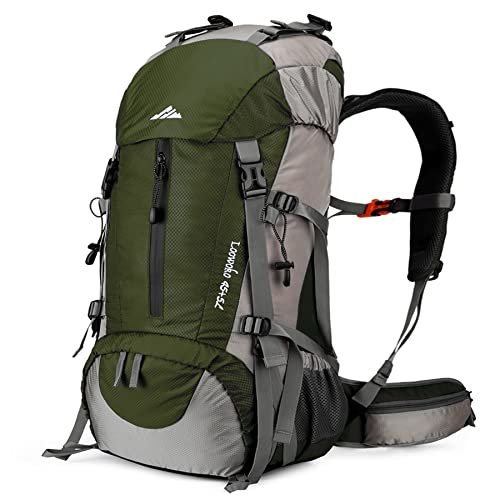
The Loowoko 50L Hiking Backpack is a high-volume, frameless trail rucksack built for weekend campers, casual backpackers, and travelers who want maximum storage without the heft of a structured frame. Sized at approximately 23.6 x 11.8 x 7.9 inches with a 50-liter capacity, this bag bridges the gap between a large daypack and an extended-trip hauler. It best serves hikers who pack relatively light gear, budget-conscious beginners, and outdoor enthusiasts traveling on airlines where empty pack weight matters.
Trail performance with a frameless pack depends heavily on mindful load management. Because the Loowoko 50L does not have internal metal stays or a composite frame sheet, the user creates structural stability through smart packing. Placing your sleeping pad or dense, soft layers against the back panel establishes a smooth contact surface. Breathable S-curve shoulder straps with dense sponge padding, an adjustable sternum strap, and an elastic padded back panel help cushion the upper body while encouraging air circulation on warmer trail days.
The build quality incorporates tear-resistant polyester and nylon fabrics designed to withstand routine trail friction and brush contact. Upgraded zippers and reinforced seam stitching secure daily closure points, while lateral and vertical compression straps allow you to cinch down empty volume. When carrying bulkier trail equipment, the integrated lash loops and exterior straps hold items such as trekking poles, ice axes, or rolled sleeping pads securely against the outside of the bag.
Organization is a definite strength of this pack, featuring a spacious top-loading main compartment complemented by an independent bottom shoe compartment. This bottom divider isolates dirty trail runners or camp shoes from your clean clothing and food supplies. Six external pockets give you dedicated spaces for water bottles, guidebooks, and trail snacks, keeping critical items accessible without opening the primary compartment.
Weather protection is straightforward thanks to the included waterproof rain cover, which stores directly in its own bottom pocket. While the polyester and nylon pack body resists light moisture and everyday trail grime, pulling the fitted rain cover over the exterior is essential for severe downpours. Note that because the pack has no internal frame, loading it with excessive weight may cause the shoulder straps to take on disproportionate pressure, making it less suitable for heavy, technical multi-day expeditions.
For day hikers needing bulk capacity, budget-conscious weekend campers packing modern lightweight gear, and travelers exploring destinations with varied climates, the Loowoko 50L offers solid utility. Its blend of low pack weight, diverse pocket layout, exterior tool loops, and an integrated rain cover makes it an economical and capable gear hauler for casual outdoor adventures.
With 50 liters of listed storage, this backpack easily handles warm-weather camping systems, clothing layers, and trail food. The primary compartment opens wide for rapid loading of bulky gear sacks and clothing bags.
The integrated lower shoe separator is a standout feature for outdoor travel, offering an isolated compartment for trail footwear, sandals, or wet apparel. Six external pockets let you categorize smaller items like navigation tools, sunscreen, snacks, and headlamps for quick trailside access.
Exterior webbing loops and compression straps provide functional tie-down spots for outdoor hardware. Hikers carrying trekking poles, compact tents, or sleeping pads can lash them directly to the pack exterior, preserving valuable interior space for weather-sensitive supplies.
The Loowoko 50L is engineered with a frameless construction, keeping the total tare weight around 2.1 to 2.36 pounds. Without rigid metal stays or internal perimeter frames, the backpack flexes naturally with your body as you hike.
Load support relies on widened, thickened S-type shoulder straps padded with dense sponge and covered in breathable mesh. These straps help spread contact pressure across the shoulders and collarbones, while the sternum strap stabilizes the harness against lateral movement.
Because there is no rigid internal frame transferring weight downward to a heavy-duty hip belt, this pack is best suited for light-to-moderate loads. Hikers should pack heavy items close to the spine to maintain balanced weight distribution and prevent the pack from sagging away from the torso.

Pros
- Massive expandable storage volume shifting easily between 70L and 100L for bulky gear
- Low empty weight of 3.31 pounds keeps the pack easy to maneuver and haul
- Tough 600D Oxford fabric with reinforced stitching and sturdy zippers
- MOLLE webbing provides convenient external attachment points for trail accessories
Cons
- Lacks an internal frame or aluminum stays, which limits structured load transfer under heavy loads
- Fabric is water-resistant rather than fully waterproof, requiring a separate rain cover in persistent downpours
- Does not offer specific torso-length adjustment tracks for micro-tuned backpacking fit
The Vaupan Expandable Hiking Backpack is a high-capacity, tactical-style outdoor rucksack designed for campers, travelers, and outdoor enthusiasts who need to transport bulky gear without taking on excessive empty pack weight. With an adaptable storage capacity shifting from 70 liters up to 100 liters, this pack caters to budget-focused users, family campers, and hunters carrying items like sleeping bags, mats, and spare clothing.
Regarding capacity and load handling, the backpack measures 40 by 30 by 75 centimeters in standard 70-liter mode, expanding to 40 by 30 by 90 centimeters (approximately 11.8 by 15.7 by 35.4 inches) when fully deployed to 100 liters. It weighs just 3.31 pounds (1.5 kg), which is remarkably low for a pack of this volume. Comfort features include widened, thickened S-type mesh shoulder straps padded with sponge and a high-elastic breathable back panel. However, because it lacks a rigid internal frame or structured load-lifter system, packing strategy plays a crucial role in maintaining stability on the move.
Build quality centers on durable 600D Oxford fabric combined with water-resistant backing, supported by reinforced stitching and robust zippers. For organization, the pack includes an expansive top-loading main compartment equipped with an elastic expansion drawstring, an interior laptop compartment, a front zippered organizer pocket, and two side pockets tailored for water bottles or compact umbrellas. The exterior is fitted with a MOLLE webbing system, allowing hikers to attach trekking poles, tents, and additional pouch accessories directly to the outside.
Using and fitting the Vaupan rucksack is straightforward, relying on standard strap adjustments rather than complicated harness sizing. When loading a frameless high-capacity pack like this, place softer bulk items at the bottom, dense gear against your back, and use the exterior MOLLE straps to balance long items. Maintenance requires minimal effort: wipe down the Oxford exterior with a damp cloth, spot clean trail grime, and allow the fabric to air dry completely before storage.
There are realistic limitations to keep in mind before heading out. While the product data references waterproof and water-resistant materials, the fabric is primarily water-resistant, meaning it can shed light moisture but will require a waterproof rain cover or dry bags during sustained rain. Furthermore, carrying maximum capacity without an internal frame or structured hip-belt load transfer means heavy, dense loads may pull away from the shoulders over long trail miles.
The Vaupan 70L-100L Backpack is a practical, value-driven choice for weekend campers, scout trips, road travel, and basecamp storage where maximum volume and modular external carry take priority. Hikers carrying lightweight, high-volume gear will appreciate the low pack weight and expandable layout, provided they pack intentionally to compensate for the frameless build.
The core advantage of the Vaupan tactical rucksack is its expandable storage design, which shifts from a standard 70-liter pack to a 100-liter hauler using an integrated drawstring expansion system. In standard mode, the pack stands 75 centimeters tall, expanding to 90 centimeters when maximum storage is required.
This flexible volume accommodates bulky camp items including sleeping bags, camp mats, hammocks, extra footwear, and outer layers. An internal laptop sleeve, front zipper compartment, and dual side bottle pockets round out the organization, giving users flexible options for packing gear of varying sizes.
The rucksack is crafted from 600D Oxford fabric designed to provide dependable resistance to abrasions, scuffs, and trail wear. The fabric features a water-resistant treatment that helps repel mist and light rain encounters.
Because the pack features standard zippers and stitched seams without complete submersible sealing, users should not treat it as fully waterproof in severe weather. For hiking in heavy rain, pairing the rucksack with an external pack rain cover or packing sensitive gear in waterproof dry bags is strongly advised.

Pros
- Weighs only 1.37 pounds while incorporating a structured PP support board rarely found in ultralight daypacks.
- Versatile internal sleeve fits either a 2L water reservoir or a 15.6-inch tech device.
- Includes both an adjustable chest strap with a safety whistle and a padded waist belt for load security.
- Durable combination of 600D polyester and 200D nylon fabric handles light precipitation and trail brush.
Cons
- Hydration reservoir is not included and must be purchased separately.
- The 20-liter volume is strictly sized for day use and cannot accommodate bulky overnight or multi-day backpacking gear.
- Fabric is water-resistant for light rain but is not waterproof and lacks an included rain cover for sustained downpours.
The WATERFLY 20L Hiking Backpack is a compact, lightweight daypack designed for day hikers, urban commuters, and travelers who need a structured pack without the bulk of a full-size trekking bag. With an overall volume of 20 liters and an empty weight of 1.37 pounds (620 grams), this pack provides enough room for daily trail essentials, hydration, or everyday tech. Its streamlined profile meets standard airline carry-on specifications, making it equally functional for trailhead travel and routine day trips.
For trail outings, load support and torso stability rely on an internal polypropylene (PP) board combined with a ventilated 3D mesh back panel. While many small daypacks are completely frameless and prone to barreling against the back, the integrated PP sheet offers rigid structural backing that keeps gear from poking through and promotes airflow along the spine. The harness system includes padded shoulder straps, an adjustable chest strap with an integrated safety whistle, and a padded waist belt designed to stabilize the load across uneven terrain.
The exterior chassis is built from a combination of 600D polyester and 200D nylon fabrics, engineered to brush past trailside branches and handle light rain exposure. Equipment access is handled through smooth two-way SBS zippers fitted with extended pull rings, allowing easy operation while wearing trail gloves. Inside, the main compartment features a light-grey lining that enhances visibility, making it easier to identify packed items in low-light trailhead conditions.
Packing and hydration management are straightforward thanks to a versatile dual-purpose sleeve in the main compartment. This padded divider accommodates up to a 2-liter hydration bladder (purchased separately) with an integrated hose exit port, or it can securely hold a laptop or tablet up to 15.6 inches for commuting. Additional external organization includes dual side mesh pockets for water bottles, a quick-access front zippered pocket for trail snacks or small accessories, and a front elastic bungee system to lash down an extra layer or damp rain shell.
Hikers should keep realistic expectations regarding volume and weather protection. With a 20-liter capacity and medium sizing, this pack is intended for single-day outings and cannot accommodate bulky sleeping systems or multi-day backpacking loads. Furthermore, while the 600D and 200D materials are water-resistant against mist and light showers, the pack is not fully waterproof and does not include a dedicated rain cover, meaning critical electronics should remain in protective dry bags during heavy rain.
Overall, the WATERFLY 20L Daypack is a practical choice for hikers, travelers, and commuters who prioritize lightweight portability, internal frame support, and organized hydration readiness. If you need a supportive, sub-two-pound daypack for weekend peak bagging, local state park trails, or urban transit, this model delivers functional utility and comfortable carry at a manageable size.
The WATERFLY Daypack is specified at a 20-liter capacity with external dimensions measuring 10.8 x 6.5 x 18.9 inches. This size provides sufficient internal space for rain layers, trail food, emergency gear, and personal items, while remaining compact enough to comply with standard airline carry-on regulations.
The pack comes in a medium size and incorporates an adjustable chest strap and a padded waist belt to secure the load against the body. Unlike completely frameless ultralight daypacks, this model integrates an internal PP board that maintains pack structure and keeps contents evenly positioned across the back during movement.
Hydration integration is built directly into the main compartment via a padded sleeve capable of housing a standard 2-liter water reservoir (sold separately). An integrated hose routing port allows hands-free drinking on the move, while dual exterior mesh side pockets provide quick-reach storage for standard water bottles.
For dual-purpose use, the same padded sleeve can protect laptops and tablets up to 15.6 inches for work or travel. Outer storage includes a front zippered pocket for smaller essentials and an external bungee cord configuration designed to hold packable jackets or damp apparel on the outside of the pack.
Pros
- Weighs only about 0.68 pounds and stows into its own 7 x 6.3 inch pocket for easy travel packability.
- Shoulder strap pockets provide convenient on-the-go access for a smartphone and small trail items.
- Multiple exterior pockets, including dual bottle sleeves and a front mesh stash zone, offer solid organization for a 15L pack.
- Adjustable chest belt helps stabilize shoulder straps and integrates an emergency whistle buckle.
Cons
- Frameless, ultralight construction lacks back-panel padding, suspension stays, and a hip belt for heavier loads.
- Tear-resistant fabric does not include a rain cover or seam-sealed waterproofing for sustained downpours.
- Compact 15-liter volume cannot accommodate bulky cold-weather gear or multi-day supplies.
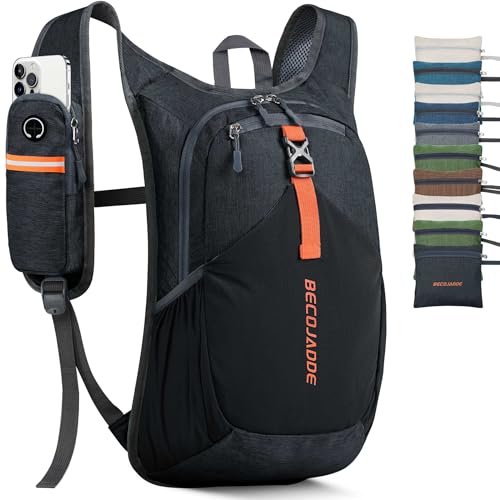
The BECOJADDE 15L Small Hiking Backpack is a frameless, foldable ultralight daypack tailored for short trail hikes, city-to-trail travel, everyday commutes, and low-bulk outdoor activities. Designed for hikers who prefer to travel light, this pack offers a functional 15-liter volume while weighing only about 0.68 pounds. Its ability to collapse into an integrated zippered pouch makes it an appealing choice for luggage-toting travelers, minimalist day hikers, and casual outdoor enthusiasts who need auxiliary carrying capacity without the bulk of a full-size technical pack.
On the trail, the pack's 15-liter interior holds lightweight essentials such as a packable wind shell, trail snacks, a small first-aid kit, and personal accessories. Measuring 17.7 by 11 by 5.1 inches when unfolded, it features an adjustable chest belt that slides vertically and tightens around the circumference to keep the shoulder straps aligned across the torso. Because it is an ultralight packable design without a rigid internal frame or padded hip belt, load management relies on balanced packing and sensible gear choices rather than structural load transfer.
Crafted from tear-resistant and scratch-resistant fabric, the backpack incorporates reinforced stress points to handle common strap strain during everyday outings. The shoulder straps use a breathable mesh construction, but the standout feature is the harness pocketing: a zippered phone pocket rests on the left strap while a drawstring cinch pocket sits on the right. External storage is further complemented by dual side water bottle holders, a front elastic mesh sleeve, a front zippered compartment, and a rear anti-theft zippered pocket placed directly against the wearer's back.
Transitioning between storage and active trail use is straightforward. When empty, the bag collapses down to a compact 7 by 6.3 inches into its own designated zippered pocket, sliding cleanly into a carry-on suitcase, glove compartment, or larger multi-day backpack. The sternum strap buckle integrates a small emergency whistle, adding practical utility for outdoor safety. For routine maintenance, the lightweight fabric can be spot cleaned with mild soap and cold water, followed by air drying away from direct high heat to preserve fabric coatings and mesh elasticity.
Despite its versatile pocket layout, the BECOJADDE 15L has clear operational boundaries. With no internal frame stays, back-panel ventilation channels, or load-transferring hip belt, carrying dense, heavy, or sharp objects can cause uncomfortable pressure points against the spine. Furthermore, while the tear-resistant fabric sheds light trail friction, the product specifications list no waterproof membrane, taped seams, or rain cover, making additional internal dry sacks necessary during heavy rain. It also does not list a dedicated internal hydration reservoir sleeve or hose port, relying instead on its two exterior side bottle pockets.
For hikers, travelers, and daily commuters looking for an affordable, ultralight grab-and-go pack with exceptional quick-access strap pockets, the BECOJADDE 15L is a capable option. It works well as a summit pack stashed inside larger luggage or as a lightweight daypack for warm-weather trail loops where only water, snacks, and a light jacket are required. Hikers requiring structured back support, heavy load-bearing frames, or dedicated reservoir hydration should look toward fully framed technical packs instead.
The BECOJADDE 15L stands out in the packable daypack category by offering harness-mounted storage rarely seen on minimalist ultralight bags. The left shoulder strap integrates a zippered phone pocket to keep modern smartphones secure and within immediate reach, while the right strap features an elastic drawstring pocket suitable for energy bars, sunglasses, or small trail gear.
Exterior storage includes two dedicated side water bottle holders, a front elastic mesh drop pocket for quick trail layers, and a front zippered compartment for smaller flat gear. Additionally, a hidden rear anti-theft zippered pocket rests flat against the back panel, providing secure storage for passports, cash, and identification during travel or public commuting.
Designed for maximum portability, this pack folds directly into its own internal pocket, shrinking from an unfolded footprint of 17.7 x 11 x 5.1 inches down to 7 x 6.3 inches. Weighing roughly 0.68 pounds, it can be stashed in travel luggage, duffel bags, or vehicle consoles without consuming noticeable space.
The harness includes an adjustable chest belt that adjusts vertically along the shoulder straps and cinches horizontally across the chest for a secure upper-body fit. The sternum buckle features a built-in safety whistle for signaling on the trail. Because this pack is completely frameless and lacks a padded waist belt, it performs best when carrying moderate, light day loads.

Pros
- Weighs only 0.8 pounds, significantly reducing carried base weight for day hikes and travel
- Folds into an integrated pocket for compact storage inside luggage or multi-day backpacking packs
- Dedicated wet compartment separates damp gear or dirty clothing from dry contents
- Shoulder strap features a built-in emergency survival whistle for outdoor safety
- Anti-theft zipper clips help secure pocket openings on crowded trails and travel hubs
Cons
- Frameless, ultralight build lacks internal suspension, rigid stays, and a padded hip belt for heavy loads
- IPX4 water-resistance rating handles splashes and light showers but does not protect against torrential downpours
- Shoulder straps provide minimal padding compared to dedicated heavy-duty daypacks
The MIYCOO Ultralight Packable Backpack is a 35-liter collapsible daypack designed for day hikers, travelers, and campers who need functional trail volume without excess weight. Weighing only 0.8 pounds, this frameless bag is built to fold completely into its own internal storage pocket, reducing its profile to a compact 4.5 x 3.9 x 7.8 inches. That packability makes it an appealing option for travelers stashing a summit bag in a suitcase, as well as backpackers looking for a lightweight side-trip bag at basecamp.
When expanded to its full 12.5 x 8.5 x 20.9-inch dimensions, the pack provides 35 liters of total capacity divided across three distinct compartments. This volume gives hikers sufficient room for trail layers, food, hydration containers, and trail accessories. A notable internal feature is the integrated wet compartment, designed to isolate damp towels, sweaty apparel, or rain shells from dry layers. Because the backpack is entirely frameless and unstructured, packing heavier items flat against the back panel is recommended to maintain stability while walking.
Construction relies on water-resistant fabric rated at IPX4, providing defense against water splashes and light rain encountered along the trail. The pack features upgraded heavy-duty zippers equipped with anti-theft zipper clips that connect pulls together, reducing the likelihood of accidental openings or tampering. Major stress zones are reinforced to withstand everyday packing stress. Additionally, the sternum region of the shoulder strap includes a molded emergency survival whistle for signaling assistance in remote outdoor environments.
Handling and maintenance are simple due to the minimalist construction. The pack requires no complex torso adjustments or rigid frame setups; users simply unfold it from the inner pocket and adjust the shoulder straps for a secure carry. After muddy outings, the fabric can be spot-cleaned with mild soap and water before air drying. Once fully dry, the daypack packs back into its self-contained pocket pouch in seconds, keeping gear closets and travel luggage organized between outings.
Potential buyers should keep realistic design limits in mind. Without an internal frame sheet, aluminum stays, or a load-bearing hip belt, carrying dense, heavy loads may result in pressure on the shoulders. Furthermore, the IPX4 rating indicates splash resistance rather than complete submersion waterproofing, meaning vulnerable electronics or dry clothing should still be protected with internal dry bags or an external pack cover during sustained downpours.
For hikers, commuters, and travelers seeking an affordable, space-saving pack for casual trail days and secondary travel excursions, the MIYCOO 35L Packable Daypack offers strong utility. It delivers practical wet-dry separation, basic splash protection, and emergency signaling in an ultra-portable format suited for moderate-load adventures.
The MIYCOO Packable Daypack provides 35 liters of storage distributed across three distinct zipper compartments. The interior layout includes a specialized wet compartment, allowing hikers to separate damp rain gear, swimwear, or muddy towels from clean, dry clothing and trail snacks.
When empty, the entire backpack collapses directly into an internal pocket, measuring just 4.5 x 3.9 x 7.8 inches when packed down. This self-contained folding design eliminates the need for separate stuff sacks and allows the pack to slip easily into luggage, car compartments, or larger multi-day packs.
The exterior fabric of this daypack features an IPX4 water-resistance rating, designed to protect contents against water splashes and light, intermittent rain showers during outdoor activities.
Hikers should note that IPX4 splash resistance is not equivalent to complete waterproofing. In continuous heavy rain or severe weather, water may penetrate through non-sealed seams or zipper tracks, so moisture-sensitive items like electronics and down insulation should be placed in secondary waterproof bags.

Pros
- Spacious 40L storage capacity paired with a low empty weight under 2 pounds
- Integrated rain cover stows neatly in a dedicated bottom pocket for quick storm protection
- Dedicated external lash straps for carrying trekking poles, tripods, or a sleeping pad
- Dual zippered hip-belt pockets allow convenient access to snacks, keys, or small essentials
- Integrated safety features including a reflective logo and built-in sternum strap whistle
Cons
- Lacks a rigid internal frame or stays to support dense, heavy backpacking loads
- Hydration reservoir is not included and must be purchased separately
- Torso length is not adjustable for hikers requiring custom back-panel sizing
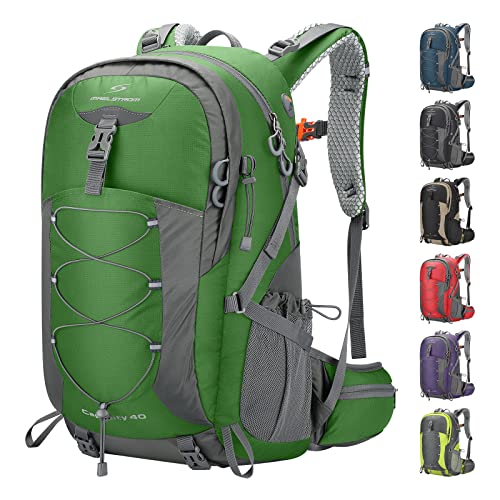
The Maelstrom 40L Hiking Backpack is a lightweight, high-volume daypack designed for day hikers, budget-minded outdoor enthusiasts, campers, and adventure travelers needing ample storage without excessive pack weight. Built with an exterior profile measuring 8.6 by 13.4 by 22 inches and offering a full 40-liter capacity, this pack provides sufficient space for bulky layers, trail rations, camera equipment, or weekend travel essentials.
Trail usability centers around thoughtful load management and convenient trail-side access. With an empty weight listed between 1.5 and 1.96 pounds, the pack adds minimal dead weight before packing your gear. The suspension system relies on ergonomic shoulder straps, a back support system, and dual side and bottom compression straps that help cinch the load tight to prevent shifting. Two zippered waist belt pockets provide on-the-move access to lip balm, trail snacks, or small navigation tools, while the sternum strap buckle integrates a survival whistle for emergencies.
The pack is constructed from a lightweight nylon fabric described as water-resistant, scratch-resistant, and tear-resistant. To defend gear against sudden mountain downpours, a dedicated bottom zippered pocket contains a fitted rain cover equipped with a reflective silver logo. External hardware includes side compression straps with quick-release buckles to secure trekking poles or tall water bottles, alongside dual bottom straps designed to hold a compact sleeping pad or camera tripod.
Hydration management is integrated directly into the primary compartment, which features an internal hook-and-loop strap to hold a hydration reservoir upright and a dedicated top port for hose routing. Gear organization is straightforward thanks to a main zippered compartment, two front zippered organizer pockets, two side water bottle sleeves, and exterior mesh pouches, allowing hikers to keep wet or quick-access items separated from clean interior gear.
Because this backpack uses a frameless structure, it is not built to carry heavy multi-day backpacking loads, which can cause the pack to pull against the shoulders without a rigid frame to transfer weight to the hips. Additionally, the back panel has a fixed torso length rather than an adjustable harness, meaning hikers with especially long or short spines cannot fine-tune the suspension. The water-resistant nylon handles light mist, but hikers should always deploy the included rain cover during steady rain to prevent moisture from entering through the seams or zippers.
For day hikers needing extra room for cold-weather layers, families packing trail gear for group outings, or travelers wanting an organized carry-on daypack, the Maelstrom 40L Backpack represents an affordable, highly functional choice. Those requiring structured load transfer for heavy backcountry expeditions should look toward internal-frame packs, but for general outdoor and travel use, this pack delivers strong everyday value.
The Maelstrom pack provides a verified 40 liters of volume distributed across several compartments to keep trail gear neatly sorted. The main compartment offers unobstructed packing space for bulkier layers, a rain jacket, or packed camp meals, while an internal sleeve holds your hydration reservoir securely against the back panel.
External organization includes two front zippered pockets for trail maps, headlamps, and hygiene kits, alongside dual mesh side pockets designed for standard water bottles. Two zippered hip-belt pockets provide quick access to trail snacks and compasses, and dual bottom lash straps allow you to secure a sleeping pad, rolled tarp, or compact tripod externally.
Constructed from water-resistant and tear-resistant nylon fabric, the pack body easily repels brief mist, dust, and light trail splashes. The exterior fabric resists scuffs from branches and rocky terrain during routine day hikes and travel.
For sustained downpours or heavy storm exposure, the pack features a dedicated bottom zippered pouch housing an integrated rain cover. Deploying this fitted cover over the entire pack shields exposed zippers and seams from rain intrusion while enhancing trail visibility via a reflective silver logo.

Pros
- Featherweight 1.1-pound design keeps base trail weight minimal
- Durable fabric blend combining 600D polyester with 210D nylon plaid
- External trekking pole holders free up internal compartment space
- Chest strap includes an integrated emergency signal whistle
- Reflective detailing enhances low-light visibility along roadways and trailheads
Cons
- Frameless design lacks a rigid stay or padded load-bearing hip belt for heavy gear
- 20-liter capacity is strictly built for day trips and cannot accommodate overnight camping gear
- Water-resistant fabric repels light moisture but does not replace a waterproof rain cover in heavy rain
The SKYSPER 20L Hiking Daypack (LANTC20) is a streamlined, frameless pack engineered for day hikers, outdoor travelers, and daily commuters who prioritize agility over bulky load-bearing structures. Weighing just 1.1 pounds with an exterior profile measuring approximately 10.3 by 7.4 by 16.9 inches, this daypack provides 20 liters of usable gear volume. It is specifically scaled for half-day outings, summit pushes, urban excursions, and casual trail explorations where carrying heavy overnight loads is unnecessary.
On the trail, weight distribution relies on contoured shoulder straps paired with an adjustable sternum strap that keeps the pack seated firmly against your upper body. The carrying system incorporates a grooved back panel layered with breathable mesh fabric, which is designed to reduce sweat accumulation across your back during warm afternoon walks. Because the pack lacks a rigid internal frame or padded hip belt, load comfort is best maintained by keeping carried items lightweight and well-distributed within the main compartment.
Material durability is driven by a hybrid shell made from high-density 600D polyester and 210D nylon plaid fabric. This construction provides water-resistant protection against light mist and trail drizzle while offering resistance against abrasions and fabric tears. To prevent seam failure when the pack is packed full, SKYSPER reinforced the key shoulder strap anchor points and structural stress zones with reinforced lap-knot stitching.
External gear management is straightforward thanks to dedicated trekking pole fixtures and open front-end plugin loops that allow you to lash extra gear to the outside of the pack. Safety details include a built-in emergency whistle molded directly into the sternum strap buckle, reflective accents for dawn or dusk visibility, an anti-theft zipper design on select compartments, and a printed outdoor emergency rescue guide to assist with basic wilderness awareness.
Prospective buyers should note the natural limitations of this lightweight design. The 20-liter capacity is tailored strictly for day hikes, snacks, compact layers, and small personal gear, making it insufficient for multi-day backpacking or carrying bulky winter sleep systems. Furthermore, while the 600D and 210D fabrics resist surface moisture, the bag is not fully submersible and does not include a separate rain cover, so critical electronics should be packed inside sealed waterproof sacks during severe storms.
For hikers, travelers, and students who want a low-profile, dependable daypack that balances trail-ready external lash points with everyday commuter organization, the SKYSPER 20L pack provides excellent utility. It is a smart, budget-conscious choice for anyone seeking a comfortable, featherweight pack for routine day hikes and fast-paced travel days.
The exterior of the SKYSPER 20L Daypack utilizes high-density 600D polyester matched with 210D nylon plaid fabric. This combination balances abrasive resistance against trail foliage with the flexible, tear-resistant properties of woven nylon.
All primary load-bearing connections, including the shoulder strap anchors and top handle points, are reinforced using heavy-duty lap-knot stitching. This extra reinforcement helps resist thread pulling and seam separation under active trail movement.
While the fabrics offer reliable water resistance against brief showers, damp brush, and light trail spray, the pack is not seam-sealed or waterproof. Users hiking in persistent rain should pair the pack with an external rain cover or line the interior with dry bags to protect sensitive contents.
The pack utilizes an adjustable chest strap that slides vertically and tightens across the chest to stabilize the shoulder harness. An emergency whistle is integrated into the chest buckle for quick signaling on the trail.
For hikers who use trekking poles, dedicated external fixtures secure poles tightly against the pack body when navigating scrambles or flat terrain where poles are not needed. Additional front-end webbing plugins offer anchor points for clip-on trail accessories.
The grooved back panel and breathable mesh backing enhance comfort across varied body types. However, because there is no rigid frame or adjustable torso ladder, optimal comfort is achieved by packing heavier items close to the spine and keeping total load weight modest.

Pros
- Lightweight 1.1-pound construction minimizes unnecessary pack weight on the trail.
- Built-in hydration routing with dedicated reservoir hang loop and hose port.
- Multiple external gear-lashing options including side pole loops, front bungee, and bottom straps.
- Breathable foam-padded mesh shoulder straps support everyday day-hiking comfort.
Cons
- Water-repellent fabric is not designed to withstand steady downpours or heavy rainstorms.
- Does not include a hydration bladder, which must be purchased separately.
- Lacks a padded load-bearing hip belt for heavy trail loads.
The RealCool 20L Lightweight Hiking Backpack is an entry-level daypack designed for casual day hikers, campers, and travelers who require streamlined gear storage. With a 20-liter capacity and measured dimensions of 8.3 x 9.8 x 16.9 inches, this pack caters to short outings where carrying a heavy internal-frame pack would be impractical. It is well-suited for walkers, day-trippers, and budget-conscious outdoor enthusiasts looking for a compact pack to carry trail snacks, light layers, and personal hydration.
Weighing just 1.1 pounds, the pack adds minimal base weight to your excursion, allowing for easy movement on standard trails. The internal storage layout includes multiple organizational pockets to keep smaller items separated from bulkier gear. For on-trail hydration, the main compartment incorporates a Velcro strap to suspend a hydration bladder alongside a dedicated drinking tube port at the upper right corner. While the pack utilizes foam-padded, breathable mesh shoulder straps, it does not feature an internal frame or a heavy padded hip belt, making it best suited for light trail loads rather than dense gear.
The exterior is constructed from 210D nylon fabric designed to offer resistance against minor scuffs and trail snags. This material is treated with a water-repellent coating capable of shedding light dew, moisture, or incidental splashes. However, the fabric is not intended for downpours or sustained heavy rain, so packing sensitive electronics inside waterproof dry bags is recommended. External utility is supported by front bungee cord netting, lower webbing straps with buckles for securing gear, dual trekking-pole elastic attachments, and reflective safety strips for low-light conditions.
Loading the 20L pack is straightforward thanks to its multi-compartment structure, which helps distribute bulk evenly across the pack body. Adjustable shoulder straps allow users to position the bag along the back to match personal preference, while the breathable mesh backing helps manage heat during warm-weather hikes. External attachments make it simple to stow trekking poles when transitioning between rough ascents and flat sections. For post-hike care, spot cleaning with a damp cloth and mild soap followed by thorough air drying will help maintain the fabric coating.
Despite marketing that mentions waterproof capabilities, buyers should remember that the water-repellent 210D nylon will not keep gear dry in continuous wet weather or severe rainstorms without an aftermarket rain cover. Furthermore, hikers seeking structured load transfer for heavy multi-day gear should consider a fully framed pack with an ergonomic hip belt. For general day hikes, travel, camping, and fitness walking where a lightweight footprint and integrated hydration routing are top priorities, the RealCool 20L pack serves as an accessible and functional everyday trail companion.
The RealCool 20L daypack is designed for hands-free hydration integration, featuring an internal Velcro hanging strap to secure a hydration reservoir inside the main compartment. A dedicated hose port on the upper right side allows the drinking tube to route over the shoulder strap for quick sipping on the trail. A hydration reservoir is not included with the pack and must be acquired separately to use this system.
Built from 210D nylon, this daypack provides practical tear and scratch resistance against common trail brush and light contact. The material features a surface-level water-repellent treatment to deflect light precipitation, morning dew, and trail splashes. The pack is not seam-sealed or waterproof in heavy downpours, so additional pack liners or dry sacks should be utilized for moisture-sensitive equipment in rainy environments.
External gear storage on the RealCool 20L pack includes dedicated elastic loops on both sides to stow trekking poles when not in use. A front bungee net provides accessible space for quick-grab items like a rain jacket or windbreaker, while bottom buckle straps can lash lightweight gear beneath the pack body. Reflective striping on the exterior adds low-light visibility along roadways and dawn trail approaches.
Key Factors in Selecting a Durable Hiking Backpack
A hiking pack must withstand rough abrasive surfaces, heavy gear loads, and unpredictable trail weather without suffering catastrophic seam tears or hardware failures. Determining how to choose a durable hiking backpack requires an objective assessment of fabric weaves, stress-point reinforcements, suspension structures, and hardware specifications before committing to a purchase. While marketing descriptions often emphasize cosmetic styling or headline volume numbers, genuine trail longevity comes down to measurable construction details that resist friction and mechanical tension. By focusing on how specific materials and assembly techniques perform under trail stress, hikers can select a pack that delivers dependable performance across countless miles.
Fabric Density, Denier Ratings, and Tear Resistance
Backpack longevity begins with the primary exterior textile, which is typically measured by its denier rating. Denier indicates the linear mass density of the fabric yarns, with higher numbers generally reflecting thicker fibers that offer improved abrasion resistance against rough granite, thorn bushes, and dense brush. Many lightweight daypacks utilize 200D to 210D nylon fabrics, which provide an effective balance between tear resistance and low base weight for fast outings. In contrast, heavier-duty tactical and expedition packs often incorporate 600D polyester or 600D Oxford fabrics to handle repeated scraping against rough ground and sharp gear edges. Choosing the right density requires balancing the physical weight penalty against the specific abrasion hazards of your typical hiking routes.
Fabric composition also plays a fundamental role in resisting puncture propagation and surface friction. Nylon remains a favorite among outdoor gear manufacturers because of its natural elasticity, superior tensile strength, and high resistance to repetitive scuffing. Polyester offers excellent dimensional stability and inherent resistance to ultraviolet degradation, meaning it holds its shape well and resists weakening after prolonged exposure to intense sunlight. Many modern packs utilize specialized weaves such as ripstop or Taslan nylon, which interweave thicker reinforcing yarns in crosshatch patterns to arrest micro-tears before they expand. When evaluating pack fabric, inspecting whether the material incorporates ripstop grid patterns can give you a clear indication of how well the bag will isolate unexpected punctures on the trail.
Critical Stress Points, Reinforcement, and Stitching Methods
The seams connecting the suspension harness to the pack body endure tremendous dynamic force during every uphill stride and downhill step. High-wear failure zones primarily include shoulder strap anchors, load-lifter connection tabs, top haul handles, and hip-belt junction panels. Budget packs frequently fail when single-stitched seams pull through standard fabric weaves under the strain of a full load. To prevent sudden blowouts, well-constructed backpacks incorporate reinforced box-stitching, multi-row bar-tacking, or specialized lap-knot reinforcements at every high-tension anchor point. Examining these anchor locations reveals whether the manufacturer designed the backpack to distribute carrying stress across reinforced backing plates or simply stitched straps directly into raw perimeter seams.
Internal seam finishing is another subtle yet critical indicator of structural durability. Raw, unfinished interior seams can fray quickly over time as gear shifts, rubs, and slides inside the main compartment. Durable backpacks finish raw fabric edges with nylon binding tape that encases the stitch line and guards it against internal friction. Furthermore, high-stress perimeter seams benefit from double stitching or folded flat-felled construction that doubles the thread engagement per linear inch. Checking that critical seams lie flat without puckering or loose thread loops ensures the pack will hold its structural shape when filled to maximum capacity.
Frame Architecture Versus Frameless Pack Longevity
A backpack’s internal support system directly affects how tension is distributed across its exterior fabric and seams. Heavy gear placed inside a completely frameless pack causes the flexible material to bulge irregularly, focusing carrying tension onto narrow stitch lines across the upper back and shoulder anchors. While frameless designs excel in ultralight contexts and packable daypacks weighing around one to two pounds, they require careful weight management to avoid overstressing the fabric. In contrast, backpacks with built-in internal support systems distribute gravitational load across an engineered platform, preventing distortion that stretches seams out of alignment. Understanding how your carried weight interacts with the pack frame is essential for preserving long-term structural integrity.
Manufacturers employ several distinct structural methods to maintain pack shape and support trail loads. Some daypack models utilize integrated polypropylene (PP) frame sheets combined with ventilated 3D mesh back panels to create rigid vertical support without adding excessive dead weight. Larger expedition packs often rely on contoured internal aluminum stays or perimeter alloy frames that channel pack weight directly down into the hip belt. This mechanical load transfer not only spares your shoulder muscles from premature fatigue, but also keeps the main pack bag from sagging and tearing around strap attachments. If you regularly carry dense gear such as camp stoves, water bladders, and heavy footwear, choosing a pack with a rigid or semi-rigid frame sheet significantly extends gear life.
Hardware Reliability: Zippers, Buckles, and Fasteners
Hardware failures can render an otherwise pristine hiking backpack completely useless on the trail. Zippers represent the most common mechanical breakdown point, especially along curved main compartment openings that experience outward lateral pressure. Durable hiking packs typically employ heavy-duty coil zippers from recognized suppliers like SBS, featuring robust teeth that resist derailment and separation under load. Dual-slider zipper arrangements offer practical convenience while reducing unilateral wear, and glove-friendly ring pulls prevent hikers from ripping slider tabs off when opening stiff pockets. Inspecting the zipper chain width and ensuring the sliders move smoothly across corners helps identify bags built for repetitive trail use.
Plastic buckles, ladder locks, and tension sliders must also withstand extreme temperature fluctuations and accidental foot stomps around camp. Tough backpacks utilize acetal or high-density nylon hardware that retains flexibility in sub-freezing temperatures rather than turning brittle and snapping. Sternum-strap buckles often incorporate integrated emergency signal whistles, combining safety utility with essential strap stabilization across the chest. Additionally, reinforced webbing straps should feature heat-sealed ends and tight weave structures that resist unraveling when cinched down aggressively. Reliable adjustment hardware ensures that straps stay locked at your preferred tension without slipping loose as you navigate steep terrain.
Weather Protection, Fabric Coatings, and Rain Covers
Moisture resistance is a major factor in overall backpack longevity because waterlogged fabrics stretch, weaken, and cultivate mold. Most hiking backpack textiles feature a durable water repellent (DWR) exterior coating paired with an internal polyurethane (PU) backing to shed light precipitation. These treatments allow packs to handle morning dew, light trail drizzle, or incidental water splashes rated around IPX4 standards without soaking your gear. However, water-resistant fabrics do not make a backpack completely waterproof, as moisture can eventually seep through standard needle holes and zipper seams during persistent downpours. Understanding the boundary between surface water repellency and true storm protection helps hikers manage equipment safely in damp wilderness conditions.
To guard against heavy downpours, many reliable hiking backpacks come equipped with dedicated waterproof rain covers stored in integrated bottom zippered pockets. An external rain cover wraps completely around the pack exterior, shielding both the coated fabrics and exposed zipper tracks from prolonged water saturation. Keeping fabric dry preserves internal polyurethane coatings, which can soften, delaminate, and develop sticky residues if left saturated for extended periods. When evaluating backpacks, checking whether a fitted rain cover is included saves the extra cost and hassle of purchasing aftermarket rain gear. For trips through regions known for sudden storms, a rain cover remains one of the simplest ways to prolong backpack lifespan.
Volume Management and External Attachment Systems
Selecting an appropriate pack capacity prevents the dangerous overstuffing that ruins zippers and stretches seam threading. Daypack capacities ranging between 15 and 20 liters comfortably accommodate daily essentials, lightweight layers, and hydration bladders without unnecessary bulk. Weekend and multi-day adventures typically require 35 to 50 liters of volume to fit sleep systems, cooking gear, and extra clothing. Some specialized tactical designs even feature expandable storage sections that adjust between 70 and 100 liters to handle extended wilderness journeys. Matching your pack volume to your actual gear requirements ensures that main compartment zippers close effortlessly without bearing structural stress.
External attachment systems help preserve interior space and protect pack seams from uneven point loading. Durable backpacks incorporate adjustable side and bottom compression straps that stabilize internal cargo and pull pack weight closer to your center of gravity. Dedicated loops for trekking poles, ice axes, and bottom sleeping pad straps allow bulky items to ride securely on the outside of the pack bag. Modular systems such as MOLLE webbing grids or elastic front bungee cords offer customizable attachment points for jackets, sandals, or wet clothing. Distributing bulky equipment across external attachment systems prevents overpacking the internal compartment while keeping essential tools accessible during long hikes.
Suspension Ergonomics and Contact Point Durability
A well-engineered suspension system does more than keep the hiker comfortable; it also protects the backpack from irregular friction wear. Padded S-shaped shoulder straps contour naturally around the torso, preventing the strap edges from digging in or rolling over under load. Breathable 3D spacer mesh layered over high-density foam padding promotes continuous airflow while shielding pack fabrics from corrosive body sweat and body oils. Without adequate padding and structural contours, thin straps can bunch up, focusing friction against specific contact points that abrade quickly. Choosing an ergonomic harness setup ensures that the backpack moves in harmony with your body rather than constantly rubbing against outdoor clothing.
The hip-belt design is equally vital when carrying medium to heavy loads over rugged backcountry trails. An adjustable waist belt with wide lumbar support transfers the majority of pack weight onto the strong skeletal structure of your hips. This significant load transfer relieves downward pull on the upper shoulder harness, dramatically decreasing tension at the top strap anchors. Thickly padded waist wings also provide convenient housing for zippered hip-belt pockets, which keep trail snacks and pocket knives accessible without requiring you to remove the pack. A balanced suspension harness directly translates to less mechanical strain on the pack chassis during rigorous physical movement.
Maintenance Habits and Long-Term Fabric Preservation
Even the toughest hiking backpack will experience premature deterioration if subjected to improper post-hike maintenance and storage. Trail dust, fine sand, and dried mud accumulate within fabric pores and zipper teeth, creating microscopic abrasions every time the fabric flexes. Following a proper hiking backpack cleaning and care routine prevents dirt from grinding into fabric fibers and preserves water-repellent treatments over time. Rinsing dirty gear with mild, fragrance-free soap and warm water removes salt deposits from sweat without dissolving protective polyurethane coatings. Regular preventative maintenance protects seam threads and keeps adjustment hardware functioning smoothly for years of dependable service.
Proper storage techniques are just as essential for preventing material breakdown between hiking seasons. Storing a damp or soiled backpack inside a warm, humid closet invites mildew growth that eats away at nylon threads and causes internal waterproof coatings to delaminate. Backpacks should always be hung in a cool, dry, well-ventilated space away from direct sunlight, which can fade colors and weaken synthetic yarns over time. In addition, loosening all compression straps, shoulder adjustments, and hip-belt buckles before long-term storage prevents elastic webbing from stretching out permanently. These simple storage habits protect the structural integrity of your backpack and ensure it remains trail-ready whenever adventure calls.
Practical Durability Checklist Before Making a Purchase
Before purchasing your next outdoor pack, run through a systematic checklist to verify that its build quality matches your hiking ambitions. Start by examining the fabric specifications to confirm whether the exterior uses abrasion-resistant nylon, tough Oxford polyester, or ripstop reinforcement. Inspect the stitch work around shoulder strap attachments, haul loops, and compression anchors to verify the presence of multi-row bar-tacks or lap-knot stitching. Confirm that zippers feature durable coil construction with sturdy dual pulls, and check whether an integrated rain cover is included for wet-weather defense. Evaluating these physical elements ensures that your financial investment translates into real-world durability on demanding trails.
Finally, consider how the backpack’s capacity, internal compartmentalization, and frame structure align with your typical trail gear. A small daypack with a built-in support sheet is ideal for brisk day outings, whereas a multi-day 50-liter backpack requires heavy-duty waist padding and robust compression webbing to balance large loads. Take the time to evaluate zipper action, strap thickness, and attachment loops against your expected packing style before heading into the backcountry. Choosing a hiking backpack built with quality components and sensible structural design guarantees that your pack remains a reliable trail companion across every outdoor journey.


Write Your Review
No reviews yet. Be the first to share your experience!