


Trail outings quickly unravel when children slide across loose gravel or struggle with soggy socks after splashing through shallow creeks. Finding dependable footwear with genuine lugged traction and reinforced toe bumpers keeps younger hikers upright and confident on rocky ascents. Understanding where to buy kids hiking boots is the first step toward outfitting young explorers with footwear that matches their foot volume, hiking style, and rapid growth rates. Parents often balance outdoor performance against seasonal growth spurts, making the choice of where and how to purchase these boots essential for getting the best value. Just as deciding whether wearing long pants when hiking protects legs from brush, proper footwear protects growing joints and arches from rough trail surfaces.
Major online marketplaces, dedicated outdoor specialty outfitters, and brand websites offer distinct advantages for families navigating footwear selection. Digital retailers provide vast inventories ranging from entry-level trail sneakers to technical waterproof models from heritage outdoor brands. Meanwhile, brick-and-mortar storefronts allow children to test heel lockdown and downhill toe clearance before heading toward the trailhead. Identifying reliable shopping platforms with generous exchange policies ensures you can dial in the right fit without worrying about unexpected blister hot spots or pinched toes on your next family adventure.


Strategic Footwear Sourcing for Young Trail Hikers
Deciding where to acquire youth trail footwear requires balancing reliable retailer return policies with the structural demands of the trail. Children place unique physical stresses on outdoor shoes through constant scrambling, puddle jumping, and sudden directional shifts. Finding a dependable vendor ensures parents receive authentic gear built with genuine traction rubber and protective toe bumpers rather than fashion-oriented sneakers disguised as outdoor gear.
Primary Retail Channels for Purchasing Kids Hiking Footwear
Large digital marketplaces serve as the most accessible starting point for families seeking an expansive variety of sizes and models. Platforms like Amazon provide direct access to established outdoor brands such as Columbia and Merrell alongside affordable trail alternatives like Mishansha and EQW. User feedback on these platforms frequently highlights real-world sizing quirks, helping parents determine whether a specific shoe runs narrow or small. Rapid shipping schedules also allow parents to secure trail gear quickly before upcoming weekend family outings.
Specialty outdoor co-ops and regional gear shops offer a curated selection emphasizing technical trail performance. Retailers like REI or independent outfitters typically stock proven youth models from manufacturers like KEEN and Columbia. In addition to verified equipment quality, specialty retailers maintain staff members who understand how trail socks and foot volume alter shoe sizing. Shopping directly through manufacturer portals such as Merrell or Columbia is another excellent route for finding complete color selections, seasonal clearances, and full size runs.
Weighing Online Convenience Against In-Store Fitting
In-store footwear shopping provides the immediate benefit of physical trial before committing to a purchase. Children can slide their feet into boots, walk around the store, and test uphill traction or downhill toe clearance on angled trial ramps. Store staff can also measure developing feet with a standard Brannock device to establish an accurate baseline length and width. This hands-on process quickly exposes heel slippage or pinching around the ankle collar that product specification sheets cannot reveal.
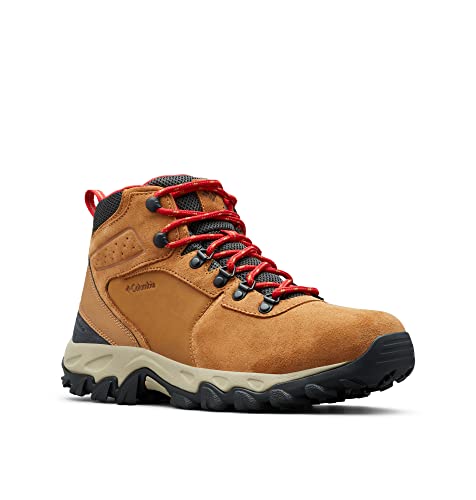
Online purchasing provides access to a much wider array of price points, extended sizes, and niche silhouettes. Parents can compare technical suede hikers like the Columbia Youth Newton Ridge Amped against flexible synthetic designs without traveling between multiple shopping centers. Online platforms also carry budget-friendly alternatives from brands like R CORD or Wolidio that regional outfitters rarely stock. Combining online research with liberal return windows allows families to replicate an in-store fitting session in their own living rooms.
Sizing Strategy and Growth Allowance for Developing Feet
Parents frequently feel tempted to purchase youth footwear several sizes too large to extend the shoe’s useful lifespan. Oversized trail boots allow the child’s foot to slide forward on descents, resulting in painful toe jamming against the front bumper. Excess interior space also generates severe friction along the calcaneus, creating hot spots and skin chafing within the first mile of walking. A safe growth allowance is roughly one finger-width of space, or about a half-size larger than street shoes, between the longest toe and the front of the toe box.
Conducting an insole footprint test offers a practical, visual way to verify proper internal volume and length. Remove the factory footbed from boots like the KEEN Unisex-Child Targhee 4 and place it flat on a hard floor. Have your child stand squarely on the footbed with their full body weight while wearing their intended trail socks. You should see a thumb-width margin of space past their longest toe, while the heel sits neatly within the contoured heel cup without spilling over the lateral edges. Much like investing in dedicated hiking pants for rough trails, getting the sizing right prevents irritation that can easily ruin an outdoor trip.
Upper Materials and Protective Toe Collision Bumpers
Upper construction dictates how well a child’s trail shoe balances abrasion resistance against total weight. Traditional split suede and leather uppers, featured on models like the Columbia Youth Newton Ridge Amped, deliver remarkable resistance against jagged rocks and abrasive brush. These natural materials shield growing feet from trail debris while maintaining structural shape across hundreds of trail miles. Suede constructions do require occasional cleaning and conditioning to prevent the hide from stiffening after repeated cycles of wetting and drying.
Lightweight synthetic textiles, such as the breathable oxford cloth and artificial leather found on Mishansha boots, prioritize flexibility and quick drying times. Synthetic materials flex naturally with a child’s gait right out of the box, eliminating the stiff break-in periods common with heavy adult boots. Regardless of upper fabric, a robust anti-collision toe bumper is non-negotiable for youth hiking. Reinforced rubber toe caps, like the high-abrasion bumper on the KEEN Targhee 4 or the full-cover caps on EQW models, protect delicate toes when kids kick roots or stumble on rocky paths.
Weatherproofing Systems and Breathability Limits on Muddy Trails
Wet conditions demand reliable moisture defense, but children experience weatherproofing differently than adult backpackers. Integrated waterproof membranes like KEEN.DRY or Merrell’s M Select DRY construct an internal barrier that blocks puddles, mud, and stream splashes. These proprietary bootie linings allow internal perspiration vapor to escape while preventing liquid water from soaking into wool socks. This weather protection proves invaluable when family hikes encounter morning dew, damp leaves, or muddy shoulder-season paths.
Waterproof membranes present real performance tradeoffs during warm summer hikes across arid terrain. Internal membranes restrict overall airflow, causing young feet to sweat heavily during high-exertion scrambles and creating damp socks from the inside out. Water that overtops the ankle collar during deep puddle splashes also becomes trapped inside waterproof booties, taking days to dry thoroughly. Water-resistant coatings, such as Columbia’s Omni-Shield, offer a balanced alternative for dry climates by shedding light dirt and drizzle while maintaining superior fabric breathability.
Outsole Traction Patterns and Underfoot Compound Support
Children move dynamically on the trail, darting up dirt banks, balancing on fallen logs, and scrambling over wet boulders. Outsoles molded from specialized rubber compounds, such as Columbia’s Omni-Grip or Merrell’s M Select GRIP, offer multi-terrain stability across damp granite and loose gravel. These compounds utilize deep, strategically placed lugs that bite into soft soil while shedding packed mud from between the tread channels. Flat running sneakers lack this mechanical bite, leading to frequent slips and trail apprehension on steep grades.
Budget-friendly youth boots frequently utilize thermoplastic rubber (TPR) soles, as seen on models from R CORD, Wolidio, and MIXIN. TPR provides reliable flexibility and baseline friction for neighborhood nature centers, playground trails, and gentle gravel paths. While TPR may wear down faster on abrasive granite than dense carbon rubber, its pliable nature supports developing foot musculature. Midsole cushioning, like Columbia’s Techlite foam, absorbs ground impact over extended mileage, reducing joint fatigue when older kids begin carrying daypacks or packing for a multi-day backpacking trip with family.
Closure Systems and Trail Adjustability for Growing Independence
Lacing configurations significantly impact both trail safety and child independence during outdoor outings. Traditional lace-up footwear allows precise tension control across the forefoot and instep, which helps lock the heel securely into the back of the boot. However, standard laces frequently come untied in wet brush or trip young hikers when trailing loose on the trail. Parents must often stop repeatedly to retie muddy laces on long walks if traditional knots slip loose.
Alternative closures provide an ideal balance of ease and security for toddlers and elementary-age adventurers. Elastic bungee systems paired with toggle locks, featured on KEEN and Columbia models, allow kids to tighten their shoes with a single hand motion. Hook-and-loop straps, utilized on boots from Mishansha and Wolidio, empower young children to manage their own footwear at camp or during school outings. Side zippers, such as those on MIXIN boots, provide rapid entry while maintaining a classic lace look for casual trail walks.
Retail Return Policies and Living Room Fit Verification
Generous retailer return policies remove the financial risk of purchasing youth hiking boots online. When shopping through digital storefronts, verify that the merchant offers free returns or exchanges within a window of at least thirty days. This leeway allows you to order two adjacent sizes simultaneously, compare the fit at home, and return the ill-fitting pair without penalty. Outdoor co-ops often provide extended return windows for members, which can be useful if an unexpected fit issue arises.
Test new boots indoors on clean carpets before heading out into mud and gravel where return privileges might be voided. Have your child wear their hiking boots around the house for an hour while completing normal activities and walking down flights of stairs. Check their feet afterward for localized redness along the heels, pinky toes, or instep bones. If the child complains of numbness or displays visible hot spots, exchange the boots for a wider profile or a larger half-size before tackling actual trail miles.
Maintenance Routines and Hand-Me-Down Durability
Proper post-hike cleaning extends the operational lifespan of youth hiking footwear, making it suitable for younger siblings or resale. Dried mud draws essential moisture out of natural suede and synthetic fibers, leading to premature cracking at the forefoot flex points. Use a soft nylon bristle brush and warm water to scrub away dried trail soil after each muddy hike. Certain models, including the KEEN Targhee 4, feature machine-washable construction, allowing parents to refresh heavily soiled shoes on gentle wash cycles.
Always allow wet boots to air-dry naturally in a well-ventilated space rather than placing them next to campfires, radiators, or inside hot clothes dryers. High radiant heat shrinks synthetic liners, warps internal heel counters, and weakens the cementing adhesives that bind the outsole to the upper. Store clean boots with the laces loosened in a climate-controlled room to protect midsole foams from environmental breakdown. Inspect the tread lugs and insole cushioning before passing boots down, ensuring the structure still offers adequate arch support and traction for the next child.
Selecting where to purchase youth hiking boots comes down to finding trusted retailers that provide flexible trial windows, accurate sizing options, and purpose-built trail features. Whether you choose an in-person fitting at a local outfitter or take advantage of broad online inventories, focus on verified traction compounds, protective toe caps, and secure midfoot closures. Equipping young adventurers with properly fitted, durable trail shoes builds their confidence on rocky terrain, turning challenging family outings into lifelong outdoor passions.



Write Your Review
No reviews yet. Be the first to share your experience!