


Descending a steep, root-strewn incline with toes slamming against the front of your footwear can ruin an otherwise glorious day in the backcountry. When evaluating outdoor footwear, sizing uncertainty remains one of the primary reasons hikers suffer from subungual hematomas, blackened toenails, and debilitating friction blisters. Hikers constantly ask whether do columbia hiking boots run big or small before committing to a pair for rugged trails. The general consensus from construction patterns and trail fitment is that Columbia boots typically fit true to size length-wise, but they often lean slightly narrow through the forefoot and toe box.
Because feet naturally swell over long trail distances and thick merino wool socks consume interior volume, many backpackers benefit from sizing up a half size in standard widths. Choosing the appropriate internal dimensions becomes even more critical when planning your gear around a multiday backpacking checklist where heavy pack weight increases foot splay. Understanding how proprietary chassis designs like Techlite midsoles, Navic Fit heel lockdowns, and Omni-Tech waterproof membranes influence interior space will ensure your feet stay secure and comfortable across variable terrain.




Columbia Hiking Boot Sizing, Fit Mechanics, and Trail Performance
Finding the proper footwear size represents the most critical decision for protecting your feet on rugged terrain. When asking whether do columbia hiking boots run big or small, hikers need to know that Columbia boots generally fit true to length but lean slightly narrow in the forefoot. While length corresponds closely to standard Brannock measurements, the streamlined toe box creates a snug fit for average to wide feet. Consequently, many hikers choose to size up by a half size to prevent bruised toenails and friction hot spots.
General Sizing Profile: True to Length with a Narrow Forefoot
Columbia footwear generally adheres to standard sizing guidelines regarding overall length, but the brand is recognized for a tailored, performance-oriented cut. The boots do not run excessively large under normal trail conditions; rather, they trend toward a snug fit across the metatarsal heads. Hikers with narrower feet often report that their casual shoe size provides an excellent, locked-down feel out of the box. Hikers with medium or wide feet frequently notice slight constriction across the outer forefoot in standard widths.
Because trail conditions demand interior space for natural foot articulation, wearing street sizes without adjustment can cause discomfort. The structured toe bumpers and leather overlays on classic Columbia silhouettes do not stretch significantly over time. Trail enthusiasts planning longer excursions usually purchase a half size larger than their casual shoes to accommodate thicker socks while maintaining proper heel placement.
Boot Last Anatomy: Toe Box Volume, Midfoot, and Heel Cup
Understanding footwear fit requires examining the three distinct zones of the boot: the toe box, the instep, and the heel pocket. Columbia designs its boots with a tapered toe box that curves inward toward the pinky toe. This anatomical taper provides agile foot placement on rocky scrambles, but it limits metatarsal splay for wider feet. Hikers who need a broader toe box often notice pressure along the outer metatarsal heads if they fail to size up.
In contrast to the narrower forefoot, the midfoot and heel cup in Columbia boots offer reliable stability. Systems like the Navic Fit framework anchor the navicular bone against the footbed to prevent unwanted lateral shifting. A firm heel counter prevents vertical heel lift, which is the primary cause of friction blisters on steep ascents. Balancing this secure heel hold with adequate forefoot room is the key challenge when choosing your optimal size.
Model-Specific Fit Profiles: Newton Ridge, Konos TRS, and Alpine Series
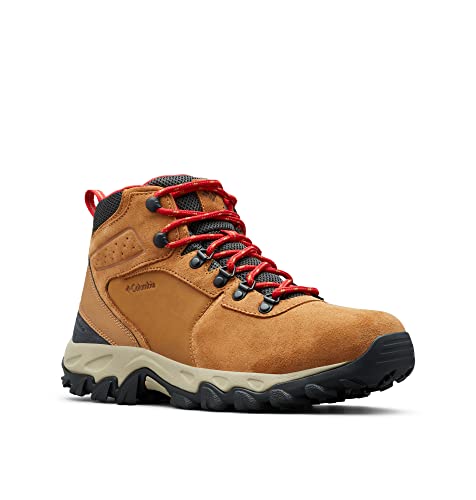
Fit characteristics vary slightly across Columbia’s diverse hiking boot lineup depending on the upper materials and chassis construction. The classic Columbia Womens Newton Ridge Plus Waterproof and the Columbia Men’s Newton Ridge II Waterproof Hiking feature durable leather and suede uppers inspired by traditional mountaineering aesthetics. These models incorporate a reinforced toe rand that limits forefoot stretch, making a half-size increase a wise choice for hikers wearing cushioned socks. The reinforced heel counter and seam-sealed bootie design keep the rearfoot stable while providing generous ankle collar padding.
In modern athletic designs like the Columbia Men’s Konos TRS Outdry Mid Waterproof, fit focuses heavily on agility and midfoot lockdown. This model incorporates the Omni-Max Plus system with Techlite+ foam alongside an impenetrable OutDry bonded waterproof membrane. Because the synthetic upper and bonded membrane possess virtually zero stretch, the boot feels distinctly athletic and snug around the midfoot. Hikers moving across rugged paths in lightweight boots often pair their setup with wearing trail pants on rugged hikes to protect their ankles from trail debris.
For mixed-terrain versatility, the Columbia Women’s Newton Alpine PT Waterproof combines a waterproof suede upper with a protective rubber rand and an eco-friendly Techlite Eco midsole. The perimeter rubber rand increases abrasion resistance against trail scree, but it also creates a firmer shell that resists stretching over time. Meanwhile, the Columbia Women’s Transverse Suede Waterproof relies on a softer suede and mesh combination that accommodates moderate foot flexion. These model variations reinforce the general rule that Columbia uppers maintain their structural shape rather than stretching open across the forefoot.
Foot Swelling, Sock Cushioning, and Backpacking Loads
Human feet change shape dynamically throughout a day on the trail due to gravitational pressure, increased blood flow, and thermal expansion. Over five to ten miles of continuous walking, the foot’s soft tissues can expand by a full half size in total volume. If you select a boot that fits snugly while standing in a store, that same boot can become painfully tight by mid-afternoon. Leaving roughly a half inch of space ahead of the longest toe accommodates this biological expansion without compromising stability.
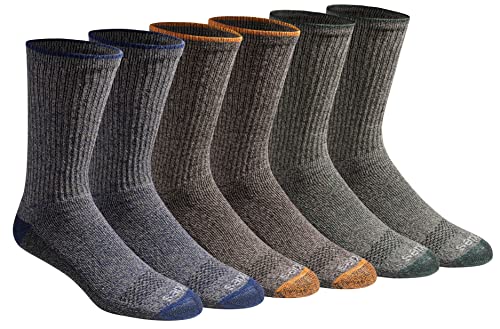
Sock selection plays an equally dramatic role in altering interior volume and fit tightness. Heavyweight merino wool hiking socks provide exceptional impact cushioning and thermal regulation, but they easily consume a half size worth of internal space. When carrying a heavy pack on rugged paths, pair your footwear with proper hiking pants for rough terrain to ensure your lower legs stay protected as your feet work hard. Always try on prospective trail boots while wearing the exact sock weight you intend to hike in.
The Downhill Incline Test: Preventing Toe Jam and Black Toenails
Downhill sections present the greatest biomechanical stress test for hiking boot sizing and volume. As you descend steep grades, gravitational pull drives your body weight downward, forcing the foot to slide forward within the boot cavity. If your boots lack sufficient length, your toes will repeatedly crash into the rigid internal toe box, causing subungual hematomas, bruised toenail beds, and intense pain. A properly fitted boot preserves an open buffer zone ahead of your toes on steep downhill grades.
You can verify adequate descent clearance at home using two reliable fitting assessments before ever stepping foot outdoors. First, unlace the boot completely and slide your toes forward until they lightly touch the front cap. Slip an index finger down behind your heel; a proper fit allows roughly one finger width between the calcaneus and the boot collar. Second, lace the boot securely and stand on a steep downward ramp or stairs while firmly tapping your foot forward to confirm your toes never touch the front wall.
Waterproof Membranes and Their Effect on Internal Volume
Waterproof technology directly impacts how spacious and flexible a hiking boot feels on your foot. Columbia utilizes several proprietary weatherproofing systems, notably Omni-Tech multilayered bootie construction and OutDry bonded exterior membranes. The traditional Omni-Tech system integrates a seam-sealed internal sockliner beneath the outer leather or textile upper. This internal layer adds noticeable structural bulk, slightly reducing the usable cubic volume inside the toe box compared to unlined alternatives.
The advanced OutDry system featured on performance models like the Konos TRS Mid bonds an impenetrable waterproof-breathable membrane directly to the outer shell. This seamless construction eliminates water accumulation between the layers and reduces overall shoe weight, but the bonded laminate exhibits minimal elastic give. Unlike unlined full-grain leather boots that gradually relax and mold to your foot, synthetic waterproof liners maintain their precise factory volume. Hikers who trek in wet or snowy environments must factor this structural rigidity into their initial sizing calculations.
Lacing Adjustments to Resolve Sizing and Pressure Issues
If you find yourself caught between sizes or experiencing localized pressure, specialized lacing techniques can dramatically improve fit. Standard crisscross lacing exerts uniform tension across the entire shoe, which often pinches high insteps while failing to secure narrow heels. Hikers experiencing tightness over the top of the foot can utilize window lacing, which bypasses specific eyelets directly over sensitive bones. This simple adjustment relieves dorsal nerve compression without loosening the ankle collar.
To counteract heel slippage in a boot that you sized up for forefoot comfort, the surgeon’s knot technique proves exceptionally effective. By wrapping the laces around each other twice at the transition between the instep and the ankle speed hooks, you create high-friction lock points. This isolated tension anchors your heel securely into the rear pocket without requiring painful overtightening across the lower forefoot. Utilizing these lacing strategies allows hikers to enjoy the toe clearance of a larger size while maintaining the stability of a customized fit.
Aftermarket Orthotics and Replacement Insoles in Columbia Boots
Most Columbia trail boots come equipped with lightweight, contoured EVA footbeds that offer basic cushioning for day hiking. While these factory insoles work well for neutral arches, many hikers replace them with structured aftermarket orthotics to support high arches or manage plantar fasciitis. Rigid aftermarket insoles feature deep heel cups and high arch profiles that significantly alter the internal volume of the footwear. A high-profile orthotic elevates the entire foot upward toward the tongue bellows, which reduces overhead space in the toe box.
When planning to insert rigid orthotics into models like the Newton Ridge or Newton Alpine series, going up a half size is almost always necessary. The increased vertical height of structured insoles can push your instep firmly against the upper eyelets, creating friction hot spots. Removing the factory liner before sliding in your supportive insole helps recover some internal depth, but forefoot volume will remain tighter. Always test your aftermarket footbeds inside the boots during your initial fitting session to verify proper toe clearance and arch alignment.
Outsole Traction, Midsole Support, and Sizing Alignment
Proper sizing is essential not only for comfort but also for how effectively the boot’s traction and cushioning systems interact with the ground. Columbia integrates specialized underfoot engineering, including Omni-Grip non-marking rubber outsoles and Adapt Trax compounds, designed for multi-terrain grip across wet rock, loose dirt, and slick gravel. When your foot sits properly centered over the midsole, your body weight drives evenly into the multidirectional perimeter lugs and heel braking zones. An improperly sized boot causes your foot to hang over the midsole borders, reducing traction efficiency.
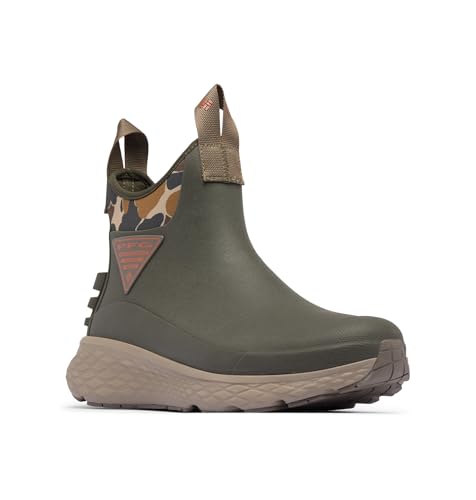
Underfoot cushioning systems such as Techlite and Techlite+ provide long-lasting impact absorption and high energy return across extended trail miles. The newer Omni-Max and Omni-Max Plus platforms incorporate specialized deflection domes in the forefoot and heel to reduce physical stress on tired joints. In deck-and-trail options such as the Columbia Men’s PFG Pro Sport Boot, a vulcanized rubber upper combines with Techlite+ foam for stable footing in slick, wet environments. Because these midsoles are tuned to disperse impact evenly, selecting a size that matches your natural arch length ensures the foot balances squarely atop the supportive platform.
Youth Footwear Sizing: Newton Ridge Amped and Peakfreak Rush
Fitting younger hikers requires a slightly different approach because adolescent feet grow rapidly while tackling strenuous trail adventures. Models like the Columbia Youth Unisex Newton Ridge Amped and the Columbia Youth Peakfreak Rush Mid Waterproof feature youth-specific lasts with convenient toggle laces and supportive Techlite midsoles. Because children often lack the vocabulary to identify subtle foot constriction, parents must inspect toe room diligently. A youth boot should offer slightly more than a finger width of growth allowance without causing the heel to slide out during uphill ascents.
The Peakfreak Rush Mid integrates a protective leather cage around a lightweight mesh upper alongside the Navic Fit lockdown system. This design gives younger explorers durable protection against sharp rocks without feeling overly stiff or cumbersome on day hikes. However, buying two sizes too large to allow for future growth is a dangerous mistake that leads to severe tripping hazards and blister formation on steep terrain. Aim for approximately a thumb width of total forward space, which provides ample growth allowance while maintaining safe trail agility.
Practical Sizing Checklist: Choosing Your Exact Columbia Size
Making the final decision on Columbia hiking boot sizing comes down to evaluating your specific foot shape, trail habits, and terrain objectives. If you have narrow to standard-width feet and primarily hike short day loops under five miles, your regular street shoe size will typically provide a snug, secure fit. However, if your feet measure on the wider side of standard, or if you plan to carry a multiday pack across mountainous terrain, ordering a half size larger is the most reliable strategy. Columbia also manufactures dedicated Wide (EE) widths in select models like the Newton Ridge Plus, which represents an ideal solution for wide-footed hikers who want true-to-size length without forefoot pinching.
Always schedule your footwear fitting sessions during the late afternoon or evening when your feet have expanded to their largest daily volume. Fasten your boots securely, test them on household stairs with your preferred trail socks, and pay close attention to pressure points across the pinky toe and heel. Taking these simple precautions ensures your Columbia boots deliver the traction, waterproof defense, and lasting comfort needed for countless memorable miles in the wilderness.



Write Your Review
No reviews yet. Be the first to share your experience!