


Navigating rocky switchbacks and muddy ascents requires footwear that balances foot protection, arch support, and continuous traction. Many outdoor enthusiasts and job-site workers wonder if their durable everyday footwear can pull double duty on rough trails, asking are cat boots good for hiking when preparing for a day outdoors. While heavy leather work footwear is famous for resisting job-site hazards, packing that same structural bulk onto uneven terrain introduces distinct challenges for lower-leg endurance and foot comfort. Hikers often pair sturdy footwear with protective clothing such as trail leg protection options to fend off brush and trail debris during long outings.
Evaluating whether are cat boots good for hiking requires looking past rugged aesthetics to examine specific mechanical components, including outsole lug depth, midsole cushioning, and protective toe caps. Caterpillar manufactures a wide spectrum of footwear, ranging from steel-toe industrial boots like the Wheelbase and Mae to dedicated crossover designs like the CAT Invader Hiker. Understanding how these features interact with rocky trails, wet roots, and steep gradients helps walkers prevent excessive fatigue, blisters, and foot soreness over high-mileage routes.


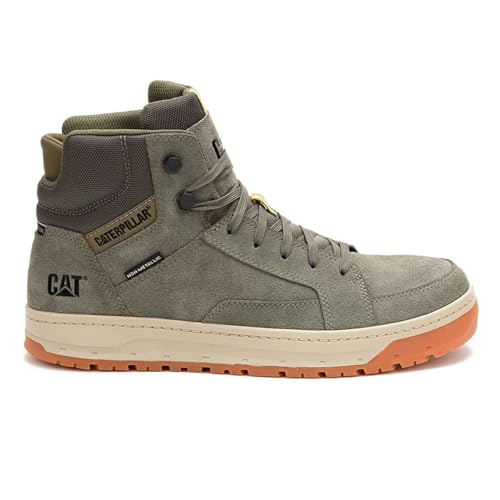

Evaluating Caterpillar Footwear on Outdoor Trails
Answering whether are cat boots good for hiking depends heavily on which specific model you plan to take into the woods. Caterpillar footwear covers a broad spectrum of designs, ranging from heavy steel-toe construction footwear to crossover trail shoes like the CAT Men’s Invader Hiker Waterproof Hiking Boot. Traditional industrial work boots often present significant drawbacks on rugged wilderness paths due to their substantial weight, rigid protective caps, and specialized slip-resistant outsoles. Certain hybrid models and lightweight soft-toe variants can perform adequately on short, well-maintained paths where intense rock scrambling is absent.
Work Boots Versus Dedicated Hiking Boots
Industrial work boots prioritize defense against crushing impacts, punctures, and abrasive job-site hazards. Manufacturers build models like the CAT Men’s Wheelbase Construction Boot and Cat Footwear Women’s Mae with thick full-grain or nubuck leather, sturdy cement construction, and heavy protective components. In contrast, purpose-built hiking footwear focuses on natural foot articulation, multi-mile ergonomic cushioning, and agility across uneven terrain. The rigid underfoot platform of an industrial work boot resists bending, which can strain foot tendons during repetitive incline strides.
Trail footwear relies on lightweight composite materials, rock protection plates, and responsive midsoles that absorb kinetic shock across miles of variable terrain. While standard work boots deliver exceptional durability in abrasive environments, that durability often comes at the expense of foot flexibility. Walking on flat concrete requires a very different flex profile than stepping over slippery exposed roots, angled granite boulders, and loose trail talus. When a boot refuses to flex naturally at the metatarsal break, your lower calf muscles must work significantly harder to propel each step.
Weight Considerations and Trail Fatigue
Footwear mass has an outsized effect on physical stamina during long hikes. An old outdoor guideline notes that a single pound on your feet expends as much metabolic energy as five pounds carried inside a backpack. Heavy work boots such as the Cat Footwear Women’s Mae or steel-toe Threshold Rebound Chelsea add noticeable bulk to every step. Over thousands of strides on an incline, lifting that extra mass accelerates muscle fatigue in the hip flexors and tibialis anterior.
Dedicated lightweight hiking boots typically weigh substantially less per pair than industrial boots with protective steel components. Choosing a crossover model like the CAT Men’s Invader Hiker Waterproof Hiking Boot reduces that burden compared to traditional steel-toe platforms, offering a more agile platform for recreational walking. When boots feel overly heavy, hikers often begin scuffing their toes on exposed trail obstacles rather than lifting their feet cleanly. Minimizing unnecessary footwear mass helps preserve leg stamina, especially when your route includes steep elevation gains.
Impact of Safety Toes on Wilderness Trails
Protective toe caps serve an invaluable safety function on construction job sites, meeting ASTM standards to deflect heavy falling objects. However, rigid steel toes found in boots like the Cat Footwear Women’s Mae and Threshold Rebound Chelsea create notable hazards on downhill mountain trails. When descending steep paths, the foot naturally shifts forward inside the footwear. If your toes collide with an unyielding steel barrier with each downhill step, painful subungual hematomas, commonly known as black toenails, can quickly develop.
Composite safety toes, such as the non-metallic caps used in the CAT Men’s Threshold Rebound Waterproof and Streamline Court, offer a lighter alternative to steel without conducting extreme cold. They still retain rigid shapes that do not compress or give way when your foot slides forward. Standard hiking boots avoid protective metal caps entirely, utilizing flexible rubber or synthetic toe rands that deflect loose trail rocks without restricting internal toe splay. For distance hiking, a soft-toe design provides significantly more forward room and preserves toenail health on descents.
Outsole Traction and Tread Performance
Outsole performance illustrates one of the sharpest distinctions between work footwear and outdoor trail shoes. Work boots like the Cat Footwear mens Exposition Chelsea Construction Boot feature slip-resistant rubber compounds engineered specifically for smooth, flat surfaces covered in water, oil, or grease. These outsoles often utilize closely spaced, shallow siping patterns and SRX slip-resistant technology to maximize surface contact on manufactured flooring. While effective in industrial buildings, these dense patterns struggle to bite into soft earth, loose gravel, or deep wilderness mud.
Hiking boots require deep, widely spaced multidirectional lugs that dig directly into forest soil and shed wet mud as the sole flexes. When a work boot encounters slick clay, the shallow tread channels quickly pack with mud, transforming the sole into a smooth, frictionless surface. The CAT Men’s Invader Hiker Waterproof Hiking Boot addresses this issue by incorporating a more aggressive, durable rubber lug pattern designed for rough outdoor grip. On steep dirt descents, having distinct heel braking lugs provides the necessary mechanical friction to avoid sudden slips.
Midsole Cushioning and Pack Load Support
Trail hiking subjects the feet to repetitive downward impacts that require balanced underfoot attenuation. Many Caterpillar models incorporate molded EVA footbeds and lightweight EVA midsoles, while heavier platforms utilize dense polyurethane components. Polyurethane, seen in the Cat Footwear Women’s Mae, resists compression over long periods of standing, making it an exceptional choice for stationary job-site shifts. On trails, however, a firm polyurethane platform can feel unforgiving against sensitive heel pads unless paired with adequate rebound cushioning.
Planning a multi-day trip requires footwear that can handle the combined weight of your body and a fully loaded pack. Hikers preparing for extended trips with a multiday backpacking gear checklist need dependable underfoot stability to avoid bottoming out their cushioning. The oversized EVA midsole on the CAT Men’s Threshold Rebound Waterproof helps absorb ground strikes, reducing joint stress over rough terrain. Supportive footwear cushions the plantar fascia and prevents excessive arch strain during long hours on your feet.
Waterproof Linings and Breathability Dynamics
Wet feet quickly lead to skin maceration, increased friction, and painful blisters during outdoor outings. Several Caterpillar models, including the CAT Men’s Invader Hiker Waterproof Hiking Boot and Threshold Rebound, feature waterproof membranes and treated full-grain leather uppers to keep external moisture away from your feet. These internal barriers block puddle splashes and shallow stream crossings as long as water does not rise above the bellows tongue. Full-grain leather also provides natural resistance to brush scrapes and abrasive trail scree.
Waterproof membranes inevitably restrict moisture vapor transfer, especially during strenuous warm-weather ascents where feet perspire heavily. In hot, arid conditions, a non-waterproof mesh boot expels heat and sweat far more efficiently than a heavy leather boot with an impermeable lining. Pairing waterproof boots with high-quality merino wool or thermal crew socks helps manage interior moisture by pulling sweat away from the skin. Ensuring that moisture escapes prevents hot spots from developing across high-friction zones like the heel and ball of the foot.
Collar Cut and Ankle Stability
Collar design plays a vital role in keeping trail debris out of footwear while providing lateral joint support. Traditional lace-up work boots feature padded collars and high shafts that wrap securely around the lower leg. Pull-on styles like the Cat Footwear mens Exposition Chelsea Construction Boot or Threshold Rebound Chelsea use elastic side panels instead of laces. While convenient for daily wear, slip-on Chelsea designs cannot be tightened across the instep or ankle, leading to excessive heel lift on steep trail ascents.
Lace-up systems allow hikers to customize internal volume tension, anchoring the heel securely into the rear counter to eliminate friction. Utilizing specialized lacing techniques, such as a surgeon knot or heel-lock loop, prevents forward foot migration on steep descents. The CAT Men’s Invader Hiker Waterproof Hiking Boot and Threshold lace-up models offer adjustable lacing hardware that helps stabilize the foot over uneven ground. Without proper lacing control, feet slide repeatedly inside footwear, generating intense shearing forces that tear dermal tissue.
When CAT Footwear Can Work for Hiking
While traditional heavy-duty steel-toe work boots are poorly matched for technical mountain ascents, specific CAT footwear can handle casual outdoor scenarios. Soft-toe models with cushioned EVA midsoles and aggressive rubber outsoles perform dependably on flat nature trails, gravel fire roads, and local forest paths. If your outdoor activities involve light trail maintenance, clearing fallen brush, or volunteer conservation work, the rugged leather uppers provide excellent abrasion resistance against brambles and sharp tools.
Hikers exploring damp forest trails often pair versatile trail boots with dedicated hiking apparel to stay comfortable across unpredictable weather conditions. If you already own flexible soft-toe CAT boots and wish to hike short recreational routes without purchasing specialty gear, they can serve as a functional starting point. The primary rule is keeping total mileage moderate, avoiding technical scree fields, and ensuring the footwear provides sufficient traction on unpaved surfaces. Matching footwear capabilities to trail severity ensures a safe and enjoyable outing.
Practical Fit Adjustments and Trail Preparation
Achieving a reliable fit is essential before testing any work-style boot on wilderness paths. Feet naturally swell by up to a half size during continuous walking, particularly in warm afternoon temperatures. When trying on boots, ensure there is roughly a thumb-width of clearance between your longest toe and the front of the interior toe box. You can test downstream room by kicking a firm floorboard unlaced; your toes should not crash painfully into the front cap.
Thick full-grain and nubuck leather uppers, such as those found on the CAT Men’s Wheelbase Construction Boot and Threshold, require a gradual break-in schedule before tackling long distances. Wearing new leather boots on short neighborhood walks allows the leather to soften and conform naturally to your foot contours without causing severe trail blisters. Never attempt to accelerate break-in using extreme heat sources like radiators or campfires, as intense heat degrades cementing adhesives and dries out leather grain. Conditioning leather periodically maintains suppleness and preserves factory water repellency.
Replacing flat factory footbeds with structured aftermarket orthotic insoles can dramatically improve arch support and heel cup retention. Adding a supportive insole reduces foot pronation, stabilizing your stride over rocky ground and preventing premature fatigue across the plantar fascia. Always verify that thicker aftermarket footbeds do not reduce internal instep volume to the point of pinching the top of your foot. Proper preparation, careful fitting, and honest appraisal of trail conditions ensure your footwear supports your outdoor adventures effectively.
Ultimately, selecting whether to hike in Caterpillar footwear comes down to balancing protective durability against agile ergonomics. If your plans involve short scenic strolls, flat woodland paths, or rough outdoor property maintenance, durable soft-toe models will carry you through reliably. For steep alpine ascents, technical trails, and multi-day treks, purpose-built hiking footwear offers the lightweight responsiveness and specialized lug traction your feet demand. Evaluating your trail terrain and footwear structure in advance keeps every outdoor outing comfortable, secure, and trail-ready.



Write Your Review
No reviews yet. Be the first to share your experience!