


Morning dew soaking through trail socks can quickly ruin an otherwise pleasant morning in the backcountry, leaving many beginners to question their footwear choices. Hikers facing unexpected mud puddles or shallow stream crossings often wonder, are all hiking boots waterproof right out of the box? The simple reality is that not every trail boot is built with a sealed internal bootie or treated leather exterior. Choosing the proper footwear involves understanding how specialized linings balance exterior moisture resistance against internal heat buildup on long trail days.
Non-waterproof boots with open mesh panels deliver outstanding airflow, making them an excellent match when you pair them with breathable lightweight hiking pants for summer treks across arid desert switchbacks. Conversely, boots equipped with waterproof membranes offer dependable coverage against rain, slush, and boggy soil, protecting your feet from painful skin maceration. Examining your intended trail conditions, pack weight, and climate will ensure you select footwear designed for comfort rather than constant moisture battles.

Pros
- Omni-Tech seam-sealed waterproof construction keeps feet dry in moderate rain, slush, and wet mud
- Techlite midsole delivers lightweight impact absorption and high energy return without weighing down your stride
- Omni-Grip rubber outsole with multidirectional lugs offers confident traction on wet rock, gravel, and loose soil
- Sturdy leather and mesh upper with metal lacing hardware provides a secure fit and dependable exterior durability
Cons
- Listed specifically in Men's Size 11, requiring careful verification of personal sizing and sock volume
- Seam-sealed waterproof membrane can trap heat during high-temperature summer outings compared to non-waterproof trail runners
- Lacks a rigid full-length shank for heavy alpine mountaineering or extreme off-trail load hauling
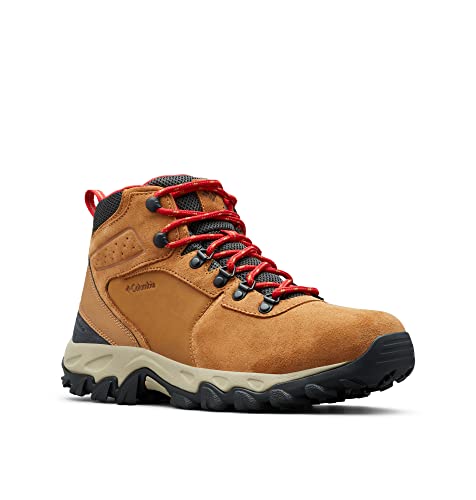
The Columbia Men's Transverse Waterproof Hiking Boot is a mid-cut outdoor trail boot built for hikers who need dependable moisture defense, underfoot stability, and structured comfort. Suitable for day hikers, weekend backpackers, and outdoor adventurers, this footwear is engineered to handle mixed-terrain environments where mud, puddles, and loose rock challenge standard athletic shoes. The Black and Mountain Red styling pairs an understated outdoor look with functional hardware tailored for male hikers seeking a size 11 profile.
Underfoot support and dependable ground contact are essential when carrying gear over varied elevation. Columbia pairs a Techlite midsole with an Omni-Grip multi-terrain rubber outsole to cushion impacts and maintain steady footing. The Techlite compound absorbs ground shock on packed trails and returns energy through each step, helping reduce foot fatigue over longer mileage. Working underneath, the Omni-Grip tread features strategically positioned perimeter and interior lugs designed to bite into dirt, loose gravel, and damp rocks without slipping unexpectedly.
Upper construction is critical for keeping trail debris out while maintaining durability against brush and abrasive rocks. The Transverse combines durable leather overlays with breathable mesh underlays, giving hikers solid lateral support without unnecessary bulk. Sturdy metal lacing hardware holds tension securely across the midfoot and upper ankle, resisting the wear and tear that can break standard fabric eyelets. Around the ankle, a generously cushioned collar softens pressure points and guards against chafing as the foot flexes on uneven trail surfaces.
Weather management is powered by Columbia's Omni-Tech multilayered system, featuring seam-sealed waterproof construction that protects feet during prolonged exposure to moderate rain, melting snow, and waterlogged paths. Because the membrane is engineered to breathe from the inside out, perspiration vapor can escape to help keep socks dry. Routine maintenance involves brushing away caked mud, allowing the boots to dry naturally at room temperature, and checking the laces and eyelets between outings to ensure ongoing trail reliability.
While the boot provides reliable weather defense and trail grip, clear functional tradeoffs should be considered. Waterproof boots naturally offer less air circulation than open-mesh trail runners, meaning feet may run warm during hot summer afternoons. Furthermore, the Transverse is oriented toward day hikes, weekend backpacking, and general trail exploration rather than technical mountaineering with heavy expedition loads. Buyers should always confirm their sock thickness and foot measurements against Columbia sizing guidelines before taking to the trail.
For hikers who want an affordable, weather-resistant trail boot built with trusted outdoor technologies, the Columbia Men's Transverse Waterproof Hiking Boot represents a practical and capable choice. Its balance of Omni-Tech waterproofing, responsive Techlite cushioning, and aggressive Omni-Grip traction provides the necessary trail security for exploring rainy woodlands, damp singletracks, and rocky switchbacks.
Columbia utilizes its proprietary Omni-Tech membrane in the Transverse hiking boot to guard against wet outdoor elements. This multilayered, seam-sealed barrier is specifically built for prolonged exposure to moderate rain, wet grass, and snow, stopping external moisture from seeping into the footbed. At the same time, microscopic pores allow internal heat and sweat vapor to vent outward, maintaining a dry and comfortable foot environment during active trail miles.
The Transverse features an Omni-Grip non-marking rubber outsole engineered for reliable cross-terrain stability. Built with specialized rubber compounds, the outsole employs strategically blended lug patterns to deliver multi-surface grip across wet rocks, loose gravel, and slippery mud. This tread geometry promotes forward momentum on ascents and braking stability on steep descents, giving hikers balanced confidence across varying trail conditions.

Pros
- Waterproof exterior construction helps keep feet protected against damp grass, rain, and trail mud
- Lightweight EVA midsoles paired with removable cushioned insoles absorb trail shock and soften repetitive impact
- Rugged rubber outsoles deliver slip-resistant grip on challenging dirt, wet rocks, and loose paths
- Ankle-height cut provides supportive coverage and helps block loose trail debris
- Dedicated 10.5 Wide sizing offers comfortable room for wider forefeet or heavier wool hiking socks
Cons
- Listed in a specific size (10.5 Wide), requiring hikers needing standard widths or different sizes to find alternative options
- Waterproof ankle-height construction can retain heat in hot, arid summer conditions compared to non-waterproof mesh trail footwear
- Manufacturer specifications do not detail exact upper fabric deniers or proprietary waterproof membrane ratings
The NORTIV 8 Men's Ankle High Waterproof Hiking Boots are mid-height trail boots built for outdoor enthusiasts who need reliable traction, moisture protection, and underfoot cushioning on dirt trails, gravel paths, and rugged campsites. Sized in 10.5 Wide with a versatile Brown/Black/Tan color pattern, this footwear caters directly to hikers with wider feet or those who prefer wearing midweight to heavyweight wool hiking socks. Whether preparing for state park day hikes, weekend backpacking excursions, camping setups, or general outdoor utility work, these boots offer a balanced design focused on stability and practical comfort.
On active trail routes, underfoot shock absorption is critical when carrying personal daypacks or overnight gear. The NORTIV 8 boots integrate lightweight, flexible EVA midsoles that offer sustained cushioning and energy return across repetitive strides. Paired with removable, shock-absorbent insoles, the interior footbed cushions against firm rocks and hard-packed soil, helping minimize foot fatigue over long trekking hours. The ankle-high silhouette provides supportive coverage around the lower ankle joint, which helps hikers stay steady when navigating uneven surfaces, rocky inclines, or root-strewn forest floors.
Weather protection and surface stability are handled by the boot's waterproof upper construction and durable rubber tread. The waterproof design helps shield feet from wet trail conditions, splash from shallow puddles, and damp morning foliage. Underneath, high-quality rubber outsoles feature an aggressive, non-slip tread pattern engineered to bite into slick mud, damp surfaces, and loose dirt, reducing the risk of slipping on tricky inclines. The combination of flexible midsole components and structured rubber outsoles ensures reliable ground feel while maintaining enough stiffness to resist torsional twisting on varied backcountry trails.
Getting the right fit and maintaining outdoor footwear requires simple routine care. Because this pair features a 10.5 Wide designation, hikers can easily adjust lace tension through the eyelets to secure the heel while leaving ample room in the toe box for natural foot swelling during warm ascents. The removable insole design makes post-hike cleaning straightforward, allowing users to pull out the inserts for thorough airing out after sweaty or rainy hikes. To preserve the waterproof integrity and prolong outsole life, simply wipe away caked-on trail mud with a soft brush and lukewarm water, letting the boots air-dry away from direct heat sources before stowing them for the next trek.
While these boots offer substantial protection and traction, buyers should weigh several realistic considerations. Waterproof ankle-height boots naturally trade off maximum ventilation for moisture defense, meaning feet may run warmer during midsummer desert or high-humidity hikes compared to non-waterproof trail runners. Furthermore, this specific listing is fixed at size 10.5 Wide, so hikers requiring standard widths or different sizing increments must ensure they choose the correct variant. The manufacturer details also omit proprietary waterproof membrane ratings or specific upper material compositions, making them better suited for moderate three-season hiking rather than technical alpine mountaineering.
For budget-minded day hikers, weekend backpackers, and outdoor workers looking for dependable wet-weather performance, the NORTIV 8 Men's Ankle High Waterproof Hiking Boots present strong everyday value. The union of supportive ankle height, flexible EVA cushioning, removable footbeds, and slip-resistant rubber outsoles delivers practical trail capability for everyday adventures. Hikers seeking a roomy 10.5 Wide fit that transitions easily from state park loops to muddy campsite tasks will find these boots a solid, trail-ready companion.
The NORTIV 8 Men's Ankle High Waterproof Hiking Boots in this listing come in a designated 10.5 Wide (10.5W) sizing. A wide fit provides extra room across the forefoot and ball of the foot, which is especially beneficial for hikers with broader feet or those who prefer pairing their boots with thicker cushioned merino wool hiking socks.
During extended hikes, feet naturally expand under the weight of a backpack. The wide toe box helps prevent uncomfortable toe pinch on steep descents, while the adjustable lace closure lets hikers dial in heel lockdown and ankle collar snugness to prevent heel slippage and blisters.
Built for multi-terrain outdoor use, these boots feature a waterproof exterior shell paired with an ankle-high collar that resists moisture intrusion from trail puddles, wet brush, and light rain. The durable rubber outsole is formulated for high-traction grip, featuring deep lugs that resist slipping on wet, muddy, and loose trail surfaces.
Internally, the boot relies on a lightweight EVA midsole designed for flexibility, impact absorption, and long-lasting energy return. Accompanied by a removable shock-absorbing insole, this multi-layer sole construction cushions the foot against sharp rocks without adding excessive footwear weight.

Pros
- Ultra-lightweight 1.25 lb build (size 10) reduces foot and leg fatigue on extended hikes
- SL-TEX waterproof membrane and closed-cell tongue protect against puddle splashes, light rain, and trail debris
- Rubber anti-collision toe bumper adds critical protection against roots and rocks
- Removable memory foam insole and flexible EVA midsole offer dependable step cushioning
- Rugged rubber outsole provides steady multi-surface traction for mixed outdoor activities
Cons
- Synthetic suede upper requires thorough air drying and brushing after muddy excursions
- Mid-top ankle cut offers lighter lateral bracing than stiff, high-cut mountaineering boots carrying heavy expedition packs
- Reported 1.25 lb weight reflects size 10 and increases proportionately with larger foot sizes
The SHULOOK Men's Waterproof Hiking Boot is a mid-top trail boot built for day hikers, weekend backpackers, and outdoor enthusiasts seeking protective footgear without unnecessary weight. Featuring an ultra-light design tipping the scales at approximately 1.25 pounds for a men's size 10, this boot suits walkers, campers, and trekkers who want dependable ankle coverage, reliable underfoot cushioning, and all-weather readiness without dragging heavy footwear across the trail.
Underfoot performance relies on a balanced combination of a flexible EVA midsole and an advanced traction rubber outsole. The EVA midsole helps cushion step impact and provides energy return over packed dirt, loose gravel, and rolling woodland trails. Inside the shoe, a removable memory foam insole conforms to natural foot contours, supplying arch support and targeted heel cushioning to reduce foot fatigue during full days on your feet.
Upper construction centers around premium synthetic suede supported by an SL-TEX waterproof membrane that prevents exterior moisture from penetrating while allowing internal perspiration vapor to vent. To maintain a clean interior environment, the boot features a closed-cell tongue that shields against splashing rain, trail mud, and creeping sand. Durability is further enhanced by an integrated rubber anti-collision toe bumper that guards the front of the foot against stray roots and loose rocks.
Daily trail prep and maintenance are straightforward thanks to a standard lace-up system that allows quick tension adjustments along the instep and mid-top collar. The skin-friendly D01 interior lining promotes ventilation against hiking socks during warm-weather treks. To keep the boots performing over multiple seasons, hikers should brush away dried trail mud from the synthetic suede and allow the shoes to dry naturally at room temperature after wet outings.
Hikers should note realistic limitations regarding ankle support and water depth. While the mid-top height offers agile ankle coverage for day packs and light weekend loads, it does not provide the rigid, heavy-duty lateral immobilization found on stiff, full-grain leather mountaineering boots designed for heavy off-trail expedition loads. Additionally, while the SL-TEX barrier protects against wet grass and shallow puddles, water will enter over the collar during deep stream crossings.
For budget-conscious day hikers, casual weekend backpackers, and outdoor travelers who value lightweight comfort, the SHULOOK Mid-Top Hiking Boots present a capable and balanced choice. The combination of protective toe bumpers, responsive EVA cushioning, and dependable rubber traction makes them well-suited for neighborhood walks, state park trails, and light backpacking trips.
The SHULOOK hiking boots utilize a traditional lace-up closure that allows hikers to customize tension across the forefoot and mid-top collar for a secure, individualized fit. The removable memory foam insole contours to the foot, delivering built-in arch support and dedicated heel cushioning to absorb repetitive foot-strike shock.
An internal D01 lining promotes airflow around the footbed, helping to keep feet comfortable and dry during extended trail walks. The integrated closed-cell tongue further enhances comfort by buffering lace pressure across the instep while preventing trail grit and moisture from migrating inside.
The upper combines synthetic suede with an internal SL-TEX waterproof membrane designed to repel trail puddles, wet mud, and light rain. A reinforced rubber toe guard acts as a front bumper against loose rocks and trail obstacles, protecting both your toes and the forward upper material from premature wear.
Beneath the foot, the dual-layer sole architecture integrates a shock-absorbing EVA foam midsole with an advanced traction rubber outsole. The multi-directional rubber tread provides dependable grip across dirt paths, damp rocks, and gravel without adding excessive weight to your stride.
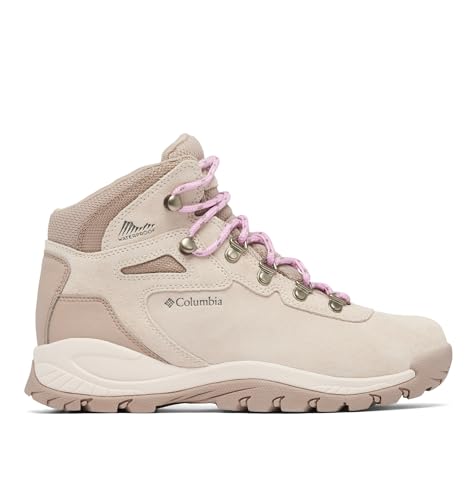
Pros
- Seam-sealed waterproof leather and suede upper guards against moisture on wet trails
- TECHLITE midsole provides lightweight cushioning and energy return for long walking comfort
- Omni-GRIP non-marking rubber outsole offers multi-terrain grip across three seasons
- Reinforced toe and heel barriers with extended toe overwrap protect high-wear zones
Cons
- Mid-cut leather and suede build may feel warmer during peak high-temperature summer hikes than mesh trail runners
- Suede and leather materials require routine brushing and proper drying to maintain condition over time
The Columbia Women's Newton Ridge Plus Waterproof Amped is a mid-cut hiking boot built for day hikers, outdoor travelers, and trail walkers seeking reliable weather protection and foot stability. Designed in a classic mountaineering style, this women's model in size 7.5 combines a seam-sealed waterproof barrier with a supportive leather and suede upper. It serves as a dependable footwear foundation for hikers navigating damp paths, dirt trails, and mixed terrain during three-season adventures.
Trail performance centers on the combination of Columbia's proprietary TECHLITE midsole and Omni-GRIP rubber outsole. The lightweight TECHLITE midsole delivers durable cushioning and responsive energy return, which helps buffer impacts when walking on firm or rocky ground. Beneath that, the non-marking Omni-GRIP rubber outsole provides multi-surface traction designed to handle changing conditions from spring mud to dry autumnal paths. The mid-cut height adds structural ankle coverage, making it practical for hikers carrying daypacks over uneven singletrack.
Construction quality is highlighted by purposeful reinforcements at high-stress areas. Columbia integrates reinforced toe and heel barriers, complemented by an extended outsole toe overwrap to protect against scuffs and impacts from trail debris. The upper blends durable suede and leather with sealed seams, forming an effective barrier against puddles and light rain while maintaining upper-foot structure. Metal hardware accents support secure lacing across the mid-cut collar to ensure steady foot placement.
Practical ownership involves straightforward care and trail preparation. Because the upper combines genuine leather and suede, clearing away dried mud with a soft brush and allowing the boots to air-dry at room temperature helps preserve material flexibility and finish. Users should adjust lace tension across the midfoot and ankle collar to achieve a secure fit before starting longer hikes, particularly when pairing the boots with cushioned hiking socks.
Buyers should consider a few practical boundaries inherent to waterproof leather footwear. While the seam-sealed construction keeps external moisture out, leather and suede mid-cut boots naturally offer less airflow than lightweight, open-mesh trail running shoes during hot midsummer hikes. Additionally, the manufacturer designates this model for versatile three-season use, meaning it is not insulated for severe winter conditions or alpine snow travel.
For hikers seeking a classic, durable mid-cut trail boot, the Columbia Women's Newton Ridge Plus Waterproof Amped offers solid practical value. Its balance of seam-sealed waterproofing, protective toe reinforcement, responsive midsole cushioning, and multi-terrain traction makes it a sensible choice for weekend day hikes, camping trips, and damp trail excursions.
The upper combines supportive leather and suede with a seam-sealed waterproof membrane designed to keep feet dry in damp outdoor settings. Heavy-wear areas benefit from reinforced toe and heel counters, along with an outsole toe wrap that resists trail scuffs.
Underneath, the non-marking Omni-GRIP rubber compound provides grip across dry soil, loose gravel, and damp rock surfaces. This makes the boot adaptable across three-season hiking environments without leaving marks on indoor surfaces.
This specific model is listed in women's U.S. size 7.5 in the Dark Stone and Cosmos color option. The mid-cut profile provides collar height around the ankle, which can be secured using the integrated lacing hardware for tailored stability.
Hikers planning on using medium to heavy cushioned hiking socks should verify their sizing preferences to ensure adequate toe room during descent on sloping trails.
The Truth About Waterproofing in Modern Hiking Boots
The straightforward answer to whether all hiking boots are waterproof is an absolute no. Outdoor footwear manufacturers intentionally design trail shoes for distinct climates, seasons, and moisture levels, splitting the market into waterproof models and highly ventilated non-waterproof options. While many popular trail boots feature integrated water barriers, plenty of boots leave them out completely to maximize breathability in warm, arid environments. Understanding this distinction will help you select the ideal footwear build for your specific geographic region and trail habits.
Why Outdoor Brands Build Both Waterproof and Non-Waterproof Boots
Trail conditions vary dramatically across different regions, meaning that a single footwear design cannot perform flawlessly on every hike. In wet climates such as the Pacific Northwest or rainy alpine ranges, boots equipped with waterproof liners provide essential shielding against sodden earth and damp morning foliage. In contrast, desert hikers traversing exposed canyon trails face relentless heat where a sealed waterproof liner quickly traps excessive perspiration inside the shoe. Footwear companies produce unlined mesh models specifically for these high-temperature environments so heat and air can escape freely without restriction.
When choosing between these two footwear categories, hikers must evaluate how moisture enters and leaves the shoe cavity. Waterproof boots effectively block incoming splashes, shallow puddle dips, and damp underbrush, keeping your socks clean and dry on standard wet-weather excursions. Non-waterproof boots, however, embrace rapid drainage and fast drying times, allowing trail water that spills over the collar to flush out through porous mesh walls within a few miles of steady walking. Neither design is objectively superior for every single outing, as each serves a distinct outdoor environment.
How Waterproof Boot Membranes Actually Work
Waterproof hiking boots generally rely on a specialized internal sock construction known as a waterproof-breathable bootie. This membrane features microscopic pores that are small enough to prevent liquid water droplets from penetrating inward, yet large enough to allow vaporized perspiration molecules to vent outward. Brands frequently employ proprietary membrane technologies to achieve this balance, such as Columbia Omni-Tech or SHULOOK SL-TEX constructions. These internal booties are sewn directly between the exterior shell fabric and the comfortable inner lining to protect the delicate membrane against abrasive friction.
Along with the membrane fabric itself, manufacturers must seal every structural seam where sewing needles puncture the material during assembly. Seam-sealed construction utilizes specialized waterproof tape applied under heat to cover exposed stitch lines, preventing liquid from seeping through microscopic thread gaps. A durable water repellent coating, commonly called DWR, is also applied to the outer face fabric or leather to encourage surface water to bead up and roll off immediately. Without functional seam sealing and exterior surface treatments, water could pool against the membrane and severely restrict its ability to breathe.
The Breathability Trade-Off and Internal Moisture Accumulation
The primary drawback of any waterproof membrane is its inherent limitation in warm or high-exertion hiking scenarios. While modern waterproof-breathable liners can vent moisture vapor under moderate temperatures, their efficiency drops significantly as internal foot heat and ambient humidity climb. Your feet produce considerable perspiration during strenuous climbs, and when that moisture cannot escape rapidly, it condenses against the boot interior. Over several trail hours, this trapped moisture can leave your socks feeling just as damp as if you stepped straight into a stream.
Prolonged internal moisture buildup softens the outer layer of skin on your soles, leading to a condition known as skin maceration. Macerated skin loses its structural toughness and becomes exceptionally vulnerable to friction hot spots, painful blisters, and fungal irritation. Hikers wearing waterproof footwear in warm summer temperatures often assume their boots are leaking when, in reality, their own perspiration has overwhelmed the liner. Choosing non-waterproof footwear with open nylon mesh panels provides continuous ventilation that actively mitigates this friction-inducing moisture trap.
Gusseted Tongues and the Bellows Waterline Boundary
Even the most capable waterproof boot has a defined physical threshold where liquid will find its way inside. This physical boundary is determined by the height of the tongue gusset, frequently referred to as the bellows tongue design. On boots such as the SHULOOK Men’s Waterproof Hiking Boots Non-Slip, a closed-cell gusseted tongue connects directly to the upper eyelet area to prevent muck, rain, and sand from sneaking through lace openings. However, if standing water reaches above this connected fabric line, water will rush directly over the tongue collar and fill the boot cavity.
Once water breaches the top collar of a waterproof boot, that same barrier that kept exterior moisture out now works against you by trapping the puddle inside. Waterproof liners prevent fast drainage, forcing the hiker to walk with a waterlogged interior until the footwear can be removed and emptied manually. Non-waterproof trail boots do not face this lingering swamp effect because their unlined, porous mesh structure permits water to drain naturally with every forward step. Understanding your boot gusset waterline ensures you do not attempt stream crossings that exceed the physical height of your protective barrier.
Upper Materials and Natural Water Resistance
The exterior material used on a hiking boot significantly influences its baseline water resistance, overall weight, and long-term trail durability. Traditional full-grain leather and supportive suede offer natural water deflection because the dense cellular structure of hide naturally slows moisture penetration. Footwear such as the Columbia Womens Newton Ridge Plus Waterproof Amped utilizes a sturdy combination of supportive leather and suede that shields against abrasive trail debris while reinforcing the waterproof build. Leather uppers require routine conditioning over time to maintain their supple texture and prevent surface cracking under muddy conditions.
Synthetic materials, including high-denier nylon, polyurethane overlays, and synthetic suede, have become increasingly popular on modern mid-cut boots. Footwear like the SHULOOK Men’s Waterproof Hiking Boots Non-Slip incorporates premium synthetic suede alongside breathable linings to deliver an ultra-lightweight profile of approximately 1.25 pounds for a standard size ten. Synthetic uppers absorb far less ambient water than untreated natural leather, which helps the boots retain their lightweight feel even when trudging through saturated grass. They also break in significantly faster, allowing hikers to hit local trails without weeks of stiff leather conditioning.
Midsole Cushioning and Load-Bearing Support on the Trail
Keeping your feet dry is only one piece of the trail comfort puzzle, as shock absorption and underfoot support are equally vital on rocky paths. Most modern day hiking boots utilize flexible ethylene vinyl acetate, commonly known as EVA, to absorb ground impacts and minimize lower-body fatigue. Designs like the NORTIV 8 Men’s Ankle High Waterproof Hiking Boots integrate lightweight EVA midsoles paired with removable cushioned insoles to support the arch across diverse outdoor activities. This cushioning system absorbs repetitive heel strikes, protecting your joints when navigating hard-packed dirt and stone staircases.
When carrying a heavy multi-day pack, midsole support works hand-in-hand with your load carriage gear to stabilize your center of gravity. Hikers hauling gear inside an internal frame hiking backpack require balanced footwear that prevents lateral foot roll on steep descents. Columbia models frequently feature Techlite midsole cushioning, which offers high energy return alongside impact absorption to reduce lower-leg strain across undulating terrain. A supportive midsole prevents your foot from twisting excessively, which in turn reduces pressure points against internal waterproof bootie seams.
Outsole Traction Compounds and Wet-Rock Stability
Waterproof protection provides little benefit if your boots fail to maintain positive traction across slick, mossy rocks or greasy trail mud. Outsole performance depends heavily on the rubber compound formulation and the geometric shape of the tread lugs. Specialized compounds, such as the Columbia Omni-GRIP non-marking rubber found on the Columbia Mens Transverse Waterproof Hiking Boot, combine multi-terrain stability with strategic lug placement. These tread patterns are engineered to bite into loose gravel while offering wide exit channels that shed caked mud before it impacts your grip.
Durable rubber outsoles on boots like the NORTIV 8 series provide slip resistance across slick rocks, loose dirt, and wet logs. Deeply sculpted perimeter lugs enhance edge control when traversing steep, off-camber dirt switchbacks, helping you stay upright on wet ascents. When moving through saturated forest floors, pairing reliable boots with flexible trail pants designed for mobility protects your legs from wet brush while letting you move freely. Reliable traction gives you the confidence to place your feet securely without sudden slips that could submerge your ankles past the boot collar.
Diagnosing Boot Leaks Versus Perspiration Condensation
Many hikers conclude their boots have failed after finishing a damp trek with thoroughly soaked socks, but membrane failure is not always the culprit. Determining whether your boots leaked or your feet simply overheated requires a simple diagnostic inspection at home. Start by checking the specific location of the moisture on your socks immediately after taking the boots off. If dampness is concentrated uniformly across the sole, toes, and instep, internal perspiration is the probable cause, as your sweat glands are heavily concentrated across those foot zones.
If you suspect a genuine physical puncture in the waterproof liner, you can perform a static water submersion test in a sink or shallow basin. Remove the internal footbeds, clean off exterior trail grime, and submerge the boot in water up to the base of the ankle collar, making sure not to submerge the tongue opening. Stuff dry paper towels inside the toe box and along the heel cup, leaving the footwear submerged for fifteen to twenty minutes. If the paper towels remain dry upon inspection, your boots are intact, and excessive sweating or wet sock wicking was responsible for your trail dampness.
Cleaning Care and Restoring Exterior DWR Repellency
Waterproof hiking boots require periodic care to maintain their protective qualities throughout multiple hiking seasons. Caked trail mud acts like a sponge on exterior fabric, drawing moisture in and clogging the breathability pores of the outer upper. After returning from muddy trails, rinse the boots using cool tap water and a soft-bristled brush to clear dirt from seams, lace hardware, and flex points. Never dry wet boots beside open campfires, heating vents, or radiators, as excessive direct heat degrades flexible EVA midsoles and can melt the adhesive bonding the waterproof membrane.
When you notice rain soaking directly into the outer fabric rather than beading into tight droplets, your factory DWR finish has worn away. You can easily revive this water-shedding performance by applying a specialized fluorocarbon-free technical footwear reproofing spray to clean, damp boots. Spray the reproofer evenly across the exterior uppers, paying close attention to high-flex zones near the metatarsal joints where water tends to pool. Regular cleaning combined with fresh DWR treatments keeps the exterior fabric from wetting out, allowing the internal membrane to breathe effectively during wet excursions.
Selecting the Right Footwear Architecture for Your Trail Style
Deciding between waterproof and non-waterproof hiking boots comes down to a realistic assessment of your typical hiking environments and weather forecasts. If your outings frequently take you through rainy mountain passes, muddy spring forests, or slushy shoulder-season trails, a waterproof boot with seam sealing is an indispensable piece of gear. Models offering reliable leather construction and padded ankle collars, such as the Columbia Newton Ridge Plus or Transverse boots, keep trail elements out while stabilizing your ankles across uneven stones.
For hikers who primarily explore desert canyons, sun-baked singletracks, or warm summer river routes where boots will be completely submerged, unlined mesh boots provide far greater comfort. They keep your feet cooler, minimize sweat-induced skin softness, and dry out in a fraction of the time required by membrane-lined footwear. Evaluating trail wetness, expected temperatures, and drainage requirements ensures you lace up the right pair of boots for a safe, comfortable day outdoors.



Write Your Review
No reviews yet. Be the first to share your experience!