


Descending a steep, rocky switchback with a loaded multi-day pack places tremendous downward force directly on your lower joints. Hikers frequently ask whether are hiking poles worth it or if carrying extra gear merely clutters their hands on simple trail walks. While casual strollers on paved park loops might see little benefit, anyone navigating uneven terrain, slick mud, or high elevation gradients can experience a dramatic improvement in stability. Integrating a dedicated pair of poles helps redistribute weight away from tired knees and transfers braking force across your upper body.
Beyond knee preservation, modern trekking equipment provides critical lateral stability during river crossings, scree descents, and heavy-pack outings. Pairing dependable poles with appropriate backcountry gear such as tendon knee hiking pants can significantly reduce cumulative trail fatigue. Lightweight aluminum shafts and ergonomic handles allow you to maintain a steady cadence across dozens of miles without feeling weighed down. Ultimately, understanding your specific trail conditions and physical requirements makes it easy to decide if hiking sticks belong on your gear list.

Pros
- Built-in anti-shock spring reduces joint stress when descending rocky trails
- Snag-free twist-lock mechanism keeps pole profile slim against pack straps
- Includes a versatile four-piece tip and basket set for rocks, mud, snow, and pavement
- Disassembles to 21.46 inches for easier transport in luggage or duffels
- High-strength aluminum alloy provides reliable durability at an accessible price point
Cons
- Twist-lock collars require firm hand tightening to prevent accidental collapse under heavy loads
- Collapsed length of 25.6 inches typically requires external backpack attachment rather than internal storage
- Rubber grips lack the sweat absorption of natural cork handles on warm-weather hikes
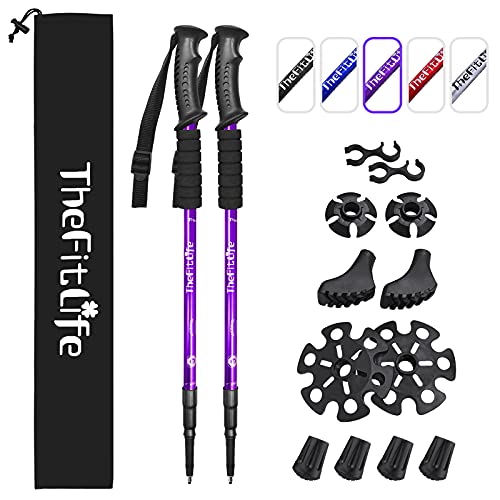
The TheFitLife Telescopic Trekking Poles provide practical stability and joint protection for day hikers, weekend backpackers, and fitness walkers. Designed as an accessible external trail accessory, these poles help balance shifting loads when carrying a daypack or overnight backpack over uneven terrain. Hikers looking to minimize joint strain will appreciate the integrated anti-shock mechanism that softens ground impacts with every stride.
On the trail, adjustability and weight balance are essential. Each pole weighs 9.92 ounces (282 grams), resulting in an agile swing weight that does not prematurely tire your arms. The three-section telescoping shaft expands from a minimum length of 25.6 inches (65 cm) up to 51.2 inches (130 cm). This generous adjustment range allows hikers to set proper pole lengths for steep ascents, descending grades, or flat trail cruising, accommodating a broad spectrum of user heights.
Crafted from durable aluminum alloy, the pole shafts are engineered to withstand rocky paths, root-strewn tracks, and variable temperatures. Instead of external cam levers, TheFitLife uses an internal twist-lock mechanism. This design creates a smooth, snag-free exterior that slides easily into backpack gear loops or under side compression straps without catching on webbing. The molded rubber grip features an ergonomic, non-slip profile suited for all-day trail handling.
For backpackers and travelers, transport flexibility is a notable advantage. The poles collapse to 25.6 inches for trail lashing. When fully separated into three individual sections, the longest piece measures 21.46 inches (54.5 cm), allowing them to fit diagonally inside most 22-inch or larger travel luggage. The package also includes rubber tips, road-walking caps, mud baskets, and snow baskets, giving hikers the correct ground interface across all four seasons.
Potential buyers should consider a few mechanical factors before hitting the trail. Twist-lock mechanisms require deliberate, firm hand tightening to ensure the internal expanders bite securely under full body weight. Additionally, while the 25.6-inch collapsed length attaches well to external pack loops, it is generally too long to fit inside compact daypack main compartments. Hikers who prefer porous cork grips for sweaty summer hikes should note that these feature molded rubber handles.
Overall, TheFitLife Telescopic Trekking Poles deliver dependable build quality, useful anti-shock dampening, and full accessory coverage at an approachable price. They are a smart addition for hikers who want reliable extra balance on rocky trails without spending premium gear prices.
Securing trekking poles properly on your backpack prevents shifting weight and snagging on low branches. TheFitLife poles collapse down to 25.6 inches (65 cm), making them well-suited for side compression straps, tool loops, or dedicated trekking-pole bungees on standard daypacks and multi-day packs. For travelers, the poles can be fully disassembled into three sections measuring 21.46 inches (54.5 cm), which fits diagonally inside checked luggage or travel duffels.
The height adjustment ranges from 25.6 inches to 51.2 inches (130 cm), making it simple to achieve an ergonomic 90-degree elbow bend on level terrain. Markings on the pole sections help you quickly match heights between the left and right poles after packing or adjusting for uphill and downhill sections.
TheFitLife poles come equipped with a comprehensive accessory set designed to adapt to varied trail surfaces. Standard carbide tips provide direct grip on hard-packed dirt, ice, and rock. For paved surfaces or rocky trails where you want to minimize noise and tip wear, push-on rubber tips and curved walking caps provide added grip and cushioning.
For loose or seasonal ground conditions, screw-on mud baskets prevent the poles from sinking deep into wet soil, sand, or scree. Wider snow baskets are also included to distribute weight across soft winter powder or crust, making these poles fully functional for year-round outdoor hiking.

Pros
- Compact 15-inch folded size fits easily inside daypacks or stows neatly against backpack compression straps
- Aircraft-grade aluminum construction with reinforced metal joint caps offers reliable trail strength
- Moisture-wicking EVA foam grip and extended shaft sleeve provide secure handling during steep climbs
- External flip-lock mechanism allows quick, tool-free height adjustments between 100 and 120 cm
Cons
- Height range of 100 to 120 cm fits users up to 5'10", requiring taller hikers to select the longer pole size
- TSA regulations require folding trekking poles to be packed in checked luggage rather than airline carry-on bags
The Trekology Trek-Z Folding Trekking Pole set is a compact, tri-fold aluminum walking stick pair engineered for day hikers, backpackers, and active travelers who need dependable trail balance without taking up excessive pack space. Sized with an adjustment range of 100 to 120 cm, this specific model suits hikers between 4'11" and 5'10" who want an adjustable walking aid that easily stows on or inside a hiking backpack.
Collapsing down to just 15 inches (38 cm), the Trek-Z poles eliminate the awkward overhang common with traditional telescoping poles when strapped to backpack gear loops or slipped into stretch water bottle pockets. Weighing 10.4 oz (294 g) per pole, they offer solid ground support on ascents and descents while adding minimal base weight to your daypack or multi-day backpacking load. The included mud stops help prevent the tips from sinking into soft ground, making them useful across forest tracks, dirt trails, and wet crossings.
Built with aircraft-grade aluminum alloy tubing and reinforced joints fitted with metal lock caps, these poles are crafted to handle rugged trail conditions and repeated folding cycles. The ergonomic handle features moisture-wicking EVA foam that helps keep your hands dry during sweaty summer hikes. An extended EVA foam section down the upper shaft allows hikers to quickly choke up on the grip when climbing steep switchbacks without pausing to readjust pole height.
Deploying the poles involves snapping the folding sections into place and securing the top flip-lock mechanism, which provides 20 cm of micro-adjustment to dial in the correct 90-degree elbow angle. When you reach the trailhead or take a lunch break, unlocking the system allows the poles to quickly fold back down to 15 inches. Trekology includes a custom holder bag to shield the rest of your backpack contents from dirt and sharp tips during transport.
While the tri-fold aluminum design is versatile, buyers should be aware of a few practical constraints. Hikers taller than 5'10" will need the longer 115 to 135 cm version, as this model caps out at 120 cm. Additionally, for travelers heading to destination hikes via commercial airlines, TSA guidelines require trekking poles to be packed in checked baggage rather than carry-on luggage.
For day hikers, weekend campers, and budget-conscious backpackers seeking reliable walking support that packs down small enough for almost any daypack, the Trekology Trek-Z poles deliver practical utility and straightforward adjustment at an accessible price point.
A key advantage of the Trekology Trek-Z poles is their 15-inch (38 cm) collapsed length, making them significantly easier to carry than standard telescoping poles that often measure 24 inches or more when retracted. This short profile allows them to slide vertically inside a typical 20-liter daypack or tuck securely into the side water-bottle pockets of a backpacking pack without snagging low-hanging branches.
The included carry bag provides a clean barrier between trail mud and your gear, keeping the interior of your backpack dry and organized. Hikers who prefer external storage can easily lash the folded poles to standard pack compression straps, ice-axe loops, or trekking-pole attachments without throwing off the balance of their pack.
This 100 to 120 cm Trek-Z model is specifically tailored for hikers with heights between 4'11" and 5'10". Proper trekking-pole sizing generally requires your elbow to rest at a comfortable 90-degree angle when holding the grip with the pole tip resting on flat ground.
Height adjustment is controlled by an intuitive external flip-lock equipped with a metal stopper, offering 20 cm of variable adjustment. Hikers can shorten the poles slightly for steep uphill pushes or lengthen them for descents to maintain balanced posture on uneven terrain.
Constructed from aircraft-grade aluminum alloy, the Trek-Z poles balance structural rigidity with manageable trail weight. Aluminum is well-suited for rugged terrain because it tends to bend under extreme stress rather than snapping abruptly like ultralight carbon fiber.
Trekology reinforces the connecting joints with metal lock caps, reducing play and wobble across the tri-fold joints during heavy downhill impacts. The moisture-wicking EVA foam handles resist sweat buildup and provide soft, all-day hand comfort in varied weather conditions.

Pros
- Collapses down to a compact 15 inches, fitting easily inside backpacks or carry luggage bags
- Natural cork handles absorb hand perspiration effectively during strenuous hikes
- Sturdy aircraft-grade aluminum construction with protective metal caps at the folding joints
- Simple height adjustment between 110 cm and 130 cm via a sturdy metal flip lock lever
Cons
- TSA regulations require trekking poles to be packed in checked luggage rather than carry-on bags
- Users must verify the push-button lock is fully popped out to ensure shaft stability before hiking
- At 11.5 oz per pole, aluminum construction is heavier than ultralight carbon-fiber alternatives
The Trekology Trek-Z Cork Grip Collapsible Trekking Poles are three-section folding hiking sticks designed for day hikers, backpackers, and adventure travelers who require portable stability on uneven trails. Rather than using traditional telescoping designs that remain long when collapsed, these poles utilize a tri-fold folding cable system that stows down to a compact 15 inches. This makes them a strong match for hikers who prefer storing their poles directly inside a daypack or securing them flat against external pack compression straps without poles protruding past the top lid.
On trail, these poles offer an adjustable length range of 110 cm to 130 cm, covering a stated user height range between 5'2" and 6'5". Each pole weighs 11.5 oz (330 g), delivering a solid feel that helps distribute carried weight and stabilize joint impact on steep descents. The main handle is shaped from natural cork, which naturally absorbs hand moisture and sweat during warm trail outings. Trekology notes that the cork grips incorporate a slight rotational flex as an anti-torque ergonomic feature. Below the cork, secondary EVA foam grips allow hikers to quickly choke down on the poles when negotiating short, steep step-ups without adjusting overall pole length.
Build quality centers on aircraft-grade aluminum alloy shafts, chosen to withstand lateral loads and rocky terrain where brittle materials might crack. To reinforce high-stress connection points, Trekology adds metal caps around the folding joints, reducing play once the poles are deployed. Extension and length adjustments are secured using a durable metal flip lock at the upper section, ensuring reliable clamping power once clamped to the hiker's preferred height marker.
Deploying the poles requires extending the folding sections until the internal tension cable pulls tight and an internal metal lock button pops through the shaft hole. Ensuring this button is fully seated is essential for complete structural rigidity before latching the upper flip lock. For transport, collapsing the poles takes seconds, allowing both poles to slip neatly into the included storage bag. When traveling by commercial air to hiking destinations, keep in mind that TSA and airline policies classify trekking poles as checked luggage, meaning they must be stowed inside checked duffels or backpacks rather than overhead carry-on bags.
While the folding mechanism provides impressive packability, the design does present a few practical limitations. The total adjustment range is 20 cm (110 to 130 cm), which may not suit hikers under 5'2" who require a shorter pole setup. Additionally, at 11.5 oz per pole, weight-conscious thru-hikers aiming for sub-pound base weights might find aluminum folding poles heavier than fixed-length carbon options. The locking button also requires careful initial alignment during assembly to ensure the segments seat properly without wobbling.
For hikers, backpackers, and travelers seeking dependable trail support without spending top-tier outdoor brand prices, the Trekology Trek-Z Cork poles offer exceptional value. The combination of sweat-wicking cork handles, reinforced aluminum joints, and an ultra-packable 15-inch folded size makes them a versatile accessory for everything from local forest walks to rugged mountain backpacking trips.
The Trekology Trek-Z poles adjust between 110 cm and 130 cm in length, accommodating hikers measuring roughly 5'2" to 6'5" (159 to 195 cm) in height. Length adjustments are managed via a metal flip lock clamp on the top shaft section, allowing users to fine-tune height based on trail slope or individual arm ergonomics.
Hikers shorter than 5'2" may find the minimum 110 cm setting too tall for standard 90-degree elbow positioning on level terrain. Always confirm that your forearm rests parallel to the ground when holding the cork grip before clamping the metal flip lock.
Thanks to a three-piece folding design, the Trek-Z poles collapse down to just 15 inches (38 cm) in length. This compact size allows them to fit horizontally or vertically inside most standard daypacks, carry duffels, or luggage cases without hanging loosely off external attachment points.
The poles come with a dedicated carry bag to keep trail mud and dust away from clean gear inside your backpack. Hikers traveling by air should remember that TSA guidelines prohibit trekking poles in carry-on baggage, requiring these poles to travel inside checked luggage.
The pole shafts are manufactured from aircraft-grade aluminum alloy, delivering reliable strength-to-weight performance and high resistance to bending stresses on demanding rocky routes. The connection joints are strengthened with metal caps to guard against joint wear and slippage over time.
The handles feature genuine cork, which helps manage perspiration and adapts comfortably to hand pressure over long miles. A secondary EVA foam grip sits directly beneath the cork for quick hand repositioning on steep gradients without stopping to change shaft length.

Pros
- Folds down to 15 inches, making it significantly easier to pack inside travel luggage or strap to compact daypacks than standard telescoping poles
- Moisture-wicking natural cork handles keep palms dry and comfortable across humid hiking conditions
- Sturdy metal flip locks and reinforced joint caps provide solid structural support without slippage when properly tensioned
- Lower EVA foam grips allow instant trail adjustment for steep uphill climbing
Cons
- At 11.5 ounces per pole, they carry more weight than specialized ultralight carbon fiber poles
- The 110 cm minimum height setting may feel slightly too long for hikers under 5 feet 2 inches
- Per TSA regulations, trekking poles with metal tips must be packed in checked luggage rather than carried on flights
The Trekology Trek-Z Cork Grip Trekking Poles are folding, multi-section hiking sticks designed for hikers, backpackers, and travelers who require sturdy trail stability without the awkward bulk of traditional telescoping poles. Sold as a pair with an included carry bag, these poles suit day hikers tackling uneven paths, weekend backpackers managing load transfer on descents, and outdoor enthusiasts who need compact gear that fits inside travel luggage or standard daypack side sleeves.
Trail packability is one of the standout characteristics of this design. Utilizing a retractable tri-fold cable system, each pole breaks down to just 15 inches (38 cm) in overall length. This short folded dimension lets you slip the pair directly into the main compartment of an overnight pack, tuck them into side stretch-mesh water bottle pockets, or strap them beneath external compression straps without snagging overhead brush. For length adjustment, an upper aluminum section provides a 20 cm sliding range from 110 cm to 130 cm, catering to user heights between 5 feet 2 inches and 6 feet 5 inches.
Component construction focuses on long-term trail durability. Trekology builds the Trek-Z poles from aircraft-grade aluminum alloy, which provides higher impact resistance and flex tolerance against rocky crevices compared to brittle carbon fiber. The folding shaft joints feature protective metal caps to resist wear at stress points during repeated assembly. Up top, the natural cork grip wicks moisture away from sweaty palms during steep ascents, while a secondary EVA foam grip sleeve allows you to lower your hand placement instantly on steep trail grades without adjusting the shaft length.
Deploying and adjusting the poles requires a straightforward two-step setup. After letting the lower segments drop into place, you pull the upper shaft section until an internal metal locking button pops outward with a firm click. A durable metal external flip lock then secures the upper telescoping section at your desired height marker. Proper setup is essential; if the lower shaft feels loose or disconnected, the metal lock button must be firmly pulled until fully seated in its designated catch hole. Maintenance is simple, requiring only an occasional wipe-down with a dry cloth after muddy hikes before packing into the included storage sleeve.
While practical and durable, the Trek-Z design carries a few realistic limitations. Each pole weighs 11.5 ounces (330 grams), resulting in a combined pair weight around 23 ounces, which may deter dedicated ultralight thru-hikers who prefer minimal swing weight. Additionally, the minimum length of 110 cm means youth hikers or adults under 5 feet 2 inches might find the grip positioning too elevated on flat terrain. Travelers should also remember that TSA guidelines require trekking poles with rigid tips to travel inside checked baggage rather than carry-on packs.
For hikers seeking an affordable, compact, and robust set of walking poles, the Trekology Trek-Z Cork Grip poles deliver excellent overall value. They provide dependable joint support, sweat-wicking cork comfort, and pack-friendly folding convenience that fits easily into standard hiking backpacks and travel duffels.
The Trekology Trek-Z poles feature an adjustable working range between 110 cm and 130 cm, making them compatible with users measuring between 5 feet 2 inches and 6 feet 5 inches in height. Sizing adjustments are controlled via a durable metal flip-lock clamp positioned on the upper shaft section, marked with clear centimeter increments for quick alignment.
Hikers can lengthen the poles slightly for steep downhill sections to maintain an upright posture, or shorten them for prolonged uphill climbs. For fast grade transitions where stopping to loosen the clamp is impractical, the extended EVA foam grip below the primary cork handle allows instant choke-down positioning.
Thanks to a three-section folding architecture linked by an internal tension cable, the Trek-Z poles collapse down to an ultra-compact 15 inches (38 cm). This compact footprint allows them to slide vertically inside most 20-liter to 65-liter hiking backpacks, eliminating the tip-heavy snagging hazards common with longer two-piece or three-piece telescoping poles.
A matching carry bag is included to keep trail mud and dust away from sleeping bags, pack liners, and clothing when stored internally. When flying to destination trailheads, note that airline security guidelines require trekking poles to be packed within checked baggage rather than carry-on luggage.
The shafts are manufactured from aircraft-grade aluminum alloy, delivering high tensile strength and resilience against bending forces when supporting heavy backpack loads on rocky trails. The connection joints between segments are reinforced with metal caps to resist cracking and wall deformation under load.
The upper handle utilizes natural cork material that absorbs hand moisture, resisting slick spots during warm summer outings. The handle is engineered with a slight rotational flex that acts as an anti-torque buffer, reducing jarring impacts transmitted through the hands and wrists across prolonged trail miles.
Pros
- Lightweight build at only 9.92 oz per pole reduces arm fatigue on long day hikes and backpacking trips
- Internal anti-shock springs help absorb repeated trail impacts on rocky or downhill terrain
- Includes full set of mud baskets, snow baskets, walking caps, and rubber tips for varied trail surfaces
- Disassembles down to 21.46 inches for practical packing inside standard 22-inch travel luggage
Cons
- Internal twist locks require firm manual tightening compared to external flick-lock levers
- Collapsed length of 25.6 inches may protrude above compact daypacks when lashed to external straps
- Rubber grips offer dependable traction but may feel less breathable on hot, sweaty summer hikes than natural cork
TheFitLife Telescopic Trekking Poles are adjustable three-section aluminum hiking sticks designed for day hikers, weekend backpackers, fitness walkers, and travelers who need reliable balance assistance on the trail. Weighing just 9.92 ounces (282 grams) per pole, this set adds minimal weight when strapped to a backpack while offering structural stability for ascending steep inclines and navigating uneven terrain.
Built to accommodate a broad range of user heights, each pole extends from 25.6 inches (65 cm) up to 51.2 inches (130 cm). The internal anti-shock spring system is engineered to dampen trail vibrations each time the pole plants on hard rock or packed dirt. This subtle cushioning effect is particularly helpful during long descents where repetitive shock transfers directly into the wrists, elbows, and knees.
The shafts are constructed from high-strength aluminum alloy, balancing impact resistance with fatigue durability on rocky paths. Rather than using external clamp levers that can catch on underbrush or gear webbing, TheFitLife utilizes a refined internal twist-lock system. It tightens securely with a simple twist, maintaining a streamlined profile that is easy to operate even while wearing trail gloves. Ergonomic non-slip rubber grips provide a firm and comfortable hold throughout changing weather.
Packing and trail transport are straightforward. Outdoor hikers can secure the poles externally using backpack gear loops and compression straps at their collapsed length of 25.6 inches. For travelers packing for distant trailheads, the poles separate completely into three sections measuring 21.46 inches (54.5 cm), allowing them to fit diagonally inside most standard 22-inch or larger travel suitcases. The package also includes mud baskets, snow baskets, protective rubber tips, and walking caps to handle mud, scree, snow, or paved paths.
A realistic consideration is the twist-lock design itself. While it eliminates bulky external hardware, twist mechanisms require deliberate tightening to prevent slipping under heavy vertical pressure, which can be harder to gauge in freezing weather compared to quick-cam levers. Additionally, hikers using small daypacks under 20 liters may find the 25.6-inch collapsed length slightly tall when mounted to smaller exterior pack pockets.
For recreational day hikers, entry-level backpackers, and fitness walkers seeking reliable trail support at a budget-conscious price point, TheFitLife Telescopic Trekking Poles offer strong value. Their combination of joint-cushioning anti-shock springs, solid aluminum durability, and comprehensive seasonal attachments makes them a versatile companion for trails across the country.
TheFitLife Trekking Poles offer a versatile length adjustment range spanning from 25.6 inches (65 cm) to 51.2 inches (130 cm). This broad range allows men, women, teenagers, and seniors to set an optimal pole height that maintains an efficient 90-degree elbow bend on flat terrain.
Height adjustments are controlled by twisting the telescoping sections. Hikers can shorten the shafts during steep uphill climbs to maintain forward momentum or lengthen them on descents to improve balance and stability across rough trail sections.
When hiking with a daypack or backpacking pack, these poles can be secured externally to trekking-pole loops, daisy chains, or side compression straps. Their collapsed profile of 25.6 inches sits comfortably alongside standard 30 to 65-liter backpacks without excessive overhang.
For air travel or off-season storage, the three aluminum sections can be separated entirely. In this disassembled state, the longest section measures 21.46 inches (54.5 cm), making the set compact enough to fit diagonally within most 22-inch or larger luggage bags.
TheFitLife provides a multi-terrain accessory kit with every pair. Included are rubber tips for hard rock surfaces, walking caps designed for paved surfaces and fitness walking, mud baskets to prevent poles from sinking into soft soil, and broader snow baskets for winter trail use.
All included attachments screw on and off quickly in the field without tools. This modular system allows hikers to adapt the poles seamlessly whether navigating muddy spring switchbacks or paved park trails.

Pros
- Collapses down to a compact 15-inch profile that fits inside most hiking daypacks and travel bags.
- Aircraft-grade aluminum shafts and metal flip locks resist trail impacts better than fragile plastic clamps.
- Natural cork grips offer comfortable, sweat-resistant hand placement with lower EVA foam extensions for switchbacks.
- Listed at 9.95 ounces per pole, keeping carried base weight and trail fatigue low.
Cons
- The 100-120 cm adjustment range is strictly limited to hikers 5 feet 9 inches and under.
- Folding cord design requires manual joint alignment during deployment compared to standard twist or slide poles.
- Aluminum construction is slightly heavier than ultralight carbon fiber alternatives.
The Hiker Hunger Foldable Aluminum Trekking Poles are compact, packable hiking sticks designed for trail balance, stability, and joint relief during day hikes or backpacking excursions. With an adjustable range spanning 100 to 120 centimeters, this specific short variant is built specifically for hikers standing 5 feet 9 inches and under. For hikers who prefer to stow their poles inside or alongside a pack when scrambling rocky sections, boarding planes, or commuting to trailheads, the folding configuration provides a distinct packability advantage over standard full-length telescoping options.
On the trail, the main benefit of this system is the compact 15-inch collapsed length combined with a manageable listed weight of 9.95 ounces. The multi-section folding shafts slide smoothly into side water-bottle pockets, slip behind exterior pack compression straps, or stow entirely within internal gear compartments. This makes them especially useful for technical trail segments where hands-free movement is required, as well as for minimalist backpackers who value clean external pack lines without protruding gear.
Construction quality centers around aircraft-grade aluminum tubing connected by reinforced joints and secured with external metal flip locks. Metal locking levers provide reliable holding strength against vertical slippage on steep descents and resist impact damage better than brittle molded plastic alternatives. Hand comfort is supported by genuine cork main grips that shape to the palms and absorb sweat, while lower EVA foam grip extensions allow hikers to choke down during sudden steep switchbacks without pausing to unlock and shorten the poles.
Deploying and adjusting the poles is straightforward once familiar with folding-shaft mechanics. The lower segments lock into place via an internal tension cable, while the uppermost section provides 20 centimeters of fine height adjustment secured by the metal cam lever. Basic maintenance involves wiping away trail mud, letting the shafts and inner cable dry thoroughly before long-term storage, and checking the flip-lock tension screw occasionally to maintain firm clamping force.
Realistic limitations must be noted before purchase. Because this model reaches a maximum length of 120 centimeters, hikers taller than 5 feet 9 inches will lack sufficient extension for a proper 90-degree arm angle, particularly on steep downhill sections. Furthermore, while aluminum bends rather than snaps abruptly under extreme lateral loads, it carries a small weight penalty over premium carbon fiber alternatives. The folding joints also require routine visual checks to ensure trail grit does not interfere with proper joint seating.
For day hikers, section hikers, and adventure travelers who fit within the recommended height parameters, these Hiker Hunger poles represent a well-constructed, travel-friendly trail tool. Their 15-inch packed profile, durable metal hardware, and ergonomic cork handles make them a dependable asset for any hiker seeking reliable stability without taking up unnecessary pack volume.
This model features an adjustable usable length between 100 and 120 centimeters, designed to fit hikers who are 5 feet 9 inches tall and shorter. Proper ergonomic trekking pole fit requires that your elbow forms approximately a 90-degree bend when holding the grip with the pole tip resting on level ground.
Hikers near the upper limit of 5 feet 9 inches who frequently tackle steep mountain descents may find themselves near the pole maximum extension. Hikers taller than 5 feet 9 inches should look toward the longer 115 to 135 centimeter variant to ensure adequate downhill reach and optimal joint support.
Collapsing down to just 15 inches, these folding poles pack considerably smaller than standard two-section or three-section telescoping poles that typically collapse to 24 inches or more. This compact profile allows them to slide entirely inside daypacks, luggage, or trunk storage compartments without sticking out.
When stowing poles on your backpack exterior, the 15-inch length minimizes snagging hazards when hiking through dense brush or off-trail terrain. To maintain the internal tension cord and prevent corrosion, ensure all sections are completely dry before packing them away for extended off-season storage.
Evaluating the Practical Value of Hiking Poles on the Trail
Deciding whether to add trekking equipment to your kit comes down to balancing weight against functional trail support. Many backpackers initially view poles as unnecessary clutter until a slick descent or heavy pack strains their joints. Trekking poles serve as active extensions of your arms that transfer downward force into the ground while maintaining your natural walking posture. Analyzing the biomechanics, structural components, and terrain demands clarifies exactly when these tools justify their place in your pack.
Biomechanical Relief and Joint Strain Reduction on Descents
Steep downhill descents represent the most punishing phase of any backcountry trek for the human body. As your foot strikes a lower step, your quadriceps and patellofemoral joints absorb multiple times your total body weight in braking impact. Trekking poles absorb a meaningful portion of this downward momentum by creating two forward contact points before your boots hit the dirt. Distributing this kinetic energy into your upper body shields your patella and meniscus from repetitive compression trauma.
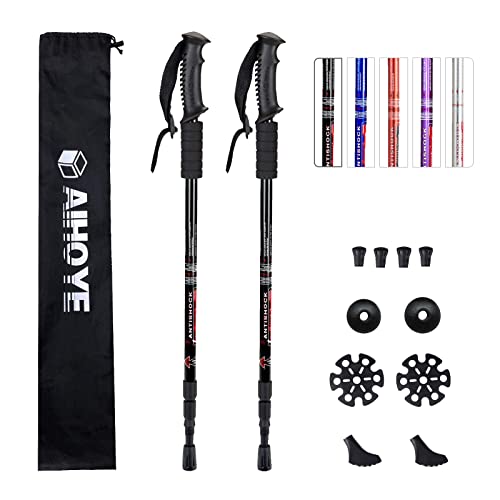
Over consecutive trail days, this continuous shock dissipation helps prevent chronic inflammation around the knees and lower lumbar spine. Hikers carrying heavy multi-day supplies feel this benefit immediately, as the poles arrest forward momentum without forcing the quadriceps into excessive eccentric contraction. Telescopic models such as the Telescopic Trekking Poles for Hiking even feature internal shock-absorbing springs designed to soften the harsh mechanical jolt on firm stone. For anyone managing prior joint soreness, having mechanical shock absorption on descents transforms a grueling trek into a comfortable journey.
Uphill Propulsion and Cardiopulmonary Cadence
Climbing steep switchbacks demands sustained output from your glutes, calves, and hamstrings. Trekking poles convert walking into a full-body propulsion system by engaging your latissimus dorsi, pectoral muscles, and triceps. Planting the poles behind your center of gravity and pushing backward propels your torso forward with each stride. This upper-body contribution relieves strain on fatigued legs during prolonged alpine ascents.
In addition to raw mechanical assistance, synchronized pole planting establishes a steady breathing cadence on steep inclines. Hikers who plant their poles in rhythm with their footsteps often maintain a more consistent pace while expanding their chest cavity for better oxygen intake. By keeping your torso upright rather than hunched over your trekking pack, your lungs expand fully against your ribcage. This steady cardiovascular rhythm prevents the sudden spikes in heart rate that force frequent trailside stops.
Lateral Stability Across River Crossings and Shifting Ground
Slick river stones, wet log bridges, and loose scree slopes test your equilibrium with every step. Trekking poles provide an instantaneous third and fourth point of contact with the ground to widen your overall base of support. When stepping across swift backcountry streams, planting two poles upstream creates a secure tripod that resists water pressure. This mechanical triangulation dramatically reduces the risk of slipping on greasy riverbed boulders.
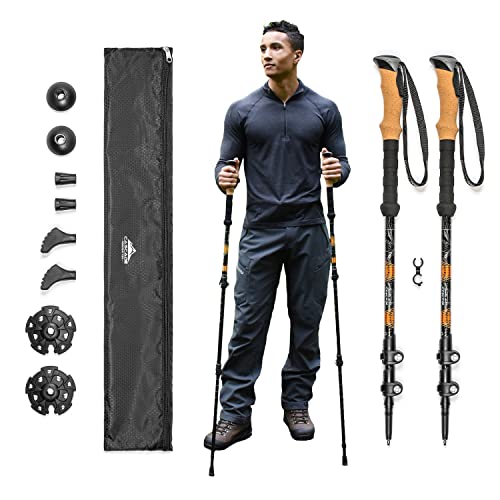
On loose talus or muddy switchbacks, a planted pole offers immediate lateral support if your footing suddenly gives way. The quick brace provided by a rigid shaft allows you to regain balance before a minor stumble turns into an ankle roll or dangerous slide. Collapsible options like the Trekology Trek-Z Hiking Trekking Poles incorporate reinforced joints with metal caps to ensure structural stability on uneven trails. Having reliable points of balance builds backcountry confidence when navigating off-camber paths or wet roots.
Shaft Materials: Aluminum Durability Versus Carbon Fiber Characteristics
Selecting the right shaft material involves balancing impact resistance against absolute carry weight. Aircraft-grade aluminum alloys, such as 7075 or 6061, are widely favored for their exceptional tensile strength and ductile bending forgiveness. If an aluminum pole gets wedged between granite boulders during a slip, the metal typically bends rather than snapping cleanly. This ductile property often allows a hiker to gently bend the shaft back into working alignment to finish the trip.
Multi-layer carbon fiber constructions offer lighter swing weight and superior natural vibration dampening compared to standard metal shafts. However, carbon fiber exhibits brittle failure characteristics when subjected to intense lateral shear forces. A carbon pole wedged in a narrow rock fissure can shatter completely under sideways stress, leaving you without support in the backcountry. For rugged trails where unpredictable rock crevices are common, aircraft aluminum provides a dependable balance of toughness and longevity.
Weight differences between modern aluminum and carbon options have narrowed significantly in recent equipment designs. For instance, the Premium Foldable Hiking Poles by USA Brand weigh under 10 oz per pole while using aircraft-grade aluminum. Choosing resilient metal construction ensures that heavy loads from iron frame hiking backpacks do not exceed the lateral shear limits of your walking gear. Investing in high-grade aluminum guarantees reliable service across thousands of rocky elevation changes.
Locking Mechanism Engineering: Cam Levers Versus Twist Expanders
The integrity of any adjustable hiking pole depends entirely on the strength of its locking system. External cam lever locks use an aluminum or composite clamp that wraps firmly around the outer shaft collar. These flick-lock systems feature external thumbscrews that allow you to adjust clamping tension quickly without requiring tools. The visual closure of the lever gives you instant confirmation that the shaft is locked before you commit your full weight.
Internal twist locks utilize an expanding internal nylon wedge that presses against the inner tube walls when rotated. While twist mechanisms create a sleek exterior profile free of snag points, they can be vulnerable to internal grit, water, and freezing temperatures. Silt entering the telescoping joints can cause the expander plug to spin freely without gripping the aluminum interior. For wet or sub-freezing adventures, external metal lever locks deliver more consistent holding power and straightforward field maintenance.
Tension adjustments should always be tested on level ground before starting a demanding trail session. If an external lever lock feels loose, simply tighten the metal thumbscrew clockwise by a quarter turn before clamping the lever shut. Applying firm downward pressure with both hands confirms that the sections will not telescope unexpectedly during a steep drop. Regular inspection of the clamping collar prevents sudden slips that could compromise your balance on technical switchbacks.
Grip Materials and Ergonomics: Cork, EVA Foam, and Rubber Options
Your connection to the pole relies on handle materials that must handle hours of friction, sweat, and varying temperatures. Natural cork grips, found on the Trekology Trek-Z Cork Grip Collapsible Lightweight, actively absorb hand moisture while conforming to your hand shape over time. Cork also stays pleasantly cool in scorching summer heat, making it an exceptional choice for warm-weather hiking. Furthermore, natural cork provides subtle rotational flex that dampens joint torque as the pole rotates across uneven ground.
High-density EVA foam serves as a lightweight alternative that resists moisture buildup while providing soft cushioning. Many trail poles feature extended EVA foam sleeves beneath the main grip, which allows you to choke up on the shaft during steep sidehill traverses without adjusting the locks. Rubber grips, while heavier and prone to causing blisters in hot, sweaty conditions, excel in freezing alpine weather by insulating hands from cold aluminum. Choosing the right grip material directly determines whether you finish long mileage days without painful palmar hot spots.
Sizing Benchmarks and On-Trail Height Adjustments
Setting your poles to the correct height is critical for maintaining efficient body mechanics on level and hilly paths. The standard benchmark requires your elbow to rest at a clean 90-degree angle while holding the grip and resting the tip on flat ground. This right-angle position keeps your shoulders relaxed and prevents forearm fatigue during extended trail walks. Exceeding the indicated stop line on the shaft compromises structural overlap and risks bending the thinnest lower section.
Terrain gradients require deliberate adjustments to keep your upper body aligned and balanced. When climbing steep inclines, shortening both poles by 5 to 10 cm prevents you from reaching upward and straining your shoulders. Conversely, lengthening your poles by 5 to 10 cm on descents lets you plant the tips forward without leaning over and rounding your back. Learning to make these quick adjustments ensures that your equipment continually supports your posture across varying topography.
Proper Wrist Strap Loading for Skeletal Weight Distribution
Most hikers misunderstand the role of wrist straps and grip the pole handles with excessive finger pressure. To use straps correctly, insert your hand upward from underneath the strap loop before wrapping your fingers over the grip and webbing. This upward orientation allows the broad strap to cross the base of your palm and support the ulnar border of your wrist. Resting your body weight on the strap loop lets you transfer downward force without death-gripping the handle.
Using your skeletal structure to support downward load relieves tension in your forearms and prevents blisters on long treks. You can hike for hours with a loose, relaxed grip because the strap carries the primary load during each forward plant. However, safety rules change when transitioning into exposed Class 3 scrambles or talus hopping. Removing your hands from the wrist straps on hazardous drop-offs ensures you can cast the poles aside immediately if you stumble.
Packability Formats: Folding Tri-Fold Systems Versus Telescoping Shafts
How your poles pack away influences gear storage, transport convenience, and trail agility. Tri-fold folding designs, such as the Trekology Trek-Z Cork Grip Collapsible Lightweight, collapse into three interconnected sections measuring roughly 15 inches. These compact folded bundles slide easily inside daypacks or fit neatly alongside lightweight hiking pants inside travel duffels. Folding poles deploy rapidly via an internal tension cord, making them favorites among trail runners and fastpackers.
Three-section telescoping poles collapse by sliding concentric tubes into one another, resulting in a packed length closer to 24 or 26 inches. While bulkier to stow inside a small pack, telescoping shafts offer broader height adjustment ranges and fewer mechanical joints. For airline travel, remember that TSA security regulations prohibit trekking poles in carry-on bags due to the pointed metal tips. Packing your collapsed poles safely inside checked luggage avoids checkpoint confiscation before your mountain vacation begins.
Accessory Attachments: Carbide Tips, Rubber Caps, and Baskets
The tip assembly at the bottom of the pole dictates traction and environmental impact across different surfaces. Hardened tungsten carbide flex tips bite aggressively into hardpack dirt, wet granite, and slick ice to ensure slip-free plants. When transitioning to paved roads or rocky conservation areas, slipping rubber pavement caps over the metal tips protects the rock from scarring. Rubber caps also eliminate the sharp clicking sound of metal on stone while providing grip on smooth asphalt.
Modular baskets prevent your pole tips from sinking too deeply into soft ground. Low-profile mud baskets stop shafts from plunging into wet bog soil without catching on low shrubs and trailside roots. Broad powder snow baskets distribute downward force across crusty snowpacks during winter snowshoe outings. Equipping the appropriate basket size prevents lost momentum and protects lower shafts from snapping in hidden ground crevices.
Trail Scenarios Where Poles May Hinder Performance
Despite their undeniable benefits, hiking poles are not universally suitable for every backcountry scenario. Navigating dense overgrown bushwhacks with poles in hand often leads to snagged straps and tangled branches. On technical Class 3 scrambles requiring three points of contact on sheer rock slabs, handheld poles interfere with secure handholds. In these situations, holding poles forces you into awkward palm placements that can jeopardize balance.
Similarly, hikers traversing narrow knife-edge ridges often prefer unobstructed hands to grab emergency rock features. Stowage loops on your backpack allow you to collapse and lash your poles out of the way when the trail turns vertical. Recognizing when to stow your poles is just as important as knowing when to deploy them for joint support. Balancing pole use with clear-handed scrambling ensures optimal safety across changing terrain.
Practical Takeaways: Determining If Hiking Poles Fit Your Trail Goals
Evaluating whether trekking poles are worth your investment comes down to terrain intensity, pack weight, and personal joint health. Hikers who tackle significant vertical elevation, carry loaded multi-day backpacks, or manage persistent knee sensitivity will find poles indispensable. Models like the Telescopic Trekking Poles for Hiking provide versatile all-season utility at an accessible entry point. The balance and joint protection gained from reliable poles quickly outweigh the minimal weight added to your gear setup.
If you primarily walk short, flat interpretive trails without a heavy load, traditional hiking poles might remain optional accessories. But once your trail objectives expand into mountain passes, slick river beds, and steep descents, a dependable pair of poles becomes essential equipment. Matching your choice of aluminum or folding design to your typical terrain ensures steady footing on every adventure. With proper height adjustment and strap technique, your poles will safeguard your knees across thousands of memorable backcountry miles.



Write Your Review
No reviews yet. Be the first to share your experience!