


Navigating steep mountain switchbacks places intense compressive force on knees, ankles, and hips. Many outdoor enthusiasts wonder whether gear sitting in winter storage can ease that physical burden during warmer months. Specifically, can you use snowshoe poles for hiking when dirt trails replace packed snow? The short answer is yes, because most poles packaged with winter gear are structurally identical to standard three-season walking sticks. Pairing reliable walking shafts with trail apparel designed for joint protection helps maintain balance and minimizes fatigue over high-mileage backcountry outings.
Understanding the mechanical crossover between winter snowshoeing and dry-land hiking requires examining basket diameters, shaft metallurgy, and locking mechanisms. Winter setups typically feature wide powder baskets designed to prevent shafts from sinking into deep drifts. Once those wide discs are swapped for low-profile mud baskets or removed entirely, the underlying poles deliver dependable downward support on rocky paths. Whether you are climbing steep scree or traversing packed dirt, repurposing your winter poles provides a cost-effective way to secure third and fourth points of contact on technical terrain.




The Technical Guide to Repurposing Snowshoe Poles for Hiking
Outdoor gear manufacturers rarely engineer dedicated pole shafts solely for snowshoeing. Instead, brands package standard multi-section telescoping trekking poles alongside snowshoes and clip wide powder baskets onto the tips. The direct answer to whether can you use snowshoe poles for hiking is an unqualified yes, provided you manage the basket diameter and inspect the traction tips. Transitioning winter gear to summer trails requires zero structural modification to the aluminum tubing or grip handles.
Hikers gain immediate biomechanical advantages by bringing these winter tools into summer use. Transferring a portion of braking impact from patellofemoral joints to the upper body preserves cartilage on prolonged descents. Engaging the lats and shoulders also increases forward propulsion on sustained climbs. Understanding how individual components function across different trail surfaces ensures your winter shafts perform reliably throughout all four seasons.
The Critical Distinction Between Snow and Trail Baskets
The single greatest operational difference between winter walking and summer hiking lies at the base of the pole. Snowshoe poles rely on wide circular powder baskets measuring between three and four inches across. That broad surface area prevents the pole from plunging deep into uncompressed snowpack, allowing the user to maintain balance and rhythm. On dry ground, however, that wide surface area transforms from an asset into an awkward liability.
Leaving large snow baskets attached on dirt paths creates significant tripping hazards. Wide plastic discs easily snag on exposed tree roots, low-lying manzanita, and granite crevices. When a basket catches an obstacle during your forward swing, it can wrench your wrist, crack the plastic disc, or pull you off balance. For summer outings, remove winter powder baskets completely or thread on compact mud baskets measuring less than two inches in diameter.
Many multi-use systems, such as Yukon Charlie’s Elite Trekking Poles, explicitly include both snow and trekking baskets in the box. This modular design confirms that the shafts are built for year-round service across diverse terrain. When transitioning away from snowfields, simply twist off the wide powder rings and install the low-profile trail rings. If your poles came from a dedicated snowshoe package without extra baskets, using the bare flex tips without any basket works cleanly on dry, rock-strewn trails.
Shaft Metallurgy and Structural Resilience Under Trail Loads
Winter poles must withstand cold temperatures without becoming brittle, which is why manufacturers overwhelmingly construct them from resilient aluminum alloys. Aluminum 6000 series and 7075 alloys offer exceptional tensile strength and ductile bending forgiveness. When carrying supportive heavy load hiking backpacks over uneven trails, your shafts must support sudden downward forces without buckling. Aluminum bends slightly under intense lateral strain, whereas rigid carbon fiber can suffer catastrophic shear failure when caught between boulders.
Examining the Tubbs catalog illustrates this rugged aluminum focus. The Tubbs Hiking Poles 3 PC and the Tubbs Trail Walking Poles 2 PC both utilize 6000 series aluminum shafts designed to absorb rugged physical impacts. That sturdy metal composition makes them equally capable of handling frozen drifts and punishing summer talus fields. Aluminum provides dependable axial load-bearing capacity when stepping down steep rock slabs, protecting your knees from excessive shock.
Telescoping pole construction also dictates packability and swing weight. A three-piece configuration collapses shorter than a two-piece shaft, making it easier to strap onto daypacks during scramble sections. While lightweight carbon models may shave a few ounces, aluminum snowshoe poles offer the durability needed when navigating rough, rocky pathways. Their resilience against rock scratches and minor dings ensures a long service life across multiple hiking seasons.
Locking Mechanisms: Cam Levers Versus Internal Twist Expanders
How pole sections lock in place significantly influences performance on the trail. Snowshoe poles generally utilize either external cam lever locks or internal expansion twist locks. Cam levers, featured on Yukon Charlie’s Elite Trekking Poles, clamp the outer shaft wall tightly around the inner telescoping tube. They feature external thumb screws that allow hikers to adjust clamp tension quickly, even while wearing thick cold-weather gloves.
Conversely, internal twist locks operate via an expander plug that spreads outward against the inside of the tube as you twist the shafts. Both Tubbs Hiking Poles 3 PC and Tubbs Trail Walking Poles 2 PC rely on twist-lock mechanisms to maintain clean, snag-free exterior profiles. Twist locks work exceptionally well on open paths, but they require periodic cleaning because fine trail silt and sand can infiltrate the joint. If dirt settles on the internal nylon expander, the plug may spin freely without gripping the aluminum wall.
Before heading out on steep descents, always perform an axial downward weight test on your locking joints. Lean your upper body weight onto both poles while standing on flat ground to confirm neither section slips downward. If a cam lock slides, turn the thumb screw clockwise half a turn to increase clamp pressure. If an internal twist lock slips, pull the sections apart, wipe dry trail grit off the nylon expansion wedge with a clean cloth, reassemble, and twist firmly until tight.
Grip Ergonomics and Warm-Weather Moisture Management
Handle design is another area where winter snowshoeing priorities overlap with summer hiking needs. Snowshoe poles typically feature contoured EVA foam grips or dual-density rubber handles. Rubber handles offer excellent thermal insulation in sub-freezing temperatures, preventing cold aluminum shafts from chilling your hands. However, during hot summer hikes, non-breathable rubber can cause sweaty palms and friction hot spots over high-mileage days.
High-density EVA foam represents the premier multi-season grip material. The Naturehike Collapsible Trekking Poles and Yukon Charlie’s Elite Trekking Poles both feature sweat-absorbent, non-slip EVA foam grips that cushion hands against trail vibration. EVA foam wicks surface perspiration effectively, reducing the likelihood of palmar blisters during warm-weather ascents. Its soft texture conforms comfortably to your grip without absorbing trail moisture or becoming slippery under direct sun.
Extended foam sleeves beneath the main grip offer immense utility on off-camber hiking trails. When sidehilling across a steep slope, your uphill pole effectively needs to be shorter than your downhill pole. Rather than stopping to adjust the telescoping locking mechanism, you can simply choke up on the extended foam handle. This ergonomic feature provides secure traction and balanced posture during rapid elevation changes without interrupting your hiking cadence.
Biomechanical Sizing and Downhill Joint Protection
Using poles on dry trails requires accurate length adjustment to safeguard your joints and maintain efficient forward posture. Standing on level ground, your elbow should form a clean 90-degree angle when holding the grip with the pole tip touching the dirt. If your forearm angles upward or downward, loosen the lock and slide the telescoping sections until your elbow sits at that neutral right angle. Wearing breathable lightweight trail pants allows complete lower-body freedom of motion while your poles stabilize each forward step.
Terrain gradients demand dynamic adjustments to maintain proper posture and joint protection. When climbing steep ascents, shorten both poles by five to ten centimeters so you do not push your shoulders uncomfortably high. On steep descents, lengthen both poles by five to ten centimeters to reach the ground ahead of your descending footstep. This length extension lets you plant the tips forward, braking downhill momentum and taking severe impact stress off the patellofemoral joint.
Proper wrist strap technique is equally essential for skeletal support and preventing hand fatigue. Insert your hand upward through the bottom opening of the strap loop, then bring your palm down over the grip. This configuration rests the soft webbing flat against your wrist and the heel of your hand. When you plant the pole, your body weight transfers directly into the strap rather than requiring a tight, tiring grip on the handle.
Converting Winter Snowshoe Sets for Three-Season Hiking
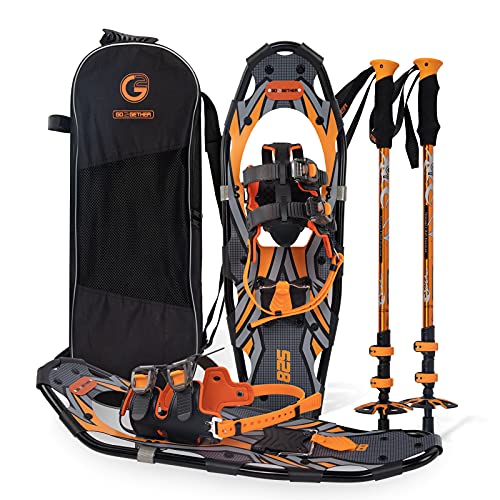
Many outdoor lovers own complete snowshoe packages that included poles right in the carrying bag. Kits like the G2 30 Inches Blue Light Weight Snowshoes for Women, the G2 25 Inches Orange Light Weight Snowshoes, and the G2 25 Inches Yellow Orange Light Weight Snowshoes bundle adjustable poles alongside snowshoes and totes. These bundled walking sticks are standard aluminum trekking poles that transition seamlessly to dry dirt once removed from the winter kit.
Youth winter setups follow the exact same crossover principle. The G2 16 Inch Kids Snowshoes Set with Trekking Poles includes compact adjustable poles equipped with snow baskets. Young hikers benefit immensely from using these poles on family trail outings during spring and summer. They provide stability across creek stepping stones and loose gravel, boosting balance and trail confidence on uneven paths.
To convert bundled snowshoe poles for warm-weather use, inspect the lower tips carefully. Most winter sets feature durable tungsten carbide flex tips covered by protective rubber shipping caps or wide powder baskets. Remove the powder baskets by unthreading them counterclockwise. Keep the bare carbide tips exposed for dirt, mud, and gravel trails, and reserve rubber tips solely for paved road walking or delicate rock surfaces where metal tips might skitter.
Field Maintenance, Grit Removal, and Transport Logistics
Summer trails subject poles to abrasive dust and fine mineral grit that winter snowpack rarely presents. After hiking through dusty or muddy terrain, fully disassemble the telescoping aluminum sections by pulling them completely apart. Wipe down the inner and outer tubing walls with a dry microfiber cloth to remove embedded dirt particles. Never apply WD-40, grease, or petroleum lubricants to the shafts, as oil destroys the mechanical friction required for locks to hold under downward body weight.
Moisture management remains vital even during warm summer months. If you ford river crossings or hike through heavy rain, separate the shaft sections when you return home and allow them to air-dry completely. Trapping water inside aluminum tubes can trigger galvanic oxidation, leaving a white powdery crust that seizes telescoping joints and jams internal expanders. Routine cleaning ensures smooth telescoping action and reliable locking performance season after season.
Travel logistics also require careful preparation when flying to backcountry trail destinations. Transportation Security Administration regulations strictly prohibit hiking poles with pointed metal carbide tips in commercial carry-on luggage. Even when collapsed down, your repurposed snowshoe poles must travel inside checked baggage. Packing poles securely in your checked duffel or backpack prevents security confiscation and keeps your gear intact for the trailhead.
Repurposing your winter snowshoe poles for three-season hiking is a smart, budget-conscious way to protect your joints and improve balance on challenging paths. By removing oversized powder baskets, confirming clamp tension, and sizing shaft height to your terrain, your winter walking sticks will serve as dependable trekking companions all year long.





Write Your Review
No reviews yet. Be the first to share your experience!