


Steep mountain descents place immense stress on your lower body, transferring high braking forces directly to the knees and quadriceps. When skiers and winter trail enthusiasts evaluate gear in the closet, the question often arises: can you use cross country poles for downhill without compromising personal safety or downhill control? Cross-country ski poles are engineered specifically for forward propulsion on flat or rolling terrain rather than absorbing aggressive vertical downhill impacts. Pairing the right gear with knee support hiking gear can help reduce joint fatigue, but relying on the wrong poles on steep slopes introduces distinct stability challenges.
While backcountry touring equipment bridges some gaps between Nordic touring and modest downhill descents, standard cross-country poles differ radically from dedicated downhill alpine poles in shaft durability, ergonomic grip designs, and overall length. Nordic poles are intentionally sized longer to maximize upper-body push on flats, which can throw off your center of gravity when navigating steep drop-offs. Understanding these mechanical contrasts ensures you protect your wrists and maintain reliable control when navigating snowy hills or technical descents.


Evaluating Cross-Country Poles on Downhill Terrain: Mechanics, Safety, and Gear Tradeoffs
The short answer to whether you can substitute cross-country gear on alpine descents is that dedicated downhill slopes demand vastly different equipment than groomed Nordic tracks. While taking cross-country poles down a steep alpine resort run is technically possible, doing so introduces genuine safety hazards, ergonomic discomfort, and equipment failure risks. Cross-country poles prioritize featherweight forward propulsion across flat or rolling terrain, whereas downhill skiing requires stout shock absorption, lateral strength, and shorter leverage. Understanding the mechanical differences between these two outdoor disciplines helps you avoid broken gear, wrist injuries, and compromised downhill stability.
The Fundamental Sizing Problem: Nordic Length Versus Downhill Mechanics
Pole length represents the most immediate obstacle when attempting to use Nordic poles on steep downhill gradients. Downhill alpine skiing relies on the traditional ninety-degree elbow angle rule, where your forearm sits parallel to the snow when the pole tip rests near your boot. In sharp contrast, classic cross-country poles typically reach your armpits, and skate skiing poles often measure up to your chin or nose. This extra length allows endurance skiers to generate expansive propulsion strokes, but it creates serious biomechanical problems the moment gravity points you down a mountain.
When poles are excessively long, executing a crisp pole plant ahead of your body becomes awkward and mechanically inefficient. You are forced to raise your hands excessively high, which pushes your upper body back and rotates your center of mass away from your ski tips. In downhill skiing, maintaining forward shin pressure and athletic body positioning is essential for carving turns and scrubbing speed. Using overly long cross-country poles naturally forces you into the back seat, dramatically reducing edge grip and increasing the risk of losing control on steep pitches.
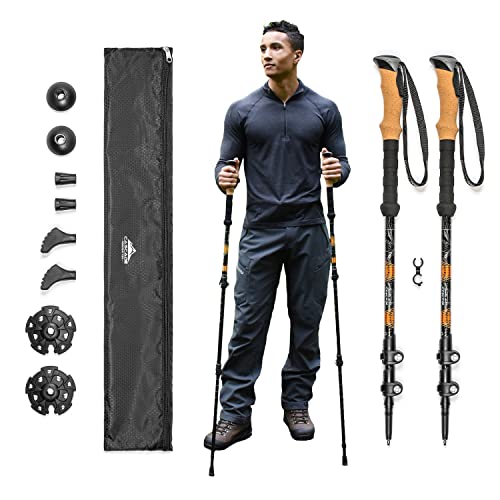
Some backcountry touring designs, such as the Cross Trail Adult Nordic Cross-Country Ski Poles, offer sized options ranging from 125cm to 150cm that partially bridge the gap for general trail exploration. However, fixed-length Nordic shafts cannot be adjusted downward when terrain suddenly rolls into a steep drop. Downhill skiers frequently need to drive their pole tips into the snow surface to initiate turns, and an overlong shaft can jam into the torso or shoulder during tight maneuvers. Proper height selection remains the first line of defense against poor turning mechanics and unnecessary joint strain.
Shaft Materials and Impact Tolerance: Carbon Fiber Versus Aluminum Resilience
Shaft construction dictates how a pole behaves when subjected to abrupt downhill impacts and directional forces. High-end cross-country racing models, like the LEKI PRC 750 Cross-Country Ski Poles – Carbon, utilize premium carbon shafts engineered for exceptional stiffness and ultralight swing weight. Carbon fiber excels at transferring forward muscular energy without flexing along its vertical axis, making it ideal for high-cadence Nordic training. However, thin-walled carbon tubes are inherently vulnerable to catastrophic failure when subjected to sharp lateral shear forces, such as striking a trailside boulder or getting pinched in crusty snow.
Downhill ski poles are intentionally built with heavier, thick-walled aluminum alloys designed to withstand repeated gate impacts, hard descents, and sudden falls. Aluminum models like the Rossignol FT-500 Nordic Ski Poles employ 5086 aluminum alloys that provide reliable structural toughness at an approachable price point. If an aluminum pole encounters excessive stress during an awkward tumble, the metal will typically bend rather than shatter into sharp shards. Carbon cross-country poles, on the other hand, can snap instantly when wedged against an obstacle under heavy downhill momentum.
Composite blends offer a middle ground between rigid carbon and ductile aluminum, as seen in the Salomon Escape Vitane Cross Country Ski Poles with their composite profile. Similarly, Whitewoods Cross Trail models incorporate a multi-directional fiberglass wrap over a 15mm tapered aluminum shaft to increase lateral strength for mixed touring. While these reinforced hybrid shafts provide better impact resistance than pure racing carbon, they still lack the heavy-duty wall thickness found in dedicated downhill ski poles. Choosing the right material comes down to balancing lightweight glide efficiency against the rugged durability needed for uncontrolled downhill slides.
Grip Dynamics and Wrist Injury Hazards: Releasable Harnesses Versus Traditional Straps
Grip and strap design represent another critical safety distinction between Nordic cross-country setups and downhill alpine equipment. Cross-country poles often utilize form-fitting harness systems, such as the Nordic Shark grip and Shark Frame Strap on the LEKI PRC 750, to secure the hand tightly against the cork handle. This ergonomic wrap keeps the pole anchored to the palm so skiers can release their fingers at the finish of each propulsion stroke and snap the grip back immediately. While this harness system maximizes continuous power transfer on flats, it poses distinct risks on rapid downhill descents.
Downhill skiers deliberately rely on looser, open-loop webbing straps or specialized mechanical release grips that allow the hand to slip free during a fall. If a pole tip gets snagged in deep snow or catches on a hidden branch at high speed, an immovable strap can violently twist the skier’s hand backward. This sudden rotational torque is a leading cause of severe wrist sprains and ulnar collateral ligament tears, commonly known as skier’s thumb. Tightly harnessed cross-country straps make it difficult to ditch the pole instantly when tumbling at downhill speeds.
Basic touring poles, like the Rossignol FT-500 Nordic Ski Poles with standard plastic grips or the Salomon Escape Vitane Cross Country Ski Poles with EVA foam handles, utilize simpler adjustable powerstraps that offer slightly easier hand extraction. Even so, Nordic handles lack the protective top platforms and ergonomic forward tilt angles built into alpine grips to support heavy downward palmar loading. When descending steep slopes, you must frequently push down hard on the grip top to arrest minor stumbles or check your speed. Cross-country grips are narrow and streamlined, making them uncomfortable and unstable when subjected to repetitive downward body weight.
Basket Diameter and Snow Contact: Powder Baskets Versus Groomed Trail Discs
The snow basket positioned above the tip plays a decisive role in whether a pole can maintain support on ungroomed downhill terrain. Cross-country racing poles, such as the LEKI PRC 750 with its Fin Vario basket and carbide tip, feature tiny, aerodynamic baskets designed specifically for hard-packed, groomed cross-country tracks. These compact baskets shave swing weight and prevent trail snagging during rapid double-poling cadences. Unfortunately, taking an ultra-compact basket into soft, off-piste snow results in immediate, uncontrolled sinking.
Downhill skiing frequently involves variable snow conditions, including wind-blown crust, heavy chop, and deep powder pockets where wide surface area is required. Dedicated downhill and freeride poles utilize broad powder baskets measuring three to four inches across to prevent the tip from plunging deep beneath the surface during a turn initiation. Touring models like the Salomon Escape Vitane Cross Country Ski Poles incorporate slightly larger touring baskets that provide modest float in light powder. Even so, these touring discs remain noticeably smaller than the wide snowflakes used by alpine skiers in ungroomed terrain.
When a pole basket sinks unexpectedly into soft snow on a downhill run, you lose the vital balance point needed to complete your turn. The skier naturally overcompensates by leaning forward or tipping inward, which easily precipitates a fall on steep pitches. Moreover, retrieving a deeply buried pole while moving downhill exerts massive bending leverage on the lower shaft, increasing the likelihood of bending aluminum or snapping lightweight carbon. Matching your basket diameter to the depth and consistency of the snowpack is just as critical as choosing the correct pole shaft length.
When Can You Safely Cross Over? Backcountry Touring and Hybrid Trail Descents
Despite the hazards of using cross-country poles at downhill ski resorts, there are specific outdoor scenarios where hybrid poles perform admirably. Cross-country touring in rolling backcountry terrain frequently involves gentle descents, rolling logging roads, and mellow meadow slopes where alpine poles would feel heavy and cumbersome. Equipment like the Whitewoods Unisex Adult Cross Trail-Glass/Touring cross-country Nordic ski poles is built specifically to accommodate these mixed backcountry trail conditions. These hybrid designs balance propulsion efficiency with enough structural reinforcement to handle moderate downhill rolling sections.
If you plan to navigate rolling hills on cross-country skis, selecting a slightly shorter touring pole can help preserve downhill balance without ruining flat-track kick-and-glide mechanics. Sizing the pole so that it reaches mid-chest rather than the top of the armpit allows you to initiate turns more naturally while maintaining adequate pushing leverage on flat trail segments. Packing sensible layers, such as breathable lightweight trail trousers, ensures you maintain complete mobility when shifting your weight across changing downhill gradients. Staying agile on your feet helps compensate for the lack of specialized downhill edges and stiff boots.
The critical dividing line comes down to slope angle, snow speed, and terrain predictability. Mellow rolling hills with gradual runouts present minimal risk for cross-country poles, allowing skiers to snowplow or step-turn comfortably with their standard touring gear. In contrast, steep groomed trails, moguls, tree runs, and resort terrain require the stout build and precise sizing of dedicated downhill poles. Knowing the boundaries of your equipment prevents unnecessary equipment failures miles away from the nearest trailhead.
Biomechanics of Joint Offloading on Steep Slopes
Steep downhill travel generates massive kinetic forces that must be absorbed by the human body with every single stride or turn. On steep mountain descents, downhill braking forces can load knee joints, patellar tendons, and quadriceps muscles with several times your total body weight. Skiers and hikers utilize poles as structural struts to transfer a significant portion of this impact energy upward through the arms, shoulders, and core musculature. When poles are sized and constructed appropriately, they actively shield lower extremity joints from excessive mechanical wear.
Using cross-country poles that are ten to twenty centimeters too long disrupts this natural load transfer mechanism completely. Instead of pushing down onto the grips with an athletic, compact upper-body posture, long shafts force your elbows wide and elevate your shoulders into an unnatural, shrug position. This awkward posture prevents you from loading your latissimus dorsi and pectoralis muscles effectively, dumping braking forces back onto your knees and lower spine. Maintaining an organized pack setup with a practical day hiking pack keeps your center of gravity stable, allowing your poles to support your joints rather than compromising your balance.
Furthermore, the absence of anti-shock damping or flex in rigid racing poles can transmit harsh vibrational spikes directly into your elbow and wrist joints on firm, icy snow. Dedicated alpine equipment absorbs these high-frequency vibrations through thicker aluminum walls and robust grip moldings. When descending hard-packed snow, relying on gear that matches your body’s ergonomic requirements keeps joint discomfort at bay throughout long winter days.
Converting Winter Poles to Three-Season Hiking and Trekking
Outdoor enthusiasts often wonder if cross-country ski poles can pull double duty as trekking poles for spring, summer, and autumn hiking. Many touring models, such as the Cross Trail Adult Nordic Cross-Country Ski Poles, promote multi-use versatility for backcountry hiking and trail walking. These poles feature durable carbide tips that bite well into hard-packed dirt and slick trails, alongside comfortable padded wrist straps that prevent hand chafing during prolonged treks. For casual walking on rolling forest paths, fixed-length cross-country poles can provide basic balance assistance and rhythm pacing.
However, traditional cross-country poles present distinct drawbacks when transitioning to rugged three-season hiking trails and technical alpine ascents. Unlike telescoping or folding trekking poles, fixed-length Nordic shafts cannot be shortened for steep climbs or lengthened for long, jarring descents. Furthermore, fixed poles cannot collapse to lash onto the exterior of your backpack when navigating rocky scrambles that require both hands for balance. Hiking over varied mountain terrain demands modular adjustments that fixed-length ski poles simply cannot deliver.
Tip and basket modularity also becomes an issue on rocky trails where standard ski baskets snag easily on exposed roots and brush. Dedicated trekking poles come equipped with compact mud baskets and slip-on rubber tips designed to protect trails, silence metal clicking, and prevent skittering on slick granite slabs. While you can use cross-country poles for low-angle trail walking in a pinch, investing in dedicated adjustable hiking poles offers far superior versatility, packability, and joint protection across technical terrain.
Transport, Storage, and Equipment Care for Winter Gear
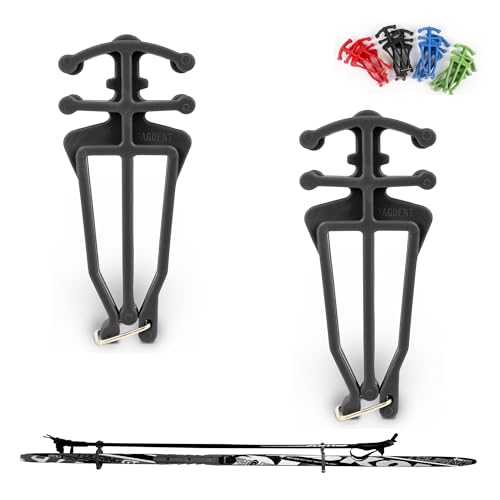
Maintaining cross-country poles and winter accessories ensures they perform reliably across multiple seasons without unexpected hardware failures. After spending a day touring through wet snow, wiping down aluminum and carbon shafts prevents surface oxidation and preserves structural integrity. Accessories such as the Bagdent Cross Country Skis and Poles Holder provide an efficient way to lock Nordic skis and poles together into a tidy, portable bundle. Keeping your equipment securely paired prevents bent shafts and scuffed bases during transit in your vehicle or storage closet.
Note that compact carriers designed specifically for Nordic gear, such as the Bagdent holder, are intentionally engineered for narrow cross-country skis up to two inches wide and will not accommodate wide downhill alpine skis. Storing cross-country poles in dry, temperature-controlled indoor spaces prevents moisture from accumulating around grip adhesives or tip ferrules. If your poles utilize screw-on or press-fit basket systems, regularly check that the connections remain tight before heading out onto the trail. Periodic visual inspections will reveal hairline cracks in carbon weaves or stress marks in aluminum shafts before they fail under load.
When preparing for winter travel that involves flying to snowy destinations, remember that airport security regulations prohibit sharp ski and trekking pole tips in carry-on luggage. Metal carbide tips must be packed securely inside checked baggage, ideally wrapped in protective bubble wrap or secured inside a rigid ski tube. Taking proper care of your poles during storage and transport guarantees they remain dependable assets whether you are gliding across groomed tracks or exploring backcountry paths.
Practical Takeaway: Selecting the Right Poles for Your Mountain Objective
Deciding whether to use cross-country poles for downhill skiing comes down to respecting the specific performance demands of your chosen sport. For downhill resort skiing, steep alpine descents, and high-speed carving, you should always choose dedicated alpine ski poles sized to a ninety-degree elbow angle with thick aluminum shafts and releasable open straps. The risk of shattering carbon shafts, suffering severe wrist sprains from tight harnesses, and losing turning balance due to excessive length makes cross-country poles unsuitable for true downhill skiing.
On the other hand, if your winter adventures consist of rolling cross-country tours, mellow backcountry meadows, and gradual hill climbs, sturdy Nordic touring poles with composite or aluminum shafts offer the ideal combination of push efficiency and moderate downhill control. Match your pole selection to the steepest gradient you expect to encounter, and never hesitate to adjust your technique to protect your joints and equipment. Equipping yourself with task-specific gear ensures that every descent remains controlled, comfortable, and thoroughly enjoyable.




Write Your Review
No reviews yet. Be the first to share your experience!