


Many trail enthusiasts wonder whether carrying extra gear in their hands actually delivers measurable advantages or simply adds unnecessary weight to their pack. Hikers frequently ask whether do hiking poles work to alleviate joint strain on steep mountain descents and improve walking cadence over rolling terrain. Trekking sticks serve as active load-bearing tools that redistribute body mass and backpack weight across the shoulders, arms, and core muscles. When descending loose talus or slick rock slabs, paired poles create additional ground contact points that stabilize the lower body and reduce jarring impacts on knees and ankles. Pairing poles with appropriate gear like supportive knee hiking pants can further manage joint fatigue on continuous downhill routes.
Uphill climbs also highlight the practical mechanics of trekking equipment, allowing hikers to engage their latissimus dorsi and pectoral muscles for sustained forward propulsion. Modern designs utilize durable aircraft-grade 7075 aluminum or ultralight carbon fiber shafts paired with dependable external lever locks that prevent sudden shaft slippage under full downward weight. While novice hikers sometimes feel uncoordinated during their first few miles, consistent use establishes a natural rhythmic gait that saves energy and speeds up recovery. Understanding how these tools work mechanically helps walkers choose appropriate setups for varied trail conditions, from casual gravel paths to remote backcountry expeditions.



The Mechanics and Practical Evidence Behind Trekking Poles
Field research and biomechanical assessments confirm that trekking poles actively alter human walking dynamics when used correctly. Instead of functioning merely as passive walking sticks, modern poles redistribute kinetic forces across the entire body, turning a two-legged movement pattern into an integrated four-limbed stride. This redistribution noticeably reduces impact stress on lower-extremity joints during descents while generating forward propulsion during uphill climbing. The real-world effectiveness of any pole system depends heavily on correct shaft sizing, reliable locking mechanisms, and proper wrist strap technique.
Biomechanical Load Transfer and Joint Relief on Steep Descents
Downhill hiking generates significant deceleration forces that travel directly through patellar tendons, knees, hips, and the lumbar spine. As a hiker steps downward, gravity accelerates the body, requiring quadriceps to contract eccentrically to brake forward momentum. By placing trekking poles out in front before the lead foot strikes the ground, substantial braking force transfers into the arms, shoulders, and chest. This load diversion spares knee cartilage, explaining why hikers managing joint sensitivities report immediate comfort gains on steep trails.
Carrying heavy backpacking equipment amplifies compressive joint forces with every step down a rocky decline. Hikers who carry gear in internal frame hiking backpacks often experience compounded fatigue across their lower back and hips when descending without poles. Pole shafts absorb axial loads during downward steps, spreading combined hiker and pack weight across multiple contact points. This continuous load shedding prevents the muscular burnout that often leads to stumbling, twisted ankles, and knee soreness on long descents.
Uphill Cadence, Muscular Engagement, and Caloric Expenditure
Ascending steep switchbacks demands tremendous work from the calves, hamstrings, and gluteal muscles. Using hiking poles allows trail enthusiasts to recruit their latissimus dorsi, triceps, and chest muscles to push upward and forward. This upper-body participation offloads the legs, helping hikers maintain a steady cadence without spiking their heart rates excessively on prolonged inclines. While recruiting upper-body muscles slightly increases total oxygen consumption, it distributes physical fatigue across more muscle groups rather than exhausting the legs alone.
The cardiovascular trade-off is often well worth the effort for distance backpackers and mountain climbers. Hikers burn slightly more energy overall because their arms and shoulders remain in continuous motion throughout the journey. However, perceived exertion is typically lower because the legs do not carry the entire physical burden of climbing. The rhythmic tempo created by alternating pole strikes also promotes steady breathing and helps prevent frequent stopping on strenuous mountain passes.
Trail Stability Across Slick Scree, Mud, and Water Crossings
Navigating loose gravel, slippery mud, wet roots, and shifting talus challenges human balance and proprioception. Two points of contact often fail to provide adequate stability when a foot slips unexpectedly on an unstable surface. Dual trekking poles provide continuous third and fourth points of ground contact, dramatically widening a hiker’s effective base of support. This expanded base allows hikers to catch small slips instantly before they evolve into traumatic falls or sprains.
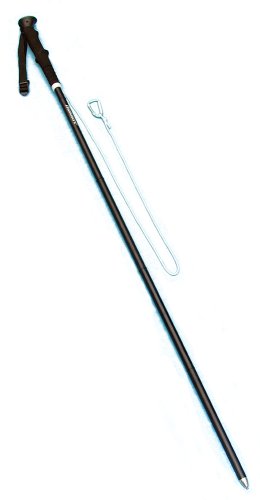
Crossing swift backcountry streams represents a critical application for trail poles. Rushing water creates lateral forces that can easily sweep a hiker off balance on slippery riverbed cobbles. Sturdy poles give walkers the ability to probe water depth, feel for submerged obstacles, and anchor against current forces. Specialized tools, such as the Hammers Collapsible Wading Staff Fishing Stick, fold down to 12 inches for storage and deploy instantly to provide dependable aluminum stability in fast currents.
Telescoping Flip Locks Versus Internal Twist Expanders
A hiking pole can only protect joints and balance if its locking mechanism holds securely under vertical downward loads. Traditional designs relied heavily on internal twist locks that used internal plastic expander plugs inside the shaft tubing. These internal mechanisms frequently fail when trail dust, water, or sub-freezing temperatures cause the expander plugs to slip or seize entirely. When an internal lock fails under full body weight during a steep descent, the sudden collapse can cause the hiker to lose balance and fall.
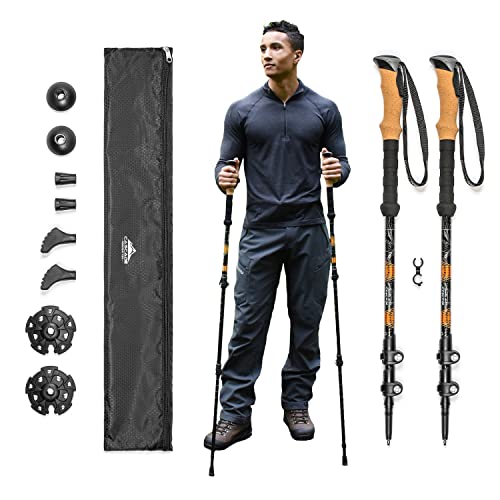
Modern outdoor gear favors external lever locks, commonly known as quick flip locks. Models such as the York Nordic Hiking & Walking Poles and the Foxelli Carbon Fiber Trekking Poles utilize external cam levers that clamp securely around telescoping shafts. These external clamps feature accessible thumb screws that let hikers adjust clamping tension quickly when temperatures fluctuate. An external lever provides immediate visual confirmation that the shaft is locked, ensuring trail confidence under heavy downward loads.
Shaft Material Dynamics: Carbon Fiber Vibration Damping Versus 7075 Aluminum Ductility
Shaft composition fundamentally dictates how a pole responds to downward force, trail vibration, and accidental impact. Carbon fiber poles, exemplified by the Foxelli Carbon Fiber Trekking Poles at 7.6 ounces per pole, offer exceptional strength-to-weight ratios and natural vibration damping. The multi-directional carbon fiber weave absorbs the jarring high-frequency vibrations generated when tungsten carbide tips strike hard granite or paved paths. This dampening effect reduces repetitive stress through the wrists, elbows, and shoulders during high-mileage hikes.
The primary drawback of carbon fiber is vulnerability to lateral shear stress. If a carbon pole wedges tightly between granite boulders and a hiker stumbles sideways, the shaft can snap cleanly without warning. In contrast, aircraft-grade 7075 aluminum shafts, featured in models like the York Nordic series, offer ductile resilience. Aluminum can bend significantly under lateral loads without snapping immediately, allowing hikers to gently bend sections back into shape to finish their trek. Aluminum poles weigh slightly more, typically around 8 ounces per shaft, but provide durable security in rugged boulder fields.
Grip Ergonomics and Wrist Strap Loading Mechanics
Grip material and design directly influence hand comfort, blister prevention, and control across varying temperatures. Natural cork grips mold to hand contours over time while absorbing and wicking away sweat in hot conditions. Ethylene-vinyl acetate (EVA) foam grips provide soft, lightweight cushioning that resists water absorption and remains pliable in freezing weather. Many premium poles incorporate extended foam choke-up sleeves beneath the main handle, enabling hikers to lower hand placement instantly on steep uphill traverses without readjusting shaft locks.
Proper wrist strap technique is essential for transferring downward load away from the fingers and forearms. Hikers must feed their hand upward through the bottom opening of the strap loop before grasping the handle. This orientation lets the wide webbing cradle the ulnar border of the wrist, allowing body weight to bear down directly onto the strap. When adjusted correctly, hikers can maintain a relaxed, open-handed grip without clenching the handle tightly, virtually eliminating forearm cramps, hand fatigue, and palmar hot spots.
Sizing Methodology and Terrain Height Adjustments
Setting the correct pole length is critical for maintaining ergonomic arm positioning and efficient movement mechanics. On level ground, a hiker should stand upright in trail footwear and adjust the pole until their elbow rests at a natural 90-degree angle. This right-angle elbow bend keeps the forearm parallel to the ground, placing the arm muscles in an optimal biomechanical position to generate leverage. Both York Nordic and Foxelli telescoping poles adjust from roughly 24 to 54 inches, accommodating users of varying statures.
Static adjustments must give way to active modifications on mountain terrain. When climbing steep ascents, hikers should shorten each pole by roughly two to four inches to plant tips forward without straining shoulders. When descending steep declines, lengthening poles by two to four inches allows tips to touch down early without awkward leaning. Extended lower grip sleeves offer a fast alternative for short climbs, letting hikers choke down on the handle without stopping to adjust flip locks. Pairing proper sizing with flexible clothing like lightweight hiking pants ensures smooth leg drive across steep terrain.
Nordic Walking Sticks Versus Technical Backcountry Poles
Fitness walking and alpine hiking represent two distinct disciplines that utilize specialized pole designs. Nordic walking focuses on fitness and conditioning across smooth dirt paths, parks, and paved walkways. Dedicated one-piece carbon options, such as the EXEL Carbon Nordic Walking Poles with Cork Grips., prioritize maximum stiffness, zero rattle, and specialized glove-style release straps designed by Nordic ski companies. These fitness poles use angled rubber pavement paws that push backward against hard surfaces to propel the body forward and burn calories.
Technical backcountry trekking poles prioritize collapsible packability, vertical load-bearing capacity, and terrain versatility. Mountain hikers require hard tungsten carbide tips that bite securely into wet mud, loose shale, and granite slabs. Backcountry models also accommodate interchangeable mud and snow baskets to keep shafts from sinking into soft ground or alpine snowpacks. Multi-purpose designs, such as the TELESIN TrekShot Carbon Fiber Selfie Stick Tripod, serve casual walks and photography, but dedicated load-bearing poles remain necessary for demanding wilderness travel.
Practical Limitations, Scrambling Risks, and Transit Logistics
Despite their proven benefits, trekking poles are not suitable for every backcountry scenario. When traversing Class 3 or Class 4 rock scrambling terrain where hands must pull body weight up ledges, poles become hazardous encumbrances. Hikers must never leave their hands looped inside wrist straps on exposed scrambles, as a sudden fall could trap the wrist and cause severe fractures. In technical scrambling sections, collapsible poles should be stowed securely onto backpack attachment loops to keep hands completely free for three-point contact climbing.
Airline travel introduces another practical consideration that many backpackers overlook until they reach the airport. Transportation Security Administration regulations prohibit hiking poles with sharp metal tips from domestic carry-on baggage. Hikers traveling by commercial air must pack their poles securely inside checked luggage to avoid checkpoint confiscation. Collapsible poles that break down into compact segments simplify checked luggage packing and protect locking collars from baggage handler damage.
Trail Maintenance and Hardware Longevity
Routine care preserves shaft integrity and prevents sudden mechanical failure on the trail. After hiking through muddy creeks or coastal areas, users should pull telescoping sections apart completely and wipe them clean with a dry cloth. Trapped moisture inside aluminum shafts can cause galvanic oxidation, leading to stuck sections and pitted metal surfaces over time. Hikers must never apply petroleum-based lubricants or oils to telescoping shafts, as lubricants destroy the friction required for cam lever locks and twist expanders to hold weight.
Checking hardware tension before every major wilderness trip prevents accidental slippage under downward loads. Lever lock thumbscrews can loosen gradually from continuous trail vibrations, reducing the clamping pressure exerted by the cam. Tightening the adjustment screw slightly with fingers or a small tool restores firm clamping resistance. Inspecting carbide tips for excessive wear and replacing cracked mud baskets ensures poles continue to grip terrain reliably across all seasons.
The accumulated evidence and real-world trail mechanics confirm that hiking poles work remarkably well for stability, joint protection, and uphill propulsion. Choosing between lightweight carbon fiber and durable 7075 aluminum depends on whether a hiker prioritizes low swing weight or rugged shear resistance in rocky talus. Mastering the 90-degree sizing benchmark and utilizing the upward wrist strap entry technique unlocks the full biomechanical potential of these tools. With properly adjusted hardware and dependable locking mechanisms, trekking poles remain one of the most effective gear investments for hikers of any experience level.





Write Your Review
No reviews yet. Be the first to share your experience!