


Long miles across uneven backcountry trails place repetitive stress on leg joints, foot arches, and lower back muscles. Hikers frequently debate why use hiking poles when casual trail walks seem easy enough without extra gear in hand. Incorporating a pair of dedicated walking sticks transforms ordinary trekking by distributing body weight across four contact points rather than two. When steep descents begin to pound the patellofemoral joint, having reliable poles paired with supportive gear like protective hiking apparel for joint relief can make the difference between a painful limp and an enjoyable mountain descent.
Trekking poles do far more than simply absorb mechanical shock on rocky trails. They engage the upper body to propel you up steep inclines, establish a steady hiking rhythm, and provide immediate stability across slick river crossings and loose talus. Modern systems from reputable outdoor brands combine lightweight materials like aircraft-grade aluminum and carbon fiber with secure external cam locks to deliver dependable trail support. Understanding the mechanical advantages and proper handling of these tools allows hikers of all experience levels to travel farther with less physical exhaustion.


The Mechanics, Benefits, and Field Realities of Trekking Poles
Joint Load Reduction and Biomechanical Cushioning on Descents
Deciding why use hiking poles often starts with understanding the heavy mechanical punishment your knees endure on downward slopes. Every downward step on a steep gradient multiplies ground reaction forces across the knees, hips, and ankles. Trekking poles intercept this downward force through your arms, shoulders, and chest before it reaches the lower joints. This mechanical offloading significantly spares the patella and surrounding connective tissues from cumulative microtrauma during prolonged alpine descents.
Hikers carrying loaded packs feel this joint preservation immediately on high-mileage days. Distributing pack weight through poles reduces the intense eccentric contractions required of the quadriceps to brake each forward step. By letting trekking poles absorb a substantial portion of the braking energy, hikers delay leg muscle fatigue and reduce quad burn. This upper body shock absorption helps prevent the unstable, trembling leg steps that frequently lead to sprained ankles late in an expedition.
Long-distance backpackers managing chronic knee discomfort frequently rely on dual poles as essential protective hardware. The physical relief is especially evident when transitioning down steep switchbacks covered in slick granite or loose pebbles. Poles provide predictable deceleration, allowing you to control your downward momentum rather than abruptly slamming your heel into hard trail surfaces. Over consecutive mountain passes, this reduction in joint shock preserves cartilage and extends overall trail longevity.
Propulsive Power and Upper Body Cadence on Steep Climbs
Uphill hiking forces the calves, hamstrings, and gluteal muscles to lift your entire body and backpack weight against gravity. Introducing trekking poles into an uphill climb recruits the latissimus dorsi, pectoral muscles, and triceps into the forward motion. This muscular distribution shifts a portion of the mechanical workload away from overburdened leg muscles directly onto the torso. As a result, hikers can maintain a consistent cardiovascular output without exhausting their lower legs on punishing vertical ascents.
Rhythm plays a critical role in endurance over challenging alpine terrain. Synchronizing your arm drive with your leg strides establishes a steady mechanical tempo that prevents erratic pacing. Hikers using a natural alternating stride find that pole plants create an active cadence, pulling the body forward and upward efficiently. This continuous rhythm helps regulate breathing and prevents premature lactic acid accumulation on high-altitude grades.
Hikers using structured gear like internal frame hiking backpacks can leverage this upper body propulsion even further when hauling heavy multi-day kits. A rigid pack frame keeps the load close to the center of gravity while poles stabilize each push-off step. The combined system reduces the tendency to lean excessively forward, which often strains the lumbar spine during steep ascents. Maintaining an upright chest posture promotes fuller lung expansion, delivering more oxygen to working muscles on grueling mountain passes.
Multi-Point Stability Across Slick, Loose, and Shifting Terrain
Maintaining balance on technical backcountry routes is one of the primary reasons to utilize trekking poles. Slippery river crossings, greasy wet logs, and shifting shale slopes constantly challenge human bipedal balance. Using two poles converts human two-point balance into a stable three-point or four-point platform at all times. This triangular foundation prevents sudden slips before your recovery reflexes even have time to react.
Stream crossings present sudden risks where cold water current and obscured, algae-coated river stones create hazardous footing. Planting a rigid pole upstream provides an anchor point to probe water depth and evaluate stone stability before committing your full body weight. This firm anchor counters the lateral shove of swift water and keeps your torso upright against the current. If a slick boulder gives way beneath a boot, pole contact points prevent full immersion and gear soaking.
Loose scree and icy mud sections present similar balance hazards where traction is unpredictable. Poles with durable tungsten carbide tips bite into frozen ground, exposed shale, and hard-packed dirt where rubber boot soles might easily wash out. On off-camber trail segments, placing the uphill pole firmly against the slope stabilizes the pelvis and prevents unexpected tumbling. This dependable contact gives backpackers greater confidence when navigating narrow, exposed ridgelines.
Shaft Materials: Evaluating Carbon Fiber Against 7075 Aluminum
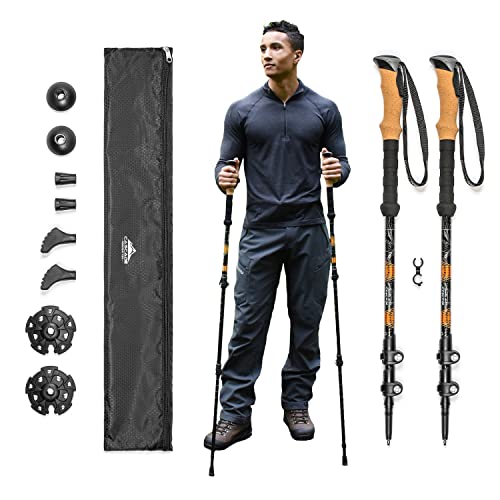
Choosing the right shaft material requires balancing scale weight against structural resilience under severe trail stress. Carbon fiber shafts, such as those featured on the Foxelli Carbon Fiber Trekking Poles, deliver minimal swing weight at only 7.6 oz per pole. The lightweight composite structure naturally dampens high-frequency trail vibrations before they travel up into the wrists and elbows. For endurance hikers covering twenty or more miles in a single day, this low swing weight drastically reduces forearm fatigue.
Carbon fiber, however, behaves differently than metal under sudden lateral bending loads. While carbon shafts handle exceptional axial downward compression, they can snap abruptly if wedged into a deep granite crevice under lateral shear force. Aluminum construction, utilized in the MSR DynaLock Explore 3-Section Alumunium poles, provides distinct durability benefits for rugged backcountry use. High-strength 7075 aluminum lower sections yield and bend under extreme leverage rather than shattering instantly, occasionally allowing careful field straightening.
Budget-friendly aluminum models like the Gaiam Trekking Poles, Pair, and the Naturehike Collapsible Trekking Poles offer durable 7075 and grade aluminum tubing for diverse trail demands. While aluminum poles carry slightly more weight than ultralight carbon variants, their ductile properties provide forgiving reliability in rugged boulder fields. Backpackers venturing into remote alpine environments where gear failure could create serious safety issues often prefer the bend tolerance of aluminum. Assessing whether you value featherlight swing weight or rugged shear resistance dictates your material choice.
Locking Mechanisms and Preventing Inadvertent Section Slippage
A hiking pole is only as reliable as the locking mechanism holding its telescoping sections in place under load. Sudden lock failure during an aggressive downhill step can cause unexpected falls and severe injuries. External cam lever locks, also known as flip locks, have largely replaced older internal twist-lock expander mechanisms across modern trekking gear. Lever locks provide an obvious visual confirmation of lock engagement, allowing hikers to verify their gear security at a glance.
Temperature fluctuations and trail dust can cause clamp tension to loosen over extended mountain expeditions. Quality systems like the DynaLock mechanism on MSR backcountry poles incorporate tool-free tension dials that let hikers tighten the clamp collar without searching for a screwdriver. Inspecting thumbscrew tension before loading full body weight ensures the cam provides sufficient clamping pressure against the inner shaft. A properly calibrated lever should close with firm palm resistance without warping the outer composite clamp housing.
Routine field maintenance helps prevent unwanted slippage on fine gravel paths and dusty alpine tracks. Fine silt and moisture can work their way between telescoping shaft sleeves, reducing surface friction and causing creeping section collapse. Disassembling the pole sections to wipe away dust and moisture with a clean, dry cloth restores holding friction without using lubricants. Avoiding oils or greases inside the locking collars is essential, as lubricants destroy the mechanical friction needed to bear downward weight.
Grip Ergonomics, Foam Extensions, and Proper Strap Technique
Hand comfort and skin protection depend directly on grip materials and ergonomic contouring. Natural cork grips, featured on the Foxelli Carbon Fiber poles, mold to the unique contours of the hiker’s hand over time while actively absorbing perspiration. This moisture management helps prevent hot spots and palmar blisters during warm summer treks. In contrast, EVA foam grips on models like the MSR DynaLock Explore and Naturehike Collapsible poles provide a soft, non-slip texture that repels water and insulates hands in freezing weather.
Extended foam choke-up sleeves beneath the primary grip offer crucial versatility when traversing uneven sidehills and steep switchbacks. Instead of constantly stopping to adjust telescoping lock levers, hikers can simply lower their grip onto the secondary foam sleeve on the uphill side. This immediate hand repositioning maintains a level shoulder posture without disrupting trail rhythm. Once level ground returns, shifting back to the main contoured grip restores standard mechanical leverage.
Wrist strap technique is widely misunderstood yet critical for joint relief and energy efficiency. Hikers should insert their hands upward from underneath the strap loop before wrapping their fingers around the grip and webbing together. This upward entry allows your downward body weight to rest comfortably across the wide strap webbing rather than requiring a tight grip squeeze. Relaxing your fingers prevents forearm muscle cramping and ulnar nerve strain, allowing the strap to transfer load directly into your skeletal frame.
Terrain Sizing Rules and Shelter Pitching Versatility
Proper pole length adjustment ensures correct posture and maximum joint protection on variable terrain. On flat trails, adjust pole height until your elbow forms a ninety-degree angle while the pole tip rests vertically on the dirt. When ascending steep slopes, shortening both shafts by five to ten centimeters prevents your shoulders from lifting awkwardly and straining the trapezius muscles. Conversely, lengthening poles by five to ten centimeters on descents allows you to reach downward without bending your spine forward prematurely.
Ultralight backpackers gain dual functionality by using rigid trekking poles as primary structural supports for non-freestanding tarps and tents. Replacing heavy dedicated tent poles with adjustable trekking shafts saves substantial pack weight on multi-day journeys. Poles with wide adjustment ranges, such as the Gaiam poles adjusting from 26.4 to 53 inches or the MSR DynaLock adjusting up to 140 cm, easily accommodate varied shelter apex heights. Verifying that pole locking collars hold securely under wind-induced tarp tension ensures shelter stability during backcountry storms.
When hiking in technical areas that require scrambling over Class 3 rock, stowing poles safely onto your backpack prevents snagging and frees both hands for climbing. Backpacks like the Deuter Trail 24L and Deuter Aircontact Core series incorporate specialized trekking pole attachment loops and bungee docks for rapid stowage. Pairing your pole system with comfortable, flexible trail clothing such as lightweight trail pants ensures full range of motion when hopping across scree fields. Securing collapsed poles tightly against the pack frame prevents shaft rattling and maintains pack balance.
Accessory Selection, Trail Etiquette, and Transit Regulations
Adapting your trekking poles to specific surface conditions requires selecting the appropriate tips and modular baskets. Tungsten carbide tips provide unmatched grip on natural dirt, loose shale, and ice, but they can scar delicate rock faces and create irritating noise on pavement. Slipping rubber road feet over the carbide tips protects fragile sandstone surfaces and provides friction on asphalt and hard-packed gravel paths. Furthermore, rubber feet prevent tip wear when practicing fitness walking on suburban pathways.
Modular baskets prevent pole shafts from sinking excessively deep into loose terrain and throwing off your balance. Compact mud baskets prevent poles from penetrating deep into soft forest soil or boggy switchbacks while minimizing snags on low trail brush. Broad powder snow baskets, like those included with MSR backcountry poles, distribute downward weight over crusty snowpacks and winter snowshoe routes. Switching baskets according to seasonal conditions keeps pole swings fluid and prevents sudden shaft entrapment.
Navigating transit rules requires planning ahead before traveling to destination trailheads by air. Transportation Security Administration guidelines strictly prohibit trekking poles with metal tips in carry-on baggage on commercial flights. Attempting to bring collapsible poles through security checkpoints often results in confiscation or mandatory gate checking. Packing your poles securely inside checked luggage alongside bulky equipment protects the shafts from baggage-handling damage and ensures your gear arrives ready for the trail.
Adopting trekking poles is not an admission of physical weakness, but rather a practical choice to enhance endurance, stability, and joint health across demanding wilderness landscapes. By offloading thousands of pounds of cumulative joint impact on descents and engaging your upper body on grueling climbs, poles preserve your physical longevity on the trail. Calibrating clamp tension, matching shaft materials to your terrain, and mastering proper strap mechanics will maximize your overall efficiency. With dependable poles in hand, you can confidently navigate rugged backcountry routes while safeguarding your knees for miles to come.




Write Your Review
No reviews yet. Be the first to share your experience!