


Many outdoor enthusiasts wonder whether can you use hiking poles for skiing when winter arrives, hoping to avoid buying another specialized set of winter gear. While standard trekking poles excel at offloading joint strain and stabilizing steps on dirt switchbacks, snow introduces freezing temperatures, deep powder, and dynamic downhill forces. You can successfully adapt trekking poles for certain winter activities like backcountry ski touring and snowshoeing if you install broad powder snow baskets and verify clamp tension. However, using lightweight hiking shafts for high-speed alpine carving can lead to sudden bending or snapped joints when subjected to harsh lateral impacts.
Selecting the right setup comes down to matching your shaft materials, locking mechanisms, and accessories to the specific demands of winter terrain. Pairing dependable poles with protective gear like supportive hiking apparel helps maintain joint comfort and stability when navigating challenging cold-weather slopes. Understanding how aircraft-grade aluminum and Kevlar-reinforced carbon fiber behave under sub-zero conditions gives you the confidence to tackle winter routes safely. By checking your locking hardware and installing proper winter flotation, you can determine whether your current trekking poles are ready for the snow or if your objective requires dedicated alpine ski poles.


Engineering Realities and Snow Performance of Hiking Poles
Understanding whether can you use hiking poles for skiing comes down to the distinct physical stresses generated across different winter sports disciplines. While hikers use poles for cadence, balance, and joint offloading, winter activities introduce sub-zero temperatures, heavy snowpack resistance, and downhill speeds. Trekking poles can serve effectively in backcountry ski touring, splitboarding, and snowshoeing when equipped with the right accessories. However, standard hiking poles face severe structural limits on high-speed alpine downhill runs. Evaluating your intended snow terrain against the mechanical design of your equipment ensures you stay safe and avoid sudden gear failure.
The Short Answer: When Hiking Poles Work on Snow and When They Fail
The direct answer is that trekking poles work remarkably well for backcountry ski touring, splitboarding, and moderate cross-country travel, but they are poorly suited for aggressive downhill resort skiing. Dedicated backcountry models like the MSR Dynalock Ascent Carbon Backcountry Poles prove that the boundary between trekking and winter sports is porous, as manufacturers intentionally engineer certain poles for year-round mountain utility. These versatile designs pair lightweight shafts with winter powder baskets and extended grips, allowing smooth transitions between summer ascents and winter tours. Summer walking sticks without winter adaptations, however, fail quickly once they hit deep snow.
The line between success and failure depends on whether the pole experiences pure vertical loads or sudden lateral shear. During casual summer hiking, poles bear downward axial pressure to support your body weight over rocky terrain. In downhill skiing, carving turns and sudden edge catches exert massive sideways bending forces on the shafts. Lightweight hiking poles lack the thick wall profiles required to absorb these violent horizontal shocks without snapping or buckling under high-speed impacts.
Recreational ski touring and low-angle winter gliding represent the ideal cross-use scenario for trekking poles. Ascending an alpine skin track demands the exact same rhythmic, upward propulsion that poles deliver on steep dirt trails. If your poles feature broad snow baskets and reliable locking collars, using them on winter ascents offers excellent upper-body balance and stability. Problems typically emerge only when pointing skis downhill at high speeds where stability requirements become far more punishing.
Downhill Alpine Resort vs. Backcountry Touring: Structural Demands
Resort downhill skiing subjects pole shafts to violent, repetitive shocks that far exceed normal trail hiking loads. Alpine skiers routinely plant their poles forcefully to initiate aggressive turns on hard-packed snow, ice, or dense moguls. Dedicated alpine ski poles feature stout, single-piece aluminum shafts with large diameters that resist bending when loaded aggressively. Multi-piece telescoping and folding hiking poles contain joint junctions that act as structural pivot points, making them far more vulnerable to buckling when subjected to downhill leverage.
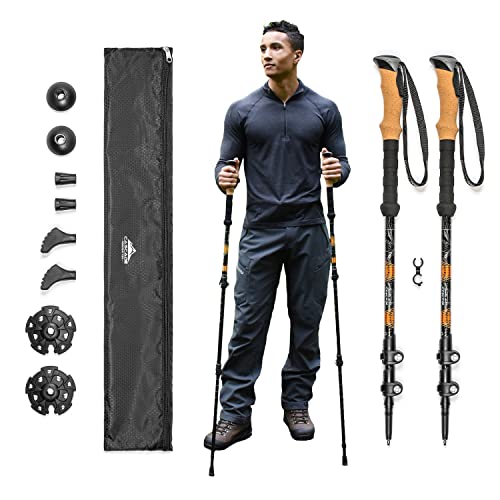
Backcountry ski touring, by contrast, prioritizes adjustability and compact packability over brute downhill stiffness. When climbing an off-camber snow slope, you often need to shorten your uphill pole and lengthen your downhill pole to maintain an upright, ergonomic stance. Splitboarders specifically benefit from collapsible designs like the Cork Grip Collapsible Hiking Poles that fold down to compact lengths to strap onto a pack for descents. Because uphill skinning mirrors mountaineering footwork, adjustable hiking poles offer functional advantages that rigid alpine poles cannot deliver.
Taking standard telescoping poles onto groomed resort runs introduces a genuine hazard of unexpected mechanical collapse. A pole tip catching in heavy slush or snagging near a chairlift can apply sudden torque that bends a thin-walled hiking shaft instantly. If you plan to spend the entire day riding lifts and carving firm groomers, a traditional fixed-length alpine ski pole remains the safest option. Save your adjustable trekking poles for backcountry touring where adjustability provides genuine performance benefits.
Basket Diameter and Flotation: Why Powder Baskets Are Mandatory
The single most essential modification required to use hiking poles on snow is replacing narrow summer baskets with wide winter powder baskets. Standard trekking poles ship with small mud baskets designed solely to stop tips from jamming between trail rocks or sinking into soft soil. In winter conditions, these tiny discs provide virtually zero flotation, allowing the pole to punch straight down through feet of powder snow without resistance. When a pole sinks unexpectedly into deep snowpack, you lose your balance and expend unnecessary energy pulling it back out.
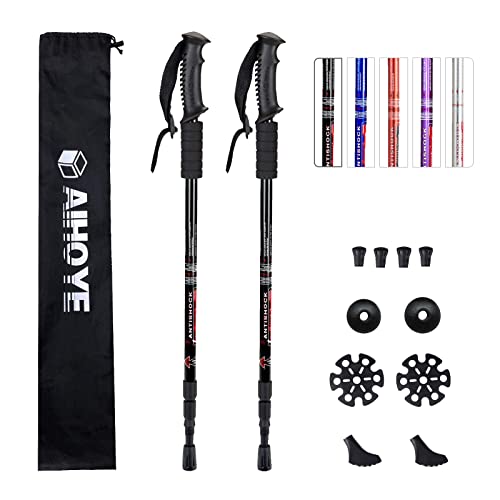
Winter powder baskets, such as those included with the Hiking Poles, Trekking Poles for Hiking, feature broad circular profiles that distribute downward force across a wider surface area. This broad platform catches the snowpack, providing the firm, predictable base required to push off and stabilize your stance. Without proper winter baskets, walking or skiing across snow turns into an exhausting ordeal of continuous post-holing. The basket must also remain pliable in freezing weather so it can pivot over crust without cracking.
Checking the thread pattern or press-fit design of your pole lower sections is essential before heading into the snow. Some brands use proprietary friction-fit mounts, while others feature threaded fittings that accommodate standard replacement winter baskets. Always verify that your winter baskets twist or snap securely past their locking detents so they do not spin off in dense snow. Losing a basket miles away from the trailhead immediately compromises your stability and rhythm.
Shaft Metallurgy and Composite Dynamics Under Cold Temperatures
Sub-freezing temperatures alter the physical properties of outdoor gear materials, particularly composite fibers and metallic alloys. Aircraft-grade aluminum, featured in models like the Hiking Poles, Trekking Poles for Hiking, maintains remarkable ductility in cold environments, bending slightly under heavy strain rather than shattering abruptly. This bend resilience provides an important safety buffer when you encounter hidden obstacles buried under fresh snow. Even if an aluminum shaft sustains a minor bend during a winter stumble, it rarely suffers catastrophic, splintering failure on the trail.
Carbon fiber exhibits distinct advantages and vulnerabilities in freezing alpine conditions. While basic carbon composites can turn brittle in bitter cold, advanced winter poles like the MSR Dynalock Ascent Carbon Backcountry Poles incorporate Kevlar reinforcement to protect multi-directional carbon fibers against impact damage. This hybrid construction delivers excellent tensile rigidity and vibration dampening while maintaining minimal swing weight over long tours. However, non-reinforced carbon shafts designed strictly for ultralight summer thru-hiking remain vulnerable to sharp ski edges and rocky impacts.
When heading into cold alpine environments, pairing reliable pole shafts with appropriate clothing such as breathable hiking apparel helps regulate body temperature and preserve mobility. Steel ski edges are remarkably sharp and can nick pole shafts during kick turns or rapid descents. A small scratch on an aluminum pole typically causes only cosmetic wear, but a sharp notch in a thin carbon tube creates a concentrated stress fracture that can snap under downward load.
Locking Mechanism Integrity and Sub-Zero Clamp Slippage
Freezing moisture and dropping temperatures represent major failure points for adjustable trekking pole locks. When melting snow seeps into telescoping joints and refreezes, ice crystals coat internal contact surfaces, drastically lowering the friction needed to hold extended sections in place. Internal twist-lock mechanisms relying on expanding plastic plugs are particularly prone to slipping or freezing solid in winter weather. Once moisture freezes over an expander plug, generating enough hand torque to tighten the shaft becomes nearly impossible, leading to sudden height collapse.
External cam lever locks, especially those built with sturdy metal hardware, offer far superior holding power in freezing conditions. External clamps apply direct mechanical pressure around the outer tube circumference, making them much less vulnerable to internal moisture glazing. Poles with tool-free tension thumbscrews allow you to tighten the clamping force with cold or gloved hands when temperature drops cause hardware contraction. Confirming that your cam levers close with firm resistance before stepping onto the snow ensures your poles will not collapse under sudden weight.
Folding Z-pole mechanisms provide another dependable choice by eliminating telescoping friction joints entirely along the lower shaft. These designs utilize an internal tension cord and a mechanical push-button lock to secure segmented tubes into place with rigid consistency. Models like the Cork Grip Collapsible Hiking Poles combine rapid push-button deployment with an upper metal flip-lock for height adjustment. Always separate and wipe down all pole sections after your outing to prevent trapped moisture from corroding the hardware during storage.
Grip Ergonomics, Extended Choke Sleeves, and Heavy Winter Gloves
Operating ski poles in winter requires handles that accommodate bulky insulated gloves and mittens without causing hand fatigue. Summer hiking grips often feature tight ergonomic finger grooves sized for bare hands, which can feel awkward and constricting through heavy ski mitts. High-density EVA foam and natural cork handles deliver valuable thermal insulation, preventing cold aluminum shafts from chilling your palms. Natural cork also resists moisture absorption, avoiding the cold, slick feeling that develops on smooth plastic grips during wet snow conditions.
Extended foam choke sleeves placed directly below the main handle provide a major functional advantage on winter snow. When traversing steep, untracked sidehills, your uphill hand naturally requires a lower grip point than your downhill hand to maintain an upright, balanced posture. Rather than stopping to adjust pole length on an exposed slope, an extended choke sleeve allows you to slide your hand down instantly for quick leverage. Backcountry poles like the MSR Dynalock Ascent Carbon Backcountry Poles incorporate extended EVA foam grips specifically to make sidehill switchbacks smooth and efficient.
Handle top caps also serve a practical mechanical role when traveling through deep winter snowpack. Backcountry skiers frequently use the firm hooked edge of their pole grips to scrape sticky snow off ski topsheets or flip heel risers on touring bindings. A robust, non-slip grip cap lets you engage binding levers without taking off your skis or bending over in deep snow. Thin or fragile handle caps found on minimalist summer walking sticks can crack if used to force heavy winter binding latches.
Wrist Strap Geometry and Avalanche Safety Protocols
Trekking pole wrist straps are designed to support your skeletal frame during trail walks, transferring body weight directly through the webbing onto your wrists. Proper hiking technique involves inserting your hand upward from underneath the strap loop so the wide webbing cradles your palm. In downhill skiing, however, remaining tethered to your poles introduces serious safety risks in certain snow environments. Skiers descending through forested glades routinely take their hands out of pole straps to prevent shoulder dislocations or thumb sprains if a basket catches a buried branch.
Avalanche terrain introduces even stricter rules regarding wrist strap usage on snow. Backcountry skiers and splitboarders navigating avalanche terrain are trained to release their wrist straps entirely before dropping in. If caught in a snow slide, attached poles act like anchors that pull arms downward, hindering your ability to deploy safety gear or clear an airway. Because standard trekking straps lack quick-release safety buckles, removing your hands from the straps prior to skiing avalanche-prone slopes is essential.
Strap adjustability is another practical factor when moving between summer hiking and winter skiing. Standard summer straps are often too narrow to fit comfortably over bulky insulated winter gloves or mountaineering gauntlets. Poles equipped with wide, micro-adjustable strap webbing allow you to expand the loops to fit insulated mitts without pinching. Keeping your wrists unconstricted ensures healthy blood circulation to your fingers, helping prevent numbness and frostbite during prolonged sub-zero tours.
Pole Length and Sizing Variations Across Ski Disciplines
Proper pole length varies considerably between summer hiking, resort alpine skiing, backcountry touring, and Nordic cross-country skiing. In traditional hiking, standard sizing positions the pole so your elbow forms a clean 90-degree angle on level ground. Downhill alpine skiing follows a very similar sizing guideline, with skiers flipping the pole upside down and gripping under the basket to confirm a right-angle elbow bend. Adjustable telescoping hiking poles easily achieve this standard length, providing comfortable ergonomics for casual resort skiing.
Backcountry touring requires frequent length changes that rigid alpine poles simply cannot accommodate. When climbing steep, untracked ascents, shortening your poles by five to ten centimeters lets you push upward cleanly without straining your shoulders. On gentle descents through deep powder, lengthening the shafts prevents your upper body from dipping too low when baskets compress the snowpack. Having a generous adjustment range, such as the 45 to 53 inches on the Hiking Poles, Trekking Poles for Hiking, allows you to adapt to changing snow conditions instantly.
Nordic cross-country skiing, specifically classic and skate skiing, represents the one winter discipline where hiking poles cannot function effectively. Classic Nordic skiing requires poles reaching shoulder height, while skate skiing demands even longer shafts reaching between your chin and nose to generate high-speed gliding power. Because standard hiking poles max out around 135 to 140 centimeters, they are far too short for Nordic skate technique and lack the specialized angled grips needed for sustained gliding. For dedicated cross-country tracks, investing in sport-specific Nordic poles is essential.
Pre-Trip Inspection and Field Preparation Checklist
Preparing your hiking poles for winter snow travel requires a careful mechanical inspection before arriving at the trailhead. Start by separating all telescoping sections to clean out any residual trail dust, sand, or moisture that could freeze and cause slipping. Inspect the locking collars for signs of stress cracks in plastic parts, and ensure tension screws are torqued so cam levers close securely. When organizing your winter gear, pairing reliable poles with durable equipment like load-bearing hiking packs ensures you have ample room to lash collapsible shafts securely during transitions.
Next, inspect the tip assemblies and powder basket fittings to ensure they seat tightly against their stops. Carbide tips must be free of deep fractures, and the flexible lower sheaths should show no cracks from summer scrambling. Thread or snap your wide powder baskets into place and pull firmly against the rim to verify they will not pop off in dense snow. If your poles feature spring-loaded anti-shock systems, check that they compress smoothly, as frozen internal springs can introduce unwanted play on firm snow.
Finally, perform a static downward load test indoors or at the trailhead before trusting your equipment on steep terrain. Extend the shafts to your desired length, lock all clamps firmly, and lean your full upper body weight onto the handles against a solid floor. If either section slips even slightly, tighten the external tension screw until the lock holds completely firm. Spending five minutes to confirm clamp tension before stepping onto the snow ensures your poles provide dependable support throughout your winter tour.
Cross-utilizing your gear across different seasons is an efficient, budget-friendly way to enjoy the outdoors year-round. When outfitted with wide powder baskets, dependable metal cam locks, and durable aluminum or reinforced carbon shafts, trekking poles provide superb stability for backcountry ski touring, splitboarding, and snowshoeing. Understanding their mechanical boundaries by avoiding aggressive alpine carving or high-speed impacts ensures your poles remain reliable, versatile tools across both summer trails and winter snowfields.






Write Your Review
No reviews yet. Be the first to share your experience!