


Steep downhill descents often push knees and leg muscles past their comfortable limits, especially when you carry the weight of a loaded backpack across rocky switchbacks. Hikers frequently wonder whether are hiking poles useful or simply extra gear cluttering their hands on open trails. Adding a dedicated pair of poles provides two extra points of contact with the ground, creating immediate balance across slippery scree, wet roots, and stream crossings. While paired with supportive hiking pants for joint comfort, poles can significantly dampen the repetitive braking forces that wear down patellar tendons during long descents.
Beyond joint relief, trekking poles transform hiking into a full-body rhythmic activity that engages the upper body on steep ascents. Modern designs feature durable shafts made from aircraft-grade aluminum or ultralight carbon fiber, alongside ergonomic natural cork or foam handles that manage palm sweat. Reliable locking mechanisms, such as external cam lever locks, keep shafts rigid under heavy downward loads without slipping unexpectedly. Understanding how poles function across varied terrain helps you decide whether they belong in your standard backcountry kit.


The Practical Realities of Hiking Poles on the Trail
Deciding whether to use trekking poles comes down to understanding how your body handles physical strain across steep elevations and uneven terrain. For many hikers, poles seem like unnecessary accessories until a grueling descent turns into an exercise in knee management. Evaluating their utility requires looking closely at joint mechanics, upper body energy distribution, shaft materials, and trail conditions.
Biomechanical Joint Relief and Downhill Braking Forces
Downhill hiking places heavy compressive stress on the patellofemoral joint, ankles, and lumbar spine. Every time your forward foot steps down onto a lower boulder or steep drop-off, your quadriceps contract eccentrically to decelerate your entire body weight. When you carry a heavy pack in a sturdy internal frame hiking backpack, that impact multiplies with every downward stride. Hiking poles give you two additional contact points to absorb and redistribute that downward momentum through your upper body.
By planting poles slightly ahead of your descending foot, you create an external braking frame that shares the load. This mechanical assist shortens the sudden impact curve experienced by your lower leg joints and stabilizes your core posture. Over several miles of continuous descent, transferring even a fraction of each impact away from the knees helps prevent acute tendon irritation. Hikers who struggle with joint sensitivity often find poles help them maintain an upright, balanced posture.
This joint protection does not mean poles eliminate muscular fatigue entirely. Instead, they shift part of the workload from the quadriceps to your upper body musculature. Your triceps, shoulders, and lats work actively during each braking phase to stabilize your descent. Spreading this muscular strain helps protect your lower joints from excessive wear on long wilderness treks.
Uphill Cadence and Upper Body Propulsion
On steep ascents, hiking poles shift their primary role from shock absorption to active propulsion. Moving uphill on rough trails demands sustained cardiovascular exertion along with heavy calf and hamstring engagement. Planting your poles behind your center of gravity allows your arms and back muscles to push downward and backward against the terrain. This synchronized pushing motion provides a steady boost that keeps you moving smoothly up steep switchbacks.
The upper body assist also helps establish a steady walking cadence. When your arms swing in coordination with your leg strides, your breathing rhythm naturally syncs with your movement. This rhythmic pacing prevents the erratic sprinting and resting cycle that quickly exhausts hikers on mountain passes. Utilizing poles on climbs helps distribute metabolic effort across more muscle groups, delaying localized leg fatigue.
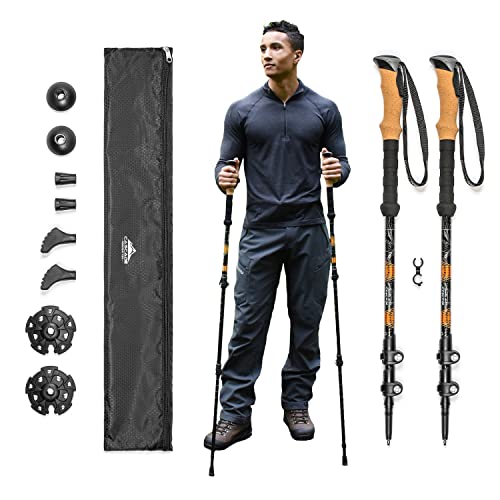
Maintaining this uphill rhythm requires poles that feel light and nimble in motion. Models like the Foxelli Carbon Fiber Trekking Poles weigh approximately 7.6 ounces per pole, keeping swing weight minimal as you plant and reset with every forward step. Lower swing weight reduces forearm and shoulder fatigue over thousands of repeated uphill plants. When your poles feel effortless to swing forward, maintaining an efficient uphill pace becomes far easier.
Balance, Stability, and Rough Terrain Negotiation
Traversing technical trails requires constant micro-adjustments in foot placement to avoid slipping. Wet river stones, loose scree fields, muddy ruts, and exposed tree roots present frequent fall hazards on two feet. Hiking poles immediately expand your base of support from two contact points to four, dramatically increasing stability. If one foot slides on slick mud or loose gravel, a firmly planted pole tip provides the leverage needed to recover your balance before a stumble becomes a fall.
River and stream crossings showcase the stability benefits of hiking poles clearly. Fast-moving currents push against your legs, while submerged rocks are often coated with slick algae and silt. By probing underwater footing with your pole tips, you can confirm solid bottom contact before stepping forward. Keeping three points of contact on the riverbed at all times provides reliable balance against moving water.
Poles also provide essential tactile feedback when negotiating blind drops or tall trail brush. Probing overgrown trail edges helps you detect concealed holes, hidden rocks, or sudden drop-offs before committing your weight. Across lingering spring snowfields, poles help you evaluate snow crust firmness and test snow bridges over hidden melt streams. This constant sensory feedback lets you navigate unpredictable backcountry terrain with far greater confidence.
Shaft Metallurgy and Material Flex: Carbon Fiber Versus Aluminum
The structural backbone of any hiking pole is its shaft material, which directly dictates how the pole responds to impact, flex, and weight. Manufacturers primarily build poles from either tempered aluminum alloys or layered carbon fiber weaves. Aluminum alloys, such as aircraft-grade 7075 aluminum found in the MSR DynaLock Explore 3-Section Alumunium, offer high tensile strength and natural bend ductility. When an aluminum pole gets wedged between granite boulders under lateral pressure, it tends to bend rather than snap instantly.
This bending resilience can be a vital safety advantage on remote backcountry routes where gear failure leaves you stranded without support. In many situations, a slightly bent aluminum shaft can be gently straightened in the field to remain functional for the remainder of the trip. Aluminum shafts also handle abrasive rock scrapes and cold weather impacts without developing hidden structural stress fractures. The tradeoff is slightly higher carry weight and a firmer trail vibration transferred into your arms.
Carbon fiber shafts present a distinct balance of properties, prioritizing minimal weight and superior natural vibration absorption. Poles constructed from high-tensile carbon fiber deaden the high-frequency vibrations that travel up the shaft when carbide tips strike solid rock. This damping characteristic reduces joint fatigue in your wrists and elbows during long days on hard-packed trails. However, carbon fiber exhibits lower resistance to lateral shear stress, meaning a shaft jammed tightly in a rock crevice can fracture catastrophically if loaded sideways during a fall.
Locking Mechanisms and Downhill Axial Load Security
Because telescoping poles collapse for transport, their locking mechanisms must withstand substantial downward axial force without slipping. External cam lever locks have largely replaced older internal twist-lock expander plugs on modern trails. An external lever uses an exterior clamp that presses the outer pole tube securely around the inner telescoping section. This clamping design provides visible mechanical confirmation that the section is locked securely before you put your weight on it.
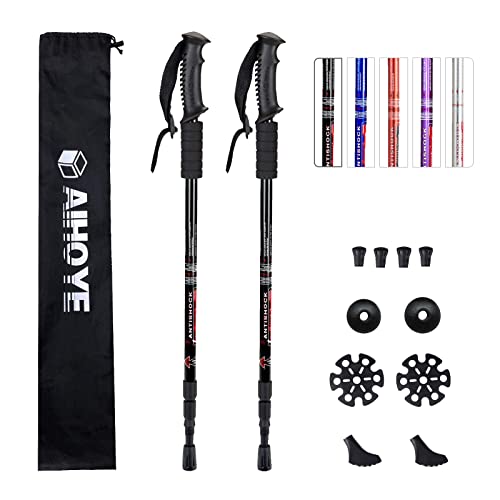
Models such as the MSR DynaLock Explore 3-Section Alumunium feature tool-free tension adjustments that let you dial in clamping resistance by hand. This adjustability is essential because temperature fluctuations and moisture can cause shaft materials to expand or contract slightly. When cold mountain air causes metal tubes to shrink, tightening the exterior thumbscrew ensures the clamp maintains its holding power. The FitTrek Nordic Walking Poles for Men Women also utilize a quick lever lock system designed for rapid adjustments, even while wearing thick trail gloves.
In contrast, internal twist locks rely on expanding plastic wedges hidden inside the shaft tubing. These internal mechanisms are vulnerable to trail dust, silt, and moisture that work into the seams and reduce surface friction. If an internal lock begins to spin freely on a steep descent, cleaning and recalibrating the internal plug on the trail can be difficult. External cam locks remain easier to inspect, clean, and adjust in the field, making them the preferred choice for reliable backcountry support.
Grip Compounds, Ergonomics, and Extended Foam Sleeves
The contact point between your hands and your poles influences comfort, blister prevention, and overall control throughout the day. Natural cork grips, featured on both the Foxelli Carbon Fiber Trekking Poles and the FitTrek Nordic Walking Poles for Men Women, are prized for their sweat-wicking properties. As you hike in warm conditions, natural cork absorbs palm perspiration and gradually conforms to the individual shape of your hands. This custom fit reduces friction points and lowers the likelihood of developing painful blisters on high-mileage days.
High-density ethylene-vinyl acetate (EVA) foam grips provide an exceptionally soft hold with minimal added weight. Unlike cork, EVA foam does not mold to your hand over time, but it offers dependable grip in wet, rainy conditions. Many poles feature an extended EVA foam choke-up sleeve that extends several inches below the primary handle. This lower grip sleeve allows you to drop your hand position quickly when traversing steep switchbacks, eliminating the need to stop and shorten the pole shafts.
Rubber grips represent another common option, primarily used on cold-weather mountaineering or budget walking poles. Rubber provides solid insulation against freezing shaft temperatures and resists moisture absorption entirely. However, non-breathable rubber can cause sweaty hands and friction hot spots in warm summer weather. Choosing a grip compound that matches your hiking climate ensures your hands remain comfortable and blister-free across long days on the trail.
Sizing Principles, Terrain Adjustments, and Strap Technique
Proper pole sizing is critical to achieving effective joint relief and comfortable walking posture. The standard rule of thumb for sizing on flat terrain is the ninety-degree elbow angle. When standing upright with your hiking shoes on, hold the pole grips so your elbows bend at a right angle to the ground. If your forearms angle upward, the poles are set too long, forcing your shoulders to shrug and causing neck fatigue.
As trail gradients change, adjusting your pole length optimizes your leverage and biomechanical efficiency. On sustained uphill climbs, shortening both poles by five to ten centimeters allows you to push off without raising your elbows above shoulder height. When descending steep mountain slopes, lengthening your poles by five to ten centimeters lets you plant them ahead on lower trail surfaces without hunching your spine forward. Adjustable telescoping shafts make these elevation adjustments quick and straightforward.
Mastering the correct wrist strap technique is equally important for avoiding hand and forearm fatigue. Rather than grabbing the handle and squeezing tightly with your fingers, insert your hand upward from underneath the strap loop. Pull down so the strap rests smoothly across the back of your wrist, then grasp the handle along with the strap webbing. This technique allows your skeletal frame and the strap to support your downward body weight, letting you relax your grip without losing control.
Modular Tips, Baskets, and Wear Components
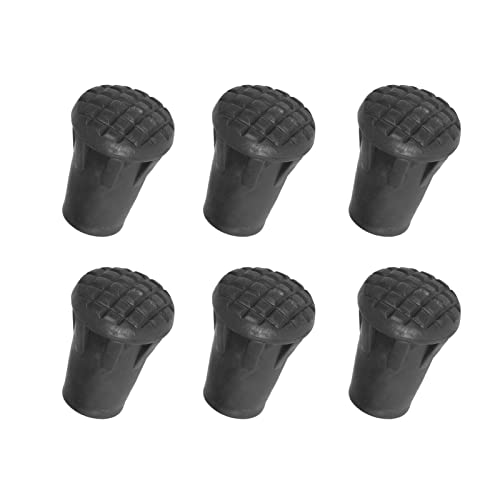
At the base of the pole, modular tips and baskets determine traction and terrain versatility. Most backcountry poles come equipped with hard tungsten carbide flex tips that bite securely into hard rock, mud, and packed dirt. Tungsten carbide resists abrasive ground wear far better than softer steel tips, maintaining sharp traction edges over hundreds of trail miles. When walking on pavement, asphalt, or slick indoor surfaces, slip-on rubber tips, such as the 6pcs Set Replacement Outdoor Hiking Pole Tip End, prevent slipping and protect delicate surfaces from scarring.
Interchangeable baskets prevent your poles from sinking too deeply into soft ground. Small, low-profile mud baskets are ideal for standard three-season hiking, providing just enough surface area to keep pole tips from wedging between roots. When transitioning to winter trails or snowshoeing, swapping to wide powder snow baskets prevents the shafts from plunging deep into soft snow. Poles like the MSR DynaLock Explore 3-Section Alumunium include both summer and winter baskets to support true year-round backcountry utility. Keeping spare rubber tips in your pack also ensures you can protect metal tips during extended road sections.
Shelter Pitching Utility, Specialized Poles, and Travel Logistics
Beyond walking assistance, hiking poles provide valuable dual-purpose utility for ultralight backpackers. Many modern non-freestanding backpacking tents and tarps use trekking poles as their primary structural uprights, eliminating the need to carry separate tent poles. This multi-use approach shaves significant weight from your pack. However, dedicated shelter poles, such as the Tarp Poles Heavy Duty Adjustable or the UEAKPIC Camping Tarp Poles 3.28-8.2FT Telescoping, feature larger diameters and push-button locking pins engineered specifically to withstand heavy wind loads on large camp awnings, distinguishing them from walking poles.
There are also hybrid creative tools, such as the TELESIN TrekShot Carbon Fiber Selfie Stick Tripod, which combines light walking support with camera monopod and tripod capabilities. While such multi-tools work well for casual scenic walks and content creation, dedicated trekking poles remain essential when carrying heavy loads over technical mountain trails. Their structural integrity and load-bearing cam locks are engineered specifically to support body weight under dynamic trail impacts. Matching your gear choice to the demands of your itinerary ensures you have the right structural support.
When preparing for air travel to distant hiking destinations, understanding airport transit regulations is essential. The Transportation Security Administration (TSA) strictly prohibits hiking poles with sharp carbide tips in carry-on baggage on domestic commercial flights. Attempting to bring your poles through airport security checkpoints will likely result in confiscation. To travel safely with your trekking gear, collapse your poles to their minimum length and pack them securely inside checked luggage.
Ultimately, hiking poles are remarkably useful tools that provide tangible benefits for nearly every style of hiker. Whether you want to relieve knee strain on steep alpine descents, power more efficiently up grueling switchbacks, or maintain sure footing across slick river crossings, a dependable pair of poles transforms your experience on the trail. Taking time to select the right shaft material, adjust your locking clamps properly, and practice correct strap loading technique ensures you gain maximum stability and endurance on every adventure.





Write Your Review
No reviews yet. Be the first to share your experience!