


Navigating steep descents with a heavy pack places tremendous repetitive stress on knees, ankles, and lumbar stabilizers. Dedicated hikers rely on balanced trekking poles to absorb braking forces, maintain balance on loose scree, and propel uphill steps across technical mountain trails. For decades, hikers investigating premium equipment have asked where are leki poles made before investing in high-end walking hardware. Knowing the production background of your gear provides clarity on material quality, engineering tolerances, and overall backcountry dependability.
Whether you carry an ultralight kit or load a supportive iron frame hiking backpack for extended multi-day routes, pole construction dictates how well your equipment survives rocky terrain. LEKI designs and manufactures its trekking gear under stringent European production standards, combining proprietary aluminum tempering with refined composite carbon layups. Understanding these design origins helps walkers choose the right balance of shaft stiffness, grip ergonomics, and packable folding mechanisms for their specific trail ambitions.





Everything You Need to Know About LEKI Pole Manufacturing, Materials, and Design
Hikers asking where are leki poles made often want to know whether their equipment comes from outsourced commodity factories or dedicated production facilities. The direct answer is that LEKI maintains central manufacturing in Tachov, Czech Republic, while keeping research, development, and engineering at company headquarters in Kirchheim unter Teck, Germany. This European operational model allows the brand to maintain tight oversight across aluminum tube milling, composite carbon braiding, and locking hardware assembly. Inspecting how these facilities operate reveals why specific shaft alloys, grip contours, and locking mechanisms perform consistently on rough trails.
European Manufacturing Facilities in Germany and the Czech Republic
LEKI originated as a woodcarving enterprise founded by Karl Lenhart in Kirchheim unter Teck, Germany, before transitioning into specialized ski and trekking pole production. The central headquarters in southern Germany remains the intellectual core where industrial designers draft prototypes, refine locking mechanisms, and conduct material stress simulations. Rather than outsourcing assembly to third-party suppliers overseas, the company centralized its mass production in Tachov, Czech Republic. This dedicated facility stands as one of the largest pole manufacturing centers in the world.
Operating an owned manufacturing center in Central Europe establishes direct oversight over quality control, environmental compliance, and labor standards. Engineers can transition a newly refined shaft profile or clamp design directly from German development labs into Czech production lines without lengthy overseas supply chain delays. Raw components undergo automated quality screening alongside manual inspections to ensure consistent tube tolerances and locking friction. This close geographic link between German engineering and Czech manufacturing forms the foundation of LEKI’s reputation for dependable outdoor hardware.
Shaft Metallurgy: High-Strength Aluminum Production and Heat Treatment
Aluminum remains the primary choice for hikers who value ductile strength and high impact resistance over absolute minimal weight. LEKI manufactures its metallic shafts using proprietary aluminum alloys designated as HTS 6.0 and HTS 6.5, which undergo specialized heat-treatment processes. These high-temperature tempering cycles realign the crystalline grain structure of the metal, maximizing tensile yield strength without introducing brittleness. When subjected to sudden lateral loads, such as a pole tip wedging between granite boulders, these treated aluminum tubes bend slightly rather than fracturing abruptly.
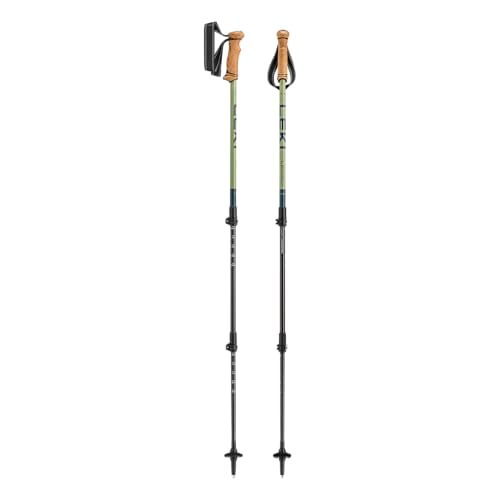
The trail pants designed for knee strain that hikers wear on rugged ascents are often paired with robust aluminum poles to create a secure, stable walking rhythm. For example, the LEKI Legacy Lite Trekking Poles – Denimblue utilize HTS 6.0 aluminum across a three-section telescoping layout, yielding a durable yet manageable profile. Travelers seeking single-staff stability often turn to the LEKI Wanderfreund High Fives Trekking Pole, which incorporates stiffer HTS 6.5 aluminum to support heavier downward axial loads. Precision tube drawing at the European plant ensures uniform wall thickness across each section, preventing thin spots that could buckle under heavy pack weight.
Carbon Fiber Fabrication: PRC 1000 and HRC Max Composite Layups
Carbon fiber construction addresses the needs of fastpackers, long-distance thru-hikers, and trail runners who prioritize minimum swing weight. In LEKI composite manufacturing, multi-directional carbon fibers are layered and bound with high-performance epoxy resin systems. The brand categorizes its carbon engineering into grades such as PRC 1000 (Performance Racing Carbon) and HRC Max (Highest Racing Carbon). PRC 1000 balances tensile stiffness with practical trail resilience, whereas HRC Max focuses on trimming every possible gram for race-day efficiency.
The structural layout of carbon fiber excels at damping high-frequency trail vibrations before they travel up the shaft into your wrists, elbows, and shoulders. The LEKI Makalu FX Carbon Trekking poles demonstrate this balance by employing PRC 1000 carbon across five folding segments, maintaining rigidity without excessive mass. For pure racing cadence, the LEKI Ultratrail FX.One Trekking Poles- Grey Light and LEKI Ultratrail FX.One Trekking Poles-Bright feature HRC Max carbon to achieve an ultralight quarter-pound weight class. While carbon shafts resist high axial downward forces, hikers must exercise care to avoid severe lateral rock strikes that can score composite walls.
Locking Mechanism Architecture: Speed Lock Plus and Speed Lock 2 Plus
Telescoping hiking poles require reliable adjustment clamps that prevent sudden length slippage on steep descents. LEKI developed its external cam-lever systems, known as Speed Lock Plus and Speed Lock 2 Plus, to replace older internal twist-lock expanders. These external levers are engineered from lightweight composite materials and metal clamping pins that distribute holding friction evenly around the outer tube circumference. Unlike internal expanders that can slip when exposed to internal moisture or trail silt, external lever locks provide visible, positive mechanical clamping.
The Speed Lock 2 Plus mechanism represents a refined iteration that reduces overall clamp volume while maintaining exceptional holding force. An integrated textured thumbscrew allows hikers to fine-tune clamping tension without requiring specialized shop tools. If temperature drops cause shaft metal to contract slightly during alpine hikes, a quarter-turn of the dial restores secure holding power. The LEKI Legend Black Carbon Trekking Pole employs dual Speed Lock 2 Plus switches to secure its carbon segments reliably across varied terrain gradients.
Folding System Mechanics: External Locking Device (ELD) and Push-Button Z-Poles
Packability is a decisive factor for travelers, mountaineers who stow poles during technical scrambles, and trail runners carrying running vests. LEKI addresses compact storage through two primary folding designs: the External Locking Device (ELD) and quick-release push-button mechanisms. The ELD system features a user-friendly release lever positioned on the upper shaft, allowing hikers to release internal tension even while wearing thick cold-weather gloves. An internal high-tensile core cord runs through aluminum or carbon tube joints, pulling the sections into rigid alignment upon deployment.
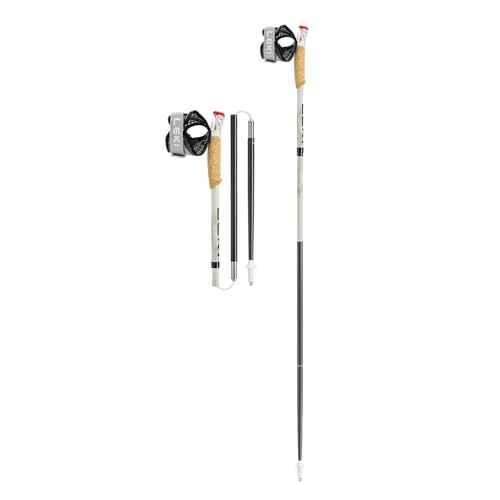
Push-button folding designs, seen on fixed-length models like the Ultratrail series, separate into three compact sections measuring around 14.5 inches. This compact pack size allows hikers to slide folded shafts directly into running vest quivers or side water bottle pockets without snagging brush. The joint connectors feature aluminum sleeves that shield composite tube ends from friction wear during rapid assembly. Regular inspection of the internal cord tension ensures that joint interfaces remain snug, preventing distracting shaft wobble on technical terrain.
Grip Ergonomics and Biomechanics: Aergon Air, EVOCON Cor-Tec, and Shark Grips
The physical interface between your palm and the pole dictates comfort over high-mileage trail days. LEKI engineers its grips with a built-in positive angle, typically canted forward between 8 and 10 degrees, to keep your wrist in an ergonomically neutral alignment. The Aergon Air grip incorporates a hollow-core construction that trims weight while providing an expansive, rounded head for palming on steep descents. Soft rubber grip heads offer confident traction when leaning forward during long downhill switchbacks.
Grip compounds vary according to hiking style and environmental conditions. The EVOCON Cor-Tec grip found on the Legacy Lite blends natural cork with durable synthetic polymers, creating a breathable surface that resists sweat buildup and molds to your grip over time. For fast-paced trail running and fitness walking, the Trail Trigger Shark system utilized on the LEKI Traveller Carbon Nordic Walking Pole and Ultratrail series provides a click-in mesh strap. This glove-style harness maximizes energy transfer through the backward push phase and releases instantly with a top-mounted push button.
Impact Absorption Engineering: Dynamic Suspension System (DSS)
Continuous descent on hardpacked switchbacks transfers repetitive shock into the arm joints and musculoskeletal system. To mitigate peak deceleration forces, LEKI developed the Dynamic Suspension System (DSS), an elastomer-based antishock assembly integrated directly above the lower tip. Unlike older spring-loaded mechanisms that were prone to pogo-stick bouncing and mechanical noise, the DSS unit provides controlled elastomeric damping. This design reduces initial impact spikes without compromising pole rigidity during firm ground planting.
The LEKI Makalu FX Carbon AS Trekking Poles incorporate this DSS tip into a hybrid shaft configuration that pairs carbon upper sections with an aluminum lower section. This hybrid approach places robust aluminum where trail rocks and scree strike most frequently while maintaining composite damping throughout the upper shaft. Hikers navigating sharp drop-offs appreciate the subtle mechanical absorption that protects tired shoulder joints over twenty-mile days. The sealed nature of the elastomer core protects internal damping materials from moisture, mud, and trail debris.
Field Maintenance, Carbide Tip Longevity, and Component Modularity
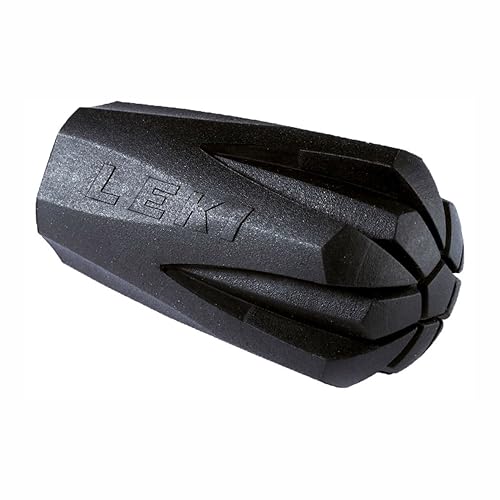
Longevity on backcountry trails depends on modular components that can be inspected, cleaned, and replaced after heavy use. LEKI equips its trekking shafts with press-fit Flex Tips crafted from sintered tungsten carbide, a material selected for its extreme hardness and bite on wet granite. If a carbide flex tip eventually wears down or snaps under severe rock wedging, the plastic tip housing can be soaked in warm water and replaced without replacing the entire pole. For road walking, paved fitness trails, or rock protection, the slip-on LEKI Walking Rubber Tip fits over the carbide point to dampen noise and eliminate slippage on asphalt.
Maintaining telescoping poles requires periodic cleaning to prevent grit from scoring internal shaft coatings. After hiking through rain or muddy stream crossings, pull telescoping sections completely apart and wipe the interior and exterior tube surfaces with a clean, dry microfiber cloth. Avoid applying WD-40, silicone lubricants, or grease to the shaft tubes, as petroleum residues ruin the friction needed for Speed Lock clamps to hold securely. Allowing disassembled sections to dry completely before long-term storage prevents galvanic corrosion and keeps your locking hardware operating smoothly.
Selecting the Right LEKI Configuration for Backcountry Objectives
Matching pole construction to your hiking objectives ensures that you carry the right balance of weight, stiffness, and packability. Multi-day backpackers navigating mixed terrain benefit from three-section adjustable models like the Legacy Lite or Makalu FX Carbon, which adjust easily between uphill climbing and downhill braking lengths. Single walking canes like the Wanderfreund High Fives or Legend Black Carbon cater to travelers seeking balance assistance and ergonomic palm support along level footpaths and rolling trails.
Dedicated trail runners and ultralight enthusiasts often lean toward fixed-length folding models like the Ultratrail FX.One, where the absence of adjustment clamps minimizes total swing weight. Meanwhile, fitness enthusiasts and Nordic walkers achieve greater propulsion with adjustable setups like the LEKI Traveller Carbon Walking Poles, utilizing specialized Shark grips to drive powerful arm swings. Evaluating your preferred terrain, pack storage limits, and joint support requirements ensures that your gear investment delivers reliable performance across thousands of trail miles.
Understanding the production heritage and engineering specifications behind your hiking equipment brings peace of mind on remote backcountry trails. Whether you choose resilient HTS aluminum tubes, lightweight PRC 1000 carbon composites, or specialized antishock tips, LEKI’s centralized European manufacturing ensures high standards of craftsmanship and durability. Regular inspection of clamp thumbscrews, proper upward strap loading, and routine post-hike cleaning will keep your poles functioning reliably across countless alpine adventures.






Write Your Review
No reviews yet. Be the first to share your experience!