


Navigating steep mountain ascents and loose, rocky descents demands exceptional leg power and sharp balance. Runners tackling technical singletrack often debate whether do you need poles for trail running or if carrying extra gear merely creates unnecessary arm fatigue. Distributing forward effort across your upper body can spare quadriceps on grueling vertical gains, while stabilizing your cadence over slippery mud or scree. Just as runners review a trail pant protection guide for overgrown routes, selecting the right hardware shapes overall comfort and performance.
Modern equipment has shifted this conversation away from heavy hiking sticks toward ultra-packable folding designs. Lightweight materials like 7075 aluminum and high-density carbon fiber allow runners to stow shafts into running vests without breaking stride. These specialized poles provide critical contact points on uneven ground, reducing joint impact on jarring downhill sections. Evaluating your race distance, elevation profile, and technical skills helps determine whether bringing poles offers a genuine tactical advantage.


Evaluating Trail Running Poles: Biomechanics, Terrain Demands, and Hardware
Whether do you need poles for trail running depends on course elevation gain, trail surface technicality, and overall outing duration. Casual outings across rolling dirt paths rarely justify the extra weight and coordination required to carry poles. Once terrain pitches upward into sustained mountain grades or stretches past marathon distances, trekking shafts transform into powerful tools for preserving leg strength. Understanding how poles alter your running economy helps you decide whether they belong in your training arsenal.
Poles act as an auxiliary drive system, allowing your shoulders, chest, and arms to share the mechanical burden typically borne by your legs. Runners confronting thousands of feet of vertical gain find that poles reduce perceived exertion during steep power-hiking segments. Conversely, carrying poles on flat terrain can disrupt your natural arm swing and lower your turnover speed. Evaluating your specific running goals and route demands reveals whether the performance benefits outweigh the operational inconvenience.
Biomechanical Force Distribution on Steep Ascents
Ascending steep mountain trails forces your quadriceps, calves, and glutes to handle immense concentric loading with every stride. By planting poles ahead of your body and engaging your core, back, and triceps, you transfer a substantial portion of that workload to your upper body. This distributed propulsion prevents premature muscular failure in your lower legs during prolonged climbs. As a result, your legs stay fresher for runnable flats and descents later in the run.
Your posture also improves dramatically when using poles on steep gradients. Without poles, exhausted runners frequently hunch forward over their hips, compressing the diaphragm and restricting lung capacity. Pole plants encourage a more upright torso, opening up your chest for deeper oxygen exchange on grueling ascents. Maintaining an upright posture also stabilizes your center of mass, preventing lower back fatigue over ultra-distance outings.
Rhythm plays a critical role in uphill energy conservation. Alternating pole plants with foot strikes establishes a steady cadence that prevents erratic pacing spikes on variable terrain. Runners often use a double-pole plant on steep switchbacks, levering their entire body upward with both arms simultaneously. This rhythmic assistance smooths out heart rate spikes and keeps your cardiovascular effort in a sustainable aerobic zone.
Downhill Stability and Joint Impact Mitigation
Descending rocky, technical trails generates severe eccentric loading on knee joints and quadriceps muscle fibers. Poles function as shock dampers, catching vertical momentum before your leading foot strikes the ground. This pre-landing deceleration reduces peak impact forces transferred through your patellofemoral joints and ankles. Over thousands of feet of descent, that reduction in mechanical shock preserves leg muscles from debilitating soreness and breakdown.
Balance and traction also improve when navigating loose scree, wet roots, or slick mud. A pole tip planted forward acts as an instantaneous third or fourth point of contact, preventing ankle rolls and unexpected slips. If a foot loses traction on slippery rock, a planted pole offers immediate brace support to catch your balance. This added security allows runners to descend with greater confidence and fluid momentum rather than tentative braking.
Downhill pole use requires deliberate caution regarding arm mechanics and ground clearance. Trailing a pole tip behind you can cause it to wedge between rocks, potentially tripping you or bending the shaft under forward momentum. Runners must plant poles lightly ahead and wide of their stride path to avoid stepping on their own equipment. Proper downhill technique emphasizes rapid, light touches rather than leaning your entire body weight onto the grips.
Terrain Profiles: When Running Poles Help Versus Hinder
Course profile represents the primary factor in deciding whether to bring poles on a trail run. Routes featuring steep, sustained vertical climbs of fifteen percent grade or higher heavily favor pole use, as power hiking becomes the most efficient locomotion strategy. Mountain ultras through alpine passes and high-altitude endurance events routinely showcase runners relying on poles. In these scenarios, the energetic payoff of upper-body propulsion far exceeds the minor weight penalty.
In contrast, flat or gently undulating cross-country trails render poles largely counterproductive. When running at high turnover speeds on smooth dirt, holding poles locks your hands in fixed positions and interferes with natural arm drive. The physical effort of carrying shafts across runnable terrain can waste energy without offering any mechanical advantage. If a course allows continuous running without steep power-hiking sections, leaving poles behind is generally the smarter choice.
Trail width and vegetation density also dictate pole practicality. On overgrown singletrack bordered by dense brush or low tree branches, pole shafts can easily snag on foliage and disrupt your stride. Runners frequently consult a backcountry gear checklist when preparing for remote routes with unpredictable trail conditions. Assessing whether a path is open alpine terrain or tight woodland helps you determine if deploying poles will create unnecessary frustration.
Shaft Materials: Comparing High-Modulus Carbon Fiber and 7075 Aluminum
Selecting shaft material involves balancing minimum swing weight against resistance to impact damage. High-density carbon fiber models, such as the Xhigh Ultralight Carbon Fiber Trekking Poles at roughly 100 grams per pole or the CONTOOSE 100% Carbon Fiber Hiking Pole, prioritize maximum weight reduction. Carbon fiber naturally absorbs trail buzz and metallic vibration, reducing joint fatigue in your hands and wrists during high-mileage runs. Furthermore, an ultra-low swing weight allows you to flick poles forward effortlessly without expending unnecessary shoulder energy.
The primary vulnerability of carbon fiber lies in its brittle failure mode under lateral shear stress. If a carbon shaft slips into a deep boulder crevice and your body weight twists against it, the composite tube can snap abruptly without warning. Aluminum shafts, such as the 7075 alloy used in the Croosseoutdoors Ultralight 7075 Aluminum Trail Running Poles and AONIJIE Collapsible Trekking Poles, deliver greater ductile strength. When subjected to severe lateral leverage or accidental tripping impacts, aircraft-grade 7075 aluminum tends to bend rather than fracture catastrophically.
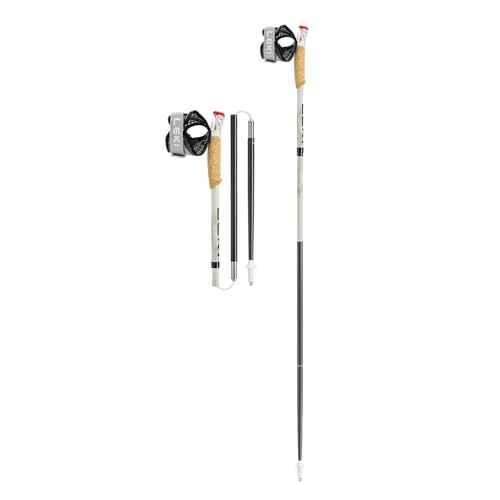
Weight differences between aluminum and carbon designs have narrowed substantially with modern engineering. Aluminum options like the LEKI Evotrail FX.One TA weigh approximately 7.58 ounces, providing rugged torsional rigidity across rough mountain terrain. Meanwhile, specialized carbon shafts like the LEKI Cross Trail FX.One Superlite achieve weights around 5.7 ounces with slim profile tubing. Runners prioritizing rugged durability in sharp alpine scree often lean toward 7075 aluminum, while weight-conscious racers tackling smooth vertical ascents favor carbon fiber.
Deployment Hardware: Push-Button Pins, Pull Cords, and Fixed Z-Poles
Trail running demands rapid transitions between running freely and deploying poles for steep climbs. Traditional three-section telescoping poles with external cam locks are generally too slow and bulky for fast-moving runners. Modern running poles utilize four-section folding Z-pole architecture connected by internal tension cords. When unlocked, the sections collapse into lengths between 13 and 15 inches, fitting neatly against vests or waist packs.
Locking systems vary between push-button release pins and internal pull-cord tensioners. Push-button mechanisms, featured on the LEKI Cross Trail FX.One Superlite and LEKI Evotrail FX.One TA, lock automatically when you pull the top shaft until a pin clicks into place. Alternatively, models like the Croosseoutdoors 7075 Aluminum poles utilize an internal pull cord with a retention knot that seats into a handle slot. Both designs provide rapid deployment in seconds, allowing runners to assemble their gear without stopping forward momentum.
Fixed-length folding poles eliminate telescoping joint hardware to maximize structural stiffness and eliminate play. By removing adjustable cam levers, models like the Xhigh Ultralight Carbon Fiber poles cut mechanical failure points and joint rattle. However, fixed-length setups require precise sizing based on your height and terrain preferences. If you plan on adjusting shaft lengths between extended uphill and downhill gradients, four-fold adjustable models like the AONIJIE Trail Running Poles offer greater versatility across varying slopes.
Grip Morphology and Wrist Connection Systems
Hand fatigue and palm blisters can quickly derail an endurance run if your grip setup lacks ergonomic refinement. Closed-cell EVA foam handles, featured on the AONIJIE Collapsible poles and CONTOOSE Carbon Fiber poles, offer lightweight comfort and reliable moisture resistance. EVA foam prevents sweat saturation, maintaining a slip-free texture in wet or humid conditions. Many designs incorporate extended lower foam sleeves, allowing runners to choke down on the shaft during steep switchbacks without adjusting pole length.
Natural cork grips, such as those found on the LEKI Evotrail FX.One TA, provide superior moisture absorption and mold gradually to your hand shape. Cork maintains a firm, dry tactile feel during hot summer ultras, reducing the friction hot spots that lead to blisters. However, cork grips carry a slight weight penalty compared to minimalist sculpted foam grips. Choosing between cork and EVA comes down to personal preference regarding palm sweat management and overall weight priority.
Wrist attachment systems significantly influence how efficiently you transfer propulsion into the ground. Standard adjustable webbing straps support your wrist bones so you can push downward without squeezing the handle tightly. Advanced systems, such as LEKI’s Trigger Shark 2.0 and Cross Shark grips, utilize a breathable mesh glove frame that clips directly into the handle. This clip-in interface optimizes power transfer on steep ascents and releases quickly via a top push-button when you need to free your hands for aid stations or technical scrambles.
Vest Integration and Mid-Run Transition Techniques
Carrying poles efficiently when they are collapsed is just as critical as using them effectively on climbs. Holding folded poles in your hands while sprinting across flat sections quickly tires your arm muscles and limits finger dexterity for nutrition access. Most running hydration vests feature specialized pole attachment points, such as front chest bungee loops, bottom horizontal lumbar straps, or dedicated back quivers. Stowing poles securely prevents annoying bounce, shaft rattle, and skin abrasion over long training miles.
Practicing mid-stride transitions is essential for maintaining race pace. Struggling to untie bungees or wrestle shafts into a tight quiver can cost valuable minutes at the base of every mountain climb. Experienced trail runners practice collapsing and securing their poles while jogging, keeping their momentum steady. Finding reliable methods for securing equipment to pack exteriors mirrors the skill required to anchor folding poles onto minimalist running vests without breaking rhythm.
Waist-mounted pole belts have gained immense popularity among mountain runners seeking rapid accessibility. These elastic tubular belts hold collapsed poles horizontally against your lower back, distributing weight evenly around your center of mass. This position eliminates vest bounce and allows you to slide poles in and out in seconds without reaching behind your shoulders. Whether using a waist belt or a vest quiver, stabilizing folded shafts against your body keeps your hands free and your stride balanced.
Carbide Tip Safety and Trail Etiquette in Groups
Trail running poles feature aggressive tungsten carbide tips engineered to bite into hardpack dirt, slick granite, and icy mud. While these tips provide dependable traction, they pose genuine safety hazards in crowded race environments. Flailing pole tips backward while running can accidentally strike trailing competitors, causing severe punctures or tripping falls. Runners must practice pointing their pole tips forward or keeping them tucked close to their hips whenever other athletes are nearby.
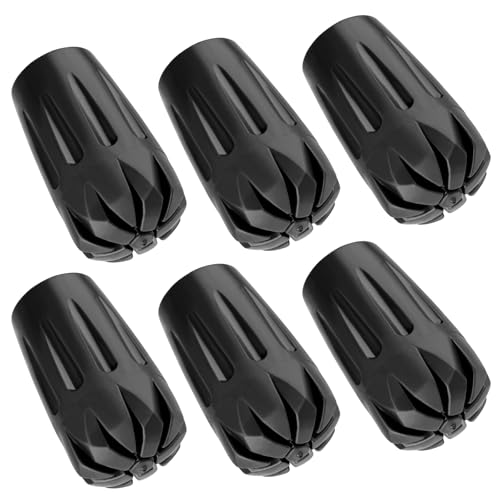
Trail surfaces also suffer when metal tips are used carelessly on fragile environments. Dragging pole tips across rock slabs produces loud scratching noises and accelerates trail erosion on heavily used routes. Installing rubber pavement tips can dampen impact noise and protect delicate rock faces during road-to-trail transition sections. In addition, carrying removable mud baskets, like those included with the Croosseoutdoors poles, prevents shafts from sinking deep into boggy terrain or wet snowpack.
Routine maintenance ensures your folding poles remain safe and functional throughout the racing season. After wet or muddy outings, pull all folding sections apart and allow internal cords and aluminum ferrule joints to air dry completely. Storing poles while damp invites oxidation inside aluminum tubes and degrades internal shock cords over time. Inspect carbon shafts regularly for hairline cracks, and ensure carbide tips remain firmly seated before tackling rugged mountain races.
Determining Your Ideal Trail Running Pole Strategy
Deciding whether to run with poles comes down to an honest assessment of your race terrain, upper-body conditioning, and gear handling skills. If your upcoming course features sustained, grinding ascents and thousands of feet of elevation change, adding ultra-packable folding poles will conserve vital leg energy and protect your joints on punishing descents. Take time during training to dial in your deployment transitions, strengthen your triceps, and master rhythmic planting before race day. With the right technique and pack integration, trail poles become an indispensable asset for conquering demanding mountain terrain.
Remember that running with poles is an acquired skill that requires dedicated practice. Introducing poles to your weekly long runs allows your shoulders and back to adapt to the repetitive propulsion demands. Start by testing your setup on short, steep hill repeats before committing to carrying poles in an ultra-marathon. By matching your equipment choices to the specific elevation profile of your target route, you can maximize uphill efficiency while maintaining agile downhill speed.






Write Your Review
No reviews yet. Be the first to share your experience!