


Hiking across uneven mountain terrain places continuous vertical force through your upper body and hiking shafts. Many hikers unbox new gear and immediately wonder what are trekking pole baskets for, often setting aside those circular plastic discs as optional extras. In reality, these small hardware accessories serve as essential mechanical stops that transform how your poles interact with soft ground, deep mud, loose scree, and winter powder. Without baskets attached, a pole tip easily penetrates several inches or even feet into yielding soil, stealing forward propulsion and disrupting your rhythmic cadence.
Integrating the right basket style also protects your pole shafts from structural damage while navigating unpredictable backcountry trails. When you are coordinating gear planning for multi-day backpacking trips, matching your hardware to the expected terrain ensures dependable joint relief and stability on steep descents. Modern manufacturers like LEKI, Foxelli, and TREKOLOGY produce interchangeable designs built for different environmental conditions. Understanding how these components function allows you to maintain balance, preserve your equipment, and hike with greater efficiency throughout every season.


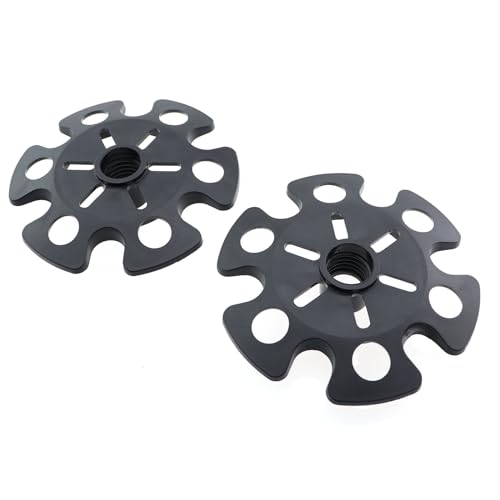


Trekking pole baskets are circular or scalloped barrier rings that attach directly above the carbide tip of a hiking staff or walking pole. Their primary engineering function is to increase the surface area of the pole tip, preventing the shaft from sinking excessively into yielding ground such as mud, wet silt, snow, or loose sand. By creating a physical limit against soft surfaces, baskets preserve your balance, protect your joints from sudden drops, and safeguard the pole shaft against severe bending stresses. Understanding the specific mechanics behind these small accessories helps you determine when to install mud baskets, when to swap to wide powder snow baskets, and when to remove them altogether.
Core Flotation Mechanics: Expanding Surface Area in Soft Terrain
The standard tip of a trekking pole terminates in a narrow tungsten carbide point engineered to bite into hard-packed dirt, granite slabs, and slick tree roots. This narrow point concentrates all the downward force of your upper body and backpack onto an area smaller than a pencil eraser. When you encounter soft earth, saturated bogs, or loose gravel, that high pressure drives the bare pole tip deep into the ground. A plunging pole suddenly robs you of vertical support, forcing your shoulder, elbow, and knee joints to absorb unexpected shock.
Adding a basket fundamentally changes the physics of ground contact by dispersing your downward weight across a wider circular plane. Products like the AbbiyyZ Trekking Pole Baskets or the TREKOLOGY snow and mud accessories act as physical flotation platforms. Instead of your pole sinking six to twelve inches into a saturated alpine meadow, the basket makes contact with the upper substrate and arrests downward travel. This mechanical stop allows you to plant your pole with confidence, push off firmly, and maintain a consistent hiking stride.
Energy conservation is another direct benefit of proper flotation mechanics. Pulling a bare pole out of suctioning mud or deep snowpack requires repeated upward effort with every single step. Over the course of a ten-mile hike, that repetitive pulling motion accelerates fatigue in your forearms, biceps, and shoulders. Maintaining flotation at the ground surface keeps your stride fluid, reduces cumulative muscle strain, and preserves upper body endurance for technical trail sections.
Preventing Shaft Entrapment and Catastrophic Shear Failure
Beyond flotation in soft earth, trekking pole baskets perform a critical safety function by keeping pole tips out of narrow crevices. Mountain trails frequently cross fields of broken scree, talus boulders, exposed root lattices, and deep rock fissures. If a bare pole tip slips between two buried rocks while your forward momentum continues, the shaft acts as a mechanical lever against the stone. This trapped condition generates immense lateral force that can easily ruin high-end hiking gear.
Shaft materials respond differently to entrapment, but both aluminum and carbon fiber face catastrophic damage under leverage. Aircraft-grade 7075 aluminum will bend sharply when subjected to lateral torque, often warping the telescoping tube beyond field repair. Carbon fiber shafts offer exceptional vertical stiffness and vibration damping, but they are inherently vulnerable to brittle shear failure. A wedged carbon pole can snap instantaneously with a loud crack, leaving you without essential stability on steep terrain.
A properly sized basket physically blocks the pole tip from slipping deep into narrow rock slots or dense root webs. The outer rim of the basket bridges the gap between adjacent stones, keeping the carbide tip near the surface where it can release cleanly. This simple mechanical barrier reduces the risk of tripping falls and prevents costly shaft breakage. Hikers traversing technical rocky passes benefit immensely from keeping their mud baskets installed as mechanical shields.
Mud Baskets Versus Snow Baskets: Diameters and Design Differences
Outdoor gear manufacturers divide trekking pole baskets into two primary categories based on diameter and intended environment. Mud baskets, sometimes called trail baskets, typically measure between 50 and 55 millimeters in diameter, or roughly two inches across. Models like the Foxelli Trekking Poles Mud Baskets and the replacement discs found in the Monfasye Trekking Pole Tips kit represent this compact profile. Their smaller circumference provides just enough surface area to stop soft-ground sinkage while maintaining minimal weight and low wind resistance.
The compact geometry of a mud basket allows you to move quickly through overgrown singletrack without snagging on low brush or heather. Scalloped edges and small perforations allow wet dirt to clear quickly rather than clumping onto the plastic disc. Because mud is considerably denser than winter powder, a two-inch diameter offers sufficient resistance to support the vertical load of a backpacker without adding noticeable swing weight to the bottom of the pole.
Snow baskets, in contrast, require a dramatically larger footprint to achieve flotation in unconsolidated winter powder. High-flotation models such as the LEKI Big Mountain Basket measure 95 millimeters across, while options from KKUANG and Holmgillick range from 85 to 87 millimeters. Winter snow consists primarily of trapped air and crystalline ice, offering very little resistance to concentrated downward pressure. Oversized snowflake or webbed baskets distribute your weight over three to four times the surface area of a mud basket, preventing the pole from vanishing into deep drifts during winter trekking or snowshoeing.
Socket Compatibility, Bore Diameters, and Threading Standards
Replacing or upgrading baskets requires careful attention to socket geometry and internal bore dimensions. Most modern trekking poles feature a plastic tip assembly with molded threads or a friction lip located roughly two to three inches above the carbide tip. Multi-piece bundles like the Aihoye Trekking Hiking Poles Replacement Rubber kit or the KKUANG accessories specify precise upper and lower bore measurements, often featuring an internal socket diameter around 13 to 15 millimeters.
Some outdoor brands utilize proprietary threading patterns that require matched replacement components. For example, Foxelli notes that their dedicated mud baskets are designed specifically for original Foxelli poles and may not seat securely on competitor hardware. Similarly, LEKI employs an engineered screw-thread collar that mates precisely with LEKI flex tips. Before purchasing replacement baskets, inspect your pole tip assembly to determine whether it uses a universal friction press-fit, an internal push-turn lock, or a continuous spiral thread.
Installing a basket incorrectly can lead to trail loss or hardware stripping. When attaching screw-on baskets, turn the collar firmly until it passes the initial resistance ridge and seats against the upper stop. A loose basket will gradually unscrew due to rotational vibration each time the tip strikes hard ground. If your poles utilize friction collars, ensure the plastic socket is completely clean of trail silt before pushing the basket firmly over the retention lip.
When to Remove Baskets: Dense Brush, Talus, and Summer Hardpack
Although baskets provide indispensable flotation and crevice protection, there are specific trail conditions where removing them is the smarter choice. On hard-packed summer dirt trails, dry granite switchbacks, or paved access roads, flotation is completely unnecessary. The bare carbide tip or a rubber road cap provides superior ground bite without the added bulk of a plastic disc. Leaving baskets off on firm summer trails slightly reduces swing weight and keeps your poles feeling nimble.
Dense, overgrown off-trail bushwhacking represents another scenario where baskets can become a genuine hindrance. When pushing through thick scrub oak, dwarf birch, or tangled mountain laurel, wide basket rims constantly catch on branches and stiff twigs. Each snag yanks backward on your pole, disrupting your balance and increasing forearm strain. Hikers tackling overgrown backcountry routes often choose to remove their baskets to navigate narrow brush tunnels without frustrating trail hangups. When hiking off-trail through dense underbrush, combining basket removal with wearing rugged trail pants helps protect your lower body from thorny obstacles.
Navigating boulder fields with large, open talus gaps also warrants careful evaluation. While baskets prevent tips from entering tiny cracks, they can occasionally catch under the sharp overhang of a loose boulder during a step forward. If a basket hooks an undercut rock shelf, it can pull your arm backward and compromise your stance. Assessing trail conditions allows you to decide whether flotation benefits outweigh the minor risk of mechanical snagging.
Hardware Coordination: Carbide Tips, Rubber Caps, and Baskets
A trekking pole basket works as part of an integrated lower-tip system that includes carbide flex tips and removable rubber protectors. Multi-accessory packages such as the Replacement Rubber Tips Set for Trekking Poles-4 and the TREKOLOGY transition bundle provide a variety of specialized tips alongside mud and snow baskets. Understanding how these components cooperate ensures optimal traction and equipment longevity across changing terrain.
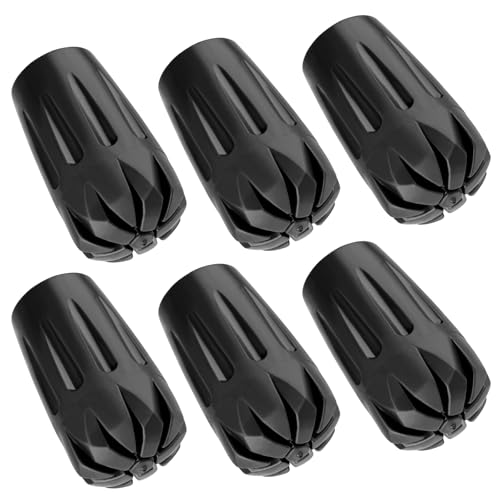
Carbide tips excel on raw earth, loose scree, and icy trails because their hard crystalline structure penetrates rigid surfaces. However, hiking with bare metal tips on paved asphalt, slick slickrock, or wooden walkways causes unpleasant vibration, premature tip wear, and annoying metallic noise. In those environments, pressing a thick vulcanized rubber cap over the carbide tip dampens shock and enhances friction. Quality rubber tips incorporate an internal metal washer to prevent the sharp carbide point from punching through the rubber base under heavy downward force.
Baskets sit permanently above both carbide points and press-fit rubber accessories, remaining fully operational regardless of which tip cover you choose. For instance, you can run a small mud basket alongside a rounded rubber walking foot when traversing damp forest tracks interspersed with paved path sections. This modular flexibility allows you to adapt your hiking poles to mixed terrain without carrying duplicate gear or sacrificing joint protection.
Field Maintenance, Securing Baskets, and Seasonal Transitions
Backcountry trails are notoriously harsh on plastic hardware, and lost baskets are among the most common equipment mishaps hikers experience. Thick, clay-heavy mud acts like a hydraulic clamp around a basket, pulling downward with surprising force as you lift your leg. To prevent losing a basket in deep mud bogs, regularly inspect the connection point during trail breaks. Give each basket a quick clockwise twist to verify that trail vibrations have not loosened the threaded collar.
Cold temperatures introduce additional structural demands when transitioning from autumn hiking to sub-zero winter mountaineering. High-quality replacement baskets, like those crafted from polypropylene or cold-resistant flexible polymers, are formulated to withstand freezing conditions without turning brittle. Storing your trekking poles in a freezing vehicle trunk with damp mud caked around the baskets can cause freeze-expansion stress that weakens the socket. Rinsing your tip assemblies with clean water after muddy treks ensures smooth basket swaps when winter snow arrives.
When packing for extended expeditions, carrying a spare pair of universal mud or snow baskets adds virtually zero weight to your pack while providing crucial insurance. If a basket cracks against a hidden rock or pulls free in a river crossing, having a replacement ready prevents uneven pole performance for the rest of your trip. If you need extra space inside your pack bag for seasonal hardware and bulky gear, attaching gear to your pack exterior leaves plenty of interior volume for safety spares and trail essentials.
Trekking pole baskets may appear simple, but their role in maintaining balance, offloading joint impact, and preventing costly pole failures is vital to every outdoor adventure. Whether you are installing compact mud discs for rainy autumn switchbacks or mounting wide powder baskets for deep alpine snow, matching the right hardware to your route ensures dependable stability on every mile of trail. Inspecting your tips regularly and carrying lightweight replacements will keep your hiking rhythm smooth across any backcountry terrain.






Write Your Review
No reviews yet. Be the first to share your experience!