


Negotiating steep downhill switchbacks with a heavy pack places substantial stress on knees, hips, and ankles. Experienced hikers routinely rely on robust walking poles to absorb downward impact and maintain reliable footing across loose scree and exposed river beds. When deciding which gear can withstand seasons of backcountry punishment, many backpackers inevitably ask where are leki trekking poles made and how the brand maintains its reputation for mechanical reliability. Understanding the manufacturing roots behind these trail tools provides valuable insight into the engineering standards, shaft metallurgy, and precision locking hardware used across their lineup.
From ultralight carbon folding models built for mountain runners to heat-treated aluminum workhorses engineered for multi-week expeditions, construction origin directly influences build quality and field durability. Whether you are assembling a multi-day backpacking checklist or seeking knee relief on weekend day hikes, knowing where and how your poles are crafted ensures you invest in hardware capable of handling severe trail stress. In this detailed guide, we examine the manufacturing headquarters, European production facilities, and specialized materials that define modern where are leki trekking poles made.

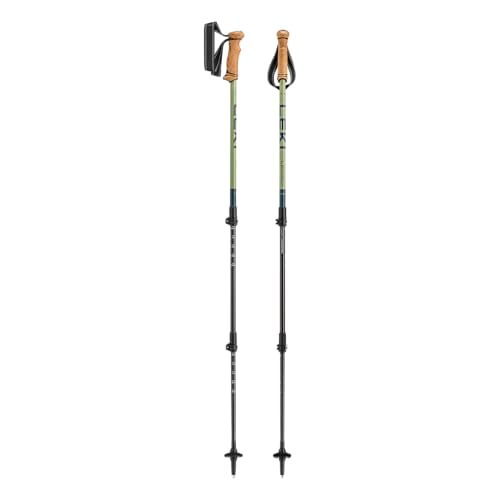


The Manufacturing Origins and Engineering Standards of LEKI Poles
LEKI designs, engineers, and tests all of its equipment in Kirchheim unter Teck, Germany, while manufacturing the vast majority of its trekking poles in Tachov, Czech Republic. This central European manufacturing structure separates the brand from outdoor companies that rely on third-party contract factories in Asia. By operating its own specialized production plant, the company maintains direct control over tube drawing, heat treatment, composite layups, and component molding. Hikers asking where are leki trekking poles made can trace their gear directly back to these European operations where precision machinery converts aerospace alloys and carbon fibers into rugged trail tools.
European Production Facilities and Engineering Roots
The headquarters in Kirchheim unter Teck serves as the primary hub for design engineering, mechanical prototyping, and biomechanical stress analysis. Technicians at this facility model pole geometries, evaluate lever clamp tolerances, and refine ergonomic grip shapes like the Aergon Air. Once a design passes initial evaluation, mass production shifts to the company-owned factory in Tachov, Czech Republic. Established in the year 2000, the Tachov plant ranks among the largest dedicated pole production facilities in the world.
Manufacturing goods within the European Union enables strict oversight across every phase of the assembly line. Specialized workers manage raw aluminum extrusion, automated powder coating, anodization, and hardware assembly under uniform labor and environmental regulations. Outsourcing to distant third-party facilities often introduces batch-to-batch inconsistencies in tube wall thickness and locking clamp tolerances. In-house production allows LEKI to maintain tight quality standards and implement immediate design updates across its active product catalog.
Aluminum Metallurgy and Shaft Alloys
Trekking pole durability starts with tube metallurgy, where aluminum shafts must balance rigid stiffness with lightweight handling. Models such as the LEKI Makalu Cork Lite Trekking Poles-Stone Blue and the LEKI Khumbu Lite Trekking Poles – Orange feature HTS 6.5 aluminum tubing. This heat-treated aircraft alloy offers exceptional tensile strength without creating unnecessary swing weight during long hiking days. When subjected to sudden tripping falls or rocky jams, HTS aluminum tends to bend rather than snap abruptly, allowing hikers to safely complete their journey.
Other designs, including the LEKI Legacy Lite Trekking Poles – Denimblue and LEKI Voyager Trekking Poles – Blue – White, utilize HTS 6.0 aluminum shafts. This tubing configuration balances solid structural rigidity with a friendly entry point for recreational day hikers and weekend backpackers. The specialized tempering applied at the Czech plant hardens the metal against denting from granite boulders and loose talus. Tough aluminum walls also prevent crushing when poles are lashed tightly to a fully loaded expedition rucksack.
For shorter hikers and travelers seeking compact walking sticks, specialized aluminum builds offer tailored dimensions. The LEKI Super Micro Trekking Pole uses HTS 6.5 aluminum to deliver reliable cane support in an 18.1-inch collapsed footprint. Similarly, the LEKI Wanderfreund High Fives Trekking Pole pairs high-strength aluminum with two external locks for maximum downward stability. These alloy shafts provide stable vertical support that helps reduce knee impact across uneven pavement and cobblestone paths.
Carbon Fiber Construction and Trail Dynamics
Hikers focused on moving fast through alpine terrain often prioritize carbon fiber shafts to minimize swing weight. The LEKI Makalu FX Carbon Trekking incorporates pure PRC 1000 carbon composite tubing across its upper and lower segments. Carbon fiber naturally absorbs high-frequency vibrations before impact chatter reaches your wrists, forearms, and elbows. This damping capability reduces joint fatigue across high-mileage days, making composite poles an attractive choice for thru-hikers tackling rugged long-distance trails.
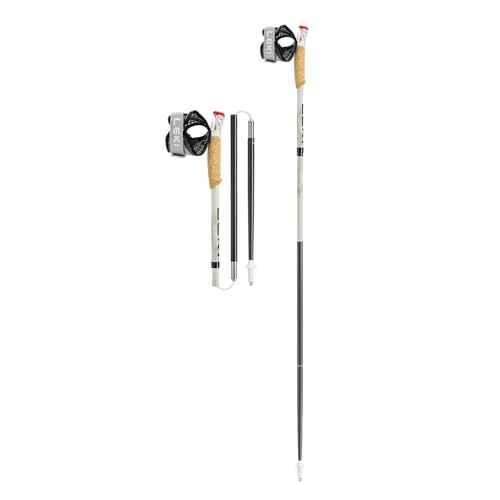
Mountain runners who count every single gram benefit from specialized ultra-high-modulus carbon layups. The LEKI Ultratrail FX.One Trekking Poles-Bright uses HRC max carbon construction to keep pole weight down to less than six ounces per pole. This featherweight design accelerates uphill cadence by virtually eliminating rotational inertia during rapid arm swings. However, ultralight carbon tubing lacks the ductile bending tolerance of aluminum and can fracture under sharp lateral shear stress if wedged between rocks.
Deciding between carbon fiber and aluminum involves evaluating the specific terrain you plan to explore. Carbon shafts excel on smooth trails, dirt switchbacks, and steep climbs where minimal swing weight saves upper-body energy. Aluminum shafts remain the preferred choice for rocky talus fields, scree scrambles, and dense off-trail bushwhacking where heavy impacts occur frequently. Understanding these material trade-offs allows backpackers to match shaft composition to the exact physical demands of their routes.
Locking Mechanism Reliability: Speed Lock Plus vs Super Lock SLS
A trekking pole cannot protect your knees if the locking mechanism slips under sudden downward force. LEKI manufactures two distinct locking formats across its lineup to satisfy different operational requirements. The external cam clamp system, known as Speed Lock Plus, equips popular options like the LEKI Wanderfreund High Fives Trekking Pole and LEKI Legacy Lite Trekking Poles – Denimblue. This external lever mechanism compresses a durable composite collar around the inner shaft to prevent vertical displacement.
Speed Lock Plus provides dependable holding power while remaining exceptionally easy to operate in freezing conditions with thick winter gloves. An integrated knurled thumb screw allows hikers to fine-tune clamping tension directly in the field without carrying extra tools. When seasonal temperatures drop and metal shafts contract, a quick quarter-turn of the dial restores firm clamping friction instantly. This reliable holding force prevents hazardous pole collapse during technical descents or heavy pack transfers.
In contrast, internal twist mechanisms like the Super Lock (SLS) system appear on the LEKI Voyager Trekking Poles – Blue – White and LEKI Super Micro Trekking Pole. Super Lock functions via an internal threaded expander plug that spreads against the inside of the shaft as you twist the sections. This internal arrangement creates an exceptionally sleek, snag-free outer shaft profile that slips smoothly through thick trail brush. However, internal expanders require regular cleaning because fine silt and moisture can cause the internal plug to lose traction.
Ergonomics, Grip Materials, and Wrist Strap Support
Grip comfort directly impacts endurance on demanding multi-day backcountry treks. LEKI crafts its handles from several distinct materials engineered for moisture wicking, thermal insulation, and pressure distribution. The Aergon Air cork grip on the LEKI Makalu Cork Lite Trekking Poles-Stone Blue blends natural cork with an open-core structure to wick palm sweat away effectively. Natural cork gradually molds to your individual hand morphology over time, preventing painful friction hot spots during hot summer ascents.
For balanced durability and weather resistance, the EVOCON Cor-Tec grip equips models like the LEKI Legacy Lite Trekking Poles – Denimblue and LEKI Khumbu Lite Trekking Poles – Orange. Cor-Tec combines natural cork particles with synthetic polymers to resist surface flaking and UV degradation across years of heavy trail exposure. The rounded, edgeless grip head lets hikers rest their palms comfortably on top of the pole when braking on steep downhill slopes.
Specialized grips also cater to specific athletic disciplines and non-traditional hiking postures. The LEKI Ultratrail FX.One Trekking Poles-Bright utilizes the Trail Trigger Shark system, featuring a breathable mesh strap that clicks directly into the handle for efficient power transfer. Meanwhile, the cane-style cork handle on the LEKI Wanderfreund High Fives Trekking Pole distributes vertical body weight across the palm base. Proper strap adjustment allows hands to push against the webbing loops rather than gripping the handles with excessive force.
Packability: Folding Z-Poles vs Telescoping Architecture
Packed length plays a decisive role when preparing gear for flights or securing equipment to a rucksack. Traditional three-section telescoping poles collapse by sliding sections within each other, typically packing down between 25 and 26.5 inches. The LEKI Khumbu Lite Trekking Poles – Orange packs down to 26.4 inches, while the LEKI Legacy Lite Trekking Poles – Denimblue collapses to 25.2 inches in its compact version. When attaching equipment to your backpack, telescoping shafts fit securely into standard side compression straps.
For international flights and fastpacking where space is strictly limited, folding Z-poles provide unmatched packability. The LEKI Makalu FX Carbon Trekking incorporates the External Locking Device (ELD) to break down into three 15.7-inch segments with a single lever press. The race-focused LEKI Ultratrail FX.One Trekking Poles-Bright separates into three 14.5-inch segments using a push-button release. These compact sections fit neatly inside carry-on luggage or running hydration packs without snagging on external zippers.
Choosing between telescoping and folding frames depends on how much length adjustability your adventures require. Telescoping poles offer thirty to thirty-five centimeters of extension range, making them easy to adjust for uphill climbing and pitching trekking-pole-supported tents. Folding poles have fixed lower lengths with limited top adjustment, sacrificing versatile height tuning for ultra-compact stowing. Evaluating your typical camp setups and transport methods helps determine which shaft architecture fits your routine.
Tips, Baskets, and Accessory Hardware
Secure ground engagement relies on durable hardware engineered to handle relentless trail friction. Most LEKI walking poles feature the Flex Tip Short equipped with a hard tungsten carbide point. The concave carbide tip bites securely into granite, wet roots, and loose scree to prevent dangerous slippage. A flexible plastic ferrule allows the tip assembly to flex up to thirty degrees if pinched between boulders, preventing the lower pole shaft from bending or shearing under lateral torque.
Modular basket systems allow hikers to modify their poles quickly for varying ground conditions. Standard trekking discs, such as the Trekking 2.0 baskets on the LEKI Khumbu Lite Trekking Poles – Orange, prevent poles from sinking into soft dirt and mud bogs. For winter mountain travel or snowshoe outings, hikers can thread wide powder baskets onto the tip collars for enhanced flotation. Wearing protective hiking apparel alongside wide winter baskets keeps you moving steadily through deep alpine snow drifts.
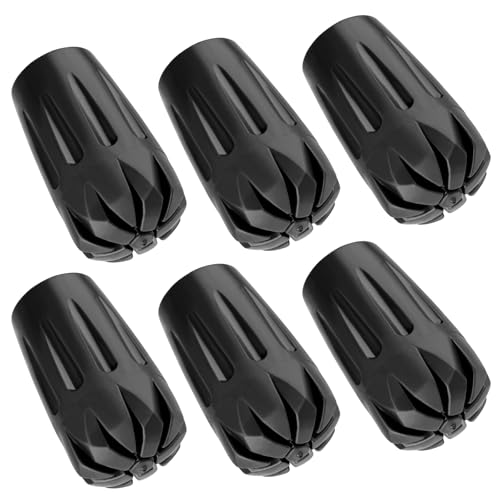
When walking on paved roadways, sidewalks, or sensitive historic cobblestones, bare metal points produce harsh vibration and surface damage. The LEKI Rubber Walking Tip fits firmly over carbide flex tips to provide silent, shock-absorbing grip on solid pavement. These vulcanized rubber pads eliminate noisy metallic tapping and protect luggage fabric from being punctured during international travel. Keeping a pair of rubber tips in your pack expands the usability of your poles across urban and wilderness environments alike.
Field Maintenance, Cleaning, and Longevity Practices
Consistent field maintenance ensures European-made trekking poles perform dependably over decades of backcountry exploration. After navigating rainstorms or deep river crossings, completely disassemble all telescoping sections as soon as you reach camp. Stand the bare aluminum tubes upright to dry thoroughly, preventing moisture from becoming trapped inside the sleeves. Moisture trapped within aluminum tubing fosters white oxidation scale, which can seize telescoping shafts together permanently if left unaddressed.
Never apply household lubricants, grease, or silicone sprays to the inner shafts or expander plugs of your poles. Lubricating products eliminate the friction that cam clamps and internal expanders need to lock shafts securely under downward weight. If trail grit or fine silt contaminates the internal tubes, wipe them clean using a cloth lightly dampened with isopropyl alcohol. Clean aluminum surfaces allow friction collars to seat firmly, ensuring reliable support whenever you load the poles.
Always conduct a quick vertical load test before stepping onto steep descents or narrow ridge crossings. Place both poles on firm ground and press your full upper-body weight onto the grips to confirm the clamps hold securely. If a shaft slides downward, open the Speed Lock Plus lever and turn the knurled adjustment dial clockwise slightly to tighten the clamp. Taking thirty seconds to verify lock tension protects your joints and ensures steady balance across demanding backcountry terrain.
Practical Takeaways on European Manufacturing
Understanding that LEKI manufactures its trekking poles in Germany and the Czech Republic sheds light on the exceptional durability of their equipment. In-house production in Tachov ensures strict material consistency, robust shaft metallurgy, and tight mechanical tolerances that outsourced brands struggle to match. Whether you select lightweight HTS 6.5 aluminum workhorses or ultralight carbon speed poles, each design reflects thoughtful European engineering built to safeguard your knees.
Investing in reliable trail hardware translates directly to safer footing, reduced joint fatigue, and greater confidence on rugged mountain paths. Backpackers seeking all-around versatility will appreciate the balanced adjustability of telescoping aluminum models, while fastpackers will favor compact carbon folding frames. By caring for your poles properly and verifying lock tension before each descent, you can trust your European-crafted gear to support every backcountry mile ahead.






Write Your Review
No reviews yet. Be the first to share your experience!