


Regulating core body temperature during steep ascents and avoiding unpredictable weather surprises require thoughtful trail outfitting. Staying comfortable on rugged paths starts with understanding %what do women wear hiking%, moving away from heavy cotton garments toward functional fabrics that handle moisture efficiently. Lightweight technical apparel prevents chafing along friction points like the inner thighs while defending against trail brush and unexpected wind gusts. Hikers who invest in versatile pieces such as dedicated trail pants build a reliable foundation that adapts to shifting backcountry conditions without adding excessive bulk to their pack.
Finding garments that combine weather resistance, active mobility, and sun defense can feel daunting with so many outdoor apparel options available. Modern trail trousers and breathable tops balance active stretch with protective features like integrated cord locks to keep bugs away from ankles. When selecting outdoor gear, evaluating fabric breathability, quick-drying performance, and ergonomic cuts ensures steady comfort through long miles. Proper gear choices ultimately eliminate distractions so you can focus entirely on enjoying the natural scenery ahead.

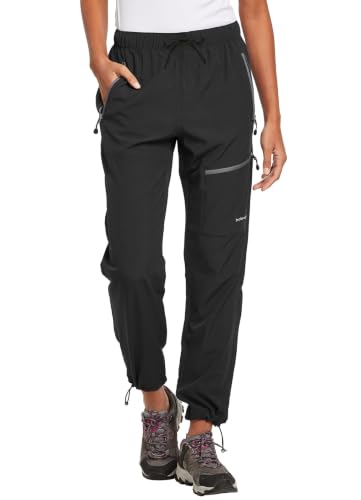
Pros
- Four zipper-secured pockets offer dependable storage for trail essentials without items slipping out
- UPF 50+ rating provides reliable sun defense during exposed daytime hikes
- Elastic waist with interior drawstring and articulated knees offer flexible trail movement
- Adjustable ankle cinch cords help block trail debris, insects, and drafty air
Cons
- Water-resistant fabric is designed for light moisture and will not replace dedicated waterproof rain pants in downpours
- Jogger-style cut and ankle cuffs may not suit hikers who prefer a traditional straight-leg or boot-cut fit
- Packaged sizing reflects a specific 29-inch regular inseam in Medium, requiring careful inseam selection for petite or tall users
The baleaf Women's Hiking Pants are lightweight, quick-drying trail joggers engineered for women seeking functional comfort across day hikes, travel adventures, and campsite wear. Combining active jogger styling with outdoor-specific utility, these pants cater to day hikers, weekend campers, and backpackers who need breathable apparel that moves freely on the trail. With built-in UPF 50+ sun protection and a water-resistant finish, they serve as a practical lower-body layer for mild to warm conditions as well as transitional shoulder-season weather.
Trail movement is supported through functional tailoring, highlighted by articulated knees and an elastic waistband equipped with an adjustable drawstring. This design allows hikers to step over fallen logs, scramble over rocky inclines, or sit comfortably around camp without feeling restricted by rigid fabric. The lightweight and breathable construction helps manage body heat during steep ascents, while the quick-dry properties ensure that sweat or damp brush exposure dries out relatively quickly during steady movement.
Storage and trail protection are central to the build quality of these joggers. The pants feature four separate zip-closure security pockets, giving outdoor enthusiasts reliable spaces to store pocket knives, trail passes, identification, or small snacks without worrying about items tumbling out on uneven ground. At the ankle cuffs, integrated adjustable cord locks allow hikers to cinch the leg openings snugly around trail shoes or hiking boots, which helps deter dirt, gravel, and insects from crawling up the legs.
Maintenance and packing for trips remain straightforward thanks to the lightweight fabric construction and machine-washable care requirements. For backpackers and travelers packing clothing into compression sacks or backpack compartments, the compressible material takes up minimal pack volume and shakes out easily at the trailhead. The combination of an elastic waist and drawstring cord makes daily adjustments quick, accommodating fluctuating base layers or personal fit preferences throughout a multi-day trip.
While these joggers offer strong everyday utility, buyers should note specific functional limitations before setting out into harsh environments. The water-resistant finish is intended to shed light moisture, damp foliage, or brief drizzles, but it does not make the garment waterproof during sustained downpours or heavy mountain storms. Additionally, hikers who prefer loose boot-cut hems over cuffed jogger silhouettes may find the tapered ankle styling less compatible with bulky mountaineering footwear.
For hikers, campers, and travelers seeking dependable sun protection, agile mobility, and secure zippered storage at an accessible value, the baleaf Women's Hiking Pants represent a sensible wardrobe addition. They provide the necessary lightweight breathability and functional pocket configuration needed for warm-weather day hikes, state park explorations, and casual backpacking itineraries.
Finding the right fit in the baleaf Women's Hiking Joggers relies on evaluating both waist sizing and inseam measurements. This specific pair comes in a size Medium with a 29-inch regular inseam, while the product line also offers 27-inch petite and 31-inch tall options to accommodate varying heights. The elastic waistband pairs with an interior drawstring to ensure a secure, slip-free fit that adapts easily across different body shapes.
Mobility is further enhanced by articulated knees, which provide dedicated pre-shaping so the fabric does not pull tight across the kneecaps when stepping up steep terrain. At the hem, adjustable cord locks let you fine-tune the ankle circumference, allowing you to wear them loose for increased airflow or cinched tight against boots for debris protection.
The baleaf Women's Hiking Joggers feature a lightweight synthetic fabric designed specifically for active outdoor performance. Built-in UPF 50+ sun defense helps block harmful ultraviolet rays during long stretches on exposed alpine ridges or sunny valley paths, reducing the need for constant sunscreen reapplication on the legs.
Organization is managed through four zip-closure security pockets that prevent critical trail gear from falling out during active movement. While the water-resistant coating helps shed light moisture and morning dew from brushy paths, it remains breathable enough to prevent overheating on warm summer ascents.
Essential Trail Layering and Apparel Guide for Women
Selecting the right hiking outfit requires balancing physical comfort, weather protection, and unrestricted movement across varied elevation profiles. Hikers frequently ask %what do women wear hiking% when planning their first backcountry outings or upgrading from basic gym clothing. The answer centers on functional layering, durable stretch-woven fabrics, and practical protection against trail hazards like biting insects and harsh sun rays. Understanding how individual garments work together transforms your outdoor experience from an endurance test into an enjoyable day on the trail.
The Three-Layer Trail Clothing System Explained
Core body temperature changes constantly during outdoor excursions as your physical output fluctuates between steep ascents and relaxed flat sections. The three-layer clothing system provides a reliable framework for managing perspiration and external environmental factors efficiently. A next-to-skin base layer pulls moisture away from your skin, an insulating mid-layer traps essential warmth, and an outer shell blocks wind and precipitation. Adjusting these layers proactively before you start shivering or overheating keeps your energy focused on navigating the path ahead.
High-output climbs generate significant body heat that quickly turns into internal sweat if your garments trap moisture against the skin. Adding or removing lightweight layers allows you to regulate warmth without stopping for lengthy clothing changes. Carrying a modular clothing system ensures you remain prepared for sudden summit wind chills or shaded forest descents where ambient temperatures drop unexpectedly. This adaptable strategy forms the foundation of smart wilderness dressing regardless of trail difficulty.
Why Fabric Selection Trumps Fashion: Ditching Cotton for Synthetic Blends
Moisture management remains the most critical factor when selecting outdoor apparel for mountain environments. Standard cotton shirts and denim bottoms absorb moisture rapidly and hold onto water, creating a clammy layer against your skin that accelerates hypothermia risks in chilly winds. Technical synthetic fabrics like nylon and polyester offer hydrophobic properties that facilitate fast moisture transfer and rapid drying times. Choosing quick-drying synthetic blends ensures that sweat generated during strenuous scrambles evaporates rapidly into the surrounding air.
Blended outdoor textiles frequently incorporate small percentages of elastane or spandex to enhance functional stretch across joints. These synthetic materials resist surface abrasion from rough rock walls and dense trailside brush far better than standard casual knits. Selecting durable synthetic tops and bottoms helps prevent fabric tearing and prevents skin chafing along high-friction contact areas. Packing non-absorbent synthetic garments keeps your pack weight manageable even when sudden rain squalls roll over the ridge.
Choosing Trail Bottoms: Technical Hiking Pants Versus Everyday Workout Tights
Gym leggings offer comfortable four-way stretch, but they often lack the durability required for overgrown trails and abrasive granite scrambles. Technical hiking trousers feature tightly woven synthetic weaves that repel light moisture while shielding your legs from thorns, ticks, and scrapes. Exploring modern trail pant designs shows how contemporary outdoor pants combine the athletic mobility of joggers with heavy-duty trail protection. Dedicated hiking pants provide structural toughness that prevents snagging and extends the operational lifespan of your wilderness wardrobe.
Breathability remains an essential consideration when choosing between heavy canvas work trousers and lightweight synthetic hiking bottoms. Lightweight trail pants crafted with water-resistant finishes allow heat to escape during warm afternoon hikes while keeping sudden mist from soaking through to the skin. Many experienced hikers prefer versatile jogger-style pants that transition smoothly between casual walking paths and technical mountain routes. Having dependable lower-body coverage protects against accidental trail scuffs without restricting natural hip and knee extension.
Functional Design Details in Hiking Bottoms: Pockets, Waistbands, and Ankle Cuffs
Pocket design in hiking pants dictates how easily you can access trail essentials without removing your daypack. Options equipped with multiple zip-closure security pockets, such as those featured on the baleaf Women’s Hiking Pants Quick Dry Water, ensure your phone, trail map, and lip balm stay secure on steep switchbacks. Deep cargo storage compartments allow you to distribute gear evenly across your thighs without interfering with natural walking mechanics. Secure closures prevent valuable personal items from sliding out while climbing over downed logs or scrambling up boulder fields.
Waistband construction directly influences whether you experience uncomfortable friction beneath a loaded backpack hip belt. Elastic waistbands featuring an adjustable internal drawstring provide a personalized fit that stays put without pinching during deep lunges. At the bottom hem, adjustable cord locks around the cuffs give hikers the flexibility to seal out ticks, sand, and trail debris. Cinching the ankle openings tight also lets you hike the pant legs up to your calves during warm river crossings or muddy sections.
Solving Fit and Inseam Challenges on the Trail
Finding well-fitting outdoor apparel can present challenges due to variations in torso length, hip width, and leg inseam measurements. Garments with articulated knees and gusseted crotches allow full range of motion when stepping up steep stone staircases without binding across the thighs. Sizing availability plays a crucial role in overall comfort, which is why brands offering dedicated petite and tall inseams solve common bunching or ankle exposure issues. Choosing Rrosseyz Women’s Hiking Pants Lightweight Water gives hikers extended sizing options designed for relaxed mobility across challenging terrain.
Pants that pull tightly across the quadriceps or slip downward under a backpack belt quickly cause painful skin irritation. Testing the waistband rise and ensuring ample room for squatting prevents mid-trail adjustments and chafing along the hip bones. Look for designs that feature generous stretch recovery so the fabric maintains its shape after hours of sustained movement. A comfortable, unrestricted fit ensures you can tackle technical terrain with confidence and complete freedom of motion.
Upper Body Essentials: Sun Protection, Moisture Wicking, and Base Layers
Ultraviolet radiation intensifies as elevation increases, making reliable sun protection an essential requirement for exposed alpine ridges. Technical long-sleeve shirts and sun hoodies featuring certified UPF 50+ fabric shield your neck, arms, and shoulders from harmful rays without requiring constant sunscreen reapplication. Lightweight synthetic tops facilitate active airflow, allowing perspiration to evaporate while blocking solar heat absorption. Investing in sun-protective garments keeps your skin safe across sun-drenched switchbacks and open meadows.
Base layers must feel soft against the skin while managing active sweat output across varied trail paces. Flatlock seam construction prevents backpack strap rubbing along the tops of your shoulders during full-day journeys. A crewneck or quarter-zip synthetic pullover allows you to adjust neck ventilation as temperatures fluctuate throughout the morning. Pairing a breathable technical shirt with supportive hiking trousers creates a cohesive, chafe-free foundation for any outdoor adventure.
Packable Insulation and Outer Shells for Unpredictable Weather
Mountain environments are notorious for sudden microclimate shifts that bring rapid temperature plunges and gusty summit winds. Carrying a compact mid-layer, such as a lightweight grid fleece or packable synthetic jacket, delivers crucial warmth during stationary trail breaks. These insulating pieces trap body heat within lofted air pockets while allowing residual vapor to escape during steady hiking. Stowing a warm layer near the top of your pack guarantees fast deployment whenever chilly winds pick up unexpectedly.
An outer wind shell or lightweight waterproof jacket completes your upper-body layering strategy by sealing out wind chill and precipitation. Water-resistant finishes on trail clothes repel light morning dew and passing drizzles, but sustained storms demand dedicated seam-taped rain gear. A reliable shell prevents convective heat loss from stripping away warmth when you reach exposed ridges. Preparing for varied weather conditions ensures that a passing mountain storm never compromises your safety or comfort.
Footwear Support and Anti-Chafe Friction Management
Proper trail outfitting extends beyond shirts and trousers down to your socks and supportive trail footwear. Dense merino wool or synthetic trail socks cushion the footbed while moving moisture away from damp skin to prevent painful blisters. Avoid thin casual cotton socks, as they bunch up inside trail runners and trap friction-causing moisture against sensitive heels. Pairing quality hiking socks with breathable trail running shoes or supportive boots protects your feet across rocky trails.
Skin-on-skin and fabric-on-skin friction frequently causes painful chafing during warm, high-mileage hikes. Moisture-wicking seamless underwear crafted from synthetic fibers eliminates bulky seams that press uncomfortably beneath tight waistbands. Applying anti-friction balms along the inner thighs and wearing stretch-woven bottoms with smooth interior seams prevents irritation before it starts. Proactive friction management keeps you moving smoothly and pain-free through every mile of your itinerary.
Practical Garment Care and Maintaining Trail Performance
Technical outdoor apparel requires proper laundering techniques to preserve stretch recovery, breathability, and water-resistant surface coatings. Machine washing your synthetic trail trousers and sun shirts on a gentle cycle removes dried sweat salts and abrasive trail grit that can degrade fiber weaves. Avoid standard liquid fabric softeners because they deposit waxy residues that clog the microscopic spaces necessary for active moisture wicking. Using gentle, residue-free laundry detergents preserves the capillary action that pulls sweat away from your skin.
Water-resistant finishes on lightweight hiking pants benefit from periodic maintenance to maintain their moisture-shedding capabilities. Tumble drying on low heat according to garment care labels can help reactivate surface repellency after regular machine washing. Storing your clean trail clothes in a dry, ventilated closet prevents mildew buildup between seasonal adventures. Proper garment maintenance extends the functional lifespan of your outdoor investment, keeping you ready for the next trailhead departure.
Assembling the Right Outfit for Your Next Day Hike
Putting together the ideal hiking kit comes down to assessing your trail forecast, expected terrain, and personal exertion levels. Combining lightweight water-resistant joggers with a breathable UPF sun shirt establishes an adaptable base setup for mild weather. Tucking an insulating fleece and a compact shell into your backpack provides instant insurance against changing mountain skies. Checking local trail conditions before heading out guarantees that your apparel choices match the physical demands of the day.
Confidence on the trail develops when your clothing moves naturally with your body without chafing, binding, or overheating. By focusing on quick-drying synthetic blends, functional pockets, and customizable waistbands, you create a versatile wilderness wardrobe. Thoughtful preparation and sensible fabric choices allow you to hike comfortably across any distance. Heading out with dependable, trail-ready apparel ensures that your backcountry memories stay focused on stunning vistas rather than wardrobe discomfort.


Write Your Review
No reviews yet. Be the first to share your experience!