


Long miles on rugged trails demand apparel that protects your lower body while allowing unrestricted movement. Knowing what trousers do you wear hiking makes the difference between enjoying a scenic summit climb and suffering through miles of painful skin friction. Standard cotton jeans absorb heavy sweat, dry slowly, and cling uncomfortably to your legs as the morning warms up. Technical synthetic fabrics solve this problem by pulling moisture away from your skin while repelling light trail precipitation.
Modern hikers frequently choose versatile lightweight hiking pants that balance tear resistance against active airflow. Options range from reinforced ripstop cargo designs to looser parachute silhouettes equipped with ankle drawstrings. Selecting the proper pair depends on terrain obstacles, sudden mountain wind shifts, and your personal need for gear storage. Inspecting fabric composition and mobility features ensures your legs stay shielded across changing elevation zones.
Pros
- Generous 35% elastane content offers much more stretch and flex than traditional rigid canvas cargo pants
- Zippered thigh pockets prevent trail essentials from sliding out when sitting or scrambling
- Reinforced knee and crotch sections add practical durability in high-wear zones
- Lightweight synthetic construction dries relatively quickly after moisture exposure
Cons
- Does not include a belt, requiring you to provide your own belt for an adjustable waist fit
- Water-repellent finish handles light rain and splashes but is not a substitute for fully seam-taped technical rain shells in heavy downpours
- Elastic blend may feel less rigid than heavy-duty work canvas for extreme abrasive industrial tasks
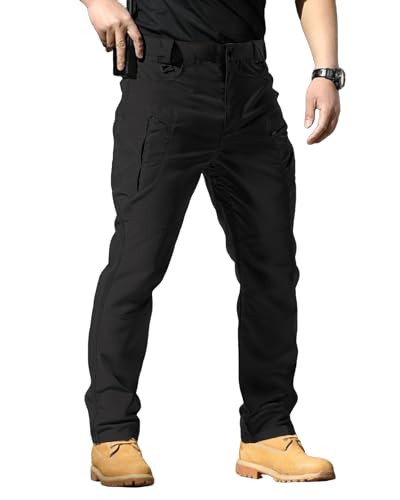
The PIDO YOGA Men's Stretch Tactical Pants are designed for hikers, backpackers, outdoor workers, and travelers who need flexible, durable apparel for active days outside. Traditional utility trousers often rely on heavy, rigid canvas that restricts knee drive on uphill switchbacks. These pants counter that issue by blending 65% polyester with 35% elastane, producing a lightweight, high-stretch feel that moves freely during steep climbs, kneeling around camp, or navigating overgrown trails.
Pocket organization is a major focus of this design. The layout includes six functional pockets positioned for practical utility. The standout features are the dedicated thigh cargo compartments equipped with secure zippered closures. These zippered pockets keep items such as smartphones, pocket knives, trail maps, or car keys safely locked down, preventing accidental loss when scrambling over rocks or stepping over fallen timber.
Durability in the outdoors depends heavily on stress-point engineering. These pants feature reinforced construction across the crotch and knees, helping them withstand brush scrapes, abrasive boulders, and repeated flexing. The ripstop textile weave further limits tearing if you encounter stray thorns or sharp gear edges. Additionally, the outer fabric receives a water-repellent treatment engineered to bead off light drizzle, morning dew, and liquid splashes without suffocating natural airflow.
Regarding fit and day-to-day handling, the pants use an ergonomic cut designed to accommodate tactical movements and active strides. This specific listing arrives in size Large and versatile black. Buyers should note that a belt is not included in the package, so pairing them with a sturdy nylon trail belt is recommended to fine-tune waist tension. Maintenance is simple, as synthetic polyester-elastane blends wash cleanly and air-dry much faster than pure cotton duck or denim.
There are a few realistic limitations to consider before heading into wet backcountry conditions. While the description identifies the fabric as waterproof, it functions as a water-shedding surface barrier rather than a fully seam-sealed hardshell membrane. In prolonged, soaking downpours, water can eventually work its way through the seams, making a dedicated rain shell advisable for severe weather. Furthermore, the high elastane ratio prioritizes flexibility over the extreme armor-like puncture resistance found in heavy, unyielding work pants.
For day hikers, campers, anglers, and outdoor DIYers seeking an affordable pair of multi-pocket pants that will not bind at the knees, the PIDO YOGA Stretch Tactical Pants represent a sensible choice. The combination of secure zippered thigh pockets, reinforced high-friction points, and generous stretch makes them a comfortable companion for active days on and off the trail.
Storage efficiency on the trail requires both accessibility and security. The PIDO YOGA Tactical Pants feature six individual pockets strategically arranged to distribute pocket gear comfortably across the hips and thighs.
The zippered thigh cargo pockets are especially useful for hikers carrying sensitive items like smartphones, compact trail guides, GPS units, or keys. The zip closure ensures contents stay locked inside during vigorous movement, while the standard hip pockets provide rapid access to everyday items when resting at camp or walking easy terrain.
The core material is a blend of 65% polyester and 35% elastane woven into a ripstop pattern. This ratio delivers high stretch and recovery, allowing the pants to expand during deep strides and squatting without losing their shape.
To handle trail wear, the manufacturer incorporates dedicated reinforcements at the knees and crotch, which are the most common failure points in active pants. The surface is treated to resist oil and repel light precipitation, helping keep trail grime and morning moisture from immediately soaking into the fibers.
The ergonomic cut of these pants focuses on mobility, providing sufficient clearance through the seat and thighs to accommodate natural athletic movement without excess bulk flapping in the wind.
This model is supplied in size Large and does not include a belt. Hikers should plan to use a standard webbed outdoor belt or low-profile hiking belt to dial in waist stability, especially when loading the cargo pockets with heavier gear items.

Pros
- Roomy, oversized leg profile offers breezy comfort and unbinding mobility on easy walking paths
- Adjustable ankle drawcords can cinch tight to keep out low trail debris or adjust cuff height over sneakers
- Lightweight packable fabric makes them simple to fold into a daypack or travel bag
- Four exterior pockets provide accessible storage for light personal essentials
Cons
- Low-rise waistband and loose fit can bunch or shift uncomfortably under a loaded backpack hip belt
- Listing mentions both waterproof and water-resistant qualities, but fabric lacks taped seams for heavy rain protection
- Wide-leg cut can easily snag on thick trail brush, briars, or rocky scrambles
The COPYLEAF Women's Cargo Parachute Pants are designed as a hybrid between modern Y2K streetwear and casual outdoor apparel. These bottoms cater primarily to day walkers, campers, festival-goers, and travelers who prefer a loose, comfortable silhouette over traditional tight hiking leggings or rigid trekking trousers. Because the pants prioritize a relaxed, baggy profile, they are best suited for maintained dirt trails, park paths, and casual outdoor activities rather than technical backcountry expeditions.
On easy footpaths, the oversized wide-leg design promotes natural airflow and prevents fabric binding around the knees and thighs during high steps. The manufacturer lists the material as lightweight, windproof, and quick-drying, which helps manage mild breezes and light sweat during warm-weather outings. However, because there is no technical gusseted crotch or mechanical stretch construction specified, overall movement depends primarily on the extra room afforded by the baggy parachute cut.
Regarding fabric build, the product data describes a lightweight, washable, skin-friendly material with water-resistant properties. The design includes four utility pockets for keeping small items close at hand, alongside an elastic drawstring system at both the waistband and ankle hems. Specific fiber percentages such as nylon or polyester are not detailed in the manufacturer specifications, so buyers should anticipate standard lightweight synthetic apparel rather than reinforced, high-denier ripstop designed for rough rock abrasion.
Sizing and daily handling center around a low-waist fit with an elastic drawcord closure. Wearers can cinch the bottom hem drawstrings tightly around trail runners or hiking shoes to keep loose dirt and leaves from blowing up the pant legs. While this loose design feels breezy for campground lounging or town strolls, the low-rise waistband and gathered fabric may cause chafing or sliding if paired with a heavy backpack hip belt on long mileage days.
A notable limitation lies in the weather claims provided in the product listing. Although the product description references waterproof qualities, it simultaneously describes the pants as water-resistant lightweight fabric without mention of seam sealing, waterproof membranes, or high hydrostatic ratings. Consequently, these pants should not be relied upon as protective rainwear in sustained downpours or freezing shoulder-season weather.
For casual outdoor enthusiasts, park visitors, and campers wanting a relaxed, fashionable aesthetic on a budget, the COPYLEAF Cargo Parachute Pants offer an accessible everyday option. They provide wind deflection, light splash resistance, and generous airflow for relaxed summer activities, while hikers facing rugged terrain, heavy rain, or dense brush should opt for dedicated, abrasion-resistant technical hiking pants.
The COPYLEAF Cargo Pants feature an oversized, low-rise silhouette reminiscent of classic Y2K parachute trousers. The wide leg provides generous space through the seat and thighs, allowing maximum airflow during warm, humid walks.
Integrated elastic drawstrings at both the waist and ankles allow users to dial in their preferred fit and leg volume. Cinching the hems creates a jogger-style cuff that pairs easily with low-top trail shoes or casual sneakers, while leaving them open creates a breezy wide-leg flare.
These pants serve well across multiple casual settings, from campsite fire rings and travel days to easy city park strolls. The four-pocket layout provides quick storage for phones, car keys, or small travel essentials.
Because the lightweight fabric packs down small, these pants are convenient to stow in a weekender duffle or carry-on. They provide a comfortable change of clothes after a hike without taking up valuable pack volume.
Essential Trail Trouser Considerations for Day Hikes and Rugged Terrain
Hikers require trousers that actively regulate skin temperature, block cutting winds, and withstand friction from overgrown trail brush. When deciding what trousers do you wear hiking, the foundational rule is selecting quick-drying synthetic blends while strictly avoiding cotton denim or casual sweatpants. Technical trail pants incorporate resilient weaves, mechanical or fiber stretch, and strategic water-repellent coatings to keep you comfortable across variable terrain. Evaluating your route difficulty, expected weather fluctuations, and gear carrying habits will quickly clarify the ideal style for your trek.
Synthetic Fiber Performance and Moisture Transfer Mechanics
Synthetic fibers like polyester and nylon dominate outdoor apparel because they absorb minimal ambient moisture. When your body generates heat on steep switchbacks, polyester yarns pull perspiration outward through capillary action to accelerate surface evaporation. Cotton fibers hold onto water up to twenty-seven times their dry weight, creating cold, heavy fabric that increases the danger of post-ascent shivering. By choosing polyester blends, you ensure that sweat and trail dampness dissipate rapidly even during sustained uphill climbing.
Water-resistant surface treatments complement these synthetic yarns by forcing light rain and morning dew to bead up rather than soak into the fabric. The budget-friendly hiking bottoms available today often incorporate hydrophobic surface coatings that repel mud, oil, and liquid splashes. These treatments allow the fabric to remain breathable so vapor escapes before condensing on the inside of the pant legs. Maintaining this balance between outward moisture transfer and exterior liquid repellency keeps hikers comfortable across unpredictable afternoon squalls.
Nylon fibers offer another resilient synthetic alternative often favored for their outstanding tensile strength and resistance to rough surfaces. While polyester excels at dry times and moisture wicking, nylon provides enhanced durability against coarse mountain granite and dense vegetation. Blending either synthetic with elastic polyurethane yarns yields a functional trail weave that withstands repeated laundering and sun exposure. Regardless of the exact synthetic composition, avoiding cotton garments remains the golden rule for staying dry and protected in unpredictable wilderness conditions.
Ripstop Construction and Brush Abrasion Defense
Backcountry trails expose hiking trousers to sharp granite edges, thorny briars, and fallen timber. Ripstop fabric utilizes a crosshatch grid of reinforced reinforcing threads that physically arrest tears before they spread across the garment. The PIDO YOGA Men’s Stretch Tactical Pants Waterproof highlight this advantage by utilizing tear-resistant ripstop construction engineered to handle branch scratches and rough working conditions. Without ripstop reinforcement, a single snag on an unseen branch can produce a catastrophic seam-to-seam rip that leaves your legs exposed to the elements.
High-abrasion zones like the seat, knees, and crotch absorb the greatest mechanical stress during scrambles and ascents. Trousers built with reinforced paneling at these primary impact zones maintain their structural integrity across seasons of intense trail wear. Double-layered stitching along inner leg seams also prevents high-friction thread failure when carrying a loaded daypack. Investing in durable face fabrics eliminates anxiety when navigating overgrown trails or kneeling on rough soil during camp setup.
Ergonomic Patterning and High-Mobility Trail Articulation
Unrestricted leg movement is vital when taking high steps over boulders or traversing steep hillside contours. Traditional trousers feature flat, rigid patterns that pull tightly across the thighs and hips whenever you lift your knee. Technical outdoor pants counteract this restriction by integrating elastane fibers, articulated knee darts, and gusseted crotches. Articulated knees follow the natural bend of the leg, preventing excess fabric from bunching behind the joint or pulling tight over the kneecap.
Fabric stretch percentages significantly alter trail mobility and long-distance comfort. The PIDO YOGA trousers incorporate thirty-five percent elastane blended with polyester, delivering exceptional multidirectional flexibility that stretches cleanly with every step. Hikers managing joint stiffness often look for knee-supportive trail pants or flexible stretch garments that reduce mechanical resistance during repetitive knee flexion. Generous stretch fibers allow you to scramble up steep inclines without feeling restricted by tight thigh seams.
Pocket Architecture and Practical Backcountry Storage
Trail navigation and routine gear access require well-planned pocket organization that remains accessible while moving. Standard jeans pockets sit too tight against the hips, making it nearly impossible to retrieve a compact map or multitool while wearing a pack. Tactical cargo designs solve this limitation by offering multiple dimensional pockets positioned flat against the thighs. The PIDO YOGA trousers include six functional storage compartments engineered to distribute weight evenly without sagging against the knees.
Secure closures on thigh pockets prevent critical outdoor essentials from slipping out on rocky descents. Zippered cargo compartments keep smartphones, GPS devices, and trail snacks locked in place during high-mobility scrambles. Flap-covered utility pockets also shield contents from drifting dust, sand, and light precipitation. Distributing smaller tools across your thighs eliminates the bulk of keeping items in your jacket or waistband where backpack hip straps cause painful pressure.
Wind Resistance and Breathability Balance in Loose Trail Silhouettes
Exposed ridge crossings frequently subject hikers to biting gusts that rapidly strip away core body warmth. Tightly woven fabrics act as physical wind barriers, stopping chilly breezes before they reach your skin. The COPYLEAF Womens Cargo Pants Parachute Hiking Pants leverage lightweight windproof parachute fabric that blocks cold air drafts along open summits. These water-resistant materials provide dependable barrier protection while remaining remarkably skin-friendly and comfortable for all-day trail wear.
Loose parachute silhouettes also create a microclimate of circulating air between the fabric and your skin. During warm afternoon ascents, this wider cut encourages passive airflow that vents accumulated body heat faster than tight leggings. The spacious wide-leg profile allows sweat vapor to dissipate freely without sticking uncomfortably to sweaty calves. Balancing wind protection against passive airflow ensures your legs remain temperate across shifting trail elevations and sudden ridge squalls.
Ankle Hem Adjustments for Debris and Insect Defense
Loose pant cuffs can easily drag in trail mud or snag against low-hanging roots if left unfastened. Adjustable elastic drawstrings at the hem give hikers the ability to cinch the bottom opening tightly around their hiking boots. The COPYLEAF cargo trousers feature integrated hem cords that allow immediate transition from a relaxed streetwear cuff to a secure trail taper. Tightening the cuff creates an effective physical barrier that prevents loose pebbles, trail dust, and scree from falling into your footwear.
Cinching your pant cuffs also provides crucial defense against ticks, chiggers, and biting trail insects lurking in tall grass. Fastening the hem close to the boot collar makes it far harder for ground pests to crawl up the inside of your trousers. In damp conditions, cinched hems prevent wet brush from soaking your hiking socks and wicking moisture downward into your footwear. This simple mechanical adjustment delivers tremendous versatility when switching between groomed gravel pathways and overgrown wilderness tracks.
Layering Versatility Across Changing Seasonal Temperatures
Mountain hiking environments rarely maintain a constant temperature from the trailhead to the summit. A chilly morning start at four thousand feet often turns into blazing midday sun before dropping to freezing summit winds. Effective hiking trousers should offer enough internal volume to accommodate a light merino wool or synthetic thermal base layer underneath. A relaxed fit or wide-leg cut like the COPYLEAF parachute model easily slips over next-to-skin long underwear without pinching or binding.
When heavy, sustained rain storms roll in, technical trousers must also fit cleanly beneath waterproof hardshell rain pants. Trousers with flat waistbands and low-profile drawstrings prevent painful pressure ridges from forming under the elastic cinch of rain gear. Bulky metal belt buckles should be avoided because they press painfully against your hip bones beneath heavy pack hip belts. Streamlined waist adjustments keep your midsection comfortable when layering multiple storm layers during foul weather.
Warmer summer treks present the opposite challenge where intense sun and ambient heat can cause severe discomfort and fatigue. Lightweight synthetic hiking pants shield your lower legs from direct solar radiation and stinging nettles without overheating your body. Convertible trousers that zip off at the knee or loose pants with roll-up hem tabs allow quick ventilation when ascending hot, exposed ridges. Adapting your legwear configuration to current trail temperatures helps conserve metabolic energy and prevents sweat buildup on long hiking days.
Laundering Protocols and Water-Repellent Treatment Maintenance
Proper cleaning routines protect the functional life and water-repelling qualities of synthetic trail trousers. Standard household laundry detergents leave behind chemical surfactant residues that attract water droplets and compromise breathability. Washing your outdoor pants with a specialized technical wash formulated for synthetics removes ground-in trail dirt without clogging moisture-wicking pores. Always close all pocket zippers, velcro flaps, and drawstring toggles before placing the trousers into the washing machine to avoid fabric snags.
Fabric softeners and dryer sheets must be strictly avoided because their silicone coatings permanently ruin synthetic capillary wicking action. Air drying on a clothesline preserves the elasticity of stretch yarns like elastane and prevents shrinkage. If the exterior fabric begins soaking up moisture instead of beading droplets, you can restore water resistance using a gentle tumble dry cycle if the garment care tag allows heat. Periodically reapplying a spray-on water-repellent finish ensures that mud and light rain continue rolling cleanly off the fabric face.
Choosing Between Tactical Utility and Relaxed Parachute Profiles
Selecting the best trouser design comes down to matching garment construction with your specific trail demands. Tactical cargo trousers prioritize dense fabric weaves, reinforced knees, and multi-pocket organization designed for off-trail scrambling and harsh brush. The PIDO YOGA tactical pants provide structured utility and high elastane recovery for hikers navigating rocky, abrasive environments where puncture resistance is paramount. Hikers carrying heavy pocket tools, radios, or navigation gear will appreciate the durable pocket stability of this structured design.
Conversely, parachute style cargo pants offer exceptional freedom of movement, ultralight drape, and a breezy, modern aesthetic for casual day hikes. The COPYLEAF womens cargo trousers combine casual Y2K street style with water-resistant utility, making them ideal for transitions from trailhead to town. The adjustable elastic waistband accommodates shifting layers throughout the day without requiring a separate hiking belt. Choosing between these designs depends entirely on whether your priority lies in heavy-duty abrasion defense or lightweight, breezy comfort.
Practical Trail Verification Before Heading Out
Testing your trousers at home before embarking on a lengthy wilderness trek avoids painful surprises miles from the trailhead. Put on your chosen trousers along with your loaded daypack and your standard hiking footwear. Perform several deep squats, high knee lifts, and forward lunges to confirm that the crotch seam and thigh fabric do not pull uncomfortably tight. If the waistband slides down or digs into your hips during deep bending, adjust the waist drawstrings or consider sizing up to maintain full range of motion.
Ensure that all functional cargo pockets remain easily reachable while your backpack hip belt is buckled tightly around your waist. Stash your phone and trail essentials into the zippered compartments to verify that weighted items do not uncomfortably slap against your kneecaps while walking. Finally, check that the ankle hems cinch cleanly over your boot shafts to seal out trail debris. Taking a few minutes to verify fit and mobility ensures your hiking trousers perform reliably across every mile of backcountry terrain.


Write Your Review
No reviews yet. Be the first to share your experience!